Your Sunday Sermon Notes: 14th Sunday after Pentecost (22nd Ordinary – N.O.)

Was there a GOOD point made in the sermon you heard at the Mass for your Sunday (obligation or none), either live or on the internet? Let us know what it was.

Too many people today are without good, strong preaching, to the detriment of all. Share the good stuff.

What was attendance like?

Tell about attendance especially for the Traditional Latin Mass.  I was getting reports that it was way up.  But now COVID… again….  Tell me it doesn’t have a demonic component.

Was the Motu Proprio mentioned?  Any local changes or news?

For those of you who regularly viewed my live-streamed daily Masses – with their fervorini – for over a year, you might drop me a line.

Posted in SESSIUNCULA | Tagged
10 Comments

Rome Shot 261

Photo by The Great Roman™

Posted in SESSIUNCULA | Tagged
Comments Off on Rome Shot 261

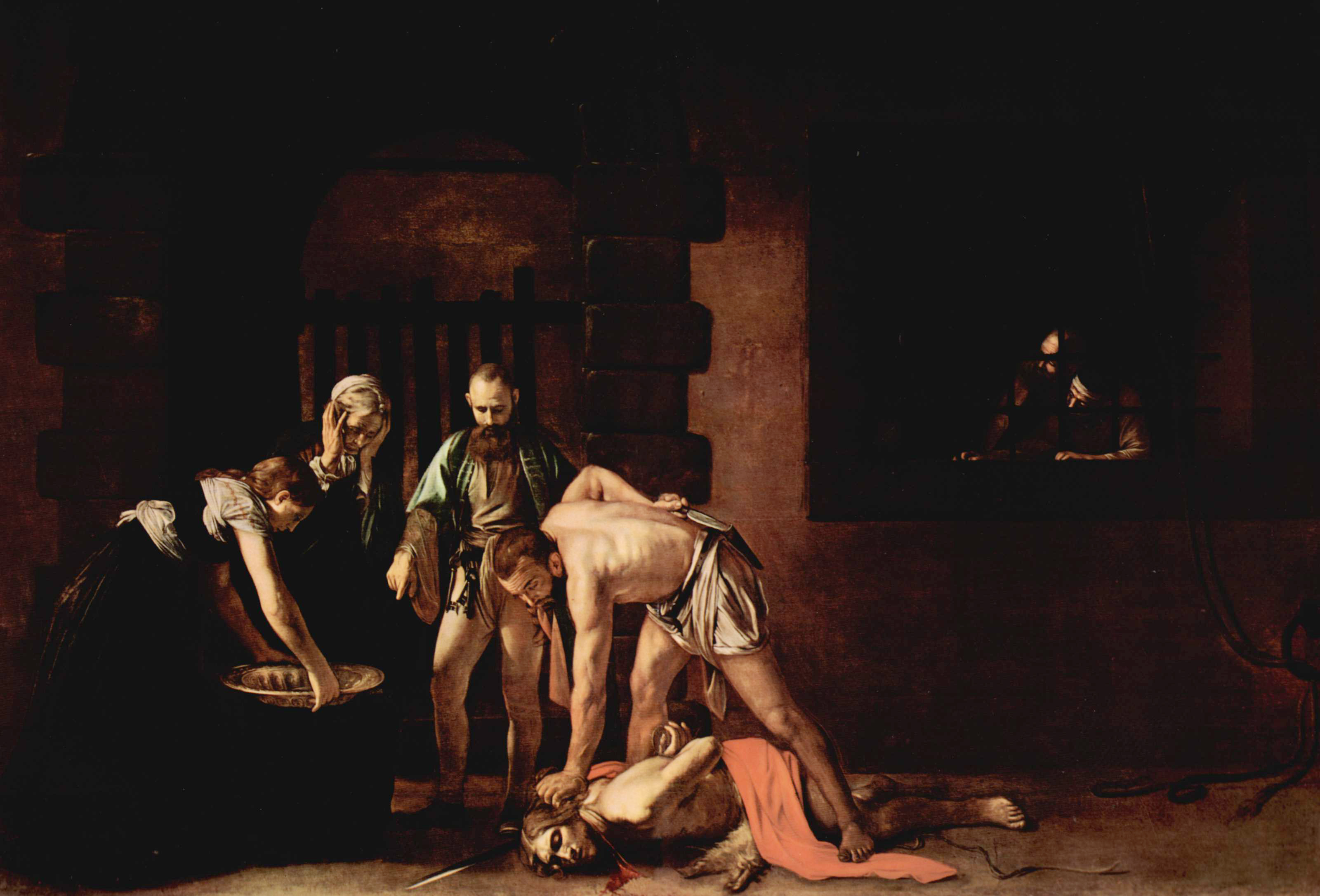
29 August – Feast of the “cancellation” of St. John the Baptist

Today is the feast of the Beheading of John the Baptist.

I have always considered this (also) my name day, and in so many ways it is more appropriate for me than the Nativity of John in June.

And since I have – with great pastoral concern for my person and future – been “cancelled” (more than once) the Feast of the Beheading of the Baptist is of even greater significance for me.

It is also a good occasion for me to thank my benefactors.  Without you, dear dear readers,…. 

The date of this feast has its origin in the day of the translation (moving) of relics of the head of the Baptist to the Basilica of San Silvestro in Capite in Rome.  Feast days are often fixed on the date of the death of a saint or on the date of the moving of their relics, which we normally term “translation”.  The word “translation” makes more sense when you know Latin.  It is a compound of trans and fero.  Fero has as its other principle parts the perfect tuli and participle latum.  So, English “transfer” and “translate” are nearly identical twins.

Here is the Roman Martyrology entry for ” the greatest man born of woman”, as the Lord called him:

Memoria passionis sancti Ioannis Baptistae, quem Herodes Antipas rex in arce Macherontis in carcere tenuit et in anniversario suo, filia Herodiadis rogante, decollari praecepit; ideo, Praecursor Domini, sicut lucerna ardens et lucens, tam in morte quam in vita testimonium perhibuit veritati.

The memorial of the suffering and death of St. John the Baptist, whom King Herod Antipas held in the prison in the citadel of Macheron and, on his birthday, since the daughter of Herodias was making the request, ordered to be beheaded; thus, the Precursor of the Lord, like a bright shining lantern, gave witness to the truth in death as much as he did in life.

There is a tradition that John was forgiven the guilt of Original Sin before He was born, at the sound of Mary’s voice when she came to visit Elizabeth and John leapt in her womb.

St. Augustine spoke often of St. John the Baptist, “the voice” of Christ’s “Word”.

Here is a piece of s. 380, preached in a year we can’t quite figure out. As a matter of fact, it might not be an actual sermon, but something assembled from other pieces. Still, it is Augustinian:

8. So let us recognize these two things in the very differences of [Christ’s and John’s] deaths. We read that John suffered martyrdom for the truth; was it for Christ? It wasn’t for Christ if Christ isn’t Truth. It certainly wasn’t for His Name, and yet it was for Truth itself. I mean the reason John was beheaded, after all, was not that he had confessed Christ. But he was urging self-control, he was urging justice; he was saying, “It is not lawful for you to have your brother’s wife” (Mk 6:18). The law, you see, which had commanded this, had also commanded about those who died without children, that brothers should take the wives of their brothers, and raise up seed for their brothers. Where this reason was lacking, the only motive was lust. It was this lust that John was rebuking, a chaste man rebuking an incestuous one; because this too is what he represented: “It is necessary for him to grow, but for me to diminish” (Jn 3:30).

The commandment had already been given that if anyone died without seed, his closet relation should take his wife and raise up seed for his brother. After all, why had God commanded this if not to signify in this way that the brother’s seed was to be raised up to the brother’s name? The commandment, you see, was that the child to be born would have the name of the deceased. Christ was deceased, the apostles took His spouse, the Church. Those whom they begot of her they did not name Paulians or Petrians, but Christians.

So let both their deaths also speak of these two things: “It is necessary for him to grow, but for me to diminish.” The one grew on the Cross, the other was diminished by the sword. Their deaths have spoken of this mystery, let the days do so too. Christ is born, and the days start increasing; John is born, and the days start diminishing. So let man’s honor diminish, God’s honor increase, so that the honor of man may be found in the honor of God.

Augustine makes the connection between the change of seasons and the births of John the Precursor and Christ the Messiah. Very nice.

In nature, in the northern hemisphere, the days are now quite obviously getting shorter, a cycle reflected in our feasts.

Please pray for me.  Ask St. John to stand guard over me and to intercede with his divine Cousin for the graces I am going to need in the future.


Posted in SESSIUNCULA | Tagged
6 Comments

What a difference a bishop can make.

From Chess.com today, the Daily Puzzle is from one of the 18th c. “Modenese Masters”, Domenico Ercole del Rio (+1802).  There is an elegant forced mate here in 3 but it requires a bold sacrifice.  White to move.

What a difference a bishop can make.

St. John Fisher was a lone bishop who stood up and said, “No”.   That was a Bishop’s Gambit, I guess, that didn’t in the end work for the Church in England, since they still wound up with the Church of England.  St. John Fisher now lives in the glory of the Trinity to intercede for us in this time when the State will be increasingly hostile to all things Christian.  Fisher, not Fischer.

Bl. Clemens von Galen wasn’t the only German bishop to stand up to Nazism in the 1930’s and 40’s (von Preysing, Frings), but he was a particularly visible prelate.  He led the Catholic protest against the euthanasia program.   Do you suppose von Gallen would have given Communion to baptized Catholic Josef Goebbles?  Hitler forbade Goebbles from abandoning the Church for tactical reasons.  That’s Galen, not Gallen.

We need some hard-identity Catholicism from bishops… not whatever the hell it is they are into.    Does it seem to you at all that when they deal with politicians who promote evils like abortion it’s always endless dialogue, soft words and nuanced phrases as if they had some chance to penetrate those obsidian hearts.

But that’s also the way the bishops talk to each other when they meet.

I’m all for decorum.  I don’t think we need constant belts in the chops à la St. Nicholas and Arius at the Council of Nicea.  After all, that belt in the face didn’t seem to change Arius mind.  Perhaps if he had hit him harder?  Twice?   I digress.

My point is that it seems like the bishops talk to each other in the same way that they talk to pro-abortion politicians.  Their yes is not really yes.  Their no is not really no.  Hence, they have no effect on the herd as they move closer to the cliff.

And just to get up on my lobby-horse again,  I submit that, as always, the role of our traditional sacred liturgical worship plays a critical part in the recovery of our Catholic identity, so enervated, so compromised from decades of debilitating attacks from within.  We need our traditional sacred liturgical worship to teach us who we are again.  We are our rites.   Cutting people off from their patrimony, traditional sacred liturgical worship, cuts them off from their very identity, leaving them to drift, rudderless, in the world’s ever-shifting currents.  To steer a boat within a strong current, you need a rudder, that which literally is still in touch with the past, where we have come from.

Celebration of the traditional Roman Mass is one of the most instructive things a priest or bishop can do, for the sake of his Catholic identity as a sacerdos.  You learn things from the rite that simply are not evidenced in the post-Conciliar form.

In the wake of Traditionis custodes, I implore, I beg bishops out there to learn and to celebrate the traditional Roman Rite.

First, you will be of help to yourself, because if you don’t know the traditional Rite, you don’t know your Rite.

Second, you will give immense comfort to the most marginalized members of your flock, something I should think you would want to do.

Here’s a tip, which I suspect is at the core of why many bishops hesitate to get involved with the TRADITIONAL Roman Rite.

Your Excellencies, you have been formed in a Novus Ordo liturgical practice.  With its constant options – left to you as priest and bishop – and with its exhortation to give extra little impromptu pep talks at certain points, and with its ubiquitous versus populum arrangement, the psychological pressure on you as celebrant is great.   Facing them, everyone looking at you to do the next thing, gives the Novus Ordo celebrant, priest or bishop, the overwhelming sense that the liturgical action, carrying it forward, depends entirely on YOU.

That is one of the terrible costs especially of versus populum celebration, perhaps the single most damaging thing to our Catholic identity that resulted after the Council.

Because your experience, Your Excellencies, is wholly steeped in this priest-centric ars celebrandi, I suspect that when you see the photos of traditional Pontifical Masses, or even see Solemn or Low Masses in the Traditional Roman Rite, you quail a bit inside.  You don’t know how to do those things and, as a bishop, you don’t like not knowing what to do.  You are loathe to have people see or think that you don’t know what to do because, in the way you were trained and then seasoned, it all depends on YOU to carry the action forward.   You see all those gestures, the language, the ad orientem posture, and you can’t get your head around how YOU are going to be the driving force to animate the liturgical action.

That’s the trap.

You are not the one who carries it forward.  The Rite itself takes care of that.  All you have to do is be docile and follow, rather than lead.  That’s where your freedom to pray is centered.  That’s where you discover yourself as victim along with being the priest who offers sacrifice.

If being celebrant for a Pontifical Mass looks intimidating, I can assure you that it is probably the easiest liturgical role you will ever have.

You are surrounded by ministers who play their parts.  There is an MC and Archpriest to lead you, literally by walking in front of you, and to point at every text you have to read.  Sure, it’s in Latin, but don’t you think you ought to be able to say prayers in Latin, as a bishop of the Latin Church?  And most of them are silent, anyway.    If you just let yourself be guided along, you will be in the right place at the right time to do the right thing.

It doesn’t depend on you to animate the liturgy.  Just let the sacred ministers do their job.  Just let it be.  Just be.

As far as getting you all gussied up with extra vestments and gloves and different miters and so forth, again, this is a demonstration that it really isn’t all about you.

That may seem counter intuitive, but it hearkens to the fact that the priest is also the victim being sacrificed.

Think of yourself as a lamb being raised for the Temple.  You are cared for very well so you don’t have flaws, pampered even, right up to the point that they open your throat with a blade.   When all the ministers gather around and literally undress and dress you, you are the priest being prepared to offer sacrifice and the victim about to be sacrificed.

What have we priests and bishops lost over the decades by not saying the vesting prayers?   Has this affected our identity and our ars celebrandi?

For example, Your Excellencies, when the ring is put back on your finger, you say: “Adorn with virtue, Lord, the fingers of my body and of my heart, and place upon them the sanctification of the sevenfold Spirit.” Fingers “of my heart”! Very poetic. Each object has its meaning.  The texts of the vesting prayers, carefully sculpted over centuries of spiritual experience and reflection, are dense in meaning. They breathe biblical images.   When you sit there and endure the ministers putting your shoes on, running against the American grain in particular, be patient and meditate on the prayer for the buskins, which cites Eph 6 and Ps 60: “Shod my feet, Lord, unto the preparation of the gospel of peace, and protect me under the cover of thy wings.”   The Enemy hates you and what you are about to do in saying Mass.  Do you pray for protection against diabolical attack?   That’s what you ask for in putting on the amice: “Place upon me, O Lord, the helmet of salvation, that I may overcome the assaults of the devil.”

You do believe in the Devil…. right?  Do you think there’s a chance that the Enemy is trying to undermine you?

Are you ever discouraged or sorrowful in your mandate?  The maniple prayer offers solace: “May I deserve, O Lord, to bear the maniple of weeping and sorrow in order that I may joyfully reap the reward of my labors.”

I go on at length because the riches available to you are so very great and we, the Catholic flock entrusted to you, need for you to be able to carry out your role so that we can carry out ours.  We don’t need half of it from you, we need all of it.  We need you to be traditional so that we also can be who we are supposed to be in our lives.

A bishop can make all the difference.  But it requires a bold sacrifice.

St. John Fisher, pray for us.
Bl. Clemens von Galen, pray for us.


Posted in Hard-Identity Catholicism | Tagged , , ,
25 Comments

Rome Shot 260

Posted in SESSIUNCULA |
3 Comments

WDTPRS – 22nd Ordinary Sunday: O mighty God of hosts, graft into our hearts the love of Your Name!

In the Sanctus of Holy Mass and, in the great Te Deum, we echo the myriads of angels bowed low in the liturgy of heaven before God’s throne: “Holy, Holy, Holy LORD GOD SABAOTH …. God of “heavenly hosts”.

With small differences our Collect for the upcoming 22nd Ordinary Sunday (Novus Ordo) is based on a prayer in the 8th century Gelasian Sacramentary and, subsequently, one in the 1962 Roman Missal for the Sixth Sunday after Pentecost.

Deus virtutum, cuius est totum quod est optimum, insere pectoribus nostris tui nominis amorem, et praesta, ut in nobis, religionis augmento, quae sunt bona nutrias, ac, vigilanti studio, quae nutrita custodias.

Insero means “to sow, plant in, engraft, implant.”  I like “graft”.  Optimum is “best”, but seeing that we are applying “best” to God, we can get away with “perfect”.

Our Collect summons images of, on the one hand, armies and, on the other, an orchard and vine tending.  Many of our ancient prayers have vocabulary which invokes military, agricultural, and forensic/juridical images.  Today, on the one hand, the God of hosts guards the good things we have.  On the other, this same mighty God is grafting love into us and then nourishing it so it can grow.

OBSOLETE ICEL (1973):

Almighty God, every good thing comes from you. Fill our hearts with love for you, increase our faith, and by your constant care protect the good you have given us.

The norms underlying the current ICEL English translation stated that “deficiency in translating the varying forms of addressing God, such as Domine, Deus, Omnipotens aeterne Deus, Pater, and so forth, as well as the various words expressing supplication, may render the translation monotonous and obscure the rich and beautiful way in which the relationship between the faithful and God is expressed in the Latin text” (Liturgiam authenticam 51).

Today the priest invokes God as Deus virtutum, an expression in St Jerome’s Latin Vulgate Psalter (Ps 58:6; 79:5 ff; 83:9; 88;9) often translated as “God of hosts.”  Don’t confuse “host”, which is “army, multitude”, with the wheat wafer used at Mass.  Virtutum is genitive plural of virtus, “manliness, strength, courage, aptness, capacity, power” etc.

St Jerome chose virtutum to render the Hebrew tsaba’, “that which goes forth, an army, war, a host.”  Tsaba’ describes variously hosts of soldiers, of celestial bodies, and of angels.

LITERAL RENDERING:

O mighty God of hosts, of whom is the entirety of what is perfect, graft into our hearts the love of Your Name, and grant, that by means of an increase of the virtue of religion, You may nourish in us the things which are good, and, by means of vigilant zeal, guard the things which have been nourished.

CURRENT ICEL (2011):

God of might, giver of every good gift, put into our hearts the love of your name, so that, by deepening our sense of reverence, you may nurture in us what is good and, by your watchful care, keep safe what you have nurtured.

Today we pray to God for an increase in “religion.”  I’ll take this to be the virtue of religion. Last week I wrote about the difference between “values” and “virtues”.  Let’s make more distinctions.

The Catechism of the Catholic Church defines “religion” as a set of beliefs and practices followed by those committed to the service and worship of God.

The First Commandment requires us to believe in God, to worship and serve him, as the first duty of the virtue of religion (cf also CCC 2084, 2135).   St. Thomas Aquinas (d 1274) says that religion is the virtue by which men exhibit due worship and reverence to God as the creator and supreme ruler of all things (STh II-II, 81, 1).

We must acknowledge dependence on God by rendering Him a due and fitting worship both interiorly (eg, by acts of devotion, reverence, thanksgiving, etc.) and exteriorly (eg, external reverence, liturgical acts, etc.).

The virtue of religion can be sinned against by idolatry, superstitions, sacrilege, and blasphemy.

We creatures must recognize who God is and act accordingly both inwardly and outwardly.  When this at last becomes habitual for us, then we have the virtue of religion.  A virtue is a habit.  One good act does not make us virtuous.  If being prudent or temperate or just, etc., is hard for us, then we don’t yet have the virtues.

Our petition for religion follows immediately from our desire that God “graft” (insere) love of His Holy Name into our hearts.  We move from the title of God the angels and saints never tire of repeating in their everlasting liturgy in heaven: HOLY.  Then we beg for all good things to be nourished in us by God as He increases in us the virtue of religion.  This leads to the proper interior and exterior actions that necessarily flow from recognizing who God truly is and who we are.

Posted in WDTPRS |
Comments Off on WDTPRS – 22nd Ordinary Sunday: O mighty God of hosts, graft into our hearts the love of Your Name!

UPDATED – VIDEO: Priest announces he and people have been forbidden to say St. Michael Prayer and Hail Mary after Mass.

UPDATE: For fairness….

UPDATE: For commonsense….

UPDATE: For background…

A piece at First Things and another at Crisis.

Originally Published on: Aug 27, 2021 at 04:01


I will turn comments off for this, though I would like for a lot of people to see it. Share it.

This priest in Libertyville, IL, was required by Card. Cupich to cease praying the Prayer to St. Michael the Archangel publicly after Mass.  People can say it silently on their own, but they can’t pray it collectively.  He was also told not to say a Hail Mary after Mass.

It might take a moment for the video to download.  HERE

[UPDATE: I have a report that audio plays on computers but not on phones.]


I can think of a couple of reasons why this diktat might have come down.

Perhaps there was a person who didn’t like it, complained, and took all the oxygen out of the room for everyone else.  It’s plausible.  There are countless instances of bishops listening to one Karen and not backing the priest.

Otherwise, praying a Hail Mary and the St. Michael Prayer after Mass is what is done after the Traditional Latin Mass.  Can’t have that!  Gotta stomp that out.

It could be both.

It could be neither.

Either way, it’s just plain sad.

Get ready for more of this.

Meanwhile, pledge to be a Custos Traditionis.

Posted in Pò sì jiù, You must be joking! | Tagged
8 Comments

ASK FATHER: Griping about canon lawyers and marriage “annulments”

From a reader…

QUAERITUR:

My experience is that any marriage can be annulled on the grounds of gross immaturity or mental defect. (Didn’t know “porneia” was Greek for these terms….) And when canonists are asked about church laws regarding the responsibility of  priest and bishops to help reconcile marriages they says things like that’s old and we don’t do that anymore.

How can a church law be ignored because people stopped doing what they are supposed to be doing?

BTW it seems like many cannon lawyers are divorce lawyers.

GUEST PRIEST RESPONSE: Fr. Tim Ferguson

The two most common complaints about marriage tribunals are that 1) they grant too many annulments and 2) they don’t grant enough annulments.

Often, both complaints come from the same person. During my time as a lay canonist (two n’s, not three, thank you), I once met a priest. When I told him that I worked at the marriage tribunal, he said, “Oh, so you’re one of the folks who are destroying our marriages,” and turned and walked away. Three years later, when a case involving a member of his family received a negative decision, this same priest called me up and read me the riot act on the phone.

The complaints about tribunals granting too many or too few annulments come from looking at the situation in the wrong way. Judges don’t “grant” or “withhold” annulments as if they were some sort of favor. They are a judgment, based on the law and the facts presented before the Court. The facts presented might be flawed (people lie, people misremember), but they are what we have to go on.

A more helpful analogy is, perhaps, a medical diagnosis. A good doctor examines the patient, asks pertinent questions, perhaps does a few tests, then draws on his knowledge of medical conditions to come up with a diagnosis. His diagnosis might be wrong, despite his best efforts. The patient could be concealing some important factors, or there may be medical developments or conditions about which the doctor does not know. That’s why it’s generally good to get a second opinion before making important medical decisions.

If the local doctor examines 50 people and finds that 48 of the fifty patients have cancer, we don’t generally jump to the conclusion, “Dr. Gilligan is handing out cancer diagnoses like candy!” Instead, we start asking ourselves, why do so many people in this town have cancer?

A good tribunal (and most of them are good) examines the parties – interviews are conducted, evidence is examined, witnesses are called, often a psychological review is conducted. Unlike in the medical field, it is very rarely the case that only one canonist examines the case. Ideally, a degreed Defender of the Bond and three degreed Judges are involved in the case. If a majority of the judges find sufficient evidence for nullity, an affirmative decision is given. In the recent past, an automatic appeal to a second court was made. Now that appeal is optional, but a reasonable option for a party who disagrees with the decision.

The seemingly large number of affirmative cases in the United States and much of the Western world doesn’t say as much about the quality of canon lawyers and tribunal staff as it does about the travesty of marriage in our society. A society that treats marriage as disposable (and yes, the Church failed utterly when States first started introducing no-fault divorce), impermanent, and merely some sort of social contract allowing for guilt-free sex between two persons of whatever gender, it is entirely understandable that few young people have a clear understanding of the covenant they are entering into, and so many of them come from backgrounds that are so dysfunctional that their ability to sustain, let alone understand a mature adult relationship is severely damaged.

It is true that the Church urges pastors and those involved in nullity cases to try to assist couples with reconciliation whenever possible. Experience has shown that, by the time someone is considering filing for a declaration of nullity, reconciliation is difficult if not impossible. Pastors – and laity – have a lot of work to do in forming young people to understand what marriage is, how to find a suitable partner, and what the commitment of marriage is truly about. Throwing stones at canonists is much easier.

Anecdotal “evidence” to completely demolish what I’ve said above coming in three…, two…, one…

Posted in "How To..." - Practical Notes, ASK FATHER Question Box, Canon Law | Tagged ,
44 Comments

Rome Shot 259

In 2005 the bones of St. Augustine were brought to Rome from Pavia to the Church of St. Augustine, where there is also the tomb of Augustine’s mother, Monica.

It was the first time in 1617 years that they had been reunited.

Posted in SESSIUNCULA | Tagged ,
9 Comments

Catholics who support manifest evils … yes… they are “some kind of Catholic”.

I subscribe to very few print journals and magazines.  I just can’t get through them all as they rain down on me.  Hence, I am selective.

One publication I do subscribe to is Touchstone.

There was a powerful editorial in the July/August edition about the Catholicism of “devout” Joe Biden and Nancy Pelosi and their sort… which I assume includes not a few bishops, priests and many other lay people, both publicly seen and unseen.

Some people are not going to like that I posted this.  However, I offer it for two reasons.

First, there are those who say that Biden, Pelosi, the editors of the Fishwrap, ideological enemies of the Church’s traditional sacred worship, etc., are “not Catholics”.   They are Catholics.   Iuxta modum, but they are.

Next, let this serve as a form of examination of conscience before you GO TO CONFESSION.   We all fail in commission and omission, none of us being perfect and most of us having both bad habits and underdeveloped virtues (which means they are not virtues at all).  Mediocrity is not a goal of the awakened – not woke – Catholic.  And of course promotion of downright evil is the path to Hell.

Here We Remain: Touchstone & the “Devout” Friends of Abortion
by S. M. Hitches

[…]

President Biden is, to be sure, some kind of Catholic, as the Jewish atheist is some kind of Jew, or the anarchist who wishes to destroy his country is some kind of citizen, or the theologian who teaches in the name of Christ while denying his deity and his Resurrection is some kind of Christian, or the cancerous cell is some part of the body it is killing. If possession of some kind of religious sensibility, even an intense sensibility, is the proper mark of devotion, then perhaps one cannot even deny that Biden, Speaker Pelosi, and Catholics like them are “devout.” But this does not stop them from being very bad Catholics, servants of God in the same way Satan is, or bloody-minded enemies of the Church of which they are officially members in good standing, and which is replete with bishops who have no qualms about offering them Communion.

In response to the abortion-favoring policies of President Biden, Cardinal Gerhard Müller, former prefect of the Congregation for the Doctrine of the Faith—the Vatican curial department responsible for supervising the teaching of Catholic doctrine—wrote:

When the politico-religious rulers of their time wanted to forbid the apostles from proclaiming the teachings of Christ under threat of punishment, the apostles replied, “One must obey God rather than men” (Acts 5:29). . . . Those who -relativize the clear commitment to the sanctity of every human life on the basis of political preferences with tactical games and sophistical obfuscations [taktischen Spielen und sophistischen Verschleierungen] openly oppose the Catholic faith.

“Sophistical obfuscations”—like “devout Catholic.” What Cardinal Müller says for the believing segment of the Catholic Church is the same for any form of faith that is credibly called “Christian,” including, please God, that of this journal. On the abortion of a living child, a matter of mere Christianity, we remain as we have always been, but likely now more than ever, when faced with such devotion as Mr. Biden’s, under threat of punishment. Pray for us that our faith does not fail, and we continue to help our readers escape the religion of Antichrist, whose followers perpetually confuse religiosity with goodness.

“sophistischen Verschleierungen”…  sometimes you can’t beat German.

Posted in Emanations from Penumbras, Hard-Identity Catholicism, Liberals | Tagged , , ,
5 Comments