ZISK: In an interview, Francis talks about “Traditionis custodes”, how he views it, what it means, why he did it. Wherein Fr. Z comments.

From Vaticannews.va:

Extracted from an interview with Francis by Carlos Herrera on Radio COPE


Q: I don’t know if Pope Francis is a man who likes to bang his fist on the table. Would it be possible that the last blow on the table has been the pontifical document limiting the celebration of the ‘Tridentine Masses’? And I also ask you to explain to my audience what the ‘Tridentine Mass’ is, what is it about the Tridentine Mass that is not mandatory.

FRANCIS: I’m not one to bang on the table, I don’t get it. I’m rather shy. The history of Traditionis custodes is long. When first St. John Paul II—and later Benedict, more clearly with Summorum Pontificum—, gave this possibility of celebrating with the Missal of John XXIII (prior to that of Paul VI, which is post-conciliar) for those who did not feel good with the current liturgy, who had a certain nostalgia… it seemed to me one of the most beautiful and human pastoral things of Benedict XVI, who is a man of exquisite humanity. And so it began. That was the reason. After three years he said that an evaluation had to be made. An evaluation was made, and it seemed that everything was going well. And it was fine. Ten years passed from that evaluation to the present (that is, thirteen years since the promulgation [of Summorum Pontificum]) and last year we saw with those responsible for Worship and for the Doctrine of the Faith that it was appropriate to make another evaluation of all the bishops of the world. And it was done. It lasted the whole year. Then the subject was studied and based on that, the concern that appeared the most was that something that was done to help pastorally those who have lived a previous experience was being transformed into ideology. That is, from a pastoral thing to ideology. So, we had to react with clear norms. Clear norms that put a limit to those who had not lived that experience. Because it seemed to be fashionable in some places that young priests would say, “Oh, no, I want…” and maybe they don’t know Latin, they don’t know what it means. And on the other hand, to support and consolidate Summorum Pontificum. I did more or less the outline, I had it studied and I worked, and I worked a lot, with traditionalist people of good sense. And the result was that pastoral care that must be taken, with some good limits. For example, that the proclamation of the Word be in a language that everyone understands; otherwise it would be like laughing at the Word of God. Little things. But yes, the limit is very clear. After this motu proprio, a priest who wants to celebrate that is not in the same condition as before—that it was for nostalgia, for desire, &c.— and so he has to ask permission from Rome. A kind of permission for bi-ritualism, which is given only by Rome. [Like] a priest who celebrates in the Eastern Rite and the Latin Rite, he is bi-ritual but with the permission of Rome. That is to say, until today, the previous ones continue but a little bit organized. Moreover, asking that there be a priest who is in charge not only of the liturgy but also of the spiritual life of that community. If you read the letter well and read the Decree well, you will see that it is simply a constructive reordering, with pastoral care and avoiding an excess by those who are not…


That’s where that topic ends before a different question.

“who are not….”     What?

I’ll begin saying that I sincerely want to believe that Francis believes what he said in that response.  I also am pretty sure that a lot of people have lied to him.  I think he admits into his circle people who are not well-motivated.   Also, there is a lot we don’t know and probably won’t know, for example, what did the result of the survey of bishops really say.

That said…

There are some things in this response that need comment.

I won’t do my usual in-line fisk or “zisk” with emphases and comments.  I’ll pull quotes instead.

…for those who did not feel good with the current liturgy, who had a certain nostalgia… it seemed to me one of the most beautiful and human pastoral things of Benedict XVI, who is a man of exquisite humanity.

So, no regard for him now?   It can be argued that Summorum was the most important thing that Benedict gave to the Church.  But note that issue of nostalgia.  More on that later.

Then the subject was studied and based on that, the concern that appeared the most was that something that was done to help pastorally those who have lived a previous experience was being transformed into ideology. That is, from a pastoral thing to ideology. So, we had to react with clear norms. Clear norms that put a limit to those who had not lived that experience.

Firstly, there are a lot of “ideologies” going around in the Church right now which seem pastoral, but are not.  They are true ideologies.  You can think of one right now without even working.  For example, the homosexualist agenda promoted by Jesuit activist James Martin.  That’s an ideology.  So where are the “clear norms” to deal with that problem?   None, you say?

Next, we are simply to accept that Summorum was for those who had “lived a previous experience”.  That’s flat out false.   That was NOT the intent or target of Summorum.  How many times, again, does a falsehood have to be repeated until people just assume it is the truth?  The point of Summorum was not to provide for people with “nostalgia” as the falsehood claims.  It was intended to provide for anyone who had a desire for the Traditional Latin Mass and sacraments with the older rites.   So, if that is the principle behind Traditionis, that Summorum was only for people who were old enough to have known the Roman Rite before the Novus Ordo, then Traditionis is founded on a lie.

“to put a limit to those who had not lived that experience”

My heavens.   Think about that.   If you didn’t grow up with it, you have no right to it.

Next…

Because it seemed to be fashionable in some places that young priests would say, “Oh, no, I want…” and maybe they don’t know Latin, they don’t know what it means.

Another canard on a couple of levels.

Firstly, the buck stops on the table of the Legislator, whose ultimate responsibility it is for the canons of the law which he authorizes.  The Code of Canon Law has a clear norm which states that seminarians are to be very well trained in the Latin language.  Period.  No maybe, no option, no wiggle room.   If Francis is aware of the fact that younger priests don’t know Latin, then when are we going to see action from him either to pull that canon or to enforce it?   Francis often remarks about hypocrisy, and rightly so.  If, from this point onward, nothing is done about the Latin problem either way, then the fault lies squarely on his shoulders and the endurance of Traditionis becomes an ever deepening blotch on his legacy.

Second, I’ve seen the videos of Francis when he has celebrated Mass in Latin.  I’ll just leave that there.  I recall, for example, Francis saying Mass with English orations in Madison Square Garden.  He didn’t have a clue what he was saying because he doesn’t have English.  When I lived in Rome, Card. Bergoglio would stay at our residence.  I had numerous meals with him.  No English to speak of… or with.  BTW… I found him a rather agreeable sort of guy and liked the fact that he sat with us instead of at a table apart, as some cardinals.

Moreover, there are countless priests and bishops in the world who say Masses for ethnic groups in their languages without a deep working knowledge of those languages.  Are they to be condemned?   I recommend that those Masses be shut down immediately until Father or His Excellency is conversant in, say, Spanish!  Otherwise…. hypocrisy?

Lastly, “fashionable”?  That’s pretty insulting towards those who have a sincere piety and honest appreciation for the treasure that is the Traditional Rome Rite.   In addition, who thinks that it was “fashionable” to start saying the TLM?  Doesn’t that imply a widespread popularity and acceptance?  And what if there were some priests who celebrated the Traditional Rite because they thought it was “chic”?  Does that mean that you have to hammer those who embrace it for deeper motives?

And on the other hand, to support and consolidate Summorum Pontificum.

He issued Traditionis to SUPPORT Summorum…..

As young people put it today… I just can’t…

I did more or less the outline, I had it studied and I worked, and I worked a lot, with traditionalist people of good sense.

This leaves me puzzled.  I can’t imagine who those people would be.  He worked on this with “traditionalist people of good sense”.  Like…. Card. Burke?  Eminent canonist who knows well the traditionally inclined?  I suspect that, if true, their contribution was to hold him back from issuing something far harsher.   That’s what I hear Card. Ladaria did.  There is nothing in the restrictions imposed by Traditionis that smacks of  “traditionalist people of good sense”.

For example, that the proclamation of the Word be in a language that everyone understands; otherwise it would be like laughing at the Word of God.

This is … I don’t know what this is.

Firstly, using just the example of that video of the Mass in Madison Square Garden, or just pick your papal Mass over the last few decades, papal Masses are marked by a veritable Tower of Babel of languages.   Does everybody at these Masses understand all the languages being used?

Next, let’s pretend for a moment that everyone at a Mass understands English or Spanish or the mix of languages being used.  Even if they do, what is their level of understanding of the content of the prayers, which deal with deep mysteries hard to explain in any tongue.

On the other hand, if we use our Church’s sacred language – all the great religions of the world have their sacred languageseven if people in the congregation don’t use Latin as their mother tongue, they can at least have the impression that what is being said (which they can follow in their book or aid) is special and not a banality, a commonplace, something “every day” and even a passing convention.    And let’s not even get into the uneven quality of the translation being used.

Also, the comment about “everyone understanding” betrays a kind of “didactic” attitude about liturgy rather than a “sacral” attitude.

This is one of the great disadvantages of the Novus Ordo in the way that it is celebrated.  It lends itself to an ars celebrandi marked by didacticism.  The three year cycle of Gospels for Sundays does this, as does the addition of a reading, versus populum celebration (not really part of the rubrics of the Mass, but the prevailing style), and multiple options for the priest to exit the texts during Mass and add his own remarks.

What is lost in this skewed ars celebrandi is the fact that every word of Holy Mass ought to be sacral and sacrificial.  Every word of the liturgical texts is the word of Christ the High Priest raising a sacrifice to God the Father.   It is wrong to think of the first part of the Mass, the “Mass of the Catechumens” or the “Liturgy of the Word” as a contrast to the  “Liturgy of the Eucharist” as if they didn’t have much to do with each other.  They are both sacrificial.   In the Liturgy of the Word the readings are being offered to the Father.  Think of each word uttered in each reading as the fragrant sacrificial smoke that rises as the incense is consumed with fire.  That is the proper attitude we should have for the readings, rather than a didacticism which demands that everyone understand every word in a shallow and immediate way.    There is time to “break open” the word and expound on it also in a didactic way: the sermon, classes, talks, etc.

After this motu proprio, a priest who wants to celebrate that is not in the same condition as before—that it was for nostalgia, for desire, &c.— and so he has to ask permission from Rome.

Again, the canard about nostalgia.

Let’s turn the nostalgia sock inside out for a moment.  What does nostalgia really mean, anyway?   There is the shallow sense of the word – as Francis used it in the interview – and the deeper meaning, found in its roots.

Nostalgia, is, as the Greek indicates, a pain (algea) we feel for our “return home” (nostron): “pain for the return, ache for the homecoming.”  It is an essential longing for your true home.

False or shallow nostalgia might be thought of as a desire for some “golden age” that is no more, and probably never was.   Sure, it’s a desire for something better, but it could be just a fantasy.

Augustine, drawing on the science of the day, describes the heart as restless because, according to ancient thought, gravity was a tendency within the thing itself which compelled it to go to where it belonged.  The object tries to get where it is supposed to be, not in fantasy but in truth.  Thus it is with the heart and God.   Augustine says, “amor meus, pondus meum… my love is my weight”. 

Anthony Esolen explores this in his book Nostalgia: Going Home in a Homeless World.  He focuses on wandering Odysseus trapped on the island of Calypso, longing for his home in Ithaca because it is where he truly belongs, not in the dream world of his enchanting captrix.  He is supposed to be there, not where is he.   So too a growing number of Catholics, young people mainly, have felt that sort of nostalgia when their restless hearts – longing for more than they have been receiving from the Church in her more or less dumbed down liturgical practice.

They discover something in the Traditional Latin Mass that they truly need, that feels like home, that they ache for when they don’t have it.

And to take that away from them once they have found it?

To prevent those with that unfulfilled ache from finding their place?

This is the definition of cruelty.

A kind of permission for bi-ritualism, which is given only by Rome. [Like] a priest who celebrates in the Eastern Rite and the Latin Rite, he is bi-ritual but with the permission of Rome.

Okay, this says what we have known all along.  There is not one Roman Rite, there are two.   Summorum was a juridical document which treated the two Rites as if they were one.  That was a deft move and it worked well for a while.  However, there were some inherent problems in that approach, since it glossed over a reality that needed to be confronted.  Finally, after some years, that reality was being confronted (e.g., in the exploration of the pre-55 Triduum, which put a magnifying glass on the whole of the “reform”) and the result was terrifying to the Left and to the discontinuity and rupture camp, who still dominate the seats of power in the Church.

That is to say, until today, the previous ones [priests saying the TLM] continue but a little bit organized.  … If you read the letter well and read the Decree well, you will see that it is simply a constructive reordering, with pastoral care and avoiding an excess by those who are not…

George Orwell would admire that.

I predict that Traditionis will only bear the fruit of pain in the short run.

In the long-run I think it will find its place alongside other official documents which have been more or less ignored.    It seems to me that this sort of heavy-handed attempt must fail.

The TLM has been growing rapidly and organically in the Church in a time when our shepherds have squandered their moral capital. There is a demographic sink hole opening up under the Church which will leave her severely diminished.  Young people are not burdened by the fantasy of the halcyon days of the Spirit of Vatican II.

Furthermore, it is not as if the vast majority of the younger people who desire the Traditional Roman Rite are rejecting Vatican II.  That’s simply a lie.   They are perfectly content with the good teachings of the Council, which they recognize really was an Ecumenical Council.  If they are aware of the controversial aspects of the Council documents, they do not reject the Council as a whole.  They simply don’t prostrate themselves and worship Vatican II as if it were the Golden Calf of Sinai.

Neither do they worship the Traditional Roman Rite as some Tradition’s most determined opponents do the Novus Ordo.  They are fixated on the Rite of the Novus Ordo rather than on the point of sacred liturgical worship, which is the fulfillment of the virtue of Religion.

The inveterate opponents of the TLM have their Golden Calf.

What was it that Ratzinger wrote about the Golden Calf?

In Spirit of the Liturgyaddressing the problem of immanentism (a manifestation of Modernism), Ratzinger observed that the Hebrews knew that the Calf wasn’t really a god.  They wanted the Calf as their god because they didn’t want what the true Most High God was asking of them.  The religion of the Calf would be easier.

This is exactly the same trap I think that some people who hate the Traditional Roman Rite fall into: they fear the challenge inherent in the ritual and the texts.  They fear the apophatic aspect, the demanding elements of the Traditional Rite.  For them, everything has to be instantly and easily apprehended, for example, “in a language that everyone understands”.   They want everything to be seen (versus populum) and heard (audible Eucharistic Prayer) and immediately grasped (banal translations, unchallenging music everyone can sing).

Here is the take away: Che Sera, Sera… Whatever Will Be, Will Be.

I don’t think that the Traditional Roman Rite can be controlled or stomped out.  It is going to stay and grow.  There will be bumps and pain, but it isn’t going away.

What I hope for is an opening of hearts.  That’s why I have asked for people to make an informal commitment to pray for those who are in charge of implementing Traditionis custodes.  I ask you to become true custodes Traditionis by prayer and by offering mortifications for the warming and opening of the hearts of their bishops.

HERE

We have to be patient and prayerful and ready to suffer all manner of mistreatment and indignity.   In the end, we will be better off for what we will have endured and generations in the future will be grateful.

Prayerfully and cheerfully persevere, avoiding bitterness and spiritual stinginess.  “Bless those who persecute you; bless and do not curse them.”

Remember that we are not made for this world and, in Heaven, we will have only one Rite.

I have turned on the comment moderation queue.

Posted in ¡Hagan lío!, Francis, Liturgy Science Theatre 3000, My View, Save The Liturgy - Save The World, Si vis pacem para bellum!, SUMMORUM PONTIFICUM, The Coming Storm, The Drill, The future and our choices, Traditionis custodes | Tagged , ,
25 Comments

Rome Shot 263

Photo by The Great Roman™

UPDATE:

Thanks MCS, EW, BP, JW


Posted in SESSIUNCULA | Tagged
2 Comments

U.S. Seminary in Rome snuffs out the Traditional Latin Mass and training for seminarians

The craven faculty of the North American College (US seminary in Rome), perhaps under the pressure of their board, has snuffed out the Traditional Latin Mass, which was a regularly scheduled Mass on Saturdays.

There was also training for the seminarians in how to celebrate the TLM.

I heard about this through several channels, but Rorate published a photo of the publicly posted memo, saying, “Our only options are to resist or to die and disappear.”

Thus will it be harder for these men to be fully trained in the LATIN RITE, the ROMAN RITE, to which they belong.

Nota bene: This applies to the seminary college not to the priests college.  The NAC has two places, one for seminarians in formation and another for priests studying in Rome.

My thought is that this will simply drive learning the TLM underground, as before in the times before Summorum.   The huge difference between now and then is that there are lots of resources online and lots more priests who know how to say the TLM.  These seminarians have a huge advantage now, compared to the past.

HOWEVER… I counsel the guys there to be careful as they proceed anyway to learn the TLM and even perhaps to celebrate it out of sight.   I would if I could tell them to be careful as they look for resources online.  Recent trends suggest that, since their internet activities are surely being monitored, it is likely that they would be more severely treated for looking videos about how to celebrate the TLM than they would for looking at “gay” porn.

If I were able to, I would encourage the men there to get local, Italian mobile phones if they don’t have their US phones with them and then to tether their laptops and use the mobile, cellular data rather than the NACs network.

Moreover, were I able to send them all a message, I would say that there are a great many priests out here who are pulling for you.  When we have the chance, we will support you all we can.  But for now, be careful.  Study hard.  Lock your doors.  Get ordained.

Remember that, in the Church, laws that are not received are no laws at all.   HERE

Posted in ¡Hagan lío!, Be The Maquis, Save The Liturgy - Save The World, Seminarians and Seminaries, SUMMORUM PONTIFICUM, The Coming Storm, The future and our choices, Traditionis custodes | Tagged , ,
16 Comments

31 August – The Church Triumphant and a Patron Saint for “Cancelled” Priests

Unless you are either a true student of a) history, b) hagiography, or c) liturgy, you might have no idea what the phrase “Church Triumphant” means.

Of course that phrase ultimately has an eschatological meaning, but for us in the Church Militant – another nearly entirely forgotten concept – it means immediately our connection with the glories of Heaven and how they trickle, sometimes gush down to us here in this earthly, teary vale.

We have a foreshadowing of the glory of Heaven in the way the Church has, through the ages, always overcome, even after internal upheaval.  History reveals that to be true.

We have a foreshadowing of Heaven in the lives of the Saints.  Study of the saints and of their relics reveals that to be true.

We have that foreshadowing in an exceptional way in our sacred liturgical worship, preeminent because we are by our baptism actively receptive participants in the primary way by which we fulfill the virtue of Religion, thus acting more as we are supposed to act as images of Christ, now gloriously risen.

Today, you would hardly know that the Church of this vale of tears is either Militant or has anything to do with the Church Triumphant.

Our leaders are feckless cowards, sometimes corrupt.   Even official teaching documents seem to give more and more place to the “wisdom of this world” that Paul inveighed against.   Our worship is in disarray and the virtue of Religion nearly totally eclipsed with narcissistic anthropocentrism.    And the most powerful corrective we have working in the Church to get her back on track is under savage attack by those whose duty it is to guide us to Heaven.

With that as a preamble, there are some beautiful foreshadowings of Heaven listed in the Marytrologium Romanum today.  They help us to have hope and to persevere.

Today in the MartRom is an entry for St. Joseph of Arimethea and St. Nicodemus, from the New Testment.  Think about how they went against the current of the Sanhedrin.  Consider the enormous pressure they must have experienced to condemn Christ.  Instead they helped Him in the only way they could and even had dealings with the Romans to accomplish it.  Do you image that, afterwards, they were treated well by their Jewish brethren?

Today is also the feast of St. Aristides, a philosopher who wrote to the Emperor Hadrian.

There is an amazing Paulinus, bishop and martyr, who was deeply involved with the Arian controversy. The MartRom calls him ariana infestatio.   Infestatio! A delightful word, meaning “disturbance, annoyance”.  We might say a “plague” in the sense of some person who “plagues” another.  Paulinus was an “Arian annoyance/plague”, that is, he was a thorn in their sides, who plagued them in their error.

At Lindisfarne, St. Aidan, bishop and abbot.   I greet a friend of mine today on his name day.

Blessed Andrew of Borgo San Sepolcro, which was the birthplace of one of the most perfect paintings ever conceived by the mind of man.  I am sure one of you can tell me what this painting is.  It is in Borgo San Sepolcro, btw.

And today we have the amazing St. Raymond Nonnatus (yes, from Latin non natus).   Insofar as he is a Raymond, like Raymond Penafort, he is a patron saint the now-recovering Leo Raymond Card. Burke.  St. Raymond became Master General of the Mercedarians who labored to raise money to ransom slaves from the infidel Muslims, took up the sword to fight for them, or offered their own persons in their stead.  St. Raymond, get this, when he exchanged himself for a captive in North Africa was tortured.  He was eventually ransomed.  He was named cardinal by Pope Gregory IX but died on his way to Rome at the age of 36.

Members of the religion of peace spiked St. Raymond’s lips and sealed his mouth to keep him from preaching.   

Perhaps St. Raymond Nonnatus could be a patron saint of cancelled, muzzled priests>

Think of St. Raymond Nonnatus today and say a prayer for the continued recovery of Card. Burke from the Wuhan Devil, the demonically accursed (I believe) COVID.

Think of St. Raymond Nonnatus today as hundreds of American citizens and Afghanis who collaborated with US and international forces are now abandoned by the Biden Administration to the Taliban.  They must be terrified.  They are being rounded up.  There are efforts to smuggle them out now… now that they have to be smuggled rather than evacuated in an orderly way.  But… no.   Having robbed the American people at the polls, they now rob Americans in Afghanistan of their lives.  So much for sacred honor.

Think of St. Raymond of the spiked lips and pray for “cancelled” priests.

St. Joseph of Arimethea, pray for us.
St. Nicodemus, pray for us.
St. Aristides, pray for us.
St. Paulinus, pray for us.
St. Aidan, pray for us.
Bl. Andrew, pray for us.
St. Raymond, pray for us.

St. Michael the Archangel, defend us in battle.

St. Joseph, Patron of the Church, take the reins!

Posted in Cancelled Priests, Saints: Stories & Symbols | Tagged
6 Comments

Rome Shot 262

Photo by Bree Dail.

UPDATE YOUR LINK!

Posted in SESSIUNCULA | Tagged
2 Comments

31st of the month: lean

FWIW… today is a “thin” day for monthly donation subscriptions.

This is partly because on months that have only 30 days, the donations are shifted to the 30th, etc.

However, that makes the 30th a little thin too.

If you have thought about signing up for a monthly donation, today would be a good day. (ANY day would be a good day!)

If you benefit from the blog, please pitch in.


Some options


UPDATE:

Welcome aboard and thanks to… CM, ER, MG  & 1 Sept DW

And, everyone, remember TRANSFERWISE.  Very cool and international.


Posted in ¡Hagan lío!, ACTION ITEM! |
Comments Off on 31st of the month: lean

Your Sunday Sermon Notes: 14th Sunday after Pentecost (22nd Ordinary – N.O.)

Was there a GOOD point made in the sermon you heard at the Mass for your Sunday (obligation or none), either live or on the internet? Let us know what it was.

Too many people today are without good, strong preaching, to the detriment of all. Share the good stuff.

What was attendance like?

Tell about attendance especially for the Traditional Latin Mass.  I was getting reports that it was way up.  But now COVID… again….  Tell me it doesn’t have a demonic component.

Was the Motu Proprio mentioned?  Any local changes or news?

For those of you who regularly viewed my live-streamed daily Masses – with their fervorini – for over a year, you might drop me a line.

Posted in SESSIUNCULA | Tagged
10 Comments

Rome Shot 261

Photo by The Great Roman™

Posted in SESSIUNCULA | Tagged
Comments Off on Rome Shot 261

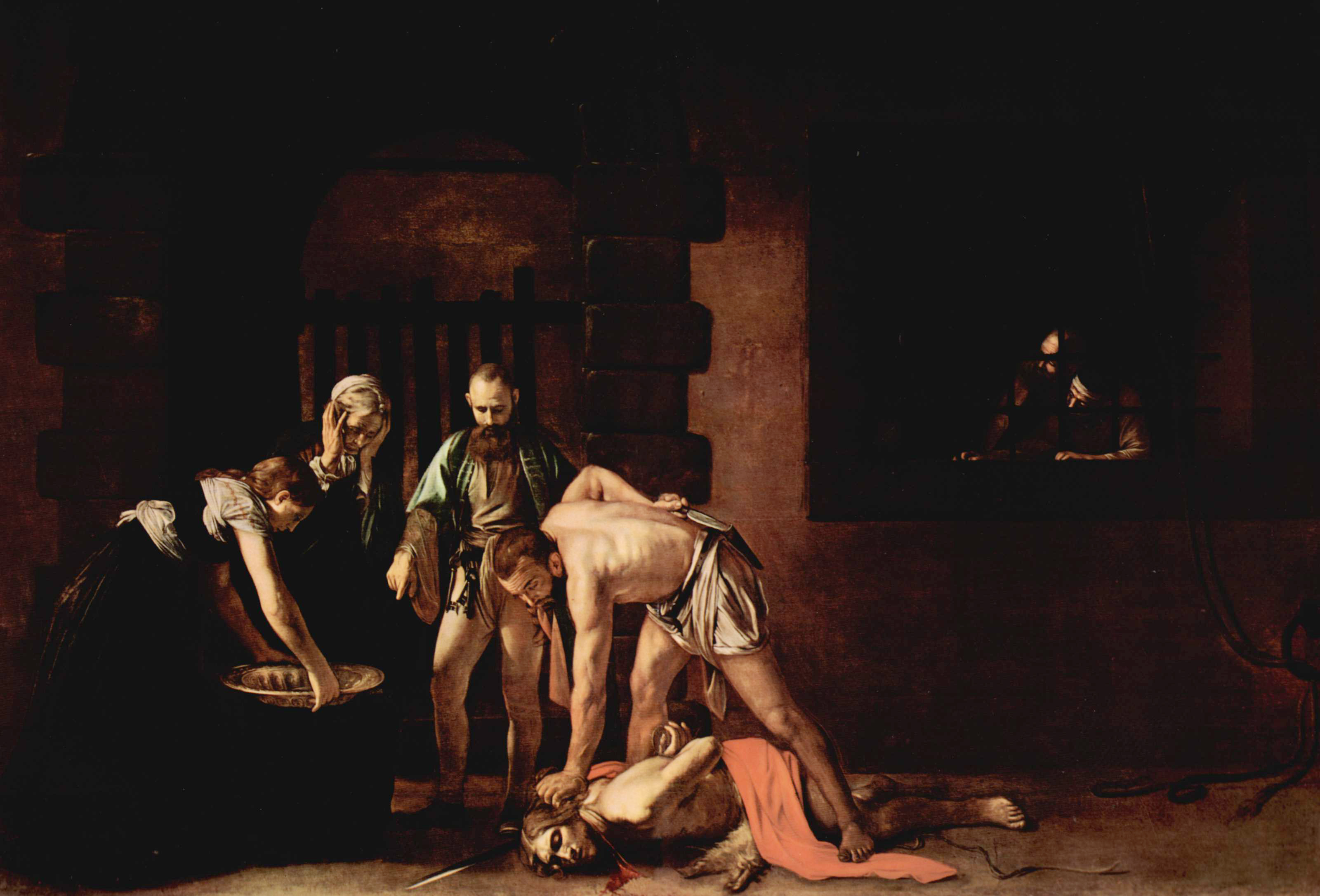
29 August – Feast of the “cancellation” of St. John the Baptist

Today is the feast of the Beheading of John the Baptist.

I have always considered this (also) my name day, and in so many ways it is more appropriate for me than the Nativity of John in June.

And since I have – with great pastoral concern for my person and future – been “cancelled” (more than once) the Feast of the Beheading of the Baptist is of even greater significance for me.

It is also a good occasion for me to thank my benefactors.  Without you, dear dear readers,…. 

The date of this feast has its origin in the day of the translation (moving) of relics of the head of the Baptist to the Basilica of San Silvestro in Capite in Rome.  Feast days are often fixed on the date of the death of a saint or on the date of the moving of their relics, which we normally term “translation”.  The word “translation” makes more sense when you know Latin.  It is a compound of trans and fero.  Fero has as its other principle parts the perfect tuli and participle latum.  So, English “transfer” and “translate” are nearly identical twins.

Here is the Roman Martyrology entry for ” the greatest man born of woman”, as the Lord called him:

Memoria passionis sancti Ioannis Baptistae, quem Herodes Antipas rex in arce Macherontis in carcere tenuit et in anniversario suo, filia Herodiadis rogante, decollari praecepit; ideo, Praecursor Domini, sicut lucerna ardens et lucens, tam in morte quam in vita testimonium perhibuit veritati.

The memorial of the suffering and death of St. John the Baptist, whom King Herod Antipas held in the prison in the citadel of Macheron and, on his birthday, since the daughter of Herodias was making the request, ordered to be beheaded; thus, the Precursor of the Lord, like a bright shining lantern, gave witness to the truth in death as much as he did in life.

There is a tradition that John was forgiven the guilt of Original Sin before He was born, at the sound of Mary’s voice when she came to visit Elizabeth and John leapt in her womb.

St. Augustine spoke often of St. John the Baptist, “the voice” of Christ’s “Word”.

Here is a piece of s. 380, preached in a year we can’t quite figure out. As a matter of fact, it might not be an actual sermon, but something assembled from other pieces. Still, it is Augustinian:

8. So let us recognize these two things in the very differences of [Christ’s and John’s] deaths. We read that John suffered martyrdom for the truth; was it for Christ? It wasn’t for Christ if Christ isn’t Truth. It certainly wasn’t for His Name, and yet it was for Truth itself. I mean the reason John was beheaded, after all, was not that he had confessed Christ. But he was urging self-control, he was urging justice; he was saying, “It is not lawful for you to have your brother’s wife” (Mk 6:18). The law, you see, which had commanded this, had also commanded about those who died without children, that brothers should take the wives of their brothers, and raise up seed for their brothers. Where this reason was lacking, the only motive was lust. It was this lust that John was rebuking, a chaste man rebuking an incestuous one; because this too is what he represented: “It is necessary for him to grow, but for me to diminish” (Jn 3:30).

The commandment had already been given that if anyone died without seed, his closet relation should take his wife and raise up seed for his brother. After all, why had God commanded this if not to signify in this way that the brother’s seed was to be raised up to the brother’s name? The commandment, you see, was that the child to be born would have the name of the deceased. Christ was deceased, the apostles took His spouse, the Church. Those whom they begot of her they did not name Paulians or Petrians, but Christians.


So let both their deaths also speak of these two things: “It is necessary for him to grow, but for me to diminish.” The one grew on the Cross, the other was diminished by the sword. Their deaths have spoken of this mystery, let the days do so too. Christ is born, and the days start increasing; John is born, and the days start diminishing. So let man’s honor diminish, God’s honor increase, so that the honor of man may be found in the honor of God.

Augustine makes the connection between the change of seasons and the births of John the Precursor and Christ the Messiah. Very nice.

In nature, in the northern hemisphere, the days are now quite obviously getting shorter, a cycle reflected in our feasts.

Please pray for me.  Ask St. John to stand guard over me and to intercede with his divine Cousin for the graces I am going to need in the future.


Posted in SESSIUNCULA | Tagged
6 Comments

What a difference a bishop can make.

From Chess.com today, the Daily Puzzle is from one of the 18th c. “Modenese Masters”, Domenico Ercole del Rio (+1802).  There is an elegant forced mate here in 3 but it requires a bold sacrifice.  White to move.

What a difference a bishop can make.

St. John Fisher was a lone bishop who stood up and said, “No”.   That was a Bishop’s Gambit, I guess, that didn’t in the end work for the Church in England, since they still wound up with the Church of England.  St. John Fisher now lives in the glory of the Trinity to intercede for us in this time when the State will be increasingly hostile to all things Christian.  Fisher, not Fischer.

Bl. Clemens von Galen wasn’t the only German bishop to stand up to Nazism in the 1930’s and 40’s (von Preysing, Frings), but he was a particularly visible prelate.  He led the Catholic protest against the euthanasia program.   Do you suppose von Gallen would have given Communion to baptized Catholic Josef Goebbles?  Hitler forbade Goebbles from abandoning the Church for tactical reasons.  That’s Galen, not Gallen.

We need some hard-identity Catholicism from bishops… not whatever the hell it is they are into.    Does it seem to you at all that when they deal with politicians who promote evils like abortion it’s always endless dialogue, soft words and nuanced phrases as if they had some chance to penetrate those obsidian hearts.

But that’s also the way the bishops talk to each other when they meet.

I’m all for decorum.  I don’t think we need constant belts in the chops à la St. Nicholas and Arius at the Council of Nicea.  After all, that belt in the face didn’t seem to change Arius mind.  Perhaps if he had hit him harder?  Twice?   I digress.

My point is that it seems like the bishops talk to each other in the same way that they talk to pro-abortion politicians.  Their yes is not really yes.  Their no is not really no.  Hence, they have no effect on the herd as they move closer to the cliff.

And just to get up on my lobby-horse again,  I submit that, as always, the role of our traditional sacred liturgical worship plays a critical part in the recovery of our Catholic identity, so enervated, so compromised from decades of debilitating attacks from within.  We need our traditional sacred liturgical worship to teach us who we are again.  We are our rites.   Cutting people off from their patrimony, traditional sacred liturgical worship, cuts them off from their very identity, leaving them to drift, rudderless, in the world’s ever-shifting currents.  To steer a boat within a strong current, you need a rudder, that which literally is still in touch with the past, where we have come from.

Celebration of the traditional Roman Mass is one of the most instructive things a priest or bishop can do, for the sake of his Catholic identity as a sacerdos.  You learn things from the rite that simply are not evidenced in the post-Conciliar form.

In the wake of Traditionis custodes, I implore, I beg bishops out there to learn and to celebrate the traditional Roman Rite.

First, you will be of help to yourself, because if you don’t know the traditional Rite, you don’t know your Rite.

Second, you will give immense comfort to the most marginalized members of your flock, something I should think you would want to do.

Here’s a tip, which I suspect is at the core of why many bishops hesitate to get involved with the TRADITIONAL Roman Rite.

Your Excellencies, you have been formed in a Novus Ordo liturgical practice.  With its constant options – left to you as priest and bishop – and with its exhortation to give extra little impromptu pep talks at certain points, and with its ubiquitous versus populum arrangement, the psychological pressure on you as celebrant is great.   Facing them, everyone looking at you to do the next thing, gives the Novus Ordo celebrant, priest or bishop, the overwhelming sense that the liturgical action, carrying it forward, depends entirely on YOU.

That is one of the terrible costs especially of versus populum celebration, perhaps the single most damaging thing to our Catholic identity that resulted after the Council.

Because your experience, Your Excellencies, is wholly steeped in this priest-centric ars celebrandi, I suspect that when you see the photos of traditional Pontifical Masses, or even see Solemn or Low Masses in the Traditional Roman Rite, you quail a bit inside.  You don’t know how to do those things and, as a bishop, you don’t like not knowing what to do.  You are loathe to have people see or think that you don’t know what to do because, in the way you were trained and then seasoned, it all depends on YOU to carry the action forward.   You see all those gestures, the language, the ad orientem posture, and you can’t get your head around how YOU are going to be the driving force to animate the liturgical action.

That’s the trap.

You are not the one who carries it forward.  The Rite itself takes care of that.  All you have to do is be docile and follow, rather than lead.  That’s where your freedom to pray is centered.  That’s where you discover yourself as victim along with being the priest who offers sacrifice.

If being celebrant for a Pontifical Mass looks intimidating, I can assure you that it is probably the easiest liturgical role you will ever have.

You are surrounded by ministers who play their parts.  There is an MC and Archpriest to lead you, literally by walking in front of you, and to point at every text you have to read.  Sure, it’s in Latin, but don’t you think you ought to be able to say prayers in Latin, as a bishop of the Latin Church?  And most of them are silent, anyway.    If you just let yourself be guided along, you will be in the right place at the right time to do the right thing.

It doesn’t depend on you to animate the liturgy.  Just let the sacred ministers do their job.  Just let it be.  Just be.

As far as getting you all gussied up with extra vestments and gloves and different miters and so forth, again, this is a demonstration that it really isn’t all about you.

That may seem counter intuitive, but it hearkens to the fact that the priest is also the victim being sacrificed.

Think of yourself as a lamb being raised for the Temple.  You are cared for very well so you don’t have flaws, pampered even, right up to the point that they open your throat with a blade.   When all the ministers gather around and literally undress and dress you, you are the priest being prepared to offer sacrifice and the victim about to be sacrificed.

What have we priests and bishops lost over the decades by not saying the vesting prayers?   Has this affected our identity and our ars celebrandi?

For example, Your Excellencies, when the ring is put back on your finger, you say: “Adorn with virtue, Lord, the fingers of my body and of my heart, and place upon them the sanctification of the sevenfold Spirit.” Fingers “of my heart”! Very poetic. Each object has its meaning.  The texts of the vesting prayers, carefully sculpted over centuries of spiritual experience and reflection, are dense in meaning. They breathe biblical images.   When you sit there and endure the ministers putting your shoes on, running against the American grain in particular, be patient and meditate on the prayer for the buskins, which cites Eph 6 and Ps 60: “Shod my feet, Lord, unto the preparation of the gospel of peace, and protect me under the cover of thy wings.”   The Enemy hates you and what you are about to do in saying Mass.  Do you pray for protection against diabolical attack?   That’s what you ask for in putting on the amice: “Place upon me, O Lord, the helmet of salvation, that I may overcome the assaults of the devil.”

You do believe in the Devil…. right?  Do you think there’s a chance that the Enemy is trying to undermine you?

Are you ever discouraged or sorrowful in your mandate?  The maniple prayer offers solace: “May I deserve, O Lord, to bear the maniple of weeping and sorrow in order that I may joyfully reap the reward of my labors.”

I go on at length because the riches available to you are so very great and we, the Catholic flock entrusted to you, need for you to be able to carry out your role so that we can carry out ours.  We don’t need half of it from you, we need all of it.  We need you to be traditional so that we also can be who we are supposed to be in our lives.

A bishop can make all the difference.  But it requires a bold sacrifice.

St. John Fisher, pray for us.
Bl. Clemens von Galen, pray for us.


Posted in Hard-Identity Catholicism | Tagged , , ,
25 Comments