9 July: Sts. Thomas More and John Fisher

St. Thomas More, once Chancellor of England, was martyred on 6 July 1535.  St. John Fisher, Bishop of Rochester, was martyred on 22 June 1535.   In the Novus Ordo calendar, they are celebrated on 22 June.  In the traditional calendar they are celebrated today, 9 July.  John Paul II named St. Thomas the patron of statemen.

It is quite hard to find their proper for celebration in the Vetus Ordo, the Traditional Latin Mass.  HERE My good friend Fr. Finigan sent it to me.  In your kindness pray for his swift and full recovery from a stroke.

Let us ask St. Thomas to intercede with God to obtain special graces of sorrow and of tears for Joe Biden and Nancy Pelosi and all other Catholic politicians who have for years contributed by their efforts in government and by giving scandalous example, to the extermination of countless pre-born children.

Let us ask St. John to intercede with God to obtain special graces, a deepening of the gifts of fortitude and of fear of the Lord, so that they will at last, as a body, fulfill their duty before God and His people in the instruction of errant Catholic politicians and in the proper administration of the Eucharist in Holy Communion to those who manifestly and persistently cause grave scandal.

I posted this on 22 June, but it bears repetition. From the 2005 Martyrologium Romanum.

Sanctorum Ioannis Fisher, episcopi, et Thomae More, martyrum, qui, cum Henrico regi Octavo in controversia de eius matrimonio repudiando et de Romani Pontificis primatu restitissent, in Turrem Londinii in Anglia trusi sunt.  Ioannes Fisher, episcopus Roffensis, vir eruditione et dignitate vitae clarissimus, hac die iussu ipsius regis ante carcerem decollatus est; Thomas More vero paterfamilias vita integerrimus et praeses coetus moderatorum nationis, propter fidelitatem erga Ecclesiam catholicam servatam sexta die iulii cum venerabili antistite martyrio coniunctus est.

Sts. Thomas and John, pray for us.

Posted in Emanations from Penumbras, Saints: Stories & Symbols |
3 Comments

ASK FATHER: Why are the Novus Ordo and the Traditional Latin Mass just two “forms” instead of two different “rites”?

UPDATE 9 July:

You might go over to The Remnant and watch Peter Kwasneiwski’s talk at the Roman Forum on the issue I treat, below, and a lot more.   One of the important points he makes is the ever-increasing ultramontanism we are seeing, these days almost to the point of papalotry.

His talk at the Roman Forum is pretty much the same as the piece I mention, below, at Crisis.   The piece and talk are truly worth your time.   Among the chewy sustenance we find – an example:

I know of bishops who simply flatly deny that it is good for souls to have access to the Church’s traditional rites; they say it is better for them to be “obedient,” to be “humble and content with what the Church provides,” and “not to look for externals or be fixated one one’s own ideas of what’s reverent,” etc. Let’s put it this way: if pastors and bishops had a clue what was “for the good of souls,” we would not be in the disastrous situation in which we find ourselves.

As great as are the benefits we have been able to reap through Summorum Pontificum, we are in dire need of a more comprehensive theological understanding of the inherent rightfulness of traditional liturgy and the inalienability (so to speak) of the rights of clergy and laity to such liturgy. We need to see that, as much as popes have added to divine worship over the centuries, we are not beholden to popes for the liturgy; it preexists them, superior in its reality and its authority; it is the common possession of the entire People of God.


Originally posted Jul 8, 2021 at 19:11

From a reader…

QUAERITUR:

I have recently been discussing w/ an FSSP priest friend of mine the issue of “forms”. Maybe you can tell me if my thesis here is correct.

From the day of my first RCIA and experience of Mass, I never understood the NO. It was always odd to me. Catholics constantly talked about “tradition” but then here I was sitting in a church building watching a dolled up and dumbed down version of the Lutheran service I just left one block down the street. Except there we knelt in reverence for (admittedly invalid) communion.

When I was introduced to the TLM I realized that this was the faith I’d been converted to, but was further confused, as it was obvious even to me and my wife who are not deeply knowledgeable about liturgies that this was a different RITE, not just a different “form” {whatever that is}. At the time I never understood the use of this “form” language and no one could shed any light on it for me. To me, if the NO is a truly valid and valuable liturgy at all then at the least it is a separate RITE.

Fast forward to Dijon and the rumored TLM suppression…

When this occurred it dawned on me that there might have been a reason specifically chosen for the use of the term “form” instead of simply admitting the obvious…that the NO is a different RITE. For if it was admitted that the NO was a separate RITE, then the administration of the Church could never have forced it upon priests as priests under all codes as far as I know, cannot be forced to say a different RITE than that in which they were ordained and incardinated and in fact must get special approval to celebrate bi-ritually. At any rate the whole thing appears to me to be duplicitous in the extreme, truly and deeply dishonest, something I am coming to associate with the term “Catholic Leadership” in general these days. It is very difficult not to think of this whole development as a planned operation.

You ask a good question.  I have written about this many times, but in such a way that it is perhaps buried in longer posts with a different focus.

I think the key to this lock is found in a distinction.  Summorum Pontificum is a juridical document, not a theological-liturgical or historical-liturgical document.  It establishes a juridical reality whereby if a priest of the Latin, Roman Church has the faculties to celebrate Mass in the Roman Rite then he… sorry if this seems circular… he has faculties to celebrate the Roman Rite.  Since the Traditional Form of the Roman Rite as codified in the 1962 editio typica of the Missale Romanum was, as the Legislator Pope Benedict XVI declared, never abrogated, then all priests with faculties to say Mass can freely use also the 1962 Missale and not just the more commonly used 1970, etc. editions (Novus Ordo).

Let’s halt for a moment and get a term squared away. “Abrogate” means to abolish completely, in such a way that you cannot appeal even to long-standing custom.  A good example of this is found the Congregation for Divine Worship’s 2002 document entitled Redemptionis Sacramentum:

[65.] It should be borne in mind that any previous norm that may have admitted non-ordained faithful to give the homily during the eucharistic celebration is to be considered abrogated by the norm of canon 767 §1. This practice is reprobated, so that it cannot be permitted to attain the force of custom.

So, any norms or appeals to previous custom that would allow a lay person to preach were abrogated, wiped out.  Then it went farther and “reprobated” the same, which means that if someone decided to continue to do this, abusively, they could not make future appeals to contra legem custom (as was the case with girl altar boys, etc.).

The Vetus Ordo, codified in the liturgical books in force in 1962, was never abrogated.   Hence, it is still the Roman Rite of the Church and it can be used without an indult which grants an exception to a law.

Summorum Pontificum itself established a law.  It did not pretend to solve the problem of whether or not the Novus Ordo is a different rite. 

For a long time before Summorum, there was hot debate about this question among liturgists.   Some claim (overly optimistically) that the Traditional form or Vetus Ordo and the Novus Ordo are the same Roman RiteI don’t know that anyone who celebrates both can maintain that claim for long.

However – and this is important – governing involves, to paraphrase Otto von Bismarck, “the art of the next best”.  Even Popes have to apply politics and “the art of the possible”.

Had Benedict made declaration that the Novus Ordo and the TLM were two different rites, all hell would have broken loose in negative reaction.  Also, that would probably have required new or altered structures in the Curia to handle the consequences.  Moreover, it would have made it much harder for priests to use the Traditional Roman RITE, since they would have to be bi-ritual, which is more complicated.

The solution in Summorum Pontificum is an elegant juridical solution that sidesteps many problems.  Is it the best possible in terms of outcome?  Perhaps not.  I think it was too restrictive.  However, getting the Traditional Latin Mass back into the main stream of Catholic life absolutely involved the art of the possible, of the second best.

Had Benedict allowed himself to make the perfect into the enemy of the good, we would today still be locked up in the chains of hostile bishops.

On the 14th anniversary of Summorum there were a couple of good pieces published by friends of mine.

Recently, Peter Kwasniewski wrote at Crisis about this issue, using language that I wouldn’t have used.  He writes of “Summorum Pontificum: Its Tragic Flaws”.  It could be that Peter, whom I greatly esteem, misses a couple of points.  First, let’s see what he said at Crisis.  My emphases and comments:

The most notorious feature of Summorum Pontificum is its claim, in Article 1, that there are two “forms” of the Roman rite:

The Roman Missal promulgated by Paul VI is the ordinary expression of the lex orandi (law of prayer) of the Catholic Church of the Latin rite. Nonetheless, the Roman Missal promulgated by St. Pius V and reissued by Bl. John XXIII is to be considered as an extraordinary expression of that same lex orandi, and must be given due honour for its venerable and ancient usage. These two expressions of the Church’s lex orandi will in no way lead to a division in the Church’s lex credendi (law of belief). They are, in fact two usages of the one Roman rite.

Yet the claim that Paul VI’s Missale Romanum of 1969 (the “Novus Ordo”) is, or belongs to, the same rite as the Missale Romanum last codified in 1962—or, more plainly, that the Novus Ordo may be called “the Roman rite” of the Mass—cannot withstand critical scrutiny, nor can this claim be sustained for any two liturgical books, Vetus and Novus. Never before in the history of the Roman Church have there been two “forms” or “uses” of the same local liturgical rite, simultaneously and with equal canonical status[Firstly, I am not so sure that that is the case.  It seems to me that through our long history of sacred liturgical worship there have been times when there was quite a bit of variation.  However, it eventually became necessary, as after the Protestant Revolt, to codify things for the sake of unity.  Anyway, let’s not lose sight of the fact that SP is a juridical document, not trying to settle the theological-liturgical question… in which field we find a very different answer, IMHO.]

That Pope Benedict could say that the older use had never been abrogated (numquam abrogatam) proves that Paul VI’s liturgy is something novel, [and that this is a juridical issue] rather than a mere revision of its precursor, since every earlier editio typica of the missal had replaced and excluded its predecessor. While there have always been different “uses” in the Latin Church, this doubling of the liturgy of Rome is a case of dissociative identity disorder or schizophrenia. [Yes, but in 2007 the question is not confined to ROME but spreads to the whole world.]

By no stretch of the imagination is it possible, let alone desirable, to talk about the Tridentine rite and the Novus Ordo as “two usages” or “forms” of the same Roman rite; [I will agree, if we are looking at content of the two Missalia and considering the content theologically as well as looking at the genesis of the Novus Ordo (a quickly assembled, artificial construct) compared to the perennially stable, slowly developing Roman Rite.] and it is ludicrous to say that the deviant form is “ordinary” and the traditional “extraordinary,” unless the evaluation is merely sociological or statistical. [Let’s not leave that without comment.  I think that distinction of “statistical” is important.  A while back I wrote about the term “norm”.  Something can be a “norm” which is prescriptive, like a law which establishes how something ought to be done. Also, “norm” can be descriptive, explaining how things are being done.  The same can be said about “ordinary” and “extraordinary”.   Prescriptive or descriptive?   When we interpret law in the Church, we do so to favor people’s rights.  Some people want to make that “extraordinary” to mean “rare” or “exceptional” (as if by an indult), and “ordinary” to mean the “norm” in the obligatory sense.  Think of Communion in the hand.  It is the norm only in the sense that it is common.  But Communion on the tongue is the norm for which there must be an indult.  “Extraordinary Form” does not mean that it is meant to be the exception, permitted as if by indult.  It was not abrogated.  It is a normative Mass not by statistics, but by law and by custom.] With a growing body of scholarship showing the radical differences in theological and spiritual content between the Roman rite and the modern papal rite of Paul VI, it is not intellectually honest or credible to claim that the old and new rites express the same lex orandi or, consequently, the same lex credendi. [Which statements, being made in a juridical document, and not in a scholarly monograph about the Roman Rite, reflect the “art of the possible”.  Imagine what would have happened had Benedict suggested openly that the two forms or rites express a different lex orandi, a different lex credendi?  That would have elicited unheard of blowback that would have buried Summorum deeper than Veterum sapientia.] It may be that the new rite is free from heresy, but its lex orandi only partly overlaps with the old rite’s, and so too for the credenda that they conveyas seen not only in texts but also in ceremonies and in every other dimension of public worship.  [“only partly” is sometimes enough.  This is the challenge of governance, the art of the second best.]

Holy Church had dramatic growing pains in her early centuries.  Varying practices and doctrines tore at her unity.  Eventually huge questions about, for example, the person of Christ – Did He just appear to be a man?  Did He have a human will?  Was He divine like the Father or a creature? – had to be worked out.  Titanic struggles ensued and civil authorities had to intervene because average people took these things so seriously that there could be riots in the streets at the suggestion of an opposing proposition.

To solve these problems bishops of differing factions met in councils and synods to hammer out the truth.  However, these factions were stubborn and often the best they could do was produce a formula just vague enough that both sides could sign it.   Clear enough and ambiguous enough that both sides could sign.  Then, in another few decades, when that formula wasn’t enough, different sides went at it again and another, suitably clear but diplomatically ambiguous formula was crafted that all could sign.  And so forth.  Thus, brick by brick we made ever clearer steps towards a fuller understanding of, for example, who Christ is so that at Chalcedon and with St. Leo the Great we arrived at something superior to what preceded.  We had to come to learn who the Mother of God is also.  We had to solve questions about the Holy Spirit.   As time passed, other questions flowed from the conclusions of previous councils and synods…. down to our time and Vatican I (Who is the Pope and who are bishops?) and Vatican II (about which the jury is still out).

Summorum Pontificum reflects a heavy brick, nay rather, a keystone in the arch, to hold things in place until more could be done.   It isn’t perfect, but it was sound.

Also at Crisis, Gregory DiPippo wrote of Summorum for its 14th anniversary.  He goes into the derailing of the liturgical reform mandated, by hook and by crook(s), by the Council.  In the wake of rumors about attacks on the integrity of Summorum (NB: rumors), Gregory reminds:

These fears are not misplaced, but at the same time, those who love the traditional liturgy should not allow themselves to be discouraged. A withdrawal, whole or partial, of Summorum Pontificum, brings with it an implicit but absolutely undeniable recognition that the post-Conciliar reform has definitively lost its grasp on the hearts and minds of the young. … [A]ny movement to suppress the Church’s traditional liturgy once again will fail, because it is in itself a confession of a much greater failure.

This is exactly right.

I would add that 2021 is not the same as the time when the Novus Ordo was implemented, 1970.  These are not the days of information limited to diocesan newspapers and the increasingly heterodox, renegade Fishwrap.   If certain powers that be think that the fruits of Summorum can be snapped out of existence as if with the stroke of a pen, they are living in a fantasy world constructed from their own will-to-power view of governance.

Just to circle back to the top:

Summorum Pontificum is not “tragic” unless you see it as trying to accomplish more than it was certainly intended to accomplish.  It is a juridical document which provided a solid juridical path to getting the TLM back into the Church’s mainstream.

Bottom line: If a priest is idoneus to celebrate Mass (he has faculties, he is competent) he has to be allowed to celebrate.  By declaring that the TLM had never been abrogated, and that juridically the Roman Rite has two “forms”, then if a priest has the faculties to celebrate Mass at all, he can choose either form.  Then the burden is on those (i.e., bishops) who want to say that the priest is not idoneus.  But if he isn’t, then maybe he also isn’t to say Mass in say, Spanish… or English in the case of priests from elsewhere.  Then what?   Try to restrict idoneus for one and you restrict it for the whole.  That’s not going to work.

Of course the counter to this is that bishops don’t care about the law and they do what they want to whom ever they want, reasonable or not, charitable or not, moral or not.

But then the mask is off.


Posted in "How To..." - Practical Notes, ASK FATHER Question Box, Brick by Brick, Hard-Identity Catholicism, Liturgy Science Theatre 3000, Save The Liturgy - Save The World, SUMMORUM PONTIFICUM, The Drill, The future and our choices | Tagged , , ,
23 Comments

Daily Rome Shot 211

Posted in SESSIUNCULA |
5 Comments

YOUR URGENT PRAYER REQUESTS

PLEASE use the sharing buttons! Thanks!

Registered here or not, will you in your charity please take a moment look at the requests and to pray for the people about whom you read?

Continued from THESE.

Let’s remember all who are ill, who will die soon, who have lost their jobs, and who are afraid.

I get many requests by email asking for prayers. Some are heart-achingly grave and urgent.

As long as my blog reaches so many readers in so many places, let’s give each other a hand. We should support each other in works of mercy.

If you have some prayer requests, feel free to post them below.

You have to be registered here to be able to post.

I ask a prayer for myself.  I’m dealing with a lot of challenges right now.

Also, please pray for T, presently deployed, who is facing serious – faith related – problems on the home front.  Great suffering.

Posted in SESSIUNCULA |
30 Comments

7 July 2021 – Tour de France Stage 11, the Monastery at Le Barroux, and wine

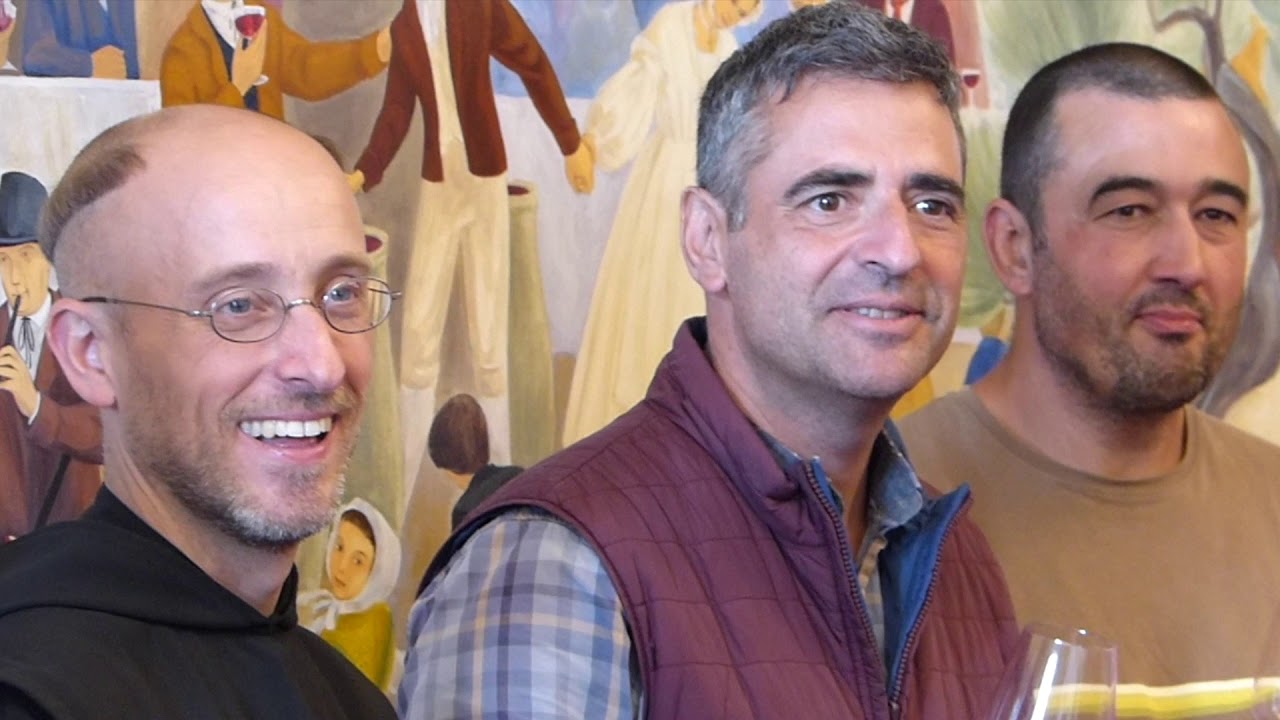
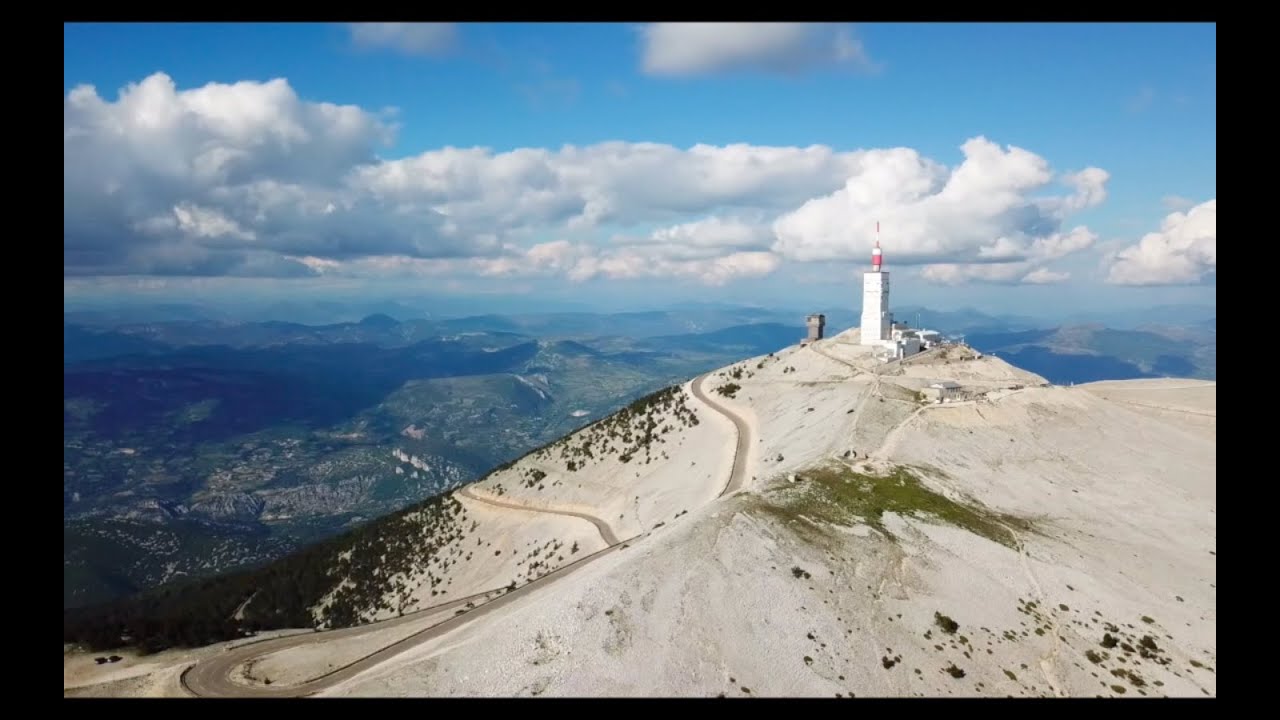
Yesterday I posted that Stage 11 of the Tour de France would focus on Mount Ventoux, indeed near to where the beautiful, traditional Monastery Ste. Madeleine is. The monks and nuns of their sister Abbey have revived an ancient vineyard, some of the terraces going back to the 5th c., which had been under the aegis of Popes at Avignon.   The route goes very close to the nuns’ Abbeye Notre-Dame de l’Annonciation.

The monks made it known that the route is taking the riders through the area where their vineyard is. Hence, they are having a sale on their wine (discount code TDF10 and TDF15).

Let’s see more about the wine!

YouTube thumbnailYouTube icon

BTW… the riders have to climb Mount Ventoux twice. The stage ends with a descent and the riders will hit speeds around 60 mph.

Posted in Just Too Cool | Tagged , ,
3 Comments

07/07/07 – 14th Anniversary of Summorum Pontificum – Fr. Z rants.

Today is the 14th Anniversary of the release of the of Benedict XVI’s Motu Proprio Summorum Pontificum.   The text was released on 7 July 2007 – 7/7/7

Just for fun, this blog’s page on that day: HERE

Lately, rumors have been mongered about a possible suppression or alteration of Pope Benedict’s legacy document.   Some think, without very solid grounding, that perhaps Francis will reimpose something along the lines  of the terms of Ecclesia Dei adflicta. Before Summorum permission from diocesan bishops was required rather than the greater subsidiarity principle of parish priests making the determination about use of the traditional Roman Rite.

I don’t think anything is going to happen, frankly.  However, if I am wrong, and there is a restriction of the traditional form, a terrible violation of charity and a moral abuse of the faithful, I suspect that such a move will be met with strong resistance.

It is good to take stock of the fruits of the Motu Proprio.

Firstly, one could argue that Summorum Pontificum was the most important thing that Benedict XVI gave to the Church.  It will have the longest and most profound consequences.

Why?   Because of the knock on effect created when priests learn to say the Traditional Mass.  It changes the priest and how he sees himself and understands his role at the altar and in the Church.  That produces a positive ripple effect through those whom he serves.

Why?  Because lay people begin to experience our sacred liturgical worship on a new, deeper level.  There’s more “sustenance”.   This has its own knock on effect in their sphere of life.

Why?  Because “WE ARE OUR RITES!”

We are facing huge changes in the Church.  We had to face them anyway, but COVID-1984 Theater accelerated the process.

A demographic sink hole is going to open up under the Church in these USA and swathes of “Catholics” will disappear.  Those left will be of a traditional leaning together with converts from Evangelical backgrounds and well-rooted charismatics who are enthusiastic about their Faith.  There will be some frictions, but these groups will find each other out of need.  The result, I predict, will be amazing.

The Traditional Latin Mass is the key to the future.

The TLM must become widespread and frequent and beautifully executed.  Only after a significant period of stability with the traditional forms will the real “mutual enrichment”, as Benedict XVI called it, or “gravitational pull”, as I have called it, will manifest its effects.  Until then, avoiding impatient tinkering, we must have an increase in celebrations of our traditional worship, which means more than just Holy Mass.

We need all the devotions and other rites as well.  More novenas.  More litanies.  More processions.  More.  More.  More.

And more is what we are getting.  I don’t think our stats about the numbers and locations of TLMs are entirely accurate.  During COVID Theater many priests learned to celebrate with the traditional Missal and they quietly implemented Masses in their parishes.    Keeping in mind that the plural of anecdote is “data”, what I’ve been hearing is that where the TLM has been added to the schedule, it rather quickly grows in numbers of congregants.  Moreover, they tend to be young and generous.

WE ARE OUR RITES.

They shape us from the outside in and the inside out.  They inform us and give us our identity.   In order to have an impact on the world, which is our Christian duty, we have to know who we are.  Hence, we need solid CULT, CODE and CREED.   Worship, Catechism, and Law.

Every good initiative we have as a Church must begin in and return to sacred liturgical worship.  This is clear because of the necessity of the virtue of Religion, which must order our lives, orient us.

BISHOPS: If you are smart, you will embrace this growing movement.  There are good reasons to do so.  First, this is the most marginalized group in the Church and they are young, enthusiastic and growing in numbers even as many are falling away.   Secondly, attention from you, bishops, could help to seal them to you and bring them onboard with your pastoral vision for your diocese.  Thirdly, if you don’t or perhaps can’t celebrate using the traditional Roman Rite, then you might not have a full view of what it is to say Mass as a bishop.  Don’t for a moment imagine that it is like saying the Novus Ordo.  That’s the stuff of another post.

Bottom line: I guess it depends on how much you love your flock.

That’s enough for this rant.

Here is something I have written in the past:

______

I call the Motu Proprio “The Emancipation Proclamation”.

Summorum Pontificum was a hugely important gift to the entire Church.  It was perhaps the most important thing that Benedict XVI did in his pontificate.

I’ve called this important Motu Proprio a key element of Benedict’s “Marshall Plan“.  Summorum Pontificum was a key element of Benedict’s vision of revitalizing the Church by jump starting, as it were, the organic development of liturgical worship, so critical to our Catholic identity.  Benedict hoped to rebuild the Church in the wake of post-Conciliar devastation and against the onslaught of the dictatorship of relativism.

No initiative we undertake in the Church can succeed without it being rooted in our sacred liturgical worship.   However, our collective sacred liturgical worship is presently in a state of cataclysmic disorder.   I believe with all my heart and mind that we, collectively, cannot in this present state fulfill properly our obligation to God according to the virtue of religion, that virtue which directs us to give to God what is His due.   Hence, according to the hierarchy of goods which we all must embrace, we are, collectively, disordered.  Nothing we can do as a Church will succeed in this state of affairs.  We have to see to our worship of God.

The use of the TLM will help us to correct our downward trajectory.  The knock-on effect that learning the TLM has on priests is remarkable.  That knock-on effect ripples beyond the sanctuary to congregations.

So much more has to be done.  An alarmed Enemy is fighting back and fighting hard.

The revitalization for the Church through a restoration of our Catholic identity will require nearly heroic courage from priests.

Priests will need to work hard to acquire tools that they were systematically cheated out of in their formation.  They will be intimidated.  They will fear that they can’t do it.  They can do it, but it will take hard work and support from others.  Graces will be given in this undertaking, because the connection of the priest and the altar is fundamental to the Church’s life.  No other thing that the priest does is more important.  Priests must also be willing to suffer attacks from libs, many of whom are not malicious but who are blinkered and nearly brainwashed.

Next, it is going to require nearly heroic courage and spirit of sacrifice from lay people who must support their priests and encourage them in projects that they will be reluctant to undertake.  Lay people must also be ready to engage in their parishes on a new level.

Remember, friends, that we are our rites.  As the Church prays, so do we believe and live.

Everything that we are and do as a Church flows from and returns to sacred liturgical worship.  We are our rites.

Summorum Pontificum is a great gift.  Pray for Benedict XVI and thank God for this gift.

Finally, a nostalgic image from back in the days of the “Sabine Farm”.

And with a little help from a one-time reader… “Vincenzo”.

Posted in Hard-Identity Catholicism, SUMMORUM PONTIFICUM | Tagged
8 Comments

7 July – Stage 11 of @LeTour, the Monks of Le Barroux, and YOU

This post brings together three great offerings from France: good wine, great chant, and the Tour de France.

I while ago I wrote about the wonderful wine made by the traditional Benedictine monks of Le Barroux in S. France.   I bought some, tried it, and it is indeed good.

They are working the papal vineyard from the time of Clement V, an Avignon Pope.  This wine was particularly appreciated by his successor, Pope John XXII, dodged being a heretic by hair’s breadth.  After WWI the land was worked again and in the 70’s the wine obtain the status of “AOC Ventoux”.  Then the monks built their monastery nearby in 1986.  They’ve teamed up with their neighbors in the production of Via Caritatis grand cru wines since 2016.

They’ve recently been allowed to export to these USA!

A link to an order form!

You can hear live online or on demand the monks chanting the liturgical hours HERE.   They sing like men.

It just so happens that tomorrow’s stage, 11, of the Tour will take the cyclists through the vineyards of the monks on their way to climb the legendary Mount Ventoux.

YouTube thumbnailYouTube icon

Remember, too, that the Benedictines of Norcia, Italy, are making great beer.  They have a beer club to which you can subscribe.

The monks reached out to me and said that for every FIVE new Club members who sign up and reference “Father Z” in the “Notes about your Order” line, I will get a free case! I share it with my friends.  Everyone likes it.  With savory sausages and cheeses it simply can’t be beat.   Order some now.

CLICK!

Posted in Just Too Cool | Tagged , , , ,
1 Comment

6 July: St. Maria Goretti, Virgin and Martyr

Today is the Feast of St. Maria Goretti, who died defending her virginity and also in the attempt to prevent her killer from committing a terrible sin.

The story of her appearance to him, Alessandro Serenelli, in prison, and his subsequent conversion and life of holiness is the very stuff of Christian hope.

I am so disappointed when I hear Catholics, in particular, dismiss a person who has had a real conversion because in his “past life” he was a sinner.  Isn’t that what we pray for?  The conversion of sinners?  Aren’t their lives to be celebrated rather than reviled?  In a way, the abuse of a truly converted soul because of past sins is a rejection on the Holy Spirit, a rejection of Christ’s saving Sacrifice, a rejection of the Father’s bountiful love.

We are not Protestants who think that our sins remain, merely covered over or by some bookkeeping ignored.  When we confess our sins and amend our lives those sins are gone, removed forever through the washing of the Blood of the Lamb.  Though our sins be as red as scarlet, they are cleansed as white as snow.  Though we have their memory, though we will always feel a need to do penance, those sins will not be held against us in our judgment.  And there is no sin so great that the infinite power and love of God cannot remove from our souls, provided we ask.

Maria, 11 years old, before she died, forgave her 20 year old killer who, when he couldn’t rape her, stabbed her 14 times with a thick chisel-like awl.   She later appeared to him and gave him 14 lilies.  He became a model prisoner and earned early release, at which time he sought out Maria’s mother, who forgave him and took him to herself as if he were her own son.  His life became a paragon of devotion and there is even talk of his cause.

His conversion involved abundant forgiveness from those whom he wrong.  It required intercession in heaven to obtain graces.   This is one reason why I regularly pray “pro inimicis… for enemies”, those who have recently done me terrible harm.  I believe they could be great paragons to emulate, and among them maybe a truly great leader in the Church.

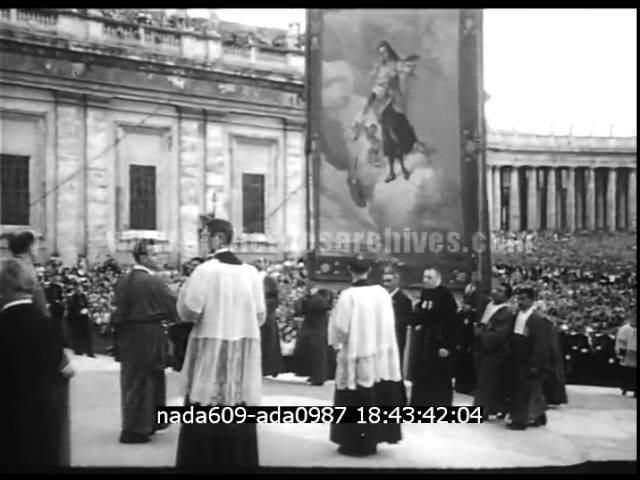
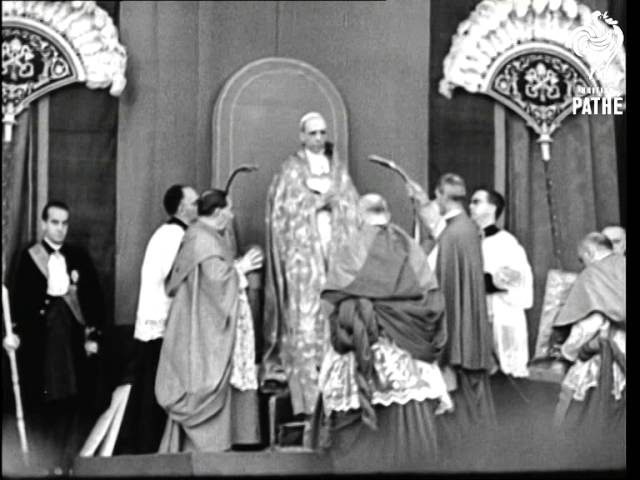
Maria Goretti’s canonization in 1950 was so thronged with people that, for the first time, the ceremony was moved out of the Basilica into the square. Her mother attended, as did her killer.

In 2015 my friend Fr. Carlos Martins, through his apostolate Treasures of the Church, brought the body of St. Maria to make a pilgrimage tour through these USA.   In his talks and videos he tells her story and about Alessandro’s amazing conversion.

This is a beautiful saint to invoke in these confused times when the ideologically driven are trying to twist the very nature of man in sheer defiance of His will.

She is a mighty intercessor and I am told by my exorcist friends that demons react violently to her very mention, not just her relics.

My 1st class relic of St. Maria Goretti.

Here is a snippet from the sermon Ven. Pius XII gave for the canonization of St Maria Goretti, whose feast is today.

Pius, the Last Roman Pope, from about 1950 onward, seeing what was going on in society called for greater purity.  What would he think about today?

The place: St. Peter’s Square, completely jammed
The date: 24 June 1950
The occasion: the canonization of St Maria Goretti

Full text HERE.

What you hear Pius XII say in the recording:

Perchè, diletti figli, siete accorsi in così sterminato numero alla sua glorificazione? Perchè, ascoltando o leggendo il racconto della sua breve vita, così somigliante a una limpida narrazione evangelica per semplicità di linee, per colore di ambiente, per la stessa fulminea violenza della morte, vi siete inteneriti fino alle lacrime? Perchè Maria Goretti ha conquistato così rapidamente i vostri cuori, fino a divenirne la prediletta, la beniamina? Vi è dunque in questo mondo, apparentemente travolto e immerso nell’edonismo, non soltanto una sparuta schiera di eletti assetati di cielo e di aria pura, ma folla, ma immense moltitudini, sulle quali il soprannaturale profumo della purezza cristiana esercita un fascino irresistibile e promettente : promettente e rassicurante.

Why, beloved children, have you rushed in such boundless numbers to her glorification?  Why, hearing or reading the account of her brief life, so much like a pristine gospel narrative for the simplicity of its line, for the painting of its setting, for the very flaming violence of the death, were you touched even to tears?  Why has Maria Goretti conquered your hearts so quickly, even to the point of becoming your favorite, your darling?   Thus, there is in this world, manifestly overwhelmed and sunk into hedonism, not only a sparse crowd of the chosen, thirsting for heaven and pure air, but a throng, but an immense multitude, upon which the supernatural fragrance of Christian purity works an irresistible and promising allure: promising and encouraging.

Some visuals to go along with the sound.

YouTube thumbnailYouTube icon

Prayer to St. Maria Goretti

Oh Saint Maria Goretti who, strengthened by God’s Grace, did not hesitate even at the age of twelve to shed your blood and sacrifice life itself to defend your virginal purity, look graciously on the unhappy human race which has strayed far from the path of eternal salvation.

Teach us all, and especially youth, with what courage and promptitude we should flee for the love of Jesus anything that could offend Him or stain our souls with sin.

Obtain for us from our Lord victory in temptation, comfort in the sorrows of life, and the grace which we earnestly beg of thee (pause, insert special intention here), and may we one day enjoy with thee the imperishable glory of Heaven. Amen.

Our Father … Hail Mary … Glory be … St. Maria Goretti, pray for us!

GO TO CONFESSION!

Posted in GO TO CONFESSION, Modern Martyrs, Saints: Stories & Symbols | Tagged ,
12 Comments

Daily Rome Shot 210

YouTube thumbnailYouTube icon

YouTube thumbnailYouTube icon

Posted in SESSIUNCULA | Tagged ,
Comments Off on Daily Rome Shot 210

Daily Rome Shot 209

Posted in SESSIUNCULA | Tagged
Comments Off on Daily Rome Shot 209