Daily Rome Shot 169

Posted in SESSIUNCULA |
Comments Off on Daily Rome Shot 169

Concerning the death of St. Joseph

“Let me die as did glorious St. Joseph, accompanied by Jesus and Mary, pronouncing those sweetest of names, which I hope to extol for all eternity.”

This is the very end of a fine piece about the death of St. Joseph today at The Catholic Thing.

The writer, Michael Pakaluk opines on the reason why St. Joseph disappears from view in the Gospels.  He supposes, as many have, that by the time the Lord began His earthly, public ministry, St. Joseph had already died.   There is some internal indirect evidence for this in the Gospels and Pakaluk goes over a few points.  No one is bound to believe this theory one way or the other.

Pakaluk also dips into the question of the age of St. Joseph.  There is a long tradition of depicting St. Joseph as an old man, which supposedly explains how the Lord could have “brothers” (perhaps from an earlier marriage).  Positing that Joseph was elderly at the time of his marriage to Mary also was thought to be a safeguard of her virginity.   I side with St. Jerome in holding that Joseph was a young man, capable, for example, of moving swiftly to get his wife and child out of danger and into exile, will that that would have meant.

If Joseph was a younger man, then, if he did die before the Lord’s public ministry began, he died young.

How does that fit with the divine plan for our salvation?

Pakaluk suggests that St. Joseph understood how his continued presence in the Lord’s life would raise problems for people accepting the Lord as God, born of the virgin in fulfillment of prophecy.  Hence, he willingly departed, as it were.    There are a couple of other ideas as well.

I heard one not too long ago which caught my intention.  It was fitting that St. Joseph not be present for the Lord’s Passion because His fatherly and manly impulses would not have allowed him to stay quiet and inactive as he watched his Son suffer.

St. Joseph, magnificent saint and intercessor, has lately been very good to me.   I recently was impelled to entrust my material cares to his guidance.  What subsequently happened leaves me in no doubt at all that Joseph did, in fact, put his hand on my challenges and guide their outcome.


Posted in Saints: Stories & Symbols, The Drill | Tagged
12 Comments

St. Gregory VII – “equivalent saint”

Today is the Feast of St. Gregory VII, Hildebrand.   He reigned from 1073-1085.  This was a serious Pope.  He had to deal with the Investiture Controversy, which was about the primacy of the Pope’s authority.  He was vilified during his pontificate for his steadfastness.  He wound up excommunicating Emperor Henry IV three times.   You might remember the story about how Gregory imposed a penance on Henry.  Henry was to walk to Canossa, where Gregory was.  Some accounts have Henry kneeling in the snow before the entrance to the castle.

Gregory didn’t have qualms about dealing with politicians who were bad Catholics.  He acted.

Gregory VII was introduced into our veneration at the altar – though not so much this year, because it is Tuesday in the Octave of Pentecost – not through canonization, as most modern saints are.  He is venerated due to “equivalent canonization”.

The mighty Benedict XIV, Lambertini, explains “equivalent” or “equipollent canonization” in his De Servorum Dei beatificatione et de Beatorum canonizatione.  Essentially, a Pope can enjoin the Church to observe the veneration of a Servant of God not yet canonized by the insertion of his feast into the liturgical calendar of the Universal Church, with a Mass and the Divine Office.   The conditions are that there must be a) a “cult” of the person, that is religious veneration, 2) attestation of virtues or martyrdom in historical records, and 3) uninterrupted fame of miracles brought about by his/her intercession.  This “equivalent canonization” isn’t done with the usual process and formula of canonization, but rather by means of a decree that the Church venerate the Servant of God with the same cult by which canonized saints are venerated.  Some examples of this sort of canonization are Norbert, Bruno, Pietro Nolasco, Raymond Nonnato, Stephen of Hungary, John Fisher and Thomas More, Venerable Bede, Albert the Great, etc.  More recently, Benedict XVI did this for St. Hildegard of Bingen.

Benedict XIV, who did this for some saints, also was the Pope – and great canonist – who codified the process for beatification and canonization which, though altered in some parts, is basically the same process still used today by the Church.

So, now you know.

Posted in Saints: Stories & Symbols | Tagged
2 Comments

Daily Rome Shot 168

Posted in SESSIUNCULA |
2 Comments

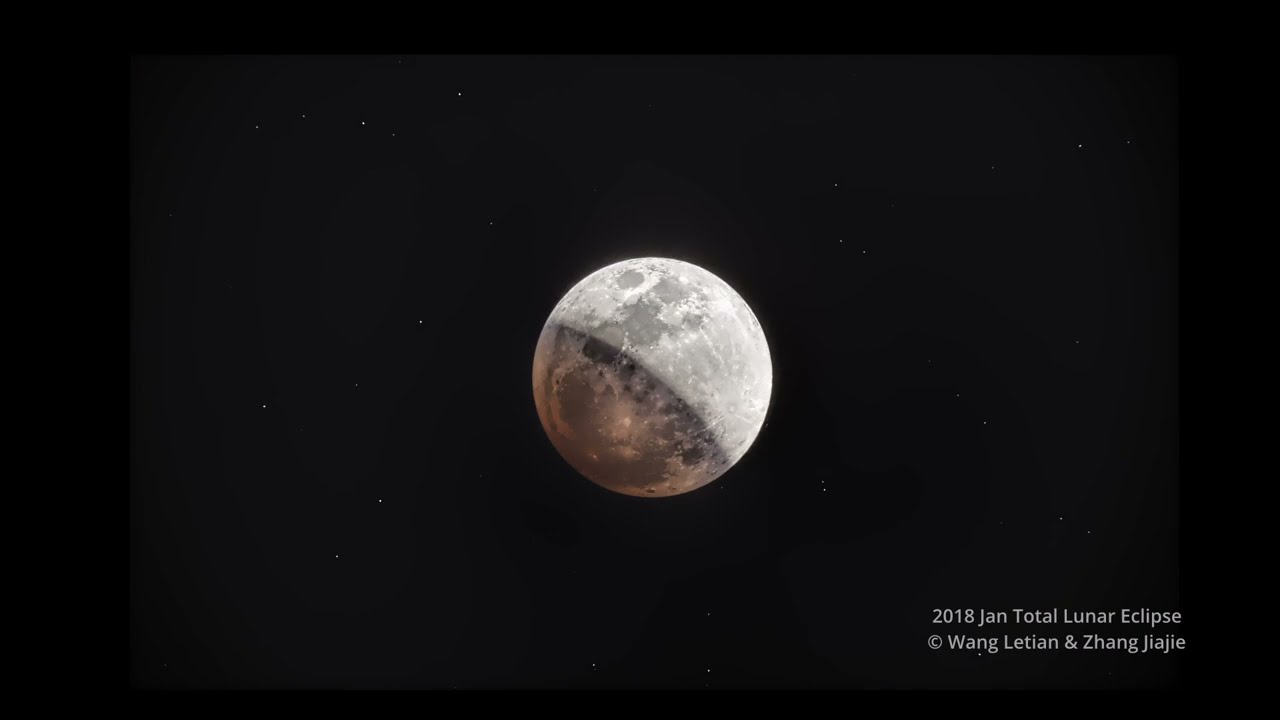
26 May 2021: Blood Supermoon Total Lunar Eclipse

Tomorrow, 26 May 2021, there will be a Blood Supermoon Total Lunar Eclipse. It will be visible from southeast Asia, across the Pacific, to the southwest Americas.
“Blood” refers to the color of the Moon during full eclipse.  Supermoon means that the Moon is closer to the Earth in its slightly elliptical orbit, and so appears larger.

At APOD, there is a quick time-lapse video of an eclipse from 2018.

YouTube thumbnailYouTube icon

Posted in Look! Up in the sky! | Tagged
4 Comments

Why men are alienated from contemporary Christianity

A friend just shared this with me.

Posted in The Coming Storm, The Drill, The future and our choices | Tagged ,
21 Comments

MILESTONE: 100,000,000 VISITS

Today, sometime in the morning, my stat counter turned over to 100,000,000 – one-hundred-million – visits, since I started keeping stats.

Thank you.

This portends a pivotal week.


Some support options!


Posted in SESSIUNCULA |
12 Comments

ASK FATHER: When the next Carrington Event wipes out the grid, what will happen in our ultramontanist Church of the 21st century? 

From a reader…

QUAERITUR:

Our sun is waking up.  One sunspot let loose half a dozen flares ranging from C-class to M-class over the weekend.  Our magnetic shields are weak and getting weaker.  Barring Divine intervention, it’s only a matter of time before the next Carrington event sends us back to a world lit only by flame.

In thinking about this recently, I wondered, given the direct role that the Holy Father plays in appointing bishops around the world, what would happen in the event of a sudden and prolonged interruption of international communication?

Given the age and general location (densely populated urban areas) of most of our bishops, I’d imagine many dioceses and eparchies would very quickly find themselves sede vacante.  Are there any canonical provisions for appointing or consecrating bishops without the input of the Holy See in our ultramontanist Church of the 21st century?

Bishops, for all their human failings, seem kind of important for the continuation of the Church in a given area.  Is anyone in the hierarchy tasked with thinking about this, or will we be caught as offguards as the rest of the world in preparing for this event?

What you are talking about with a new Carrington Event is damn scary, given our global lack of preparedness.

Useful. Readable.

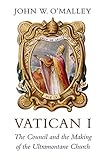
For those who are not in the know, the adjective “ultramontanist” refers to the tendency to place huge importance on the person of the Pope, to centralize all authority in Rome, and to subordinate all local Churches to the Pope and Rome to a high degree.  There was a sharp uptick in ultramontanist attitudes after the First Vatican Council and the decrees about papal primacy and papal infallibility.   The point here is that all choices of bishops must now be approved by Rome and receive a papal mandate, otherwise the consecrations would be illicit although valid.  For more on this shift take a look at John W. O’Malley’s Vatican I: The Council and the Making of the Ultramontane Church.

And again for those who are not in the know, on 2 September 1859 an extremely powerful CME, coronal mass ejection, struck the Earth.  The “Northern Lights” were seen as far south as the Caribbean.  People could read at night as if during the day.  The electricity dumped into the atmosphere was devastating.  There was not much electric tech yet but, for example, telegraph wires melted.

Imagine that today.  In one day we would be plunged into the early 19th century.   Some tech, hardened again EMPs and the like, would survive, but there would be no grid.

Think of all the stuff today that we depend on, most of which requires electricity.  Think of all the gizmos with delicate circuitry which would be fried.   Everything would stop.   The result would be death on a scale that can hardly be imagined.

Use phone camera

It would be a darn good idea for dioceses and others to have ham radio equipment that can be quickly stored in a very hardened place.   These days there would be at least some warning that a huge CME was on the way and likely to strike us.    We would have a little time to put some things away.    The ensuing chaos that would likely erupt in the world even as warning was given would be hard to deal with, but some people will be able to take steps to protect some useful equipment.

Will you have what it takes to survive?

On the other hand, perhaps there will be nuclear attacks that cause EMPs, or perhaps there will be a pandemic or other natural events which brings down the world’s economy, resulting in much the same.

What about the state of the Church?

Massive swathes of the population would be dead within a year and most of the surviving world would make Mad Max look like Downton Abbey.

What will happen to the buildings and clergy?

In those places where it is impossible to establish communication with Rome, with  whomever survives as Vicar of Christ … remember that Rome will be chaos and I imagine that a distraught populace would eventually storm the Vatican City … bishops would have to fend for themselves.   If before the CME hit, the Pope didn’t issue worldwide directives for what to do, I imagine that, in the absence of the possibility of a mandate from Rome for consecration of bishops, bishops would just have to take matters into their own hands.   They would have to consecrate some men as bishops on their own and then do their best.  Perhaps things would get sorted out later.

Let us also recall that while the Lord promised that the gates of Hell would not prevail against His Church, He didn’t promise that the Church would survive everywhere and in the form we recognize.    He didn’t make any promises about the Church surviving in these USA.   He didn’t make any promises about the borders of dioceses or the numbers of our schools and churches and chanceries.    He didn’t say anything about many of the things we have now.  We have had to do our best based on what He passed to the Apostles and what they passed in the Deposit of Faith.

It may well be that the Church will not survive a new Carrington Event… in these USA or wherever you are.

Some people have given thought to various disaster scenarios and have spun them into speculative novels.

Here are a few books you can try out, just to scare the stuffing out of you.

Lights Out by David Crawford

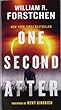
One Second After by William R. Forstchen (a sequel – One Year After)

Dark Grid by David. C. Waldron

The following isn’t a CME/EMP scenario, but the effects are in many respects the same.

Patriots by James Wesley Rawles.

It is really good to think about these things, especially if you are responsible for others.

Something for you hams out there to think about, too.

73

Posted in "How To..." - Practical Notes, ASK FATHER Question Box, Global Killer Asteroid Questions, Ham Radio | Tagged , ,
24 Comments

Liberal Ass. of U.S. Catholic Priests is now pushing for the ordination of women

I read at Church Militant that the renegade, liberal Ass. of U.S. Catholic Priests is now pushing for the ordination of women, first to the diaconate.   This is not going to happen, but the confusion sown by such support warrants correction.

From Church Militant…

AUSCP uses diaconate as stepping stone

The Lepanto Institute has been ringing the alarm bell about the Association of United States Catholic Priests (AUSCP) and its unrelenting push to undermine Catholic teaching for several years now. In the past, we’ve reported on this group for its alliance with sexually deviant organizations and agendas, its work with an international network of heretical organizations, and its call for “priestless parishes.”

The AUSCP’s scandalous work even elicited a warning from its own bishop, Bp. Daniel Thomas, who said that any association with the AUSCP “may be a source of grave concern due to the confusion and scandal they have caused.”

Now the AUSCP is taking action to push for the ordination of women to the permanent diaconate with an eye toward ordination to sacramental priesthood.

In an April newsletter, the AUSCP urged its priest members to visit a website called www.Discerningdeacons.org and participate in a “Discerning Deacons Week of Action,” saying: “Help us launch and spread the good news about the active discernment of our Church about women in diaconal ministry. Our goal is to invite 100 supporters to join us in small daily actions to get the word out.”

[…]

The Ass. is peddling a lie.

Women cannot be ordained to any of the three Holy Orders.

The Sacrament of Orders is one sacrament, not three.  There are not three distinct sacraments for the three ordinations to the tri-partite hierarchy, episcopate, presbyterate, diaconate.  As Ott explains, the Sacrament of Orders imprints a character on the recipient (De fide).  The Sacrament of Orders is in three grades, each of which has its own character, bearing with it a permanent spiritual power.  The bishop receives the power of ordination, the priest receives the power of consecration and absolution.  The deacon receives the power of serving the bishop and the priest at the Eucharistic Sacrifice and of distributing Holy Communion.

The Sacrament of Orders cannot be conferred on women.  Women cannot be ordained to the episcopate.  They cannot be ordained to the priesthood.   The Church teaches infallibly that women cannot be ordained to the priesthood. (Ordinatio sacerdotalis HERE and the CDF’s response to a dubium HERE) The impossibility of ordaining women belongs to the “substance of the sacrament” of Orders (HERE).  If they cannot be ordained to any one of the orders, they cannot be ordained to any of the orders. They cannot be ordained to the priesthood, hence they cannot be ordained to the diaconate.  This is not merely a matter of discipline, it is a matter of irrevocable doctrine.

BTW… Sunday 22 May was the 27th anniversary of Ordinatio sacerdotalis.


Posted in Deaconettes | Tagged , , ,
7 Comments

A Pentecost Monday lesson

It was a terrible mistake to eliminate the Octave of Pentecost in the Novus Ordo.

It could be restored.

REPOSTED:

Years ago I told this Pentecost Monday tale and it has made the rounds.  It has made the rounds everywhere, but I am the origin of the anecdote, which I published years ago in the pages of The Wanderer and also on the now defunct Catholic Online Forum in its Compuserve days.  (Remember Compuserve? I’ve been at this since 1992.) Lots of people have picked it up.

It bears repetition.

This stands as a lesson for what happens when we lose sight of continuity.

Take this for what it may be worth.

Some years ago … gosh, it was decades now… I was told this story by a retired Papal Ceremoniere (Master of Ceremonies) who, according to him, was present at the event about to be recounted.

You probably know that in the traditional Roman liturgical calendar the mighty feast of Pentecost had its own Octave.  Pentecost was/is a grand affair indeed, liturgically speaking.  It has a proper Communicantes and Hanc igitur, an Octave, a Sequence, etc. In some places in the world such as Germany and Austria Pentecost Monday, Whit Monday as the English call it, was a reason to have a civil holiday, as well as a religious observance.

The Novus Ordo went into force with Advent in 1969.

The Monday after Pentecost in 1970, His Holiness Pope Paul VI went to the chapel for Holy Mass. Instead of the red vestments, for the Octave everyone knows follows Pentecost, there were laid out for him vestments of green.

Paul queried the MC assigned for that day, “What on earth are these for?  This is the Octave of Pentecost!  Where are the red vestments?”

Santità,” quoth the MC, “this is now Tempus ‘per annum’.  It is green, now. The Octave of Pentecost was abolished.”

“Green? That cannot be!”, said the Pope, “Who did that?”

“Holiness, you did.”

And Paul VI wept.

….

[And now it’s another thing: HERE]

For more on that era check these PODCAzTs:

093 09-11-16 40 years ago… Paul VI on the eve of the Novus Ordo
094 09-11-20 40 years ago… Paul VI on the eve of the Novus Ordo (Part II)
095 09-11-24 40 years ago… Paul VI on the eve of the Novus Ordo (Part III)

Posted in Linking Back, Liturgy Science Theatre 3000, Save The Liturgy - Save The World | Tagged
6 Comments