WDTPRS: Palm Sunday – an example so perfect that it transforms us

Palm Sunday marks the beginning of Holy Week.  Holy week includes the Sacred Triduum.

The principal ceremonies of the Palm Sunday Mass include the blessing of palm branches (or olive branches in some parts of the world, such as Rome) and a procession around and into the church.  In the Novus Ordo Missale Romanum an interesting rubric about the procession harkens to ancient times:

“At a suitable hour the “collect” is made (fit collecta) in a lesser church or in another appropriate place outside the church toward which the procession marches.”

Here is our word “collect” used to describe a gathering of people.

Also in the rubrics there is something helpful for our understanding of “active participation”:

“Then as is customary the priest greets the people; and then there is given a brief admonition, by which the faithful are invited to participate actively and consciously (actuose et conscie participandam) in this day’s celebration.”

Those words actuose et conscie are very important.  The Second Vatican Council, when using the term actuosa participatio or “active participation”, meant mainly interior participation, the engaging of the mind, heart and will.  The Council Fathers did not mean primarily exterior participation.  Exterior participation should be the natural result of interior participation: we seek to express outwardly what we are experiencing within.  While the two influence each other, there is a logical priority to interior participation, which is by far the more important.  You can be doing things, even reciting or singing, and have your mind be a thousand miles away.  But focused attention, and careful listening, active reception of what is going on is far more challenging.  It is precisely that active receptivity that produces authentic outward informed participation, rather than just going through the motions.

I digress.

At the end of the procession, when everyone is gathered in the church, the priest says the…

COLLECT (2002MR):
Omnipotens sempiterne Deus,
qui humano generi, ad imitandum humilitatis exemplum,
Salvatorem nostrum carnem sumere
et crucem subire fecisti,
concede propitius,
ut et patientiae ipsius habere documenta
et resurrectionis consortia mereamur.

The vocabulary of today’s Collect is incredibly complex.  We can only scratch at a fraction of what is there.

Our prayer was in older editions of the Missale Romanum and, before them, in the Gelasian Sacramentary.  In the Gelasian there is an extra helpful et: Salvatorem nostrum et carnem sumere, et crucem subire.  Wonderfully alliterative!  The editor of the Gelasian excludes a comma, which makes sense to me: qui humano generi_ad imitandum….

There may be a touch of St. Augustine’s (+430) influence in the prayer.  In Augustine humilitatis appears with exemplum on close conjunction with documentum (ep. 194.3) and with documentum and patientiae in proximity to exemplum (en. ps. 29 en. 2.7).  In the context of the Passion Augustine says: “Therefore, the Lord Himself, judge of the living and the dead, stands before a human judge (Pilate), offering us a decisive lesson of humility and patience (humilitatis et patientiae documentum), not defeated, but giving the soldier an example of how one wages war (pugnandi exemplum): …”

There are two words for “example” here: exemplum…documenta. These words appear together in numerous classical and patristic texts. Our startlingly useful Lewis & Short Dictionary informs us that our old friend exemplum means, “a sample for imitation, instruction, proof, a pattern, model, original, example….”  Exemplum is a term in ancient rhetoric, an inseparable part of the warp and weft of the development of Christian doctrine during the first millennium.

For Fathers of the Church, all well-trained in rhetoric (how we need those skills today), exemplum identified a range of things including man as God’s image, Christ as a Teacher, and the content of prophecy.   In Greek and Roman rhetoric and philosophy, an exemplum could have auctoritas, “authority”, the persuasive force of an argument.  When we hear today’s prayer with ancient ears, exemplum is not merely an “example” to be followed: it indicates a past event with such authoritative force that it transforms him who imitates it.

Today we hear humilitatis exemplum, the authoritative model of humility who is Christ – Christ in action, or rather Christ in Passion, undergoing His sufferings for our sake.  This becomes the foundational and authoritative pattern of the Christian experience: self-emptying in the Incarnation and Passion leading to resurrection.   Exemplum is augmented later in the prayer by documentaDocumentum is also a “pattern for imitation” like exemplum but also in some contexts having the meaning of “a proof”, that is, a concrete demonstration that what is asserted is true: evidence.   In this case it is a paradigm after which we are to pattern and shape our own lives.  But this pattern or model itself actually has power to shape us.

Christ transforms us, the baptized who are made in his image and likeness, after his perfect exemplum, and who imitate His exempla and documenta, His words and deeds.

How important are the mighty transforming signs of our sacred liturgical worship!  They inform and transform us.  WE ARE OUR RITES!

Consortium (from con-sors… having the same lot/fate/destiny with something or someone) classically is a “community of goods” and “fellowship, participation, society.”

Habeo, habere has a vast entry in the L&S. The common meaning is “have”, but it also indicates concepts like “hold, account, esteem, consider, regard” as well as “have as a habit, peculiarity, or characteristic.”  Habere is doing double-duty with two objects, documenta and consortia. This is why I use both “grasp” for the first application of habere and “have” for the second.  The meanings of the two different objects draw our two different senses of habere.

Patientia is from patior, “to bear, support, undergo, suffer, endure”, and it carries all its connotations as well as the meaning “patience”.  This is where the word “Passion” comes from.  Today is Second Passion Sunday.  We could say here, “examples of His long-suffering” or “exemplary patterns of His patient forbearance.”  Finally, note that nostrum goes with Salvatorem and not with carnem: caro, carnis is feminine and the form would have to have been nostram carnem.

We have to stop and get into the…

SLAVISHLY LITERAL RENDERING:
Almighty eternal God,
who, for the human race,
made our Savior both assume flesh and undergo the Cross
for an example of humility to be imitated,
graciously grant,
that we may be worthy to grasp both the lessons of His forbearance
and also shares in the resurrection.

OBSOLETE ICEL:
Almighty, ever-living God,
you have given the human race Jesus Christ our Savior,
as a model of humility.
He fulfilled your will
by becoming man and giving his life on the cross.
Help us to bear witness to you
by following his example of suffering
and make us worthy to share in his resurrection
.

CURRENT ICEL (2011):
Almighty ever-living God,
who as an example of humility for the human race to follow
caused our Savior to take flesh and submit to the Cross,
graciously grant that we may heed his lesson of patient suffering
and so merit a share in his Resurrection
.

More can be said about that phrase patientiae ipsiusIpse, a demonstrative pronoun, is emphatic and means “himself, herself, itself”.  Could we personify patientia to mean, “grasp the lessons of Patience itself” or even “of Patience Himself”?   That would be poetically sublime.

In the fullness of time the Second Person of the Trinity, God the Son, the eternal Word through whom all things visible and invisible were made, by the will of the Father emptied Himself of His glory and took our human nature up into an indestructible bond with His own divinity.  He came to us sinners to save us from our sins and teach us who we are (cf. Gaudium et spes 22).  This saving mission began with self-emptying (in Greek kenosis).

Fathom for a moment the humility of the Savior, emptying Himself of His divine splendor, submitting Himself to His humble and hidden life before His public ministry.   When the time of His years and His mission was complete He gave Himself over again, emptying Himself yet again even to giving up His very life.   Every moment of Jesus earthly life, every word and deed, are conditioned by humility.   This is our perfect example to follow, an example so perfect that it has the power to transform us.

As Holy Week begins and the Sacred Triduum is observed, come to the sacramental observance of the sacred and saving mysteries with humble self-emptying.  Make room for Christ.

Posted in Benedict XVI, Hard-Identity Catholicism, Liturgy Science Theatre 3000, Save The Liturgy - Save The World, SESSIUNCULA, SUMMORUM PONTIFICUM, The Drill, The future and our choices, Wherein Fr. Z Rants | Tagged , , ,
2 Comments

Daily Rome Shot 114

Posted in SESSIUNCULA | Tagged
1 Comment

#ASonnetADay – SONNET 128. “How oft, when thou, my music, music play’st…”

Posted in Poetry, Sonnet A Day | Tagged
1 Comment

Officer slain in Boulder shooting was a TLM parishioner. Wherein Fr. Z rants about death and YOU. UPDATED

UPDATE: 26 March

Time has been changed to noon MDT. Still at the Denver Cathedral with
an FSSP celebrant.

the link for livestream is
https://livestream.com/accounts/3170708/events/9593864


Originally Published on: Mar 24, 2021

Recently there was a terrible mass shooting in

Boulder, CO perpetrated by a adherent of the Religion of Peace.

One of the victims was a Boulder Police Officer, Eric Talley, 11 year vet, 51 years old, husband, father of 7.  He responded to the incident and he was killed.

Officer Talley and family belong to Our Lady of Mount Carmel in Littleton, staffed by priests of the FSSP, including my friend Fr. Jackson, author of the fine book Nothing Superfluous.  The family attended the Traditional Latin Mass there.

I am told that there will be a Solemn Requiem Mass for Talley at the Denver Catholic on Monday at 1430 (Mountain).

I wonder if I didn’t meet Talley when I was at their parish for Forty Hours a few years ago.  I met a lot of great people.

This incident reminds us all that we do not know the time or place of our death.  It could be far off in terms of swiftly flying earthly years.  It could be in your very next breath and before you read another word of this post.

One of the most poignant and important petitions in the Litany of Saints is our plea to God:

A subitanea et improvisa morte, libera nos, Domine.

From a sudden and unprovided death, save us, O Lord.

Sudden death is one thing.   It can be a grace, as opposed to a long, drawn out agony.   On the other hand, for some people the long agony is a grace, for it gives them the chance to repent and offer their suffering in reparation for their sins.

So, sudden or foreseen or long or quick… that’s one thing.

Unprovided is another. 

An “unprovided” death is a death without access to the last sacraments, especially absolution from a priest.

That’s a scary thought…. especially if you haven’t been to confession for a  long time.

When did you last go to confession?

Dear readers, one of the main reason I put myself into this blog, my force multiplier, is because every single one of you is going to die.

I want every one of you to enjoy the happiness of heaven.

Some of you, however, haven’t darkened the door of a confessional for a long time.

I tremble for you.

I beg you.

GO TO CONFESSION.

It might be your last.

This is one of the reasons why I pray for my enemies and ask God to help me forgive them.   Even today, I’ve been told that I was attacked again online by a troubled person who often spreads lies about me in a public forum.

I take seriously what the Lord says.  If we do not forgive, we will not be forgiven.  If you have problems with someone, do your best to work them out while you can.

This is also why I often use the prayers during Holy Mass “for a good death”.

Preparing and praying for a good death – for ourselves and for our neighbors – is one of the most important things we can do AS CATHOLICS, as followers of Christ.

Posted in Four Last Things, GO TO CONFESSION, Hard-Identity Catholicism | Tagged , , ,
24 Comments

ASK FATHER: 1st Friday Communion and pre-55 Good (1st) Friday (no Communion): What to do?

I had this question come in….

QUAERITUR:

I’m curious to know what happens to First Friday and First Saturday devotions when the Triduum falls on those days. I’ve searched the Internet a bit and cannot readily locate guidance. Is it customary for those devotions to be transferred later in the month, or would clients of those devotions simply skip April for purposes of counting the consecutive monthly attendance expectations for those devotions?

Also,

Before the 1955 changes to Holy Week, on Good Friday there was no Communion for the faithful.   When Good Friday was also a 1st Friday, what were people supposed to do who were trying to receive on nine consecutive 1st Fridays?

This would be an issue now for Catholics who are attending the pre-55 Triduum.

That’s an interesting question.

First, I will point out that it is unlikely that anyone will be in a position wherein they have only the pre-55 Good Friday and there is no where else to go.  They can receive at non-pre-55 Good Friday or Novus Ordo (yes, yes… I know … but they can).

I suppose they could ask the priest for the pre-55 service to give them Communion outside of the service.  But that seems to me really to violate the whole spirit of the pre-55 thing.

When St. Margaret received the 1st Friday promises, there was no Communion on Good Friday.  Everyone knew that, including OUR LORD who gave the promises.  Christ knew that Communion was not distributed on Good Friday, and He knew about 1st Fridays, and He knew that Good Friday could be a 1st Friday.

The Lord said, “nine consecutive months except maybe you can skip one”.

No. Wait.  That’s not what he said.  He said, “I promise you in the excessive mercy of My Heart that My all-powerful love will grant all to those who communicate on the First Friday in nine consecutive months the grace of final penitence…”.

I have to conclude that the Lord figured that people will take the devotion seriously and plan it out to make sure that they can receive on a 1st Friday for nine consecutive months.  People could figure out when Spring was coming.  It comes around every year, and so does the Triduum.  The dates of the movable feasts were announced in churches each year.  One could ask even if there were not as many calendars in centuries past as there are now.

These days, it seems to me that anyone making this devotion could mark a calendar and, along the way, discover, “Hey!  This year Good Friday is a 1st Friday.  If I want to receive, and if I go to pre-55 Good Friday, that’s going to be a problem.”

At that point you a) make plans to go elsewhere for Communion or b) you start your 1st Friday devotion the following month.

Sorry.  I guess those of you who want to participate at pre-55 Good Friday on this 1st Friday, and you want Communion too, you will have to attend two services, pre-55 and one which also provides for Communion for the faithful.

That’s not going to kill you, by the way.

Posted in "How To..." - Practical Notes, ASK FATHER Question Box, Hard-Identity Catholicism, Liturgy Science Theatre 3000 | Tagged , ,
5 Comments

Friday after 1st Passion Sunday: Our Lady of the Seven Sorrows and “Our Lady of Sorrows Project”

Today, Friday after 1st Passion Sunday, and a 1st Friday this year, we commemorate Our Lady of the Seven Sorrows.

Today, priests can say the Mass of Our Lady of Sorrows, with counter-intuitive white vestments, a Gloria and other aspects usually abandoned during Passiontide.   It is a striking liturgical moment.  I will say this Mass in today’s live stream at Noon, CDT.

Some time ago, I wrote a series of reflections on the Seven Sorrows of the Blessed Virgin.  I invite you to have a look.   Our Lady of Sorrows Project

Here are links to the individual posts

1st Sorrow – The Prophecy of Simeon
2nd Sorrow – The Flight into Egypt
3rd Sorrow – The loss of the Child Jesus in Jerusalem
4th Sorrow – Mary meets Jesus on the way to Calvary
5th Sorrow – The Crucifixion of Jesus
6th Sorrow – The Piercing of the Side of Jesus, and His Deposition
7th Sorrow – The Burial of Jesus

Today, Friday in Passiontide, the Roman Station is at Santo Stefano Rotondo.

This image of Our Lady of Sorrows is from that very basilica.

Posted in SESSIUNCULA | Tagged , ,
Comments Off on Friday after 1st Passion Sunday: Our Lady of the Seven Sorrows and “Our Lady of Sorrows Project”

Daily Rome Shot 113

Posted in SESSIUNCULA | Tagged
5 Comments

25 March is Dantedì… Dante Day.

I would be remiss were I not to mention that Italy – and the whole world – is celebrating a Year of Dante.   2021 is the 700th anniversary of the death of arguably the greatest of all poets.  The English language publication Wanted In Rome has a pretty good round up article HERE.

There are some great events in Italy to mark the centennial.

25 March is Dantedì… Dante Day.  A national holiday.

It nigh on impossible to convey the importance of Dante’s work, which of course the tri-partite La Divina Commedia.

What I can do here, and you who know not Dante or know little, will thank me, is point you to a good translation and some fun music.

For good translations, try the late, great Inkling Dorothy Sayers’ translation.  She died while working on the Paradiso, but her assistant did an admirable job in completing the Part 1, Inferno, US HERE – UK HERE).

Another good translation is by Anthony Esolen. Part 1, Inferno- US HERE – UK HERE).
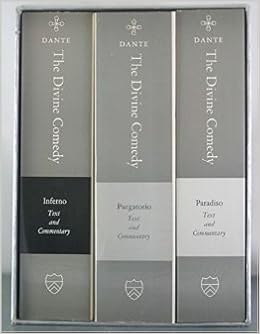
Do NOT make the mistake of reading only the Inferno.  The really good stuff comes later in the Purgatorio and Paradiso.

Be smart in your approach to Dante.  Read straight through a canto to get the line of thought and story and then go back over it looking at the notes in your edition.  Sayers has good notes.  Esolen has great notes.  Dante was, I think, the last guy who knew everything.  Hence, every Canto is dense with references.  You will need notes to help with the history, philosophy, cosmology, poetic theory, politics, theology, etc.  Really.

You. Will. Need. Help.  Take it.

There are many online sites.  For example HERE.

For some good music to play while reading your Dante.

The Dante Troubadours

Lo Mio Servente Core: Music at the Time of Dante

Dante and the Troubadours

There are volumes of commentaries by Charles S. Singleton. Not cheap but good for advanced work.

CLICK ME

Posted in Just Too Cool, Our Catholic Identity | Tagged , ,
14 Comments

SONNET 127. “In the old age black was not counted fair…” After that break… let’s get to the end!

Posted in Poetry, Sonnet A Day | Tagged ,
4 Comments

Daily Rome Shot 112

Photo by Bree Dail.


Posted in SESSIUNCULA | Tagged
4 Comments