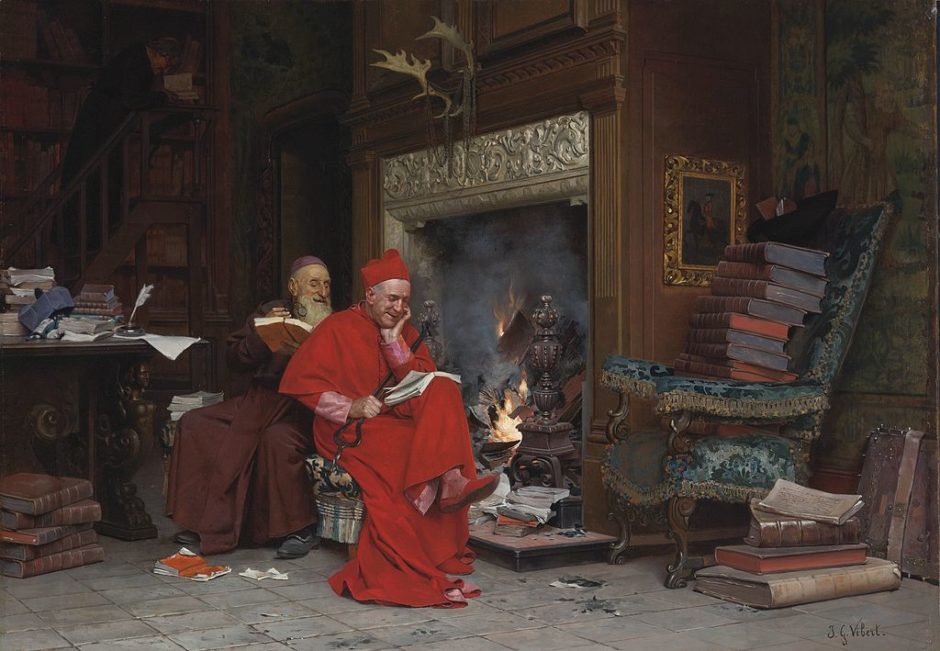
WDTPRS – 3rd Sunday of Lent (2002MR): Two wings of prayer

Lenten-Discipline

Almsgiving, Fasting, Abstinence, Mortification

WARNING BELOW…

Roman Station: St. Lawrence outside the walls

An examination of our conscience is a humbling experience.  When we look to see who really are inside, we can have different reactions.  Sometimes we find things which frighten and discourage us.  If we are weak in our habits and our faith, that inveterate enemy of ours souls, the Devil who is “father of lies” will rub us raw with our ugliness tempting us to lose hope about the possibility of living a moral life or, in extreme cases, about our salvation.

On a less dramatic plane, falling down in our Lenten resolve on one day can cause a collapse of our will so that we will “flag” and give up.

This is why the Lenten discipline is so important.   By it we learn to govern our appetites, examine our consciences, do penance, and learn the habits which are virtues.  On the other hand, a recognition of sins and failures will “incline” us to call with humble confidence upon the mercy of God who paid the price for our salvation.

Today’s Collect taken from the ancient Gelasian Sacramentary for Saturday of the 4th week of Lent, has many Lenten elements and only a close look at the words can unlock what it really says.

COLLECT
– LATIN TEXT (2002MR):

Deus, omnium misericordiarum et totius bonitatis auctor,
qui peccatorum remedia
in ieiuniis, orationibus et eleemosynis demonstrasti,
hanc humilitatis nostrae confessionem propitius intuere,
ut, qui inclinamur conscientia nostra,
tua semper misericordia sublevemur.

ICEL (1973 translation of the 1970MR):
Father,
you have taught us to overcome our sins
by prayer, fasting and works of mercy.
When we are discouraged by our weakness,
give us confidence in your love.

Does this properly translate the Latin?   Bets, anyone?

Misericordia means generally “tender-heartedness, pity, compassion, mercy”.  In the plural, as we find it today, it refers to works of mercyWe find both a plural and a singular in today’s prayer and we must make a distinction between them.  Our bulky and bountiful Lewis & Short Dictionary explains that bonitas is the “good quality of a thing” and also various benevolent and virtuous behaviors.  When referring to a parent, bonitas means “parental love, tenderness.”  Demonstro indicates, “to point out” as with the finger, “indicate, designate, show.”  Demonstrasti is a “syncopated” form for demonstravisti, which helps the prayer to flow.  The L&S states that inclino means, “to cause to lean, bend, incline, turn.”  In a more neutral sense it signifies, “to bend, turn, incline, decline, sink.”  By extension it means, “to decline, as in a fever, or sink down in troubles”, but it can also mean, more rarely, “to change, alter from its former condition”.  We are all at sea with this word, so we turn to Souter’s A Glossary of Later Latin and find “to humble”.  This is probably the direction we must go.  Sublevo literally means to lift up from beneath, to raise up, hold up, support.”   Thus it comes to mean also, to sustain, support, assist, encourage, console” and also, “to lighten, qualify, alleviate, mitigate, lessen an evil, to assuage.”

This word is in the beautiful 10th century Mozarabic Lenten hymn Attende, Domine often sung in parishes around the world even today: “Give heed, O Lord, and be merciful, for we have sinned against you. / To you, O high King, Redeemer of all, / we raise up (sublevamur) our eyes weeping:/ hear, O Christ, the prayers of those bent down begging.”

Confessio is from confiteor (con-fateor – the first word in our expression of sorrow for sins at the beginning of Mass).  This is a complicated word.  First, confessio is obviously “a confession or acknowledgment”.  The Latin Vulgate (Heb 3:1) and St. Gregory the Great (+604 – Ep. 7,5) use it for “a creed, avowal of belief” in the sense of an acknowledgment of Christ.  The most famous use of confessio, however, must be that of St. Augustine of Hippo (+430), whose stupendous autobiographical prayer is now known as Confessiones.  The excellent Augustinus Lexicon now being developed says confessio has three major meanings: profession of faith in God, praise of God, and admission to God of sins.  We can say “testify” or “give witness to.”  Augustine uses the word testimonium twice in the second sentence of his Confessions.  This is not “confession” in the sense of admission of criminal guilt, nor is it merely to a Christian confession of sins.  Rather, it is a way of giving witness to the Christian character we put on in baptism, a witness by how we live to what the Lord has done within us.  Sometimes that response requires humble admission of sins, sometimes it requires humbly giving glory to God.  Sometimes it demands patient fidelity and the practice virtue in the tedium of everyday life.  Sometimes it requires more spectacular deeds, even martyrdom.  It always demands humility.  The best confession we make is in our words and deeds, according to our state in life, in the midst of the circumstances we face each day no matter what they are.

Our Collect reminds us of the remedies for sin identified by Jesus Himself: prayer, fasting (cf. Matthew 9:14), and almsgiving or works of mercy (cf. Matthew 6:1; Luke 12:33).

When Jesus cures the epileptic demoniac, He says that that sort of demon is driven out only by both prayer and fasting (Mark 9:27 Vulgate).  In Acts 10 an angel tells the centurion Cornelius that his prayers and alms have been seen favorably by God (literally, they ascended as a memorial before God in the manner of a sacrifice).

St. Augustine said: “Do you wish your prayer to fly toward God? Make for it two wings: fasting and almsgiving” (En. ps. 42, 8).

In a Lenten Angelus address on 16 February 1997, St. John Paul II said:

The Church points out to us a path (of moving from a superficial life to deep interiority, from selfishness to love, of striving to live according to the model of Christ himself, that) … can be summarized in three words: prayer, fasting, almsgiving.  Prayer can have many expressions, personal and communal. But we must above all live its essence, listening to God who speaks to us, conversing with us as children in a “face to face” dialogue filled with trust and love.  In addition to being an external practice, fasting, which consists in the moderation of food and life-style, is a sincere effort to remove from our hearts all that is the result of sin and inclines us to evil.  Almsgiving, far from being reduced to an occasional offering of money, means assuming an attitude of sharing and acceptance. We only need to “open our eyes” to see beside us so many brothers and sisters who are suffering materially and spiritually. Thus Lent is a forceful invitation to solidarity.

This brings us to conscientiaConscientia signifies in the first place, “a knowing of a thing together with another person, joint knowledge, consciousness”.  Note the unity, or solidarity, of knowledge in the prefix con-.  It also means, “conscientiousness” in the sense of knowledge or feelings about a thing.  It also has a moral meaning also as, “a consciousness of right or wrong, the moral sense”.

LITERAL TRANSLATION:
O God, author of all acts of mercy and all goodness,
who in fasts, prayers, and acts of almsgiving indicated the remedies of sins,
look propitiously on this testimony of our humility,
so that we who are being humbled in our conscience
may always be consoled by your mercy.

Remember, words have different meanings, which I why I provide raw vocabulary.

I must point out something that could change this literal translation.

St. Augustine in one of his sermons speaks of the mercy of God.  Using the example of Jesus’ mercy to the woman caught in adultery (John 8), Augustine says – as if Jesus were talking – “Those others were restrained by conscience (conscientia) from punishing, mercy moves (inclinat misericordia) me to help you (ad subveniendum)” (s. 13.5 – 27 May 418 on the feast of St. Cyprian of Carthage).   Even though in the Collect inclino is paired with conscientia rather than misericordia as it is in the sermon, the vocabulary suggests that this sermon may have been a partial source for this ancient Collect.  This could provide a clue as to how to translate it.   So, we can say “we who are being moved by our conscience” or even “we who are being brought low, bent down, humbled by our conscience” or “we who are flagging (as if under a weight) in our conscience”.

What to do?  When translating we have to make a choice.  This time around I chose “being humbled”.

As a people united before Christ’s altar of sacrifice, humbled and cast down low, we raise our eyes upwards to the Father who tenderly sees our efforts.   But we can become weary in the midst of our Lenten discipline and the enemy is tirelessly working for our defeat.

Do not forget the military imagery of exercises and discipline we had in previous weeks.

In today’s Collect we beg Him to pick us back up, dust us off, and help us stay upright for the rest of the hard Lenten march (sublevemur).

In am reminded of the moment in the film The Passion of the Christ when Christ falls under His horrible burden of the Cross.  His Mother, our Mother, recalling how once He had fallen as a child and she ran to Him to console Him in His unexpected pain, runs to Him to give Him what support she might in His entirely expected suffering.  She ran to Him and then stood with Him.

Mary hurries also to each of us and stays by our side.

We are not in our Lenten discipline alone.  When we are flagging in our efforts, when we are humbled in our failures, our Blessed Mother is our help, together with all the saints and angels of whom she is the glorious Queen.

We too can be help to others, particularly by not causing for them an occasion of temptation to break their resolve.

WARNING: I seem not to be able to watch this without choking up.  I’ll bet you will too.  If you are a “tough guy”, I’d shut the door.

YouTube thumbnailYouTube icon

Posted in LENT, Linking Back, Liturgy Science Theatre 3000, Patristiblogging, WDTPRS | Tagged , ,
4 Comments

Daily Rome Shot 94

Photo by Bree Dail.

Posted in SESSIUNCULA | Tagged
3 Comments

Antonio Socci on the recent Corriere piece with and about Benedict XVI

Marco Tosatti has posted on his site an English translation of Antonio Socci’s latest, which was in Libero.  It’s all about the recent Benedict XVI “interview” posted by Corriere della Sera.

Tosatti points out that Corriere turned non-news into the headline and buried the real lead.   The non-news, old-news is Benedict XVI saying that “there is one Pope”.   The real news is Benedict’s apparent attitude about Biden: it differs from that of Francis. That’s news.

What would have been news would have been a statement from Benedict that “There is only one Pope, and Francis is he, not I, and I have nothing to do with the papacy now.”   But I believe Benedict has never said anything like that.  That would have been news.  Instead, Corriere emphasized what Benedict has been saying, with ambiguity, “there is only one Pope”.

Socci, in the English posted by Tosatti, points out what journalists could have asked and should get answers for:

-Why do you wear white and why are you called “Holy Father Benedict XVI” if there is only one pope?

-Why are you officially called “pope emeritus” if there is no juridical or theological definition of such a title?

-Why do you still give the Apostolic Blessing (or the Papal Blessing), which is a prerogative of the pope (to which a plenary indulgence is attached)?

After all, some people have noted that in some of his recent books are signed “Benedict PP XVI,” with the initials “PP” (Pastor Pastorum), which is the title reserved for the pope. Furthermore, in public ceremonies in which the pope emeritus has participated, some cardinals have bowed down to him and kissed his ring, which they should have done only with the pope.

Vatican journalist Saverio Gaeta has noted that “on Pope Bergoglio’s coat of arms the pallium is missing, while it is present on the coat of arms of Pope Ratzinger: an element that in Vatican symbology is decidedly not negligible.

Individually considered, meh. Taken together, hmm.

Socci then goes into the question of whether or not acceptance of the Petrine Ministry at the election is “irrevocable”.  After all, in his last audience, Benedict said that it was “forever”, which suggests that Benedict thinks that the Petrine Ministry is like to the ontological change that comes with ordination.   He goes into the curious speech given by Archbp. Gänswein in 2016 about Benedict’s intention to enlarge the Petrine Ministry, so there can be an active and a contemplative member (of the same Petrine office).

Theologians will have to hash through that last one, or we will have to wait for something new from the pen of …who?… I guess Benedict. He either had something in mind and reasons for it, or he didn’t. It would be helpful to have greater clarity so that we can know one way or the other.

The truth will out. And because of his concerns a constitutive element of the Church, the Petrine ministry, and the working of the Holy Spirit due to the many invocations at the time of a conclave, we should ask God the Holy Spirit to illuminate the questions.

It strikes me as unlikely that a Pope on his own can expand the Petrine Ministry, established by Christ.  If this is a legitimate development, perceived by the Church over time and consistent with Tradition, the sensus fidelium fidei, etc., well…. maybe.  But, if this is an error, it would be a substantial error.  And if that substantial error was the basis of Benedict’s motive to resign the active Petrine Ministry without resigning the contemplative, then there would be grounds to raise a question or two about the validity of the resignation.  In most cases, figures in the Church cannot resign validly if they are in substantial error about why they are resigning.  Does that same standard apply to the Successor of Peter?   I don’t know.  The Pope is the Legislator and Interpreter, not I.

Just as a mind exercise, we might also remember that another idea has been floated about the resignation of Benedict, whereby he wanted to resign as Bishop of Rome (Successor of Peter), but not as Vicar of Christ (Successor of Peter).  Similar to the active and contemplative scenario. Possible?  Some say yes. Some say no.  Would a Pope be in substantial error in such an attempt?  Maybe. Given that Peter became Christ’s Vicar at Caesarea Philippi, not at Rome, and that Peter was Bishop at Antioch, before Rome, it seems that being Vicar of Christ was not, in its origin, dependent on being Bishop of Rome. Are the two offices now so tied together that the one is impossible without the other? Who says? This was debated at the time of Vatican I.  Auctores scinduntur.

In any event, you might look at Socci’s piece, which is as much about the journlistic fumble as it was about the larger questions of the papacy.

Posted in Benedict XVI, Francis | Tagged , , , , ,
27 Comments

Daily Rome Shot 93

Photo by Bree Dail.

Posted in SESSIUNCULA | Tagged
8 Comments

HUGE NEWS! IDENTIFIED: Remains of Servant of God, Army Chaplain Fr. Emil Kapaun (MofH in Korean War!)

This is terrific news!

Fr. Kapaun was taken POW in Korea in the Battle of Unsan in 1950.  Their camp was overun by 20000 Chinese.  Kapaun rescued nearly 40 men while under fire.   He died in a N Korean camp and was buried in a mass grave.

Miracles for his cause, now open, have been claimed.

AWARD OF THE BRONZE STAR MEDAL – By direction of the President under the provisions of Executive Order 9419, and pursuant to the authority contained in AR-600-45, the Bronze Star Medal with “V” Device for heroic achievement in connection with military operations against an enemy of the United States is awarded the following named officer:

CHAPLAIN (CAPTAIN) EMIL J. KAPAUN 0558217, CHAPLAIN CORPS, UNITED STATES ARMY, a member of Headquarters and Headquarters Company, 8th Cavalry Regiment, 1st Cavalry Regiment, displayed heroism in action against the enemy near Kumchung, Korea on August 2, 1950. Chaplain KAPAUN received information that there was a wounded man in an exposed position on the left flank of the first battalion that could not be removed as there were no litter bearers available. Chaplain KAPAUN, together with another officer, immediately proceeded to the front lines, where he contacted the Battalion Commander in order to obtain the approximate location of the wounded man. With total disregard for personal safety, Chaplain KAPAUN and his companion went after the wounded man. The entire route to the wounded soldier was under intense enemy machinegun and small arms fire. However, Chaplain KAPAUN successfully evacuated the soldier, thereby saving the soldier. This heroic action on the part of Chaplain KAPAUN reflects great credit on himself and the military.

His Medal of Honor citation reads:

The President of the United States of America, authorized by Act of Congress, March 3, 1863, has awarded in the name of Congress the MEDAL OF HONOR to

CHAPLAIN (CAPTAIN) EMIL. J, KAPAUN
UNITED STATES ARMY
for conspicuous gallantry and intrepidity at the risk of his life above and beyond the call of duty:

Chaplain Emil J. KAPAUN distinguished himself by acts of gallantry and intrepidity above and beyond the call of duty while serving with the 3rd Battalion, 8th Cavalry Regiment, 1st Cavalry Division during combat operations against an armed enemy at Unsan, Korea, from November 1–2, 1950. On November 1, as Chinese Communist Forces viciously attacked friendly elements, Chaplain KAPAUN calmly walked through withering enemy fire in order to provide comfort and medical aid to his comrades and rescue friendly wounded from no-man’s land. Though the Americans successfully repelled the assault, they found themselves surrounded by the enemy. Facing annihilation, the able-bodied men were ordered to evacuate. However, Chaplain KAPAUN, fully aware of his certain capture, elected to stay behind with the wounded. After the enemy succeeded in breaking through the defense in the early morning hours of November 2, Chaplain KAPAUN continually made rounds, as hand-to-hand combat ensued. As Chinese Communist Forces approached the American position, Chaplain KAPAUN noticed an injured Chinese officer among the wounded and convinced him to negotiate the safe surrender of the American Forces. Shortly after his capture, Chaplain KAPAUN, with complete disregard for his personal safety and unwavering resolve, bravely pushed aside an enemy soldier preparing to execute Sergeant First Class Herbert A. Miller. Not only did Chaplain KAPAUN’S gallantry save the life of Sergeant Miller, but also his unparalleled courage and leadership inspired all those present, including those who might have otherwise fled in panic, to remain and fight the enemy until captured. Chaplain KAPAUN’S extraordinary heroism and selflessness, above and beyond the call of duty, are in keeping with the highest traditions of military service and reflect great credit upon himself, the 3rd Battalion, 8th Cavalry Regiment, the 1st Cavalry Division, and the United States Army.

Posted in Just Too Cool | Tagged ,
12 Comments

SAVE THE LITURGY – SAVE THE WORLD! A TLM community reports in with GOOD NEWS

They say that the plural of anecdote is “data”.  This is another data point which underscores just exactly how right I am about everything, and how unstoppable this movement is.

This is from the Latin Mass Community in Erie, PA.

I would like to alert you to the new website for the flourishing Latin mass community in the diocese of Erie Pennsylvania:
https://www.LatinMassErie.org . The Erie Latin mass community has doubled in the past two years and it continues to grow, especially among young families. Thank you for all that you have done to promote the sanctification of the Church through the liturgy and sound doctrine. Much of our growth has happened during the pandemic. This pandemic has forced people to go online with their faith, and they have found bloggers like yourself and Taylor Marshall who have made them aware of the Latin Mass. Many of our new community members didn’t even know the Latin mass existed before the pandemic.

While I get notes like this from lay people and priests around the country quite often, I thought this was timely, given the rant that I ranted in a previous post today.

There are a few things I really like about this.

First, they have a nice website.

Next, “doubled in the past two years”… “young families”.

Next, people who have started to attend during COVID-1984 picked up the idea from people like me.  They “didn’t even know the Latin mass existed before the pandemic”.  I think I would re-write a little: “Before the pandemic, they didn’t know the Latin Mass existed.”   Why, yes!  It did exist before the pandemic and the pandemic helped the TLM to spread, too.

Next, note the connection between sanctity, sound doctrine, and liturgy.  It’s all there, folks.  Right there.

Next, from the site I learned of a super idea.   At a regularly scheduled TLM, they invite in a “Guest Priest” to preach.  Their bishop is coming soon.  Great idea.

Fr. Z kudos.   I really like news like this.  I needed good news today.

Here’s a thought.

Those of you who have organized TLM COMMUNITIES, such as this one and such as the TMSM of which I am the “prez”… WRITE TO ME.  I’d like to build a page of these organized communities.

I don’t mean, “Hey Father, we have a nice group who attends St. Cunégonde in the Diocese of Red Bird.  Nice people.  There are donuts after.

No, I mean an organized group, with a structure in place.
Write to me HERE and put TLM COMMUNITY in the subject line.

And remember that, perhaps, the Catholic Signal Corps could help you get online.

Save The Liturgy – Save The World

Posted in "How To..." - Practical Notes, Liturgy Science Theatre 3000, Our Catholic Identity, Save The Liturgy - Save The World | Tagged ,
1 Comment

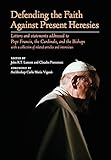
NEW COMPENDIUM BOOK: Defending the Faith against Present Heresies….

Since the Church’s earliest days, even in the Letters of Paul, there developed a genre of writing adversus haereses, against heresies.  The reason is obvious:  Christ is the Truth.  With the exception of those on the ideological Left regarding elections, Christians want the TRUTH, even though it is hard.   When people stray from the Truth to sow error, they and what they teach become a threat to the salvation of souls, their own and those of others who embrace their errors.   Christ gave a special ministry to the Church, the Petrine Ministry with Tradition, the Rule of Faith handed down and protected through Apostolic Succession.

The very people of God has a sensus fidei, a sense of the Faith.  Though the better description is sensus fidei fidelium… the faithful’s sense of the Faith: to have it, you have to be faithful.

Along comes Francis, who says and writes curious things which raise questions in the minds of the faithful.   It is not the role of Popes to bring about doubts and divisions.  On the contrary.   But, here we are.  Doubts and controversies are multiplying.  There are a lot of factors, but I think in honesty we have to admit that Francis is in the mix to one degree or another.

One is led to wonder about what is going on in the heads of those who never evince the slightest puzzlement about some of the things Francis issues.

People of Faith want to know the Truth.  These days, with “fake news” and competing voices and, now, cancelling and suppression of speech, getting to the Truth can be hard.

Not forgetting that Francis himself has called for parrhesia, clear, honest talk, some people of good will have raised concerns about certain recent developments.  They also do it in public when their concerns haven’t been addressed in private.

Results vary.

One thing invariably happens, those on the Left who seem not to see anything at all odd in things right in front of their faces, shout explanations along the lines of, “SHUT UP!”

Given the growing willingness of some within the Church to embrace the cancel culture, terror tactics of the secular Left (I’m a recent target, along with a bishop), in the future it maybe become hard to find the questions, concerns, challenges, pleas for answers, respectful rebuttals, etc. online.  I readily imagine a cancelling of all such things by catholic news media outlets, etc, the purging of sites that have archived them by a growing catholic Minitrue.

Until we move into the 451ºF phase, scripta manent. Concrete books are not as susceptible to widespread obliteration.

A small Catholic publishing house in Canada, Arouca Press, has put out a seriously provocative volume.

Defending the Faith against Present Heresies: Letters & Statements Addressed to Pope Francis, the Cardinals, and the Bishops with a Collection of Related Articles & Interviews,

edited by John R.T. Lamont and Claudio Pierantoni, with a Foreword by Archbishop Carlo Maria Viganò.

US HERE – UK HERE

Long title.  But you get what it’s about.

This is a compendium of things which – to be blunt – does not make Francis, Cardinals, Bishop look good.  Quite the opposite.   The book is provocative.

Those who tend to favor what Francis and his crew have been doing will become shrill.  This is hardly to be doubted.

Some will dismiss it out of hand, saying that those who are represented in it, or who would want to read it, are crazy outliers. Pay no attention to the tilting deck, life boats and iceberg, everything is fine.  “Shut up!” they explain.

This is what I draw out of the existence of such a book.

Whether you are a staunch supporter of Francis and his crew or you are a sharp critic, …

You might be able to dismiss one or two smart people who have problems with, say, certain aspects of Amoris laetitia.  You might be able to brush aside as an isolated incident when Francis says something weird to a journalist.

When you start to collect all of these things, odd sayings and teachings, reactions to them, into one volume so that you can see a picture emerging, you can’t simply brush it aside.

The cumulative force of the things collected in this book may just prompt questions.   Just scanning through the table of contents and the useful index makes you go, “Whoa!  There’s a lot here.”

Again, the book is printed and not just in the cloud.  The left might be able to make it rare, try to cancel the publisher, buy up copies, and destroy them.  Some will remain.   The more you all buy, … etc.

Again, the left might be able to attack and even silence sites which have the book’s content piece meal, here and there, but this is a compendium which produces a cumulative effect.

What I would say to those who are 1000% in favor of everything that’s been going on for the last few years, and who think this is a bad book, blah blah, is:

If you think this compendium is bad, then produce your own book, respond to it.  Collect into one volume your supportive open letters and explanatory essays.  Let people see the cumulative effect of your no-doubt-incontrovertible position, bound to persuade.

Rather than respond with “Shut up you kooks!”, put up or shut up yourselves.

Take it seriously and see what happens.

Posted in Francis, Our Catholic Identity, REVIEWS, The Coming Storm, The Drill, The future and our choices | Tagged ,
4 Comments

@BishopBarron on Barron. @EricSammons on Barron. Wherein @FatherZ rants.

On 2 March Bp. Robert Barron issued an apologia at Word On Fire: “The Evangelical Path Of Word On Fire”.

He spends his first several hundred words talking about his own efforts to battle “beige” Catholicism through a “missionary spirit of Vatican II”. Then he puts his foot wrong, in my opinion: he starts up a cartoonish caricature of “traditionalist movement” with vocabulary like: fiercely, ferocity, anger, nostalgic (that damned chestnut… again?!?), antipathetic, radically, self-devouring, spitting-mad. His word choice calls to mind defamatory propaganda posters of yesteryear: unappealing characters marked with recognizable evil logos loom over all that is good and true.  The Beige are on the Left!  The Trads are on the Right!  We must battle the forces of evil to protect the Middle!

I like Scott Hahn’s description of traditionist leanings as mad trads, rad trads and glad trads.  The first two possible categories, which can overlap, are growing less and less prominent while the “glad trads”, with the influx of young people in the traditional movement, are growing.   Barron is a little behind the times.  That could be corrected if he would personally – not through surrogates – reach out to them instead of further marginalizing them with his obviously tilted vocabulary.

In a huge surprise move, Barron “nails his colors to the mast” of Word On Fire!  He thinks it is middle ground between the beige and the nostalgic self-devourers. He goes on to say that he has “tried to situate Word on Fire on the path of an evangelical Catholicism, the Catholicism of the saintly popes associated with Vatican II, a living Catholicism.”

The Olympian Middle.

Never mind that Summorum Pontificum assured that traditional expressions of liturgical worship are in the warp and weft of living Catholicism. Bp. Barron has never – to my knowledge – made a positive step in the direction of what is unquestionably the most marginalized group in the Church, a growing community primed and ready to be activated in the service of the New Evangelization, a group of determined, smart, well-catechized Catholics, giving good examples with stable marriages and large families: traditionalists.

Bp. Barron: It is impossible to have authentic, living Catholicism without that which Summorum Pontificum made possible.

Please correct me if I am wrong.  I mean that sincerely.  If Bp. Barron has celebrated a Pontifical Mass in the Traditional Roman Rite, I’d like to know.

If I were a bishop – thank you, Lord, I never will be – having seen what is going on in the traditional movement, I’d want to get involved with them FAST, no matter my own inclination and give them guidance, support and channel them at something: evangelization, works of mercy, etc.  This group is NOT going away.  An policy of hostility toward them is not going to go well in the future for priests and bishops.

MIND EXERCISE: Imagine for a moment.  Imagine a diocesan bishop shifting around his time and energy allocations toward the traditional side of things.  That doesn’t mean ignoring the other end of the spectrum… even though the traditional end has been ignored.  This isn’t about getting even.  Imagine, a bishop turning his energy to support the traditional movement in a diocese as a priority, rather than just as a begrudged concession, that occasional handful of dirt tossed in their direction.  Imagine.

Were some bishop to do that, I think people would absolutely explode into the traditional movement and embrace a warm and fervent outward expression of the Faith.  I think that bishop and his parish priests would wake up to find increasing numbers of people ready to go to the wall for what the bishop aims to do.

Am I wrong?

At Crisis Eric Sammons responded to Bp. Barron.

Sammons says, in a nutshell, that Barron doesn’t seem to understand who and what the traditional community is.  Worse, Barron has become part of the “beige” that he says he wanted to convert.  Hence, the title of his piece, “The Beiging of Bishop Barron”.

Sammons indicates, as I have pointed out, that the traditional movement indeed on the move.  It is growing and succeeding where it is given a little TLC.

Young priests are learning the traditional forms of sacred worship and the knock on effect is palpable.

I say that a demographic sinkhole is opening up under the Church in these USA.  The beige and the virtually un-catechized are going to drop through this hole never to be seen again in our churches.  Senior Catholics, often generous to the Church, will because of the steady tick tick tick of the “biological solution”, inexorable time, will dwindle in numbers and they will take their generosity with them.  Their un-churched, un-committed children and grandchildren will no longer pretend to embrace the Faith of their families.  They will be gone even on Christmas and Easter.   We will lose properties and social standing as a Church.

Why?  Barron rightly talks about “beige” Catholicism.  No question.  For a long time, that’s what the Church has presented: beige, a color so neutral that it is neither to be seen as interesting or uninteresting.   Sammons thinks that Barron’s attempts to do the same thing we have been doing for so long, but just do it a little better, is, in effect, to become the very beige one seeks to battle.

Sammons, my emphases:

There lies the irony of Barron’s negative views of traditionalism. Catholics are fed up with beige Catholicism, but they don’t want the half-measures that Barron recommends in response. Instead of replacing felt-banner 1970s liturgies with slightly less gauche ones, they want liturgies that give all the glory to God. Instead of substituting heretical teachings with orthodox yet oh-so culturally-relevant homilies, they want unadulterated, politically-incorrect, and unapologetic proclamations of the Faith. And instead of a half-hearted, cover-your-*ss response to the abuse scandal, they want a deep cleaning of the hierarchy, from top to bottom. They see that Catholicism as practiced since the 1970’s is far worse than beige, and Barron’s response itself has lost all color. Give us that ol’ time religion, they say.

It’s clear that Bishop Barron is far and away one of the most talented members of the American episcopate. Unfortunately, it’s also clear that he’s missing the new pulse beating within the Church: the strong and joyful beat of traditional Catholicism. Instead of considering it his enemy, he should recognize it as the fulfillment of what he’s been striving for all along.

I suggest that simply doing what we have been doing, but maybe a little better, isn’t going to slow the sink-hole’s expansion or pull from its depths those who fall in.  Repeating the failed strategies of the past, won’t work.  Furthermore, to continue down this same old path is what is “self-devouring”.

BUILD BEIGE BETTER

Something Sammon wrote struck me.

An improved beige is worse than beige.

Let’s add orthodox and traditional elements to the beige and it is worse than it was before, not better.  Why?  Because hearing some better preaching and seeing a few little hints at tradition here and there will make people think that they’ve got it all, when in fact they have neither one or the other.

I am reminded of the masses in the Inferno’s Canto 3, the fore-hell where the tepid run in a circle chasing a meaningless unmarked banner.   The tepid.

The sooner priests and bishops wake up to the potential of the traditionalist movement, the sooner we can battle the inevitable declines in the Church and seek a new way forward.  I am convinced that, as the various factions drop out of sight, we will be left with committed Catholics in several seemingly disparate groups, converts who come from Evangelical background, those who lean charismatic, and traditionalists.   These groups will, per necessity, find each other.  They will have conflicts and frictions, but something amazing could grow from their “mutual enrichment”, to borrow a phrase.

Summorum Pontificum was a gift to the whole Church, not just a slice.  It is what makes possible an authentic “living Catholicism”.   

If we are going to talk about “a living Catholicism”, then it is absolutely imperative that traditional forms of worship be integrated as widely as possible.  How is “Catholicism” even to be imagined it it is not rooted in tradition?  Summorum Pontificum reminds the world that you can’t have a living Church without tradition.

Further, when you trash tradition, you kill what you say you want.

Continue to marginalize traditionalists and you will only slow, harm and hobble any efforts of Evangelization.

Anytime His Excellency Bp. Barron wants to have a Pontifical Mass, I’ll happily contribute in any way I can, as a sacred minister, or by sitting in choir and praying for him, or … whatever.   Perhaps he will one day get interested in a positive way about a growing number of young Catholics who are his natural allies.

I’ll turn on the moderation queue and get ready to see thoughtful comments.

Posted in Hard-Identity Catholicism, Our Catholic Identity, SUMMORUM PONTIFICUM, The Coming Storm, The Drill, The future and our choices, The Olympian Middle, Wherein Fr. Z Rants | Tagged , , ,
32 Comments

Latin Liturgy Association: complimentary one-year membership for priests and seminarians

I received this note:

The Latin Liturgy Association decided to grant a complimentary one-year membership to all interested priests and seminarians. You are free to share that information with any priests or seminarians that you think would be interested. They email directly, and I will add their names and emails to our membership database. If they would prefer a paper copy, they should include their mailing address in their email.

HERE

Posted in Latin, Liturgy Science Theatre 3000, Mail from priests | Tagged
1 Comment

Daily Rome Shot 92

Photo by Bree Dail.

Posted in SESSIUNCULA | Tagged
Comments Off on Daily Rome Shot 92
























