Alexa gizmo laughs randomly. Creepy.

Do you have one of those Alexa gizmos? Brrrrrrr! No thanks.


At Engadget I read:

Alexa is randomly laughing, and it’s creepy as hell (updated)
Mercifully, Amazon is fixing it.

If you have an Alexa-powered device, you’d be forgiven for thinking it was haunted: users have been complaining that their devices would laugh randomly or simply refuse to do what they were asked. Is your smart speaker going to murder you in your sleep? Thankfully, no. Amazon has confirmed that it’s aware of the problem and is “working to fix it.” The company hasn’t said what went wrong, but it’s notable that this isn’t a case of accidentally triggering the voice assistant — the laughter has kicked in without triggering the signature blue light that accompanies responses on Echo speakers and other Alexa devices.

[…]

They have a bit of an explanation.  But, brrrrrrrrr.

I am not drawing a direct line, but this reminded me of what I’ve been told by exorcists about the way demons can infest electronic tech.

Posted in You must be joking! | Tagged
6 Comments

IMPORTANT: What’s being done to men? Systemic attacks on masculinity.

I urge everyone to watch this segment on the status quaestionis of MEN in these USA. For decades there has been an open war on boys, men, masculinity. This has had devastating effects on society at large and on the Church in particular.

The guy he interviews in the second part of the video was great.

Posted in Pò sì jiù, The Coming Storm, The Drill, The future and our choices | Tagged , ,
23 Comments

UPDATED @NCRonline #Fishwrap croons for ordination of women as bishops. Pray daily for their conversion or downfall.

UPDATE BELOW

Originally Published on: Mar 5, 2018

The next time the Fishwrap (aka National Schismatic Reporter) criticizes anyone for having a faithful, conservative understanding of the Church’s discipline or doctrine, point them to this article.  The next time writers for the Fishwrap such as Michael Sean Winters or Phyllis Zagano attack, remember this article.

HERE

Fishwrap endlessly promotes a homosexualist agenda and the ordination of women.  While claiming that we must all accept whatever the Pope says, they routinely undermined everything that John Paul II and Benedict XVI taught.  And they have the audacity to put the word “Catholic” on their mast head.

A regular writer for Fishwrap, open lesbian Jamie Manson, has a piece today about the “ordination” of a woman as a bishop.  No, it’s not objective.  Here’s the first line, which just about sums up Fishwrap and their writers when it comes to aberrant behavior:

“Bye, Bishop Mema!” 4-year old Miles crooned as he wrapped his arms around his grandmother.

Blech.

Even though this was not a truly Catholic ordination, perpetrated by the “Ecumenical Catholic Communion in a Presbyterian Church (which itself is incredibly insulting towards Catholics), Mason simply accepts its validity.

Talk about your “Self-absorbed Promethean Neopelagians”!  Lib, thy name is S-aPN!

We don’t have to stand idly by when these people with the help of the Fishwrap make a completely mockery of the Sacraments, the beating heart of our Catholic identity.

Pray for the conversion or the destruction of the Fishwrap

Pray this prayer everyday for the rest of Lent.

HERE

St. Joseph, pray for us.

Dear St. Joseph, Terror of Demons and Protector of Holy Church, Chaste Guardian of Our Lord and His Mother, hear our urgent prayer and swiftly intercede with our Savior, whom as a loving father you defended so diligently, that He will pour abundant graces upon the staff of that organ of dissent the National catholic Reporter so that they will either embrace orthodox doctrine concerning faith and morals or that all their efforts will promptly fail and come to their just end. Amen.

UPDATE: 7 March 2018

Fr. Longenecker has his own take on this loony farce.   His conclusion is dead on target:

The only other thing I would add is that the only thing crazier than these groups are the ones who agree with everything they stand for, but not only stay within the Catholic Church, but do so intending to change it from within. How different from the members of the Ecumenical Catholic Communion are people like Phyllis Zagano and James Martin SJ  and the members of the hierarchy who support and promote them?

They believe the same thing as Bishop Denise of the ECC. They just don’t have the guts or integrity to get up and go join the ECC like she did. No.

As they have said, “We prefer to work within the system.”

Do I hear an “Amen!”?

Posted in ACTION ITEM!, Liberals, Our Catholic Identity, Pò sì jiù | Tagged ,
27 Comments

Pew Research Center looks at Pope Francis’ numbers 5 years into his pontificate

At the site of the Pew Research Center you can read about the survey about Pope Francis five years into his pontificate.   The numbers are on the move.   They also, in surveying Americans, break the numbers down according to political leanings.

It also gets into shifting demographics of Catholics in these USA.

Here is a little bit:

Pope Francis Still Highly Regarded in U.S., but Signs of Disenchantment Emerge
Five years after his election, pope draws growing number of negative assessments, especially from Catholic Republicans

[…]

Five years into Francis’ papacy, the vast majority of U.S. Catholics continue to have a favorable opinion of the Argentinian pontiff, and most say he represents a major – and positive – change for the Roman Catholic Church. At the same time, a new Pew Research Center survey finds signs of growing discontent with Francis among Catholics on the political right, with increasing shares of Catholic Republicans saying they view Francis unfavorably, and that they think he is too liberal and naïve.

[…]

But while Francis remains quite popular, there are signs that American Catholics are less enamored with him than was once the case. For instance, the share of American Catholics who say Pope Francis is “too liberal” has jumped 15 percentage points between 2015 and today, from 19% to 34%. And about a quarter of U.S. Catholics (24%) now say he is naïve, up from 15% in 2015.

[…]

Over the same period, the share of Catholic Republicans who say Francis represents a major, positive change for the Catholic Church has declined from 60% to 37%. By contrast, there has been little movement since the end of Francis’ first year as pope in the share of Catholic Democrats who view him as a major change for the better (71% today vs. 76% in 2014).

[…]
While Francis is quite popular with Americans overall, analysis of Pew Research Center surveys conducted since he became pope finds no evidence of a rise in the share of Americans who identify as Catholic (22% in 2012, 20% in 2017), and no indication of a Francis-inspired resurgence in Mass attendance. In surveys conducted in 2017, 38% of Catholic respondents say they attend Mass weekly. By comparison, in the year before Francis became pope, 41% of U.S. Catholics reported attending Mass weekly.

There are, however, a number of changes occurring within American Catholicism that were underway before Francis became pope and have continued during his pontificate. For instance, the share of U.S. Catholics who are Hispanic has grown from 32% in the year before Francis became pope to 36% today. The share of U.S. Catholics who favor allowing gays and lesbians to legally marry has grown from 54% in 2012 to 67% in 2017. And while there has been little change in the partisan composition of Catholic voters as a whole, white Catholic registered voters have continued to trend in a Republican direction. As of today, 54% of white Catholic voters identify with or lean toward the GOP, up from 50% in 2012 and early 2013.

Other key findings from the new survey include:

Roughly half of Catholics (55%) say the priests at their parish are “very supportive” of Pope Francis, and an additional 23% say their priests are “somewhat supportive” of the pontiff. Roughly one-in-five self-identified Catholics decline to answer the question or else volunteer that they do not attend church often enough to assess the level of support for Francis among their parish priests. Just 2% say their priests are “not too” or “not at all” supportive of the pontiff.

[…]

Catholics who attend Mass at least once a week give Francis somewhat higher marks than do those who attend Mass less often; 56% of weekly Mass attenders say they have a “very favorable” view of the pontiff, compared with 40% among Catholics who attend Mass less often. Still, large majorities of both groups rate the pope at least “mostly” favorably.

[…]

This just scratches the surface of the results. Have a look for yourselves. It is fascinating reading.

Posted in Francis, The Drill | Tagged ,
10 Comments

PODCAzT 161: CDF Instruction on The Ecclesial Vocation of the Theologian, “Donum veritatis”

In this podcast we hear the Congregation for the Doctrine of the Faith’s 1990 Instruction Donum veritatis, “On the Ecclesial Vocation of the Theologian”.

I post this now because of the present claims of some who clearly want to turn the Church’s teaching about some things upside down and also because of a liberal theologian’s post at Commonweasel “A Wake-Up Call to Liberal Theologians”.

Massimo “Beans” Faggioli is worried that liberal theologians are losing ground in the academy (i.e., Catholic colleges, universities) in the face of a shift of young people, etc., to more conservative theologians and traditional presentations of the Church’s teachings. Beans has created a strawman, the “neo-traditionalist”. He wrongly claims that conservatives ignore or reject Conciliar and post-Conciliar theology. It may be that conservatives tend to reject Concilium school writers, but they tend to embrace Communio writers. In other words, they’ve made a determination that some are right and some are wrong, but it is inaccurate to say that conservatives or traditional Catholics reject or ignore Conciliar and post-Conciliar theology.

Faggioli however, is right about how “market forces” are at work. Subsequently, he seems pretty concerned that his side of the field is losing ground. He has made an appeal to others of his leaning to make changes, lest they lose their influence as theologians in the academy and in the Church.

Apart from fundamental problems, Faggioli’s piece has some good points. However, there is an odd lacuna in his presentation. He made no reference to the 1990 CDF Instruction Donum veritatis which explicitly pertains to his theme and, therefore, his perceived plight of liberal theologians. I found that curious: surely he knows of the document.

If he is really interested in this question and really wants to preserve a role of liberal theologians in the Church, then he and they must remain in touch with Donum veritatis.

Hence, I now share Donum veritatis with a wider audience through reading it aloud. Some of you can listen more easily than you can sit and read.

I don’t attempt to read in-line citations or the notes. You can see those on the Vatican website.

The document has strong emphasis on the orientation of the theologian always to the truth which saves, Christ Himself. Theologians have a bond of charity with the pastors of the Church who exercise its Magisterium. It describes what doubts or dissent are and how they are to be resolved.

At the core of the document is the explanation of how pursuit of the truth is a service of the salvation of the whole People of God.

If this is what Faggioli and others want, then it seems to me that they will eagerly embrace this document.  If they reject the document, then we might with good reason wonder what they are up to.

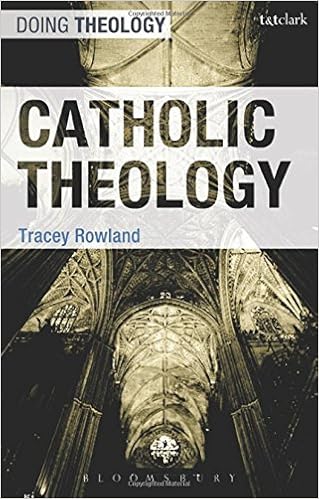
I offer this as a sincere help.  Also, to all listeners, I suggest Tracey Rowland’s terrific book Catholic Theology.  

US HERE – UK HERE

Posted in Hard-Identity Catholicism, Our Catholic Identity, PODCAzT, The Coming Storm, The Drill | Tagged , ,
2 Comments

Jesuit Amerika Magazine laments: “Where are the millennial Catholic activists?” Wherein Fr. Z rants.

Jesuit-run (hence confused) Amerika Magazine has posted a lament: “Where are the millennial Catholic activists?”

The head-scratching writer is bumfuzzled. Protests for favored lib causes are drawing people with lots of gray hair. Where are the young, social media savvy protesters?

First, the young generation of Catholics don’t feel the need to relive the halcyon days of yore, with the draft card and bra burning, dope smoking and guitar strumming, altar smashing and whitewashing. They don’t have that baggage. They aren’t triggered by protest signs and gray ponytails.

Yes, there are some young people at these protests, but let’s make a distinction.  There are young Catholics and there are young catholics.

To the question, “Where are the millennial Catholic activists?” Fr. Longenecker posted the quintessential answer:

Fr. Z über-kudos to Fr. L.

Demographic studies suggest that in a few years the numbers of people in pews will drop dramatically as boomers go to their frightening judgment and the “nones” get a little older and just leave.

In the next few years, dioceses will lose a high percentage of priests. Where I am, three priests have died in the last week.

It’s a war of attrition now as the Biological Solution really kicks into it’s ineluctable gear.

However, last Sunday at the TLM I celebrated it was like day-care in the church.

In these still small but growing traditional groups, there are lots of young families with lots of kids and more on the way.

TLMs are alive all over the place now and there are more and more of them. Since Summorum Pontificum in 2007 the number of TLMs has grown from around 200 to over 500. A couple years ago in France, traditional ordinations accounted for over 20% of all the ordinations.

I suspect that were there to be general permission to use the older Pontificale Romanum for ordinations to the diaconate and priesthood, well over half the men to be ordained would rather have the traditional form than the newer.

My sense is that this can’t be stopped, not without moves that would probably tear the unity of the Church to pieces.  This is so, because the “gravitational pull” or “mutual enrichment” or “knock-on effect” really is taking place.  The Ordinary Form is also being purified of dross in many places because of what priests learn at the TLM altar.  A synergy is building.

Of course the seats of ecclesial power abound with prelates who would rather burn down struggling parishes and watch Satan disco dance in the ashes than do the slightest “traditional” thing to revitalize our identity and evangelical mission.

Hence, because this is also spiritual warfare, YOU, dear readers, need to buckle it on and get to work.

The storm is almost here.

Polish that armor, sharpen that sword, mend that shield, square that gear, do those drills.  Pray for specific intentions.  Practice mortifications for reparation for sins.  Contribute at the parish.  Examine your conscience.

GO TO CONFESSION!

UPDATE:

I post the above and then find an article about parish closures in Europe.  HERE

The Diocese of Trier in Germany will reduce its number of parishes from 172 to 35 by the year 2020

[…]

The details provided by the CNS of some of the other diocesan reorganizations planned or currently underway in Europe makes for sobering reading:
– Berlin: 105 parishes to be reduced to 35 “pastoral spaces”, with unused churches to be sold off and 40% of clergy and lay staffers reassigned, thereby alleviating some of the Diocese’s $140 million debt

– Vienna: 660 parishes to be merged into 150 hubs served by a handful of priests

– Luxembourg: 274 parishes reduced to 33

– Clogher, Ireland: 37 parishes cut to 14 “pastoral areas” coordinated by teams of just two priests and six laypeople

– Utrecht: 326 parishes to just 48 hubs in which only one church will serve as a “eucharistic center”

[…]

Some will spin this as a greater opportunity for lay people in the Church. Riiiiight.

It’s disaster, pure and simple.

See my comments above about disco dancing devils.

These are the fruits born of liberals.

Posted in ¡Hagan lío!, Fr. Z KUDOS, GO TO CONFESSION, Hard-Identity Catholicism, Semper Paratus, The Coming Storm, The future and our choices, Wherein Fr. Z Rants | Tagged ,
21 Comments

ASK FATHER: Multiple priests for baptism of more than one child

Hey libs! THAT’s where you pour the water, you OAFS!

From a priest:

I have a multiple child Baptism coming up. My question is if one priest can supply all the various ceremonies and multiple priests celebrate the Baptism proper for the various children in the older Rituale?

Hmmm… no, not really.  That makes the right confusing, at best.

Just follow the Rituale.  Some things you have to do with each child individually, such as exorcisms, something can be done by all the godparents together, such as certain responses to questions and the recitation of the Creed.

Depending on how many there are, if you don’t have a great memory, you may need a little “label” on the kids with their names, or have a godparent hold one, for moments like the imposition of salt.  Also have a list tucked into the book with all their names in the proper Latin (or English) forms, for moments when you can say one prayer over all of them.

If you try to force everything to be “meaningful” – looking around with significant eye contact and earnest expressions at every other word – you will be there all day.

Keep it moving and it won’t take that long.

And try not to let the inevitable din distract you from pushing forward.

Posted in "How To..." - Practical Notes, ASK FATHER Question Box, Liturgy Science Theatre 3000, Mail from priests | Tagged
1 Comment

CAVIEZEL: You weren’t made to ‘fit in’… BE SAINTS!

No young person wants to follow an uncertain trumpet.

Here is a good video to rise to as the morning gets underway.

Actor Jim Caviezel speaking at Stuebenville. Posted at LifeSite.

¡Hagan lío!

Posted in ¡Hagan lío!, Be The Maquis, Hard-Identity Catholicism, Just Too Cool, Semper Paratus, Si vis pacem para bellum!, The Coming Storm, The future and our choices | Tagged
4 Comments

German bishops on Communion: Discernment über alles!

My old friend Msgr. Hans Feichtinger has penned for First Things a piece about the German bishops.

DISCERNMENT ÜBER ALLES

The German bishops have announced that they will soon publish new guidelines for reception of the Holy Eucharist. [Because the old guidelines really need updating.] In the future, non-Catholics married to Catholic spouses and attending Mass with their families could, in certain cases, be admitted to communion if they profess the Catholic faith in that sacrament. [Woah!  Faith is the last thing to go.] Already I have been asked about this change at the German-speaking parish in Canada’s capital city of Ottawa, where I am pastor. Our people pay close attention to what the bishops at home are up to. Members of the German community abroad, especially in the first generation, often are married to other people with German background, and some of these very stable marriages are “mixed,” with one Catholic and one Protestant spouse.

No one can deny the objective difficulty that arises when a family attends Church regularly and one of the parents (or even some of the children) cannot receive communion, either because as Catholics they do not receive it in Protestant churches, or as Protestants they are not admitted to the Catholic Eucharist. It feels strange, in a way that is hard to explain.

The ecumenical imperative is: Thou shalt be hospitable! And the ecumenically correct language is: Mixed marriages “unite” the confessions (they are konfessionsverbindende Ehen—gotta love these long German words). But much of this talk is delusional, or at least shallow. And the project very quickly leads to bizarre situations: Should a pastor stop giving communion to the non-Catholic spouse after the death of the Catholic one? We do have non-Catholic people attending our parish occasionally, even after the deaths of their Catholic spouses.

The bishops, of course, propose that pastors should discern in each individual case whether admission of a non-Catholic to communion would be permissible. Discernment über alles. According to the bishops, the basic condition for receiving Holy Communion is profession of the Catholic faith in the Eucharist. But that profession, as we have understood it up to now, [!] entails that no one may receive communion who is not a Catholic (or does not at least belong to a church in which all sacraments are considered such and valid), and that one must be in the state of grace, which in normal adult life requires going to confession once in a while. Talk of these things is ecumenically incorrect, of course. [In false ecumenical dialogue cannot admit that Catholics openly say what they are to profess openly.]

My predecessor in Ottawa and I have consistently explained why the Church does what it does, and why it sometimes says no. What the bishops in the Fatherland now are about to release sounds like yet another compromise for the sake of being—or rather, sounding—inclusive and pastoral, with very questionable pastoral consequences. The Church in Germany, with its great institutional strength, seems to become ever less resilient and less reliable, ever less willing to resist trends, even some that have already failed in the Christian communities that adopted them long ago. On loosening Eucharistic discipline, the trial and error has been done by others, and it turned out to be an error every time. Of course, such a change would also be a huge impediment to ecumenism with the Eastern Churches—but the Germans care less about Russia and other theologically underdeveloped countries. [Remember Card. Kasper’s comments about Africa.]

The German church tax is often thought to increase the freedom of the Church, as it makes parishes and dioceses less dependent on the wishes of donors. I have myself believed this for some time. But I am losing my faith. A normal diocese in Germany has a budget in the hundreds of millions; in larger dioceses the combined budget of diocese, bishop, parishes, and social services is beyond the billion mark. Money, lots of it, is the common denominator amid the many discontinuities of the last centuries, through reformation, secularization, social and political revolutions, and wars. To this day, the Church in Germany is holding on to its preferred income sources and its inclusion in the institutional grid of public institutions. The Church in Germany is recognized and treated by the state as something close to an entity of public law. In theory, this status should ensure its freedom, to a degree that churches in other countries should envy. But the same Church is increasingly unable to stand for core principles of the Christian message. The best-funded Catholic bishops in the world are not on the Olympic podium in the doctrinal-fidelity-and-courage competition. It seems they are not even running to win that prize (1 Cor. 9:24).

Theologians and prelates in Germany have long been champions of collegiality among the bishops. And there seems in fact to be very strong collegiality within the Conference of German Bishops itself. (Maybe there is also some peer pressure.) But when it comes to bishops outside the Holy Roman Empire of the German Nation, the Germans’ interest in collegiality is less strong—to say nothing of their longstanding difficulty with following laws and guidelines issued by the Holy See. For themselves, the Germans like exceptions. (Just wait for their whining about how they cannot implement the guidelines recently issued for theological faculties—never mind that Pope Francis himself signed off on them.) I am sure there are bishops and theologians in Germany who do not agree with the direction the Bishops’ Conference is taking under the leadership of its current Westphalian bosses. But they dare not disagree publicly. They do not seem to have the courage simply to say Non possumus, for fear of being relegated, by their confreres and colleagues, to the ranks of the “controversial” or those “against Francis.” Maybe a secret workshop needs to be organized for them with Jordan Peterson?

Breaking from the doctrinal and disciplinary tradition of the Church, as the German bishops propose, is a bad idea, both doctrinally and pastorally—which goes to show that these things can be distinguished, yes, but not separated. It also goes to show that breaking up the discipline of the Church along the lines of nation-states is a model unfit for the globalized world (and thus shockingly old-fashioned!). More importantly, it is incompatible with the Catholic faith.

It is interesting that the Holy Father has not picked up on the difficulties and temptations of the well-funded Church in German-speaking lands. His message of a Church of the poor, informed by the needs of those on the margins, has not been heard in diocesan curias north of the Alps, concerned as they are with the needs of the good Catholic burghers. The projects presently advanced by the German bishops seriously undermine doctrinal integrity and fidelity, ecclesial unity, and pastoral practice. I wonder what it will take to change course, and I wonder whether and how Francis and his dicasteries will weigh in.

But then again, there are miracles—such as Germany’s victory over Canada in ice hockey at the Olympics. Every giant will fall at some point. While Rome seems to be sleeping, the time has come for bishops outside Germany to hold their brothers accountable, and for pastors in Germany simply to ignore episcopal guidelines and musings that are in stark contrast to the traditional wisdom, teaching, and discipline of the universal Church. That Church (in the documents of Vatican II, believe it or not) “affirms that underlying all changes there are many things that do not change; they have their ultimate foundation in Christ, who is the same, yesterday, today, and forever.”

Dear readers… more and more people are less and less silent.

Posted in Hard-Identity Catholicism, One Man & One Woman | Tagged ,
5 Comments

Wherein Card. Kasper tells us what we can and can’t say

This from Jesuit-run Amerika:

Cardinal Kasper: Quit throwing around the word ‘heretic’ [Hmmm.  I’ll bet he says that!]

Think twice before calling someone a “heretic.”

That is the seemingly simple advice from Cardinal Walter Kasper, the prominent German theologian whose ideas have influenced Pope Francis, especially his view that mercy should be the guiding principle in pastoral practice[That is an over simplification.  There is another aspect to it: there is suggestion on the part of some that there is a “mercy” which can make truth and law and even revelation irrelevant.]

Speaking in an interview with Alessandro Gisotti at Vatican News, the 85-year-old prelate addressed controversy about “Amoris Laetitia,” the pope’s 2016 letter on families, which includes a provision that allows some divorced and remarried Catholics to receive Communion[So that’s a direct confirmation of what AL suggests.  However, there are those who say a) that it doesn’t or b) it shouldn’t.]

“First of all I would like to say that debate in the church is necessary. There is no need to fear debate!” the cardinal said.  [Uh huh.  Because that is what Card. Kasper offered about the contributions of African bishops during the Synod. HERE]

But he said the debate on “Amoris Laetitia” has become too heated—even though the “people of God” have accepted the teaching.

“There is a very bitter debate, way too strong, with accusations of heresy. A heresy is a tenacious disagreement with formal dogma.” [Yes.  That’s right.  The defenders of the interpretation of AL that allows for people in the state of mortal sin or also in a manifest irregular situation to receive Communion say that not everyone can live up to “ideals” laid down by the Church.  That’s contrary to the formal teaching of the Council of Trent.]

Cardinal Kasper rejected claims from some Catholics who accuse Pope Francis of undermining church teaching on marriage. [AL sparked the discussion.  AL is over the new signature of Pope Francis.]

“The doctrine of the indissolubility of marriage has not been called into question on Pope Francis’ part!” he said. “Before saying that something is heresy, the question should be what the other person means by what has been said. And, above all, that the other person is Catholic should be presupposed; the opposite should not be supposed!” [Perhaps we could channel our inner Kasper and respond: “But [he] should not tell us too much what we have to do.”]

Cardinal Kasper praised “Amoris Laetitia” for its accessibility, saying it is “not high theology incomprehensible to people” and that the “people of God understand.”  [I think we are free to deny this premise.  I suspect that the “people of God”, in fact, do NOT understand what’s going on. However, once both sides of the issue are explained they understand only too well that some people are trying an end-around with what has always been taught.  Honest Catholics, hearing that adulterers can go to Communion, know that there’s something wrong.]

“The pope has an optimal connection with the People of God,” he said.  [“Optimal”? Is that really the case these days?]

[…]

But, remember, “debate in the church is necessary. There is no need to fear debate!”

God Bless Card. Kasper.

Posted in 1983 CIC can. 915, One Man & One Woman, The Drill | Tagged , , ,
16 Comments