ASK FATHER: What are the Four Catholic Creeds?

From a reader…

What are the Four Catholic Creeds, and why don’t we use the most recent one in Mass?

Good question.  Let’s start with some basics, which many readers might not know.

Our English word “creed” is from Old English creda, in turn from Latin credo, “I entrust, I believe”.  The profession of faith we make during Holy Mass takes its nickname “Creed” from its first word in the Latin text which begins “Credo in unum Deum… I believe in one God…”.  “Creed” is also used more generically for some statement of belief.

In the Ordinary Form of the Roman Rite, we recite the Creed mainly on Sundays and solemnities.  In the traditional Extraordinary Form the Creed is used with much greater frequency.

Why do we have a Creed at Mass?  Among other explanations we can turn to what the General Instruction of the Roman Missal says (67):

The purpose of the Symbolum or Profession of Faith, or Creed, is that the whole gathered people may respond to the word of God proclaimed in the readings taken from Sacred Scripture and explained in the homily and that they may also call to mind and confess the great mysteries of the faith by reciting the rule of faith in a formula approved for liturgical use, before these mysteries are celebrated in the Eucharist.

The 2002 Missale Romanum has some rubrics for the Creed.  We read in the new translation of the Order of Mass at rubric 18: “At the end of the homily, the Symbol or Profession of Faith or Creed, when prescribed, is sung or said:…”.  Oddly, the new translation excludes another rubric found in the Latin edition immediately after the Gregorian chant notation for how the priest is to sing the introduction, or intone, the Creed:  “Toni integri in Graduali romano inveniuntur…. Complete tones are found in the Graduale Romanum.”  The Graduale Romanum is published for the Holy See by the monks at the French Benedictine monastery at Solesmes.  It contains all the chants needed for a choir, schola or congregation to sing the Proper and Ordinary in Latin.

Let no one claim congregations cannot sing the Creed in Latin!  It is a powerful experience to hear a congregation sing the Creed with confidence.  It isn’t hard.  It just takes a little time and prompting.  People should also be allowed actively and consciously to listen to beautiful settings from our treasury of sacred music.

For the Novus Ordo, or Ordinary Form, of Holy Mass – since the 2002 edition of the Missale Romanum – we are given two main options for the Profession of Faith.  We may use the “Apostles Creed” or the “Nicean Creed” (fuller title “Nicene-Constantinopolitan Creed”).  Rubric 19 says that the Apostles Creed “adhiberi potest … can be used” in the place of the Nicene Creed “praesertim… especially” during Lent and the Easter season.  That said, it is clearly the Church’s intention that Nicene Creed, which historically has been the only Creed for Mass, is the norm.

The Apostles Creed, or Symbolum Apostolicum, is especially familiar to those who recite the Holy Rosary.  It is also used by other Christians, who accept it because it is not elaborate in its doctrinal scope.  Many Christians are not interested in systematic doctrine.

In the early Church it was assumed that the Apostles themselves composed and handed down a “rule of faith”.  There is pious legend of very ancient origin that the Apostles Creed was composed by the Twelve under the inspiration of the Holy Spirit at Pentecost, each one of them contributing one of its “articles”.  It is possible with some jostling and nudging to break down the Apostles Creed into twelve sections, though St. Thomas Aquinas (+1274) preferred to break it into seven (cf. STh II, q. 2).  J.N.D. Kelly’s book Early Christian Creeds [US HERE – UK HERE] has great detail about this and other early professions of faith.

Rufinus of Aquileia (+410), the old friend and sometime nemesis of the irascible St. Jerome (+420), in his Commentary on the Apostles Creed relates the story of this Creed’s origin, already old in his day.  The Apostles, given the ability to speak many languages by the Holy Spirit at Pentecost, were about to take leave of each other and go out into the world.  They wanted a norm for preaching so that, even though they were very far apart from each other, they would still be unified in their teaching.  “So, they met together in one spot and, being filled with the Holy Spirit, compiled this brief token … each making the contribution he thought fit; and they decreed that it should be handed out as standard teaching to believers.”  There is a contemporary document from Northern Italy, probably based on notes from the preaching of St. Ambrose of Milan (+397), that the Twelve were worried about heresy and they wanted to strengthen bishops who succeeded them.  A sermon incorrectly attributed to St. Augustine of Hippo even breaks down which Apostle contributed which article and says this took place on the tenth day after the Ascension.  When the Holy Spirit came they were all “inflamed like red-hot iron”.  Peter started, of course, followed by Andrew, etc.

The Apostles Creed is much shorter than the Nicene Creed because in its earliest forms it predates the controversies about the divinity of the Holy Spirit and of Christ and His two natures, divine and human.

There was an even shorter and more ancient forerunner of the Apostles Creed called the Old Roman Creed or Old Roman Symbol, based in turn on a 2nd century regula fidei or “rule of faith” used in questioning candidates before baptism.  St. Ambrose mentions an “Apostles Creed” in letter 42 to Pope Siricius.  This could have been that Old Roman Creed or some subsequent development.  The first full quotation of the Apostles Creed comes in an 8th century work by the St. Priminius (+753).  After Charlemagne spread it through his lands it would eventually be used in Rome itself.

Thus in the Apostles Creed we have a profession of faith of very ancient origin, certainly going back to the very early times of the Church.  This venerable collection of statements of belief epitomizes the most ancient declarations of faith of our forebears.  Each point is rooted in the New Testament and the most deeply held convictions of the earliest Christians.

Here we must pause to look a the term “Symbol”, used to describe a “profession of faith” or a “creed”.  The word comes from the Greek, a compound of the verb ballein (“throw”) and the preposition syn (“together).  A symbolon was a token of proof, that something was genuine or that a person was who he said he was.  For example, a symbolon could be the impression carved into something or left in a waxen seal (Greek character – as in the indelible change that takes place in the soul when you are baptized, confirmed or ordained.).  Think of a modern silver stamp or the shiny holographic stamps on modern sports memorabilia and money.

A symbolon could also be half of an object purposely broken in half so that, once matched with its other half, it became a sign, a “symbol” of the identity of the one who carried it.  An ancient contract, for example, might be written on a clay tablet, baked, and then broken in half, so that the two parties each had a piece that would fit together.  Shards of pottery called “tallies” were also used, as in the story told by the ancient Greek historian Herodotus about Glaucus the Spartan and the man from Miletus and their financial deal.

In sum, in a “symbol” you “throw” the parts “together” to ensure identity.  This has become a common topos in literature.  Later cut pieces of paper could be used.   In interior identity was exteriorized with a material symbol.  A symbolon could also be used as a “ticket” for voting or even for travelling.  The ever-sarcastic Tertullian (+ c. 220) used it in this sense when attacking the heretic Marcion, asking by what symbolum he took St. Paul “on board” his ship.  St. Cyprian of Carthage (+258) applies the word to an early profession of faith much like the Apostles Creed.

In John LeCarre’s spy-novel Smiley’s People a torn postcard is used as a token to prove identity.  In Shakespeare’s Twelfth Night Sebastian and Viola find they are twins this way.  In the fluff movie The Parent Trap the identity of twins is discovered by halves of the same family photo.  In the unfluffy history of the Franks, King Childeric, deposed as a libertine and debaucher, flees to Thuringia after leaving half of a gold coin with a friend so he could prove himself on his return. In Plato’s Symposium Aristophanes describes how Zeus split the originally androgynous into male and female halves who feel complete when they find each other in love.  In the so-called “Judgment of Solomon” the identity of a baby is discovered by the threat of literal halving.  None of this has anything to do with the Creed, of course, but it fun.

It is time to move on to the normative Creed used during Holy Mass.   For the purposes of practicality, we must leave aside a separate option for the creedal variation of our renewal of baptismal vows with its dialogical structure.

The fuller title of the Creed we call by shorthand the “Nicene Creed” is the “Niceno-Constantinopolitan Creed” (Symbolum Nicenum-Constantinopolitanum).   The text has its roots  in much earlier creeds and the questions and answers during baptismal rites going back close to Apostolic times.  The text of our Mass’s Nicene Creed is related more immediately to the anti-Arian Council called by the Emperor Constantine at Nicea (in 325 in present-day Turkey).

Before the Council of Nicea creeds of various forms were for a local Church’s use.  A new form of Creed developed from meetings of bishops in synods and councils held to address theological problems.  The bishops and ecclesiastics who met in council had to subscribe to a summary of theological propositions which pointed to correct teaching, orthodoxy.  They were tests.

Sometimes the formulas included anathemas for those who strayed from the faith they determined came from the Apostles: “As for those who say [HERESY X],… these the Catholic and apostolic Church anathematizes/kicks out.”  The meaning of the Greek word anáthema drifted around considerably, by the way.  It originally stood for something dedicated or set apart.  It could be good, as in set apart for God.  It came later to mean set apart in an evil way, apart or separate from the community.

In any event the Creed promulgated by the Council of Nicea was the first of its kind, in that it had a universal legal authority and its anathema excommunicated those who dissented from what it defined.

The Council of Nicea was called to help bring unity to the important social force of Christianity which had recently been legalized and then made the religion of the Empire.

The Council was directed to work through Christological questions (that is, theology about who Christ is) which were tearing apart the unity of the Church and thereby creating problems for society as a whole.  What the Fathers of the Council needed to agree upon in some way, was the relation of Jesus Christ, the Son incarnate, to Almighty God the eternal Father.  The Council also worked to fix a date for the celebration of Easter (the first Sunday after the first full moon following the Spring Equinox), and also issue laws for the discipline of church practices.  The Council was about unity of faith and practice.

Regarding the Christological question, the Council Fathers defined what they determined to be the faith of the Church going back to the teachings of the Apostles regarding who Christ is: Christ is truly God in a literal way, with the same divinity as the Father, and not just in a metaphorical way.

A theological debate was gripping especially the Greek East, where a priest named Arius (+336) in Alexandria had stirred and intensified a long debated proposition that Christ, identified with the Son, was not of the same divine nature as the Father, but was rather the first, highest, most sublime of all creatures.  Christ was in a way divine, but not in same way the Father is divine.  In fact, the pre-Incarnate Son was a creature.  In the famous phrase of the Arians, “there was a time when he was not”.  That meant he wasn’t eternal and God as the Father was eternal and God.

The theological twists of terminology are extremely complicated, and I run the risk of gross oversimplifications in what follows.

The Arian question divided the ancient Church and Empire.  The Council at Nicea condemned the Arian errors and determined that by Christian Faith we believe that the Son is homoousios, Greek for “of the same substance” or “of the same being”, with the Father. Greek ousia, a feminine participle of the verb einai, “to be”, is a tricky term basically meaning “being”.  Ousia is rendered into Latin, and therefore English, in a bewildering number of ways depending on the topic and era.  Ousia could be rendered in Latin as either substantia (substance) or essentia (essence).   To make this even more confusing, the term homoousios itself was controversial because the word had been used by Gnostics in a way that was later condemned.  But we must keep moving….    Homoousios is rendered in Latin as consubstantialis.

The brilliant but erratic Church wild-child Tertullian (+c.220) was the first Latin writer we know of to render homoousios into Latin as consubstantialis (Against Hermogenes 44).

Tertullian chose substantia probably because Latin lacks many verb forms that Greek has.

Substantia was taken to mean what ousia meant, the way to describe the nature of a thing whereby it is what it is, namely, that which doesn’t depend on something else to exist.

Since classical Latin active lacks a participle for the verb esse, “to be”, another solution had to be found: substantia, something “standing under”.  So, ousia is what subsists in itself and doesn’t depend on anything else.  Consubstantialis was deemed the best Latin could do for homoousios, meaning, of the “of the same being/substance”.

The terms being and substance have certainly drifted apart from each other in philosophy, in metaphysics, over the centuries.  Even in the ancient world different groups talked past each other with different understandings of the same terms.  That said, today being and substance aren’t really the same thing in English.

The controversial decision to translate Latin consubstantialis with the Latinate slavishly literal “consubstantial” rather than “one in being” (as the bad old ICEL translation had it) was certainly correct.

May I add that, in some ways, the Arian crisis has reemerged in a deadly new form?  If those who say that people in the state of mortal sin can properly be admitted to Holy Communion, then the divinity of the Lord and the doctrine of transubstantiation are put into question.   Do we believe what Christ said about divorce and remarriage?  Was He wrong?  If He was wrong, He isn’t God and what we do at Mass is idolatry.

The next part of the history of the Creed we say during Holy Mass goes back to the time of another great Council of the Church, Constantinople I (381).

Oddly, the first text we have of the Niceno-Constantinopolitan Creed (the orthodox Catholic faith proclaimed at Nicea as expressed and expanded by the Council Fathers at Constantinople to account for other heresies that had been dealt with during the intervening years) actually shows up in the acts of yet another Council, the Council of Chalcedon (451) during which the Fathers defined that Christ had two perfect natures, divine and human.

At sessions of Chalcedon, the Nicene Creed was publicly read along with “the faith of the 150 fathers”, that is, the Creed used during Council of Constantinople in 381.  Amazingly the minutes of the Council of Chalcedon, its acta, all survived.  That is how we have the text of the Niceno-Constantinopolitan Creed.

Furthermore, there enough differences between the original Nicene Creed and what we call the Niceno-Constantinopolitan Creed that we can say the later constitutes its own text.  It is not merely a modification of the original Nicene version.

Perhaps that is enough about those ancient liturgical creeds.

There are other approved Creeds, not to be used at Mass, which deserve mention.

The so-called “Athanasian Creed”, called also Quicumque vult, was recited by clerics and religious occasionally in the pre-Conciliar form of the Office.  Hence, it is also a liturgical creed, but not for Mass.

The Athanasian Creed was probably written in Latin in perhaps around the 6th century and got its name from a medieval legend that St. Athanasius (+373), during one of his exiles, gave the text to Pope Julius I (+352).  It contains precise Trinitarian and Christological statements and ends with the less-than-ambiguous: “this is the Catholic Faith; which except a man believe truly and firmly, he cannot be saved.”

Another creed is the Creed of Pope Pius IV, called also the Professio Fidei Tridentinaissued on 13 November 13 1565 by Pope Pius IV in the Bull Iniunctum nobis after the Council of Trent (1545 – 1563).  Hence, it was designed to defend the Catholic faith against Protestant error.  This is one of the four authoritative Creeds of the Catholic Church. It was modified slightly after the First Vatican Council (1869 – 1870) to harmonize it with the dogmatic definitions of that Council.  It was long used as an oath of loyalty for theologians and pastors, etc., and also for the reception of converts.  This was the Creed my pastor had me recite when I was brought into the Church.  It seems to have stuck.

I should mention also the non-liturgicalCredo of the People of God” promulgated in 1968 by Pope Paul VI for the 19th centenary of the martyrdom of Sts. Peter and Paul.  In his Motu Proprio Solemni hac liturgia by which he promulgated this Creed, a clearly troubled Paul wrote about those days as if he were describing our own times:

In making this profession, we are aware of the disquiet which agitates certain modern quarters with regard to the faith. They do not escape the influence of a world being profoundly changed, in which so many certainties are being disputed or discussed. We see even Catholics allowing themselves to be seized by a kind of passion for change and novelty. The Church, most assuredly, has always the duty to carry on the effort to study more deeply and to present, in a manner ever better adapted to successive generations, the unfathomable mysteries of God, rich for all in fruits of salvation. But at the same time the greatest care must be taken, while fulfilling the indispensable duty of research, to do no injury to the teachings of Christian doctrine. For that would be to give rise, as is unfortunately seen in these days, to disturbance and perplexity in many faithful souls.

This describes Paul’s times, but our own as well, especially in light of how some people interpret Amoris laetitia.

The recitation of our Creeds, ancient and modern, brief or long, is necessary for us as Catholics.

It has been said that Creeds are for the head what good works are for the heart.

If we do not know the basics we believe as Christians, we cannot be good Catholics.  We don’t know who we are.

We need to understand the basic tenets of our Faith and be able to stand up and make a profession of that Christian Faith when it is safe and convenient and when it is unpopular or even dangerous.

The repetition of the articles of faith, especially with others, can help to strengthen us in time of trial.  This was certainly the case with the ancient martyrs.  But no less is it the case in modern times.

For example, during the Chinese persecution of Christians at the end of the 19th century a 14 year old girl named Anna Wang was martyred in Hebei during the nationalistic Boxer Rebellion.  With other Christians she was told to renounce Christ or die.  Anna’s family fell, but she responded: “I believe in God. I am a Christian. I do not renounce God. Jesus save me!”  She died and was born into heaven.  Surely her opening declaration came from the Creed.  We all face challenges to our faith, many of us on a daily basis.  The recitation of creeds can be a preparation for our trials, small and large.

I hope these brief observations help.

Posted in "How To..." - Practical Notes, ASK FATHER Question Box, Hard-Identity Catholicism, Liturgy Science Theatre 3000 | Tagged , , ,
10 Comments

Rube Goldberg Machine

This is how I occasionally see my day develop.

YouTube thumbnailYouTube icon

Wow. Right?

Posted in Just Too Cool |
4 Comments

20 Years Later: #WhoKilledFatherKunz

Last Saturday, 3 March, we had a Requiem Mass for in the intention of the late Fr. Alfred Kunz. It was the 20th anniversary of his murder.  His body was found on 4 March 1998, though he was probably killed the night before.

This was not only the sin of murder, but also the sin of sacrilege.   One act, two sins.

Remember how David could have killed his enemy and persecutor King Saul, but refused because we must not raise our hand against the Lord’s anointed.   Harming a priest is sacrilege.

20 years ago.  There still has been no resolution.

It is possible that someone out there knows something that might make a difference in this case.

The Dane County Sheriff’s Office hopes to re-invigorate the investigation of this case, and encourages anyone with information to contact the TIPS line at 608-284-6900 or email at

tips@danesheriff.com 

I can’t imagine keeping something like this bottled up.  I can’t imagine how it must gnaw inside.

Here are photos from the Requiem on the 20th anniversary of Fr. Kunz’s brutal murder.

This shot, with the juxtaposition of birettas, touched me and makes me consider my own impending death.

Here is my sermon after the Mass. [UPDATE 7 March 2018 – I’m told that it was auto-playing, so I shifted it over to another audio plugin.]

Posted in "How To..." - Practical Notes, ACTION ITEM!, Four Last Things, Mail from priests, Priests and Priesthood | Tagged
3 Comments

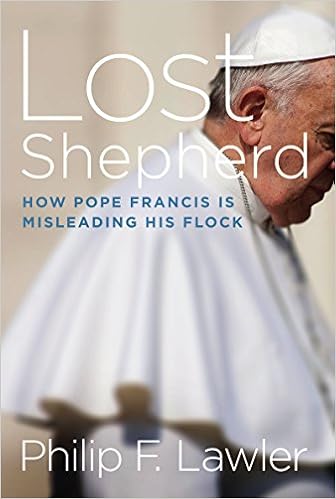
Video interview with Phil Lawler about book on Pope Francis: Lost Shepherd

I’m still reading the book, which will be vilified – with its author – by papalotrous libs who will not have read it.  The New catholic Red Guards don’t permit questions.  They don’t have to read, either.  They react.
Lost Shepherd: How Pope Francis is Misleading His Flock.
US HERE – UK HERE

Lawler presents a heartfelt cri de coeur.

Lawler was once very positive Pope Francis.  He describes how, eventually, something in him “snapped”.  He came to the view that the Pope was trying to change unchangeable teaching, which is a contradiction.  Confusion is growing and the one who is given to the Church to resolve confusion is bringing it about.

So far, what I’ve read in this new book is fair and balanced.  He remains supportive and respectful and hopeful.

For example, Lawler looks at the Pope’s encyclicals praising what is praiseworthy and pointing to what is confusing.   When looking at Laudato si’ he first underscores what is solid and then points out that

A spiritual leader weighing in on a scientific debate, Francis is obviously out of his element. Man-made climate change either is or is not a scientific reality. A pronouncement by the pope—who has no special authority on scientific issues—will not affect that reality one way or another. In Laudato Si’, the pontiff sides with the majority opinion, and he does so unnecessarily, because the question of climate change is not central to the moral argument that he is exploring.  (Kindle Locations 524-528).

In any event, I’m still working through the book.

The title is really provocative, but I have found him to be respectful while making his concerns known.  The analogy that he uses is that of a concerned child who, seeing that his father has put his foot wrong, speaks up out of love.

Having read as much as I have read, I have every reason to believe that Lawler is sincere.

On EWTN, Raymond Arroyo interviewed Phil Lawler.

Go to 23:00 for Lawler.  You can tell that Lawler is not a bomb thrower.  You make the call.

BTW… his comment on the weird new stamp for Easter issued by the Vatican Post is DEAD ON.

YouTube thumbnailYouTube icon

In addition to this interview, you might also have a look at a piece penned by Sam Gregg about Lawler’s book at Catholic World Report.

Gregg says:

The power of Lawler’s narrative was derived from its calm tone, a meticulous attention to facts, a refusal to overstate or downplay how bad things were, a comprehensive knowledge of Catholic teaching and history, and an obvious love for the Church. … As in his previous work, Lawler doesn’t embellish facts. Indeed there’s nothing by way of fact in Lawler’s text which isn’t already known. Lawler’s focus is upon helping his readers understand Francis’s papacy and what it might mean for the Catholic Church in the long-term.

[…]

But one of his book’s strengths is that it tries, at every point, to give Francis the benefit of the doubt. In addition to avoiding the hyperbole, polemics, and more bizarre theories about Francis which populate some of the internet’s weirder outposts, Lawler prudently distinguishes between the pope’s words and actions, and the more flagrantly outrageous statements of some of the garrulous characters surrounding him.

This judicious approach won’t save Lawler from the barrage of insults, frenetic name-calling, splenetic tweets, conspiracy theories, and limp non sequiturs which, alas, we’re come to expect from some of Francis’s defenders. [And we know whose non sequiturs he means!] That, it seems, is how they roll. But just as Lawler’s The Faithful Departed made its case carefully and without exaggeration, so too does Lost Shepherd neatly and charitably summarize many faithful Catholics’ reservations about Francis’s pontificate.

To which, I think it is appropriate to add:

YouTube thumbnailYouTube icon

Posted in Francis, REVIEWS, The Drill | Tagged , ,
29 Comments

Pope Francis decrees Memorial of Mary, Mother of the Church

Our Lady of the Column over the altar of Mary, Mother of the Church in St. Peter’s Basilica

Pope Francis has decreed the insertion into the calendar of the ORDINARY Form the Memorial of Mary, Mother of the Church, to be celebrated on Pentecost Monday.

The decree is dated 11 Feb 2018, the 160th anniversary of the first apparition of Our Blessed Mother at Lourdes.

How this will work with the Extraordinary Form is a bit of a puzzle, since we celebrated the Octave of Pentecost.  It seems to me that adding her orations to the Collect, etc., would be a good approach.

The title goes back at least to St. Ambrose and has been used by many Popes.  Paul VI explicitly named her “Mother of the Church” in the Credo of the People of God and created an altar for her under this title in St. Peter’s Basilica which has an ancient icon of Mary that was the model for the mosaic that John Paul II added in 1981 to the external wall of the Apostolic Palace over St. Peter’s Square.

There is a deep theology to this Marian title and celebration.

The great Card. Sarah, Prefect of the Congregation for Divine Worship said (HERE), that this elevation of her Votive Mass to a Memorial comes from “maturation of liturgical veneration given to Mary following a better understanding of her presence ‘in the mystery of Christ and of the Church’, as explained in Chapter 7 of Vatican II’s Lumen gentium.”  It also underscores, “the importance of the mystery of Mary’s spiritual motherhood, which from the awaiting of the Spirit at Pentecost has never ceased to take motherly care of the pilgrim Church on earth”.

Prot. N. 10/18

DECREE [It’s in Latin.] on the celebration of the Blessed Virgin Mary Mother of the Church in the General Roman Calendar  [HERE]

The joyous veneration given to the Mother of God by the contemporary Church, in light of reflection on the mystery of Christ and on his nature, cannot ignore the figure of a woman (cf. Gal 4:4), the Virgin Mary, who is both the Mother of Christ and Mother of the Church.

In some ways this was already present in the mind of the Church from the premonitory words of Saint Augustine and Saint Leo the Great.  In fact the former says that Mary is the mother of the members of Christ, because with charity she cooperated in the rebirth of the faithful into the Church, while the latter says that the birth of the Head is also the birth of the body, thus indicating that Mary is at once Mother of Christ, the Son of God, and mother of the members of his Mystical Body, which is the Church.  These considerations derive from the divine motherhood of Mary and from her intimate union in the work of the Redeemer, which culminated at the hour of the cross.

Indeed, the Mother standing beneath the cross (cf. Jn 19:25), accepted her Son’s testament of love and welcomed all people in the person of the beloved disciple as sons and daughters to be reborn unto life eternal. She thus became the tender Mother of the Church which Christ begot on the cross handing on the Spirit.  Christ, in turn, in the beloved disciple, chose all disciples as ministers of his love towards his Mother, entrusting her to them so that they might welcome her with filial affection.

As a caring guide to the emerging Church Mary had already begun her mission in the Upper Room, praying with the Apostles while awaiting the coming of the Holy Spirit (cf. Acts 1:14).  In this sense, in the course of the centuries, Christian piety has honoured Mary with various titles, in many ways equivalent, such as Mother of Disciples, of the Faithful, of Believers, of all those who are reborn in Christ; and also as “Mother of the Church” as is used in the texts of spiritual authors as well as in the Magisterium of Popes Benedict XIV and Leo XIII.

Thus the foundation is clearly established by which Blessed Paul VI, on 21 November 1964, at the conclusion of the Third Session of the Second Vatican Council, declared the Blessed Virgin Mary as “Mother of the Church, that is to say of all Christian people, the faithful as well as the pastors, who call her the most loving Mother” and established that “the Mother of God should be further honoured and invoked by the entire Christian people by this tenderest of titles”.

Therefore the Apostolic See on the occasion of the Holy Year of Reconciliation (1975), proposed a votive Mass in honour of Beata Maria Ecclesiæ Matre, which was subsequently inserted into the Roman Missal.  The Holy See also granted the faculty to add the invocation of this title in the Litany of Loreto (1980) and published other formularies in the Collection of Masses of the Blessed Virgin Mary (1986).  Some countries, dioceses and religious families who petitioned the Holy See were allowed to add this celebration to their particular calendars.

Having attentively considered how greatly the promotion of this devotion might encourage the growth of the maternal sense of the Church in the pastors, religious and faithful, as well as a growth of genuine Marian piety, Pope Francis has decreed that the Memorial of the Blessed Virgin Mary, Mother of the Church, should be inscribed in the Roman Calendar on the Monday after Pentecost and be now celebrated every year.

This celebration will help us to remember that growth in the Christian life must be anchored to the Mystery of the Cross, to the oblation of Christ in the Eucharistic Banquet and to the Mother of the Redeemer and Mother of the Redeemed, the Virgin who makes her offering to God.

The Memorial therefore is to appear in all Calendars and liturgical books for the celebration of Mass and of the Liturgy of the Hours.  The relative liturgical texts are attached to this decree [You have to hunt for them.  Let’s save you some time.  HERE] and their translations, prepared and approved by the Episcopal Conferences, will be published after confirmation by this Dicastery. [“all Calendars”?  And in the Extraordinary Form we use the Breviarium Romanum not the Liturgia Horarum.  Read on…]

Where the celebration of the Blessed Virgin Mary, Mother of the Church, is already celebrated on a day with a higher liturgical rank, approved according to the norm of particular law, in the future it may continue to be celebrated in the same way. Anything to the contrary notwithstanding.

From the Congregation of Divine Worship and the Discipline of the Sacraments, 11 February 2018, the memorial of the Blessed Virgin Mary of Lourdes.

Robert Card. Sarah, Prefect
Arthur Roche, Archbishop Secretary

UPDATE:

Here is the Collect for the Mass (and hours) for Memoria Beatae Mariae Virginis Ecclesiae Matris, which is simply from the Votive Mass Mary, Mother of the Church:

Deus, misericordiarum Pater, cuius Unigenitus, cruci affixus, beatam Mariam Virginem, Genetricem suam, Matrem quoque nostram constituit, concede, quaesumus, ut, eius cooperante caritate, Ecclesia tua, in dies fecundior, prolis sanctitate exsultet et in gremium suum cunctas attrahat familias populorum.

I guess the could have squeezed a few more commas into that oration… sheesh.

LITERAL VERSION:

God, the Father of mercies, whose Only-Begotten affixed to the Cross established His Mother the Blessed Virgin Mary also as our Mother, grant, we beg, that as her charity is also at work, Your Church, ever more fruitful each day, may exalt in the sanctity of progeny and may draw into her bosom all the families of peoples.

Hmmm… so much for that whole thing about not proselytizing.  Right?  Didn’t the non-note-taking 90+ year old Communist Eugenio Scalfari of La Repubblica claim that Pope Francis said that proselytism was “solemn nonsense”?

Posted in Liturgy Science Theatre 3000, Our Solitary Boast | Tagged ,
12 Comments

ASK FATHER: Are “butt baptisms” valid?

From a priest…

QUAERTUR:

Are partial immersion baptisms valid?

Where the baby is dipped up to the waist 3x, with valid words of baptism spoken.

Here’s the deal.

The “proximate matter” of baptism is ablution. This means physical contact of the water and the person’s body. The ablution symbolizes outwardly what happenes in the soul.

There are different ways to accomplish this ablution. There is dipping or immersion (immersio), pouring (infusio) or sprinkling (aspersio).

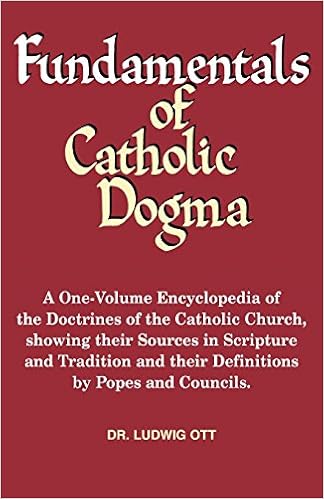
The immersion does not, apparently, even have to be a three-fold immersion. Pope Gregory the Great, in a letter to the Church in Spain, permitted a single immersion. According to Ott’s helpful book this was to symbolize against the Arians the unity of the divine substance of the Trinity.

However, in all cases, the water must flow on the head.

I have had to write about this in the past.  Hence, back when I consulted a friend of mine who worked in the Congregation for the Doctrine of the Faith about validity of baptism when the water a) does not touch the head or b) flows only on the hair, and doesn’t touch the skin of the head.   In the case of b) yes, that is valid.  However, in the case of a) there are big problems.

If the water does not touch the head, at least the hair of the head, the baptism is invalid.

However, it is possible to find in some manuals – and we like manual – that if water touches, say, only the shoulder, the baptism could be valid.  The far away from the head, the more doubtful.  In all those cases where the water touched something other than the head, there should be a conditional baptism.   Consider: in an emergency where someone is stuck in a hole and you can only reach a leg, and water is poured on the leg, that baptism is doubtful and should be repeated conditionally.

That’s why I wrote to my friend in the CDF with the question.  He responded: water must flow on or touch the head, at least the hair of the head.

To be sure, the water should be poured in enough quantity and on a place of the head where there is exposed skin, while the Trinitarian form is recited: “I baptize you in the name of the Father, and of the Son, and of the Holy Spirit.”  In my opinion it is best to do this in Latin, though approved translations are allowed.  The form is absolutely essential. In no circumstance can it be altered. These words must be pronounced simultaneously with action of making the water contact the head.  Not before.  Not after.

A good practice is to pour the water thrice, with the Names of the Persons of the Trinity, or continuously as the whole form is pronounced, directly on bare skin of the head.  That way there is no question about validity.

There is no reason to FOOL AROUND WITH SACRAMENTS!

Bishops would do well to quiz priests about how to baptize.  Some might find this insulting, but I have heard some pretty crazy things.  It may be that men trained – this includes permanent deacons, by the way – in certain places during certain years cannot be assumed to know how to baptize properly.

I mean … how hard is it, guys, to do it right?  To do it in such a way that there can be no doubt in the minds of those watching that it was valid?

How hard is it?

For all love, if priests and deacons can’t do these basic things right, say the black and do the red, they should be sent to some… I dunno… remedial summer camp. No air-conditioning or screens on the windows until they can demonstrate that they know the words and actions.


Posted in "How To..." - Practical Notes, ASK FATHER Question Box, Liturgy Science Theatre 3000 | Tagged , ,
22 Comments

28 February 2013

Five years ago today we watched the helicopter take off.  Posts HERE

Say a pray for Benedict XVI.  He gave inestimable gifts to the Church in his too short pontificate.

Posted in Benedict XVI | Tagged
3 Comments

Card. Sarah has frightened the libs… again. The vicious attacks begin.

Summoning the nastiness of which liberals are duly known, Rita Ferrone demonstrates how mean-spirited a lib can be in piece penned for Commonsqueal.  She attacked Robert Card. Sarah because he has called for a rethinking of Communion in the hand.

Card. Sarah opined in a preface he wrote for a recent book (HERE) that Communion in the hand (with other practices and influences) has diminished faith in the Eucharist.  He is, of course, right.   Hence, the spittle-flecked nutty from Ferrone.

It’s soooo predictable.

She doesn’t offer much in the way of counter arguments, except to cite the tired old claim that in the ancient Church some people received Communion in the hand and some writers wrote eloquently about that.  Never mind that the practice of Communion in the hand dropped away for a good reason, such as deepening appreciation and understanding of the Eucharist.  She also makes the point lots of people receive Communion that way in good faith.  In other news, water is still wet, the sun still rises in the East, 2 plus 2 still equals 4… well… you get what I mean.

In effect, Ferrone’s attack on the Cardinal consists mainly of calling him stupid and mean.

“…Sarah manages to slander…”

“…Sarah’s comments reveal either an appalling ignorance of or an indifference to liturgical history…”

“… he is disparaging the faith of many centuries of Christians…”

“… Sarah’s remarks display a lamentable lack of pastoral sensitivity…”

“Why did Pope Francis appoint Sarah—not to a niche position, but to a mainstream post in a field about which he knows little? And why does he let him go on blundering in this way?”

She goes on and on and on.

Ironically, however, the first sentence of her piece is:

In an arena where, arguably, the most important thing he could do is to encourage charity and an irenic spirit toward various forms of Eucharistic piety,…

Hypocritical much?

Look, these issues are really important and – simply put – we have to “have the fight“.   Heated language is part of that.   But clearly Sarah scared the stuffing out of Ferrone and she lashed out with a clear meanness, a littleness of spirit, because he is writing on a wholly different level: spiritual.

Her accusation that Card. Sarah denigrated people who receive Communion in the hand is simply A LIE.  Libs are seldom checked by facts.  Clearly what Sarah did – as when he made a call for ad orientem worship – is attempt to promote a more thoughtful, prayerful attitude of worship and reception of the Eucharist.

Pointing out that profanation of the Eucharist takes place more easily because of Communion in the hand is NOT a denigration of people who have never been taught about Eucharist.  Most people, when they are well-instructed, rethink Communion in the hand.  It’s not their fault if they haven’t been well instructed.  Card. Sarah isn’t blaming people for something that isn’t their fault.  His call is for a deeper understanding of what we do at Communion.

Here’s a taste of what Card. Sarah wrote in the preface she has reacted against so violently with my emphases:

May this book encourage those priests and faithful who, moved also by the example of Benedict XVI — who in the last years of his pontificate wanted to distribute the Eucharist in the mouth and kneeling — wish to administer or receive the Eucharist in this latter manner, which is far more suited to the Sacrament itself. I hope there can be a rediscovery and promotion of the beauty and pastoral value of this method. In my opinion and judgment, this is an important question on which the Church today must reflect. This is a further act of adoration and love that each of us can offer to Jesus Christ. I am very pleased to see so many young people who choose to receive our Lord so reverently on their knees and on their tongues. May Fr. Bortoli’s work foster a general rethinking on the way Holy Communion is distributed. As I said at the beginning of this preface, we have just celebrated the centenary of Fatima and we are encouraged in waiting for the sure triumph of the Immaculate Heart of Mary that, in the end, the truth about the liturgy will also triumph.

Here’s one of Rita’s comments about the Cardinal:

“… What a cruel and unnecessary affront to the person in the pew! What a pernicious viewpoint to endorse…”

I think we are all familiar with the startling statistics about knowledge of and acceptance of what the Church teaches.  I think we know that huge numbers of those who go to Communion at Mass are committing acts of sacrilege.

Card. Sarah, who regularly retreats from the hurly-burly and spends days in prayer and fasting, in his preface wrote openly about the war that Hell and demonic forces wage on people’s belief in the Blessed Sacrament.

If you were looking for confirmation that Card. Sarah’s call for consideration of ad orientem worship and the reduction of Communion in the hand are dead on target, look no farther than Ferrone’s mean-spirited spittle-flecked nutty.

I suspect that most of the unhinged reactions which will be flung – chimp-like – at Sarah stem from his unambiguous reference to the spiritual battle being waged for souls even on the angelic plane.   Card. Sarah believes in the Devil and the spiritually deadly effect of Hell’s war on souls.   Libs don’t believe these things.  As a matter of fact, when they are brought up libs become either a) dismissive about such fairy tales, thus confirming the truth that the Devil’s greatest victory is to wipe out people’s belief in him or b) angry and violent, which is another kind of confirmation.

The Enemy doesn’t like resistance.   When challenged demons commonly raise a hellish squeal.

You might try an experimental gut check.

Read a little bit of one of Card. Sarah’s books.   Then read some of Ferrone’s invective.

The Power of Silence: Against the Dictatorship of Noise.

US HERE – UK HERE

US HERE – UK HERE

Posted in Liberals, Liturgy Science Theatre 3000, New catholic Red Guards, Our Catholic Identity, The Drill | Tagged , , ,
18 Comments

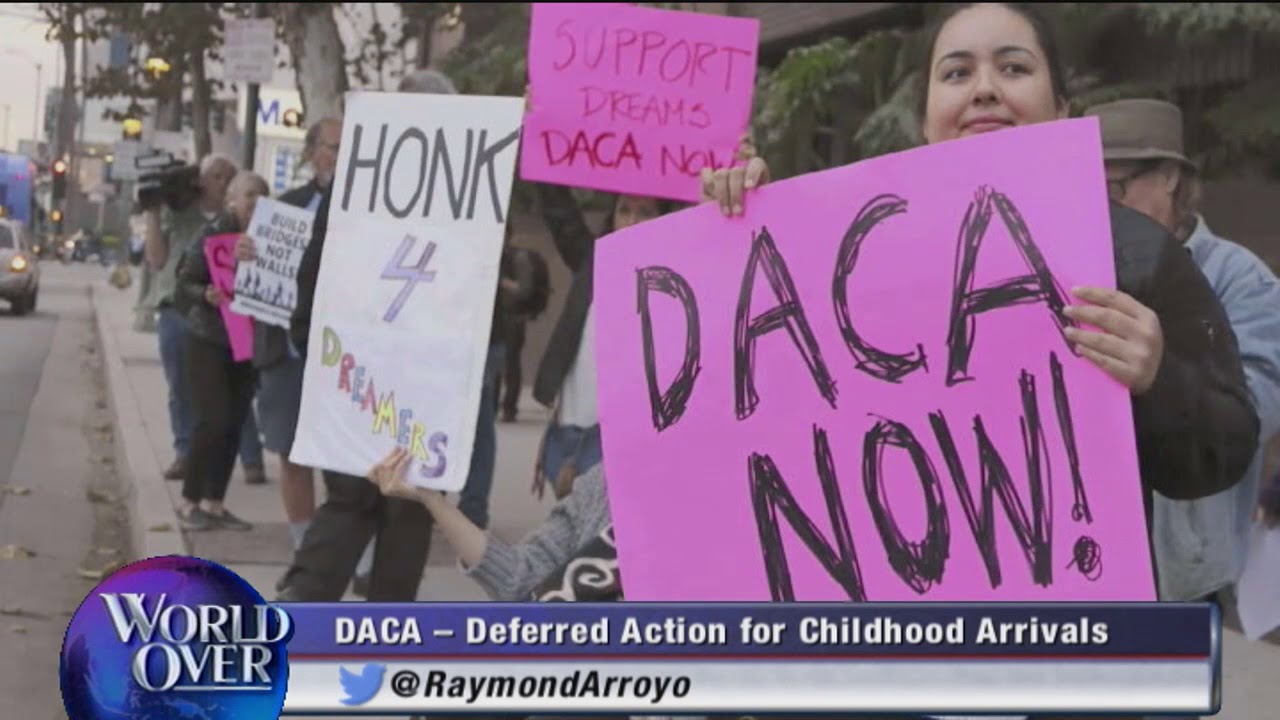
ASK FATHER: USCCB urges Catholics to call officials about DACA. If I don’t, do I sin?

From a reader…

QUAERITUR:

As you are probably aware, the USCCB has declared this Monday, February 26 to be a call-in day for DACA, and is urging Catholics to call their congressmen in support of the DREAMERs. On some other Catholic sites people have started a rallying cry, declaring that those who do not call in are being disobedient and will be guilty of mortal sin. I am not sure that this is even possible. Although immigration certainly has a moral component, it strikes me as more of a political issue and not nearly on the same level as abortion, gay marriage or euthanasia. My question is does this statement by the US bishops carry any moral obligation, or are we free to disregard it?

Here we have to walk a fine line and make a few distinctions.

First, contrary to what libs want everyone to accept, some issues concerning human well-being are more important than others.  For example, the right to be born and the right to a dignified natural death are more foundational to human well-being that other issues.   That is why abortion and euthanasia are intrinsically evil.   We really can’t have differences of opinion on those points.  “Gay” marriage violates the image of God in us and the explicit and manifest will of God identifiable in the fact that we are made male and female (and God tells us in Scripture what that’s all about), at the same time as Scripture also has condemnations of homosexual acts.   So, we really can’t have differences of opinion on that.

Then there myriad questions of human-well being that are grayer areas.   What to do about poverty?  What to do about immigration?   These things have to do with contingent moral judgments that admit manifold solutions.  We can have different ideas, legitimate ideas, about how to help the poor and how to help immigrants.

When the bishops of a place decide to make statements about the economy, or immigration or nuclear arms, or whatever else that falls into these areas that involve contingent moral judgments which admit wide variation of solutions, we Catholics must pay attention to what they say.   We pay attention because a) we ought to be interested in social issues and b) they are our bishops.  We owe respect to our bishops, and so we give them an honest hearing even when they are not talking only about spiritual issues or those other issues that don’t really allow for a difference of opinion.

Hence, are are not free to “disregard” what bishops says, individually or collectively.

That said, bishops don’t have dominant claim on our minds or obedience when it comes to matters that are in those murky and difficult areas involving contingent moral choices.   We can listen to them, weigh their arguments and then determine that, yeah I agree, or nah I don’t agree.

If you don’t agree – and remember, we are not talking about matters like abortion, artificial contraception, euthanasia, homosexual acts, etc, – you are not obliged to call anyone.  You can regard their message, disagree, and disregard their invitation to call your elected representatives.

If you do agree – even about those things which admit of many and varying solutions, such as what’s the best way to lift people out of poverty, which school of economics do we think has the best shot, what to do about immigrants, etc. – then you are still not obliged to call anyone.  You can accept their invitation to call someone or your can disregard their invitation to call someone.

If the bishops issue an invitation to call elected officials about things that really don’t admit many solutions, when they have to do with, for example, abortion or homosexual acts, then their invitation has a stronger force to it.   The more the issue has to do with defense of society from intrinsic evils, the stronger the invitation.  However, even then it remains an invitation to call a representative, not an obligation.

I firmly believe that society would be better off were more Catholics, with a strong identity and fidelity to the Church’s teachings, active in the public square.  In a sense, we are obliged to participate in public life, in society, according to our vocations and means, etc.  On the other hand, that obligation isn’t so strong that we don’t have a legitimate choice in the matter.

Bottom line, if you choose not to call anyone about DACA, either for it or against it, you do not commit a sin.  However, were you to call your elected officials in support of something intrinsically evil, then yes, you would commit a mortal sin.

It seems to me that the people who want you to think that it is a “sin” not to call in about DACA – and let’s be clear – they want you to call in support their view – they don’t want you to call if you differ with them, use “sin” (which ironically they don’t believe in for a lot of other clearly sinful acts) to manipulate your emotions.  There are libs who blur issues into one murky cloud of moral choices.  If someone mentions the evil of abortion, they rush in with talk about immigration, as if the two issues were on the same moral footing. In doing so, they blur the clear primacy of the right to be born through associating it with myriad other issues that involve contingent moral choices (“How to we lift people out of poverty?… How do we educate children?… How do we welcome immigrants?… etc.).

Be wary and make distinctions.

Posted in "How To..." - Practical Notes, ASK FATHER Question Box, The Drill, The future and our choices | Tagged ,
62 Comments

ASK FATHER: Priest forbids a deacon to wear a dalmatic

From a reader…

QUAERITUR:

Can the priest celebrant of Mass tell a deacon tell a deacon to not wear a dalmatic at Mass? Some people think it best that a deacon wear a dalmatic for a higher degree of solemnity but not on common ferial days unless preaching. I imagine this might not be worth bickering over for transitional deacons, but what can a permanent deacon do?

“Higher degree of solemnity”.   That sounds like that old chestnut of “progressive solemnity”.

B as in B, S as in S.  That’s just liturgical stinginess.

The proper vestment of the priest is the chasuble.

The proper garment of the deacon is dalmatic.

The priest cannot be prevented from wearing his chasuble and the deacon his dalmatic.

As far as wearing it only when preaching is concerned, it is ironic that there is an old tradition of priests and deacons removing their chasuble or dalmatic to preach!

Of course when a priest has decided to make Mass about himself (“See? I get to wear a chasuble and HE only gets a stole!”) there is not much you can do.  This is an exercise of power, which suppresses commonsense.

I suppose that you have already tried to win him over.  With charm, keep working on it.

You might consider, when you have the chance to preach, explaining the significance of vestments and how the different offices require them in her sacred liturgical worship.

Posted in "How To..." - Practical Notes, ASK FATHER Question Box, Liturgy Science Theatre 3000 |
18 Comments