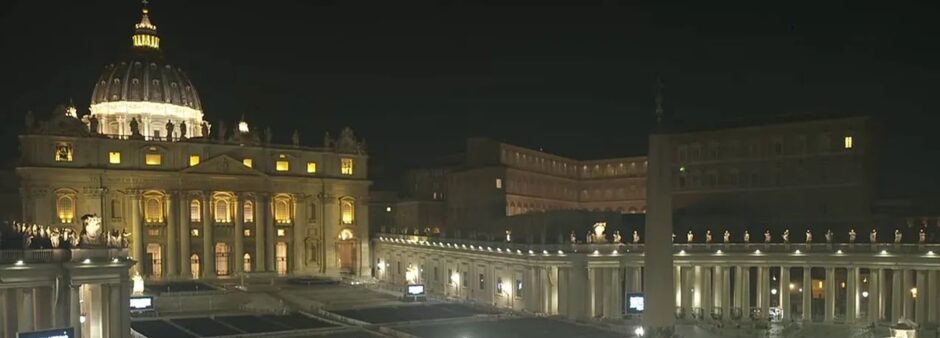
ASK FATHER: Penalties for Violation of the Seal. Wherein Fr. Z and a fictional SSPX priest explain the situation.

In the combox I was asked…

QUAERITUR:

Doesnt revealing the content and identity of a penitent incur grave penalties?

I respond thusly.

First, for a person – and priests are people, too – to incur a censure, he has to commit a sin.  So, he has to know that it is wrong and do it anyway.   When it comes to something like the Seal of Confession, a priest can’t plead innocent ignorance.  If he is ignorant he is culpably ignorant, because of his office in the Church.  Also, during his ordination he had to state explicitly that it was his intention to hear confessions.  Moreover, someone had to stand up and testify that he was properly trained.  Could any of those points of responsibility go awry?  Sure.  People can lie.  People can be truly stupid.  But it is highly unlikely that, even in the worst training or a really thick candidate, the priest doesn’t know what the Seal is and what violation of the Seal brings.

Let’s see some law.

Can. 983 §1. The sacramental Seal is inviolable; therefore it is absolutely forbidden for a confessor to betray in any way a penitent in words or in any manner and for any reason.

Can. 1388 §1. A confessor who directly violates the sacramental Seal incurs a latae sententiae excommunication reserved to the Apostolic See; one who does so only indirectly is to be punished according to the gravity of the delict.

Priests may not reveal what they have learned during confession to anyone, even under the threat of their own death or that of others.

Punishment for breaking the Seal of the confessional depends the severity of the violation.

A priest who directly violates the Seal, that is, he explicitly connects a sin to a penitent by name, incurs a latae sententiae excommunication.   By the very fact that the priest did it, knowing it was wrong, he incurs the censure.  It will probably also be declared by proper authority if the case is revealed.  But even if it isn’t, the priest submit himself to judgment and seek a remedy, right away, through the Sacra Penitentieria Apostolica in Rome through the services of a confessor who knows the procedure.

What is direct violation?  Example, in the Diocese of Libville at Sing A New Faith Community Into Being Faith Community, Father Tad Flapmouth (biretta tip to Fr. Fox!) says, “On Saturday afternoon, in the confessional, Maggie MacGullicuddy confessed to me that she had slept with Frank O’Sullivan’s transgender husband, four times in the last week!  She says she was sorry, but was she?   First, all that 1950s stuff about sex and gender hangups!  Sheesh.  I gave her that thing… you know absolution…because she insisted, but I think she might just be scared of that old stuff about hell and isn’t reoriented in a hopeful and transformative vision of the reformed sacrament.”  That’s direct violation.

One who breaks the Seal indirectly gives sufficient information so that the sins and the penitent can be deduced.  For example, also in Libville at Engendering Togetherness Community of Welcome, Fr. “Just call me Bruce” Hugalot (recently moved from St. Idealia), says, “An elderly parishioner regularly knocks on the sacristy door about 8 minutes before Mass asks me to hear his confession.  His confession is always masturbation. Week after week, same confession always with the number of times.  Laundry list, right?  I have to wonder if this guy isn’t just stuck in some cultic or magical view, you know, like all that Counter-Reform stuff that is now obsolete.”  That’s indirect.  If you know where Hugalot says Mass… er um… presides at liturgy, and had noticed that a few minutes before Mass the same elderly guy goes to the sacristy, you would know his identity and what he confessed.

“But Father! But Father!” you PrayTell readers are dribbling, “It’s all about, you know… human brokenness and being present to each other in encounters of proximity that … that… can level out the outdated misconception of the dynamics of … of…. rigid legalism, and ritualism!  And YOU HATE VATICAN II!”

I really don’t.  And I respect Vatican II enough not to lie about it, and not to force it to say or mean something that it does not say or mean.

The Seal of Confession is so important that when a priest violates it, in addition to the application of the censure of excommunication, he can be dismissed from the clerical state.

So, yes, there are grave penalties for grave sins.  This is one of the gravest that a priest can commit.

Allow me to say that the violation of the Seal is incredibly rare.   Even the goofiest sort of lib priest (if he ever hears confessions at all) will usually not violate the Seal.  That’s how hard this is beaten into our thick skulls in seminary.

What would a lecture on Penance be like?

For example, at Our Lady Hammer of Heretics Seminary in the Diocese of Black Duck, Msgr. Zuhlsdorf and Fr. Rocco Firm of the SSPX’s St. Joseph Terror of Demons Chapel are running a practicum on the Sacrament of Penance.

Seminarian: “Msgr. Z, pray tell, afterward can we say to someone that…”

Msgr. Z: “KEEP YOUR MOUTH SHUT!”

Seminarian: “But what about if….”

Msgr. Z: “KEEP YOUR MOUTH SHUT!”

Seminarian: “But…”

Msgr. Z: “KEEP YOUR MOUTH SHUT!”

Seminarian: “Okay, I get it.  I just want to know if…”

Msgr. Z (exiting): “Fr. Firm, can you take this while I get some coffee?”

Fr. Firm: “KEEP YOUR MOUTH SHUT!”

Friends, do not let the incredibly rare occasion of a violation of the Seal, direct or indirect, or even the appearance of one, put you off of going to Confession.

And that fictional dialogue is actually based on my experience at the hell hole called St. Paul Seminary in the 80’s from a complete heretic priest who denied transubstantiation, threw me out of the seminary when he was acting rector, left the priesthood to shack up with a faculty member, etc. etc. etc.  When it came to the Seal, the answer was always the same: KEEP YOUR MOUTH SHUT.

GO TO CONFESSION!


Posted in "How To..." - Practical Notes, ASK FATHER Question Box, Canon Law, GO TO CONFESSION | Tagged , ,
27 Comments

21 April – HOLY MASS (TLM) – St. Anselm – LIVE VIDEO: 1200h CDT (GMT/UTC -5) – With prayers “For the sick”

Click To Contribute

Will you please subscribe to my channel? HERE

I will LIVE stream a Traditional Latin Mass at NOON Central Daylight Time (= GMT/UTC -5 and ROME 1900h).

The Mass formulary: St. Anselm, Bp., Conf., Doctor

I will add prayers “Pro infirmis… for the sick”, especially for those who are near to death.

  • NB: You can find an English translation of the Mass formulary HERE.  Scroll down. Use the 1960 setting.
  • We can say the Regina Caeli together, since the Angelus bells are usually ringing when the live stream starts.
  • I will say a Spiritual Communion prayer at the very beginning for those of you who cannot make a Eucharistic Communion. 
  • I will also recite in Latin the traditional  “Statement of Intention” (…a hint to priests).
  • After Mass and the Leonine Prayers, I will recite a prayer in Latin “In time of pandemic” followed by a blessing with a fragment of the Cross.

I’ll add a “fervorino” (short sermon).

ORATIONS “Pro infirmis… for the sick who are near to death”

COLLECT: Almighty and merciful God, who hast conferred upon mankind both the remedies of salvation and the gifts of life everlasting: look mercifully on Thy servants who are afflicted with sickness of the body, and refresh the souls which Thou has created, so that at the hour of departure, they may be found worthy to be taken home to Thee, their Maker, free from all stain of sin, by the hands of holy Angels.

SECRET: Receive, O Lord, the sacrifice we offer up on behalf of Thy servants who are nigh unto death, and grant that by means of it all their sins may be washed away; so that they who at Thy will are stricken by Thy scourges in this life, may obtain eternal rest in the life to come.

POSTCOMMUNION: We beseech Thy clemency, O Almighty God, that by the virtue of the Sacrament Thou wouldst vouchsafe to strengthen Thy servants with Thy grace so that at the hour of their death the enemy may not prevail against them, but they may deserve to pass to life accompanied by Thine angels.

Posted in Liturgy Science Theatre 3000, LIVE STREAMING | Tagged
Comments Off on 21 April – HOLY MASS (TLM) – St. Anselm – LIVE VIDEO: 1200h CDT (GMT/UTC -5) – With prayers “For the sick”

Wherein Fr. Z responds to a lie

I’ve sat on this for two days now.  I shared the draft with trusted experts for review.

I was told that, at PrayTell – a disaster of a blog which most of you should simply ignore – there was a personal attack on me by name by a Franciscan who runs the liturgy office of the Diocese of Raleigh, Fr. Jim Sabak, OFM.   Sabak rightly took heat for issuing guidelines for that diocese for administration of the Sacraments of Penance and of Anointing during this pandemic.  Some of those guidelines – issued I believe in March – were not well conceived, to put it mildly.  When I wrote about those guidelines, I did not identify the diocese.  My post HERE

Sabak’s new offending post at PrayTell is entitled “Clericalism and the Pandemic”.  The projection of “clericalism”, by someone like this, lines up in an almost perfect parallel with how Alexandria Ocasio-Cortez flings out “racism”.

I strive to give people the benefit of the doubt.  I don’t enjoy this. I would have just ignored his goofy notions and his distortions of what happened about his guidelines if he hadn’t lied about what I wrote.

At PrayTell on 18 April, after getting heat for his bad guidelines, he whines:

For Penance, we asked clergy to discontinue “drive-up” celebrations as not the most appropriate way to celebrate the sacrament. Additionally, we noted that spacing a penitent six feet from a confessor did not provide for the essential privacy for individual celebration of the sacrament. For Anointing of the Sick we struggled to envision a manner by which to celebrate the sacrament especially with the terminally ill who had succumbed to the virus. We decided that prayer over the sick and with family would be best, given the problematic situation involved with touching the forehead and palms with the Oil of the Sick.

Within minutes of receiving the memo my email inbox exploded with question after question after question. Some only asked for clarity and expansion on what the memo contained. Other correspondence, however, contained an anger, which source was difficult to discern. [How about, YOU GOT IT WRONG?]

One of the ordained wrote that my suggestions made him question why he ever became a priest in the first place, and that he should have stayed in immigration law. [Thus identifying that priest.] Another sent the memo to the blog of the infamous Fr. Z, who proceeded to “rant,” as he is want. [The word you are looking for is “wont”.] Fr. Z raved on that these guidelines left the faithful to eternal condemnation because they prohibited the faithful from receiving the necessary sacraments before death.

That’s just a plain lie.

Firstly, in those bad guidelines issued back in March he – presumably Sabak – wrote that there shouldn’t be “drive up” confessions, not because of privacy but because “The necessary human interaction crucial to the celebration of the sacrament is impeded through the lack of full proximity and the ability to offer counsel and direction is hampered by the distance between the confessor and the penitent.”  Note: no mention of privacy.

The problem with this is that the necessary human interaction possible in a drive up confession is not at all impeded.  A penitent can confess and a priest can absolve easily at the range.  And if they aren’t shouting at each other, and if no one else is nearby, it is not obvious that there would be a problem for privacy.

Maybe Sabak thinks priests have to touch penitents.  I don’t know.  That was a fad for a while.

And I find it ironic that this fellow should NOW be interested in privacy after his apparent violation the Seal by identifying a penitent and the content of his confession on the same PrayTell blog!  I checked with canonists on that one and they were quite simply horrified.  I held myself in check then.  But … now?

In that Seal violating post he wrote on 4 November 2019:

For example, an elderly parishioner, at about eight minutes before Mass, regularly knocks on the sacristy door, and each time asks, “Father can you hear my confession?” [NB: age… time… place…] Again, this exchange occurs less than ten minutes before Mass begins. To refuse would place the parishioner in a state of distress, having been raised with a particularly insufficient understand the sacrament. Without any other time to attend to it, I quickly celebrate the sacrament with themTheir confession…masturbation (with frequency that week); again and again, week after week, the same confession always with the number of times[content of what was confession in the Sacrament of penance] I could have been impressed by their stamina, but did the celebration of the sacrament truly provide any peace? I cannot say, but for them it is necessary, if only mechanical, week after week. It is retributive, but did it achieve the purpose of the sacramental encounter?

This is not a hypothetical situation.  In a comment below that post, a reader raised the point of violation of the Seal.  Sabak responded: “In response to your concern, though, I’ve revised the language of the post.”  So, what we see at PrayTell is the “revised” version. It still identifies the penitent and of the content confessed.  I shudder to imagine what it was like before.  There is sufficient information in Sabak’s PrayTell post to identify the penitent by his “regular” pattern of behavior and his age and what he does and the explicit public revelation of the content of his confession.

And he is director of liturgy in a diocese.

Moving on…

In those March diocesan guidelines Sabak – presumably – wrote that the Sacrament of Anointing could not be administered with a gloved hand.  “In the current state of the pandemic, the celebration of the Sacrament of Anointing of the Sick cannot be fully administered as a gloved hand cannot administer the anointing.”

“Fully” administered?  You don’t partially administer a sacrament.  Also, in the recent PrayTell post he said that they were concerned about touching the patient’s skin with the thumb.  He glossed over his ignorant and erroneous claim that the sacrament couldn’t be administered with a gloved hand.

YES, a priest CAN anoint with a gloved hand or an instrument.   I explained that thoroughly HERE, in the post Sabak lied about.

Sabak claimed in the recent 18 April PrayTell blog post that

“Fr. Z raved on that these guidelines left the faithful to eternal condemnation because they prohibited the faithful from receiving the necessary sacraments before death.”

That’s a blatant falsehood.

I did NOT write that the guidelines “left the faithful to eternal condemnation”.  I did not suggest that or hint at it or anything like that.

I did write: “[T]his is not the time for restricting the sacraments that can otherwise easily be administered without danger of contagion.”

To be clear: When a person is in danger of death, that’s certainly when he needs the sacraments the most!  Does Sabak deny that?

It seems that that is a view that foreign to Sabak.  Later in his recent PrayTell post wrote about the criticism he received:

Nothing in any of these conversations [critical of his guidelines] reflected an understanding of sacrament as communal, as an encounter with God, with Christ, for building up of the Reign of God, for the transformation of our lives here and now. While the concern for the faithful and their reception of the sacraments is sincere, this concern emphasized the immortal salvation obtained through sacramental reception and the role of the ordained in providing the means for that salvation. [Imagine!  A priest being concerned about a person’s “immortal salvation” IN TIME OF PANDEMIC!  How backward is that?] It was cultic in scope, approaching the position that without the clergy there can be no sacramental experience, and thereby no possibility of salvation. [“No possibility of salvation”?  Where did this guy go to school?   No well-educated priest leaps from “unable to receive sacraments” to automatic “no possibility of salvation”.  But, I’ll tell you what: I’d rather have the last sacraments than not have them.  For many centuries the Church has prayed and still prays for God to preserve us from a “sudden and unprovided death”.  For that Franciscan, and people in Columbia Heights, that means, the Last Rites.  Our merciful Savior Himself instituted the Sacrament of Penance and gave His own power and authority to His priests to forgive post-baptismal sins.  Why?  So we would not have to wonder about forgiveness, provided we are sincere.]

Such interpretations and emphases around sacramental engagement fly in the face of reformed theology [?] after the Second Vatican Council.  The ordained sincerely aspire to exercise their role as ministers in this difficult period of social restrictions, but they seek to do so in an almost magical way. This approach projects a view of God who will not suffer the inconveniences of a pandemic to get what this God deserves by way of sacramental obligations.

Magic!   Reformed theology!  Cultic!  If you don’t think like Fr. Jim “the reformed” Sabak, then you are backward shaman of some kind.

Speaking of “magic”, try to get your head around this.

Such perspectives and reactions seemed to emphasize a rubricism and legalism, popular in some circles of the Church today. What was most troubling, though, was the primarily supernatural and almost magical approach toward engagement and efficacy of the sacraments. In a fascinating manner, the pandemic seems to have unearthed a Counter-Reformation image of sacramental understanding as medicinal where the clergy act as the earthly physicians of the “Heavenly Physician.” The faithful, because they are fundamentally sinners, need the sacraments to heal them and to maintain an appropriate relationship with God. They also give them a fighting chance for eternal life should they die. The proliferation of an 18th century prayer by Alphonsus Ligouri to alleviate anxiety over the inability to receive Eucharist in these days, which prayer is theologically problematic [?] – it is not Jesus, whom we receive, but the risen Christ – testifies to this.

On the other hand, St. Paul writes in 1 Cor 11:28-30:

Let a man examine himself, and so eat of the bread and drink of the cup. For any one who eats and drinks without discerning the body eats and drinks judgment upon himself. That is why many of you are weak and ill, and some have died.

I’m truly embarrassed for Sabak.   He seems to be a Vatican II as Super-Council discontinuity fundamentalist.  He seems, from his language, to be perfectly willing to reduce the supernatural to the natural, which would make him a modernist.  He shows contempt for the faithful who have a solid understanding of the Faith as rooted in the Catechism of the Catholic Church.  

Leaving apart the dopey shot at one of the great Doctors of the Church, what does this line even mean?  Read carefully: “The proliferation of an 18th century prayer by Alphonsus Ligouri to alleviate anxiety over the inability to receive Eucharist in these days, which prayer is theologically problematic – it is not Jesus, whom we receive, but the risen Christ – testifies to this.”

When we receive the Eucharist, according to Sabak: ” it is not Jesus, whom we receive, but the risen Christ”.

It is NOT Jesus.  It is the Risen Christ.  Hence: The Risen Christ is NOT Jesus.

Look.  Before the Incarnation, the Second Person of the Trinity wasn’t Jesus.  Jesus is a divine Person with two natures, divine and human.  After the Incarnation and Nativity we have with us on earth Jesus, born of the Virgin at Bethlehem.  The bond of those two natures, divine and human, in one divine Person, Jesus, is indestructible.  Jesus, who is Messiah, King, Priest, Prophet, New Adam, etc., all the beautiful titles and roles he has, is still Jesus, now gloriously risen.   Our humanity, which He took into that indestructible bond, is now glorious.  But He is still Jesus, the Son of Mary the Mother of God.

But Sabak seems to think that Jesus and Risen Christ are two different people.  Go back and read that strange line again.  Sabak, the guy who doesn’t know how to anoint people, and who revealed the content of a concrete confession on a blog, thinks that St. Alphonsus’ Spiritual Communion prayer is “theologically problematic” because, as Sabak puts it, “it is not Jesus, whom we receive, but the risen Christ”.

I would have just ignored all these goofy notions and his distortions of what happened about his guidelines if he hadn’t lied about what I wrote.

Meanwhile, I am getting emails from priests who know him on the East coast, relaying, along with links to his condescending April hit piece at PrayTell, other amazing things he has uttered.  While it wouldn’t be fair to detail at 3rd hand what I’ve read, I am shocked.

And he is the liturgy director of a diocese.  Ponder that.

And another thing.  In my post about these bad guidelines I purposely did not identify the diocese he works for.   But now that this guy has attacked me by name with a lie about what I wrote, I am compelled to clarify things.

By the way, if it weren’t so serious, I might find humor in his insinuation that we dumb retrograde priests out here lack an “understanding of sacrament as communal”.  For Sabak, however, “communal” seems also to mean revealing the identity of a penitent and what he confesses on a blog.  

Behold the fruits of post-Conciliar “reformed” theology.

I have been asking people to pray for priests who are really annoying or who are doing harm.  I will pray for Fr. Sabak.

Posted in B as in B. S as in S., Green Inkers, Liberals, Pò sì jiù, Si vis pacem para bellum!, The Drill | Tagged ,
47 Comments

20 April – REQUIEM MASS “Pro defunctis sacerdotibus” – LIVE VIDEO: 1200h CDT (GMT/UTC -5) – With prayer “in time of pandemic”

Click To Contribute

Will you please subscribe to my channel? HERE

I will LIVE stream a Traditional Latin Mass at NOON Central Daylight Time (= GMT/UTC -5 and ROME 1900h).

The Mass formulary: REQUIEM “Pro defunctis sacerdotibus”

After, I will recite a prayer in Latin “In time of pandemic” followed by a blessing with a fragment of the Cross.

  • NB: You can find an English translation of the Mass formulary HERE.  Scroll down. Use the 1960 setting.
  • We can say the Regina Caeli together, since the Angelus bells are usually ringing when the live stream starts.
  • I will say a Spiritual Communion prayer at the very beginning for those of you who cannot make a Eucharistic Communion. 
  • I will also recite in Latin the traditional  “Statement of Intention” (…a hint to priests).
  • At the end, after the Leonine Prayers, I’ll say a “Prayer against pandemic” from the Roman Ritual with blessing with a fragment of the True Cross.

I’ll add a “fervorino” (short sermon).

For more than one deceased priest:

COLLECT
Deus, qui inter apostolicos sacerdotes famulos tuos N. et N. sacerdotali fecisti dignitate vigere: praesta, quaesumus,; ut eorum quoque perpetuo aggregentur consortio. Per Dominum.

O God, who was pleased to raise Thy servants N. and N. to the dignity of the priesthood: vouchsafe to number them with They priests for evermore.

SECRET
Suscipe, Domine, quaesumus, pro animabus famulorum tuorum, N. et N. sacerdotum, quas offerimus, hostias; ut, quibus in hoc saeculo sacerdotale donasti meritum, in caelesti regno Sanctorum tuorum iubeas iungi consortio. Per Dominum..

Receive, we beseech Thee, O Lord, for the souls of Thy priests, N. and N. the sacrifice we offer: in this world Thou didst raise them to sacerdotal rank; bid them now enter the company of Thy saints.

POSTCOMMUNION
Prosit, quaesumus, Domine, animabus famulorum tuorum N.et N. sacerdotum, misericordiae tuae implorata clementia: ut eius; in quo speraverunt et crediderunt, aeternum capiant, te miserante, consortium.

O Lord,, may Thy mercies, which we implore, avail Thy servants, N. and N., Priests, departed. In Thee they hoped, in The they believed: may they be united to The for evermore.

Posted in Four Last Things, Liturgy Science Theatre 3000, Priests and Priesthood | Tagged ,
Comments Off on 20 April – REQUIEM MASS “Pro defunctis sacerdotibus” – LIVE VIDEO: 1200h CDT (GMT/UTC -5) – With prayer “in time of pandemic”

More about the SSPX and the heart

I wrote about the SSPX the other day because some internet tweets were drawing out the worst in people.

Opening up Twit-deck today reveals that the worst is still going on.

The canonical status of the SSPX and the various issues connected to it, cannot be hashed out on Twitter, on Fakebook, in rambling partially-informed vlogs, etc.

The situation of the SSPX is anomalous and difficult.

Even the office of the Roman Curia that was set up in 1988 to handle matters related to the SSPX, inter alia, made careful and guarded comments about their status.  (I know, I wrote some of them.)  Since then there have been various backings and forthings which have helped and have harmed the dialogue between the Holy See and SSPX.  Mistakes have been made and advances have been made.  It is a difficult process because of the exceptional nature of the Society.

In the anglophone sphere there is a problem which often blinds dilettantes when it comes to matters of law and discipline and praxis and interpretation of Church matters. People with an American formation, especially, tend to like cut and dried, sharply defined edges and neat little boxes into which they can sort things. But that’s not how things work in the Church when it comes to law.

I am reminded of a certain kind of priest who, because of inflexibility and not a little scrupulosity had to… simply had to… make signs of the Cross during the Canon exactly between the syllables of the words in which the marking was printed. This nearly Jansenist rigidity contributed to the maniac modernist war on our liturgical tradition, discipline and doctrine.   This same thing can be found in lay people of a strongly traditional stripe, for whom all priests must conform in their manner of saying Mass to how they recall old Fr. Sven O’Brian used to do it, ’cause he used to wiggle his pinky finger at the same point in Mass as followed in their ol’ St. Joseph Missal.

Some people don’t know what they don’t know.

I know quite a lot about the SSPX situation, as it turns out, but I don’t know what’s going to happen next.  All along the way, just as I thought I had things worked out, I’d get thrown a wicked changeup.  The priests of the SSPX are clearly suspended a divinis.  Welllll… not so much, since they can now receive faculties to witness marriages.  Priests of the SSPX clearly don’t have faculties to absolve penitents in regular auricular confession.  Welllll… not so much, since now they do.  What’s next?

The priests of the SSPX obviously don’t have faculties to preach or to say Mass.  Oh, yeah?  I’m waiting for another changeup.

I can’t predict what will come next, but I have learned to be patient at the plate and not grip the bat too tightly.    My view has had to evolve as the situation evolves.  One day this is going to get sorted out.  I hope soon.

Repetita iuvant.

The fact is, the SSPX is a what the ancient Latin writer Juvenal in his Satires would call “rara avis in terris nigro simillima cygno… a bird as rare on earth as a black swan”.  They didn’t think black swans existed.  They were wrong, but that’s not the point.  That’s where we get the phrase rara avis, a “rare bird”, something unique or hardly to be imagined.  There’s nothing else out there quite like the SSPX.

Notwithstanding, some hard-headed and clearly hard-hearted folks out there are absolutely determined that the SSPX must be definitively categorized and confined to a precise cubbyhole otherwise… OTHERWISE!! … as Dr. Peter Venkman predicted: “Human sacrifice! Dogs and cats living together! Mass hysteria!”

They just can’t stand that the SSPX does not conform to their paradigm of how the Church ought to work… on their planet.

Since I’m on a quoting roll, back in seminary in Rome there were guys from way up in Piemonte who had their own indecipherable ways and dialect.  Sometimes when talks or sermons got a little long one of them would mutter, “gavte la nata”, which was eventually explained to me as meaning, “pull the cork out”. In other words, let the pressure out and let’s get on with things.

Will you allow me to digress into a personal anecdote?  It’s about one of the most important things that ever happened to me in Rome and it has to do with the traditional Mass and with rigid positions.

When I was at “Ecclesia Dei“, early on, we had a really strained correspondence with an intractable American bishop, an infamous über-lib, who had a deadly feud going on with people in his diocese who wanted the traditional Mass.  The people got us involved, the bishop got angry.  It was awful.

Finally, the bishop wrote to us a letter that was seriously rude, even insulting.  I had had it.  “Basta!”  I drafted a response for the Cardinal that was going to END the issue by bringing in the weight of the office.

My dear late mentor and boss, Card. Mayer, the holiest man I’ve ever known, called me to his office, as usual, to go over various drafts of correspondence.  He had saved The Draft – my hammer on the bishop – until the end.  He said that what I had written was correct and proper.  “This is what we should write, of course.”  Then he asked about the first sentence,

“Here you wrote, X.  Do you think perhaps we could write Y instead?”

“Of course, Your Eminence!  It’s your letter”.

Changes were made in his carefully microscopic writing.

“And in this place, you wrote X.  Could Y work here?”

“Yes, Eminenza!”, I responded.

We continued that way until there was literally nothing remaining of my Draft – the hammer – but a couple of “ands” and “thes”.   We were actually laughing as my composition relentlessly disappeared under the black ink spiderweb of the Cardinal’s emendations, each one carefully and politely framed as a question, asking permission.

At last I said, “I obviously don’t have the right view of this.  Help me out.  Help me to understand how you want me to approach this.”

He paused a bit and looked at the crucifix on the wall of his office and said, “At a certain point, we have to stop fighting and try to open up their hearts.”

With that, I went back to my desk and stared at the keys of the typewriter… yes, typewriter… and pondered.

“How do I open this bishop’s heart after all the bitter bridge burning?  One of us has to give, and clearly it has to be us.  Get off your high horse and keep it simple.”

I flashed out another draft and was back in the Cardinal’s office a few minutes later.  He looked at my new version, approved it, and out it went in the evening mail bag.

What, you might be asking, did I write in that second draft to that bishop?   It was not long.  It was not complicated.

I apologized to him for our part in making the correspondence so difficult and then said along this line,

“Your Excellency, so many good people in your diocese simply want to have access to Holy Mass according to the 1962 Missale Romanum.  Will you please, Your Excellency, not open your heart for them and give them what they want? They would be so happy.  Sending prayerful best wishes for, etc. etc.”

Some time later we received a note from one of the faithful in that bishop’s diocese who had been involved in the feud and tension.   He thanked us for what we did, and related that, not only had this über-lib, tradition-hating bishop given the required permission for the Traditional Mass, but he came to them and he said it himself.

I was stunned, but I don’t think the Cardinal was.

To this day, my heart gets chilly and I often fail in charity.  But I am, I trust, a work in progress.  But that was was an important life lesson.  I learned that, in the matter especially of the dynamics of tradition, the heart is an important lens through which to view complicated conflicts.  This is because, I am convinced, the Enemy knows that he cannot succeed if we succeed in renewing the life of the Church through a recovery of our traditional liturgical rites.   So the Devil is going to fuel feuds, create strife, harden hearts.  Moreover, Old Scratch and demons are the ultimate lawyers.   If they can keep us quibbling and mired in the details, we are rendered ineffective.

Recovery of our identity is just as much a matter of the heart as it is a matter of stuff we can grind about in our heads.

I could tell story after story like the one above.  I also have many tales about the zeal of good SSPX priests whom we helped out at Ecclesia Dei, and whom I personally got to know.  What a lot of people today don’t understand is what the atmosphere of those times was like, especially in certain countries.  The hostility and vindictiveness of bishops and priests in positions of power was nothing short of diabolical.  It was far worse in Europe than it was in these USA back then.  And, these days, especially in these USA, the situation is now very much improved.

Hence, it is really hard, especially for the young who haven’t been in the trenches, newcomers, as it were, to take in all these matters, and especially for lay people, to understand these matters from within.

This is why I think that some whippersnappers out there should put a sock in it for a little while and… please… open their hearts to the matter.

I urge every one just to unclench about the SSPX. Could you, please?

The situation of the SSPX is complicated.  It is anomalous.  It is evolving.

The moderation queue is ON.

Posted in Cri de Coeur, My View, SSPX | Tagged
20 Comments

Your “Low” Sunday 2020 Sermon Notes – VIDEO

Was there a good point made in the sermon you heard at the Mass for your Sunday, either live or on the internet?

Let us know what it was.

For my part…

Posted in What Fr. Z is up to |
6 Comments

ASK FATHER: Cohabiting couple who own a house. (MUST READ HILARITY!)

I don’t like hypothetical questions.  “What if’s…?” can go on forever.

However, this one was interesting.  So I reached out to my friend Fr. Ferguson, knowing in my bones that what I would get back would be a doozy.

It’s a doozy.

From a reader…

QUAERITUR:

I have a hypothetical question for you. Let’s say a couple who has been cohabiting buy a house together and co-own it, both have money in it and neither parties has the financial means to buy the other person out, and selling it isn’t possible either (terrible housing market). Neither party has the intention to marry the other and have been together for a very long time. What is the morally correct thing to do in this case? Would it be sufficient to live separately in the same house such as roommates (to my surprise, our traditional priest says co-Ed roommates are allowed if they have separate rooms. My dad didn’t seem to think so, fwiw)?

GUEST PRIEST RESPONSE: Fr. Tim Ferguson

Hypothetical situations are difficult to talk about, and almost impossible to provide clear moral guidance on, because, as a hypothetical situation, there are far too many variables that could completely alter the case.

Let’s flesh out this hypothetical situation. Hypothetically, of course. Titus and Bertha moved in together when they were stupid, hormone-stricken 19 year olds, away from home at a college out of state. Neither went to church regularly, and they knew, deep down in their hearts, that love would conquer all, and together they were going to show the world what real maturity was like. Ten years later, Bertha’s got a good job at a local bank, has stopped smoking marijuana, and is looking ahead to her future. Titus worked for a moving company for awhile before he got fired for smoking on the job, then he helped his buddy Biff in his pool cleaning business for a bit before it shut down because too much money was going into late-night nachos and the latest tennis shoes. Now, Titus collects unemployment and has several high-level characters on different World of Warcraft servers as well as a killer tattoo of Bertha’s name turning into a butterfly on his left arm. On the advice of a friend, Bertha goes one Tuesday evening to a Catholic Mass and the beauty reawakens in her heart the faith she had stopped practicing in tenth grade when Sr. Noreen yelled at her for having her skirt too short. Bertha comes home, sees Titus on the couch and thinks – I want more out of life. But his name is on the house as well, and she doesn’t want to go through the battle right now. Does she stay in the house, move into a separate room, go make a good confession, and start living her life as a practicing Catholic – more or less ignoring her domestic situation until an easy out comes along?

No. Bertha puts on her big girl pants and gives Titus and ultimatum. He has three options: a) clean up, sober up, get a job and propose to her; b) pick up his dirty clothes, move out, and sell his half of the house to her; or c) let her sell her half of the house to him, and she’ll pack up her dishes and Willow Tree figurines and move out.

Or, lets flesh it out this way:

Connie and Brian move in together after a short but passionate affair, having met on the job at the local pancake house. Deeply in love, but young and immature, they do what all their friends are doing and first rent a cheap, rundown apartment. But as they grow up, and grow together, they start moving forward with their lives. After ten years, Brian is a manager at the restaurant, and Connie is successfully selling beaded jewelry on her Etsy shop and doing medical records transcription at home. But, the flame has gone out of their relationship. They are bonded, not by romance, but by time and inertia. Both are nominally Catholic, and go occasionally to Mass, only learning recently that the tripe they had learned in CCD class back at St. Edmund’s of the Hills Parish and Country Club was balderdash, and coming to the realization that living together without the benefit of marriage is objectively sinful. They know they should move apart, but their finances are mixed, and a little tricky. Brian has a good job, but couldn’t afford to get his own place. Connie has claimed a chunk of their house as a business expense and they also have two vehicles that they jointly own. The housing market is lousy right now, and if they tried to sell and buy two separate places, they would both take an inordinate loss. It’s going to take some time to separate their finances and their lives.

They go to Fr. Dan McTradington, who counsels them that it’s okay for them to continue living under the same house – in different bedrooms – while they work toward separating. He counsels them that they need to firstly ensure that they remain chaste, and that they avoid giving scandal as much as possible. He helps them to set a reasonable timeline and asks them to regularly check in with him on the steps they’re taking.

Of course, it’s all hypothetical, so there could be another thousand variations…

Fr. Z adds:

Yes, Fr. Ferguson is that fun in person.


Posted in "How To..." - Practical Notes, ASK FATHER Question Box, Fr. Z KUDOS, HONORED GUESTS, Lighter fare, One Man & One Woman |
15 Comments

Another point about the SSPX. They are not a small, fringe group.

In the wake of my post about the SSPX yesterday, it has come up in email and comments that the SSPX is a small group.  Libs really like to fling this around.  “This is a small fringe group.  They shouldn’t be given any attention or place in the Church.”

HOWEVER…

The SSPX isn’t as small as some people think (or desire).

Take a gander at the SSPX entry on Wikipedia.  We read…

If the Society’s canonical situation were to be regularized, it would be the Church’s 4th largest society of apostolic life [!] (similar to a religious order, but without vows), according to the three criteria published annually in Annuario Pontificio [of 2016]: number of erected houses (median 31; SSPX 167), number of members in the society (median 229; SSPX 971), and number of priests in the society (median 149; SSPX 640).

If they were completely regularized, they would have been in 2016 be the 4th LARGEST society of apostolic life in the Church!

Meanwhile, they have been growing and other orders and societies in the Church, without canonical conundrums, have been shrinking.

No wonder libs and some non-libs are nervous about them.

Also, they have built a huge new seminary in these USA in Virginia.  A beautiful place.

They are building an enormous church in Kansas.

They even had sent out a survey in consideration of creating a kind of Catholic town or community.

If people think that the SSPX is just some little group and not worthy of consideration, they are not living in reality.

Please allow me to add the point I concluded with yesterday.

The situation of the SSPX is messy.  The Society doesn’t fit easily into categories.   It’s unique.  This is complicated affair and not fairly characterized by simple black and white Olympian statements.

A great deal of what I see written about the SSPX is poorly-informed, mean-spirited, spiritually-stingy twaddle hurled down as if it were an unerring bolt from Zeus.

It behooves us to treat the priests of the Society with charity.  We have to be at least as flexible and generous as the Church herself in the way that she interprets her laws. We interpret laws that place burdens as narrowly and strictly as possible, so as not to place undue burdens on people.  We interpret laws that give advantages and favors as widely and liberally as possible, so as to expand what we enjoy.

When we consider matters having to do with the SSPX, let’s be at least as gentle as the Church’s attitude in interpreting her laws.

Posted in SSPX | Tagged ,
25 Comments

17 April – Holy Mass (TLM) Easter Friday – LIVE VIDEO: 1200h CDT (GMT/UTC -5) – With a fervorino (aka homily)

Will you please subscribe to my channel? HERE

I will LIVE stream a Traditional Latin Mass at NOON Central Daylight Time (= GMT/UTC -5 and ROME 1900h).

The Mass formulary: Friday in the Octave of Easter.  (You can eat meat today!)

I’ll say a Low Mass, but I’ll sing the Sequence anyway.

  • NB: You can find an English translation of the Mass formulary HERE.  Scroll down. Use the 1960 setting.
  • We can say the Regina Caeli together, since the Angelus bells are usually ringing when the live stream starts.
  • I will say a Spiritual Communion prayer at the very beginning for those of you who cannot make a Eucharistic Communion. 
  • I will also recite in Latin the traditional  “Statement of Intention” (…a hint to priests).
  • At the end, after the Leonine Prayers, I’ll say a “Prayer against pandemic” from the Roman Ritual with blessing with a fragment of the True Cross.

I’ll add a “fervorino” (short sermon).

My Jesus, I believe that Thou art present in the Blessed Sacrament. I love Thee above all things and I desire Thee in my soul. Since I cannot now receive Thee sacramentally, come at least spiritually into my heart. As though Thou wert already there, I embrace Thee and unite myself wholly to Thee; permit not that I should ever be separated from Thee. Amen.

Posted in Liturgy Science Theatre 3000, LIVE STREAMING | Tagged , , , , , , , , , ,
1 Comment

Fr. Z’s Kitchen: Vignarola romana and using up left overs with stuff in the freezer

The other day I noticed some cheese named for St. Rocco, who is a patron saint invoked against disease and pandemic. I took it as a sign that I should buy it… to help against the Coronavirus, you know.  Trying to do my best for you.

Sometimes I miss Rome… a lot.  I had planned to be there, pretty much now and into May.  Sigh.

When I miss Rome, I bring Rome to me… in my kitchen.

A friend of mine from Rome wrote that she was making Vignarola alla romana.  “That’s the ticket”, quoth I.

These days if the markets were open they would be filled with new artichokes and broadbeans and peas.  The Romans make something called vignarola from those components.   There are variations, with wild lettuce and with guanciale, etc.

I don’t have these fresh things available.  So… IMPROVISE – ADAPT – OVERCOME!

At the shops I found some – alas – canned artichokes.  No frozen were available.   I found some good frozen peas and, for the fave, fresh but flash frozen lima beans.

Start with some oil and give some heat to green or spring onions.

In go the artichokes,

In go the still frozen lima beans.  Add a slosh of dry white wine.  Simmer together.   Add a little fresh mint.   It can be done with parsley, but mint is better.

More torn mint. Simmer.

It was surprisingly good!  It wasn’t quite a good as it could have been with great Roman fresh ingredients, but it was pretty darn good.  And so easy.  Since I don’t like to let the perfect be the enemy of the good, I was happy with it and enjoyed it.

I asked a priest friend for a Supper for the Promotion of Clericalism™, with appropriate social distancing.

I soaked potatoes in salt water and roasted them.  My little portable grill was quickly set up in the courtyard outside The Cupboard Under The Stairs for the preparation of a very large porterhouse steak, which was on a super good sale.  With the vignarola romana and a superb bottle of wine – thanks to donors – I splurged on for Easter…

I had so much vignarola that I had to do something with it.   However, again my Roman friend suggested making meatloaf with it!

“Wow!”, quoth I.  “Let’s do that!”

I made the bread crumbs with the heels of a loaf and with the remains of the bread from the Supper for the Promotion of Clericalism.  I had ground pork and ground 96 beef in the freezer archive.  Italian parsley and 6 big garlic cloves went through the processor.   Two eggs.    Also, more mint!

So, baked potatoes (big bag for $5!) and chives with polpettone da vignarola romana!

And now I have so much meatloaf that I will be eating it for a while.

Hmmm… maybe I could make some kind of pasta sauce out of it ….

Posted in Fr. Z's Kitchen | Tagged ,
13 Comments






















