Bp. Folda of @fargodiocese opines about people who desire Communion on the tongue during Coronavirus

The Diocese of Fargo is one of the US dioceses which has improperly banned Communion on the tongue, in the context of the Wuhan Corona Lockdown Virus.  This ultra vires policy flies in the face of Redemptionis Sacramentum 92.

Fargo also violated Summorum Pontificum in applying this unfortunate ban to the Traditional Latin Mass, wherein it is not permitted to distribute Communion in the hand.

Responding to challenges to this power play, Bp.  John Thomas Folda, responded that:

Some have said that in conscience they cannot receive Communion in the hand, and so will not receive the Eucharist at all if they cannot receive it on the tongue. This seems to elevate a personal preference or stance to a higher level than the value of Holy Communion itself. There is nothing inherently irreverent in receiving Communion in the hand; the highest authority of the Church allows it. If one’s conscience places a higher value on a physical posture or manner of receiving than on the Sacrament itself, then I would conclude that the conscience is erroneous and has been improperly formed. It would make no sense to deprive oneself of the Body and Blood, Soul and Divinity of Christ, merely because Communion cannot be received on the tongue.

At first glance, this dismissive attitude about the sensibilities of the faithful about their reverence for the Eucharist is a bit alarming.

However, there is a lot more that is troubling in this argument.

Let’s first review a few things.

The Holy See has permitted that people may alternatively receive Communion on the hand.  Reception of Holy Communion on the tongue is the rule, and reception on the hand is an exception to the rule.  Communion on the hand is allowed by an indult.  The norm for the Latin Church is Communion on the tongue.

The indult for Communion on the hand was granted because of widespread violation of the law.

The excuse for the violation of the law about proper distribution was founded on an erroneous archaeologism.   Claims have been made for years that the original way that Communion was received was directly in the hand.   However, it cannot be established that this was a universal practice in the Early Church.  St. Cyril of Jerusalem (+386) is often quoted as writing: “placing thy left hand as a throne for thy right, which is to receive so great a King … receive the body of Christ.”  However, this seems not to be an authentic text of Cyril.  Also, reading on, the text describes dipping one’s fingers in the Precious Blood to touch one’s eyes, etc., and, as it were, consecrate the senses.  A good idea?

St. Basil of Caesarea (+379) wrote about taking the Eucharist with the hand to others in time of persecution.   We are today in the still relatively calm West in a time of persecution, but not like the persecutions of yore.  And do you think they received the Host in their hands or in a container or cloth?

Various ancient Councils and synods strictly inveighed against Communion on the hand, threatening excommunication.  Why?  Because our understanding of what the Eucharist is matured over time.  With that greater understanding came greater discipline.  Later writers were able to put into words that greater understanding, also with rigorous tools of reason.

St. Thomas Aquinas (+1274) argues in his Summa Theologiae (III, q. 82, a. 3) against lay people touching the Eucharist with their hands, saying that:

On the contrary, It is written (De Consecr., dist. 12): “It has come to our knowledge that some priests deliver the Lord’s body to a layman or to a woman to carry it to the sick: The synod therefore forbids such presumption to continue; and let the priest himself communicate the sick.”

I answer that, […] Thirdly, because out of reverence towards this sacrament, nothing touches it, but what is consecrated; hence the corporal and the chalice are consecrated, and likewise the priest’s hands, for touching this sacrament. Hence it is not lawful for anyone else to touch it except from necessity, for instance, if it were to fall upon the ground, or else in some other case of urgency.

“Out of reverence towards the sacrament….”Bp. Folda wrote: “There is nothing inherently irreverent in receiving Communion in the hand; the highest authority of the Church allows it.”

Is Folda’s argument good?  Popes, the highest authority, allow this, therefore it must be okay? The highest authority of the Church, Pope Paul IV, created the Roman ghetto for Jews.  Pope Stephen had his predecessor Formosus exhumed, tried, hacked up and thrown in the Tiber.   One could multiply instances of really bad decisions which were allowed, and even done, by Popes.   That argument is not very convincing.

Instead, I  think I will go with both Aquinas and the perennial liturgical practice of the Church which has since time immemorial consecrated the hands of priests with chrism precisely because they were to be, thereby, “proportioned” to handle the most sacred things, sacred vessels and the Eucharist.  The hands of lay people are not consecrated with chrism.

Moreover, if one were to respond that, today, lay people can handle sacred vessels and distribute the Eucharist, one could respond that over the last few decades we haven’t seen reverence for the Eucharist increase or even hold steady.  One factor of many, for sure, but certainly a factor.  Anything that so obviously diminishes a sense of the sacred cannot be good for our Catholic identity.

In his  Spirit of the Liturgy, Joseph Ratzinger writes about gesture and posture.     He underscores how important different gestures are, for they embody the “psychosomatic unity of man”.  When you try to disembody this or that liturgical gesture, “the act of worship evaporates”.   Our gestures and postures are not indifferent, neutral, interchangeable.

No.  It is not true that there is no difference between reception of Communion on the tongue and reception on the hand.  There is a world of difference. As I have been saying for a long time: We ARE our rites!

The same Pope Ratzinger distributed Communion on the tongue.

By the way, in Spirit of the Liturgy you must read carefully the section about kneeling, prostratio.  Ratzinger reminds us that the inability to kneel is characteristic of the diabolical and that the Devil was often depicted as having no knees.

Let’s say that you, having pondered the sacrilege of scattering of particles of Hosts and having considered that Councils banned Communion on the hand, Aquinas explained that only the priest should touch the Sacrament (and the deacon when asked by the bishop) and that Communion on the tongue remains the Church’s preferred way of reception, want to receive only on tongue.  Bp. Folda thinks that you have a poorly formed conscience.   And you, having a poorly formed conscience, can’t decide for yourself according to your conscience and common sense and the Church’s clearly written law.  He will decide for you, and everyone else, by banning the Church’s preferred method of distribution.

There is strong evidence that Holy Church has for well-over a thousand years considered Communion in the hand to be irreverent.

Given that fact it makes sense – pace Folda – that people might choose not receive Communion at all if the way it is distributed is (contra legem) only on the hand.

Finally, I would add as I did elsewhere, that sometimes it seems that bishops may have a dislike for practice X or Y, but they have stronger feelings about the people who desire those practices.

Respectfully submitted.


Posted in The Drill | Tagged , ,
18 Comments

A bishop reverses his restriction on Communion on the tongue.

During this Chinese COVID-1984 virus pandemic, some bishops have, ultra vires, improperly restricted Communion on the tongue, ostensibly out of concern for public health.  When questioned, some have succumbed to the temptation to double-down on poorly crafted and unfortunately worded restrictive policies which their staff have put together.  Moreover, such policies contradict obvious and easily understood law in the matter of Communion on the tongue (e.g., RS 92).  Their arguments are not convincing.  Their attitude is more alarming yet.

One bishop, however, has reviewed his policy and has issued a clarification.

Bishop Douglas Deshotel of Lafayette issued a letter on 12 May which which reaffirms the right of the faithful to receive Communion on the tongue with reasonable precautions.  He revised his stance after the USCCB issued its “ruling”, as he called it.   He makes an appeal to good judgment and common sense.

Bp. Deshotel is to be applauded for having the backbone to move from his previous position.

Fr. Z kudos.


Posted in Fr. Z KUDOS, Liturgy Science Theatre 3000 | Tagged , ,
3 Comments

13 May – HOLY MASS (TLM) Our Lady of Fatima – LIVE VIDEO: 1200h CDT (GMT/UTC -5)

Click To Contribute

I will LIVE stream a Traditional Latin Mass at NOON Central Daylight Time (= GMT/UTC -5 and ROME 1900h).

Today: Mass in honor of  Our Lady of Fatima with a commemoration of St. Robert Bellarmine, Bishop, Confessor, Doctor of the Church. I will add prayers “Pro Ecclesiae unitate… for the unity of the Church”.

The Mass formulary will be from 22 August: Immaculate Heart of the Blessed Virgin Mary.

Will you please tell others about this Mass?  Will you please subscribe to my channel? HERE

  • NB: You can find an English translation of the Mass formulary HERE.  Scroll down. Use the 1960 setting.
  • We can say the Regina Caeli together, since the Angelus bells are usually ringing when the live stream starts.
  • I will say a Spiritual Communion prayer at the very beginning for those of you who cannot make a Eucharistic Communion. 
  • I will also recite in Latin the traditional  “Statement of Intention” (…a hint to priests).
  • After Mass and the Leonine Prayers, I will recite a prayer in Latin “In time of pandemic” followed by a blessing with a fragment of the Cross
    For texts of Prayers before Mass for each day of the week, in versions for laypeople and for priests: HERE

THANK YOU to my flower donors!

And HUGE thanks to viewers for yet more new RELIQUARIES (from my wishlist).

Finally, one of you sent a quite generous gift card.  There was no gift slip with it! I don’t know who you are.  But thank you.

Posted in Liturgy Science Theatre 3000, LIVE STREAMING |
Comments Off on 13 May – HOLY MASS (TLM) Our Lady of Fatima – LIVE VIDEO: 1200h CDT (GMT/UTC -5)

Let’s raise the standards

There is strain between the Church’s laity and leadership. Rather, strain between the people in the pews and the hierarchy. Leadership is something other. It can be found on either side of the Communion rail.

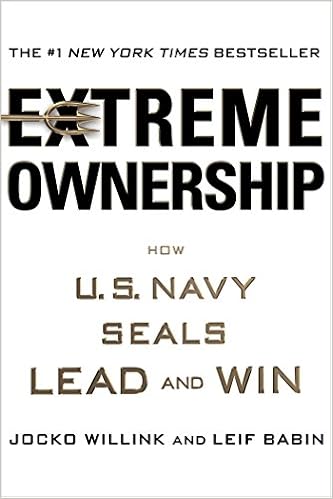
May I recommend to the readership – especially to the hierarchical leadership – a good book?

I’ve written about it before.

More and more my thoughts turn to the kind of New Normal that we want. We are going to pay and pay and pay, and then pay some more, for the lockdown imposed on our nations and economy and churches. This is going to hurt, friends, and the hurting hasn’t even started yet.  As the Fat Man laid down in Rule VIII: “They can always hurt you more.

We are going to new a new style of priest, king, prophet in our hierarchy, in our chanceries and parish offices.  New style… maybe with a lot of old in it.  I’ve ranted about that recently, and pointed my finger at myself.  Je m’accuse.

Read this.  I’ve been recommending it to priest friends for a while now:

US HERE – UK HERE

It is not a complete manual, but it does bring home the fact that when the mission fails, it is often leadership that failed.  And leadership isn’t limited to the commanding officer.  The whole team has to own the mission and its objectives.  The leader needs to bring people into that vision and help them to embrace it for themselves.  Everyone has to believe in the cause they are fighting for.  Leaders have to own it first.

Let’s raise the standards.

(That’s a double entendre, by the way, about something risky, not risqué.)

Posted in ¡Hagan lío!, "How To..." - Practical Notes, ACTION ITEM!, Be The Maquis, Hard-Identity Catholicism, The Coming Storm, The future and our choices | Tagged , ,
25 Comments

12 May – HOLY MASS (TLM) Sts. Nereus & Achilleus, etc. – LIVE VIDEO: 1200h CDT (GMT/UTC -5)

I will LIVE stream a Traditional Latin Mass at NOON Central Daylight Time (= GMT/UTC -5 and ROME 1900h).

Today I will celebrate Mass in honor of Sts. Nereus and Achilleus, Domitilla and Pancratius. I will add prayers “Pro infirmis”.

Will you please subscribe to my channel? HERE

NB: My good friend Fr. Chris Basden is at the Shrine of St. Augustine in Ramsgate, England.  They are trying to get their YouTube stream going.  They need 1000 subscribers.  Could you give them a hand and subscribe?  HERE

  • NB: You can find an English translation of the Mass formulary HERE.  Scroll down. Use the 1960 setting.
  • We can say the Regina Caeli together, since the Angelus bells are usually ringing when the live stream starts.
  • I will say a Spiritual Communion prayer at the very beginning for those of you who cannot make a Eucharistic Communion. 
  • I will also recite in Latin the traditional  “Statement of Intention” (…a hint to priests).
  • After Mass and the Leonine Prayers, I will recite a prayer in Latin “In time of pandemic” followed by a blessing with a fragment of the Cross
    For texts of Prayers before Mass for each day of the week, in versions for laypeople and for priests: HERE

Click To Contribute

THANK YOU to my flower donors!

And HUGE thanks to viewers for yet more new RELIQUARIES (from my wishlist).  The new one’s now have relics of St. Thomas Becket and St. Joan of Arc.

Alas, Amazon sent something wrong instead of other (taller) reliquaries on my list.  I am going to have to sort that out with them.  But it is a good problem.

Finally, one of you sent a quite generous gift card.  There was no gift slip with it! I don’t know who you are.  But thank you.

Posted in LIVE STREAMING |
Comments Off on 12 May – HOLY MASS (TLM) Sts. Nereus & Achilleus, etc. – LIVE VIDEO: 1200h CDT (GMT/UTC -5)

@BishopStika issues a Decree for @knoxdiocese and people react. Wherein Fr. Z makes an entreaty

___ Originally Published on: May 11, 2020 at 19:42

I has come to my attention via LifeSite that His Excellency Most Rev. Richard Fr. Stika, Bishop of Knoxville on 6 May issued a DECREE (it says “decree”) which says, inter alia, that “Reception of Host on the tongue is strictly prohibited at this time.”

I believe the bishop is acting ultra vires in this matter, but that’s not why I am writing this today.

Obviously Bp. Stika got push back, and rightly so. People have the right to make their concerns known both to him directly (preferable as a first step) and the Holy See. However, the push back that he received is a mixed bag.

Then Bp. Stika issued a Tweet that was pretty inflammatory.

Wow.  Harsh, much?

So, Bp. Stika would, in effect, censure people who want Communion on the tongue, which is their right (cf. Redemptionis Sacramentum), with a kind of interdict.

If he intends to include Communion at celebrations of the TLM in this, then he is doing something pretty provocative and, again, I believe beyond his authority (cf. Summorum Pontificum and Universae Ecclesiae).

An “interdict” bans a person from receiving the Eucharist.  Interdicts can be incurred through the sinful commission of a delict, as when one incurs an excommunication, automatic or declared.  If a interdicted person violates the interdict, they are to be expelled or the sacred rite suspended.   Also, interdict is the penalty to be imposed when someone, stirs up hatred of the local ordinary bishop because of some act of ecclesiastical authority (cf. can. 1373).

Folks, don’t stir up hatred of your bishop because of some act of ecclesial authority!

Back in the day there was an excommunication that also made a person vitandus, someone to be avoided.  This is no longer part of the 1983 Code.    However, some times I have observed that bishops are perfectly happy to punish with the older Code.   I’m not saying that that is what Bp. Stika is doing.  But his reaction reminded me of that.

Bp. Stika, to whom I have not hitherto paid a lot of attention, is very active on Twitter.   As far as I can tell, he is not among those bishop who war on the TLM and those who desire it.  That’s a good thing, right?

However, Stika also posted this, in the wake of his tweet, above:

I can’t disagree with him on this.  I’ve been at this thing for over three decades.  When the Id of Traddom gets going, things can get ugly fast.  I am convinced that this is because the Enemy knows that the only viable path to renew the Church’s identity and life in a lasting way is through recovery of Tradition.  The Enemy is probably rather content with vast swaths of the Church at the moment, and doesn’t need to exert attention in those spheres where people have only vague notions about the Catholic Faith, or erroneous ideas, or who are simply drifting along.   Instead, the Enemy is going to make sure that his really opponents are divided in bitter factions and atomized into ineffectiveness.   Tradition has to be repressed through constant temptation and prodding of those who desire it. They are real the threats.

Back to Bp. Stika’s somewhat understandable reaction to the reactions:

Really?

I read some of the tweets people, many anonymous (aka cowardly) bequeathed to Bp. Stika. Some of them were truly infra dignitatem Christianam. They were beneath Christian dignity.  On a human level I get why Bp. Stika would point out their bad behavior.

At the same time, I wonder why Bp. Stika felt the need to troll people who want to receive Communion on the tongue.  In effect, that is what he did.   For sure, he was being trolled. But he doesn’t have to “fight back”. He is a diocesan bishop, for Pete’s sake.

If what some trads and others did in attacking Bp. Stika like jackals was infra dignitatem, so too I wonder if a bishop sending out tweets that he must know is going to bring those reactions isn’t also bordering on infra dignitatem.

“This will rile them up!”, followed by, “Let people see who they are!”

What I should like to see are some mutual apologies and then far calmer discourse.

It seems to me that that is what Christian charity suggests and our recognition of different roles in the Church suggests.

If the people of Knoxville (read: any diocese) don’t like what Bp. Stika (read: any bishop) did, they have channels of recourse.  The sands of time are flowing: this situation won’t last forever. We shall see what he himself does about his Decree in the future. Moreover, no one is compelled to receive Communion at Mass.  You can opt to stay in your pew and make a Spiritual Communion.

If you are being treated unjustly by any bishop or by any priests, God knows it.  If they have sinned in imposing unjust decrees or enforcing them, they will be accountable at their judgment.  Don’t sin in response.

Time will tell.  Later, you will remember this moment when the diocese – any diocese, not just Knoxville – asks you for something.   Let’s hope that the air has been long cleared in a cordial way and we have a “new normal” better than the “old normal”.

If you are strongly against Communion in the hand, and if you are going to go to Mass, and if you know that when you go forward to receive you will not be given Communion on the tongue, then you have to ask yourself what your motive is for going forward. The Communion rail isn’t the place for protests.

I put out a general plea to all in – call it what you will – traddom, the tradosphere, traddies, trads, traditional whatever – please don’t act like jackasses right now.  If you perceive yourselves to be mistreated, maintain your dignity.  If those who mistreat you are to blame, so be it.  This isn’t the time of the lex talionis.

What happens is that some priest or bishop pokes you in the eye.  You turn around and poke him in the eye.  The situation builds and rapidly becomes ridiculous.

Satan and demons win.

You – nay rather, WE – all lose.  WE lose dignitas.  WE lose standing.  WE lose credibility.  You lose it for yourself and for others.  You also lose, sometimes, habitual grace.  And when that happens, the whole Church is wounded.

This sort of thing has to stop.

Yesterday, in the Epistle for the 4th Sunday after Easter, St. James said:

Know this, my beloved brethren. Let every man be quick to hear, slow to speak, slow to anger, for the anger of man does not work the righteousness of God.”

James goes on to say after that pericope:

“If any one thinks he is religious, and does not bridle his tongue but deceives his heart, this man’s religion is vain.”

Meanwhile, Paul writes to the bishop Timothy:

“Preach the word, be urgent in season and out of season, convince, rebuke, and exhort, be unfailing in patience and in teaching.” (2 Tim 4:2)


Posted in ¡Hagan lío! | Tagged , ,
28 Comments

11 May – HOLY MASS (TLM) Sts. Philip and James – LIVE VIDEO: 1200h CDT (GMT/UTC -5)

I will LIVE stream a Traditional Latin Mass at NOON Central Daylight Time (= GMT/UTC -5 and ROME 1900h).  I received an email that there may be fire alarm testing today!  I don’t know when.  

Today I will celebrate Mass in honor of Sts. Philip and James, Apostles. I will add prayers “Tempore Mortalitatis”.

Will you please subscribe to my channel? HERE

NB: My good friend Fr. Chris Basden is at the Shrine of St. Augustine in Ramsgate, England.  They are trying to get their YouTube stream going.  They need 1000 subscribers.  Could you give them a hand and subscribe?  HERE

  • NB: You can find an English translation of the Mass formulary HERE.  Scroll down. Use the 1960 setting.
  • We can say the Regina Caeli together, since the Angelus bells are usually ringing when the live stream starts.
  • I will say a Spiritual Communion prayer at the very beginning for those of you who cannot make a Eucharistic Communion. 
  • I will also recite in Latin the traditional  “Statement of Intention” (…a hint to priests).
  • After Mass and the Leonine Prayers, I will recite a prayer in Latin “In time of pandemic” followed by a blessing with a fragment of the Cross
    For texts of Prayers before Mass for each day of the week, in versions for laypeople and for priests: HERE

Click To Contribute

THANK YOU to my flower donors!

And HUGE thanks to viewers for yet more new RELIQUARIES (from my wishlist).  The new one’s now have relics of St. Thomas Becket and St. Joan of Arc.

Alas, Amazon sent something wrong instead of other (taller) reliquaries on my list.  I am going to have to sort that out with them.  But it is a good problem.

Finally, one of you sent a quite generous gift card.  There was no gift slip with it! I don’t know who you are.  But thank you.

Posted in LIVE STREAMING |
2 Comments

Your Sunday Sermon notes – 4th Sunday after Easter (5th of Easter) 2020

Was there a good point made in the sermon you heard at the Mass for your Sunday, either live or on the internet? Let us know what it was.

For my part…

Posted in Liturgy Science Theatre 3000, Sermons, Wherein Fr. Z Rants |
3 Comments

10 May: St. Job

Many of the figures in the Old Testament are commemorated by Holy Church as saints.

Here is the entry in the 2005 Martyrologium Romanum:

1. Commemoratio sancti Iob, admirandae patientiae viri in terra Hus.

We could talk about Job all day and into next week or next year.

Posted in Saints: Stories & Symbols |
Comments Off on 10 May: St. Job

Wherein Fr. Z rants and points a finger

In another post, I commented on some good points made by Joseph Shaw in a piece at HPR.

I want to return to Shaw’s piece for some final points.  Picking up toward the end…

[…]

It certainly would not have been the way I would have chosen to do it — I have previously argued for the restoration of a longer Eucharistic fast — but the enforced infrequency of Holy Communion will do much to restore the fame eucharistica, “eucharistic hunger,” the lack of which Pope John II so lamented. It is to be hoped that priests will encourage the Faithful who are able to receive less frequently to make the most of it when it is possible, by careful preparation, ideally including fasting, an act of perfect contrition (or, if possible, sacramental Confession), and prayer, and to follow it with a serious thanksgiving.

[…]

Good stuff here.

First, I have had an informal poll about increasing the length of the Eucharist fast on the sidebar of this blog for a while now.   Frankly, the present fast of one hour before Communion is a joke.  The reduction of the Eucharistic fast from three hours to one before Communion, is merely one of many signals given – perhaps unwittingly, at first – by the post-Conciliar Church that the Eucharist just isn’t that important.

There were quite a few signs which bolstered a stronger Catholic identity.  For example, women using chapel veils.  Like them or hate them, veils are signals.  Families were recognizable as Catholic when they headed to the church on Sunday – in their Sunday best – even because a little girl had a little hanky or piece of tissue bobby-pinned to her hair.  A full church with half or more of the heads covered in veils signaled not nothing, if you get me.

The fact that Catholics did not, by law, eat meat on Fridays was an obvious signal to a wider society.

These are just a couple of examples.

Moving to another point, think about how for the past few decades most of our churches are before and after Mass.  Is there silence?  Is the atmosphere one of recollection and preparation before and awe and thanksgiving after?   I’d wager that most parish churches are busy and noisy and distracting before and after Mass.  After Mass… right.  How many people are left after Communion?

I once popped into a parish church on a Sunday while visiting my mother in her town.  I can’t say for sure, but of the congregation, perhaps half a dozen were under 30.  At Communion about half the congregation headed for the doors. After the final blessing and truly horrid song – maybe the reason many left? – the place erupted in chatter.

We’ve removed so many of the signals that what we do in church is important that you can’t blame people who treat the place like a McDonald’s.

I point my finger at priests.  Including myself.  Je m’accuse.

These days when libs want to obliterate something, they blame “clericalism”.  It’s a handy label, rather like how the Left shouts “Racism!” if you challenge their math… or anything else.   The modern, post-Conciliar priest is to be not the mediator between the people and God’s altar, not the one who renews the Sacrifice, blesses and absolves.  No, he is to be a nice guy who affirms you and gives you the white thing to make you feel good about being with other people before you sing a song.   Before Mass, the priest is supposed to joke around with the myriad servers and “Eucharistic Ministers”.  After Mass – er “liturgy” – the priest is supposed to be at the front door saying “Have a nice day!” rather than in the sacristy or sanctuary.

A “sacristy priest”, oh dear, worst of the worst of clericalism.

But sacristies are important.  They are signals.

Priestly practices have knock on effects.

Just as his ars celebrandi – his manner and attitude and style at Mass – have a effect on the participation and comprehension of people in the pews, so too does the priest’s habits of preparation before Mass and his thanksgiving after.

Sometime ago I wrote about how a feature in old Roman sacristies hit me.


Sacristies usually have or once had a niche with a kneeler and a framed plaque with the preparation prayers priests would say before and their acts of thanksgiving after Mass.  These prayers are also in the traditional Breviarium Romanum.

Not only that.  There are or were sinks in sacristies with a sign or sometimes an inscription in the marble or painted on the wall with the prayer that the priest would say as he washed his hands before putting on his vestments.

Fathers… did you know that there is a prayer for washing your hands before putting on your vestments?  And of course there were and are prayers for the donning of each vestment.  Did you get that in seminary?

There was etiquette for how priests were to acknowledge each other as they went to and returned from the altar.

The aptum.  The pulchrum.  Decorum.

Ritual, which brings discipline and which over time provides interior formation, surrounded the ritual of the Mass itself.

I wonder what would happen – think about this with me now – what would happen, what kind of knock on effect there would be on the wider Church, were priests to begin to do these things again.   If bishops were to do these things.

I can hear it now.

“But Father!  But… but… Fffff…. ‘ordained minister’!”, the libs writhe and howl.  “This is … is… pure CLERICALISM!   And it’s probably RACIST!   You… you… and your Latin and hats and books.  Your … your… prayers with ‘thee’ and all that begging and unworthiness.   We’ve grown up!  We’ve evolved and don’t have to grovel anymore.  No, we STAND!  We take because we are … are…. an EASTER PEOPLE!   But you don’t get any of that because YOU HATE VATICAN II!”

Let’s not lie about Vatican II.

Shaw, at the beginning of the HPR piece I mentioned at the top, had an outstanding line:

“What exactly is gained by not adding exorcised salt to the holy water?”

Perfect.

The Council said that in the liturgical reform, nothing was to be changed unless it was for the true good of the people.  The Council Fathers mandated that nothing was to be done unless it was in continuity with what we had before.

That’s not what we got.

What exactly is gained by not adding exorcised salt to the holy water?

Absolutely nothing.

What was lost?

A whole world.  An identity.

The results of which we see in our churches today.

The results of which we see reflected in Pew Research studies.

The results of which we see in the contempt shown for the people who desire traditional worship…. who desire salt in their Holy Water, as it were.

It was not for nothing that John Paul II in 1988 wrote in Ecclesia Dei adflicta 6:

“[B]y virtue of my Apostolic Authority I decree… respect must everywhere be shown for the feelings of all those who are attached to the Latin liturgical tradition, by a wide and generous application of the directives already issued some time ago by the Apostolic See for the use of the Roman Missal according to the typical edition of 1962.”

Sweet Jesus, have mercy.  To what point have we come if John Paul thought he had to command bishops to respect people’s feelings and to be generous to them in entirely legitimate matters?  And lately we’ve seen a Pope who ridicules them!  Bishops write in tones of disdain for people who “demand” Communion on the tongue and who have to be “accommodated”.

To what point have we finally arrived?  And whither?  QUO?

People who are attached to the Latin liturgical tradition – people who want salt in their Holy Water – are the most systematically marginalized demographic in the Church.

I want back all the SALT.

ALL the salt.

The Latin liturgical tradition John Paul wrote about means salt in the Holy Water.  Salt in the Holy Water is a metaphor for a whole identity.

Think about this.   The Church is the greatest expert in humanity that there has ever been.  Her practices were wise on profound levels that shaped us.

I mused, above, about a knock on effect through the priestly rituals surrounding Mass, his prayers before and after.

In fact, Holy Mother Church made sure that the people saw the priest ritually preparing to say Mass and to pray after Mass: the Prayers at the Foot of the Altar beforehand and the reading of the Last Gospel afterward.   These were remnants retained in the Missal from the priest’s preparation and thanksgiving that developed over the centuries.

The Church decided that you – for centuries – should see him do it.  That’s how important it is.

As Fr. Jackson put it in his splendid book there is “Nothing Superfluous” in the traditional rites.

And what did the usurpers of the Conciliar liturgical reform do?   They cut out the priest’s preparation before and his prayer after Mass, relegating anything that he might choose to do entirely to his private practice.

They also stopped adding salt to the Holy Water.

Yeah yeah… in the Novus Ordo Missal there’s an option for salt, but it’s not the same thing.

As I said, above, I am pointing a finger at myself.

I am often lax in making a traditional preparation before Mass and thanksgiving after.  I get distracted, impatient to get on with oh-so-important things I know I have to do.

Preparing for Mass and being recollected after can be hard in a parish setting where there has not yet been established a minimum of discipline in a sacristy. People want to talk to the priest.  The priest wants to talk to them.  There are things to discuss, etc.  All important, I’m sure.   In general, priests like talking to people.

But the knock on effect of that, of not preparing and not pausing after, is corrosive for priestly identity, not fortifying.  And if the priest’s identity is corroded, it follows as the night the day that his flock will feel the effects to one degree or another.

I wonder if people really, if it came right down to it, wouldn’t rather know that Father is praying and preparing before Mass, giving thanks afterward, rather than seeing him act like a or host with an hors d’oeuvre tray at a dinner party.  In his sacred Mass vestments.  They might be a little disoriented at first, not seeing him slapping people on the back as they go out. Over time, however…. I wonder.

This is something that lay people need to chime in about.  Priest or dinner party host.   Mediator who renews the Sacrifice or nice guy.

I know that there are multiple angles to this and a great depends on context but I can’t shake the feeling that what can be lost is far greater in long-term significance than what can be gained.

I have some work to do.  I’m going to put the salt back into my preparation before and my time after Mass.  I owe it to myself, to our forebears, and to you.

Posted in "But Father! But Father!", Decorum, Hard-Identity Catholicism, Liturgy Science Theatre 3000, Pò sì jiù, Priests and Priesthood, Save The Liturgy - Save The World, Seminarians and Seminaries, The Drill, The future and our choices, Wherein Fr. Z Rants | Tagged , , , , ,
30 Comments