From an American priest in Venezuela

From Fr. Greg Schaffer, from my native place but serving in Venezuela, in my e-mail:

I am not sure if you remember me from St. Paul Seminary…we were there together for one I believe. I have enjoyed reading your blog over the years. To get to the point for the last 20 years I have been serving at the Archdiocesan mission of the Archdiocese of St Paul and Minneapolis in the Diocese of Ciudad Guayana, Venezuela. My current responsibility is serving as the Diocesan Administrator of the Diocese of Ciudad Guayana until our Holy Father names our new bishop. The current political and economic situation in Venezuela is very difficult. The current Socialist government is very anti-Catholic. In the midst of many struggles, where many people including many priests and religious of the diocese are malnourished, we are trying to complete construction on our Cathedral. We are the only diocese in Venezuela without a Cathedral. Our Cathedral will be the FIRST Cathedral to be dedicated to St. John Paul II – it is located on the site of where he celebrated Mass January 29, 1985. I have contacted the Papal Foundation in the US and they directed me to contact the nuncio here in Venezuela which I will do to request funding from them.

With the help of a friend, I am making contact with the organization Kristan Noch in Poland (they are based in Germany) to ask for financial help with the construction. Do you know of any other Catholic Foundations that I might try contacting? I estimate it will take $300,000.00 to finish construction of the lower chapel which is the goal for this year. Once the lower chapel is completed we can start having daily Mass celebrated at the site which will be a huge blessing for the people and the project! There is a facebook page dedicated to the construction of the Cathedral – https://www.facebook.com/fundacioncatedral.deciudadguayana. Wikipedia also gives a brief history and description of the cathedral at https://es.wikipedia.org/wiki/Catedral_de_San_Juan_Pablo_II_(Ciudad_Guayana).

Thank you for reading all of this. Thank you for your blog and for the great ministry that you are doing! May the Lord bless you and fill you with His Peace and many graces during this Holy Week and throughout this Holy Easter Season! Thank you for your prayers and for any suggestions you may have for me! Gratefully, Fr Gregory Schaffer

Posted in The Campus Telephone Pole | Tagged
6 Comments

Your Palm Sunday Sermon Notes (some photos)

I suppose that in some places it might not have been possible to preach for any length because of the extent of the rites. However, I also suppose that in some places Father (or His Excellency, His Grace, His Lordship, His Eminence) did, in fact, discourse.

Was there a good point made in the sermon you heard at your Mass of Sunday obligation? Let us know.  [GOOD!  This isn’t open for griping.]

For my part, I reminded people that we are our rites. Participating in these sacred mysteries makes them present to us, us to them. We must also remember that, while Holy Week has elements which surely make us sad, because they remind us that our sins crucified Our Lord, any every moment of agony was a victory. Every blow received, every thorn, harsh word or nail was and, liturgically, is a triumph.

Here are a few shots from our Palm Sunday:

17_04_09_SMPB_PalmSunday_01

17_04_09_SMPB_PalmSunday_07

17_04_09_SMPB_PalmSunday_11

17_04_09_SMPB_PalmSunday_12

17_04_09_SMPB_PalmSunday_14

17_04_09_SMPB_PalmSunday_04

Posted in Liturgy Science Theatre 3000 |
32 Comments

ASK FATHER: Regular genuflections and… shoes

13_03_05_b16_shoesFrom a reader…

QUAERITUR:

All my previous shoes I used during the liturgy [?] died from the same plague. The sole of the right shoe is broken, presumably, due to regular genuflections. I guess the wisdom of the Church should be aware of this problem. Do you have any advice?

You are suggesting that genuflecting is not good for the sole?

My first inclination was to say, “Go to the Novus Ordo in a suburban parish: you won’t genuflect nearly as often.”

For that matter going to a beautiful Eastern Divine Liturgy would do that too.  But you mentioned “liturgy” instead of Mass, so I don’t know what’s going on.

Yes, this is what happens. The shoe tend to wear faster because of genuflection. It can also be tough on certain areas of the pants, were the fabric get’s stressed.

Look, pal, I can’t help you with your shoes, okay?  The only thing I can think of to suggest is, take good care of them.  Keep them polished and treated so that the leather stays flexible.

That’s the way it is.

Why is it so?

Perhaps God hates shoes.

NO! Rather, God loves cobblers and shoemakers!

Should the Church be aware of this?  By all means!  You should write, immediately, to the Holy Father and tell him to channel the ghost of Bugnini and take all the genuflections out of Mass.

No.  Wait.  Don’t do that.  Really.

As far as your sole, and your soul, is concerned, apply the best correctives.

Examine your sole and go to the cobbler.

Examine your soul and …

GO TO CONFESSION.

Posted in "How To..." - Practical Notes, ASK FATHER Question Box, Lighter fare | Tagged
26 Comments

Papal Preacher’s 5th Lent Sermon was about the Protestant Reformation

FYI…

Via CWN:

Papal preacher devotes Lenten sermon to Protestant Reformation

Father Raniero Cantalamessa, the Capuchin Franciscan friar who has served as preacher to the papal household since 1980, preached his final [5th] sermon of Lent 2017 to the Pope and members of the Roman Curia on April 7.

The topic of the sermon, delivered in the in the Redemptoris Mater Chapel of the Apostolic Palace, was “‘the righteousness of God has been manifested’: the fifth centenary of the Protestant Reformation, an occasion of grace and reconciliation for the whole Church.”

The sermon had four sections:

  • The Origins of the Protestant Reformation
  • The Doctrine of Justification by Faith after Luther
  • Justification by Faith: A Doctrine of Paul or of Jesus?
  • How to Preach Justification by Faith Today

The combox is closed.

Posted in Pò sì jiù, You must be joking! | Tagged ,
Comments Off on Papal Preacher’s 5th Lent Sermon was about the Protestant Reformation

VIDEO: FSSP – Requiem recording project

For your Just Too Cool file.

YouTube thumbnailYouTube icon

And now … available for PRE-ORDER at a reduced price.  Release date: 12 May 2017

US HERE – UK HERE

Posted in ¡Hagan lío!, Hard-Identity Catholicism, Liturgy Science Theatre 3000, Priests and Priesthood, Seminarians and Seminaries | Tagged , ,
6 Comments

Happy 1st Anniversary ‘Amoris laetitia’ and a terrific new book alert – ACTION ITEM!

See the end of the post!

See the end of the post!

It has been 1 year already since the unleashing of the text of the Post-Apostolic Exhortation Amoris laetitia.

It seems longer, in some ways.

Since it’s release, sharp divisions have developed in the Church over objectively ambiguous, now infamous elements of Chapter 8.  You know the issues all too well.

Unity is breaking down.  Bishops conferences now have differing policies, as do bishops of dioceses.  You can now step across invisible, arbitrary borders and find yourself in a place with a different approach to Communion for the divorced and civilly remarried (adulterers) who have no true purpose of amendment.

The implications for doctrine, and the practice which flows from doctrine, are manifold and potentially devastating.  A clue as to a possible future could rest in the remarks made about divorce and remarriage by the Superior General of the Jesuits a while back.  In a clear defense of the antinomian and innovation approach to Chapter 8, the Jesuit General said that we can’t really know what Christ said about marriage.  HERE and HERE  The implications of such a view completely undermine Christianity itself, in that they shift belief from being Christocentric to being anthropocentric.  We would no longer have any firm basis for … well, anything!

As I have written before, the ever-broadening controversies sparked by Amoris laetitia will lead more conservative and traditionally (i.e., faithful) clergy to continue to do what they do in keeping with the Church’s clear teaching in unambiguous documents and will lead more liberal and progressivist clergy to continue to disobey the Church’s laws and teachings with impunity.

The latter, some of whom are very powerful, are accelerating their antinomian efforts with an increasingly sanctimonious tone, while the former are becoming increasingly frustrated as they dig in and await open persecution.

A lot of us are trying to make sense of this as we ask God for direction and insight.

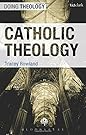
I recently found something useful in a terrific new book by Tracey Rowland, Catholic Theology.  US HERE – UK HERE

This book is in a series about how various religions are “Doing Theology”.  As such, it is a status quaestionis book, in that it describes the present state of affairs.  This book is intended to help (especially) students, who go from class to class in a bewildering tangle of various approaches, to figure out what is going on.

A lot of us ask: “What is the Pope up to?”

In her chapter on types of Liberation Theology, and in dealing with the tension between theory and praxis, Rowland drills into the possible approach of Jorge Mario Bergoglio.  She writes (emphases and comment mine):

Situating Pope Francis

While much has been written about Pope Francis’s agenda for his pontificate and his personal history as a Jesuit Provincial and Archbishop, little has been written on his attitudes to the practice of theology as an intellectual discipline. This is because with Francis the accent is on social problems, not ideas, praxis rather than theoria. As he said to a Jesuit student who explained that he was studying Fundamental Theology: ‘I can’t imagine anything more boring.’  When a person says that he ‘can’t imagine anything more boring than Fundamental Theology’, it is not likely that his publications will be full of treasure to be mined for a book on how to do theology. In an article published in The Atlantic, Ross Douthat observed:

Francis is clearly a less systematic thinker than either of his predecessors, and especially than the academically-minded Benedict. Whereas the previous pope defended popular piety against liberal critiques, Francis embodies a certain style of populist Catholicism – one that’s suspicious of overly academic faith in any form. He seems to have an affinity for the kind of Catholic culture in which mass attendance might be spotty but the local saint’s processions are packed – a style of faith that’s fervent and supernaturalist but not particularly doctrinal. He also remains a Jesuit-formed leader, and Jesuits have traditionally combined missionary zeal with a certain conscious flexibility about doctrinal details that might impede their proselytizing work.

Nonetheless, it has been suggested by several academics and papal commentators that if Pope Francis has sympathy for any particular approach to Catholic theology, it is that of ‘People’s Theology’. One of the most extensive articles on this subject is Juan Carlos Scannone’s ‘El papa Francisco y la teologia del pueblo’ published in the journal Razón y Fe. In this paper Scannone claims that not only is Pope Francis a practitioner of ‘People’s Theology’ but also that Francis extracted his favourite four principles – time is greater than space, unity prevails over conflict, reality is more important than ideas, and the whole is greater than the parts – from a letter of the nineteenth-century Argentinian dictator, Juan Manuel de Rosas (1793– 1877) sent to another Argentinian caudillo, Facundo Quiroga (1788– 1835), in 1834. These four principles, which are said to govern the decision-making processes of Pope Francis, have their own section in his Apostolic Exhortation Evangelii Gaudium and references to one or other of them can be found scattered throughout his other papal documents. Pope Francis calls them principles for ‘building a people’.

A common thread running through each of these principles is the tendency to give priority to praxis over theory. [NOTA BENE…] There is also a sense that conflict in itself is not a bad thing, that ‘unity will prevail’ somehow and that time will remove at least some of the protagonists in any conflict. The underlying metaphysics is quite strongly Hegelian, and the approach to praxis itself resembles what Lamb classified as ‘cultural-historical’ activity and is associated primarily with Luther and Kant rather than Marx. (Kindle Locations 4226-4252)

There is quite a bit more, but this might provide a clue as to why His Holiness allow the chaos to grow without, for example, responding to the Five Dubia of the Four Cardinals which were submitted 200 days ago at the time of this writing.  This may be why he sends mixed signals, such as telling Chilean bishops during their ad limina visit that Communion shouldn’t be given to the divorced and remarried, while having Card. Baldisseri (Synod of Bishops) write an approving letter to the bishops Malta after their shocking guidelines were released (The Maltese Fiasco).

Again, we wonder “What is Pope Francis up to?”

Again, I turn to Rowland, who writes specifically about Amoris laetitia and the conflict it has aroused.  She describes the praxis and theory tension again and then:

[C]hapter eight of the document, or what might be described as the praxis chapter rather than a theory chapter, emphasised that those who find themselves in ‘irregular situations’ (what were formerly described as situations of mortal sin or morally disordered situations) should be spiritually and emotionally accompanied along the path of a gradual reintegration into the life of the Church. Whereas in previous Church teaching emphasis was on how the person’s rational intellect makes it possible to discern the true and the good and the beautiful, [NOTA BENE]  the subtext of this document was that many contemporary people are in effect so far post-Christian as to be pre-Christian. The cultural environment in which they breathe, in which their wills and intellects develop, is so toxic to a Christian understanding of sexuality and marriage that their levels of moral culpability in what is an objectively sinful situation are not easily amenable to judgement, and thus the Church has to be for them a ‘field hospital’ when their life choices, based on subjective conceptions of the good, detached from Christian Revelation, cause all manner of damage. Notwithstanding the earlier endorsements of selected teachings of John Paul II, chapter 8 gives the impression that the role of the Church as ‘teacher of the Truth’ and ‘guardian of the deposit of the faith’ should be muted so as not to scare people away from the Church operating in her capacity as a ‘field hospital’. The change of language from ‘morally disordered’ or ‘mortally sinful’ to an ‘irregular situation’ is symptomatic of this muting. (Kindle Locations 4377-4389).

I have a strong sense that this is an accurate assessment of the subtext of Amoris laetitia Chapter 8.

I wonder: is it true?  Often, I am struck with the thought that many people who might self-identify as “Catholic” in fact belong to some other religions than I do.  If they pick and choose about important aspects of Catholic life and teaching, are they Catholic?  Are so many people now, who are nominally Catholic, in fact pre-Christian?  Is it, therefore, necessary to dumb-down or even distort doctrine so as “not to scare them away”?   Is this the state of affairs today?  And, if it is, does this accurately describe Pope Francis’, et al., strategy?

That said, I fear that this approach, IF that is Pope Francis’ true approach – and we can’t know for sure until he tells us clearly – this elevation of praxis over doctrine, will result in devastation.  One could use this as a starting point to justify just about anything.  Where does it stop?

Rowland rightly speaks of “subtext”.  We can drill deeper and find, in that subtext, subtly threaded through, the denial of what the Council of Trent affirmed about the help of grace, and to which Trent applied an anathema.  HERE  God’s commandments are not impossible ideals.  Neither God nor Holy Church impose impossibilities.  That, however, is what is suggested by many who endorse the antinomian/innovation interpretation of Amoris.

For my part, I pray that God will guide us swiftly out of this time of conflict and uncertainty.  I fear for souls.

To pave the way for such a grace-filled intervention, we had all better examine our consciences and…

GO TO CONFESSION.

Finally, I have put Rowland’s new book on my Amazon Wish List with a request for 30 copies.  

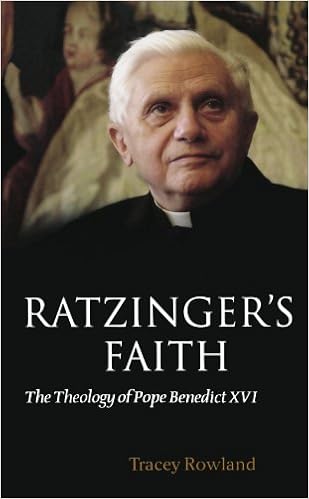
Each year the seminarians of the diocese gather with Bp. Morlino (aka The Extraordinary Ordinary) for a solid jam-packed week in August.  For the last few years I have given them copies of a good book which YOU readers have sent.  For example, a couple years ago you sent copies of another spiffy book by Rowland, Ratzinger’s Faith.

US HERE – UK HERE
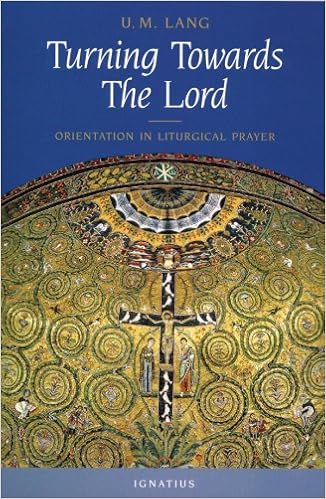
Another time I gave them, with your help, Fr. Lang’s book on ad orientem worship, Turning Towards The Lord.

US HERE – UK HERE
I make my request quite early this year because, in years past, the books I’ve asked for have sold out!  Not only do you send them to me, but you get them for yourselves, which is great!  However, that can slow the delivery.  In order to have all the copies well before August, we should start now, just to be sure.

The moderation queue is ON.

Posted in ACTION ITEM!, Francis, The Coming Storm, The Drill, The future and our choices | Tagged , ,
15 Comments

ASK FATHER: Deacon told by priest to let a layman take his role

7Deacons4From a deacon

Could you please address the all too common occurrence where Deacons are asked (or told by the priest) to relinquish their liturgical role to a lay person?

Case in point: I was told to allow the music minister to chant the General Intercessions on Good Friday this year, not because I’m unable to, but because the music minister had done it through the years and is retiring. It was urged that I allow this to proceed. I am unsettled with this in that I believe I should have stood my ground in accord with the rubric. This is but one example…

I have witnessed and experienced personally (many times) the Deacon’s part being given to laity at the discretion of the priest and worse, the deacon relinquishing his part to laity. It shouldn’t be this way, am I being too rigid?

I was unaware that this is a common problem.

It is simply wrong to force a deacon out of his proper liturgical role in order to give it to a lay person.

First, that violates the deacon’s identity.

Second, that violates the lay person’ identity.

Moreover, the deacon is being asked to participate in a condescending clericalism.

Let deacons be deacons.  That’s why the Church ordains them.


Posted in "How To..." - Practical Notes, ASK FATHER Question Box, Liturgy Science Theatre 3000, Our Catholic Identity | Tagged ,
21 Comments

ACTION ITEM! “Church Madness” Championship 2017 – FINAL!

action-item-buttonYour attention is urgently needed.

Last year, St. John Cantius in Chicago ascended the brackets to be Numero Uno in the Church Madness tourney.

This year we see that the last surviving churches are the Institute of Christ the King’s Oratory in St. Louis, Missouri

…and St. James in Louisville, KY….

Last year, I made the argument that what happens inside the church, liturgically, must be taken into consideration in determining its beauty.

I think we know what goes on at the Institute Church in St. Louis.

QUAERITUR: What goes on in St. James in Kentucky?

A trip to the website show me that at St. James they have a “Children’s Liturgy” (FAIL!), and that that post online which priest is scheduled for which Mass (FAIL!).  It is hard to find their Mass schedule (FAIL!).  They call most of their Masses “liturgies” (FAIL!).

Furthermore, you can see in their photo, above, that they have unspeakable things in their church, things which grate the very eyeball which which we are asked to gaze.  They have twisted their pews and they have in a prominent, visually unavoidable location … I can hardly bring myself to say it… a PIANO!

art-and-liturgy-church-madness-st-james-louisville-ky-interior-01

The horror!

No.  No, a thousand times no.   This is infra dignitatem and St. James will not receive my vote.  This is the sort of place that would have altar girls.  No. No. No.

The rest of the building, as beautiful as it is, is not enough to outweigh these defects.

What happens in the building counts for a great deal.

Therefore…

17_04_06_Madness_00

As of now the results are…

17_04_06_Madness_01

To VOTE for the St. Francis go…

>>HERE<<

For even thinking about voting for St. James go… HERE.  And then…

GO TO CONFESSION!

UPDATE 7 April:

The contest is officially closed. They haven’t announced the winner yet, but the situation looks to be well in hand.

17_04_07_Madness_01

Posted in ACTION ITEM!, Lighter fare, Liturgy Science Theatre 3000 |
22 Comments

Wherein Google confers a new ecclesiastical title upon His Eminence

Pewsitter can be useful in finding, quickly, what’s going on.  One of my gripes, however, is that they link to googly-translated pages.  Grrr.

Today, however, that produced an amusing moment.

They linked to an interview in German with Walter Card. Kasper for the occasion of his 60th anniversary of ordination.   This is how the googly-translated page came up for me:

17_04_06_screenshot_Kasper_01

Walter Kasper, courtesan cardinal!

The headline in German (original HERE):

Ich war immer gern Priester”  [I’ve always been glad to be a priest.]
Vor seinem 60-jährigen Priesterjubiläum hat katholisch.de mit dem emeritierten Kurienkardinal Walter Kasper gesprochen. Im Interview gab der 83-Jährige auch Einblicke in Privates.

If could have been worse, I suppose, given that last part.   But then Fishwrap, Pill and Jesuits would liked it even more.

Walter Kasper, courtesan cardinal!   Perhaps this is Google’s Freudian-cyber slip, given that His Eminence’s desire that those who are living in a impenitent state of adultery should be given Holy Communion?

In any event, this is just a light moment and there is no need to get too serious with this post.

Google Translate!  Hours of linguist fun!

Posted in Lighter fare | Tagged ,
4 Comments

New, traditional Carmelite community for men

From my email:

Thanks for all you do. I’ve enjoyed your blog for years.

I’m just contacting you to spread word of a new religious community starting which is called the Hermits of Our Lady of Mt. Carmel (“Eremitae Dominae Nostrae De Monte Carmelo”).

They are a group of laymen currently seeking canonical approval to observe the unmitigated Rule of St. Albert. They use the 1938 Carmelite Breviary, and seek to (…when they have priests) celebrate exclusively the EF (Carmelite Rite).

They are in need of prayer, some more notoriety, as well as financial assistance (’tis the season for alms!) in beginning their foundation.  They have a property available to them in North Carolina, but need help raising the funds to pay for the land.

Anyway, thanks for whatever you might think good to do for them. And my apologies if you’re already familiar with the community.

Here’s their website: https://www.eremitaednmc.org/

Posted in ¡Hagan lío!, Be The Maquis, The Campus Telephone Pole, The future and our choices | Tagged ,
4 Comments