WDTPRS: Ascension Thursday: That hope informs our trials

Ascension 1651 by Francisco Camilo Museu Nacional dArt de Catalunya MNAC Barcelona smTonight at 6:30 PM at St. Mary’s in Pine Bluff we will have a Solemn Mass for the Feast of the Ascension of the Lord… because it is Ascension THURSDAY… today.

A priest friend wrote this morning:

“Today we have celebrated the Novus Ordo mystery of ‘not the Ascension”.  Almost uplifting!”

Agreed.  Of course even in the Novus Ordo today is supposed to be Ascension.  The shift to Sunday’s took place arbitrarily and it was done in some places, not all (very few).

On Sunday I will celebrate Sunday after Ascension Thursday, because that’s what day it is.

Let’s have a look at the Collect for the Mass of the Lord’s Ascension… on this THURSDAY.

COLLECT – (1962MR):

Concede, quaesumus, omnipotens Deus: ut, qui hodierna die Unigenitum tuum Redemptorem nostrum ad caelos ascendisse credimus; ipsi quoque mente in caelestibus habitemus.

Our hard working Lewis & Short Dictionary can have a little rest today, I think.  There is nothing especially noteworthy in the vocabulary.  Let us therefore move on to a straight-forward…

LITERAL TRANSLATION:
Grant, we beseech You, Almighty God,
that we, who believe Your Only Begotten Son our Redeemer
to have ascended on this day to heaven,
may ourselves also dwell in mind amongst heavenly things.

Bl. Abbot Columba Marmion, OSB (+1923), wrote in Christ in His Mysteries (US HERE – UK HERE) that “of all the feasts of Our Lord … the Ascension is the greatest, because it is the supreme glorification of Christ Jesus.”

Then, speaking about the very Collect we are looking at today, Bl. Columba says,

“This prayer first of all testifies to our faith in the mystery in recalling the title ‘Only-begotten Son’ and ‘Redeemer’, given to Jesus, the Church shows forth the reasons for the celestial exaltation of her Bridegroom;—she finally denotes the grace therein contained for our souls. … The mystery of Jesus Christ’s Ascension is represented to us in a manner suitable to our nature: we contemplate the Sacred Humanity rising from the earth and ascending visibly towards the heavens.”

Of course it is not only Christ’s humanity but our humanity that ascended into heaven.

We Catholics know that what was not assumed, was not redeemed (St. Gregory of Nazianzus).  Our humanity, body and soul, was taken by the Son into an unbreakable bond with His divinity. When Christ rose from the tomb, our humanity rose in Him.  When He ascended to heaven, so also did we.  In Christ our humanity now sits at the Father’s right hand.  His presence there is our great promise and hope.  It is already fulfilled, but not yet in its fullness.  That hope informs our trials in this life.

Preaching on 1 June 444 St. Pope Leo I “the Great” said,

“Truly it was a great and indescribable source of rejoicing when, in the sight of the heavenly multitudes, the nature of our human race ascended over the dignity of all heavenly creatures, to pass the angelic orders and to be raised beyond the heights of archangels. In its ascension it did not stop at any other height until this same nature was received at the seat of the eternal Father, to be associated on the throne of the glory of that One to whose nature it was joined in the Son.”

Leo says in another sermon of 17 May 445,

“This Faith, reinforced by the Ascension of the Lord and strengthened by the gift of the Holy Spirit, has not been terrified by chains, by prison, by exile, by hunger, by fire, by the mangling of wild beasts, nor by sharp suffering from the cruelty of persecutors.  Throughout the world, not only men but also women, not just immature boys but also tender virgins, have struggled on behalf of this Faith even to the shedding of their blood.  This Faith has cast out demons, driven away sicknesses, and raised the dead.”

The knowledge that our humanity is now enjoying heaven can work wonders for us in the hour of need. Keep this in mind in time of trial.

When the Lord ascended to heaven He did not lose touch with us His people in this vale of tears.  St. Augustine in s. 341 talks about Christ’s presence in every word of Scripture as Word equal to the Father; or as the mediator in the flesh dwelling in our midst; or Christ as the Head and Body together as in a spousal relationship, Christ and His Church intimately bound.

This means that Christ is not insensible to our sufferings.  Our faith in this unbreakable bond of Head and Body calls us to be clean and worthy of this saving intimacy.

Allow me to get a little mystical for moment. Another thing that this means is that Christ, as High Priest, is now at the heavenly altar eternally offering His Sacrifice to the Father.  This means that His High priestly action is in eternity and not just in points of historical, past time.  The immense implication of all of this is that, by having our High Priest in heaven and eternity, what He does is still present to us.  All the mystery of the Passion and Resurrection is still available to us, not bound by chronology or by geographical location.  The High Priest in heaven now guarantees that we can have many Masses at many altars at the same time, many Communions, many people encountering the Mystery through the time that hurtles toward the summation of all things when Christ will take all things to present them to the Father so that God will be all in all.

Posted in "How To..." - Practical Notes, Liturgy Science Theatre 3000, WDTPRS |
6 Comments

Vigil of Ascension – old and new

fullsize_vanni_ascensionHere is something I wrote a loooong time ago – 2006 – for an WDTPRS article in the print version of The Wanderer.  I had a column there for 11 years.

…(I)n some places the Feast of the Ascension, which falls always on a Thursday, has been transferred to this Sunday.  That would make it “Ascension Thursday Sunday”, I suppose.

In addition, the third edition of the Missale Romanum issued in 2002 now provides us with a Mass for the Vigil of Ascension, which wasn’t in previous editions of the Novus Ordo.  Moreover, the prayers for the new Vigil of Ascension are not the same as those found in the pre-Conciliar Missale for the Vigil.  Also, there are now proper Masses for the days after Ascension, most having alternative collects depending on whether or not in that region Ascension is transferred to Sunday. Since many people do not have access to the prayers for the Vigil of Ascension, let’s look at them this week.  First, here are the antiphons. Ant. ad introitum:  Regna terrae cantata Deo, psallite Domino, qui ascendit super caelum caeli; magnificentia et virtus eius in nubibus, alleluia. (Ps 67:33,35)  Ant. ad communionem: Christus, unam pro peccatis offerens hostiam, in sempiterum sedet in dextera Dei, alleluia.  (Cf. Heb 10:12)

COLLECT:
Deus, cuius Filus hodie in caelos,
Apostolis astantibus, ascendit,
concede nobis, quaesumus,
ut secundum eius promissionem
et ille nobiscum semper in terris
et nos cum eo in caelo vivere mereamur.

This was modified from a prayer in ancient sacramentaries such as the Liber Sacramentorum when it was used on Ascension Thursday having its Station Mass at St. Peter’s Basilica.  Here is some liturgical education for you.  The eucological formulas (the prayers), for the Ascension found in what is sometimes called the Leonine Sacramentary surviving in one 7th century manuscript in Verona (the Veronese Sacramentary) are the oldest prayers we have in the Roman liturgy!  The Missale Romanum and those ancient collections consist principally in prayers for Masses which in fancy liturgist talk are called “eucological formulas”.

You might not immediately recognize astantibus as being from asto or adsto, which that ascendant lexicon of Latin lemmata, the Lewis & Short Dictionary, says means, “to stand at or near a person or thing, to stand by”  The L&S will also inform you that asto has the synonym adsisto.

If you have ever heard the phrase “to assist (adsisto) at Holy Mass” this is the concept: you are present and actively participating.

Also, during the Roman Canon, the priest describes the people as circumstantes, “standing around”.  This doesn’t mean they there around the altar with their hands in the their pockets (though I admit I have seen that happen). Rather, they are there morally and spiritually “around” the altar, participating each according to their vocation and capacity.  So, circumstantes is used to identify the baptized who are present.

SUPER LITERAL VERSION:
O God, whose Son today ascended
into the heavens as the Apostles were standing close by,
grant us, we beseech You,
that, according to His promise,
we may be worthy both that He lives with us on earth,
and that we live with Him in heaven.

The Apostles, who were adstantes, actively participating in the Lord’s Ascension before, during and after the actual moment if the Ascension, both listened to the Lord and watched the Lord.  Similarly, at Holy Mass we actively participate before, during and after the consecration, both by listening to the Lord speak through the texts and watching what the Lord does in the liturgical action.

LATER ADDITION in 2011:

NEW CORRECTED ICEL (2011):
O God, whose Son today ascended to the heavens
as the Apostles looked on,
grant, we pray, that, in accordance with his promise,
we may be worthy for him to live with us always on earth,
and we with him in heaven
.

When the Second Person took up our human nature into an indestructible bond with His divinity, indestructible, we were thereby destined to sit at God’s right hand, first in Christ and then on our own.  Christ makes us worthy, no one else.  Christ alone.  It’s all His.  And because it’s His, it’s ours.

Posted in SESSIUNCULA |
5 Comments

Tuesday 28 May – Mass for Benefactors

I’ve been saying Masses for benefactors in Rome, with a couple of interruptions for other issues.   However, unless something super big pops up, I’ll say Mass for benefactors – those who regularly contribution donations by subscription or recently ad hoc, and who have sent items from my wishlist, etc. – tomorrow afternoon, Rome time.

God and my angels know who has sent snail-mail I haven’t seen yet.

I keep you in my constant prayers, of course, and regularly say Mass for your intention.   It is my pleasure, honor, and duty to do so.

UPDATE: Here’s some concelebration.

I’m at the center altar, celebrating Mass for the intentions of YOU benefactors.

Posted in ACTION ITEM! |
Comments Off on Tuesday 28 May – Mass for Benefactors

ASK FATHER: Difference between Pastor and Parochial Administrator

From a reader…

QUAERITUR:

With priest assignments currently being announced, I am curious about the difference between a Pastor and a Parochial Administrator. If a Pastor is reassigned to another parish as an Administrator, is that a lateral or a lesser assignment?

GUEST PRIEST RESPONSE: Fr. T. Ferguson

In short, on a practical level, there is little difference. The main difference between a pastor and a parochial administrator is that a pastor has stability of office – he is appointed, ideally for life,  (canon 522) but by concession in the United States, he may be appointed for a six-year term (http://www.usccb.org/beliefs-and-teachings/what-we-believe/canon-law/complementary-norms/canon-522-stability-of-office-of-pastor.cfm). There are other provisions for pastoral terms of office in other countries.

Theoretically, at least, a pastor cannot be removed from the parish prior to the expiry of his term if he does not want to. There are provisions in the law for removing or transferring a pastor (cc. 1740-1752). Practically, this process is rarely used and other, praeter legem processes are used to remove or transfer a pastor (threats, cajoling, intimidation, badgering, enticement).

A parish administrator (c. 540) does not have stability of office – he is often appointed for a period of time, but his appointment can be revoked or altered at any time by the bishop.

It was long customary for a priest to receive his first parish as administrator. Then, if things seemed to work and there were no problems, after a year, he would be made pastor.

Other reasons for appointing an administrator rather than a pastor may be that another priest is in line to be made pastor but is not quite ready yet (off studying at school, engaged in another ministry, on a sabbatical), or the bishop has some other assignment in mind for the priest being named administrator (“I’m appointing you as administrator of St. Eleutherius for a year because in twelve months, after he celebrates his jubilee, Msgr. Bilious will be retiring and I want you as pastor of St. Alphege of the Country Club.”).

There are frequently labyrinthine internal politics at work that would confuse the Spatharokandidatos of the court of Constantine Copronymos, and are probably best left unexamined.

Posted in "How To..." - Practical Notes, ASK FATHER Question Box, Canon Law, HONORED GUESTS, Priests and Priesthood | Tagged , , ,
8 Comments

“Meanwhile, I received this lovely note from a reader…”

We know that, in a few years, the inexorable force of demographics will massively reduce the numbers of people in the pews, people who even lightly suggest that they are Catholic, the number of priests, the properties the Church holds… everything.   I just saw a study that showed that something dire happened around 1965 which could be the cause of the plummet in numbers of seminarians… while on the other hand in dioceses and groups where tradition is strong, the numbers trend upward.   Coincidence?

A couple days ago here in Rome, I spoke with an American priest who said that in his major archdiocese, for the last couple of years about half of all the new priests can and do say the Traditional Latin Mass.

A friend of mine, years ago, claimed that the Novus Ordo would die out.   I didn’t accept his claim at the time.   I am beginning to wonder.   When I see TLM congregations, I see young families with lots of children.

Will they and the young TLM celebrating priests be the only one’s left in the hard times to come?   During what could be the Great Falling Away?

I have no answer to that.   The trends I see suggest something along those lines.

Meanwhile, the Enemy is active in Hell’s war on souls and the Enemy is sly.   Who knows what will hit us next.   Attacks will come from outside of the Church.  The worse attacks will be from within… as we are already seeing build in both kind and number.

Meanwhile, I received this lovely note from a reader…

I have the privilege to attend this morning the first TLM of a young priest. He is a diocesan priest and celebrated mass in a newly restored old country church on a road that just received a fresh coat of gravel. His homily mentioned keeping alive the traditions and ways of all times. The church was beautiful, the mass was edifying, and the only sound to be heard during the canon was from the farm down the road. Anyway, as this is the type of thing you tend to mention, I thought you might like hear about it.

Our Lord gave us a Church which, because it is His, is indefectible.  Indefectibility doesn’t mean that it will remain prominent and influential.   It only guarantees that it will remain until He returns in glory.

Because the Church is Christ’s Mystical Body, offered now for eternity to the Father by the High Priest at the heavenly altar, the Church will have to experience its Passion as well.   On the other side of that Passion is glory.

Before the Ascension, the Lord breathed on the Apostles and made them “witnesses” (martyres) to the Good News.  The Holy Spirit “breathed” down on the whole Church.  You, the confirmed, are “in-breathed” by the Holy Spirit also to be strong in living as “witnesses” in the Church’s commission.

Posted in Our Catholic Identity, The Coming Storm, The Drill, The future and our choices | Tagged , ,
8 Comments

Rome Day 8-9: Cheese, Anniversary, and Black Vestments

Some shots from my anniversary day in Rome and today.

First things first.

CHEESE! I hadn’t bought cheese from this guy before, but I tried some and it was simply marvelous.

And, of course, Holy Mass in the morning.   I was able to celebrate at the altar honoring St. Philip Neri.

Kids.

In the afternoon we visited Chiesa Nuova and the rooms of the Saint.  Here is the Reni original.

A death mask.

The saint.

Beautiful Chiesa Nuova.  But what’s wrong with this picture?

Nothing is wrong with this picture!   And it was great carbonara.

Saltimbocca.

And just for fun!

Today, Monday, I was at Gammarelli to get the BLACK Pontifical set underway.   I tried combinations.  I also brought friends to give additional opinions.

The violet fabric is what I chose, but it will be black with silver.   We pulled some black and silver to get the colors in our eyes.

Black and silver with silver column trim… and rose lining.

Red lining.  Hmmm…. talk about Say the Black…

Guess which I picked.

Also, they confirmed that our additional chasubles for the Easter set and Bp Hying’s new chasuble would be ready any time now.

Next door to Gammarelli, you can buy this exquisite glow in the dark statuette.   No, no… not everyone at once.

At lunch, I got a lesson (which I requested) about why the sommelier cup is the way it is.  Quite interesting, as it turns out.

And, in the spirit of interesting round things.

This evening, at Mass I was at the Gregory the Great altar.  Note the freeing of souls from Purgatory.   Remember the whole thing abut Gregorian Masses?


Posted in On the road, What Fr. Z is up to | Tagged , , ,
10 Comments

A Must Read. Important post at the UK’s @CatholicHerald today.

There’s an important post at the UK’s Catholic Herald today.  It has to do with the

HERE

I’m always going on about how, for success, every initiative we undertake in the Church has to start in and go back to our sacred liturgical worship.  Of course chronologically we do all sorts of things at the same time.  However, logically, worship must always have precedence.

Chad Pecknold, a smart and gifted writer, tells of his visit to a Native American reservation in Arizona, the spiritual care of which has been entrusted by Bp. Olmsted to a new group of Franciscans.

The article speaks to the devastation that socialism has wrecked on those poor people.   It quite rightly underscores what Leo XIII taught about the importance of private ownership of property does for human development and thriving.   On this reservation, things are owned collectively.  Hence, the lack of motivation to improve their lot.

However, these Franciscans are working to renew the spirit of the downtrodden people there through restoration also of the Traditional Roman Rite.

Here’s his peroration.   Do read the whole thing over there:

It’s tragic to see the devastation. It’s like the trail of tears has never ended. But with the Franciscan Friars of the Holy Spirit I saw a glimpse of hope for these people. Not material hope mind you, since the tribe is immensely wealthy while the people still live in true material and cultural destruction — a lot like the so-called post-Christian West. What I did glimpse, though, was a greater interior hope. Seeing the Eucharistic sacrifice at the heart of the mission, and faithful friars radiating God’s presence in the midst of their suffering, I suddenly felt joy that the image of God, so beaten down, could find a sanctuary, an oasis, life-giving water, even in the desert of desolation. I had hope that these people could be raised up, not by their tribe, but by the City of God in their midst.

And that is surely what will happen, especially because these friars have their liturgical heads screwed on in the correct direction.  Ad orientem and ad maiores.

This is what is needed in parishes, too.

A little while ago, I finished reading Ken Follett’s series about the building of a fictional cathedral in England beginning with Pillars of the Earth.  There’s lots of sheer stupidity about the Faith and goofy, tendentious “history” applied, but one thing was well captured: how the town and wealth and well-being and progress and human flourishing grew up around that cathedral and monastic community.

In Pecknold’s article this too:

St. John’s is the parish where the friars live a different kind of common life. It’s an oasis. A sign of contradiction. They wake up chanting the psalms, and go to sleep chanting the psalms. God is their common life, and so truly there is tranquility of order in the midst of devastation. They are now building a beautiful medieval chapel for the friars within their cloister, inspired by the one in Assisi.

You can feel in advance what will happen.   Spirits will be lifted, through elbow grease and grace.  Liturgical life will power it all.  Life in general will improve.

Pray that the Powers That Be leave these Franciscan Friars alone!

Posted in "How To..." - Practical Notes, Just Too Cool, New Evangelization, Our Catholic Identity, Turn Towards The Lord | Tagged , ,
11 Comments

Rome Day 5-7: Caponata, Carbonara, and Che Guevara

I’m behind on my travelogue.  May I make this a quick one?

An advantage to an apartment is that you can make breakfast when you want from leftovers.

Out of order.. which drink is mine?   This is NOT breakfast.

But this could have been breakfast.

And we’ve moved to supper.  Caponata at what is becoming a new favorite place.

Spaghetti and mud bug.

That evening.. gosh it’s a blur… orata done in salt.

This was from… lunch… yesterday?    Contestant for the best carbonara I’ve had in Rome for years.   Are things improving after a long period of disappointing mediocrity?   Have they been forced, again, to up their game?   I love the free market.

This isn’t trash talk   This one says that if someone is sick (think plague, etc.) you can turn them in by putting their name and address through the hole.  Welcome to Rome!

Near the Palazzo Chigi, there’s a place that has for decades sold small figures.  These guys clearly have a sense of humor and… a point of view!

The index of the sundial of Augustus.  One of 13 obelisks in Rome.

More on that image of St. Joseph.  Some of the details…. notice the dirty legs and arms and hands!  Beautiful.

Trash talk.  DON’T LITTER!!

Getting ready at church at Saturday night Low Mass of a Bishop.

Vigil of “Pippo”.

Friends… life has been good for that last couple of days.

Posted in On the road, What Fr. Z is up to |
10 Comments

Fr. Z’s 28th Anniversary of Ordination: St. Philip plays a prank.

Booklet for the Mass

“Well… I made it this far.”

That’s what I say to myself when this date rolls around.

Many priests observe the anniversary of their ordination at this time of year. It is a common time for ordinations, probably because Ember Days were common times for ordinations and Ember Days fall during the Pentecost Octave.

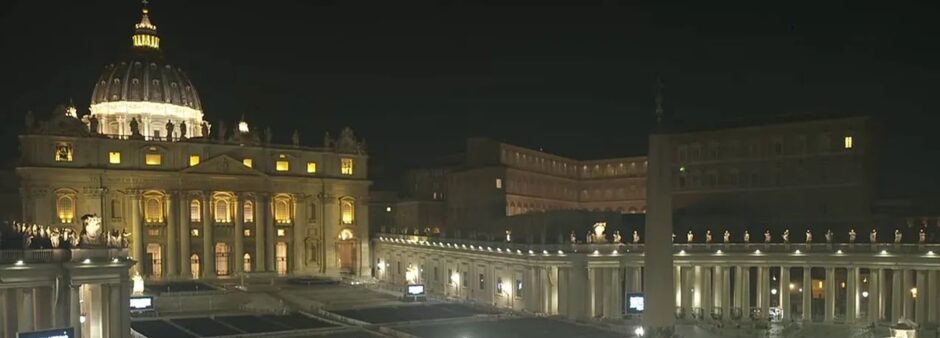
It is my anniversary of ordination today, 28 years ago, by St. John Paul II in St. Peter’s Basilica.  I suppose that might make me a 2nd class relic.

It was not only the Feast of St. Philip Neri, 26 May, but it was also Trinity Sunday. A beautiful sunny day.   Today, in Rome, we have solid gray and rain.

I got up that morning, ate breakfast, said my prayers, and walked alone across town to the basilica, where I entered through the main doors with the rest of the crowd. After that, however, I went to the right, to the nave near the Pietà, where we ordinands vested and waited for the Holy Father. My family members came separately from a different part of town. They had special tickets which brought them very close to the altar.

Since we were 60 in number, and from many countries, the basilica was absolutely jammed with people from all over the world who had come for the ordinations. The number of people, probably some 50k since it was packed to the gills with families and friends and whole colleges and the inevitable tourists, made the responses during the Litany of Saints flow over us palpably as we lay on the floor.

You have not experienced the Litany of Saints until you have heard it sung by that many people in a space like that.

St. Theresa of Calcutta was there, just in front of where my folks sat.

I had arranged for my grandmother, a convert to Catholicism in her 80’s, to receive Communion from the Holy Father.

I often wonder what happened to the other men with whom I was ordained. I only knew a few of them personally, since I had been at the Lateran University with them. I know that one fellow is now a bishop in Haiti. Also, it was the first year that the Iron Curtain was raised enough in Romania so that a few men were permitted out of the country to come to Rome to be ordained by the Pope. There were some Opus Dei guys ordained with us. Another was the sad, so very sad John Corapi of the SOLT group. One priest was ordained for the Archdiocese of Southwark in England. It would be great to meet with him during some trip. I reached out to a few some years ago and got a few responses.

NB:

God doesn’t choose men who are worthy. He chooses those whom it pleases Him to choose. In regard to myself, it’s all a great mystery to me. I probably won’t get it until I die.

The sermon from the Mass. The sermon is in Italian and the text is HERE.

YouTube thumbnailYouTube icon

I really miss him.

Here is some excerpts from the broadcast of the ordination, which was on national television in Italy.  We have the interrogation, litany and the prayer (form).

YouTube thumbnailYouTube icon

Imposition of hands.

Anecdote: After our ordination we lined up, new priests on one side of the side nave, all the cardinals and various prelates on the other. The Holy Father came and greeted us all.  To my shock, my boss, the late and great Augustine Card. Mayer who had joined the recessional, came across the nave and, in front of the Roman Pontiff, knelt down and asked for my blessing. It was one of several startling lessons Card. Mayer gave me.

This morning, Mass at the altar of St. Philip in the Church where he founded the confraternity to take care of pilgrims, Santissima Trinità dei Pellegrini.

UPDATE:

This morning, I celebrated Mass as described.   Because that church has a special relationship with “Pippo Bono” even though it is a Sunday I could use the proper for the saint, adding prayers “Pro Seipso Sacerdote” and with the proper Gospel from Sunday as the Last Gospel instead of the beginning of the Gospel of John.

The church was busy during Mass.  It seems that the parish has awakened a bit and Sunday activity has increased.  There were groups of kids being chaperoned to different places for catechism.  One group, older kids, went off with The Great Roman™.  Another group – the really little ones – was kept in church where they sang the Ave Maria in Latin again… and again… and again… and again… and again….  No, no.  It wasn’t the least distracting for me or my server.   Not at all.

The amusing aspect is this chaos revolving around us.  Last night at supper one of the priests suggested coming at the time we did for Mass because the church would be quieter.    I think he really meant it, but…. HA!

St. Philip was a great prankster in life.   It seems he is still a prankster in death.

Thanks, “Pippo”.   Another lesson on my ordination day!

Posted in Linking Back, What Fr. Z is up to | Tagged ,
20 Comments

ASK FATHER: How to break the bondage of bad habits, vices?

From a priest:

QUAERITUR:

Father, you stated:

“Create a vacuum and something else will rush in to fill it. Think
of this in our human, lived experience. If you have a bad habit, you will more than likely never break it, unless you replace it with a good habit.” I have been contemplating this very thing for a long time now. In regards to Confession.

I admit my seminary training was lacking but guiding a penitent in this situation was never discussed in any specific detail in any of my classes (that I recall) and I have not seen anything written about this….how does an individual deeply rooted in habitual sin – who confesses regularly – break out of that bondage?

This is currently a huge problem with sexual sins in our country and maybe around the world and I feel at a loss when I tell penitents to “do this…” or “do that…” but those chains seems unbreakable. (This or that being Rosary, Scripture, Holy Hours, Fasting etc…).

I don’t know how well they do these things or if they do them at all ( they say they do).

Would you be able to recommend a source for how to guide a penitent with this kind of problem. I feel like I am not helping them because  they are not progressing in conquering these habitual sins.

Thanks, Father.

Look, I’m a simple guy and a sinner.  I don’t get real fancy when it comes to these things.  Sure, fasting… yeah.  All that stuff.   As Nelson said, “Damn the maneuvers! Go straight at ’em!”

It seems to me that keeping it simple is a good approach.

If you can get a penitent to start thinking about the patterns of behavior he has that leads to sin X, then you can suggest a concrete approach.  Make a plan.

“The next time I start thinking about doing sin X, instead – right away – I’m going to go outside and scrub an oil stain out of the driveway.”   “The next time, I’ll clean and defrost the refrigerator.” “I’ll [FILL IN SOME HUMBLE MANUAL TASK.]”

For example, when you find you are starting to think about doing sin X, kick the pre-determined and contemplated plan into action.  Do that instead of the sin.   Repeat when necessary.

For language, make a list of specific words you will use instead of words or phrases you shouldn’t use.  Then, consciously, start using them.  Get into the new vocabulary so that it, instead of the F-word pops out automatically, one of the List-Words pops out.

You have to make a plan and then implement it.  Do this often enough, and, when you also avoid occasions of sin, you can get hold of the bad habit and diminish it.

A concrete example: I use to misplace my keys all the time.  Eventually I got tier of looking for my keys like a dope.   I broke the bad habit by replacing it with a planned action.  I started putting my keys in the refrigerator.   That was such a weird place to put them, that I remembered where they were.  Eventually, I got over just putting them down anywhere, and regularly put them in a non-refrigerated place.  Problem solved.

Another example, I know a priest who determined that his word for sudden shock or pain would be “Carumba!”.   Indeed, that’s now the word that slips out when he grabs something too hot to handle and burns himself.

Also, say prayers often during the day to Mary, St. Joseph and your Angel.  I do mean often.  Establish the good habit of quiet and even rapid private prayer in moments during the day, along, of course with Angelus, etc.   That can put the breaks on sudden temptations.  Often.  Really fast prayers, even just a couple of words!  Often.

Moreover….

GO TO CONFESSION!

One of the effects of the Sacrament of Penance, along with forgiveness of sins, is strengthening against temptations and sins.   It makes you stronger.

Remember that grace builds on nature, it doesn’t replace nature.  We have to do our part with elbow grease so that the grace can build.

I tell people who are not in the habit of examining their consciences every day, to do so when they brush their teeth at night.  It’s an activity that you don’t omit – I hope – and it is such a mundane contrast that you remember to do it (see aforementioned refrigerator).

Don’t get all fancy and pious.  Just suggest commonsense and concrete things with a little pious thrown in for good graces.

Once progress is made and some victories are attained, then elaborate.

And… hammer this home.  To mix metaphors, don’t candy-coat it.

“Friend, you have a bad habit here.  It’s going to be hard to replace it and the Enemy and your own interior weakness from Original Sin are going to fight you.  When you say “No’ to yourself, you are going to begin to suffer.   If it’s a really rooted vice, you will suffer more and more.   Plan on it.   You have to be willing to suffer. Be aware ahead of time so that you will know what your PLAN is to face the suffering.  Maybe it will be a cold shower or more manual tasks.  Maybe gazing at a crucifix and kissing Jesus’ feet over and over.   You have to PLAN for the suffering and then plan NOT to come down from the Cross the Lord is sharing with you.  Be ready for it and it won’t surprise you, bad as it is.   Stay on that Cross.”

Posted in "How To..." - Practical Notes, ASK FATHER Question Box | Tagged , , ,
16 Comments