Upcoming Amazon Synod and discussion of the matter (wheat) for the Eucharist

I saw something interesting at Crux about the upcoming, 6-27 October, Amazon Synod.

“Amazon” Synod… who will be the first to quip that they will try to sell out the Church?

Apparently on the agenda for the Amazon Synod will be the question of ordaining married men to the priesthood because of priest shortages.

Another point may be rethinking – get this – the matter use for the Eucharist.   There was a 25-27 February seminary on the upcoming Synod with some of the primary riggers.  Crux says (my emphases):

Another issue Taborda said is likely to come up during the synod is the possibility of replacing bread used in the consecration of the Eucharist with yuca – a shrub native to South America which is commonly cultivated as an annual crop in tropical regions, where it is popular to eat the root of the plant.

The reason for proposing the change, Taborda said, is because the bread normally used in Latin rite Masses turns into a pasty mush during the Amazonian rainy season due to the intense humidity, meaning “it’s not bread, and if it’s not bread, it’s not the Eucharist.”

In the Amazon, bread is made out of yuca,” he said. And while changing material used in the Eucharist is “a very complex question,” he believes it should be decided by the local bishops and will likely be mentioned during the October discussion.

For the Eucharist to be confected validly, only bread of wheat may be used.  In the Latin Church we use only unleavened bread, as Christ used at the Last Supper (cf. Matthew 26:17, Mark 14:12, Luke 22:7).

If memory serves, and perhaps one of you can hunt this up, early missionaries to Asia attempted, through “inculturation”, to adapt the matter for the Eucharistic species to local products, such as rice.  I think this was done by Jesuit missionaries and that they had to be corrected either by the Superior General or by the Roman Pontiff.   Surely one of you out there will have the reference.

Anyway, no wheat… no Eucharist.  Use of yuca would result in idolatry.

Posted in Liturgy Science Theatre 3000, Synod | Tagged ,
34 Comments

WDTPRS – 8th Ordinary Sunday: The “Barque of Peter” on turbulent seas

Let us has a swift look at the Collect for the upcoming 8th Sunday of Ordinary Time.  This formulary doesn’t present itself each year because of the vagaries of the Moon.  This year, in the Ordinary Form, there are more “green” Sundays than usual before Ash Wednesday ushers in Lent. In the Extraordinary Form, the traditional form, this Sunday is Quinquagesima.  Lent is around the corner.

COLLECT (2002MR):

Da nobis, quaesumus, Domine,
ut et mundi cursus pacifico nobis tuo ordine dirigatur,
et Ecclesia tua tranquilla devotione laetetur.

This prayer was in the 7th century manuscript called the Veronese Sacramentary, though it is surely much older.  It was prayed on the 4th Sunday after Pentecost where it remained for centuries in the Missale Romanum until it was moved in the 1960’s.  In the pre-Conciliar Missale Romanum we find the adverb pacifice.  The Novus Ordo redactors changed this back to the more ancient pacifico which goes with ordine.

Some vocabulary with the help of our jam-packed Lewis & Short DictionaryCursus can mean anything from “course, way, journey” to “course of a ship”, the “flow of conversation” and “postal route”. Dirigo is “to give a particular direction” or “to lay or draw a straight line”.  It was used, among other things, to indicate ordering an army to march to a certain point or to direct or steer a ship on its course.  Ordo means too many things to get into in depth.  Suffice to say that it can refer to the “methodical arrangement, class or condition.”  By extension it is applied to everything from the “orders” of the clergy, the way trees are planted, the lines of an army, or the banks of rowers in a ship.” And of course, it refers to the order of the prayers of Holy Mass. Cursus and ordo, conceptually related, set up a nice internal chiasmus, putting us, nobis, at the center of the construction.  Pacificus is a composite of pax and facio meaning “peacemaker” or “peaceable”.  Among the things devotio means are “fealty, allegiance, piety, devotion, zeal.”

I think tranquilla is ablative and that it goes with devotione instead of being nominative and thus matching up with Ecclesia.

Our Collect’s vocabulary gives us military and nautical imagery.

Try reading this prayer with the mental image of a ship.  Our ship’s great Captain sets our course upon the sea.  The Captain is so great that He can command the waters and winds.  I can see the ship as the Church in the world, the Church Militant.  We call the Catholic Church the “Barque of Peter”.  The sea it sails upon is the deep and turbulent world we live in.  The Captain is our Lord Jesus Christ, who calmed the stormy waters and commanded Peter to walk to Him upon them.  He entrusted His ship to Peter to steer it in His stead.  Once all has been made “ship-shape and Bristol fashion”, the Captain and His sailing-master use our zeal and work to steer the ship upon the course He sets, carrying us its crew to a safe haven.

The imagery almost vanishes when we have to wrench it out of Latin and into English.

LITERAL RENDERING:

Grant us, we beg, O Lord, both that the course of the world be set by your methodical peace producing plan for us and that your Church may be made joyful by means of tranquil devotion.

OBSOLETE ICEL (1973 translation of the 1970MR):

Lord,
guide the course of world events
and give your Church the joy and peace
of serving you in freedom.

Quite simply dreadful.

CURRENT ICEL:

Grant us, O Lord, we pray,
that the course of our world
may be directed by your peaceful rule
and that your Church may rejoice,
untroubled in her devotion
.

The translators thought tranquilla was nominative rather than ablative.  You decide.  Either way, this version is a great improvement over the dreadful obsolete version and it maintains the sense of the Latin original.

Before the creation of the universe God knew each one of us and desired us and loved us.  He called us into existence at a precise point in His great plan.  He gives us a part to play in that plan. He gives us the tools and talents we need to fulfill it.  If we devote ourselves to our state-in-life and strive to carry out His will, God will give us the actual graces we need because we are furthering His great plan.  In keeping with the imagery of the prayer, I suggest that our devotion can be like the wind the Captain uses to direct our courses.  We are more than just the “hands on deck”, hauling a rope or swabbing the deck.  We are not merely being pushed along. We play a vital part in the actual forward motion of the ship.  We truly depend on Him and Him alone. We do not of ourselves merit what He provides.

This could be a point of reflection as you receive Holy Communion devoutly and frequently.  Mysteriously, it is His plan and will that His work becomes our work and ours His.

He gives Himself to us so that we can be wholly His.

Posted in Liturgy Science Theatre 3000, WDTPRS | Tagged
3 Comments

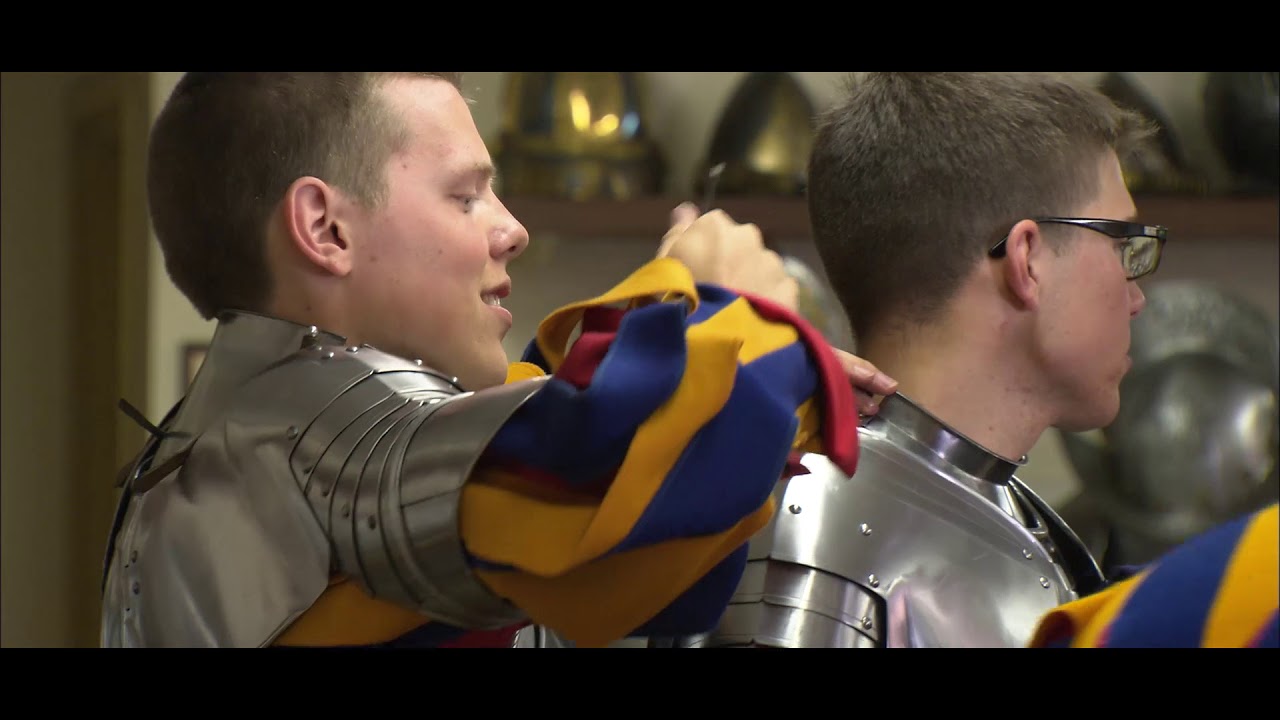
VIDEO – Pontifical Swiss Guard

Have you seen this?

YouTube thumbnailYouTube icon

Posted in Just Too Cool | Tagged
13 Comments

28 February 2013 – Benedict XVI…

6 years ago today…


The Holy Father is leaving the Apostolic Palace to go to Castel Gandolfo.

Some images…

Our final view of Pope Benedict XVI as Roman Pontiff.

UPDATE:  The doors are closed.


Posted in Benedict XVI | Tagged
29 Comments

YOUR URGENT PRAYER REQUESTS

Please use the sharing buttons! Thanks!

Registered here or not, will you in your charity please take a moment look at the requests and to pray for the people about whom you read?

Continued from THESE.

I get many requests by email asking for prayers. Some are heart-achingly grave and urgent.

As long as my blog reaches so many readers in so many places, let’s give each other a hand. We should support each other in works of mercy.

If you have some prayer requests, feel free to post them below.

You have to be registered here to be able to post.

I still have a pressing personal petition.

Posted in SESSIUNCULA |
24 Comments

“an open attempt to normalize homosexuality among clergy”

At The Catholic Thing there is an interesting piece about Stephen P. White.  The writer looks at three pieces which concern The Present Crisis in the Church, and draws an interesting conclusion.

[…]

These three pieces represent a shift away from denying a connection between homosexuality and the abuse crisis and toward an open attempt to normalize homosexuality among clergy. The stakes, in other words, have been raised.

Pope Francis, for his part, has reiterated (more than once) the Church’s prohibition on admitting men with deep-seated homosexual tendencies to seminaries. He reportedly told the Italian bishops, “If you have even the slightest doubt, it is better not to let them in.” He has upset activists by saying of homosexual priests and religious, “It would be better if they left the ministry or consecrated life rather than live a double life.”

“normalize homosexuality”

That’s the immediate goal.

The next goal for the homosexualist lobby will be to lower the age of consent.

Meanwhile, since it is increasingly evident that most people are not buying into the “clericalism” excuse, the homosexualists are shifting gears to drive toward something even more demonic.

Posted in Clerical Sexual Abuse, Sin That Cries To Heaven | Tagged , ,
9 Comments

URGENT UPDATE Sexagesima Thursday: Solemn Feast of Reparation of Insults Offered to the Most Holy Sacrament

UPDATE 27 Feb:

I have received more information for this Mass, including all the orations for the Mass.   Now the texts are complete.   I have linked to a PDF, provided by the Benedictines of Silverstream.

Click HERE


Originally Published on: Feb 25, 2019

This is not on the calendar after 1962.  On Thursday after Sexagesima Sunday there is traditionally a

Solemn Feast of Reparation of Insults Offered to the Most Holy Sacrament

This seems like a very good thing to keep in mind for each year.  Thursday after Sexagesima.  Mark it on your calendars.  There is still time to do something with this this year.

HERE

Is there a better time than this year to do this, in the wake of the “summit” and all the duplicity of recent years?  All of this comes back to lack of faith, lack of belief in what the Church believes about the Eucharist.

Think of how many “bad Communions” are made every Sunday.

We need acts of reparation far and wide.  I would like to see bishops lying prostrate on the steps of their cathedrals before going inside to celebrate a Mass like the one in the linked PDF.

The formatting of the pdf pages reminds me of the old Antiphonale Monasticum.

We find in the document, the chants and prayers for the liturgical hours, followed by the formulary, with all the chants, for Holy Mass.  The Mass even has a short Sequence.  There is an Alleluia included, along with a lengthy Tract, so it could be used outside of the time of Septuagesima or Lent.  The Offertory is also hefty.

Posted in "How To..." - Practical Notes, Liturgy Science Theatre 3000, The future and our choices | Tagged ,
20 Comments

CH: Traditional Latin Mass attendees more devout and orthodox, study says. Wherein Fr. Z rants.

From the Catholic Herald. My emphases and comments:

Traditional Latin Mass attendees more devout and orthodox, study says

A new survey suggests Catholics who attend the Old Rite are more faithful to Church teaching

Catholics in the US who attend the traditional Latin Mass a far more faithful to Church teaching than those who attend the Novus Ordo, a survey has found.

A study led by Fr Donald Kloster compared Catholics who attend the traditional Mass (TLM) with the results of previous surveys of Catholics at large, the vast majority of whom attend the Novus Ordo Mass (NOM).

The authors found that 99 per cent of Catholics who attend the TLM fulfil their weekly obligation, compared to just 22 per cent of those who go to the NOM. [Whew!] Ninety-eight per cent also go to Confession at least once a year along with weekly Mass, compared to 25 per cent of NOM attendees.

The survey also found that TLM attendees are far more sympathetic to Church teaching on moral issues. Just two per cent of Catholics who attend the TLM approve of contraception, one per cent approve of abortion, and two per cent support same-sex marriage.

In contrast, previous surveys suggest 89 per cent of NOM attendees approve of contraception, 51 per cent support abortion, and 67 per cent support same-sex marriage.

Fr Kloster said that through more than 20 years celebrating both forms of the Roman Rite, he noticed differences between the congregations. The survey, he said, “reveals a striking variance between Catholics attending the TLM versus those who attend the NOM. These differences are dramatic when comparing beliefs, church attendance, monetary generosity, and fertility rates.”

Women who attend the TLM have a fertility rate of 3.6, compared to 2.3 for NOM women.

“Importantly, TLM families have a nearly 60% larger family size,” Fr Kloster added. “This will translate to a changing demographic within the Church.”  [That’s big.]

“TLM attendees donate 5 times more in the collection, indicating that they are far more invested than the NOM attendees. TLM Catholics go to Mass every Sunday at 4.5 times the rate of their NOM brethren. This implies a deep commitment to the faith. The almost universal adherence to the Sunday Mass obligation depicts Catholics who are deeply in love with their faith and cannot imagine missing their Sunday privilege.”

There are many aspects of this that deserve discussion.  One point, however, stood out.

Demographics.

The demographics of the Church are going to shift dramatically and soon.  Younger generations from nominally Catholic families are less and less inclined to self-identity as Catholics.  They will, as they older, stop even pretending.  Older people will drop away from church attendance.  Many dioceses will soon lose large numbers of priests through death and retirement.  Church attendance and income will drop.

For years I have talked about the future of the Novus Ordo and the TLM, the roles they would play.  Summorum Pontificum was, therefore, a game changer.  It was probably the signal most important legislative move that Benedict XVI made, and he did it according to what I for years have called his “Marshall Plan” for the rebuilding the Church in the wake of post-Conciliar devastation and against the onslaught of the dictatorship of relativism.

No initiative we undertake in the Church can succeed without it being rooted in our sacred liturgical worship.   However, our collective sacred liturgical worship is presently in a state of cataclysmic disorder.   I believe with all my heart and mind that we, collectively, cannot in this present state fulfill properly our obligation to God according to the virtue of religion, that virtue which directs us to give to God what is His due.   Hence, according to the hierarchy of goods which we all must embrace, we are, collectively, disordered.  Nothing we can do as a Church will succeed in this state of affairs.  We have to see to our worship of God.

The use of the TLM will help us to correct our downward trajectory.  The knock-on effect that learning the TLM has on priests is remarkable.  That knock-on effect ripples beyond the sanctuary to congregations.

“An enemy as done this”, is what the parable of the Lord says.  The Enemy, the Prince of this world, knows how to bring us from order to disorder.  Consider the lies of the Devil to our First Parents.  In every act of the Enemy, the objective is to disorder our relationship with God, to bring us to withhold from God what is due to God.   God’s plan for humanity at every step involved His teaching us how to worship Him properly.   He continues to show us today.

Christ says that the Prince of this world has no power again Him (John 14:30). We can do this with Christ’s help.  We must to revitalize our sacred liturgical worship in order to set things on a new course.

We can do this.

What will it take?

Firstly, it is going to take nearly heroic courage from priests, who will need to work to acquire tools that they were systematically cheated out of in their formation.  They will be intimidated.  They will fear that they can’t do it.  They can, but it will take hard work and support from others.  Graces will be given in this undertaking, because the connection of the priest and the altar is fundamental to the Church’s life.  No other thing that the priest does is more important.  Priests must also be willing to suffer attacks from libs, many of whom are not malicious but who are blinkered and nearly brainwashed.

Next, it is going to require nearly heroic courage and spirit of sacrifice from lay people who must support their priests and encourage them in projects that they will be reluctant to undertake.  Lay people must also be ready to engage in their parishes on a new level.


Posted in Hard-Identity Catholicism, Liturgy Science Theatre 3000, SUMMORUM PONTIFICUM, The Coming Storm, The future and our choices | Tagged ,
23 Comments

CRISIS on The Francis Effect

At Crisis today, there is a no-holds-barred piece in the wake of the seriously disappointing Rome “summit” that concluded recently. Jonathan B. Coe is the author.

Understanding and Combating the Francis Effect

This is a brutally blunt offering.

The first part is a warm up, emphases added:

Early in his pontificate the Catholic Left gushed about the Francis Effect, which mainly reflected their hopes and dreams that the new Holy See would advance their “progressive” agenda. Progressive is usually code for departing from the teachings of Scripture and Tradition. And they predicted this would attract new converts and reverts who had been kept away, in their view, by the retrograde policies of his immediate predecessors.

Honest observers of his reign during the last five years would agree that the what of his agenda has been to pull the Church to the left in many ways, albeit with substantial ambiguity, as evidenced by Amoris Laetitia and many other public statements. Honesty would also dictate that the how of his pontificate, his modus operandi or leadership style, has been to use control, manipulation, and other dictatorial measures to accomplish his goals along with stonewalling, obfuscation, and subterfuge when needed.

A fine Machiavellian tool box has been assembled. This was all on display at the recent dog and pony show called the sex abuse summit in Rome where the root cause of the pestilence (homosexual activity and predation in the priesthood), its effects (the abuse of men who are not children) and the depraved legacy of Theodore McCarrick, and those who protected him, were all swept under the rug.

It wasn’t that the prelates failed to talk about the elephant in the room; they averted their eyes from an entire herd.

[…]

Does he get more blunt as he makes his case?

Oh yes.

Go there and read the whole thing.

Discuss.

The moderation queue is ON and thoughtful comments will be welcomed.

Posted in Francis, The Drill | Tagged
39 Comments

ASK FATHER: Patron Saint of aquaculture workers

Since there is a great deal that’s fishy going on inside and coming out of the Vatican, thus making it a kind of fish hatchery, I thought this question was appropriate.

From a reader…

QUAERITUR:

My dad is the manager at a fish hatchery in the Western US, and I was just wondering who the patron saint of aquaculture workers would be? (I was thinking of getting him a holy card or something like that).

I figured perhaps St. Anthony, who preached to fish.  But, I consulted someone whom I thought might know this off the top of his head.

GUEST PRIEST RESPONSE: Fr. Tim Ferguson

St. Neot of Cornwall! He was only four feet tall and his monastery sat by a river and he was told by an angel that if he never ate more than one fish a day, the river would never lack for fish.

My first thought was St. Murgen, the mermaid, but she’s probably better invoked as the patroness of bait…

And there, friends, you have it.


Posted in "How To..." - Practical Notes, ASK FATHER Question Box, Saints: Stories & Symbols | Tagged ,
5 Comments