What priests can – with credibility – do in marriage preparation

The other day, Kevin Card. Farrell, formerly of Dallas and now of Rome, made a disparaging remark about pretty much every priest in the world when it comes to marriage prep. He said: “[Priests] have no credibility; they have never lived the experience; they may know moral theology, dogmatic theology in theory, but to go from there to putting it into practice every day . . . they don’t have the experience.”  If that is the case, one might wonder with a measure of irony if he, a priest, is credible as the head of the Dicastery for the Laity, Family, and Life.

My good friend Fr. Gerald Murray comments on the Cardinal’s remarks at The Catholic Thing.

The Priest’s Role in Marriage Preparation

Cardinal Kevin Farrell, prefect of the Dicastery for the Laity, Family, and Life, made some provocative remarks about priests and marriage preparation in an interview that appeared recently in the Irish Catholic magazine Intercom. He said: “They have no credibility; they have never lived the experience; they may know moral theology, dogmatic theology in theory, but to go from there to putting it into practice every day . . . they don’t have the experience.”

He also spoke about the priests of the Diocese of Dallas where he served as bishop for nine years: “We have a million and a half Catholics and 75 priests, with a 45 to 50 percent rate of (Mass) attendance. Those 75 priests are not going to be interested in organizing marriage meetings.”

Do priests really lack credibility and interest in preparing couples for the sacrament of marriage? That has not been my experience. Most priests, and more specifically, most parish priests take a lively interest in marriage preparation.

Couples almost always appreciate their efforts as they prepare for marriage. Fr. Roger Landry has described the reality on the ground in most parishes in a recent column. Most priests are credible witnesses to the Church’s teaching on marriage, and they speak with insight – and often wisdom – from their extensive experience dealing with engaged couples, families, and children[Oddly enough, priests come from families.  Hmmm….]

What’s most troubling here are the premises underlying Cardinal Farrell’s remarks. He implies that the primary purpose of marriage instruction is to communicate experiential advice on how husbands and wives can live so as to produce marital happiness and familial harmony. To attain this goal, what couples need is to hear is practical advice from married people who, from their own experiences, will share “best practices” with engaged couples. He also claims that overworked priests would rather not take time from their busy schedules to meet with and instruct couples seeking to be married in the Church.

Marriage preparation programs should include advice on marital life from couples who are serious Catholics and have years of valuable experience in living out the demands of Christian marriage. And many priests are overworked. Yet should we promote the notion that priests should avoid working with engaged couples and are not really suited to this task?
Is it really better for them, instead, to dedicate time to other, relatively less important tasks such as building management and office work, which are in fact unavoidable and time-consuming tasks for most parish priests? Isn’t sacramental preparation a vital part of the spiritual paternity of the men ordained to celebrate the sacraments? [I think, perhaps…. yes?]

I had plenty of instruction in the seminary about Christian marriage, and none about building maintenance and parish office management. The seminary’s priorities were correct.

The number of Catholics seeking to be married in the Church has declined significantly. One reason is the ignorance of many Catholics about the sacramental nature of marriage and their obligations as Catholics. [Perhaps more important on the list of things that priests should pass along than “best practices”.] When a couple comes to the rectory seeking to be married in the Church we should view this as an opportunity to give doctrinal and spiritual formation to these obviously good willed, believing people. Who knows? They may tell their friends what a good experience it was to learn from a priest about the state in which they plan to spend the rest of their lives.

Poorly catechized Catholics need to understand Church teaching about the nature and purpose of marriage. Priests spend years in the seminary acquiring a deep understanding of that teaching, and how to explain its truth and value to the people of our times. They are meant to share that doctrinal formation with the laity.

[…]

I’ll cut it off there, only because I want you to go over there and read the rest.  It is very good.

Also, Fr. Raymond de Souza has a piece at the UK’s best Catholic weekly about the same topic.  He wrote:

Many priests devote enormous time and heroic energy to marriage preparation, often in the face of significant difficulties. They might not be the “best people” to do it, but certainly they would be deflated to hear Cardinal Farrell pronounce that, having “no credibility”, they are consequently wasting their time.

About 18 months ago Pope Francis – who himself offers all sorts of homely, affectionate and practical advice to married couples – took a rather different view when addressing parish priests, telling them that “no one better than you knows” the situations that couples face.

“May your primary concern be to bear witness to the grace of the Sacrament of Matrimony,” Pope Francis said. “Such witness is put into practice concretely when you prepare engaged couples for marriage, making them aware of the profound meaning of the step which they are about to take.”

So if it were a matter of authority alone, Cardinal Farrell’s comments could be ignored in light of the Holy Father taking a contrary view. Yet if Cardinal Farrell is right, it doesn’t matter that Pope Francis disagrees with him. But is he right? Is it true that priests have “no credibility” in preparing couples for marriage, because they have not been married themselves?

[…]

Yet there are questions that a priest is uniquely, but not exclusively, positioned to ask: do you pray together? If not, why not? Do you understand that your primary mission as a husband or wife is to get your spouse to heaven? Do you know that you will fail at that if you do not call upon the sacramental grace you will receive? Do you know what sacramental grace is? Do you know that it can enable to you to be far more than you imagine?

Those are matters upon which priests ought to have some credibility. If they don’t, we have much graver problems than marriage preparation.

Indeed.  Perhaps we do have graver problems.

Posted in Mail from priests, One Man & One Woman | Tagged ,
37 Comments

French stones and soutanes

As I do each year, I’ve been watching the Tour de France.  When I was young, I did a bit of riding myself.    The coverage is technically amazing and the scenery along the way is beautiful.  It’s like a brief daily vacation around different regions of France.  They show the landscapes, chateaux and churches along the way and talk about their history.

Yesterday’s leg, Stage 7, resolved in Chartres.  One of the aerial shots showed the cathedral at the moment when a figure was crossing the street and I am quite sure he was in a cassock.  My screen has pretty good resolution.  Hard to tell, but I’m pretty sure.  I watched it several times.

On Sunday the riders hit the cobblestones.   There’s even a WSJ story about it.  It should be interesting.

Posted in Just Too Cool | Tagged
4 Comments

US Association of Consecrated Virgins condemns confusing new rules from Holy See

This is interesting… in the wake of the Holy See’s confusing document on consecrated virginity.  Ed Peter‘s wrote:

Now, according to the plain terms of ESI, the Blessed Virgin Mary, archetype of virginity consecrated to God, would not be eligible for admission to the order of virgins, but Mary Magdalene, model for women who, Deo gratias, set aside a promiscuous life, would be eligible.

Something, I suggest, is seriously wrong with such norms.

Hence, the consecrated virgins of these USA are pretty irritated.

US Association of Consecrated Virgins condemns ‘shocking’ new rules

The US Association of Consecrated Virgins has said it is “deeply disappointed” at new rules issued by the Vatican that appear to say consecrated virgins need not be virgins.

The group has taken issue with section 88 of the new document, which states: “Thus to have kept her body in perfect continence or to have practiced the virtue of chastity in an exemplary way, while of great importance with regard to the discernment, are not essential prerequisites in the absence of which admittance to consecration is not possible.”

The USACV said it was “shocking to hear from Mother Church that physical virginity may no longer be considered an essential prerequisite for consecration to a life of virginity.”

“The entire tradition of the Church has firmly upheld that a woman must have received the gift of virginity – that is, both material and formal (physical and spiritual) – in order to receive the consecration of virgins,” the association added.

They said that the new rules do not change the prerequisites for consecration as stated in the Rite of Consecration to a Life of Virginity, which says: “In the case of virgins leading lives in the world it is required that they have never celebrated marriage and that they have not publicly or manifestly lived in a state contrary to chastity.”

The USACV says that this means virginity is a minimum requirement for consecration, and they add that there are “some egregious violations of chastity” that, although they do not violate virginity, do disqualify women from receiving consecration.

The Vatican issued the document, titled Ecclesiae Sponsae Imago, last week after requests from bishops throughout the world for clarity on the role of consecrated virgins amid an upsurge in vocations.

A consecrated virgin is a woman who has never married who pledges perpetual virginity and dedicates her life to God. Unlike a nun, she does not live in a community and leads a secular life, providing for her own needs.

Stay tuned!

Posted in ¡Hagan lío!, Pò sì jiù, The Drill | Tagged
52 Comments

¡Hagan lío! in Poland. Young, and raising hell…. correction… razing Hell.

These days it seems as if every time I turn around, I receive news of another Pontifical Mass in the Traditional Roman Rite has been celebrated somewhere.   I couldn’t be more pleased.

Slowly but surely, we are witnessing the reintegration of traditional sacred worship into the life of the Church.   Only good can come from the steady, side by side offering of worship to God in the two forms of the Roman Rite.

All should welcome this development, which is in its essence unifying, across ethnic groups, regions, generations and even across the bounds of death with the lived experience of our forebears, who were spiritually nourished by it and who lovingly handed it on.

Today I received a press release, which I’ll simply pass along:

Laudetur Iesus Christus! Pls feel free to use the following press release:

International liturgical workshops „Ars Celebrandi” are going on

Solemn and lofty celebrations; intense training; beautiful, contemplative Gregorian chant, new friendships and a warm atmosphere—this is the short summary of the international liturgical workshops „Ars Celebrandi”, launched yesterday at the Sanctuary of Our Lady of Sorrows in Liche? (Poland).

The workshops of the traditional liturgy „Ars Celebrandi” in Liche?, organized by the association Una Voce Polonia (Polish branch of the International Federation „Una Voce”, an organization recognized by the Holy See as the official representation of secular Catholics attached to the traditional Latin liturgy), are held for the fifth time. About 200 people from Poland and a dozen or so countries around the world, including Estonia, Latvia, Germany, France, Byelorussia, or even South Korea, learn to celebrate the Mass in the extraordinary form of the Roman rite (priests), serve it (altar servers), or sing (male and female Gregorian chant consorts).

The visit of the high-ranking Vatican prelate, Archbishop Guido Pozzo, secretary of the Pontifical Commission Ecclesia Dei (responsible for Catholics attached to the traditional liturgy around the world), will be the most important event of this year’ edition. On July 18 he will celebrate a pontifical Mass in the Basilica of Our Lady of Liche? and will hold a meeting with the participants of the workshops, answering their questions.

From this year on, “Ars Celebrandi” workshops are officially an international event: one of training groups for altar servers is held in English. This innovation was introduced in response to requests addressed to the organizers.

The priests have an unusual opportunity to improve their priestly singing under the direction of a Benedictine monk in charge of liturgical singing in the thousand-year old Benedictine Abbey in Tyniec (Cracow). Another important point is the presence of the Dominican rite—more than 750 years old own liturgy of the Order of Preachers (very popular in Poland); and the opportunity to participate in the so-called „Polish Masses” celebrated with the accompaniment of the once popular and now almost forgotten devotional folk unison songs.

The workshops are organized in a way enabling everything: prayer, learning and entertainment… well, except for rest. The plan of the day starts at 6 a.m. with singing lauds (the morning office), and ends in the late evening with a sung complete [compline] (not forgetting—for those willing—additional workshops, lasting up to midnight). However, the time for coffee meetings and making new contacts has been also provided („Ars Celebrandi” makes a great contribution to the integration of the Latin liturgy communities of different towns and countries), and even to watch the finals of the World Cup on football. [Of course.] The enthusiasts of the old liturgy are not alienated from life and stand firmly on the ground.

The event takes place from 12th until 19th of July. Daily releases and photo galleries are being published on Facebook and Instagram. Pls find enclosed a link to photos from the first day of the workshop, including the celebrations:  HERE

New galleries and releases will be published subsequently. Pls feel invited to follow us!

¡Hagan lío!

Isn’t that what Pope Francis wanted young people to do?  “Make a mess!”?   He probably meant something slightly different.  When coming from an Argentinian, who are famous for their blunt manner of expression, it probably means, “Raise hell!”… but in a good way.  Right?  “Pero quiero lío en las diócesis … Que me perdonen los Obispos y los curas, si algunos después le arman lío a ustedes, pero.. Es el consejo. …  I want a little hell-raising in dioceses… May the bishops and priests forgive me if some of you create a bit of confusion afterwards. That’s my advice.”

I love this photo from Poland:

They are young, and raising hell…. correction… razing Hell.

Posted in ¡Hagan lío!, "How To..." - Practical Notes, Just Too Cool, Liturgy Science Theatre 3000, Our Catholic Identity, SUMMORUM PONTIFICUM | Tagged , , ,
1 Comment

12 July: Sts. Louis Martin and Marie-Azélie Guérin

Today is the feast of two saints married to each other and the parents of another.

Sts. Louis and Zelie Martin have their feast in the Novus Order calendar.  They are the parents of St. Therese, the Little Flower.  July 13th was the day of their marriage. So, today would have been a preparation day. They were married at midnight with just a few witnesses.

Brides and grooms could take a lesson from this humble couple.  Maybe the dresses and photos aren’t the most important thing?

Marie-Azélie, Zelie, died from breast cancer.  Perhaps she might be invoked.

One of the more interesting choices John Paul II made during his long pontificate was the canonization of the married couple Luigi and Maria Beltrame Quattrocchi.  Pope Benedict did this with Marie-Azélie Guérin and Louis Martin.

Married couples have vocations together: to help each other get to heaven.  Everything else takes a back seat to that.

BTW… my friend Fr. Stephen Reynolds, during his time at St. Theresa’s in Sugar Land, TX, had a beautiful bronze made of the couple for a shrine.


Posted in One Man & One Woman, Saints: Stories & Symbols | Tagged
1 Comment

Does “Beans” @MassimoFaggioli undermine ‘Humanae vitae’?

The war on the teaching of Humanae vitae continued today with an offering at ultra-liberal Commonweal by Massimo “Beans” Faggioli.   Beans spends a lot of time on Twitter throwing out one inflammatory tweet after another as click bait.

Faggioli takes his starting point from the release of a new book, in Italian, by Gilfredo Marengo about how Humanae vitae came to be promulgated.   What he is really up to, however, is sowing doubt about the dependability of the content of Humanae vitae under the guise of making it is genesis understandable.

Beans doesn’t indicate that he adheres to Humanae vitae even though he teaches at a Catholic university and he should, therefore, have a mandatum.

First, note his title:

‘Humanae Vitae’ Was a Rewrite

If he and others can show that its development was contentious, then maybe you don’t have to adhere to it.

Then, inter alia, look at his numbers game:

Another important fact revealed in Marengo’s book has to do with Paul VI’s request to the bishops gathered at the synod of October 1967 that they send him suggestions about a magisterial document on the regulation of fertility. Of the more than two hundred members of the synod, only twenty-six replied between October 1967 and May 1968—and only seven of these twenty-six recommended that Paul VI confirm Pius XI’s prohibition of contraception. Among the bishops in favor of a shift in teaching away from Pius XI’s Casti connubii were not only well-known European progressives like Suenens (Brussels), Döpfner (Munich), and Legér (Montreal), but also the U.S. prelates Dearden (Detroit) [spectacularly liberal], Krol (Philadelphia) [a social liberal who covered up sex abuse], Shehan (Baltimore) [spectacularly liberal], and Wright (Pittsburgh) [supporter of Charles Curran].

Two hundred members of the synod, of which 26 replied, of whom 19 (of 200) wanted the Church’s perennial teaching to be overturned.   And that is a big deal.

Moreover, a whole bunch of bishops – the majority – didn’t respond: Qui tacet consentire videtur.

Beans might read Humanae vitae 6.  Paul VI (and the drafters) explicitly acknowledged the division in the commission that had studied the question.  HV recognized that a way of thinking emerged in the commission that was not consistent with Catholic moral reasoning.

In other words, both those who drafted the text and the Pope who made the text unequivocally his own by signing and promulgating it his own were deeply aware of the dissenters’ position. They didn’t agree with it.

This is how dissenters typically roll.

They assert that if you disagree with them, you are ignoring them.

For liberals, “dialogue” means that you need to agree with them.

Pope Paul knew about the dissent.  Pope Paul didn’t agree with it.  Pope Paul published something that adhered to the Church’s teaching.

How Humanae vitae came to be promulgated is, in fact, interesting.  I look forward to looking at this new book… for the sake of history, etc., but not to undermine the encyclical.

When we discuss Humanae vitae we discuss the promulgated text, and not some previous draft.

And now for some of the actually text of Humanae vitae:

Special Studies

5. The consciousness of the same responsibility induced Us to confirm and expand the commission set up by Our predecessor Pope John XXIII, of happy memory, in March, 1963. This commission included married couples as well as many experts in the various fields pertinent to these questions. Its task was to examine views and opinions concerning married life, and especially on the correct regulation of births; and it was also to provide the teaching authority of the Church [Paul] with such evidence as would enable it to give an apt reply in this matter, which not only the faithful but also the rest of the world were waiting for.

When the evidence of the experts had been received, as well as the opinions and advice of a considerable number of Our brethren in the episcopate—some of whom sent their views spontaneously, while others were requested by Us to do so—We were in a position to weigh with more precision all the aspects of this complex subject. Hence We are deeply grateful to all those concerned.

The Magisterium’s Reply

6. However, the conclusions arrived at by the commission could not be considered by Us as definitive and absolutely certain, dispensing Us from the duty of examining personally this serious question. This was all the more necessary because, within the commission itself, there was not complete agreement concerning the moral norms to be proposed, and especially because certain approaches and criteria for a solution to this question had emerged which were at variance with the moral doctrine on marriage constantly taught by the magisterium of the Church.

Consequently, now that We have sifted carefully the evidence sent to Us and intently studied the whole matter, as well as prayed constantly to God, We, by virtue of the mandate entrusted to Us by Christ, intend to give Our reply to this series of grave questions.

And that put to rest what the Not Popes opined.

Posted in Emanations from Penumbras, Liberals, One Man & One Woman, Our Catholic Identity, The Drill | Tagged , , , ,
9 Comments

ASK FATHER: Mom baptized my child in the bathtub

From a reader…

QUAERITUR:

My five year old nephew, who wasn’t formally baptized as an infant (ie: with his parents’ permission, in a church, by a priest, etc). My mom baptized him in the bathtub (and didn’t tell anyone except me) and he’s been learning the Catholic faith, learning his prayers, he loves praying the Rosary, sits through Mass wonderfully and pays attention to what’s going on. He’s very intelligent, and despite only being 5 (and just turning 5 at that), I’m pretty sure he has the use of reason (he seems to know very well the difference between right and wrong, good and bad, etc).

Anyways, he has asked to be baptized and my mom spoke to the priest and told him that she baptized him in the bathtub. The priest told her that since it wasn’t an emergency, that baptism didn’t count [FAIL!] (not sure what he meant by “doesn’t count”, but I’m pretty sure my mom knows how to baptize validly, albeit illicitly). My understanding is that he would have to be baptized conditionally as opposed to baptized as if nothing had happened beforehand. What happens then if baptism is repeated? Is this something I need to worry about?

You should be able to sort this out fairly quickly.  Here’s what I would do.

To start, get your mother together with the priest and ascertain if your mother knows how to baptize.   Find out what she did.

Then you have three options.  First, if she didn’t baptize properly, then baptize the child absolutely.   Second, if she is squishy on the details and leaves you wondering about what she did, then baptize the child conditionally.  Third, if she baptized properly, then consider having the priest, using the traditional rite, “supply” the ceremonies that were omitted.  HERE

It was always the case that when baptism was administered in the case of necessity, or in the reception into the Church of adults or children, or in some situation like you described, the other ceremonies of the rite are to be supplied later by a priest.

Also, make sure that the fact of the baptism, etc., is recorded properly in the parish register.

Posted in "How To..." - Practical Notes, ASK FATHER Question Box, Liturgy Science Theatre 3000 | Tagged ,
20 Comments

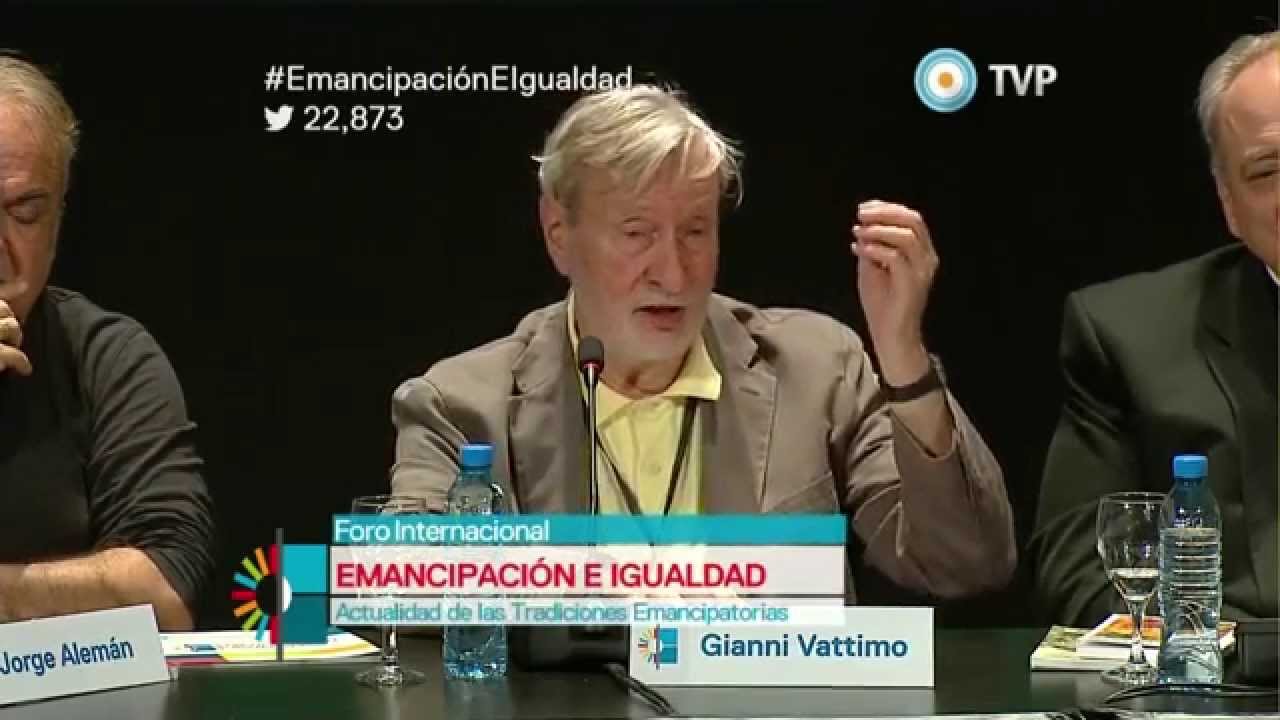
INTERESTING UPDATE – Pope Francis phones Gianni Vattimo, philosopher of “weak thought”

UPDATE 11 July:

I received a fascinating email from a priest:

In [Vattimo’s] book Credo di credere (his spiritual autobiography (reads like someone re-wrote Augustine’s Confessions after a healthy dose of laudanum), Vattimo writes that he prays the 1961 Breviarium Romanum every day and, when he bothers to go, he attends Holy Mass in the Extraordinary Form.

Even better – he doesn’t take Holy Communion because he knows that his lifestyle prevents it.

How interesting the world in which we live – bishops want everyone to receive Communion while a secular, Communist, nihilist philosopher knows that his lifestyle excludes his reception of the Blessed Sacrament!

Originally Published on: Jul 9, 2018

I saw the strangest story at La Stampa.

From Italian:

Pope Francis phones Gianni Vattimo, philosopher of “weak thought”

The Italian scholar sends a copy of his last book to Francis who calls to thank him.  A a short and pleasing conversation about the Church and philosophy: “With this Pope I am not ashamed to call myself Catholic”.

Perhaps someone will translate the whole thing.

This seems so very strange to me.  It leaves me a little confused, frankly.   I’ve written about this guy back in 2013.  HERE  Vattimo, if memory serves, is openly homosexual.  He had his … partner… euthanized in Holland.   Vattimo, who is pretty much against any truth claim and set against just about every moral teaching of the Church, has also spoken of Pope Francis.

I’ve gotten a couple notes asking me what this is all about.  I don’t know.  However, after a little digging around, I found once again a fascinating post that connected Vattimo with Pope Francis, as well as Bishop Marcelo Sánchez Sorondo, of the Pontifical Academy of Social Sciences.  Have a look at THIS.

Sorondo applauded with obvious satisfaction, as the radical left, gay, Italian philosopher, Gianni Vattimo on 13 March 2015 Teatro Cervantes in Buenos Aires in front of all the prominent left radical figures, to form a new Communist International, which he dubbed the “Papal International” because was supposed to be led by Pope Francis. Vattimo said at the time:

“Pope Francis is the only one who is capable of a political, cultural and religious revolution to lead against the superior power of money in the Civil War, which is already raging in the world, and is disguised as ‘the fight against terrorism’ , but in reality is the class struggle of the 21st century against the large number of the critics of capitalism.”

You will recall that Sorondo was the one who said that Catholic social teaching is exemplified in Communist China. HERE

Vattimo has thought about the Pope quite a bit, it seems.  I wonder if any of this is connected to what I mused about back in 2014.  HERE  Alejandro Bermudez wrote about influences on Pope Francis’ thought.  It is worth a review.

Here is the video.  Conference also with Leonardo Boff.  If you have Italian and/or Spanish, you will be pretty much horrified by this fellow.  Take note at 15:00-51:00.

YouTube thumbnailYouTube icon

Pope as point of reference for an international Communism at 24:00.
Mentions ¡Hagan lío! at 49:45.

One wonders if there is a connection between “weak thought” and “weak theology”.  HERE

UPDATE 10 July:

Popes meet with and reach out to all sorts of people. I recall that, early in his pontificate, Pope Benedict reached out to loony Hans Küng and to the brilliant but jaded Oriana Fallaci. I can’t shake the sense, however, that the motives for doing so may have been different from those of Pope Francis in reaching out to Vattimo and some of those others and that the conversations were rather different. Then again, they are very different men, that Pope and this Pope, aren’t they.

Posted in ¡Hagan lío!, The Drill | Tagged
9 Comments

SSPX ELECTS NEW SUPERIOR GENERAL – UPDATED

UPDATE 12 July:

An interview with the new SSPX Superior.

UPDATE 11 July:

Turncoat Tornielli at Inside Vatican has put a negative spin on this election, concluding that an “agreement is farther off”. How he gets to that conclusion is anyone’s guess. I suspect that it is his wishful thinking. “Sun sets on the line of dialogue with Rome”. Oooo! Dramatic.

Tornielli quotes from the old interview that Pagliarani gave:

I can only repeat what was explained clearly by my superiors from the start: the canonical situation in which the Society presently finds itself is the result of its resistance to the errors that infest the Church; consequently the possibility of the Society arriving at a regular canonical situation does not depend on us but on the hierarchy’s acceptance of the contribution that Tradition can make to the restoration of the Church.

If we do not arrive at some canonical regularization, that simply means that the hierarchy is not yet sufficiently convinced of the urgent need for that contribution. In that case we will have to wait a few more years, hoping for an increase in that awareness, which could occur along with and parallel to the acceleration in the process of the Church’s self-destruction.

That was some years ago.  Yet today we see the “process of the Church’s self-destruction” may be accelerating.  Motus in fine velocior, after all.

Tornielli pointed out that De Gallareta, elected as an assistant, is intransigent. On the other hand, Fr. Christian Bouchacourt knew Card. Bergoglio from his time in Argentina: Bergoglio had helped the SSPX in Argentina with their legal status.

Who know what will happen now? Nobody. People had expected that Pope Benedict might be the one to reconcile the SSPX, because of his understanding of Tradition. That didn’t happen. Then an unliturgically-minded seeming anti-traditional Pope is elected and the SSPX is suddenly allowed to receive sacramental confessions and to witness marriages.

So, now there is a new leadership in the SSPX.

Who can predict what will happen? Nobody.

However, given the past turns and surprises, maybe this is the team that will finally succeed.

___ Originally Published on: Jul 11, 2018 @ 12:32

This is interesting.  From what I had been reading, Bp. Fellay was the favorite for re-election.  Things went another direction.

I wonder what this means for rapprochement with Rome.

Communiqué of the General House of the Society of Saint Pius X
July 11, 2018
By fsspx.news

Election of the Superior General
On July 11, 2018, Father Davide Pagliarani was elected Superior General, for a mandate of 12 years, by the 4th General Chapter of the Society of Saint Pius X.
The new Superior General is 47 years old and is of Italian nationality. He received the sacrament of Holy Orders from the hands of Bishop Bernard Fellay in 1996. He exercised his apostolate in Rimini (Italy), then in Singapore, before being appointed Superior of the District of Italy. Since 2012, he was Rector of Our Lady Co-Redemptrix Seminary of La Reja (Argentina).
After accepting his office, the elected pronounced the Profession of Faith and took the Anti-Modernist Oath at the seminary church. Then, each of the members present came before him to promise their respect and obedience, before singing the Te Deum in thanksgiving.
The 41 capitulants will proceed tomorrow with the election of the two Assistants General, for the same mandate of 12 years. The Chapter will continue until July 21st at the Seminary of St. Pius X of Ecône (Switzerland)
Ecône, July 11, 2018
(Source : FSSPX – FSSPX.News – 07/11/2018)

There is an 2011 interview (in English) with Fr Pagliarani HERE.  A lot has changed since then, including a change of Popes.

“But Father! But Father!”, I can hear some of you over-wrought readers yowling in frustration.  “What is this Oath?  What does it say? Does it HATE VATICAN II?!?”

Glad you asked!  My emphases and comments.

THE OATH AGAINST MODERNISM

Given by His Holiness St. Pius X September 1, 1910.

To be sworn to by all clergy, pastors, confessors, preachers, religious superiors, and professors in philosophical-theological seminaries.

I . . . . firmly embrace and accept each and every definition that has been set forth and declared by the unerring teaching authority of the Church, especially those principal truths which are directly opposed to the errors of this day[Consider the context of the late 19th and early 20th centuries.  This could still apply today.] And first of all, I profess that God, the origin and end of all things, can be known with certainty by the natural light of reason from the created world (see Rom. 1:90), that is, from the visible works of creation, as a cause from its effects, and that, therefore, his existence can also be demonstrated: Secondly, I accept and acknowledge the external proofs of revelation, that is, divine acts and especially miracles and prophecies as the surest signs of the divine origin of the Christian religion and I hold that these same proofs are well adapted to the understanding of all eras and all men, even of this timeThirdly, I believe with equally firm faith that the Church, the guardian and teacher of the revealed word, was personally instituted by the real and historical Christ when he lived among us, and that the Church was built upon Peter, the prince of the apostolic hierarchy, and his successors for the duration of time. Fourthly, I sincerely hold that the doctrine of faith was handed down to us from the apostles through the orthodox Fathers in exactly the same meaning and always in the same purport. Therefore, I entirely reject the heretical’ misrepresentation that dogmas evolve and change from one meaning to another different from the one which the Church held previously[This would be hard for some people to understand today.  There is a difference between development of doctrine and change of doctrine.] I also condemn every error according to which, in place of the divine deposit which has been given to the spouse of Christ to be carefully guarded by her, there is put a philosophical figment or product of a human conscience that has gradually been developed by human effort and will continue to develop indefinitely. Fifthly, I hold with certainty and sincerely confess that faith is not a blind sentiment of religion welling up from the depths of the subconscious under the impulse of the heart and the motion of a will trained to morality; but faith is a genuine assent of the intellect to truth received by hearing from an external source. By this assent, because of the authority of the supremely truthful God, we believe to be true that which has been revealed and attested to by a personal God, our creator and lord.

Furthermore, with due reverence, I submit and adhere with my whole heart to the condemnations, declarations, and all the prescripts contained in the encyclical Pascendiand in the decree Lamentabili[remember the historical context.] especially those concerning what is known as the history of dogmas. I also reject the error of those who say that the faith held by the Church can contradict history, and that Catholic dogmas, in the sense in which they are now understood, are irreconcilable with a more realistic view of the origins of the Christian religion[This would knock a few people out of their present offices.] I also condemn and reject the opinion of those who say that a well-educated Christian assumes a dual personality-that of a believer and at the same time of a historianas if it were permissible for a historian to hold things that contradict the faith of the believer, or to establish premises which, provided there be no direct denial of dogmas, would lead to the conclusion that dogmas are either false or doubtful. Likewise, I reject that method of judging and interpreting Sacred Scripture which, departing from the tradition of the Church, the analogy of faith, and the norms of the Apostolic See, embraces the misrepresentations of the rationalists and with no prudence or restraint adopts textual criticism as the one and supreme norm. Furthermore, I reject the opinion of those who hold that a professor lecturing or writing on a historico-theological subject should first put aside any preconceived opinion about the supernatural origin of Catholic tradition or about the divine promise of help to preserve all revealed truth forever; and that they should then interpret the writings of each of the Fathers solely by scientific principles, excluding all sacred authority, and with the same liberty of judgment that is common in the investigation of all ordinary historical documents.

Finally, I declare that I am completely opposed to the error of the modernists who hold that there is nothing divine in sacred tradition; or what is far worse, say that there is, but in a pantheistic sense, with the result that there would remain nothing but this plain simple fact-one to be put on a par with the ordinary facts of history-the fact, namely, that a group of men by their own labor, skill, and talent have continued through subsequent ages a school begun by Christ and his apostles. I firmly hold, then, and shall hold to my dying breath the belief of the Fathers in the charism of truth, which certainly is, was, and always will be in the succession of the episcopacy from the apostles. The purpose of this is, then, not that dogma may be tailored according to what seems better and more suited to the culture of each age; rather, that the absolute and immutable truth preached by the apostles from the beginning may never be believed to be different, may never be understood in any other way.

I promise that I shall keep all these articles faithfully, entirely, and sincerely, and guard them inviolate, in no way deviating from them in teaching or in any way in word or in writing. Thus I promise, this I swear, so help me God. . .

UPDATE:

Election of the General Assistants

Just as the day was coming to an end, the new Superior General of the Society of Saint Pius X, Father Davide Pagliarani, and the 40 other capitulants have decided to proceed to the election of the two General Assistants.

The 1st Assistant elected is Bishop Alfonso Gallareta, auxiliary bishop of the Society, of Spanish nationality. Aged 61, he was ordained priest in 1980 at Buenos Aires, Argentina, where he lived for a certain time. In the past he has held the roles of Rector of Our Lady Co-Redemptrix Seminary at La Reja, Argentina, and superior of the Autonomous House of Spain and Portugal. He was 2nd Assistant of the Society from 2002 to 2006. Until now, he resided in Geneva, Switzerland.

The 2nd Assistant elected is Father Christian Bouchacourt, of French nationality. Aged 59, he was ordained priest in 1986 by Archbishop Lefebvre. For a long time he was stationed in Paris, especially at Saint-Nicolas du Chardonnet, before becoming District Superior of South America and then, in 2014, District Superior of France.

Now that these elections have taken place, the General Chapter will be able to address the numerous questions which have been proposed for discussion, until July 21st 2018.

Ecône, the 11th of July 2018

Posted in SSPX | Tagged ,
21 Comments

Ex ore infantium perfecisti laudem

Last Sunday at the end of the TLM at St. Mary’s in Pine Bluff, we were all joined in the singing of the Salve Regina by very young congregants.


Posted in SESSIUNCULA | Tagged
7 Comments