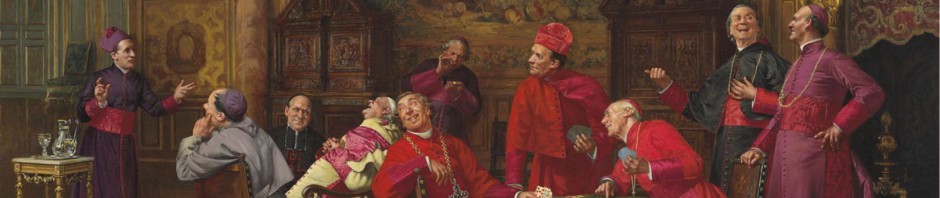
At ZENIT there is a translation into English of the wide-ranging interview given by Carlo Card. Caffarra, Archbishop of Bologna, about the upcoming Synod and the issue to be addressed. It was originally in Italian in Il Foglio.
You should read it all, but here are some snips:
The possibility of allowing the divorced and remarried to receive communion is spoken about. One of Cardinal Kasper’s suggestions was that they should undergo a period of penance that would bring them into a full readmission to Communion. Is this now an inevitable necessity, or is it the accommodation of Christian teaching to contemporary circumstances?
Those who make these suggestions have not, at least up until now, answered one simple question: what happens to the first valid and consummated marriage? If the Church admits them to the Eucharist, she must render a judgment on the legitimacy of the second marriage. It’s logical. But, as I said, what about the first marriage? The second marriage, if we can call it that, cannot be a true second marriage because bigamy is against the teaching of Christ. So the first marriage, is it dissolved? But all the popes have always taught that the Pope has no authority over this. The Pope does not have the power to dissolve a valid and consummated marriage. The proposed solution seems to imply that although the first marriage continues, the Church can somehow legitimate a second relationship. But in doing this, the proposal demolishes the foundations of the Church’s teaching on sexuality. At this point we have to ask: why, then, can we not approve of unmarried couples living together ? Or why not homosexual unions? The question is simple: what about the first marriage? No one has yet answered that question. In 2000, John Paul II speaking to the Roman Rota said: “It is clear that the Roman Pontiff’s power does not extend to valid and consummated marriages and this is taught by the Magisterium of the Church as a doctrine to be definitively held even if it has not been solemnly declared through a definitive act.” It is a technical formula, “a doctrine to be definitively held”, and it means that on this point there is no further discussion to be had among theologians nor doubts among the faithful.
Therefore, it is not just a question of praxis but also of doctrine?
Yes, this touches upon doctrine. Inevitably. You can try to say it doesn’t, but it does. And not only this. You would introduce a way of thinking that in the long run would touch not only Catholics but everyone. You would suggest that there is no such thing as an indissoluble marriage. This, certainly, is against the Lord’s will. Of that there can be no doubt.
[… Q&A on mercy… ]
We are not, therefore, talking about compromise?
Far from it! Compromise would be unworthy of the Lord. Man on his own can come to compromises. Rather we are talking of the regeneration of a human person and only God is capable of that, and in His name the Church. St. Thomas Aquinas says that the justification of a sinner is a more marvelous work than the creation of the universe. When a sinner is justified, something greater than the whole universe happens, and this act comes about through a poor, humble priest in the confessional. Right there occurs an act greater than the creation of the whole universe. We must not reduce mercy to compromise nor to tolerance. This would be to undervalue, to be unjust to, the Lord’s work.
[…]
Read the whole thing.
In the meantime, His Eminence Raymond Card. Burke, Prefect of the Signatura, has also given his opinion as a canonist that Card. Kasper’s proposals.
http://www.youtube.com/watch?v=llSCDBNPvK4&feature=player_embedded





 Pope Francis talks about going to confession. He talks about confession a lot. As a matter of fact, he talks about more than his predecessors did.
 The Samaritan woman’s response to Jesus is “enthusiastic.”
 From a reader:































