PODCAzT 137: Augustine on bad pastors; Sermon in the wake of Pope Francis’ interview

At the time of this writing it is still the 25th Sunday of Ordinary Time, aka the 18th Sunday after Pentecost in the Extraordinary Form of the Roman Rite.

It has been just a few days since the release of The Big Interview with Pope Francis.

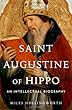
In today’s PODCAzT, I give you a taste of St. Augustine of Hippo’s monumental sermon 46, “De pastoribus… On pastors“.  Augustine explores Ezechiel’s comments on the shepherds of the Lord’s flock.  The portion of Augustine I drill into, with an introduction about Donatism, is taken from the Liturgy of the Hours for this Sunday’s Office of Readings.

What I call: The biography of Augustine Pope Benedict would have wanted to write.

One of the things that Augustine (and I) stresses in the Donatist heresy, that lead to the schism of a false church of the “pure”, is the materialistic error about sacraments. Their heresy lead to schism, a sanctimonius pitting of altar against altar.

By coincidence, there is overlap with the Scripture readings from today’s Mass in the Extraordinary Form and the Office of Readings in the Ordinary Form, as will become plain.

Finally, I offer my sermon for the Extraordinary Form Mass I celebrated this day, the 18th Sunday after Pentecost, 2013.

I talk about reactions to Pope Francis and about what adjustments we are going to have to make and why.

WARNING: Sometimes, I don’t know why, the podcast just stops. What I have done, is simply scroll to the end to help the whole thing download. You can download it, too.

The "Kyrie" was from this album, from the Canons at Sant'Antimo - CLICK

Posted in Francis, Liturgy Science Theatre 3000, Our Catholic Identity, Patristiblogging, PODCAzT, Sermons, Wherein Fr. Z Rants | Tagged , , , , , ,
19 Comments

QUAERITUR: Why are SSPX Masses valid, but not marriages or absolutions?

From a reader:

Fr Z, can you help me out with the why here and right terms.. I’m missing a piece of the puzzle?

A priest was asking me a question, regarding another person who is coming from the SSPX back to normative situation… My wife is asking about the question of licit, validity and faculties and jurisdiction.

Here’s the deal.

The priests of the SSPX are validly ordained.  They celebrate Mass illicitly but validly.  In normal situations they do not validly absolve, because they lack faculties to absolve (because faculties are necessary – in addition to valid ordination – to absolve validly).  They cannot act as proper witnesses to marriages, because they are not recognized as such by the Church.  A proper witness is require by the Church for the form of marriage.

How to sort this out?  Let’s try it this way.

Not all sacraments are juridic acts, and not all juridic acts are sacraments but, as in the classic Venn Diagram, some sacraments are juridic acts.

A juridic act (canons 124-128) is a human act by which a person, capable in law, observing the requisite formalities, manifests his intention to bring about a certain juridic effect.

For example, baptism is both a juridic act, and a sacrament. A juridic effect is intended (incorporation into the Church).  Formalities are observed. The person, capable in law, manifests his intention to baptize (he uses the proper matter and form). The Church, in her clemency and her desire that no one be denied baptism, extends jurisdiction to confer baptism to “any person who has the requisite intention” (can. 861§2). So, while bishops, priests, and deacons are the ordinary ministers of baptism, anyone – even an unbaptized person – is capable in law of baptizing validly.

Confirmation, Marriage, Penance, and Holy Orders are the other sacraments which are simultaneously juridic acts. Reception of these sacraments changes a person’s juridic status in the Church.  The Church is more restrictive about who can administer these four sacraments. Anointing of the Sick and Holy Communion/Eucharist are not juridic acts. Reception of these sacraments does not change a person’s juridic status in the Church.

Absolution of sins after Confession is a juridic act. The priest, the confessor, acts in persona Christi and judges the penitent.  Remember that the confessional has the aspect of a tribunal.  The confessor/judge absolves and lifts the sin from the penitent.  Confessors also at times lift censures.  As a juridic act, it can only be done by someone capable in law. The Church has restricted this, not because the Church wants to make penance less available to people, but rather in order to ensure that the faithful are getting the best possible pastoral care and that they remain within the fold of the Church. Thus, the Church gives faculties, permission, jurisdiction, to act in this way, to use his priestly abilities in a performing a sacramental act which is also a juridical act.

With marriage, there’s an added wrinkle. The ministers of the sacrament of marriage are the parties who get married. The spouses are the ministers of the sacrament of matrimony. Therefore, for a valid marriage to be effected, they are required to be “capable in law”. For example, a couple of thirteen year-olds are not capable of marriage. Someone already married is not capable of marriage. Other capabilities are more relational.  For example, Sempronius may be capable of marriage, but he is not capable of marrying his sister, Caia.  Neither is Sempronius capable of marrying Titus). For Catholics, an additional burden must be met. For a Catholic to marry validly, he or she must marry before an authorized witness, usually a bishop, priest, or deacon.

The priest or deacon or bishop who officiates at a Catholic wedding is there, necessarily, as the Church’s official witness to ensure that the proper form is followed, etc.  The Church tightly restricts the ability of clergy to officiate at weddings. Priests who have the ordinary faculty, the jurisdiction, the permission from the Church, to witness marriages, are limited to doing so within the territory of the parish where they are the pastor, the parish priest. If they go outside their territory, they need the express permission of the pastor in whose territory they are witnessing a marriage. If they don’t have that permission, the marriage would be invalid because it would lack one of the essential requirements for marriage. The pastor of the parish (or the bishop, the vicar general, or an episcopal vicar with jurisdiction in the area) can delegate to another priest the jurisdiction, the faculty, to witness the marriage. He should do so in writing. If the delegation cannot be proven, the marriage might well be invalid!

Let’s track back to the question.

The priests of the Society of Pius X, may be holy, generous, stalwart, good men and priests.  I have met some. I have been favorably impressed.  However, they lack the jurisdiction to hear confessions or officiate at weddings.  No proper authority has given them the faculties to act for the Church.  When it comes to certain sacraments that are also juridic acts, that makes all the difference.

Celebration of Mass, recall, is a sacramental act but not also simultaneously a juridic act.  That is one reason why when a priest without faculties says Mass, the Mass is illicit – illegal – but it is still sacramentally valid.

Although some separated or independent priests may have cobbled together a way, in the depths of their own conscience, to justify their continued practice of hearing invalid confessions and officiating invalidly at weddings, nevertheless – objectively – they lack the necessary faculties to do so for validity.

How important it is that we continue to pray for and work for unity in our Church.

Posted in "How To..." - Practical Notes, ASK FATHER Question Box, Liturgy Science Theatre 3000, Our Catholic Identity, Priests and Priesthood, SSPX, The Drill | Tagged , , , , ,
67 Comments

Francis on the “Vetus Ordo”, Traditional Roman Rite. Wherein Fr. Z analyzes… and then rants.

In the Big Interview, Francis said in response to a question about the Second Vatican Council something about the Vetus Ordo, the older Mass, the Extraordinary Form.

I’ll cut to the chase for those of you who only read the title of the post or the first paragraph and then run to the combox:

This is Francis’ strongest affirmation – to date – of Summorum Pontificum.  It is an affirmation.

What did Francis say about the Vetus Ordo? My emphases:

“What did the Second Vatican Council accomplish?” I ask.

“Vatican II was a re-reading of the Gospel in light of contemporary culture,” says the pope. “Vatican II produced a renewal movement that simply comes from the same Gospel. Its fruits are enormous. Just recall the liturgy. The work of liturgical reform has been a service to the people as a re-reading of the Gospel from a concrete historical situationYes, there are hermeneutics of continuity and discontinuity, but one thing is clear: the dynamic of reading the Gospel, actualizing its message for today—which was typical of Vatican II—is absolutely irreversible. Then there are particular issues, like the liturgy according to the Vetus Ordo. I think the decision of Pope Benedict [his decision of July 7, 2007, to allow a wider use of the Tridentine Mass] was prudent [Italian: “prudenziale” hmmm ] and motivated by the desire to help people who have this sensitivity. What is worrying, though, is the risk of the ideologization of the Vetus Ordo, its exploitation.”

Let’s drill.

I’ll write more about “prudenziale” elsewhere.

Note the phrase “Its fruits are enormous. Just recall the liturgy.”

First, Benedict XVI made a similar point in his last days as Pope in his talk to the clergy of Rome.  HERE  So, Francis echoes Benedict.  Reading Francis through Benedict.  AGAIN. Other people are starting to figure this out too, by the way.

Of course, we can debate the fruits, can’t we.  They are not – at least to me – always and everywhere immediately apparent.

Next, the phrase, “I think the decision of Pope Benedict was prudent.”

This is Francis’ strongest affirmation – to date – of Summorum Pontificum.  It is an affirmation.

Next, “the risk of the ideologization of the Vetus Ordo, its exploitation.”

What could this mean?

I have no idea what this means.

It could mean something like: “The Vetus Ordo is the only valid Mass.”  But if that is the case, who are those people?  Even SSPXers, who don’t like the Novus Ordo, will admit that it is valid.  So, the number of people who would say that are minimal.  Big deal.  And he knows that.

It could mean that the use of the Vetus Ordo might divide communities.  Could he have in mind Friars of the Immaculate?  Probably not.  But if he mean “division” then why didn’t he say “division”?

“Exploitation” sounds like a political category, doesn’t it?  Is there somewhere in the world where older form of Mass is linked to a political party?  Political action?  If it were, you would think it would be in S. America and probably France.  Would the group Tradition, Family, Property be seen to be “political” by Francis?  Some other group?

Let’s also consider those with whom Bergoglio might tie the older form of Mass.  He was from Buenos Aires.  A few miles south of Buenos Aires is the SSPX seminary where former SSPX Bishop and holocaust denier Richard Williamson was rector from 2003 to 2009 when the government of Argentina expelled him.  If when Francis thinks about those who embrace the older Mass the image of Williamson pops into his head, then … well….

But, these groups would be really small, right.  Who is “exploiting” the Vetus Ordo?  Who? Why would Francis spend time worrying about them?

I submit that he doesn’t worry about them and that he is not going to suspend the provisions of Summorum Pontificum, with which agrees.  Furthermore, it may be that this statement is so hard to parse because Francis himself doesn’t have a clear notion of issue.  He probably hasn’t given it much thought.

I conclude that, since there is not any real risk of ideologization or exploitation – whatever that means – of the older Mass – there’s no real problem here.

What Francis said is in harmony with what Benedict and did.

Finally, no matter what…

Those of you who are interested in obtaining and keeping the older form of the Mass and sacraments had better pay close attention to what Francis is saying.

He is asking for a joyful, compassionate face on the Church for the world.  That means YOU, friends.

We have the provisions of Summorum Pontificum, which is a huge advantage.

We have the message and style of Pope Francis to take as a cue, which is a huge advantage.

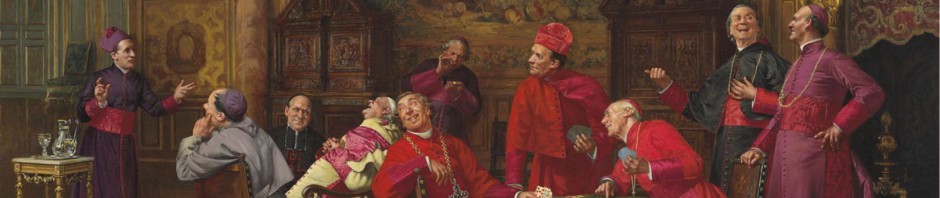
I am reminded of the stern words of the Franciscan friar after Romeo kills Tybalt (R&J III,iii):

FRIAR LAURENCE
Hold thy desperate hand:
Art thou a man? thy form cries out thou art:
Thy tears are womanish; thy wild acts denote
The unreasonable fury of a beast:
Unseemly woman in a seeming man!
Or ill-beseeming beast in seeming both!
Thou hast amazed me: by my holy order,
I thought thy disposition better temper’d.
Hast thou slain Tybalt? wilt thou slay thyself?
And slay thy lady too that lives in thee,
By doing damned hate upon thyself?
Why rail’st thou on thy birth, the heaven, and earth?
Since birth, and heaven, and earth, all three do meet
In thee at once; which thou at once wouldst lose.
Fie, fie, thou shamest thy shape, thy love, thy wit;
Which, like a usurer, abound’st in all,
And usest none in that true use indeed
Which should bedeck thy shape, thy love, thy wit:
Thy noble shape is but a form of wax,
Digressing from the valour of a man;
Thy dear love sworn but hollow perjury,
Killing that love which thou hast vow’d to cherish;
Thy wit, that ornament to shape and love,
Misshapen in the conduct of them both,
Like powder in a skitless soldier’s flask,
Is set afire by thine own ignorance,
And thou dismember’d with thine own defence.
What, rouse thee, man! thy Juliet is alive,
For whose dear sake thou wast but lately dead;
There art thou happy: Tybalt would kill thee,
But thou slew’st Tybalt; there are thou happy too:
The law that threaten’d death becomes thy friend
And turns it to exile; there art thou happy:
A pack of blessings lights up upon thy back;
Happiness courts thee in her best array;
But, like a misbehaved and sullen wench,
Thou pout’st upon thy fortune and thy love:
Take heed, take heed, for such die miserable.
Go, get thee to thy love, as was decreed,
Ascend her chamber, hence and comfort her:
But look thou stay not till the watch be set,
For then thou canst not pass to Mantua;
Where thou shalt live, till we can find a time
To blaze your marriage, reconcile your friends,
Beg pardon of the prince, and call thee back
With twenty hundred thousand times more joy
Than thou went’st forth in lamentation.

Maybe we can learn some lessons from that sad famous story about how not to act in these times of seeming civil strife in our fair Church, where we lay our scene.
Posted in Benedict XVI, Francis, Liturgy Science Theatre 3000, Our Catholic Identity, Reading Francis Through Benedict, SUMMORUM PONTIFICUM, The Drill, The future and our choices, Vatican II, Wherein Fr. Z Rants | Tagged , ,
106 Comments

THURSDAY: MSM reports Francis said Church is obsessed about abortion! FRIDAY: Pope Francis talks about abortion!

You saw it all over the MSM yesterday, Thursday 19 September.

FRANCIS CRITICIZES CHURCH FOR ABORTION OBSESSION!

And endless variations on the theme.

The MSM’s message: Pope Francis is saying that abortion really isn’t all that bad.

Today, however, I read in the Bolletino that Pope Francis addressed the International Federation of Catholic Medical Associations.

NB in my rapid translation and emphases:

A mentality of the useful, the “throw-away culture”, which today enslaves the hearts and minds of so many, has a very high cost: it requires the elimination of human beings, especially if they are physically or socially weaker. Our response to this mentality is a decisive “Yes” – and without any wavering – for life. “The first right of the human person is his life. He has other goods and some are more precious, but this one is fundamental – the condition of all the others.” (1974 CDF, Declaration on Procured Abortion, 11)  Things have a price and they are saleable, but persons have a dignity, they are worth more than thanks and they are priceless. So often, we find ourselves in situations wherein we see that which costs the less is life. For this reason, attention to human life in its totality has become in recent times a true and fitting priority for the Magisterium of the Church, especially for the most defenseless, namely, the disabled, the sick, those about to born (al nascituro), the baby, the elderly, which is the most vulnerable life.

In the fragile human being each one of us is invited to recognize the face of the Lord, who in His human flesh experienced indifference, and the solitude to which we often condemn the poorest, both in developing countries and in the countries that are well-off.  Every unborn child, but condemned unjustly to be aborted, has the face of Jesus Christ, has the face of the Lord, which even before birth, and then as soon as born, experiences the refusal of the world.  And every old person and – I spoke about the child: let us go to the elderly, another point!  And every older person, even if infirm or at the end of her days, bears herself the face of Christ.  They can’t be thrown away, as the “throw-away culture” proposes to us!  They can’t be thrown away!

Will this be reported today by the MSM in the wake of their coverage of the Big Interview?

I’m just asking.

UPDATE 21:25 GMT:

This is par for the course.

In an AP article under the name of Nicole Winfield (though there are other contributors) we find this:

Pope blasts abortion after decrying focus on rules
By NICOLE WINFIELD,

VATICAN CITY (AP) — Pope Francis offered an olive branch of sorts to the doctrine-minded, conservative wing of the Catholic Church on Friday as he denounced abortions as a symptom of today’s “throw-away culture” and encouraged Catholic doctors to refuse to perform them.  [That’s right.  He said that as an “olive branch”, a “peace offering.  Riiiight.  However, you can see something of the mindset here: it is the conservative wing that is concerned about abortion, not the liberal wing.  I hope the newsies can get this through their heads: FRANCIS IS A CONSERVATIVE.]

[…]

Francis’ comments to Civilta Cattolica contained no change in church teaching, but they represented a radical shift in tone and stood in stark contrast to the priorities of his two immediate predecessors. [Oh really?]

John Paul II and Benedict XVI were both intellectuals for whom doctrine was paramount, [Gosh! I guess only Francis has been pastoral!]

[…]


Posted in Biased Media Coverage, Emanations from Penumbras, Francis, I'm just askin'... | Tagged ,
72 Comments

Sr. Maureen Fiedler may have some anger issues

I have mentioned a couple times that liberals and (this is just a subgroup) feminists (meaning LCWR types) will eventually turn on Pope Francis.  HERE and HERE

You may recall that on 3 April, last, I wrote:

“Feminists and proponents of women’s ordination aren’t gonna be happy.”

Today I saw a piece by the good ol’ Sr. Maureen Fiedler at the Fishwrap.

She will soon need therapy.

In this schizophrenic column she displays multiple personalities.

Pope Francis on women in his interview with ‘America’ magazine
Maureen Fiedler

[First, she pour on the Lyle’s Golden Syrup (because she’s really angry.] There’s a lot to love in this interview in America magazine. You can feel a refreshing breath of fresh air with Pope Francis’ emphasis on the church as the People of God and in statements like, “We should not even think … that ‘thinking with the church’ means only thinking with the hierarchy of the church.” Whoa! That opens a lot of freedom of thought in one sentence. [She is dissembling.]
I’m really growing to like this pope. He seems open, human, even holy. [Your rhetorical mask is slipping, Sister!] But [BUT!] I think he sorely needs a course in feminist theology. [And we whipsaw into another persona.] When asked about the role of women in the church in this interview, he seems to be searching for a role other than equality, the obvious role articulated by Gaudium et Spes No. 29: “Every type of discrimination based on sex … is to be overcome and eradicated as contrary to God’s intent.” [She is ignoring that God didn’t create two sexes by accident.  “Whoops!”, quoth God.]

Pope Francis says in the interview, “I am wary of a solution [to the role of women] that can be reduced to a kind of ‘female machismo,’ because a woman has a different make-up than a man.” Female machismo? What is that, I wonder? [Remember those cartoon moments when fury strikes and steam shoot out their ears to the sound of a steam whistle?] Is he talking about feminism? Hard to say. [No, Maureen, it’s not.  Pope Francis does not like your kind of feminism.  As a matter of fact, he has disdain for it.  I refer you to his comments about “zittelle”.] Then, “a different make-up than a man”? In what way? Bodily organs? Psychological proclivities? [Inter alia.] But how would anything like that affect the ability of women to be, say, a priest? A bishop? A member of the Curia? [Because being a priest or bishop is more than just a job which anyone could do.]

Then he advocates working harder “to develop a profound theology of women.” Breaking news, Pope Francis: [The rhetorical mask slips a little more… heh heh…] There is already a profound theology of women. [Gratis asseritur…] There are libraries of feminist theology just waiting for you, and others, to dive in. [Even to burn?]

He says he wants to think about what he called “the specific place of women in those places where the authority of the church is exercised for various areas of the church.” This is profoundly — maybe purposely — unclear. [I dunno.  I followed it pretty easily.] The “place” of women in the church ought to be the same as the “place” of men in the church: in equal roles, whether they be lay roles, priestly roles or leadership roles. [Sigh.  They just don’t get it.]

The optimist in me says that maybe Francis is biding his time on issues involving women. [Sister is pretty angry.] And given the magnitude of his task in reforming the Curia, changing the emphasis of the church to social justice and peace, etc., I’m willing to cut him a little slack. [Gosh!]

Then I’d really like to be part of a delegation of women worldwide who would go and dialogue with him about women in the church. If this should ever come to pass, we’ll give NCR the exclusive interview. [Uh huh.  I’d start working on that delegation – right now.  Write lots of letters, too.  He’ll meet with you… surrrrrre he will!]

Posted in Biased Media Coverage, Francis, Liberals, Magisterium of Nuns, Women Religious | Tagged , , , , , ,
26 Comments

Pope Francis’ comments on homosexuality in the Big Interview

In the Big Interview (my first thoughts HERE), Pope Francis spoke on a range of issues, including homosexuality.

The MSM and catholic left and the squishy center is running with Francis’s jump-out quotes (traddies could maybe call them “scare quotes”).  If you look at MSM headlines, you take-away will be that Pope Francis is saying that abortion isn’t a big deal or that homosexuality is okay and that the Church doesn’t have a right to tell anyone what to do.

I don’t think that that is what he thinks or what he is doing or saying.

Let’s take a look at a portion of the interview in which Francis talks about homosexuality.  Pay attention to the vocabulary, even though this is a translation.  I haven’t yet verified the translation against the original.  My emphases and comments:

“We need to proclaim the Gospel on every street corner,” [That’s the public square.] the pope says, “preaching the good news of the kingdom and healing, even with our preaching, every kind of disease and wound. [Something that needs healing is not a good thing.  Then he leaps immediately into the issue of homosexuality… ] In Buenos Aires I used to receive letters from homosexual persons who are ‘socially wounded’ because they tell me that they feel like the church has always condemned them. But the church does not want to do this. [Which has been made abundantly clear in documents issued during the time of John Paul II from the office guided by Joseph Card. Ratzinger.  The Church does NOT condemn homosexual people!  The Church sees the actions as sinful and the orientation as a wound.  I won’t use the word “disease”, because that gives absolutely the wrong sense of the wound.  I’ll go with Francis’ point that it is something that needs “healing”.] During the return flight from Rio de Janeiro I said that if a homosexual person is of good will and is in search of God, I am no one to judge. By saying this, I said what the catechism says. Religion has the right to express its opinion in the service of the people, [Where, Holy Father, where?  On every street corner: the public square.] but God in creation has set us free: [We have FREE WILL.  We can choose to go against God’s plan and law.] it is not possible to interfere spiritually in the life of a person. [God doesn’t use mind control.  The Church doesn’t use mind control.  The Church proposes and we either freely embrace it or freely reject it.]

“A person once asked me, in a provocative manner, if I approved of homosexuality. I replied with another question: ‘Tell me: when God looks at a gay person, does he endorse the existence of this person with love, or reject and condemn this person?’ [Which is exactly what the Church teaches.  God loves everyone.] We must always consider the person. Here we enter into the mystery of the human being. In life, God accompanies persons, and we must accompany them, starting from their situation. It is necessary to accompany them with mercy. When that happens, the Holy Spirit inspires the priest to say the right thing. [Well… maybe He does.  I hope and pray that is what happens.]

So, the Pope starting by talking about the healing of what is wounded.  He immediately went into the subject of homosexual persons.  He talked about the pain they feel.  He talked about our compassion and God’s love.  Now, in talking about homosexuality he says:

“This is also the great benefit of confession as a sacrament: [What happens in the Sacrament of Penance?  First and foremost you confess your own sins.] evaluating case by case and discerning what is the best thing to do for a person who seeks God and grace. The confessional is not a torture chamber, but the place in which the Lord’s mercy motivates us to do better. [Confession is the “tribunal” in which you are simultaneously the accused and the prosecuting attorney. The Church’s role, in the person of the mercy is to act as, simultaneously, minister of  justice and minister of mercy.  You accuse yourself of sins and the Church helps in the healing.  Remember, Francis is talking about homosexuality.  Now he pivots to other great issues where there is a disease or wound to be healed.] I also consider the situation of a woman with a failed marriage in her past and who also had an abortion. Then this woman remarries, and she is now happy and has five children. That abortion in her past weighs heavily on her conscience and she sincerely regrets it. She would like to move forward in her Christian life. What is the confessor to do? [If a confessor is involved at this point in her life then that is because she is confessing the sin she committed in procuring an abortion and for her parts or failures if any in the breakup of the marriage.  Those are diseases or wounds that need healing.  What does the confessor do?  He HEALS, first by absolving the sincerely confessed sin, and also by talking of God’s love and mercy. He reconciles the women with the society of the Church as well.  So, let’s go on and see if Francis is only saying that the Church shouldn’t talk about abortion or homosexuality or that the Church doesn’t have a right to tell anyone what to do….]

“We cannot insist only [only] on issues related to abortion, gay marriage and the use of contraceptive methods. [In other words, we cannot a) limit ourselves to talking just about these burning issues and b) just talk about the sins and messes people get themselves into.] This is not possible. [We have a lot of things to talk about, in addition to those issues.  For example, the flipside of the issues, such as the joy of healing and returning to grace and life in God.] I have not spoken much about these things, and I was reprimanded for that. [Right.  Some people want to hear more from Francis about these burning issues on which the Church’s voice is being snuffed out.] But when we speak about these issues, we have to talk about them in a context. [YES!  In a context.  The context is that we are all sinners.  The context was established by Jesus: He told the woman taken in adultery, “Neither do I condemn you; go, and do not sin again.” (John 8:11)  He did NOT approve of the sin.  He called the sin what it is: SIN. At the same time He did not condemn the woman.  How is this difficult?  That is exactly the Church’s position on homsexuals and homsexual acts which are sins.] The teaching of the church, for that matter, is clear and I am a son of the church, but it is not necessary to talk about these issues all the time. [That, folks, is the take-away.] 

Let me repeat:

The teaching of the church, for that matter, is clear and I am a son of the church, but it is not necessary to talk about these issues all the time.

This is what I think Francis is up to.

Francis’ pontificate is going to be about evangelization and putting a motherly face on the Church.

I suspect that, while he is Pope, Francis doesn’t want to see the words “Vatican condemns” a-ny-where.

I think that Francis thinks that constant correction and condemnation does more harm than good.  BE CAREFUL NOW: Francis said “all the time”.  He did not say “we should not talk about these things”.

Also, I did not say that I think Francis thinks that it is only harmful to correct and condemn, etc.  It does some good, but it also does harm.  I think he thinks that, right now, the harm to the Church’s message and motherly character outweighs the good that the correction does.  (At least considering the way we have been doing it.)

That is also why he thinks things need to be done more at the local level than by him.  He doesn’t want to see “Vatican condemns” or “Pope Francis condemns” all the time. That’s just about the only way that the MSM chooses to pay attention to Popes.  If they are not calling for peace, Popes are only reported on when they exercise one of the most important dimensions of their office: saying “No!”

To recap: People who focus just on the comments that Francis made about compassion for homosexuals and “social wounds” or about not talking about abortion all the time or that the Church has no right to “interfere” with people (as if to say that Francis thinks homosexuality is okay or that the Church should be silent in the public square or that we mustn’t talk about abortion) without also underscoring that Francis was talking about things which need healing and that they are matters for confession (read: sins) have distorted his meaning.

Some of you are saying “But Father! But Father! Should any Pope talk this way?  Doesn’t he understand that people take him out of context?  Should he say any of this?”

I respond that, when I am Pope, I’ll have a different style.  Headlines might read something like “POPE NOT SEEN IN PUBLIC FOR 100 DAYS! STILL ALIVE?”  But that’s a different can of chowder.  Francis is the one in the chair and he gets to speak and act with the freedom of the Vicar of Christ in a world that hasn’t been welcoming the Church’s message for a long time.  We shall see what results.

I read what the Pope says. Then I try to figure out what he is really saying, apart from my own preferences about how he should say it.   But, hey!. He talks about the Devil in stark terms, more than Benedict ever did.  Francis might not talk in philosophical terms about beauty and mystery, and truth – no, wait he did in Lumen fidei…. well… as much as Benedict did…. no, wait… Benedict wrote what Francis signed… well… as often as we might prefer.  Instead, Francis talks about things like damaging gossip and the sort of ambition that hurts people.  Oh, Lord, how I have suffered from both gossip and the machinations of the ambitious clerics during my years as a priest. I welcome Francis healing words about these sins!  These are concrete sins that are going on even more than homosexual acts or abortions, which are also sins.  These sins deserve attention also.  We know what the sins are.  Even people who deny that certain things are sins know that they are sins deep down.  Therefore, we can use lots of attention on healing the wounds of sin.

Dear readers, don’t focus only on the jump-out quotes or the scare quotes.

Read the whole context.  Let it sink in.  Think about it.

Posted in "How To..." - Practical Notes, Francis, The Drill, What are they REALLY saying? | Tagged , , , , , ,
282 Comments

First thoughts about the Francis Interview

Pope Francis, formerly a Jesuit, gave a series of interviews to the Jesuits.  The interviews have been edited together, with parenthetical commentary and descriptions of the setting and so forth, and translated by lay people and Jesuits for publication in Jesuit publications.  The English version is at the site of Jesuit-run America Magazine.

The interview is dense. There is a LOT going on in it. It is too much for the brain to take in at one sitting.

As you read the interview, and media coverage of the interview, you will find – and this is consistent with Pope Francis’ style of talking off-the-cuff – some truly quotable quotes, leap-out quotes that sit up and beg to be taken out of context.  Look at what the MSM is doing with some of them.

For example, the New York Times leads with a headline “Pope Bluntly Faults Church’s Focus on Gays and Abortion (By Laurie Goodstein).” Oh really? Is that what Pope Francis did? CBS has “Pope Francis: Catholic Church must focus beyond “small-minded rules” and goes on to say “Pope Francis has warned that the Catholic Church’s moral structure might “fall like a house of cards” if it doesn’t balance its divisive rules about abortion, gays and contraception with the greater need to make it a merciful, more welcoming place for all.” Oh really? Is that what Pope Francis really said? The CBS statement makes the Pope sound as if he thinks that the Church has to change it’s teaching about abortion and homosexuality or it will collapse like a house of cards.

Even if you haven’t read the whole interview/article, some 12000 words, common sense tells you that that is not what the Pope said.

It is important when reading the interview, and media coverage of the interview, to keep your eyes on those leap-out quotes. When you see the MSM using those leap-out quotes in a way that doesn’t pass the smell test, go back and look at the context, the whole paragraph.

The whole context of the paragraph deconstructs the leap-out quotes and makes those quotes make sense.

Also, think about the “Francis Effect” in the reporting of this interview.  [People are picking up on “Francis Effect”.  Nice!  Maybe I should make it FrancisEffect™?]

For example, if Benedict XVI – talking in an interview about the need for a theology of women and a deeper discussion of the role of women in the Church – had said what Francis said, the headlines would have screamed “POPE DENIES EQUALITY TO WOMEN!”. On the other hand, Francis, in this interview, spoke with real disdain for “female machismo” as a solution to the question of women’s roles. When you read the paragraph on women and women’s roles in the Church you discover that Pope Francis is NOT a fan of radical feminism. Francis spoke about what Popes before him have called “feminine genius”. Nothing new. He said, “a woman has a different make-up than a man” and “we must not confuse the function with the dignity.” But since this is Francis being interviewed, and not Benedict or John Paul, journalists will go with something like, “POPE WANTS GREATER ROLES FOR WOMEN!”.  You won’t read what the Pope really communicated: Yes, women must play an important role in the Church, but men’s roles and women’s roles are different, and that also means that women can’t be ordained.

That’s one example.  Another example we will have to look at along the way is what Pope Francis meant by “right winger”.  I don’t think he meant by that what the MSM – and the catholic media – is going to make of it.  I think there is more to it that the leap-out quote says in those few words.  I’ll get to that in another post.

Here is an overarching concern I take away from my first readings.

Through interviews – and the coverage of interviews – a “virtual Francis” is being created. An interview, by its nature, can only go so far. Short questions and short responses only go so deep.

We have to make sure that, with all the media attention, with all these interviews, that the “virtual Francis” is not stronger than the real Francis.

That is exactly what Benedict XVI – in his last days as Pope – said and warned about how the Second Vatican Council was interpreted. The media and others created a virtual Council.  Remember that? There is a Council of the Media and a Council of the Fathers.

Week by week a Francis of the Media is being crafted.

Another point:

Pope’s don’t govern through interviews.

Pope Francis’ speaks about a lot of heavy and burning issues: the role of women, abortion and homosexuality, to name a few. There is not a word in the interview that changes the Church’s teaching. He indicates what his interests are and his focus for his limited time and energy is going to be. That is an important take away from the interview.

If this Pope isn’t going to speak out a great deal about abortion or homosexuality, it’s because he knows that everyone is perfectly clear about what the Church teaches on these points. Francis – as is consistent with his old-fashioned Jesuit training – wants to be efficient in the use of his time and energy.

Because the Church’s teachings are clear, Francis will spend his precious time and energy showing a side of the Church that people, especially the MSM, hasn’t paid attention to: that the Church is not a museum of the perfect, it is a field hospital for sinners. Pope Francis is reminding the whole world that we are sinners and that we have to have compassion for each other, patience with each other, that we have to work to help each other even at some great cost.  Francis is, to put it simply, touching up the Church’s human face and presenting her anew to a jaded, fallen world.

I’ll have more thoughts about particular segments and statements in the interview along the line.  I wanted, however, to offer a few thoughts and lenses that might help you in your own reading of the interview and of the media coverage of the interview.

Posted in Francis, Reading Francis Through Benedict | Tagged , ,
133 Comments

Archbp. Broglio (Military Services) statement on chaplains and same-sex unions

Click to send a donation

Conversations I have had lead me to conclude that Pres. Obama is waging a war against Catholic military chaplains.

The Archbishop for the Military Services in these USA has issued directives about Catholic chaplains and same-sex unions.

Read the whole thing HERE but here are samples:

[…]

No Catholic priest or deacon may be forced by any authority to witness or bless the union of couples of the same gender.    No Catholic priest or deacon can be obliged to assist at a “Strong Bonds” or other “Marriage Retreat”, if that gathering is also open to couples of the same gender.  A priest who is asked to counsel non-Catholic parties in a same-gendered relationship will direct them to a chaplain who is able to assist.  Catholic parties will, of course, be encouraged by the priest to strive to live by the teaching of the Gospel.

Participation in retirements, changes of command, and promotion ceremonies is possible, as long as the priest is not required to acknowledge or approve of a “spouse” of the same gender.

While the tradition of the Catholic Church always tries to find reasons to bury the dead, a priest may not be placed in a situation where his assistance at a funeral for a Catholic would give the impression that the Church approves of same sex “marital” relationships (see CIC, c. 1184, §1,3º). In the case of doubt, the Archbishop for the Military Services, USA must be consulted (see CIC, c. 1184, §2).
Lay Ministries

Obviously, anyone who is known to be in a sinful relationship is excluded from ministries in the Catholic community.  While this list is not intended to cover every situation, lectors, extraordinary ministers of Holy Communion, altar servers, catechists, and members of the Catholic Council immediately come to mind.

[…]

I am not unaware that the faithful entrusted to my pastoral care also include those Catholics who exercise command positions.  They can be faced with additional questions as they fulfill their responsibilities to those above and below them in the chain of command. Consequently in response to a doubt raised by the AMS regarding the question of a person’s possible cooperation with evil, the National Catholic Bioethics Center (NCBC) stated:

“Commanders of United States military installations/veterans’ facilities (hereafter, ‘commanders’) would not be engaging in morally illicit cooperation, but rather tolerable remote mediate material cooperation with evil by implementing federal employee benefits accruing pursuant to same-sex marriage, as required by United States v. Windsor.  Our determination is contingent on the situations in which commanders are unable to avoid such cooperation without jeopardizing their own just right to their employment security for themselves and/or their families.  This is also contingent on the commander making known his/her objection to being required to so participate, as well as on attempting through legal channels to continue to accomplish changes in policy consistent with the historic understanding of marriage and family as based on natural moral law.  Also, if without incurring a demotion of loss or downgrade of position/rank/grade or other serious harm, there is a mechanism to have others more senior in the chain of command to carry out the implementation of such policy, this should be pursued.”

[…]

Posted in Liberals, Mail from priests, One Man & One Woman, Our Catholic Identity, Pò sì jiù, Priests and Priesthood, The Coming Storm, The future and our choices, The Last Acceptable Prejudice | Tagged , , , , ,
15 Comments

Have you read Tolkien’s books? What can they teach?

Reading The Hobbit was a pivotal moment in my young life.

I saw at the blog The Art of Manliness a great post about this influential book.

Here is are the bullet points.  You can read the rest there.

The Hobbit has been a favorite of children and adults alike since its publication in 1937. It used to take a backseat to The Lord of the Rings, but with the movie being released last summer, interest has been renewed in Bilbo Baggins’ adventure.

When it was originally published, it was put into the children’s category and even won prizes for best juvenile fiction that year. Tolkien himself, however, said that a simple tale like The Hobbit can be enjoyed by children and adults alike, making it a great story to read with your kids.

In the book, the reluctant Bilbo Baggins is recruited by a wizard, Gandalf, to join a group of dwarves on an adventure. There are 13 dwarves in the party (an unlucky number, hence the recruitment of Bilbo) who have been exiled from their home, the Lonely Mountain, by a dragon. In that mountain are mounds and mounds of treasure, which is what attracted the dragon in the first place. Nobody has yet had the gall to try to fight off the beast and reclaim the mountain, so these 13 dwarves, plus Bilbo, make a run at it. Together they cross valleys, mountain ranges, murky forests, and raging rivers in order to make their way back home to the Lonely Mountain to fight the dragon.

There are many lessons we can glean from The Hobbit, but today we’ll focus on just a few of this classic tale’s most salient takeaways:

1. You can aspire to and achieve greatness no matter who you are and no matter your stage in life. […]

2. A great leader knows when it’s time to step back and let go. […]

3. There are some things in life we just have to accomplish on our own. […]

4. To simply continue on is one of the bravest things that can be done. […]

5. A great story always has conflict or hardship. […]

What lessons have you gleaned from The Hobbit? Which of these five most resonate with you? Tell us in the comments!

A good question.

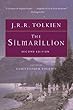
Have you never read The Hobbit?  The Lord of the Rings?  The Silmarillion?

Don’t, please, for the love of all that is beautiful, let the movies be your only knowledge of the works.

The Hobbit:

US HERE
UK HERE

The Lord of the Rings:
US HERE
UK HERE

The Silmarillion:

US HERE
UK HERE 

Dig into these books!


Posted in "How To..." - Practical Notes | Tagged , , ,
56 Comments

Confession tips, and notes about not receiving, or doing, the assigned penance.

GO TO CONFESSION!

Now that I have that out of the way, I saw an incoming link from my friend, the great Fr. Finigan, His Hermeneuticalness, to my page

As I followed the link, I discovered that, back in 2007, he added some useful tips of his own:

Fr John Zuhlsdorf has a helpful list of 20 tips for making a good confessionwhich I recommend.

A couple of things I added in the combox in response to others:

If the priest is harsh
Don’t waste energy being cross with him or feeling sorry for yourself. God is infinitely good and everything that he allows to happen to us can work to our good by his grace. In the past, I have found that it has challenged me on some sin that I have become a bit blasé about and it has done me good.

But also, pray for the priest. He is running a great risk here. If souls are lost because of his harshness, he is going to have a lot of explaining to do to Our Lord when he meets him.

If the priest doesn’t give a penance
(Apparently this happened quite a bit in San Diego.) First of all, ask him “Father, would you please give me a penance.” He may just have forgotten. If he refuses to do so, you could first of all accept this refusal as a penance in itself (these things are annoying, aren’t they?) Then you could voluntarily impose a penance on yourself, perhaps a decade of the rosary. These would be pious acts, not necessary to the validity of the sacrament.

I just checked Cappello [A great canonist whose cause has been introduced.] and he says that although the imposition of a penance is necessary for the integral celebration of the sacrament, omitting it does not make the absolution invalid. [More below.] So you can rest assured, go to communion, it is the priest’s sin, not yours.

Again, pray for the priest because he is obliged by the teaching of the Council of Trent and required by canon law to impose a salutary penance if you have actually sinned. He may well have to do the all these penances himself in purgatory. Added to which, it was always considered grave matter to omit giving a penance unless there is an excusing cause.

On the issue of the priest not giving a penance, YES, the absolution is valid.  HERE

On the issue of not doing your penance before your next confession.  HERE

Go see Fr. Finigan’s interesting photo of the confession of Fr. Cappello.  HERE

Posted in "How To..." - Practical Notes, GO TO CONFESSION, Hard-Identity Catholicism, Liturgy Science Theatre 3000, Mail from priests, New Evangelization, Our Catholic Identity | Tagged , ,
15 Comments