Douthat’s NYT Op-Ed: Can Liberal Christianity Be Saved?

From Hell’s Bible, aka The New York Times:

OP-ED COLUMNIST
Can Liberal Christianity Be Saved?  [In this case I am in favor of euthanasia.]

By ROSS DOUTHAT

IN 1998, John Shelby Spong, then the reliably controversial Episcopal bishop of Newark, […who, if I recall correctly, at one point said he did not believe in God…] published a book entitled “Why Christianity Must Change or Die.” Spong was a uniquely radical figure — during his career, he dismissed almost every element of traditional Christian faith as so much superstition — but most recent leaders of the Episcopal Church have shared his premise. Thus their church has spent the last several decades changing and then changing some more, from a sedate pillar of the WASP establishment into one of the most self-consciously progressive Christian bodies in the United States.

[NB] As a result, today the Episcopal Church looks roughly how Roman Catholicism would look if Pope Benedict XVI suddenly adopted every reform ever urged on the Vatican by liberal pundits and theologians. [Excellent.] It still has priests and bishops, altars and stained-glass windows. But it is flexible to the point of indifference on dogma, friendly to sexual liberation in almost every form, willing to blend Christianity with other faiths, and eager to downplay theology entirely in favor of secular political causes.

Yet instead of attracting a younger, more open-minded demographic with these changes, the Episcopal Church’s dying has proceeded apace. Last week, while the church’s House of Bishops was approving a rite to bless same-sex unions, Episcopalian church attendance figures for 2000-10 circulated in the religion blogosphere. They showed something between a decline and a collapse: In the last decade, average Sunday attendance dropped 23 percent, and not a single Episcopal diocese in the country saw churchgoing increase.

This decline is the latest chapter in a story dating to the 1960s. The trends unleashed in that era — not only the sexual revolution, but also consumerism and materialism, multiculturalism and relativism — threw all of American Christianity into crisis, and ushered in decades of debate over how to keep the nation’s churches relevant and vital.

Traditional believers, both Protestant and Catholic, have not necessarily thrived in this environment. The most successful Christian bodies have often been politically conservative but theologically shallow, preaching a gospel of health and wealth rather than the full New Testament message.

But if conservative Christianity has often been compromised, liberal Christianity has simply collapsed. Practically every denomination — Methodist, Lutheran, Presbyterian — that has tried to adapt itself to contemporary liberal values has seen an Episcopal-style plunge in church attendance. Within the Catholic Church, too, the most progressive-minded religious orders have often failed to generate the vocations necessary to sustain themselves.  [Hear that LCWR?]

Both religious and secular liberals have been loath to recognize this crisis. Leaders of liberal churches have alternated between a Monty Python-esque “it’s just a flesh wound!” bravado and a weird self-righteousness about their looming extinction. (In a 2005 interview, the Episcopal Church’s presiding bishop explained that her communion’s members valued “the stewardship of the earth” too highly to reproduce themselves.)

Liberal commentators, meanwhile, consistently hail these forms of Christianity as a model for the future without reckoning with their decline. [Hear that Fishwrap?] Few of the outraged critiques of the Vatican’s investigation of progressive nuns mentioned the fact that Rome had intervened because otherwise the orders in question were likely to disappear in a generation. [I wonder… in this case could we support assisted-suicide?] Fewer still noted the consequences of this eclipse: Because progressive Catholicism has failed to inspire a new generation of sisters, Catholic hospitals across the country are passing into the hands of more bottom-line-focused administrators, with inevitable consequences for how they serve the poor.  [Right!  And these liberal nuns blather on and on about helping the poor, serving the poor, the poor, the poor, while they are making sure that they have no vocations to perpetuate their work. Charity considers the true need of the other.  Were those sisters truly interested in the poor, they would adopt a model of religious life that inspires vocations to the communities so that they can continue to help the people they profess to want to serve.  Is this rocket science?  I think not.]

But if liberals need to come to terms with these failures, religious conservatives should not be smug about them. The defining idea of liberal Christianity — that faith should spur social reform as well as personal conversion — has been an immensely positive force in our national life. No one should wish for its extinction, or for a world where Christianity becomes the exclusive property of the political right.  [However, in concrete terms I don’t think our hospitals and schools were built in an age when the liberal/progressivist thing dominated.]

What should be wished for, instead, is that liberal Christianity recovers a religious reason for its own existence. As the liberal Protestant scholar Gary Dorrien has pointed out, the Christianity that animated causes such as the Social Gospel and the civil rights movement was much more dogmatic than present-day liberal faith. Its leaders had a “deep grounding in Bible study, family devotions, personal prayer and worship.” They argued for progressive reform in the context of “a personal transcendent God [There it is!  “TRANSCENDENT”!] … the divinity of Christ, the need of personal redemption and the importance of Christian missions.”

Today, by contrast, the leaders of the Episcopal Church and similar bodies often don’t seem to be offering anything you can’t already get from a purely secular liberalism. Which suggests that perhaps they should pause, amid their frantic renovations, and consider not just what they would change about historic Christianity, but what they would defend and offer uncompromisingly to the world.

Absent such a reconsideration, their fate is nearly certain: they will change, and change, and die.

WDTPRS kudos to Mr. Douthat.

Posted in "How To..." - Practical Notes, Fr. Z KUDOS, Magisterium of Nuns, Our Catholic Identity, The Drill, The future and our choices | Tagged , , , , , , ,
37 Comments

NEW: Recording of the “Internet Prayer” in NORWEGIAN!

Many years ago for those who are going to get online, the Oratio ante colligationem in interrete or Prayer Before Connecting to the Internet.

I was delighted to receive a recording of the prayer in Norwegian!

I have now collected 33 languages in text and 11 recordings.

NORWEGIAN

Bønn før en logger seg på internett:

Allmektige evige Gud, Du som har skapt oss i ditt bilde, og oppfordret oss til å søke det som er godt, sant og vakkert, spesielt i din enbårne Sønns, vår Herres Jesu Kristi, gudommelige person. Vi ber at du, gjennom den hellige biskop og kirkelærer Isidors forbønn, vil gjøre det slik at vi på våre reiser gjennom internettet retter hender og øyne mot det du finner velbehagelig, og at vi behandler alle vi møter med kjærlighet og tålmodighet. Ved Kristus vår Herre. Amen

I welcome translations in new languages and, especially, recordings of the same by native speakers of the languages. To email me, click HERE.

For an explanation of the genesis of the prayer, click HERE.

Posted in Brick by Brick, Just Too Cool, Our Catholic Identity | Tagged ,
Comments Off on NEW: Recording of the “Internet Prayer” in NORWEGIAN!

Wherein My Book Sorting Continueth: “How many branches of wax-candle light, How many drops of weary heart’s blood!

20120714-160516.jpgMy book culling goes apace.   One of the things I went through today were books on China and on poetry.  On that note, I saw this on the site of the Laudator:

A poem by Yuan Mei (1716–1797), tr. Arthur Waley:

Everything else in life is easy to break with;
Only my books are hard to leave behind.
I want to go through them all again,
But the days hurry by, and there is not time.
If I start on the Classics I shall never get to history;
If I read philosophy, literature goes by the board.
I look back at the time when I purchased them—
Thousands of dollars, I never worried about the price.
If passages were missing, the pains I took to supply them,
And to fill out sets that were incomplete!
Of the finest texts many are copied by hand;
The toil of which fell to my office clerks.
Day and night I lived with them in intimacy.
I numbered their volumes and marked them with yellow and red.
How many branches of wax-candle light,
How many drops of weary heart’s blood!
My sons and grandsons know nothing of this;
Perhaps the book-worms could tell their own tale.
Today I have had a great tidy-up,
And feel I have done everything I was born to do….
It is good to know that the people in the books
Are waiting lined up in the Land of the Dead.
In a little while I shall meet them face to face
And never again need to look at what they wrote!

Posted in What Fr. Z is up to | Tagged ,
11 Comments

Pope Benedict’s homework: “What I did for my summer vacation.”

From ZENIT:

Spokesman: Pope Working on Vol. 3 of Jesus of Nazareth

ROME, JULY 13, 2012 (Zenit.org).- The director of the Vatican press office says that Benedict XVI is working on the third and final volume of Jesus of Nazareth during his time at Castel Gandolfo.

This last portion of the work will be about Our Lord’s infancy and childhood. It is expected to be shorter than the first two volumes.

Volume 1 of Jesus of Nazareth was published in 2007 and Volume 2 in 2011.
Jesuit Father Federico Lombardi also told journalists the Holy Father is preparing speeches for his trip to Lebanon in September.

The first volume is HERE.

I found, in the first volume, the Holy Father’s exposition of the problems with an unbalanced “historical-critical” approach to Scriptures masterful and invaluable.  Also, he has a succinct explanation of how we are to understand “inspiration” and Scripture.  His reflections on the temptations of the Lord was rich.

The second volume of the Holy Father’s work Jesus of Nazareth focuses on the period the Lord’s life from the entrance into Jerusalem to His resurrection.

Click HERE.


Posted in Benedict XVI, Linking Back | Tagged ,
17 Comments

C of E hijinx: an object lesson in Church and State

A couple points to start this off.

The liberal element in the Church, progressivists, the Fishwrap and Bitter Pill types, want the Catholic Church to become, at the least bad end of the scale, like the Church of England or otherwise something more congregationalist.  They want less clear or no hierarchy (unless they are in charge) and less systematic doctrine.  They want less transcendence and more immanence.  They want a church that goes along to get along.

Another point to consider is that catholics such as Rep. Nancy Pelosi, VP Biden, Sec. Kathleen Sebelius, etc. pro-abortion quislings, would be content with an American Patriotic Catholic Association, a state-controlled church which could be used, when convenient, to promote their political and social engineering agenda.

The Church of England, which in my opinion should immediately issue their document Romanum coetibus, is demonstrating why all of the aforementioned is a bad idea.  You see, the Church of England, as the established church, the church of the state, under the Crown, must by its very nature go with, and not against, secular trends.  It may be slow in moving, but it is inevitable that it will to in the direction of popular trends and mores.

At the the site of the UK’s best Catholic weekly, The Catholic Herald, there is an article by William Oddie about the debate in the Church of England about women bishops.  Take your time to read the whole thing.  It is worthwhile and informative.

What I found so interesting was the fact that, in this debate about women bishops, some Members of Parliament are getting involved.  They are not involved on theological grounds, but on state/secular/legal grounds.

Oddie writes (my emphases):

The Church of England is established by law under the crown; it is the state Church, so we too have a stake in it. Ultimately its affairs are regulated by Parliament: when, that is to say, the Synod has legislated to establish a female episcopate, its legislation must be taken across the road and translated into English secular law by both the House of Commons and the House of Lords. Then the Queen must give her assent. All this would normally be a formality: whatever the Synod wants Parliament usually lets it have. It has been little noticed, however, that this time, members of the 30-strong parliamentary committee of MPs and peers known as the “ecclesiastical committee”, which would have to agree that the Synodical legislation is “expedient” before it proceeds on its weary way, are saying firmly that any “special arrangements” for dissident parishes would not be accepted by them.  [Get that?  Oddie here is referring to the possibility that, in the event of women bishops, there might be “flying bishops” (love that image) who would be 2nd-class bishops.]

This is, of course, for entirely secular reasons, as members of the ecclesiastical committee are making clear: the Synod’s legislation will have to conform with the Human Rights Act. That means that the “special arrangements” the House of Bishops want incorporated into the new law will not get past Parliament. “This is now the second time the bishops have tried to water down the proposals,” says Ben Bradshaw MP, a member of the parliamentary committee. “These would, in the eyes of many Anglicans, create a two-tier bishopric and a lesser status for women… I have spoken to some of my colleagues on the ecclesiastical committee and they share my concerns about the amendments.”

Simon Hughes MP, another member of the committee, says that its members have a “duty” to ensure the proposals do not conflict with equality law. “The ecclesiastical committee obviously does not set out to impose its will on [the Church], [Is that so?] however we have a duty to make sure that anything that comes before us does not break any of the principles of the law of the land,” he said.

Thus, you see what happens where there is too much Church/State entanglement.

A warning.

Posted in Our Catholic Identity, The Drill, The future and our choices, The Last Acceptable Prejudice | Tagged , , , ,
20 Comments

Of Darwinian Struggles and The De-Selection of Dear Friends

I think it was the comedian George Carlin who said that looking for happiness in possessions is like trying to satisfy hunger by taping sandwiches to your body.

Have you ever wanted to turn the key and walk away from all your stuff?  Live by a small bag and  card-table and folding chair, with bare or nearly bare walls?

I have been longing to, needing to, planning to downsize.  Progress has been made, for sure, but now I am at my Picket’s Charge, my Battle of Balaclava, my Thermopylae.

I am up against the wall: a wall, walls actually, of books.

There are so many hours and tears, so much money and sweat, in these books. My shelves are stuffed with hopes and dreams and joys and cherished gifts.

I am very low.

Into the outer darkness I have already with cold-blood banished clothing, superannuated gadgets, obsolete electronics, tchotchkes, duplicates, anchors around my neck and ankles, and I feel the better for it.  There are always the impossible choices, of course, such as too-large thing that is all you have left from a grandmother.  Vestments… even vestments, ladies and gentlemen.

Now, however, I am sorting and culling and packing books.  I am getting rid of books.  I love books, except when I hate them.  Odi at amo.

What to do?

No phrase is more deadly to the downsizer than, “This could be useful!”

Which one goes?  “You, old friend?  You, newcomer, whom I enjoyed and found helpful?”

Via the Laudator I read this great snippet from George Orwell’s Keep the Aspidistra Flying:

In all book-shops there goes on a savage Darwinian struggle in which the works of living men gravitate to eye-level and the works of dead men go up or down—down to Gehenna or up to the throne, but always away from any position where they will be noticed. Down in the bottom shelves the “classics,” the extinct monsters of the Victorian age, were quietly rotting. […] Dull-eyed, he gazed at the wall of books. He hated the whole lot of them, old and new, highbrow and lowbrow, snooty and chirpy.

I have a dark fantasy of relieving myself of this glorious useful alluring impedimenta through a massive hecatomb by flames.

Fire sale!  Everything must GO!

“But Father! But Father!”, some of you are saying, “Give them away!  Sell them!  Don’t just dumpsterize them!  Don’t, God forbid, burn them!”

Sure.

But… books.  They’re books!

Posted in What Fr. Z is up to | Tagged , , ,
83 Comments

Cathedral Parish: “We welcome drop ins!”

I missed this the other day.  From the UK’s best Catholic weekly, The Catholic Herald:

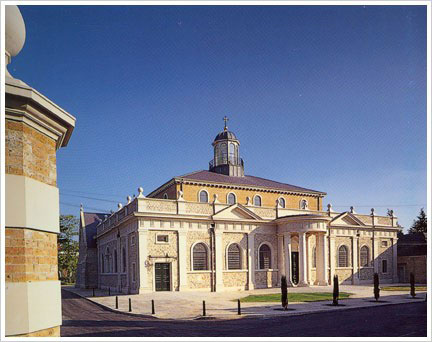
Worshippers attending Mass at Brentwood Cathedral in Essex had a rude experience when a large block of ice fell through the roof during the Eucharistic Prayer.

Fr James Mackay told BBC Essex: “Last Sunday just gone, I was celebrating Mass and halfway through there was a massive explosion to the west side of the cathedral. Everything was stopped as we heard this. I turned to my left to see lots of slate and white stuff falling from the roof. After a couple of seconds of shocked pause, I said: ‘Right, let’s crack on.’ And we did.[Exactly the right thing to do.]

Fr Mackay said: “It became clear later on that it was actually a block of frozen refuse that dropped from an aeroplane. [blech] We could see the damage – it fell straight through the slate… It was a bit of an adventure.”

[…]

Read the rest there.

Hey!  It happens.

Talk about the old petition, “From a sudden and unprovided death, deliver us, O Lord.”

You just don’t know.

When was the last time you made a good confession.

Posted in GO TO CONFESSION, Look! Up in the sky! | Tagged , ,
2 Comments

Will entrenched Curia mandarins allow Greg Burke to do his job?

At CWR there is an article about the appointment of my friend Greg Burke as the Holy See’s new “director of communications”.

My emphases and comments.

The Vatican’s real communication problem
Greg Burke is an excellent choice for a tough assignment. But will he be allowed to the job?

By Russell Shaw
“Smart move.” That’s how many loyal Catholics reacted to the announcement that the Vatican had hired a veteran American newsman as a consultant to grapple with its communication problems.

In many respects, the reaction was correct. As an experienced professional with Fox News and Time, and a serious Catholic, [I can vouch for that.] Greg Burke is an excellent choice for a tough assignment. (Disclosure: he’s also an old friend.) But the question remains: Will he be permitted to do the job? Neither Burke nor anyone else can be of much help to the Roman Curia unless it’s open to being helped. [That was one of the first things I started worrying about.]

Goodness knows the Vatican needs PR assistance. [… examples…]

But this is just the tip of the iceberg. [Keep in mind that it is nothing new for there to be “scandals”.  Each pontificate has them.] As anyone even casually familiar with the situation realizes, the underlying problems in Rome go deeper and have existed for years.

Burke is eminently well qualified to tell his new employers what the problems are and what should be done. What isn’t so clear is whether they’ll listen and act.

During three decades spent directing public relations at the national and international levels for several Catholic organizations including the American bishops’ conference, [NB:] I found that people at the top not infrequently imagine that good public relations is a matter of technique. Push a couple of buttons, do a little tweaking here and there, and behold—your previously tarnished image will glow.

Good technique is certainly important in communication, but seldom are problems like the Vatican’s only or mainly failures of technique. Instead they’re problems of attitude and philosophy.  [AMEN!] In the case of the Vatican, the difficulties tend to be the bitter fruit of an entrenched clericalist culture linked to a similarly entrenched reliance on secrecy as a routine management tool. The result is a counterproductive approach to communication and media that lies far beyond correction simply by tweaking and technique.

Often, too, communication problems get blamed on the media: “The journalists are out to get us.” In fact, some reporters really are hostile to the Church, as are some news organizations. [Even paranoids have enemies!] But most professional journalists, including many personally at odds with Catholic views, want only to do a good job according to the standards of their profession, which means getting facts straight and correctly explaining what they mean. [Sure wish there were more of that type.] Where these men and woman are concerned, the explanation that “They’re out to get us” is neither fair nor helpful. It’s a non-explanation that impedes solutions instead of encouraging them.

All that said, it must be added that there are many good, dedicated people in the Vatican. One can only imagine how badly they—to say nothing of Pope Benedict himself—have been hurt by the recent shenanigans. A serious effort to understand the underlying causes of what’s happened as well as the more immediate ones would be a service to them as well as to the rest of the Church.

Greg Burke has what it takes to give the Curia good advice. But the problems run deep, and for Burke’s expertise to matter, he needs total, unflinching support from the top—from the Pope himself. Unless it’s forthcoming (and here’s hoping it is) don’t look for much improvement.

Realistic.

Time will tell.

I renew my request to the readers here that you stop and say a prayer, perhaps to St. Michael, for Greg Burke.


Posted in Biased Media Coverage, The Drill | Tagged , , , ,
11 Comments

Mass Texts… er um… Texting During Mass. Another angle.

20120712-101807.jpgThe USCCB blog has an interesting post, about a bishop encouraging people to use their mobile phones during Mass. Yes, you read that right.

During the 4 July closing of the Fortnight for Freedom at the Basilica of the National Shrine of the Immaculate Conception, …

Archbishop William Lori of Baltimore, who concelebrated the Mass, called on the congregation to open their cellphones and text the word “freedom” or “libertad” to 377377. It was part of the U.S. bishops’ religious liberty text campaign, and in two minutes about 2,500 people suddenly joined the effort. Those who texted signed up to receive text messages about the campaign, which still continues. [Did you get that?  We must not stop.] Archbishop Lori admitted that asking people to turn on their phones at Mass was a first for him – and likely a first for everyone in the congregation.

(People who want updates on religious liberty can still text “freedom” or libertad” to 377377.)

This was a “one off”, I think. We will, I am sure, agree that texting during Mass is sub-optimal.

People on call in emergency professions might need to respond to texts, calls, “pages”.   They can go out.  But the rest of us?  Not so much.

Unusual circumstances aside, when Mass begins it is best to turn off the phones or at least switch off the ringer.

Posted in "How To..." - Practical Notes, Liturgy Science Theatre 3000, Our Catholic Identity |
16 Comments

12 July: Blessed Louis and Marie-Azélie Martin and Breast Cancer

Our frequent interlocutrix and commentatrix here, “Supertradmum”, has a nice reminder on her own blog, Etheldredasplace, about two of our family of Blesseds whom you may not be aware of or know to acknowledge today, their feast.

Sometimes those blesseds and saints who have been beatified or canonized more recently evade our attention because they are not in all our books and calendars yet.

Blessed Louis and Zelie Martin

Today in the Novus Order is the feast day of Blessed Louis and Zelie Martin, St. Therese’s great and humble parents. They are among the patrons of this blog. [Her blog, of course.] July 13th was the day of their marriage. So, this would have been a preparation day. They were married at midnight in the local church without hardly anyone there, just the witnesses and a few. How wonderful! How private and how sacred! Brides and grooms could take a lesson from this humble couple.

May God raise up other men and women who are married to create saints among us. May the intercession of Louis and Zelie lead us into our vocations and help us to trust in God at all times.

May Zelie comfort those women who have had or have breast cancer, and may she allow those who do not to refrain from judging those who do.

I like the fact that our friend Supertradmum pointed out the connection with breast cancer, which is what carried off Marie-Azélie.

One of the more interesting choices John Paul II made during his long pontificate was the Luigi and Maria Beltrame Quattrocchi.  Pope Benedict continued with Marie-Azélie Guérin and Louis Martin.  These beatifications underscore the vocation of married couples and the fact that spouses can and must seek holiness together.

Marriage is a vocation that aims at bringing children into the world and helping each other to love God and seek heaven.

UPDATE:

My friend Fr. Stephen Reynolds at St. Theresa’s in Sugar Land, TX had a beautiful bronze made of the couple for a shrine.


Posted in Saints: Stories & Symbols | Tagged , ,
11 Comments