From APOD:

Go there for the explanation. I think you can click on the image above for a larger version. Then go buy some coffee and enjoy their whole archive.
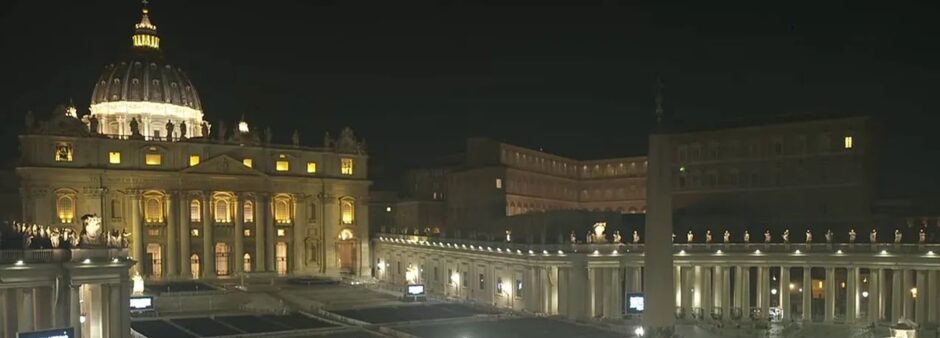
From APOD:
Go there for the explanation. I think you can click on the image above for a larger version. Then go buy some coffee and enjoy their whole archive.
There are times when, try as I might, I have no idea what – or whom – Pope Francis is talking about. I am not alone.
I had a few requests to explain something that Francis said to a group of women, a meeting of the Centro italiano femminile. The English translation I was sent is… puzzling. [UPDATE: I think the translation came from Fishwrap HERE. To be fair, John Allen said the translation was rushed. Hey! We have all been there!]
 I looked up the Italian at L’Osservatore Romano:
“… mi sono rallegrato nel vedere molte donne condividere alcune responsabilità pastorali con i sacerdoti nell’accompagnamento di persone, famiglie e gruppi, come nella riflessione teologica; e ho auspicato che si allarghino gli spazi per una presenza femminile più capillare ed incisiva nella Chiesa”.
The translation I received:
“I’m happy to see many women sharing certain pastoral responsibilities in accompanying persons, families and groups, and in theological reflection,” Francis said, “and I’ve voiced hope that spaces for a feminine presence that’s more capillary and incisive [più capillare ed incisiva] in the Church will be enlarged.”
What the heck does “more capillary and incisive” mean?
 In English, it doesn’t mean much of anything. I think the translator fell into the trap of using “false friends” when rendering this from the strained Italian.
It seems as if Francis wants a presence of women that is more “strand-like and cutting”. That is consistent with my experience of women religious who made our lives miserable in seminary back in the ’80s. “Capillary and incisive”.
That, of course, is not what Francis has in mind.
He doesn’t have any time for the LCWR types, after all, whom he has warned about being “zitelle… old maids” (in the sense that they become “sterile”, not “bearing fruit” in their vocations) and evincing female machismo. There is also no indication that Francis is associating women and hierarchy.
However, capillare can mean “widespread” and incisiva can mean “effective, trenchant”.
That said, the Holy Father went on to speak about the “feminine genius”. He confirmed that their irreplaceable role in the family must not be neglected, overlooked (trascurato).
So, Francis wants women in general, in whatever role they are playing, to be fruitful. On this occasion he strongly emphasized their roles in the family.
He is not interested in women being more “strand-like and cutting”.
And former-Father Greg Reynolds of Australia is still excommunicated.
Do any of you remember my anecdote about the unusual appearance of a raven during the “inaugural” Mass Pope Benedict XVI celebrated in St. Peter’s Square in 2005? HERE

During the Angelus today, “peace doves” were released by Pope Francis in yet another no doubt meaningful gesture for… peace.
From CBS:
VATICAN CITY – Two white doves that were released by children standing alongside Pope Francis as a peace gesture have been attacked by other birds.
As tens of thousands of people watched in St. Peter’s Square on Sunday, a seagull and a large black crow swept down on the doves right after they were set free from an open window of the Apostolic Palace.
One dove lost some feathers as it broke free from the gull. But the crow pecked repeatedly at the other dove.
It was not clear what happened to the doves as they flew off. [Any bets?]
While speaking at the window beforehand, Francis had appealed for peace inUkraine, where anti-government protesters have died.
And now this… be sure to sing along!


Was there a good point in the sermon you heard at Sunday Mass?
Let us know.
Today I mentioned, inter alia, the spiritual works of mercy. Most of you know them by heart, of course, but perhaps there are some young’uns who have never heard of these things. We are called to…
and
“But Father! But Father!”, you might be saying, why did you break up the list? Is it because you hate Vatican II? No…wait… Vatican II abolished old lists… no… wait….”
Let me expand for a moment.
All of us obliged and able to perform the last four. Only some of us are obliged or competent to perform the first three.
In regard to the first three not all of us are educated or experienced enough to instruct or counsel. Not all of us are authorized to admonish. It is not our role in life to admonish, for example, our superiors in their various manifestations. Furthermore, we do not all have the aptitudes or “character” to admonish tactfully, to counsel prudently, to instruct effectively our peers. Equal in dignity as we are, we are not equally gifted or competent in all ways. We have to get to know ourselves and our limitations.
I have had a few inquiries recently about Fr. Z’s Kitchen.
Frankly, I haven’t been doing much cooking. The most extravagant thing I have made for myself recently is a grilled cheese (cheddar) on rye. Yum… but not exactly thrilling.

 On the other hand, over the weekend a couple priests and I got together for supper (at a restaurant) to celebrate an accomplishment. We returned to the Steam Pipe Distribution Venue for dessert (call it a “movable feast”): one of my Christmas Puddings. I made more than one pudding back when.
I started the pudding a’steaming after noon and whipped up some brandy sauce. All this time I kept alive some holly which one of you readers sent me (from the sad state of New York). Here is the pudding, aflame.

With the pudding I provided the same barleywine which I used in the recipe. The flavors were, as expected, rich and, in some ways, foreign to our modern palates. I can only eat a small amount of this pudding at a time, but I don’t have much of a sweet-tooth: più salato che dolce.
Speaking of which, a friend sent some great Italian sausages, including a hot soppressata, finocchiona, and one called “winter”. I scrounged up some olives and little balls of mozzarella and absorbed it over a few days with a bottle of Carménère.

Shifting gears, I concocted something else a couple days ago. For the first time I did a complete strip down and thorough cleaning of my Glock 19. I also “pimped it out” with some stainless steel parts, including an extended mag release and an extended slide release. The original trigger connector has now been replaced with a 3.5 lbs connector.

I am not convinced I like the look of this, but I do like the extended slide release. The jury is out on the mag release. I may file the corners down a bit to smooth it out. If I get enough done today, perhaps I’ll betake myself to the range and see about this new trigger pull.

In the meantime I continue to have problems with my Springfield XDS .45ACP. It was a good idea at the time, I suppose.
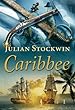
In other news, I am working the next book in the Kydd series Caribbee: A Kydd Sea Adventure. As I have noted before, they are not as good as the Aubrey/Maturin series (what is?), but they are amusing.
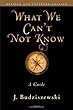
And I need also to get at What We Can’t Not Know: A Guide by J. Budziszewski. The author sent it and it is in the stack.
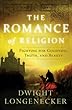
Also, I was recently sent a copy of Fr. Dwight Longenecker’s new book. I have yet to look at it, but in a spirit of solidarity (his involvement with the Patheos crowd notwithstanding) I want to point you to it. He is, as you may know, a convert and married former Protestant minster. Thus, he is one of our rare married priests. With him and his family in mind, I hope you will give his books some consideration. (Less subtly: Buy his books!)
His latest is The Romance of Religion: Fighting for Goodness, Truth, and Beauty.
Please use my links and search box when ordering from amazon. It really helps.
UPDATE:
Someone sent this. Fun.

I am not sure about that “sunny side” editorial bit, but… hey, I’m flexible.
After the dreck we have had to wade through lately, here is something of beauty.
Here is a voyage within the Basilica Santa Maria La Nuova di Monreale in Sicily, a magnificent 12th c. Normano-Byzantine edifice which must number among the most beautiful churches in the world.
COOL THING: The photography is done with a drone! HERE Hit the toggle button on the lower right of the frame to see it larger.
This via the delightfully-named Weasel Zippers:

And don’t forget THIS about how’s Cuomo’s hand-picked director for Homeland Security used the laser sight attached to his handgun as a pointer during a presentation and actually scanned it across people in the room.
 Over at Fishwrap the cracks are widening. They are losing John Allen. They closed the combox. MSW is deeply into logorrhea. They are panicky.
Now I see a piece by Thomas Reese, SJ, who was removed from his editor’s position at America Magazine about a month after Benedict became Pope (HERE), entitled “Francis makes his first mistake“.
Reese – not a lover of the Roman Curia – is unhappy with four of Francis’ nominations to the cardinalate. Reese is unhappy that heads of Roman curial dicasteries are still going to be cardinals. That means that heads of dicasteries get to play on the major league team. Well, bad news to Reese: curial heads still get to wear the big league uniform and they will still wield power. More bad news for Reese is that with these four men getting getting the red hat from Francis, four others more to Reese’s liking will not get it.
But here is a sentence that Reese tries to slip into his argument without you noticing it.
It was very easy for the Vatican to take back control during the papacy of John Paul.
HUH?
In Reese’s parallel universe, it was the those bad meanies in John Paul’s curia who took back power during John Paul’s time. It couldn’t have been John Paul! Oh, no. Remember, liberals like to love on John Paul … now that he is dead. They hated him when he was alive.
There’s more:
But under John Paul II, the decentralization was reversed and power reverted to the Vatican. That is why we have the terrible English translation used in parishes today.
LOL! Still whining about the translation, too.
No, it was John Paul who wanted to reverse the decentralization. This was his doing. Cards. Sodano or Ratzinger weren’t acting on their own. John Paul II brought Ratzinger to Rome and told him to go after X, Y, Z. He told them, “Get me back the Church. Get Catholic theology back.” It was John Paul II who hit the reset button and slowed the the spiraling chaos of dissent in the local churches that Paul VI allowed. Look, I am not fan of Card. Sodano, by a long shot, but John Paul II wanted him to strengthen the Curia, and strengthen the Curia he did.
And let’s here leave aside that the Curia ballooned under the liberals’ darling, Paul VI.
Let’s not forget our history. It isn’t as if the Roman Curia took control from local churches and the Pope just watched it passively or turned a blind eye. This was John Paul II’s design. He determined that the local churches were incapable of playing the role they were assuming. Liturgy, inter-religious dialogue, doctrine, moral theology, seminaries, religious life…. These are just a few spheres in which local churches had failed.
No, centralization was a Johanine-Pauline goal. Benedict XVI continued it.
The rest of Reese’s piece is detritus.
But Reese tried to slip in a whopper.
Soon-to-be-Card. Gerhard Müller, Prefect of the Congregation for the Doctrine of the Faith, gave a talk in Valencia, Spain. Here is a salient point.
From CNA:
Archbishop Müller encourages unity serving evangelization, mission
[…]
The Church, he said, “is not a federation of national Churches or a global alliance of confessionally related ecclesial communities, which respect, by human tradition, the Bishop of Rome as an honorary president,” but is what both “testifies to, and realizes, the unity of peoples in Christ.”
The doctrine chief explained that the college of bishops “serves the Church’s unity,” founded on Christ, and that “a bishop can only be pastor of a local Church, and not president of a federation of regional and continental ecclesial alliances.”
He added that national conferences “cannot be a pure objective principle” in the Church, for the office of bishop is essentially one of “personal testimony”: therefore “the principle of the unity of the episcopacy itself is incarnated in a person.
Read the rest there.
If you want to learn more about local churches and regional conferences and their relation to the Supreme Pontiff, check out Apostolos suos.

Coat of Arms by D Burkart









A Daily Prayer for Priests


They find you a pro-life agent in your area who commits to giving a portion of the fee to a pro-life group!

PLEASE subscribe via PayPal if it is useful. Zelle and Wise are better, but PayPal is convenient.
A monthly subscription donation means I have steady income I can plan on. I put you my list of benefactors for whom I pray and for whom I often say Holy Mass.
In view of the rapidly changing challenges I now face, I would like to add more $10/month subscribers. Will you please help?
For a one time donation...



Help Monks in Wyoming (coffee – UPDATED LINK) and Norcia (beer) and the wonderful "Soap Sisters" of Summit, NJ!


Please follow me on Twitter!










Visits tracked by Statcounter
since Sat., 25 Nov. 2006:


