Not exactly “Gather Us In”

At Catholic Education Resource Center I stumbled on a video of the great Tallis Scholars singing William Byrd, a Catholic composer who somehow survived and thrived during the reign of Elizabeth I.

However, the article I found lead me back to something from Regina Magazine, which now has an ad on my right sidebar.  Check it out.

Here is the video, for your edification today.  Not exactly “Gather Us In” or “Joy Is Like The Rain”.

http://www.youtube.com/watch?v=xME9hvAlmsU&feature=player_embedded

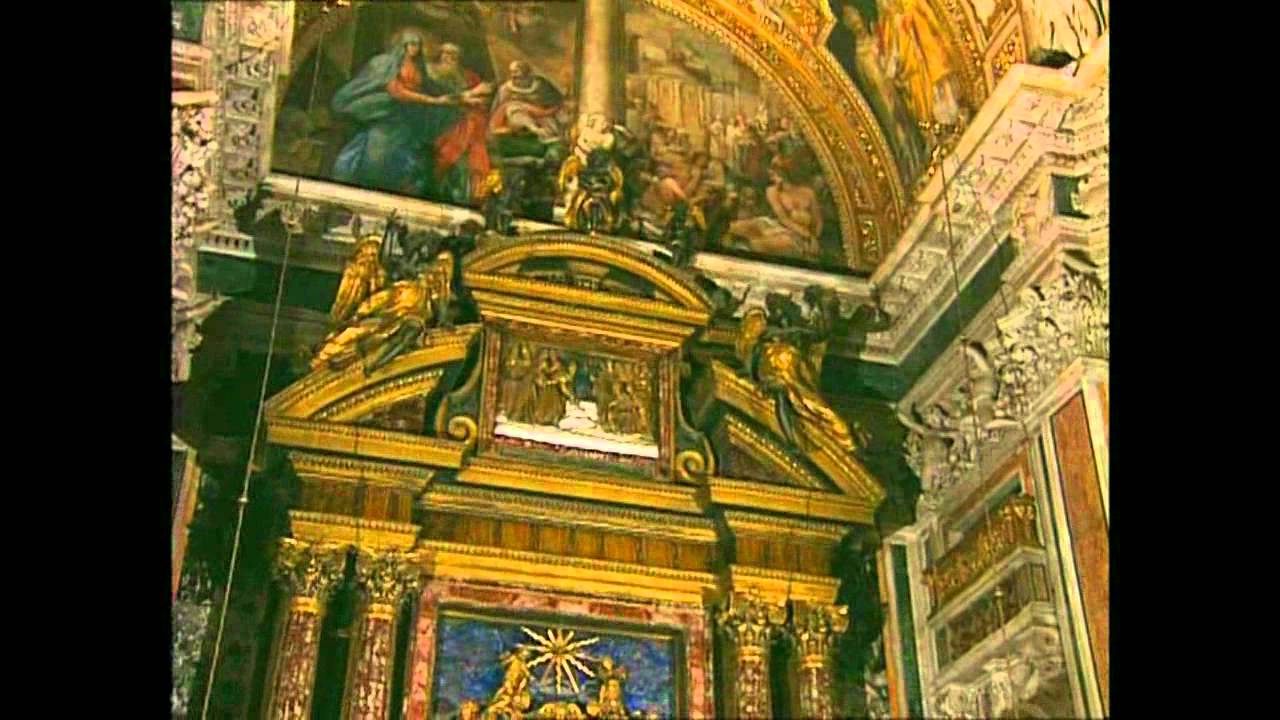
And, animi caussa, though it isn’t William Byrd, here is the video of a live performance by the Tallis Scholars in 1994 during the 400th anniversary of Palestrina’s death of Allegri’s Miserere in Santa Maria Maggiore in Rome, where Palestrina was maestro di cappella.  I was there.

Note the placement of different groups of singers in the Basilica.  When the treble floated out of the Borghese Chapel…. well….

YouTube thumbnailYouTube icon


Posted in SESSIUNCULA | Tagged , , , ,
17 Comments

ASK FATHER: What to do if sermons are heretical?

From a reader.

QUAERITUR:

What does a laywoman do if the Priest or layperson (this has happened) giving the homily at a mission starts promoting so called “same sex marraige” or trashing the teachings of the Church? Walk out? Take detailed notes on content in pew for letter to the CDF? Do something in passive protest? Start praying the rosary to disrupt error? What should I do? I’m either going to err doing tooo much or not enough and I really need your advice because things are not right and its becoming more and more common. Bishop is very timid man.

Tough question. There are many particulars to be weighed.

Ideally, I suppose, you could record it, or at least take good notes and pass it on to the authorities. That presumes that the diocesan bishop will actually do something about it.

If the bishop is a “very timid man” that might not be the case.

Sending the evidence to the Nuncio or to Rome would most likely result in the evidence being remanded again to the diocesan bishop.

I like the idea of a passive protest: standing up, silently, rosary in hand, walking out to the vestibule.

Another option is to cut one’s donation significantly, and then to inform the pastor and the bishop of why you are doing this and to what orthodox group you’ve chosen to send the majority of your Church contribution.  You should note that the donation will return to the parish when Church teaching returns to the pulpit.

This is a tough one, however, especially if it’s a mission (by which I take it it’s a small place and probably not a lot of alternatives nearby).


Posted in "How To..." - Practical Notes, ASK FATHER Question Box, Priests and Priesthood | Tagged , , , ,
34 Comments

“Catholic” – It Means Whatever You Want

I am wondering what the rank and tenure committee at DePaul were smoking when they came up with this.

From the Cardinal Newman Society:

DePaul Professor Teaches Homosexual Politics, Defended Pedophile Incident

A professor at DePaul University in Chicago, who is currently teaching the course “Creating Change: Contemporary GLBT Politics” and helped pioneer DePaul’s Gender Studies and LGBTQ Studies programs, is something of a celebrity in pedophilia circles for her 1979 article downplaying the damaging effects of childhood homosexual activity with an adult.
Elizabeth “Beth” Kelly, PhD, professor of women’s and gender studies, has taught at DePaul since 1992. In 2010, then-Chicago Mayor Richard Daley named Kelly head of the city’s LGBT advisory council. That council has since been abolished by Mayor Rahm Emanuel.
“If someone had told me 30 years ago that in 2010 I would be tenured and promoted to a professor as a publicly professed lesbian at the country’s largest Catholic university, I would not have believed them,” Kelly told the student newspaper, The DePaulia, in 2010.
She was hired by DePaul despite writing a 1979 article that reported glowingly of her own sexual relationship with a great-aunt when she was just a child. The article, “On woman/girl love, or Lesbians do ‘do it,’” reportedly appeared in the Gay Community News on March 3,1979, but is not available online. It has been excerpted at length on numerous websites and in publications including the pro-pedophilia book, Paedophilia: The Radical Case, by author Tom O’Carroll. That book is available on the IPCE website, which describes itself as “a forum for people who are engaged in scholarly discussion about the understanding and emancipation of mutual relationships between children or adolescents and adults.”

[…]

A catholic university.

If you can stand it, read the rest there.

I looked at the page of the prof.  Good grief.

A sample:

COURSES TAUGHT

  • WGS 300 Feminist Theories
  • WGS 332/432 Creating Change: Contemporary Lesbian and Gay Politics
  • WGS 354 Contemporary Knitting: [Knitting! Who knew?] Gender Craft & Community Service
  • WGS 395 Senior Seminar
  • WGS 326/PSC 363 Women & Law
  • LGQ 150 Intro. to LGBTQ Studies
  • PSC 217 Women and U.S. Politics
  • WGS 338/438 Sexual Justice: Lesbians, Gays, and the Law
  • Queer Pioneers
  • ISP 200 Sex and Power in U.S. Politics

Nothing but the best 'c'atholic educaiton at DePaul!

AREAS OF INTEREST

  • Feminist Theory
  • LBGT Politics
  • Critical Theory
  • Women and Politics
  • Queer Theory
  • Global Gender Issues
  • Democracy and Educaiton

MAJOR PUBLICATIONS

  • “Three Lives: Conversations on Solidarity and Difference”, with Frida Kerner Furman and Linda Williamson Nelson. Rowman and Littlefield, 2005
  • “A House Made of Words: Class, Education, and Dissidence in Three Lives”, John Freeman-Moir and Alan Scott, eds. “Yesterday’s Dreams: International and Critical Perspectives on Education and Social Class”, University of Canterbury Press , 2002
  • [Poor Goldilocks!  Who knew?] “In Goldilocks’ Footsteps: Exploring the Discursive Construction of Gay Masculinity in Bear Magazines,” with Kate Kane, Eric Rofes and Sara Miles eds. “Opposite Sex: Lesbians and Gay Men Writing About Each Other’s Sexuality”, New York University Press, 1998
  • Probably not what she drinks.

    “Grounds for Criticism: Coffee, Passion, and the Politics of Feminist Discourse”, in Lois Lovelace Duke, “Women in Politics: Outsiders or Insiders?”, rev. ed., Prentice-Hall, 1995 and 3rd ed., Prentice-Hall, 1998

  • “Education, Democracy, and Public Knowledge”, Westview Press, 1995 Recipient of Michael Harrington Award for Best Book published in 1995 from New Political Science Section of the American Political Science Association.

What is completely absurd in this weird landscape we are wandering through, like victims of a Salvador Dali painting, is that the Vincentians who run DePaul can do whatever the hell they want at the largest catholic university in these USA, but if you – or some small religious order – want to have Holy Mass in the older, Extraordinary Form, you have to grovel and submit samples of DNA from the back of your neck.

UPDATE:

My friend the Motley Monk offers his take HERE.

Posted in One Man & One Woman, Our Catholic Identity, Pò sì jiù, The Drill, You must be joking! | Tagged , , ,
34 Comments

USA no longer in the world’s top 10

We all want a certain level of economic prosperity, which also is the only bridge for the poor out of poverty.

To have economic prosperity, we have to have a basic level of rule of law.  There must be some regulation from government.

How much is too much? Not enough?

I think we are finding out, as the State in these USA inexorably snuff out economic prosperity.

Here is a piece in the Wall Street Journal:

America’s Dwindling Economic Freedom
Regulation, taxes and debt knock the U.S. out of the world’s top 10.

World economic freedom has reached record levels, according to the 2014 Index of Economic Freedom, released Tuesday by the Heritage Foundation and The Wall Street Journal. But after seven straight years of decline, the U.S. has dropped out of the top 10 most economically free countries.

For 20 years, the index has measured a nation’s commitment to free enterprise on a scale of 0 to 100 by evaluating 10 categories, including fiscal soundness, government size and property rights. These commitments have powerful effects: Countries achieving higher levels of economic freedom consistently and measurably outperform others in economic growth, long-term prosperity and social progress. Botswana, for example, has made gains through low tax rates and political stability.

Those losing freedom, on the other hand, risk economic stagnation, high unemployment and deteriorating social conditions. For instance, heavy-handed government intervention in Brazil’s economy continues to limit mobility and fuel a sense of injustice.

It’s not hard to see why the U.S. is losing ground. Even marginal tax rates exceeding 43% cannot finance runaway government spending, which has caused the national debt to skyrocket. The Obama administration continues to shackle entire sectors of the economy with regulation, including health care, finance and energy. The intervention impedes both personal freedom and national prosperity.

But as the U.S. economy languishes, many countries are leaping ahead, thanks to policies that enhance economic freedom—the same ones that made the U.S. economy the most powerful in the world. Governments in 114 countries have taken steps in the past year to increase the economic freedom of their citizens. Forty-three countries, from every part of the world, have now reached their highest economic freedom ranking in the index’s history.

[…]


Posted in The Coming Storm, The Drill, The future and our choices | Tagged , , , ,
12 Comments

Does Pope Francis appoint bishops without collegial consultation?

Monsignors assist the Pope

This is interesting.

Do you remember my post and comments about Pope Francis and collegiality?  Collegiality: an inquiry

This is from Sandro Magister: The pope gives, the pope takes away

VATICAN CITY, January 14, 2014 – In addition to the appointment of cardinals, Pope Francis is also taking liberties with the selection of bishops. [He is free to do so.  However, if a Pope wants to be taken serious over time, he will observe the laws that he imposes on others.  For example: let him do a, b, or c in complete disregard for the rites on, say, Holy Thursday yes, he can do that and nobody can say that he can’t.  Father Z, however, on Thursday is obliged to follow the rites.]

Above all when it comes to his native Argentina, Jorge Mario Bergoglio often (if not always) neglects to submit the appointment to the judgment of the cardinals and bishops who make up the Vatican congregation set up for this purpose, even though he radically overhauled it before Christmas.  [So, does it really matter if Card. Burke isn’t a member of the Congregation?]

In Argentina, during the first ten months of his pontificate, Francis has made fifteen episcopal appointments: eight “ex novo” and seven with transfers from other positions.

But in one of these Argentine appointments, something must not have gone quite right.

It is that concerning one of the two auxiliaries of Lomas de Zamora appointed by the pope last December 3, the Capuchin Carlos Alberto Novoa de Agustini, 47, who – as stated in the official biography published in the bulletin of the Holy See on that date – in May of 1996 had “received priestly ordination from the then-auxiliary of Buenos Aires, Bishop Bergoglio, now Pope Francis.”

It happened, in fact, that on the subsequent December 14 a statement from the diocese said that Novoa de Agustini would not be consecrated bishop because “after mature discernment” he had “requested from the Holy Father Francis a dispensation from his appointment, which he had granted to him.” No details were given on the reasons for this reversal.

Okay… let’s leave aside the fact that one of the men the Pope seems to have selected wasn’t the best choice.  The Congregation has made mistakes in the past too.

But… that is not the real point here.

The Pope needs an assist in the governance of the Church, lest he stumble.

The Roman Pontiff has a Congregation to which he has granted a mandate and authority to aid him in the selection of bishops.  If he does not use their service, if he does not work in a collegial manner, what does that mean?  What does that mean for his view and style of governance?

In my earlier post, I wrote:

It doesn’t make any difference what liberals think about collegiality, or what you think about collegiality, or what I think about collegiality. What matters is what Pope Francis thinks about collegiality.  Does anybody know?

He doesn’t always consult in the appointment of bishops?

I think we will all agree that the selection of bishops is pretty important.

Liberals are constantly crying that there isn’t nearly enough grassroots consultation in the selection of bishops, that the appointments come down from on high.

It will be interesting to see if liberals criticize Pope Francis for acting in such a non-collegial manner.

Posted in Francis, The Drill | Tagged , ,
25 Comments

Erosion of support for Pres. Obama’s attack on religious freedom

Tide of public opinion will swing against Obamacare…. er um… the so-called, misnamed, AFFORDABLE Care Act.

Has your insurance been cancelled yet?

First, people will see that it’s a bad idea which will cost far too much for far too many.  Second, they will see it as overreach by the ever-more-invasive State.

The Chicago Tribune published an editorial today against the President’s attack on the Little Sisters of the Poor.  The opinion piece still gets it wrong, but it it gets one piece right:

We’re not arguing against insurance coverage of contraceptives. But a government mandate that religious organizations violate the tenets of their faith is an unconstitutional reach.

The administration should provide a much broader conscience exemption for the insurance mandate. Exempt from these rules is any entity that would be forced to contravene its religious teachings and beliefs. Abide by the constitutional principle: Congress shall make no law respecting an establishment of religion, or prohibiting the free exercise thereof[I think the President would overturn the 1st Amendment, if he could.  And the second… and the third… and the fourth…]

Obamacare is the law of the land. But the constitutional protection of religious freedom shouldn’t be parsed or shaded by the law.

USAToday also has an opinion piece about the attack on the Little Sisters of the Poor.

Wisely, churches and other houses of worship are exempt from the requirement, but the administration wrote rules so narrowly that they failed to exempt Catholic and other religiously affiliated hospitals, colleges and charities. Its position was constitutionally suspect, politically foolish and ultimately unproductive. The number of women affected is likely so small that the administration could find some less divisive way to provide the coverage.

[…]

If the president offered a more meaningful compromise, other religious leaders would have a hard time saying no. The public health impact would be minimal. And religious freedom would be granted the wide berth it deserves.

Again, they are for the stupid law, but they are at least not with the administration in the undermining of our religious freedom.

Posted in Liberals, Our Catholic Identity, Religious Liberty | Tagged , , , , , , ,
15 Comments

ASK FATHER: Father’s sermons are simplistic

From a reader – QUAERITUR:

The priest in my parish seems to be a very decent and holy Man; but his homilies are super simplistic and boil down to being good and faithful. He also tells a minimum of two jokes per homily. Of course he is right about being good and faithful and his jokes are harmless and I’m sure well meaning. Plus he is on the front line and deserves slack; but I would love something deeper that could help me understand the readings better, understand the Church Fathers better or Sacred Tradition better…and help me learn to BECOME more good and faithful.

Any advice?? Do I just need to buck up and stop looking for perfection in the Mass, and just be glad that I’m back? Say the rosary? It doesn’t feel right to shop for Churches because I don’t like an aspect of it; and I’m sure the Enemy will direct me to spot something else to complain about in another parish anyway.

It is probably good advice to cut Father some slack.  There are, however, some positive steps one can take to help Father improve his homilies, if … if these steps are taken carefully. Very carefully.

Consider that Father might want to preach more substantive homilies.  It may be that he has in the past.  Then consider that he may have received letters and calls of complaint from parishioners. Thereafter, he may have decided to tread lightly, use humor, to deflect those complaints, lest the fill up his personnel file at the bishop’s office.

Yes, the local chancery will get letters and calls about priests’ homilies, and yes, they are often kept on file… for future use.

To start, you might get to know Father a little better. Without being weird stalker creep, seek him after Mass, thank him for offering Mass, and tell him something significant that you got from his homily – and not one of his jokes. “Father, my name is Eleutherius Witherspoon. I just wanted to thank you so much for offering the Holy Mass for us. I also wanted to say that point you made about the Holy Spirit appearing at Jesus’ baptism in the form of a dove was prefigured by the dove returning to the Ark signaling the end of the flood was very interesting – I plan on praying over that image this week.”

Over time, maybe invite Father out to a meal, or for coffee. Some priests love to do this, others, not so much, so don’t take offense if Father says no.

Once you’ve established some kind of rapport with him, you can share with him some of what you are reading to improve your own spiritual life. “Father, I just started reading these collected sermons of St. Augustine, or Fulton Sheen, or Bl. Columba Marmion.” If he shows an interest, offer to buy him a copy.

Try to avoid directly criticizing Father, since he probably gets enough of that. If he asks for your input, don’t be shy about giving it. Instead of un-asked-for criticism, offer him some comparison to your preaching heroes. “Father, I just got back from a business trip to England. Fr. Tim Finigan at Blackfen completely blew my socks off with his homily!”

In the meantime, while dealing with homilies that might not be heterodox or completely slipshod, pray. Say a prayer to the Holy Spirit as Father ascends the pulpit to proclaim the Gospel. Offer a prayer to his guardian angel when he begins to preach. Ask the intercession of Sts. Anthony of Padua, Dominic, and John Chrysostom for your priest. Keep a rosary in your pocket or a finger rosary on, and if things get to befuddled, offer up a couple of decades during the homily, quietly. And, if the homilies aren’t providing you with the grist you need for your spiritual mill, spend some time after Mass reading some quality patristic commentaries on scriptures, or homilies by Doctors of the Church, or find some good priests who do podcasts of their homilies.


Posted in ASK FATHER Question Box, Liturgy Science Theatre 3000 | Tagged , , , ,
36 Comments

REVIEW: Voyage to Alpha Centauri: A Novel by Michael O’Brien

CLICK TO BUY – Help me pay for my “AFFORDABLE” Health Care! (You won’t at all regret having this book!)

I recently finished reading Voyage to Alpha Centauri by Michael D. O’Brien. (UK LINK HERE)

I hope he writes in this genre again!

This novel deals with an expedition in the future aboard a massive, city-like ship the Kosmos to a planet orbiting Alpha Centauri. The main protagonist is a Noble prize winning physicist from the SW USA Neil de Hoyos. As one of the main contributors to the technology that makes the ship possible, he is a passenger with hundreds of other scientists and crew. The future setting is that of extreme totalitarianism, anti-Christian, post-Christian statist control. I don’t doubt that this is where O’Brien fears we are headed.  He has worked with this context before.  In any event, De Hoyos and his colleagues buck the system about Kosmos and have problems during their voyage.

The voyage itself slowly reveals itself to be another manifestation of our perennial struggle against the age old Enemy of mankind, the father of lies, the serpent.

I don’t want to offer any spoilers, and therefore I will make this a bit sketchy.

It is interesting that O’Brien has moved into science fiction. He has written about quite a few different contexts, contemporary and historical, but this is new for him and he did a fine job of it. The technology plays a role in the thrust of the narrative, as if it were a character: an important character. Moreover, the work is deeply Catholic and theological, even though there is very little that is overtly Catholic in the first part. It is Catholic in its worldview rather than in its surface trappings.

You might call this book “theological sci-fi”.

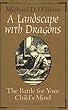
O’Brien is deeply concerned about human freedom and our dignity as images of God. Thus, in his books he often explores the problems caused by the expanding and encroaching State and about the evil, truly diabolical evil, that lurks behind attacks on human dignity. He is also convinced that we need to have clear archetypes and symbols, that evil should be recognizable as evil and good as good. This is something he has written about in reference to children’s literature in his A Landscape With Dragons: The Battle For Your Child’s Mind, which I recommend warmly for parents of young children and educators.

You will encounter in Voyage some leitmotifs which – if you are paying attention – will enrich your reading. O’Brien often works with symbols as motifs. Once you figure out his style, you’ll start picking them up pretty quickly.

From my reading of O’Brien over the years, I believe he has a strong mystical streak. Therefore, even as you might sometimes wish that he had a more aggressive editor, his books reward patience.

I wholeheartedly recommend Voyage.

I am tempted to have a discussion thread here, but I don’t want to offer spoilers.  There are some twists and turns which I don’t want to ruin.

Posted in Look! Up in the sky!, REVIEWS, The Coming Storm, The Drill | Tagged ,
18 Comments

The Goldfinch

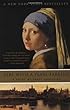
A while ago I was in New York City and I visited, eagerly, the Frick Gallery to see an exhibition of paintings from the Mauritshuis which is making its way around the world: Vermeer, Rembrandt, and Hals: Masterpieces of Dutch Painting from the Mauritshuis. Johannes Vermeer’s Girl with a Pearl Earring was on view.

However, as interesting as Girl was – I was amused to learn that, during a cleaning, a supposed highlight on the pearl turned out to be a stray flake of something and not Vermeer’s intention at all – I was even more interested in Carel Fabritius’ The Goldfinch.

You know of my interest in what I call “Christological goldfinches” in Italian painting.

I saw today at The History Blog an entry about the Frick exhibit and the Girl and the Goldfinch.

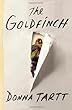
There I learned of a novel which features The Goldfinch, namely, by Donna Tartt.

Apparently people are flying and flocking like finches to see the fine feathered feature in numbers as great as those who come to view the Girl with the pearl.   They do so, it seems, from their interest in the books.  You may also know about the novel and the movie about the Girl.

Here is something from the blog entry:

The Goldfinch‘s charm has been more than evident to curators and fans of the Dutch Golden Age for centuries, of course. That’s why it’s included in what is basically a greatest hits exhibition. The petite piece, about the size of a piece of A4 paper, is a trompe l’oeil, a painting that creates the deliberate illusion of reality. A goldfinch stands on a feedbox, a delicate chain tethering him to the spot, against a whitewashed wall with crumbling bits of plaster. The shadows cast by the box are at a fairly steep upward angle and we see the box’s semicircular perches from below, suggesting Fabritius planned the piece for display relatively high on a wall.

Fabritius’ confident, smooth brushstrokes create an incredibly lifelike bird despite the lack of precision photorealistic detail. He learned from the best, studying under no less of a master than Rembrandt in the early 1640s in Amsterdam. You can see Rembrandt’s influence in the splash of yellow in the bird’s wing. Fabritius laid the yellow on thick and then scratched it while it was still wet using the butt of his brush. The scratch exposed the underlying layer of black. This is a technique Rembrandt taught him.

The overall look of the painting, however, is a departure from Fabritius’ early work in Amsterdam. Fabritius was 28 years old when he moved to Delft in 1650 and over time, he moved on from Rembrandt’s dark palette and atmospheric lighting to the brighter scenes and homier subjects of the Delft school of artists. Johannes Vermeer was influenced by this approach (he may have even been an actual student of Carel Fabritius, but the evidence for this is very thin).

Unfortunately Fabritius’ great artistry was severed shortly after he painted The Goldfinch. On October 12, 1654, a gunpowder magazine in Delft exploded, destroying a quarter of the city. Fabritius was killed at the age of 32. His studio was reduced to rumble and most of his paintings were lost. Only a dozen or so of his paintings are known to survive today. It’s possible that The Goldfinch was a witness to this tragedy. When the Mauritshuis restored it in 2003, they found microscopic damage to the surface. It may have been rescued from the rubble.

The Goldfinch, Girl with a Pearl Earring and the rest of the treasures will be on display at the Frick through January 19th, so you have no time to lose if you want to see the exhibition before it leaves the country. There is one more international stop of the tour in the Palazzo Fava in Bologna from February 8th until May 25th, and then the group returns to The Hague in time where they will be installed in the newly renovated Mauritshuis in time for its grand re-opening on June 27th.

I admit that my last trip to NYC was timed partly with this exhibit in mind.  I am a fan of Vermeer and of other Dutch masters.  The Frick has 3 Vermeer and the Met 5. With the arrival of the Girl with the pearl, there was a serious concentration of Vermeer in NYC.  Also on display was a mighty find vanitas painting by one of my faves, Pieter Claesz.

Posted in Just Too Cool | Tagged , , , , ,
10 Comments

NEWS FLASH! SUN RISES AT DAWN!

How ridiculous are things getting in the wake of The Francis Effect™?

Here is a headline from Reuters.  I really hope that the otherwise bright Phil Pullella didn’t impose this:

Pope, in nod to conservatives, calls abortion ‘horrific’

What a shocker!   The Pope is against abortion!

But wait.  There’s more.  Someone at Reuters figured out that this was absurd.   They revised the headline to:

“Pope, after conservatives’ criticism, calls abortion “horrific”

Hang on.  Isn’t this worse?

Posted in Francis | Tagged , ,
26 Comments