Via rogueclassicism:

Don’t you want a pair?
I can’t figure out how to make these liturgical.
Can you?

Via rogueclassicism:
Don’t you want a pair?
I can’t figure out how to make these liturgical.
Can you?
My friend the nearly-ubiquitous fair-minded John L. Allen, Jr., still sadly writing for the unworthy National Catholic Reporter, has an piece today on Pope Benedict at his promotion of a new liturgical movement.
I have long contended that this Pope during this pontificate has as a major goal the restoration of our Catholic identity. Liturgy must be a key component of such an endeavor.
My emphases and comments:
What Benedict means by ‘new liturgical movement’
John L Allen Jr
Sometime soon, [in…. say…. Vatican "soon"?…] the Vatican is expected to release a motu proprio, meaning a legal document under the pope’s authority, which will transfer responsibility for an aspect of marriage law from one Vatican office to another. Though it will probably fly below the public radar, the document provides a glimpse into Pope Benedict XVI’s approach to liturgy, meaning how the church celebrates the Mass and its other rituals.
Specifically, Benedict is expected to encourage the Congregation for Divine Worship and the Discipline of the Sacraments, the Vatican’s office for liturgical policy, to focus on promoting what he describes as a “new liturgical movement." The obvious question, of course, is what exactly he means by that. [Indeed, yes.]
In a narrowly tailored legal document, the pope can’t unpack the idea, but Vatican observers say that [get this…] Benedict’s broad liturgical approach can be described in terms of “continuity,” i.e., recovering elements of the liturgical tradition which he believes were too hastily set aside or downplayed in the immediate period after the Second Vatican Council (1962-65). [So far so good. Nothing new here.] His own style when he celebrates Mass reflects this thrust, including distributing communion on the tongue, rather than in the hand, and placing a crucifix on the altar to remind people that the focus is on God rather than the celebrant.
The “new liturgical movement,” then, is one which attempts to restore what Benedict XVI and like-minded observers believe was lost in the post-Vatican II period, perhaps principally, in the pope’s mind, a strong sense of transcendence.
The phrase “new liturgical movement” was first used by the pope back in 1997, when as Cardinal Joseph Ratzinger he published a set of memoirs about his life up to 1977 under the title Milestones. [The idea of a new liturgical movement came with strength from his book, named after a book by Romano Guardini, Spirit of the Liturgy.]
Here is the relevant section, which I’ll quote at length:
“There is no doubt that this new missal [after Vatican II] in many respects brought with it a real improvement and enrichment; but setting it as a new construction over against what had grown historically, forbidding the results of this historical growth, thereby makes the liturgy appear to be no longer a living development but the product of erudite work and juridical authority; this has caused us enormous harm. For then the impression had to emerge that liturgy is something ‘made’, not something given in advance but something lying within our own power of decision. From this it also follows that we are not to recognize the scholars and the central authority alone as decision makers, but that in the end each and every ‘community’ must provide itself with its own liturgy. When liturgy is self-made, however, then it can no longer give us what its proper gift should be: the encounter with the mystery that is not our own product but rather our origin and the source of our life. A renewal of liturgical awareness, a liturgical reconciliation that again recognizes the unity of the history of the liturgy and that understands Vatican II, not as a breach, but as a stage of development: these things are urgently needed for the life of the Church.”
“I am convinced that the crisis in the Church that we are experiencing today is to a large extent due to the disintegration of the liturgy, which at times has even come to be conceived of etsi Deus non daretur, in that it is a matter of indifference whether or not God exists and whether or not he speaks to us and hears us. But when the community of faith, the worldwide unity of the Church and her history, and the mystery of the living Christ are no longer visible in the liturgy, where else, then, is the Church to become visible in her spiritual essence? Then the community is celebrating only itself, an activity that is utterly fruitless. And because the ecclesial community cannot have its origin from itself but emerges as a unity only from the Lord, through faith, such circumstances will inexorably result in a disintegration into sectarian parties of all kinds – partisan opposition within a Church tearing herself apart."
"This is why we need a new Liturgical Movement, which will call to life the real heritage of the Second Vatican Council.”
That extract provides the context in which the phrase from the forthcoming motu proprio should be understood (assuming it appears as expected), which otherwise may seem a bit out of the blue.
"Out of the blue"…?
Some of us have been talking about this – not generally NCR readers, however, for a while now.
It will be interesting to see what Mr. Allen is talking about. Motu Proprio… hmmmm….
Remember 07-07-07!
From Operation Rescue with my edits:
Written by Operation Rescue
Posted June 30, 2010Commentary by Cheryl Sullenger, Senior Policy Advisor, Operation Rescue
Washington, DC – Earlier this week, the Clinton Library released a number of memos related to Supreme Court nominee Elena Kagan. The most discussed memo, dated January, 1997, concerns her take on the necessity of partial birth abortions and her input by adding language to a statement issued by the American College of Obstetricians and Gynecologists (ACOG) that favored the now-illegal late-term abortion method.
While Kagan determined that the pro-abortion ACOG was perhaps the most reliable source of medical opinion on Partial-Birth abortions, she cites statements of opposing viewpoints issued by the Society of Physicians for Reproductive Health (PRCH) and “a group of mostly pro-life physicians called PHACT.”
Kagan does not include a written statement from PHACT and only quotes from that organization in part. In contrast to her dismissive attitude toward PHACT, Kagan not only includes a full, two-page statement issued by PRCH on their letterhead, but highlights portions of that statement that agreed with the position in support of partial birth abortion that she advocated.
The Society of Physicians for Reproductive Choice is without a doubt the most extreme organization of abortionists in the nation. It is a group of abortionists who proudly boast of having committed illegal abortions prior to Roe v. Wade and advocate for no restrictions on abortion at all – ever.
[…]
In other words, the PRCH wants abortionist to have the right to conduct human experimentation on their unwitting abortion patients in order to develop new ways to dismember, poison, or otherwise kill innocent pre-born babies, many which are viable and healthy. One of their members, Curtis Boyd has already admitted he has done so much in his development of new ways to kill babies in the second trimester of pregnancy.
It simply doesn’t get any more extreme than that. Yet, this is a group that Kagan has taken cues from in the past. The same basic philosophy promoted in the 1997 PRCH memo made its way into the policy statement of ACOG, thanks to recommendations made by Kagan in her own handwriting.
The 1997 ACOG statement, with the PRCH inspired Kagan additions, helped defeat the Federal ban on partial birth abortions that year and prolonged the use of this grisly brain-sucking technique an additional six years until the Partial Birth Abortion Ban Act of 2003 was finally passed and signed into law.
“This memo shows us that Kagan had no problem dictating policy to physicians, just like she is going to dictate policy from the bench,” said Operation Rescue President Troy Newman. “Any Senator who supports Kagan supports abortion policy in its most extreme form, including abortions through the ninth month of pregnancy and human experimentation on women. This is unthinkable and unconscionable.”
“The American people overwhelmingly oppose late-term abortions and radical abortion policy that is reflected in the Kagan memo. Senators who would have the bad judgment to vote for her confirmation invite serious voter backlash during their next election,” said Newman. “Remember the public outrage expressed when Senators Ben Nelson and Bart Stupak betrayed their pro-life constituency during the debate on tax funding of abortions in health care. Kagan supporters should expect nothing less.”
Read the full Kagan/ACOG memo
Contact your Senator to voice opposition to the Kagan confirmation to the U.S. Supreme Court
Did I mention garum?
Buy your garum using amazon (when available)!
From rogueclassicism comes this about that precious liquid garum, in modern terms colatura. (Check here and here.)
Garum Festival
Are Classicists aware of this event in Tunisia?
The Garum summer festival was held [ratz… missed it again] on June 26 at the Sidi Slimane Cultural Center in Nabeul, at the initiative of the Safeguarding Association of the city. It is a gastronomic and scientific event highlights [!] yet an unknown aspect of the ancient Roman city, Neapolis (Nabeul). [The problem with actually making it to such a festival is that you would have to go there.]
Gurum or Garon, as it was known among the Greeks was a culinary preparation made mainly of “fish, salt and herbs” [That’s one way to describe it.] and was in use in Greek cuisine from at least the 5th century BC. The production and trading of Garum lasted for at least one millennium.
On the agenda of the festival, buffet and tasting of Garum dishes, an ancient condiment made in Neapolis, in Roman times, as a sauce made from pickled fish (tuna, mackerel, sardines). [Pompeii was also a big producer of garum.]
An exhibition was also scheduled to present a variety of fish sauce may be related to garum, such as Vietnamese “nuoc mam” and “pissalat niçois”.
The festival was inaugurated with a visit to the archaeological site of Neapolis to give an overview of the industry of Garum and salted fish manufactures in Roman times.
Excavations at the site between 1995 and 2006, covering 2000 square meters carried out by a Tunisian-French team was also showcased in Neapolis, hosted salted manufacturers which date back to a time was estimated between 1st and the IV centuries AD.
These factories are second in the world after those found in Spain. They have large pools of salting with production capacity up to 138 m3. The Garum was packaged in amphorae whose remains found at the archaeological site of Neapolis, represent edifying testimonials.
The development of fishery activities in the region was facilitated by the proximity of tuna migration routes, the presence of shoals for growth of wildlife marine and numerous lakes forming natural pools.
Try it! Buy your garum using amazon (when available)! And it is nearly always on my wishlist.. for obvious reasons.

 Today during Holy Mass in the Basilica of St. Peter, near to Peter’s tomb, the Holy Father gave the pallium to new metropolitan archbishops.
The pallium is a sign of the jurisdiction metropolitans have in their provinces and also a sign of their closer bond with the person of the Successor of Peter. This is one of the reasons why before the pallia are granted, they rest in a niche at Peter’s tomb.
Before they receive the pallium the Archbishops are to take an oath:
Ego…
Archiepiscopus…
beato Petro apostolo,
Sanctae Romanae Ecclesiae,
ac tibi, Summo Pontifici,
tuisque legitimis Successoribus
semper fidelis ero et oboediens.
Ita me Deus omnipotens adiuvet.I…
Archbishop of the _____ diocese (these are adjectives)
will always be faithful and obedient to
St. Peter the apostle,
the Holy Roman Church,
and to you, the Supreme Pontiff
and to your legitimate Successors.
So help me God Almighty.
 It is interesting that in recent decades this oath is witnessed by the Ecumenical Patriarch of Constantinople or by his delegate.
The Holy Father blessed the pallia today with these words (my close but not too literal translation):
O God, eternal Pastor of souls, who committed to blessed Peter the Apostle those who are called "the flock" by Jesus Christ Your Son, that they should be governed by him after the model of the Good Shepherd (boni Pastoris typo) , through our ministry pour forth the grace of Your blessing upon these Pallia, which as symbols You desired to be concrete signs (documenta) of pastoral care.
Receive the our humble prayers and grant through the intercession and merits of the Apostles, that whoever will bear them, You generously making it so, may understand himself to be the Shepherd of Your flock, and will show forth in his work that which is signified by the name.
Let him take up the evangelical yoke lain upon his neck, and let it be for him so light and sweet, that in running by example swiftly along the way of your commands, he may merit to be admitted into the everlasting pasture.
When the Pope places the pallium on the neck of the archbishop kneeling before him, he says:
For the glory of Almighty God and the praise of the blessed Virgin Mary and of saints Peter and Paul, for the decorum of the Sees committed to you, unto a sign of the authority of a metropolitan, we bestow upon you the Pallium taken from the Confession of saint Peter, so that you may use it within the confines of your ecclesiastical provinces.
May this Pallium be for your a symbol of unity and a token (tessera) of communion with the Apostolic See; may it be a bond of charity (vinculum caritatis) and a spur of fortitude, so that in the day of the Coming and the revelation of the great God and prince of shepherds Jesus Christ, you may together with the the flocks entrusted to you obtain (potiamini) the stole of immortality and glory.
There are some nice things here.
First, note that this is not about the Archbishop!
It is about the 1) glory of Sts. Peter and Paul, 2) the decorum of the archdiocese, 3) unity with the Apostolic See, and 4) the care of souls.
Also, the image of a tessera is lovely. A tessera is literally a small block or cube. It is used to describe the little cubes that make up a mosaic. It is still the Italian word for an officially issued pass or a ticket or i.d. card.
In this case it makes me think of how each of these archbishops, so different in themselves and in very different places through the world, are contributing in their individual way to the "big picture".
Also in mosaics in the apses of ancient Roman churches you often see very courtly sheep processing solemnly to the center of the mosaics where they are being gathered together under Christ, flanked by his apostles.
The are coming to drink of flowing, living water.
These are symbols of the life to come. I believe that this is what the prayer is driving at. It is meant to invoke this image.
The play on the word potiamini is a subtle triumph here. Potiamini is from potior, one of those word that takes the ablative, and means "attain, obtain" or "drink". However, it also calls instantly to mind the word potio "a drinking".
 A sign that things are changing.
Younger priests are starting to open up dusty old cabinets, looking for treasures.
On NLM I saw this. Happily they posted also an English translation of the original German.
The Vestment Treasury of Niedermünster
The findings’ worth is in the millions of Euros, yet priceless: 500 pieces of liturgical vestments from four centuries!
By HELMUT WANNER, MZ
REGENSBURG. To the glory of God, generations of women from Stift Niedermünster embroidered the most precious chasubles of Lyonnaise silk with threads of silver and gold. After the liturgical reforms these precious garments fell into oblivion. They were stored away in cabinets and forgotten. Now the new pastor of the cathedral parish, Fr. Harald Scharf, called an aspiring art historian for an inventory. The findings from Niedermünster caused the raising of heads among the specialists. The German "silk papess" Barbara Beaucamp and art historians of the Germanisches Nationalmuseum in Nuremberg showed interest in these findings. Now an inventory is made of them together with exact descriptions. On high feasts the pastor may use them again at the altar. There are planned a little exposition and a publication.
There are still wonderful things out there, unused and hidden away.
I am sure many of you have stories about bringing out things both old and new.
From my email:
Dad’s quick comeback
A teenage boy had just passed his driving test and inquired of his father as to when they could discuss his use of the car.
His father said he’d make a deal: ‘You bring your grades up from a C to a B average, study your Bible a little, and get your hair cut. Then we’ll talk about the car.’
The boy thought about that for a moment, decided he’d settle for the offer, and they agreed on it.
After about six weeks his father said, ‘Son, you’ve brought your grades up and I’ve observed that you have been studying your Bible, but I’m disappointed you haven’t had your hair cut.
The boy said, ‘You know, Dad, I’ve been thinking about that, and I’ve noticed in my studies of the Bible that Samson had long hair, John the Baptist had long hair, Moses had long hair…and there’s even strong evidence that Jesus had long hair.’
His father replied, ‘Did you also notice they all walked everywhere they went?
Some shots from the feeder.
The expert grape jelly eater.

A young male Oriole has found the bonus of a spider in his jelly.

Young make Red-Breasted Grosbeak.

A not so young male Red-Breasted Grosbeak.

A seriously annoying young Hairy Woodpecker, begging relentlessly.

More of the annoying youth, chasing mom around.

There are lots of young birds coming right now. It is fun to see them change.
Thanks are also due to those of you who have lately used the donation button. They eat because of you.
Also, many thanks to those of you who have sent items from the Amazon wish list.
LW of WI sent a book by Scott Hahn, The Lamb’s Supper together with some oil for cooking, which I will very much enjoy. I have plans for the walnut oil, especially.
Also, I have started receiving copies of The Weekly Standard.

Coat of Arms by D Burkart
 emmatag1126 on Thoughts about the collision of the Holy See and the SSPX. Wherein Fr. Z rants.: “Also, the Declaration said that we can be saved only through the Roman Catholic Church, which unfortunately leaves out my…” on Thoughts about the collision of the Holy See and the SSPX. Wherein Fr. Z rants.: “I just wanted to say how much I appreciate your charity and well-worded wishes/prayers for hearts to change. Whenever I’m…”
 on ROME 26/5– Day 52: lace imitates God’s beauty enlaced in flowers: “Fr. Z: It wasn’t until I started reading your writings a few years back that I realized how important vestments…” on ROME 26/5– Day 52: lace imitates God’s beauty enlaced in flowers: “Speaking of age, I think I am lucky not to be in my teens or even early twenties right now.…”
 on ROME 26/5– Day 52: lace imitates God’s beauty enlaced in flowers: “The “seriously cool APP” Father Z is referring to is the Ava Maria Clock which if you have not downloaded…”
 on ROME 26/5– Day 53: Persevere!: “Black to move and mate in 4 1) … Qd1+ 2) RxQd1 (or Kh2) RxRd1+ 3) Kh2 (forced) Be5+ 4)…”
 on ROME 26/5– Day 52: lace imitates God’s beauty enlaced in flowers: “@Charivari Rob: How about calling it the Old Chestnut Award? It will probably only be slightly less feared than the…”
A Daily Prayer for Priests










They find you a pro-life agent in your area who commits to giving a portion of the fee to a pro-life group!

PLEASE subscribe via PayPal if it is useful. Zelle and Wise are better, but PayPal is convenient.
A monthly subscription donation means I have steady income I can plan on. I put you my list of benefactors for whom I pray and for whom I often say Holy Mass.
In view of the rapidly changing challenges I now face, I would like to add more $10/month subscribers. Will you please help?
For a one time donation...



Help Monks in Wyoming (coffee – UPDATED LINK) and Norcia (beer) and the wonderful "Soap Sisters" of Summit, NJ!


Please follow me on Twitter!










Visits tracked by Statcounter
since Sat., 25 Nov. 2006:


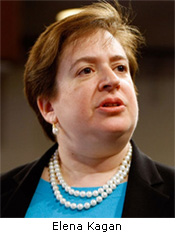 Clinton Era Memo Betrays Kagan’s Extremist Pro-Abortion Thinking
  Lectures were presented on “the benefits of Garum sauces and nuoc mam”, “the Garum amphorae and the trade of cured products”, “The Garum, the salting and the purple in Djerba, as well as the analysis of industry index of Garum and curing in Neapolis.


