 Today is the Feast of the one whom the Lord called the greatest man ever born of woman.
Here is his entry in the 2005 Martyrologium Romanum:
Sollemnitas Nativitatis sancti Ioannis Baptistae, Praecursoris Domini, qui iam in utero matris, Spiritu Sancto repletae, exsultavit gaudio ad humanae salutis adventum cuiusque ipsa nativitas Dominum Christum prophetavit; et tanta gratia refulsit in eo, ut ipse Dominus de illo diceret neminem maiorem inter natos mulierum Ioanne Baptistae.
I’ll let you readers provide your own perfect versions.
Let’s have a look at the…
COLLECT:
Deus, qui beatum Ioannem Baptistam suscitasti,
ut perfectam plebem Christo Domino praepararet,
da populis tuis spiritalium gratiam gaudiorum,
et omnium fidelium mentes dirige
in viam salutis et pacis.
I like the sound of the ends of the clauses – suscitasti… praepararet… gaudiorum and then a big change with salutis et pacis. Remember! These prayers are to be sung! Suscitasti is, as you now recognize, a syncopated form, short for suscitavisti, which would have diminished the rhythmic coherence in the first three clauses.
LITERAL TRANSLATION:
O God, who raised up blessed John the Baptist,
so that he would prepare a perfect people for Christ the Lord,
grant to your peoples the grace of spiritual joys
and guide the minds of all the faithful into the way of salvation and peace.
This modern Collect of the 1970 Roman Missal is based on the Collect of olden days:
Deus, qui praesentem diem honorabilem nobis in beati Ioannis nativitate fecisti: da populis tuis spiritualium gratiam gaudiorum; et omnium fidelium mentes dirige in viam salutis aeternae.
Perhaps the terrible wars of the 20th c., by far more bellicose than even the 16th c., drove the composers of the newer version to include the petition for peace. One can hardly object. The first part of the present Collect also is a bit more theological and significant. All in all, it seems to me that the newer Collect represents an improvement over the older version: which we cannot always say when comparing old and new prayers.
In Rome today on the feast of St. John it is the custom to eat snails. It is nice to have as your Patron the great Baptist, for I get two feasts a year, his Nativity and his Beheading! In honor of the memory, if I can’t get snails tonight, I might try for mussels or some other mud bug.
Snails apart, I cannot help but remember a marvelous St. John’s Day when rather than snails I had wonderous mussels with a dear friend, an occasion I would repeat every year, if I could.
For the Vigil of St. John in the old Roman Ritual the priest would once bless bonfires!
This is lovely custom calls to mind that many places celebrated the feasts of saints with great festivity. By this day all the cuttings and trimmings of the orchards and vineyards were dried and crackly and ready to be burned. The evening is about as long as the year can offer, so a great party could be had well into the night with much cooking in the open and revelry. After the usual introduction, the priest would bless the fire:
Lord God, almighty Father, the light that never fails and the
source of all light, sanctify + this new fire, and grant that
after the darkness of this life we may come unsullied to you who
are light eternal; through Christ our Lord.
All: Amen.
It is almost as if the fire, and our celebration, is baptized. At this point the fire is sprinkled with holy water and everyone sings the hymn Ut quaent laxis which is also the Vespers hymn.
For the feast of St. John in June for centuries the Church has sung at Vespers the hymn beginning Ut queant laxis. Those of you who are lovers of the movie The Sound of Music will instantly recognize this hymn as the source of the syllables used in solfège or solmization (the use of syllables instead of letters to denote the degrees of a musical scale). Both the ancient Chinese and Greeks had such a system. The Benedictine monk Guido d’Arezzo (c. 990-1050) introduced the now familiar syllables ut re mi fa sol la for the tones of the hexachord c to a… or, more modally, the tonic, supertonic, mediant, etc. of a major scale. The Guidonian syllables derive from the hymn for the feast of St. John the Baptist:
Ut queant laxis resonare fibris
Mira gestorum famuli tuorum,
Solve polluti labii reatum
Sancte Ioannes.
After the medieval period (when music became less modal and more tonal) to complete the octave of the scale the other syllable was introduced (si – probably taken from S-ancte I-oannes) and the awkward ut was replaced sometime in the mid 17th c. with do (or also doh – not to be confused in any way with the Homeric Simpsonic epithet so adored by today’s youth, derived as it is from the 21st century’s new liturgical focal point – TV) and do came to be more or less fixed with C though in some cases do remains movable.
So, now you know where Doh, Re, Mi comes from!
Finally, here is a PODCAzT I did on St. John, an oldie.
St. Augustine of Hippo (+430) preached about St. John in Carthage in 401 (s. 288). This isn’t, btw, the same reading as you would find in today’s Office of Readings, which is from s. 293). We also get into Ut queant laxis.
Podcast: Play in new window | Download
Subscribe:
Build a fire tonight, eat snails, and sing something in honor of St. John!


 Today is the Feast of the one whom the Lord called the greatest man ever born of woman.
 Snails apart, I cannot help but remember a marvelous St. John’s Day when rather than snails I had wonderous mussels with a dear friend, an occasion I would repeat every year, if I could.
  It is almost as if the fire, and our celebration, is baptized. At this point the fire is sprinkled with holy water and everyone sings the hymn Ut quaent laxis which is also the Vespers hymn.
 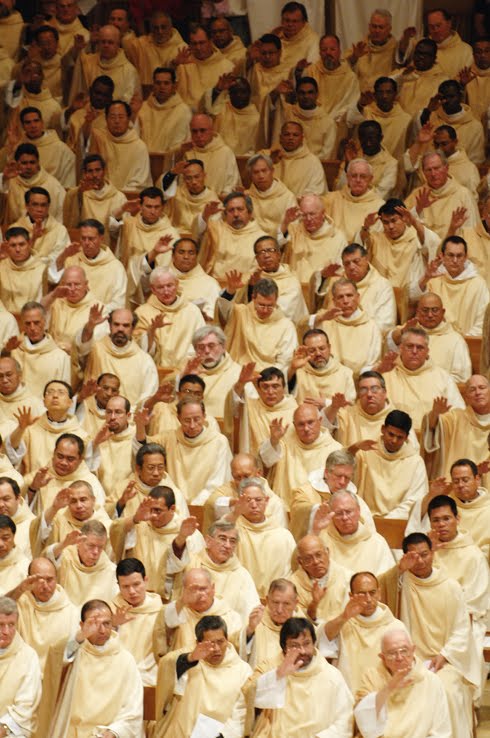 From a priest reader:
 emmatag1126 on Thoughts about the collision of the Holy See and the SSPX. Wherein Fr. Z rants.: “Also, the Declaration said that we can be saved only through the Roman Catholic Church, which unfortunately leaves out my…”






























