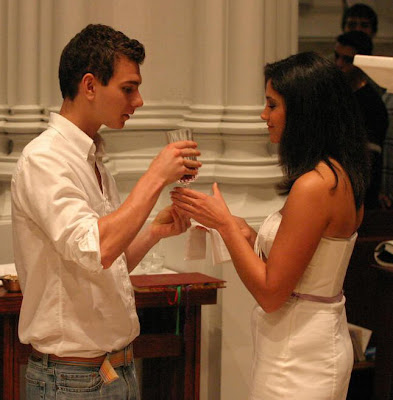
In Belleville, Bp. Braxton takes a stand on kneeling (POLL ALERT)

On the site of a newspaper in SW Illinois, St. Louis, bnd.com there is an article about the Bishop of Belleville, Most Rev. Edward Braxton.

It seems that in one of the parishes in the diocese of Belleville, people are not kneeling as the rubrics of the Church indicate, for the consecration.

Bishop Braxton has taken a stand on kneeling.

My emphases and comments:

Taking a stand: Bishop tells parishioners to kneel
Braxton sends ‘high priority’ directive to Shiloh church
BY GEORGE PAWLACZYK – News-Democrat

SHILOH — Belleville Catholic Bishop Edward Braxton has set a deadline of this weekend for all parishioners who attend Corpus Christi Church: You must kneel during the high point of the ceremony, the Liturgy of the Eucharist. [Otherwise known as Mass.]

Braxton sent a letter marked "high priority" to Monsignor James Margason, pastor of Corpus Christi, who posted the information for parishioners.

In the Catholic Church, the Eucharistic Prayer marks the central prayer of the Mass and is the moment when the "bread and wine are transformed into the body and blood of Christ," according to a directive from the U.S. Conference of Catholic Bishops. [Ummm… well… somewhat more than a directive of the USCCB, but let that pass.] The group advises that all should kneel at this time.  [Okay… remember that this is a secular report, right?]

But at the 91-year-old wood frame Shiloh church, about 50 of the approximately 90 to 150 people who attend any of four Masses [that many?] on the weekend sit in an annex, where there are rows of seats that have no kneelers — long, padded devices in a pew that can be folded down.

For years, many parishioners at Corpus Christi, including those in pews with kneelers and those without, have remained standing during the Eucharistic Prayer.

Margason said that Braxton’s Dec. 7 letter to him was posted prominently in the church and that parishioners in the main section equipped with kneelers now kneel during the reading of the Eucharistic Prayer. However in the annex, the people stand, Margason said. He declined further comment[I bet.]

The letter did not state whether there would be consequences for continued standing, even in the annex where there are no kneelers.

Dave Spotanski, the diocesan chancellor of administration, said he could not comment because the letter was a private communication between a bishop and a priest, even though it was posted publicly at Corpus Christi Church[You have to wonder what the priest was about when he posted the letter.   A public hand washing, perhaps?]

The parish, which has nearly doubled to 515 members since Margason took over in 2005, [getting the dynamic at work?] has approved construction of a new and much larger church that will be equipped with kneelers for all churchgoers. Construction will begin next year.

Braxton, who rarely comments to local reporters, could not be reached.

The letter made no reference to a lack of kneelers but pointed out that as the diocesan bishop, Braxton is "the chief steward of the mysteries of God in the particular church entrusted to my care and as the guardian of the whole of the liturgical life of this Diocese." It also stated that Braxton had been "informed" that when Margason was pastor of St. Luke’s Church in Belleville, parishioners sometimes remained standing during the Eucharistic Prayer.

"Now, however, the members of the congregation at St. Luke’s Parish kneel as they should," the letter stated.

Margason was the vicar general under former Bishops Wilton Gregory and James Keleher.

Braxton, who was installed as bishop in 2005, also wrote, "Please inform your parishioners that, at my instruction, they must begin following the liturgical norm of kneeling during the entire Eucharistic Prayer."

A publication titled "General Instruction of the Roman Missal," printed by the Catholic Order of St. Benedict in Collegeville, Minn., [sigh] states that those attending Mass should kneel during the Eucharistic Prayer when it is "reasonable." Situations where it might not be reasonable, according to the article, include reasons of health, lack of space and the number of persons present.

It is not uncommon to see elderly people sitting during the Eucharistic Prayer, or people standing on crowded Masses at Easter and Christmas.

I am glad the bishop stressed the importance of kneeling, even though reasonable accomodation must be made when it simply isn’t possible.

However, lack of a kneeler does not make kneeling impossible.

It just makes kneeling a little closer to the ground… like real kneeling.

POLL ALERT:

This poll came with the story.   The good guys are winning.  Let’s keep an eye on it.

Posted in "How To..." - Practical Notes, Our Catholic Identity | Tagged , , ,
35 Comments

Expectation of the Blessed Virgin – interesting customs

Over at the excellent Lion & Cardinal there is an entry about today’s traditional observance of the Expectation of the Blessed Virgin.

My emphases and comments:

Dom Prosper Gueranger:

This feast, which is now kept not only throughout the whole of Spain but in many other parts of the Catholic world, owes its origin to the bishops of the tenth Council of Toledo, in 656. These prelates thought that there was an incongruity in the ancient practice of celebrating the feast of the Annunciation on the twenty-fifth of March, inasmuch as this joyful solemnity frequently occurs at the time when the Church is intent upon the Passion of our Lord, so that it is sometimes obliged to be transferred into Easter time, with which it is out of harmony for another reason; they therefore decreed that, henceforth, in the Church of Spain there should be kept, eight days before Christmas, a solemn feast with an octave, in honour of the Annunciation, and as a preparation for the great solemnity of our Lord’s Nativity.

In course of time, however, the Church of Spain saw the necessity of returning to the practice of the Church of Rome, and of those of the whole world, which solemnize the twenty-fifth of March as the day of our Lady’s Annunciation and the Incarnation of the Son of God. But such had been, for ages, the devotion of the people for the feast of the eighteenth of December, that it was considered requisite to maintain some vestige of it. They discontinued, therefore, to celebrate the Annunciation on this day; but the faithful were requested to consider, with devotion, what must have been the sentiments of the holy Mother of God during the days immediately preceding her giving Him birth. A new feast was instituted, under the name of the Expectation of the blessed Virgin’s delivery.

This feast, which sometimes goes under the name of Our Lady of O, or the feast of O, on account of the [antiphon] which begins O Virgo virginum [and because on that day the clerics in the choir after Vespers used to utter a loud and protracted O, to express the longing of the universe for the coming of the Redeemer], [Come to think of it, I have probably done that too, from time to time…. usually in the face of liturgical abuses or a particularly stupid sermon.  But I digress…] is kept with great devotion in Spain. A High Mass is sung at a very early hour each morning during the octave, at which all who are with child, whether rich or poor, consider it a duty to assist, that they may thus honour our Lady’s Maternity, and beg her blessing upon themselves…  [NICE!]
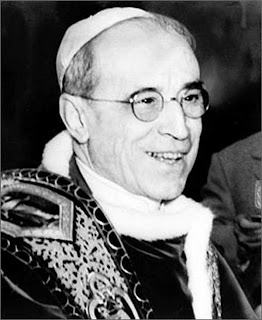
Most just indeed it is, O holy Mother of God, that we should unite in that ardent desire thou hadst to see Him, who had been concealed for nine months in thy chaste womb; to know the features of this Son of the heavenly Father, who is also thine; to come to that blissful hour of His birth, which will give glory to God in the highest, and, on earth, peace to men of good-will. Yes, dear Mother, the time is fast approaching, though not fast enough to satisfy thy desires and ours. Make us redouble our attention to the great mystery; complete our preparation by thy powerful prayers for us, that when the solemn hour has come, our Jesus may find no obstacle to His entrance into our hearts.


O Virgo virginum, quomodo fiet istud? quia noc primam similem visa es, nec habere sequentem. Filae Jerusalem, quid me admiramini? Divinum est mysterium hoc quod cernitis.

O Virgin of virgins! how shall this be? for never was there one like thee, nor will there ever be. Ye daughters of Jerusalem, why look ye wondering at me? What ye behold, is a divine mystery.

[The Liturgical Year]

So!  Blue vestments in Spain and some groaning too! 

We have a rich and interesting Church!

I like that idea of having a time for blessings of women who are with child.

Posted in ADVENT, Just Too Cool |
4 Comments

VENERABLE John Paul II and… by the way…. PIUS XII!!

Blindsided!

The title of "Venerable" is given to those whom Holy Church determined within a reasonable doubt lived a heroic life of virtue.   The Congregation for Causes of Saints examines the documentation presented to make the case that the Servant of God lived all the theological and cardinal virtues in an exemplary manner and then issues a decree concerning those virtues.   The decree is presented to the Supreme Pontiff in a consistory (or whatever other moment he considers opportune), and he subsequently determines to promulgate it or not as he considers it opportune.

Once a person is decreed also by the Pope to have lived a heroic life of virtue and is called Venerable, then there must be be an authenticated miracle before he or she can be beatified.

Here is the latest batch of decrees:

PROMULGAZIONE DI DECRETI DELLA CONGREGAZIONE DELLE CAUSE DEI SANTI

Oggi, 19 dicembre 2009, il Santo Padre Benedetto XVI ha ricevuto in Udienza privata S.E. Mons. Angelo Amato, S.D.B., Prefetto della Congregazione delle Cause dei Santi. Nel corso dell’Udienza il Santo Padre ha autorizzato la Congregazione a promulgare i Decreti riguardanti:

…..

– le virtù eroiche del Servo di Dio Pio XII (Eugenio Pacelli), Sommo Pontefice; nato a Roma il 2 marzo 1876 e morto a Castelgandolfo il 9 ottobre 1958[WOW…. THIS was downplayed a little]

– le virtù eroiche del Servo di Dio Giovanni Paolo II (Carlo Wojty?a), Sommo Pontefice; nato il 18 maggio 1920 a Wadowice (Polonia) e morto a Roma il 2 aprile 2005;

….


Paolo Rodari has an interesting comment on his blog Palazzo Apostolico about this decree about Pius XII, which sort of blind sided everyone:

The strategy of Benedict XVI to get the skeptics (among whom many Jews) to stomach the unblocking of the process of beatification and canonization of Pius XII was today made clear in a surprising way (no vatican watcher was in a position to anticipate this).  In fact, the Pope, hiding his intentions from everyone (I have my doubts that even his private secretary knew about it), promulgated a decree on the heroic virtues of Pius XII together with that of John Paul II.  We knew about Wojtyla.  About Pacelli, no.

The Congregation actually issued the decree on heroic virtues for Pius XII some time ago, on 8 May 2007. 

But, remember, the Supreme Pontiff must promulgate it.   That is what happened today.   

Posted in Saints: Stories & Symbols | Tagged , , ,
48 Comments

Catholic Herald Op-Ed: “We need a sharper divide between priests and laity”

From The Catholic Herald, the UK’s best Catholic weekly, comes this opinion piece, with my emphases and comments.     

We need a sharper divide between priests and laity

Dominic Scarborough presents a plan for recovering a true understanding of clergy and lay roles

11 December 2009

One of the most popular themes for Hollywood films over the years has been the so-called “body swap” film where parent and child exchange bodies and live the other’s life for a while, invariably “with hilarious consequences”. In the end both find that although each has learned a great deal about the other’s life, ultimately each is happier and more fulfilled as they were. A similar phenomenon can be found on our television screens with the familiar “life swap” genre.

Something similar seems to have been happening in the Catholic Church over the past few decades as many priests have started mimicking or even idolising the lay lifestyle while in many parishes it is the laity which increasingly populate the sanctuary. I know of one priest who decided he had to commission more Extraordinary Ministers of Holy Communion [Remember: they are not Ministers of the Eucharist.] to do his weekly sick calls because his time was being so taken up with the parish accounts (needless to say, one of these new Extraordinary Ministers was an accountant). The tragic element to all this (which outstrips even the comic element) is that there is more than an element of “role-play” escapism or flight from reality in this behaviour. The time may have come for the Church to realise that a clearer delineation of roles might be timely [Nay rather, long overdue.] and that the Church needs to be rooted in reality and not indulging the secular fantasies of its clergy.

As is so often the case, the Holy Father is only too aware of this situation. In a recent speech to the bishops of Brazil during their ad limina visit to Rome he made the following remarks: “Do not secularise the clergy and clericalise the laity … The truth is that the greater the faithful’s awareness of their own responsibilities within the Church, the clearer becomes the specific identity and inimitable role of the priest as pastor of the entire community.”  [I consider the purposeful clericalization of lay people by priests and bishops to be a particularly nasty type of "clericalism".  What lies at the bitter root of that weed is the false notion that lay people are not worthy unless they are doing things that priests or deacons do, that they are somehow not adequate unless they imitate priests.  We have to grant that most clerics who fall into this trap are well-motivated, but it is a trap nonetheless.]

Of course Vatican II sent out a rallying cry to the laity to recognise that they are the “People of God” and to be co-workers with the clergy and religious and not mere consumers of religion. The laity were called to discover a new sense of their sharing in the Priesthood of Christ by virtue of their baptism. But the primary task of the laity in sharing in the sacrifice of Christ was to be their emphasis on making a sacrifice of their own lives in how they lived them out in the world as a living witness and as a means of evangelisation. [We might see it this way: the clergy are to shape the lay people who shape the world around them.] How frequently, though, have these sentiments been interpreted by those with a very narrow and clerical view of the Church who seem to consider that one is not really doing something important in the life of the Church if it is not liturgical? This ideology, more than any decline in priest numbers, has led to the legions of Extraordinary Ministers and superfluous servers we now see crowding our sanctuaries.

One step towards sorting all this out might helpfully come from Rome. An important document, the significance of which even to this day is not fully understood in the wider Church, was Pope Paul VI’s Motu Proprio Ministeria Quaedam of 1972. This document abolished the clerical minor orders of porter and exorcist and re-designated the hitherto clerical orders of lector and acolyte as “instituted lay ministries”. It also abolished the tonsure and delayed the entry of the seminarian into the clerical state until diaconate (the sub-diaconate having already been suppressed). Sadly, the passage of time and the benefit of hindsight could both question the effectiveness of this previously untried system. While no seminarians are likely to feel particularly deprived at not being made a porter, [This could be an interesting point of discussion.  In the ancient Church there were many types of ministry to deal with concrete exigencies.] many seminiarians are required by their seminary staff (quite properly, according to the document) to continue to consider themselves laymen even after the reception of the lay ministries of lector and acolyte which they receive at the seminary, until the day of their diaconate when suddenly the clerical state hits them like a train. The old staged progress through tonsure, the reception of the cassock and collar, the saying of the Office and the milestones of the minor orders has given way to literally waking up the morning after diaconate as a celibate cleric.

Similarly, the appetite among the laity for these new “instituted lay ministries” has been entirely absent from the post-conciliar Church. As a policy initiative they have completely failed to take off in the western Church and I would be surprised if the total number of instituted lectors and acolytes in the entire Catholic Church (excluding the seminarians transiting through these lay ministries) would be enough to fill a village hall. Lay people happily fulfil the roles of lector and acolyte as lay people just as they sing or take up the collection but do not feel the need to be “clericalised” to do so. Indeed, according to the General Instruction of the Roman Missal 2002, where an instituted lector and acolyte are present at Mass they should always take precedence in that role. [Which could help with the problems we have in the distribution of Holy Communion as well as helping us to a more solemn liturgy.] The paradox of this is that if it were followed to the letter it would mean no lay person would ever read or serve at Mass again, given that the priest is likely to be the only person present who has been “instituted” in both of these lay ministries. Where the test of time has preserved these roles is in their proper place, in the seminaries, as steps to priesthood. In my view it is high time that the Church looked at this purely disciplinary issue again with the benefit of hindsight.

Where the laity can and should participate in the liturgy they should be proud to do so as lay people and in roles which respect the dignity of that state. Those aspects of the liturgy which pertain to the sanctuary and in a particular way to the ministerial priesthood should be reserved to clerics or to those lawfully deputising for clerics out of real necessity. [Do I hear an "Amen!"?] These “instituted lay ministries” should be quietly dropped, again, motu proprio and, at least in the case of acolyte, should be restored as an instituted role pertaining to the clerical state to which only clerics can be admitted. [Not sure about that… but this is worthy of discussion.] It would help to re-emphasise the different but complementary roles which clergy and laity have in the life of the Church and might result in more priests taking Communion to the sick and more laity helping with the accounts.

Dominic Scarborough is a lay Catholic from the south of England. A qualified barrister and former Civil Service Principal, he has a degree in Modern History from Magdalen College, Oxford. He is a regular commentator in the press and on the internet on Catholic affairs

Posted in The Drill |
54 Comments

The Feeder Feed

I have only a single male Cardinal coming around to the feeder.  There is a female lurking somewhere also, but I haven’t seen her for a while.

They are very alert and skittish.

He does go up on the feeder, an open feeder with a surface to stand on, but in general he prefers to eat on the ground.

One Cardinal does not a conclave make.

With my upcoming trips, I think I will have to find a somewhat larger feeder, requiring less frequent replenishment.  The last trip was … not successful, I think, at least as far as the birds were concerned.  It was very cold and my substitute did not refill, alas. 

I am missing some chickadees and finches. I haven’t seen a House Finch since I have returned.

Posted in The Feeder Feed |
7 Comments

Ineffabiliter sapiens, sapienter infans

Yesterday I wrote my column for the Christmas issue of The WandererInter alia I delved into what St. Augustine said about the eternal Word becoming an infans, "incapable of speech", as the Lord’s way of teaching humility.  Augustine explores this mystery quite a few times in his sermons for Christmas.  I drill into some examples.
I did, however, want to share this one in particular.  A good example of this "speechless Word" images comes at the very beginning of s. 187, preached perhaps before 411.  We can get a sense of how Augustine sounded even in translation:

“He is the One through whom all things have been made and, on Christmas, Who has been made in the midst of all things. He is the Revealer of His Father and the Creator of His mother, the Son of God through His Father without a mother and the Son of Man through His mother without a father. He is great in the eternal day of the angels but small in the time-conditioned day of men. He is the Word of God before all time and the Word made Flesh in the fullness of time. Maker of the sun, He is made under the sun. Disposer of all ages in the bosom of His Father, He consecrates Christmas Day in the womb of His mother. In Him He remains while from her He goes forth. Creator of the heavens and the earth, He is born on earth under the heavens. Unspeakably wise, He is wisely speechless (Ineffabiliter sapiens, sapienter infans). Filling the universe, He lies in a manger. Ruler of the stars, He nurses at His mother’s bosom. He is both great in the nature of God and small in the form of a servant, but His greatness is not diminished by His smallness nor His smallness overwhelmed by His greatness.”

You might be interested to know that I did a search of Augustine’s works using one of my tools and found some 397 instances of a form of ineffabilis (ineffabil*).

I am not sure what that indicates about Augustine’s opinion of his congregation…. but there it is.

Posted in Patristiblogging | Tagged
7 Comments

Card. Hummes: Without prayer, priests die of starvation.

From CNA:

Cardinal Hummes calls priests to strengthen ministry through prayer
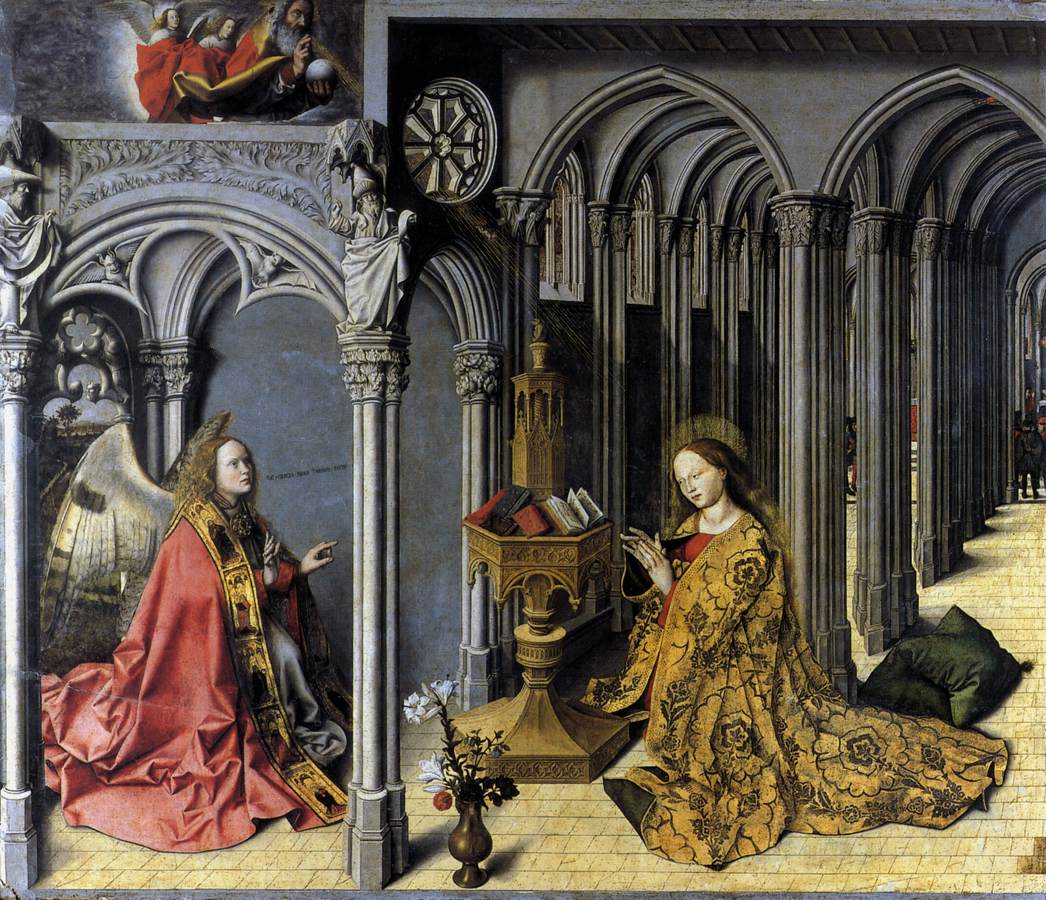
Vatican City, Dec 16, 2009 / 06:57 pm (CNA).- The prefect of the Congregation for the Clergy, Cardinal Claudio Hummes, encouraged priests this week not to neglect prayer because it strengthens their ministry by cultivating “the intimacy of the disciple with his Master, Jesus Christ.”

“Truly without the essential nourishment of prayer, the priest becomes ill.  The disciple cannot find the strength to follow the Master, and thus, he dies of starvation,” the cardinal warned in a letter.

Cardinal Hummes recalled that “prayer occupies a central place in the life of the priest,” and is a weapon for overcoming the devil, who seeks to weaken the shepherd in order to destroy the sheep.

St. John Chrysostom warned that a decrease in shepherds always leads to a decline in the number of faithful in a community.  Without shepherds, our communities will be destroyed,” he explained.

The prelate added that a lack of prayer leads to “less joy and happiness in ministry each day.”  When a priest realizes “that his prayer life is weak, that is the time to address the Holy Spirit and pray.”

“The Spirit will reignite the passion and fervor for the Lord, who is always there…”

The cardinal encouraged priests to draw close to the manger in order to renew their friendship and discipleship, in order to be sent anew by Christ as his evangelizers.


I would add something.

Pray for priests.

Posted in Year of Priests | Tagged
16 Comments

WDTPRS – Ember Wednesday “Missa Aurea” – Collect (1962MR)

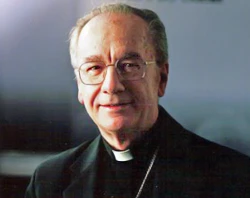
Today, Ember Wednesday of Advent, those who have the use of the older, traditional Roman Missal, offer worship to God with the so-called Missa aurea, the "Golden Mass". 

There is a strong Marian overtone to today’s Mass formulary.  The Roman Station for today is St. Mary Major.  the Gospel is the Annunciation.  The illuminated missals and sacramentary of centuries past presented the Gospel or at least its initial capital letters in gold, when our nickname Missa aurea.  And the Gospel pericope begins Missus est angelus Gabriel….  It was once celebrated with a solemnity nearly approaching a feast day.  Thus, Missa aurea also refers to little dramas in medieval times in which the Annunciation was acted out.  It is thus not just "golden Mass" but "the golden sending", which of course refers to the moment in which Our Lord becomes incarnate in the womb of the Virgin and His work for our salvation begins a new phase.  Missa aurea comes to be used in the terminology of art history also for paintings of the Annunciation, which often contain dramatic elements associated with the tableaux struck in the dramatic presentations of the mystery.  Doves would be lowered and an old man would be placed in a loft wearing an alb and cope.  Angels would come vested in dalmatics.  The Arena or Scrovegni Chapel in the 13th c.  Giotto’s frescoes echo this tradition as do many paintings of the Annunciation.

The Advent Ember Days were timed to follow St. Lucy’s feast (13 Dec.).  St. Lucy was an important saint for our forebears.  Her name, derived from the world for "light", is tied to our awareness in the northern climes of the deepening darkness of our December days and that those days will soon be getting longer again.  Listen for the urgency within the threefold "command" we are issuing to the Lord (festina… ne tardaveris… impende).

COLLECT:

Festina quaesumus, Domine, ne tardaveris,
et auxilium nobis supernae virtutis impende;
ut adventus tui consolationibus subleventur,
qui in tua pietate confidunt.

This Collect, an ancient prayer found in such manuscripts as the 8th c. Liber sacramentorum Gellonensis, survived the snipping and pasting experts of Fr. Bugnini’s Consilium in a somewhat truncated form, to be prayed on 24 December in the Novus Ordo: Festina, quaesumus, ne tardaveris, Domine Iesu, ut adventus tui consolationibus subleventur, qui in tua pietate confidunt.

That form tardaveris is a perfect subjunctive of tardo, "to tarry, loiter, linger, delay", paired here with ne to form a kind of imperative.  That ne tardaveris is found in the Latin version of the Psalms. 

Impendo is "to expend, devote, employ, apply".  Pietas, when it refers to man has to do with "duty", but when applied to God, it becomes "mercy… pity".  Remember that adventus here is a genitive with tui.   Sublevo means, basically, "to lift up from beneath, to raise up, hold up, support", but it comes to mean, "to sustain, support, assist, encourage, console any one in misfortune".  The perfect way to describe this vale of tears in which we journey.

LITERAL VERSION:
Hurry, we beseech You, O Lord, tarry not,
and expend upon us the help of heavenly power;
that those who rely upon Your mercy
may be sustained by the consolations of Your Coming.

You can feel in this prayer the growing Christian sense of urgency and longing.  Advent seems to pick up speed and become more anxious for resolution as we plunge headlong into physical darkness and cold, the reminders of our inevitable appointment with death.

This oration looks simultaneously back to the Nativity of the Eternal Word made man, but also forward to the Second Coming, which gives us consolation.  Christians in the state of grace can feel great consolation at the thought of the Coming of the Lord, in history and in the time to come.  We need not be afraid when we are in the state of grace.  Therefore, the Christian always eagerly says "Come, Lord Jesus.  Maranatha.   Come."

This prayers rings with consolation.

May the Lord’s coming and promise of return console any of you who are burdened with sorrow. Many people feel at times inconsolable.

This time of year can be a annual trial of despair and sadness for so many who are alone and suffering.

In gratitude for the Lord’s promises, console others. 

Think of this as a "golden rule".


Posted in ADVENT, WDTPRS | Tagged , ,
10 Comments

REVIEW: Catena Aurea of St. Thomas Aquinas (Baronius Press)

Latin catena means "chain".  Catena came to be the label for a work which involved "chaining" the commentaries of previous previous writers so as to create a verse by verse biblical commentary.

The best known of these catena was created by St. Thomas Aquinas (+1274) and it is called the Catena Aurea, covering the four Gospels.

The nice folks at Baronius Press have produced a new, leather bound, four volume set of the Catena Aurea and I am happy to show some photos of the books on this day especially, when in the traditional Roman calendar we celebrate the so-called "Missa Aurea" for Ember Wednesday of Advent.

As I said there are four volumes, bound in leather with pages edged in, appropriately, gold.

They are being sold through the website of Baronius Press for US $140.

I noted that they were printed in India.

This is not just a photocopied set, reproducing the original pages of the 1841 edition.  This is entirely reset.  

There are handy ribbons for marking your place.

The binding feels good, and not too tight.  The books lie open.

The contents are as you might suspect.  No pictures.  Just text.  This is a reprint of an edition that was prepared in 1841.

The volumes have no indices, which is a bit of a draw back.  Since the books were actually reset with a new typeface, preseumably in electronic form, it is hard to understand why there couldn’t be an index.  But there it is.

Baronius Press is publishing very nice books.  Their hand missal for the older Mass is wonderful.  They have some good tools for Scripture.  I was very impressed also by their Divine Intimacy.

Posted in REVIEWS | Tagged ,
14 Comments

Catholic reporter fired because he disagrees with homosexual “marriage”

From CNA with my emphases:

Catholic reporter fired over comment on same-sex ‘marriage’ campaign

Portland, Maine, Dec 15, 2009 / 09:56 pm (CNA).- A localized media frenzy has ensued after a Catholic reporter was let go from his 19-year position at a Maine newspaper for voicing his opinion against same-sex “marriage” and the campaign to legalize it in Maine.

According to an article by the Maine Public Broadcasting Network, Larry Grard, a former employee of the Morning Sentinel, was sent a mass email from the pro-gay rights organization, Human Rights Campaign (HRC), following the repeal of the same-sex “marriage” law in Maine during the mid-term elections on Nov. 4.

In the email, Trevor Thomas, spokesman for the HRC, voiced his disappointment with the vote results and allegedly stated that opponents of same-sex ‘marriage’ built their arguments on “lies and hate.”

Thomas told CNA that Grard responded to the mass email from his personal email account and said “who are the venom-spewing ones? Hint: not the Yes on 1 crowd. You hateful people have been spreading nothing but vitriol since this campaign began. Good riddance!”

Although CNA asked Thomas for the original HRC statement that Grard responded to, Thomas did not provide it.

According to Thomas, he forwarded Grard’s email response to reporter’s boss and wrote, “it’s frankly, just not acceptable coming from a news organization the morning after our defeat.” Though Thomas insisted that he did not ask for Grard’s termination, Grard was fired on Nov. 10 and his wife’s bi-weekly cooking column for the paper was canceled.

The Maine Public Broadcasting Network stated that Grard has since apologized. “He had an emotional reaction to this email and sent off a reply and he recognizes that it was a mistake – that it wasn’t professional,” said Tom Bell, president of Grard’s union, the Portland Newspaper Guild.

Bell continued to say that workers for the paper have a union contract that calls for “progressive discipline” which means that if someone makes a mistake, they are given a chance to rectify the situation before drastic action, such as termination, is taken. “The issue here is that we feel the company overreacted,” said Bell.  “For someone like Larry, who’s 58, this is a one-way ticket into poverty.”

Bill Donohue of the Catholic League has also taken up Grard’s case and referred him to several pro-bono law firms that handle situations of Catholic workers who are victims of discrimination due to their beliefs.

Posted in The Drill, The Last Acceptable Prejudice |
20 Comments