PODCAzT 129: Of the solstice, and The Baptist, and summer poems

Here is a little PODCAzT after a long hiatus. Today, the Summer Solstice, I talk about the Summer Solstice, but in light of St. Augustine and St. John the Baptist. I mentioned this in another post, but I spin it out here.

Then we have some summer poetry, from John Clare, William Blake, Carl Sandburg, Emily Bronte, Emily Dickenson, Robert Louis Stevenson, and Richard Wilbur.

Just for fun and for reflection on our mortality as sumer is icumen in.

PS: I want to like making these, but today I had every obstacle in the world, including lawn mowers and weedwhackers and doors and phones ringing and then snarky software. So, pardon a couple bumps along the way. I will now drink some iced-tea.

Posted in PODCAzT, Poetry | Tagged , , , , , , ,
5 Comments

“He must increase. I must decrease.” A note on the Summer Solstice

Today is the Summer Solstice.  From now, our northern hemispheric days get shorter, as the world’s tilt starts changing our daily/seasonal clocks.

I wonder if the LCWR leadership have special plans tonight!

An ancient Augustinian sermon made a connection between the Birth of the Lord, when the days go from shortest to getting longer, and the Birth of the Baptist, whose feast falls near the Summer Solstice.

So let both their deaths also speak of these two things: “It is necessary for him to grow, but for me to diminish.” The one grew on the Cross, the other was diminished by the sword. Their deaths have spoken of this mystery, let the days do so too. Christ is born, and the days start increasing; John is born, and the days start diminishing. So let man’s honor diminish, God’s honor increase, so that the honor of man may be found in the honor of God.

Very nice.

As the Baptist said, “He must increase.  I must decrease.”

I said, above, “Augustinianian sermon”, because s. 380, preached in a year we can’t quite figure out, might not be an authentic sermon of Augustine.  Still, it is certainly Augustine in spirit and style.

Is HE increasing for you today?

Posted in "How To..." - Practical Notes, Brick by Brick, Look! Up in the sky!, Our Catholic Identity | Tagged , , ,
5 Comments

Nuns On The Bus UPDATE!

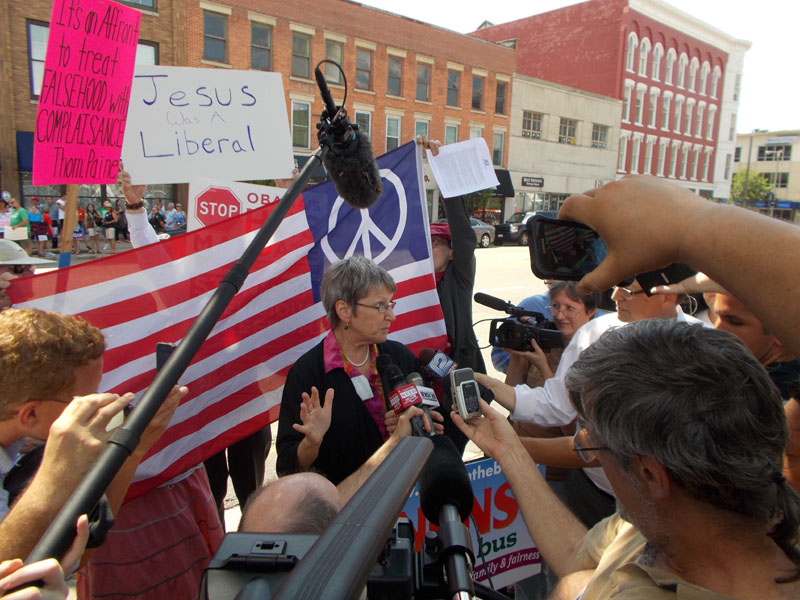
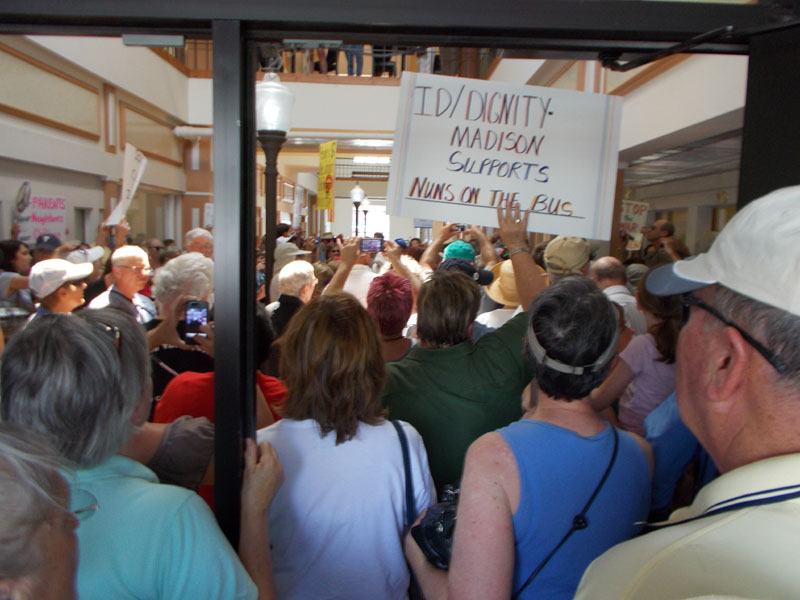
Oh… how I hope this Nuns On The Bus tour never ends!

At the blog Laetificat a denizen of the Diocese of Madison (where the great Morlino reigns) has a report on

Nuns on the Bus visit Sinsinawa and Janesville

The writer went to find the Nuns On The Bus!

Yes, folks, while some sisters are working to save our planet by fighting McDonald’s, others are driving around out there on a pollution belching bus, pouring ozone-destoying hydro-carbons into the atmosphere for the sake of fact-obfuscating self-promotion.

The Nuns on the Bus would have us think that the Congregation for the Doctrine of the Faith’s reforming efforts offered to the Leadership Conference of Women Religious (a subsidiary of the Magisterium on Nuns), was somehow about defending all women religious in their time of persecution by the mean ol’ Vatican.  That’s isn’t what the CDF is doing, but let’s not allow facts to confuse the Nuns On The Bus.

In any event, check out the photos and fun.

There is also a video of Sr Simone Campbell’s opening remarks at Sinsinawa.

According to Sister, this is how they came up with the Nuns On The Bus idea. I add just a couple comments of my own:

“I’m not used to this celebrity kind of stuff,” she said. [LOL! Right!  That’s right, Sister, you are a huge celebrity now!] She also had some details on the genesis of the trip: “The whole bus trip is a gift of the Spirit.  [Lemme think…. The Gifts of the Holy Spirit are wisdom, understanding, counsel, knowledge, fortitude, piety, and ride on the bus…. NO! Wait! That doesn’t sound right.  Lemme try again… wisdom, understanding, counsel, knowledge,… ] The only inspiration I had was to ask for help. [And look what they’re doing now!] And we asked for help in DC, and our colleagues, all the big players, they came together and helped us brainstorm this. [A bus ride!] None of us remember exactly who thought of a bus trip in this brainstorm session, but it just caught on. [Think of all the brain power and gifts of the spirit it took to come up with this plan.] And then somebody has done a bus trip, so they knew you can wrap a bus. [?!?  ….. crickets…. ] You know, if it had been left to us, we would have cut out felt letters and stuck them on cardboard and we would have tied it onto a Prius, and driven around, and thought we had done it. No, no, no! [NO! That’s too liturrrrrrgical!] So they said no, we wrap a big bus, and then I think, [Hey… isn’t the thinking part s’posed to come first?] we have forty-five seats, that’s what I thought. [Which should be comfortable for, say, 22.] Oh good, it’s on now, and I can call all my friends to get on. [Get on, Sister!] And they told me, Simone, you don’t have forty-five seats, you got seven, that’s all you control. Seven seats? So then I thought it was a little bus; they say no…” (end of video) [… crickets… ]

Hmmmm… maybe it lost something without the video. You can also see that.

One of the take-aways from this is that there are only seven of them on the bus.  Did I get that right?  Seven?  All those carbon emissions so that Sister can stand in front of cameras and talk about herself?

In the meantime, the spectacularly obtuse, and simultaneously mendacious, Lawrence O’Donnell of CNN, had Sr. Simone on.  This is so warped, all you can do is count the lies and laugh!

[wp_youtube]5NVnR7ETUSs[/wp_youtube]

I like the signs:

Wasn’t there a movie about a bus that couldn’t stop?

Oh… how I hope this nun bus tour never ends!

Posted in Just Too Cool, Lighter fare, Magisterium of Nuns, Throwing a Nutty | Tagged , ,
47 Comments

On altar rails and sanctuaries and proper liturgical roles

At Pray The Mass Fr Evan Harkins has a reflection on altar rails. Per force, he digs into what a “sanctuary” is.

Here is an excerpt with my emphases:

[…]

Practically, the rail is a help to people, both physically and spiritually. The use of rail and the way Holy Communion is distributed with it sets a solemn pace for the reception of Holy Communion. On the part of the priest, more of his time is spent actually distributing the Blessed Sacrament and less time waiting. On the part of the person receiving, the hurried tone is removed; there is a great opportunity for quiet and prayer both a few moments before and after receiving our Lord. The rail also is a help to people in kneeling and standing back up.

On the psychological level, we all have a desire, built into us by God, to offer Him our love and worship, but all of our efforts will be imperfect. This is a truth we cannot escape. If we deny our short-comings and wrong-doings on our conscious level, we will feel it and suffer on a more subconscious level. Because we know that the ‘sanctuary‘ exists — we know that there is a realm that we are unworthy and unable to enter on our own. We know that our knowledge and power are limited. God, of course, knows this too and created a solution. God sent His Son — His Christ — as the perfect high priest, who in turn instituted the Sacrament of Holy Orders, by which He allows and commands men to enter His sanctuary and offer His perfect sacrifice, so that we, the entire Church, may join our imperfect sacrifices to His. Having a sanctuary that is marked off by an altar rail is not a way of keeping people out of where they have a right to go, but it is more than anything a visible reminder to us of the reality of our situation — we need God to do what we cannot. Our worship of God is not something that we get together and decide to do; it is something that God enables us to do. We cannot worship perfectly, so Christ enables us to join in His perfect act of worship.

[…]

A lacuna is the lack of the term, presbyterium, the place marked out for the priest(s), but he definitely gets at the essence of that point in his piece.

A note about Communion rails and definition of the liturgical space of a church.

First, a church is a sacred place, made sacred by consecration.  The whole church is sacred.  Within the holy space, there is a “holy of holies”, just as there was in the ancient Temple.

From another point of view, it is useful to consider what St. Augustine of Hippo (+430) explained concerning Christ speaking in every word of the Psalms. For Augustine, sometime Christ speaks with His voice as Head of the Body which is the Church, sometimes He speaks as the Body. At times He speaks as Christus Totus, the Body with the Head, together.

The true Actor of the sacred action of Holy Mass is Jesus Christ the High Priest, who -through us His members, having different roles – raises words and deeds to the Father. Sometimes He acts and speaks in the person of the alter Christus the priest (Head), sometimes in the words and actions of the congregation (Body), sometimes when the priest and people act and speak together (Christus totus). Christ makes our hands and voices His own in the sacred action, but He is the actor and speaker.

The older, Extraordinary Form of Mass may demonstrate more clearly how the priest is the head of the liturgical body and can speak alone for the whole.  On the other hand, perhaps the Ordinary Form shows more clearly the three-fold dynamic of Head, Body, and Christus Totus.

The church building itself should manifest this three-fold distinction.

The sanctuary, at the head of the floor plan, is the place where Christ the Head of the Body speaks and acts, the nave is the place of the congregation, the Body. A communion rail is not only practical. It defines the holy of holies.  Some might claim that the Communion rail then becomes a barrier for the laity in the congregation to keep from away from the holy of holies. I don’t see it that way at all. That rail helps to point out that, in the church building’s layout, the congregation has its own proper character and dignity that must not be compromised or violated by “invasion”, so to speak, by the priest – except in those defined moments such as the Asperges or Vidi aquam we have now in Easter season.

The lack of a clear delineation of space blurs all our roles.

If the priest and people are invading each others space and roles, then proper worship is crippled.  Lay people receive mixed signals which erode their identity and the priest devolves into a mere “presider”.

The congregation has its own important role and this is defined in the building.  Dragging lay people into the sanctuary is a clericalism of the very worst sort.  It signals to lay people that they have to be given the duties and place that pertain to the priest in order to elevate their status.  “You aren’t good enough unless you are permitted – by me – to do what I can do.”  I hate that clericalist attitude.

Kneeling at the Communion rail is not only a sign of reverence in the Real Presence before reception of Communion, but – for that close encounter of priest (head) and congregation (body) – is a reverent acknowledgement of the Christus totus in action in the sacred mysteries.

This is a useful way to understand in a healthy way something more about the outward expression of “active participation” during Holy Mass, and the meaning of altar rails and sanctuaries.

This is yet another reason why Summorum Pontificum is so important.  We need its gravitational pull. We need what the older form of Mass offers – and all that goes with it – to revitalize our Catholic identity which flows first and foremost from our baptism and liturgical worship.

More altar rails! Define our sanctuaries!

Important for promotion of the New Evangelization?  I think so.

WDTPRS kudos to Fr. Harkins for writing on the topic.  Visit their blog.

Posted in "How To..." - Practical Notes, Fr. Z KUDOS, Liturgy Science Theatre 3000, Mail from priests, New Evangelization, Our Catholic Identity, Priests and Priesthood, SUMMORUM PONTIFICUM, The Drill | Tagged , , , , ,
30 Comments

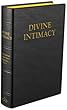
Divine Intimacy

From a reader:

Some time ago you wrote a post that mentioned the book Divine Intimacy. For whatever reason that stuck with me and after saving a little money in my book budget I purchased myself a copy. I have enjoyed it very much over the last few weeks. It is so much more dense (in a good way) than any other devotional type material I have ever had access to. Thank you for mentioning this resource and of course thank you for all that you do.
Please know that I pray for you regularly.

Thanks.

Divine Intimacy (in UK click HERE) was printed in a beautifully bound edition by the nice folks at Baronius Press. I warmly recommend it for daily reflection.

I had once upon a time thought to record the whole thing as an audio book and contacted Baronius about it, but they never got back to me with information about permissions, etc.  It could be great for the blind and for people who commute.  Oh well.  Get your own copy.

Posted in "How To..." - Practical Notes, Linking Back, Reader Feedback | Tagged , ,
24 Comments

POLL: Should the “new” Prefaces be incorporated into the Extraordinary Form of the Roman Rite?

I urge interested readers to check out a “position paper” by the chairman of the Latin Mass Society in England, Mr. Joseph Shaw.  He talks in brief here about his paper, which was posted in full by our friends over at Rorate.

Those of you who are not familiar with the issue of Prefaces in the Roman Rite, and whether or not newer Prefaces should be incorporated into the Extraordinary Form will benefit from this informative piece.

Here is how Mr. Shaw wraps up his description of his “position paper”.

The Position Paper ends with a plea for a period of liturgical stability. Traditionalists don’t deny the reality of organic development in the liturgy: the 1962 Missal is the result of such development. Indeed it is the Bugnini-like denial of the validity of development for the last nine centuries which is the real enemy of organic development. But this moment in the history of the liturgy is not ripe for the introduction of new Prefaces. We have just come through an exceptional period of liturgical turmoil. The Extraordinary Form is spreading rapidly among priests and laity, who need time to absorb it as it is. In the words of Sacrosanctum Concilium, does ‘the good of the Church genuinely and certainly require’ new Prefaces in the EF? It seems to us that it does not.

We should know our liturgical worship in both forms.  So, even if you don’t regularly attend the Extraordinary Form, you should give this paper some time.

As an adjunct to what might happen in the combox at Rorate here is a WDTPRS poll.

Should the "new Prefaces" be incorporated into the 1962 Missale Romanum?

View Results

Posted in "How To..." - Practical Notes, Liturgy Science Theatre 3000, POLLS, SUMMORUM PONTIFICUM | Tagged , , , , ,
48 Comments

Bug Out Bags

Please use the sharing buttons!  Thanks!

I just saw a government sponsored commercial showing people being tossed around.  Then dad grabs the “bug out bag” and they head for the door.

The slogan at the end: Get a kit.  Make a plan. Be informed.

I am not sure that a government website under THIS administration is what I would turn to.

But I can endorse: Bug out bags.

I have been talking about this sort of thing for a while.

Please, dear readers, I implore you… make plans for bad things that can happen.

Plan how to meet up or where to go.  Plan how to get your kids to a safe place.  Plan how to eat and have drinking water, how to do basic first aid, stay warm, and protect yourselves.

I don’t care what side of issues you are on, or if you are a fan or a writer of my latest hate mail.  Get serious and make a plan.

“But Father! But Father!”, some of you are saying. “I’m a nice person! What could possibly happen to me?”

Depending on where you live, a lot.  Even if you are not in an earthquake zone or flood plain, there are storms, man-made disasters, other events.  This morning a storm ripped through my area that was so violent that it sounded like something was being dragged over my roof.  I glanced out the window in the pale light and it looked like the world was coming to an end.  Several times in the last years in the summer tornadoes have passed within 5 miles of my place.

Ask people from Joplin what can happen.

Confess your sins regularly.

You don’t think bad things will happen to you and yours … until they do.

Posted in "But Father! But Father!", Global Killer Asteroid Questions, Linking Back | Tagged , ,
45 Comments

Defending True Marriage

Dr. Jennifer Morse – whose acquaintance I renewed during Acton University last week –  has been doing good work at the Ruth Institute to defend true marriage.  Not too long ago, I visited a parish which had their pamphlet listing 77 non-religious reasons for defending true marriage between one man and one woman.  Useful!  Perhaps pastors of parishes could get some and put them on those tables by the doors.

I also saw at Ruth Institute an article called De Facto Parents: Now children can have multiple legal parents without biology, adoption, or marriage, by William C. Duncan director of the Marriage Law Foundation.

If we are going to work to defend true marriage against those who would distort it, it is sadly not enough simply to argue in biblical terms.  We also have to point out that there are already legal options available and, therefore, it is not necessary fundamentally to distort the very concept of marriage and we have to be able to argue with natural law or non-religious points.

Posted in "How To..." - Practical Notes, One Man & One Woman, Our Catholic Identity, Religious Liberty, The future and our choices | Tagged , , , ,
19 Comments

A lament for the Octave of Pentecost from a surprising source

The new editor of American Magazine, Drew Christiansen, S.J., seems a bit wistful about the loss to the Ordinary Form of the Octave of Pentecost.  In this matter we wholeheartedly concur.

America – June 18th, 2012

By the time this column appears in print, Pentecost will have come and gone. In the waning days of the Easter season, the liturgy prompted us to wait for the coming of the Spirit; but there is no comparable liturgical effort in the days following the feast to help us relish the Spirit dwelling in us. The liturgy once encouraged Christians during the now-suppressed octave of Pentecost to meditate on the Spirit. [Dear Br. Christiansen: It is suppressed in the Ordinary Form of the Roman Rite, but not in the Extraordinary Form.] Medieval monks savored the Spirit’s gifts deeply enough to give us the so-called Golden Sequence, “Veni, Sancte Spiritus,” which we still chant today. Rabanus Maurus in the ninth century gave us the equally rich “Veni, Creator Spiritus”; and in our times the monks of Taizé popularized their own importunate round, “Veni, Sancte Spiritus.”
According to Dom Mark Daniel Kirby, [It is nice that this good priest is cited….] even Pope Paul VI, when he prepared to vest to celebrate Mass the Monday after Pentecost in 1969, was surprised and saddened to learn that under his authorization the day now belonged to Ordinary Time. [Dear Br. Christiansen: I am the origin of that anecdote, which is now wide-spread.  I pubished it many years ago in The Wanderer and also on the COL Forum, but let that pass.] The older octave, Kirby writes on his blog, Vultus Christi (snipurl.com/23r4tee), “was eight days under the grace of the Holy Spirit, eight days of joy in the fire and light of His presence, eight days of thanksgiving for His gifts. The Octave of Pentecost was one of the most beautiful moments in the Church Year, not only by reason of the liturgical texts, but also by reason of its effect in the secret of hearts.” [Nice!]
What the suppression of the octave deprived us of is the opportunity, in Dom Mark’s words, to “linger over anything momentous…to bask in the after-glow of events rich in meaning…to prolong the feast.”  [Linger, yes, but not in inactivity.  We also have the chance to reflect on the mystery of the feast from different points of view.] People have an innate capacity and desire for meditation, he writes. “Meditatio is the act of repetition by which truth, or beauty, or goodness passes from the head into the heart. There it becomes life-changing.”
This Pentecost 2012 we sorely need to appreciate the beauty and the power of the Spirit alive in us—and to celebrate the Spirit moving in the wider church and in the world. For it so often seems we are living in a time of “the quenched Spirit,” when God no longer sends prophets to speak his word and the prophets we hear are often false prophets. We need the gentle comfort of the Spirit to nurse our bruised hearts and the Spirit’s light to guide us through dark times. Most of all, we need the divine gift of reform and re-animation.

[…]

That is a taste.

Posted in Liturgy Science Theatre 3000 |
19 Comments

SUN TEA and ICED-COFFEE

20110702-012818.jpg

It is muggy and hot and sunny and the perfect day to make iced-tea or iced-coffee.

I make jars of sun tea.

QUAERITUR: Where might get good tea and coffee these days while at the same time helping sound and traditional religious men?

Put your MYSTIC MONK tea in tea bags, or tea ball, or even loose, into a clear jar of good water.  Remember: the taste of the water contributes to the taste of the coffee or tea!  Put the jar in the sun and leave it there for a few hours.  Sun tea tends to be less bitter than that made by other methods.  That is my experience, at least.

The Carmelites in northern Wyoming, the purveyors of Mystic Monk Coffee – and who now have Tea – did I mention teeeeeeea? –  are peddling just the sort of glass you need to keep your icy cold drink icy cold.

There is a glass within a glass, which insulates your chosen beverage.

I see that their Coffee of the Month is: Sumatran Mandheling Grade 1

Sumatra Mandheling is one of my favorite varieties, by the way, ever since I worked in a whole-bean coffee and tea store as one of my college jobs.  GREAT stuff!

And you can subscribe, so that the monks will send you things each month right on schedule.

Mystic Monk Tea and Coffee!

Refresh your supply now!

You have a lot more warm weather ahead and it’s swell!

Posted in "How To..." - Practical Notes, The Campus Telephone Pole | Tagged , , ,
Comments Off on SUN TEA and ICED-COFFEE