I, like you, am often subjected to rubbish from those who say they are Catholics. And when the rubbish stinks badly enough I, like you, am forced to clean it up lest it annoy other people.
This was the case with the horrible gaffes of Speaker Pelosi and Sen. Biden, of course. Since they were in a position to influence others and confuse or deceive them, we had to speak up and correct the record.
But if it was necessary to act in the case of Pelosi and Biden, it is perhaps ever more necessary to correct the errors of someone who is styled as a Catholic theologian. Although he only writes for a newspaper now, he should try to get it right, even if the readership is elderly dissident nuns.
So, today we must clean up the mess left by one Richard McBrien.
In a recent column in the tired ultra-leftist dissenting National Catholic Reporter, which is more and more showing its colors these days, McBrien promoted a pet notion of his on the basis of stunningly bad theological methodology.
He is pushing for the popular election of bishops.
To do so he instrumentalizes a few cherry-picked items associated with St. Leo the Great (+441).
You know… the only Popes McBrien seems to quote favorably are dead Popes.
Let’s have a look at his lamentable work in the NCRep. My emphases and comments.
Leo the Great’s legacy remains a challenge for the church today
Fr. Richard McBrien
Essays in Theology
Publication date: November 3, 2008
…
Leo was still only a deacon ["only a deacon" is a bit silly here, when describing what Leo’s role. Leo wielded immense political and theological influence and more than likely had oversight of the material goods of the Church of Rome. For example, Leo executed the mosaics in St. Mary Major: the images were by his design according to his theological perspective and he took take that they be constructed.] when elected to succeed Pope Sixtus III. Indeed, he was not even present at the conclave that chose him, having been away from Rome on a diplomatic mission [even though he was "only a deacon".].
As pope, Leo became a strong advocate of papal authority, but he himself was not interested in power for power’s sake. [This is a set-up phrase for what comes down the line. McBrien is planting in the reader’s mind what he hopes you the reader will see as a contrast between Leo’s approach and the power motivated approach of modern Popes. For single-issues types like McBrien and other feminists, you can usually reduce their objective to power.]
He used his authority to root out abuses in the church, to resolve disputes, to insure unity in pastoral practices, and to help clarify the church’s teaching about the divinity and humanity of Jesus Christ. [He also used his authority to clarify that he had authority and whence that authority came.]
When another bishop, Hilary of Arles, presumed to exercise authority over neighboring French dioceses, Leo ordered Hilary to confine his pastoral activities to his own diocese.
Bishops, Leo insisted, are to be elected by their own clergy and leading laity, and their elections are to be ratified by the rest of the diocesan community, without interference even from Rome. [First, that phrase "without interference from Rome" is what McBrien wants you to remember. But let’s get to some history and Leo’s texts. First, consult Leo’s Letter 40 of 22 August 449 to a group of bishops in the province of Arles, France: "Accordingly we ratify without sanction the good action done by your Fraternities in the diocese of Arles. On the death of Hilary of holy memory you unanimously consecrated a man approved also by us, our brother Ravennius, according to the wishes of the clergy, the nobles and the people." Thereafter, Leo exorts the new bishop Ravennius to be a good bishop. On 5 May 450 Leo would again write in Letter 66 to the bishops around Arles to settle a dispute about the rights of the Bishop of Arles and the Bishop of Vienne. Leo determines the extent and limits of their jurisdiction. He wrote several letters to this effect, including Letter 10 in 445. In other words, though the locals elected the new bishop Ravennius, Leo ratified that election, just as he worked to settle to dispute between the Churches of Arles and Vienne.]
Leo’s electoral principle, “He who is to preside over all must be elected by all,” has been quoted throughout the subsequent history of the church and to this very day, but unfortunately the principle has not been observed for centuries. [McBrien thinks that today bishops should be elected in the local Churches without "interference" from Rome. He is claiming Leo to back that up. That quote is from the above mentioned Letter 10. In ep. 10 Leo also writes: "And although the power to bind and loose was given to Peter before the others, still, in an even more special way, the pasturing of the sheep was entrusted to him. Anyone who thinks that the primacy should be denied to Peter cannot in any way lessen the Apostle’s dignity; inflated with the wind of his own pride, he buries himself in hell." In Letter 10 Leo also describes what was going on in Arles with old Bishop Hilary. Leo describes Hilary: "He seeks to subject you to his authority while not allowing himself to be under the jurisdiction of the blessed Apostle Peter", meaning Leo himself. Also, Hilary had a group of soldiers, armed thugs, who went everywhere with him. They imposed Hilary’s will as to who would be bishop in towns of the province. Hilary also convoked synods and interfered with other bishops. Leo works to lay down the parameters of how the dioceses and province should be governed. He writes: "We have not reserved to ourself consecrations in your provinces – a false claim which Hilary, as is his custom, can perhaps make in order to mislead your Holinesses’ minds. But in our solicitude we justify your right in order that no innovation may be allowed in the future and no further opportunity may exist for the usurper to infringe upon your privileges." Leo was concerned that pushy clerics with bands of thugs not interfere in the election of bishops. So, we learn from this that Leo thinks he can reserve to himself the right to consecrate in Arles and Vienne. The problem here is not that McBrien’s claim that bishops were elected is false: people did elect bishops in those days. The problem is that McBrien tries to use Leo as a prop for his own notion that we should have elections for bishops today, and that Leo did not vindicate rights to himself or "interfere", and modern Popes do. This is all part of McBrien’s flailing polemic against John Paul II and Benedict XVI and the sort of bishops being named more and more frequently.]
Indeed, the writings of Pope Leo the Great and also those of another great pope, Gregory I (590-604), testify that it was entirely normal for the church in the West, that is, in Italy (including Rome), Gaul, northern Europe, and North Africa, to select its pastoral leaders with and through the consent of the clergy and laity, as well as the bishops of neighboring dioceses. [Again… this is not a dispute. However, it is entirely laughable to think that neither Leo nor Gregory did not claim rights in this regard. Think for a moment about how Gregory sent a bishop to England and then advised as to the governance there, leaving freedom of course, but still maintaining authority.]
 However, if the bishops and clergy were to prefer a candidate whom the laity disapproved of, that candidacy would not likely survive. That is how decisive the voice of the lay faithful was in the early church. [Again, he cannot claim that Leo did not claims rights for himself in these matters. Leo was very clear about his own rights, as the haeres of Peter over the whole Church.]
Only later did temporal rulers and the pope himself become directly involved in the selection of bishops. But not even the pope had a direct hand in episcopal appointments outside of Italy until the end of the First Christian Millennium. [To which we must respond: The Church found a better way to select bishops. What McBrien is revealing here is the penchant of some progressivists to claim that the early Church, the pristine Church, had the better way of doing things simply because, well, that was a longer time ago than the long time ago when other ways developed. Medieval bad. Late Antiquity better. Apostolic best. This doesn’t allow for the possibility that with the changes of the times we actually learned something as a Church. Our praxis follows on a deepening of our theological reflection.]
By the 10th century, however, the role of the local clergy and laity in the election of their bishops was practically non-existent, having been supplanted by political leaders and powerful families. [Of course McBrien thinks that is bad. He can’t conceive that members of the powerful families of Christendom might have warm and concerned hearts of charity for their people. This is nothing more but the flip side of the "big business is bad" view. Companies must be evil. Nobles must be selfish. He can’t fathom than perhaps big business might have social aims together with making a buck.]
With the reform movement of the 11th century, led by Pope Gregory VII (1073-85), the extra-ecclesiastical hold on church offices began to weaken, but the reforms also produced an unintended consequence, namely, the centralization of authority in the papacy. This development would shape the history of the papacy throughout the Second Christian Millennium and even into our own time. [And this is what McBrien wants to undermine.]
The reform movement did try over the next several decades to restore the ancient practice where the clergy and laity as well as neighboring bishops had some decisive input into the selection of bishops, but the effort eventually failed and popes, kings, and local princes filled the void. [Get that? "the reform movement". He is holding them up as a model. I think he might mean the Protestant Reformation, by the way.]
The laity were limited to consenting “humbly” to whatever choice had been made for them, just as is the case today. [All in all… has that been bad? I don’t think we can claim that it has, in the balance. And there isn’t much wrong with humility.]
It was Pope Pius VII’s concordat with Napoleon in 1801 that had the effect of vesting in the pope alone the power to appoint bishops anywhere in the Roman Catholic church. And that system has remained in place ever since.
The fact that this method of appointing and promoting bishops has absolutely nothing to do with the will of Christ or with the authentic tradition of the church seems to escape many Catholics, and not a few bishops who themselves have benefitted from the break with the ancient practices. [So… the decision of the Church has nothing to do with Christ. The appointing of bishops by the Holy See has nothing to do with the "authentic" tradition of the Church? Really?]
Finally, it was also Leo the Great who made a point of referring to himself as the Vicar of Peter, always careful to add that “the blessed apostle Peter does not cease from presiding over his see.” [This is where McBrien really goes off the rails. Bad history is one thing, but bad theology is another. McBrien has probably latched onto a line in some book, like the Encyclopedia of the Early Church and made it into something Leo would not have recognized. What McBrien does not consider is that Leo, who was a key figure in the development of the theology of the Petrine ministry, uses various terms to describe his own connection with Peter and in light of Peter’s connection with Christ. Leo often describes Peter’s authority as Christ gave it to him. In the sermons Leo only once uses a word related to "vicar" to describe his rapport with Peter. In tr. 3.4 he says, "We we present our exhortations to your holy ears, consider that you are being addressing by the one in place (cuius vice fungimur) of whom we exercise this function." I don’t think anything occurs in the letters. To get at what Leo really thinks, you have to expand the pool of technical terms and look especially at how he describes himself as haeres ("heir") with all its Roman legal connotation, and how he is in the sedes and what that means both from biblical language and Roman juridical force. In the Roman view, still functioning in Leo’s day, the haeres takes the place of the giver. Think of how Octavian Augustus vindicated his rights as Caesar, and not just as the stand in for the dead Julius. If Leo, and other Popes before him, referred to themselves as "vicar of Peter", it was first because of their understanding of the close relationship of the haeres with the testator. Secondly it was because of humility. Whenever Leo refers to his close connection with Peter, he always does so with a reference to his own smallness. In tr. 3.2 we find a good distillation of how Leo shows humility, the close bond he has with Peter, and that Peter is wielding Christ’s power: "Therefore, dearly beloved, though we be found weak and slothful in carrying out the duties of our office … still we have the constant propitiation of the omnipotent and perpetual Priest. … We rightly and piously rejoice in his arrangement because, although he has delegated the care of his sheep to many shepherds, he himself has not relinquished custody of his beloved flock. From his eternal protection derives the reinforcement of apostolic help that we have received. This never stops working either, … Just as what Peter believed in Christ remains, there likewise remains what Christ instituted in Peter." We must also remember that in Letter 93 writing to the Synod at Nicea in 451 – moved later to Chalcedon, Leo wrote that, "I am present in my representatives". He understood that Christ worked in Peter and he himself had Peter’s role. This does not say he thought explicitly he was "Vicar of Christ", but it is less than a very daring step away. By the way… Leo thought he could "interfere" to approve councils and synods.]
The popes of the 5th and 6th centuries regarded themselves as “holding the place” of Peter, and even into the 11th and 12th centuries the title “Vicar of Peter” remained in use to designate the Bishop of Rome, alongside “Vicar of Peter and Paul” and “Vicar of the Apostolic See.”
“Vicar of Christ” also has a long history, but not as a papal title. It was applied to every priest at least from the 3rd century and to all bishops in the Middle Ages. Vatican II also referred to bishops as “the vicars and ambassadors of Christ” (Dogmatic Constitution on the Church, n. 27).
Leo the Great’s legacy remains a challenge for the church today. [It is apparently a challenge for McBrien too.]
In reading McBrien I am reminded of one of the central plot lines of Windswept House, by the oddball Malachi Martin. Windswept House contains some irresponsible fictions, but it was spot on when it describes the sort of creeping incrementalism and rot behind the push to see the Pope not so much as Vicar of Christ but only as Vicar of Peter. In that book, there is a (diabolically inspired) conspiracy of subverted (masonic) cardinals et al. to get the Pope to sign a document reducing his own authority as one who is more primus inter pares along the lines of a Vicar of Peter rather than a Vicar of Christ.
I am not saying that these are McBrien’s starting points. I refer to this book only because it can give you a sense of the thinking behind this effort to shift people’s view from the Pope as Vicar of Christ, with the authority that implies, to Vicar of Peter with the less extensive authority that implies.
McBrien is working from a specific ecclesiological view, one with a very weak Petrine ministry, one with a strong element of "church from below", very horizontal, not vertical. Christ selected the Apostles and Peter did not (though he certainly presided over the replacement of Judas with Matthias). Thus, Peter’s Successor selected the Apostles’ Successors. The real voice of Christ is in the people, thus the people should select the successors of the Apostle’s, not the Bishop of Rome, who is only Vicar of Peter.
Moreover, if McBrien likes Leo’s ecclesial "democracy", at least as it exists in McBrien’s theological fantasy world, then would he also advocate that the Pope should rule Italy and Rome as a secular ruler, as did Gregory?



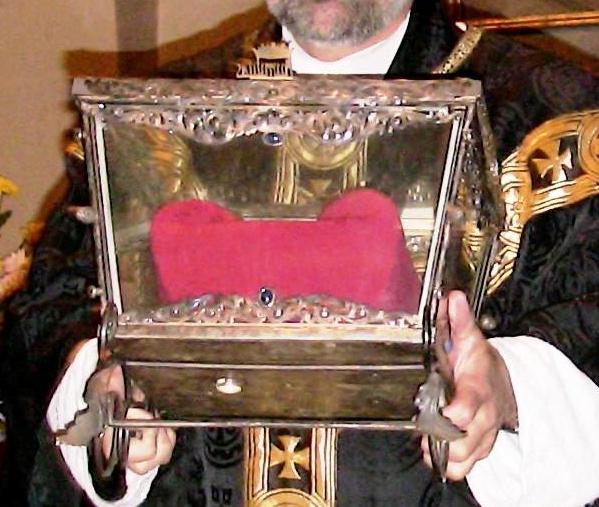


 However, if the bishops and clergy were to prefer a candidate whom the laity disapproved of, that candidacy would not likely survive. That is how decisive the voice of the lay faithful was in the early church. [Again, he cannot claim that Leo did not claims rights for himself in these matters. Leo was very clear about his own rights, as the haeres of Peter over the whole Church.]


 ex seaxe on Pope Leo XIV airplane interview: remarks about relaxing Traditional Latin Mass restrictions: “Asked whether he would reconsider his priorities after his surgery and the long trip, Leo replied, “I don’t feel like…”




























