An afternoon trip

This afternoon, after consuming some fish curry, and working on my article for The Wanderer, I went off to the Imprrial War Museum. Very well designed and interesting.

Then into the centro… What do Londoners call the center … er um … centre of towne?

I am presently enjoying a pint.

An afternoon trip

An afternoon trip

An afternoon trip

Posted in SESSIUNCULA |
15 Comments

If you are wondering what to give a more “traditional” priest

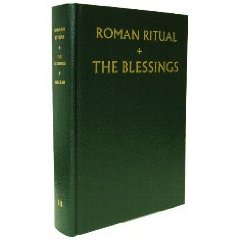
If you are wondering what to give a more "traditional" priestI received word that the 1952 edition of the Rituale Romanum is being sold in a so-called "study edition".  This is the edition in use at the time of the Vatican Council.  It is, of course, the Latin edition.

Summorum Pontificum derestricted the use of the Roman Ritual as well as the Roman Missal.  Pastors may choose to use the older Rituale Romanum for administering the sacraments, blessing, etc. 

Frankly, this is a great boon, especially in the line of blessings, since the newer, post-Conciliar De Benedictionibus ("Book of Blessings") is a total disaster.

The "study edition" of the 1962 Roman Missal is a nicely bound book with ribbons and the rubrics in red.  It could be used at the altar.   I am sure the new Ritual is the same.

Sometimes I get questions from people about what they can give priests for birthdays, Christmas, anniversaries, etc.  You might consider these books, especially the Rituale Romanum.  If you are wondering what to give a more "traditional" priest

They can be ordered from paxbooks.com.

There is also a reprint of a Latin-only 1944 edition of the traditional Roman RitualIf you are wondering what to give a more "traditional" priest.  I don’t know what changes might have been made to the 1955 edition.  Perhaps someone here can educate us.  My suspicion is that there were not many changes and, if there were, they might have had something to do with the funeral rites… but that is a guess.  This seems to be a handy pocket edition.  Useful for gravesides and other occasions.

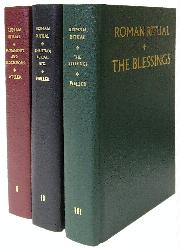
If you are wondering what to give a more "traditional" priestAnother option for the Rituale Romanum is the Latin/English volumes with the translation of the late Fr. Weller, which have been reprinted.  This is in three volumes.
If you are wondering what to give a more "traditional" priest
The first is  The Roman Ritual [Rituale Romanum]: Vol 1: The Sacraments & Processions [Latin/English] If you are wondering what to give a more "traditional" priestthen The Roman Ritual [Rituale Romanum]: Vol 2: Christian Burial, Exorcism, Reserved Blessings, etc [Latin/English]If you are wondering what to give a more "traditional" priest.  Finally, Vol 3 has the blessings: Roman Ritual (Blessings, Volume 3)If you are wondering what to give a more "traditional" priest

You can get all three in a set at a reduced price.
 
A word about the blessing issue.

The new book, De Benedictionibus represents the very worst tendencies of post-Conciliar liturgical ideology and innovation.  The forward in the book, explaining its theory – always read forwards! – shows the will of the compilers to detroy the distinction between invocative and constitutive blessings.  The former calls God’s blessing down on a person and the later constitutes things, places, etc, as blessed.  Those blessings remove things from the temporal sphere and places them in the realm of the sacred.  The new book, in eliminating that distinction, eliminates the constitutive blessing.  If you read the prayers of the Book of Blessings, as the English edition is called, you will find that the prayers don’t really bless anything.  They basically suggest that God might bless some who looks at the statue, the bell, the medal, without actually contituting the object as a blessed thing. 

This is a grave problem.

If you are wondering what to give a more "traditional" priestThere might be two, perhaps, blessings in the new book that, among the myriad options might bless something because the stick to the old language of the old books.  Also, the "blessings" in the new book also include absurd "liturgy of the word" preambles, on the model of all the other post-Conciliar rites.  Of all the post-Conciliar books, I think De Benedictionibus – The Book of Blessings – should simply be ash-canned and we should use the older Rituale Romanum.  I simply won’t use the new book.  

On a similar track, one would need to consider what was done to the new rite of exorcism, which is part of the Rituale Romanum. 

This is another grave problem. 

Even at the time of the release of the newer rite of exorcism, the Congregation’s then Prefect, Card Medina, understood that there were problems with it and, at the same time, said that bishops could authorize priests also to use the older rite, in the older Rituale Romanum.  Very wise.

Folks, our lives should be constantly filled with blessings.   That isn’t just a happy thought, but a reminder to ask for blessings from the priest! 

There should be, ideally, many more priests around so that our contact with them was far more common and their blessings could inform our days, the things they bless could be of help in our daily lives.  We should use sacramentals often and everywhere … for the enemy attacks us often and everywhere.  Thus, we need more and more priests who understand the difference between the older and new books, with their different theologies, and we must therefore put the right books into their hands.

You might consider making sure that your priests have these good tools.  The Weller set is particularly good for men whose Latin is perhaps not so strong.

Do yourselves and many others a favor.

Posted in SESSIUNCULA |
16 Comments

QUAERITUR: servers using clerical collars

A question came from a reader:

Is it permissible for non-seminarian (male) altar servers to wear the Roman Collar whilst serving the altar?  I’ve heard a lot and read a lot of conflicting reports.  Besides aesthetics, MAY they wear the Collar?  The lay servers at the vatican wear them and so does that that permit all altar boys?

Thanks Father!

There is a strong temptation to say "They do it at the Vatican, so we can do it here!"  But it is true that the boys who serve in the sacristy at St. Peter’s Basilica do wear the Roman collar with their cassocks.  But they also have the privilege of wearing the color paonazza, the violet of prelates.

Also, remember that seminarians who are not deacons are "lay servers", though we can rightly classify them more closely with the clergy.

Getting to your question… yes, I think servers can wear the Roman collar with a cassock.  And the "aesthetics" is not a small reason why I say that.  The squared "military" collar is just wrong without the band behind it around the throat.  It is all of a piece, as it were.  Another reason to wear the collar is that it helps to keep the cassocks clean and in good repair.  Older servers and men should be attentive to protect the edges of the cassocks collar from being damaged against their necks.

I don’t see anything wrong with servers wearing collars, so long as they do so in the proper way.  If they are using a Roman cassock for serving a Roman priest for the Roman Rite, then dress in the Roman manner.

When in Rome, as it were…

Posted in ASK FATHER Question Box |
24 Comments

D. of Venice in Florida: Personal Parish for TLM

I received this new via e-mail:

Bishop Dewane Gives First Church in Florida for Exclusive Use of the Latin Mass  His Excellency Bishop Frank Dewane announced today that the Diocese of Venice in Florida has purchased a church for the exclusive use of the Extraordinary Form of the Mass.

This will be the first church to be dedicated exclusively for the Latin Mass in Florida.

The church is situated on close to three acres of property and is located at 1900 Meadowood Street, Sarasota.

The property previously belonged to Holy Trinity Anglican Church.

Significant renovation will be necessary before doors can be opened, including a new roof, renovating the sanctuary and making the nave of the church larger. However it is hoped that the new church will be opened in the near future.

Juridically, the building will be erected as a chapel, and at a future date it will be raised to the status of a parish.

There will be an open house this coming Saturday afternoon (September 27th, 2008). All are welcome, bring friends!
Sunday, September 21, 2008

You can go to www.venicelatinmass.org for pictures.

Give thanks to God and our Bishop!


Posted in SESSIUNCULA |
12 Comments

… all things being equal…

From Astronomy Pic of the Day:

... all things being equal...

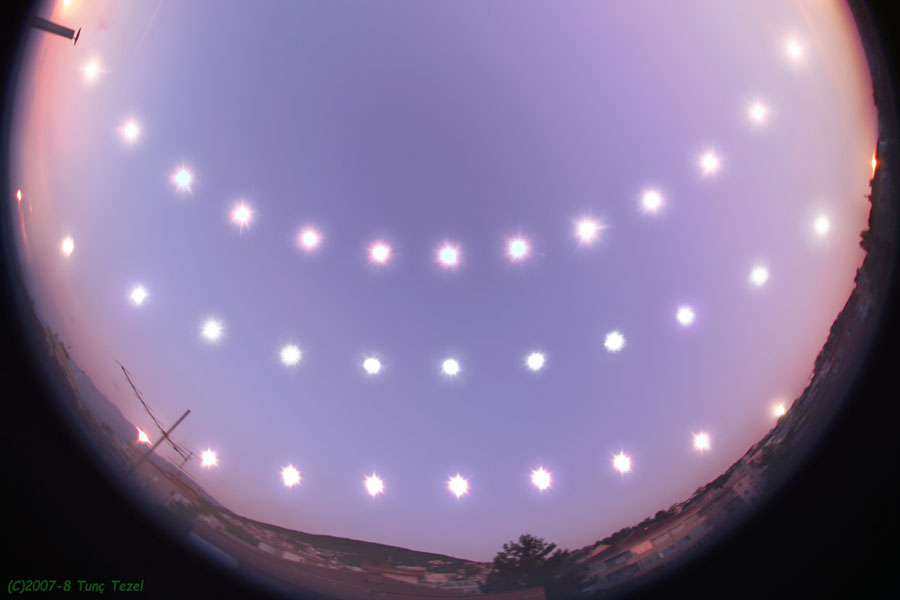
Today is an equinox, a date when day and night are equal. Tomorrow, and every day until the next equinox, the night will be longer than the day in Earth’s northern hemisphere, and the day will be longer than the night in Earth’s southern hemisphere. An equinox occurs midway between the two solstices, when the days and nights are the least equal. The picture is a composite of hourly images taken of the Sun above Bursa, Turkey on key days from solstice to equinox to solstice. The bottom Sun band was taken during the winter solstice in 2007 December, when the Sun could not rise very high in the sky nor stay above the horizon very long. This lack of Sun caused winter. The top Sun band was taken during the summer solstice in 2008 June, when the Sun rose highest in the sky and stayed above the horizon for more than 12 hours. This abundance of Sun caused summer. The middle band was taken during the Vernal Equinox in 2008 March, but it is the same sun band that Earthlings will see today, the day of the Autumnal Equinox.

Posted in SESSIUNCULA |
8 Comments

Missing home

I have been missing the Sabine Farm, so I looked out through one of my webcams, this one pointing out the window where I usually work:

Missing home

The leaves are changing.  It looks beautiful.

I am always glad to travel, and indeed Rome is home.  I very much enjoy people whom I meet and know. 

But I do miss the Sabine Farm when I am not there.

Posted in My View |
8 Comments

Dessert

I am having a very hot tart.

Sweet!

Fr. Finigan is having one also.

Dessert

Dessert

Posted in SESSIUNCULA |
2 Comments

From lunch

Here we are. I am out with Fr. Finigan, Fr. Briggs, and blogger Mulier Fortis. 

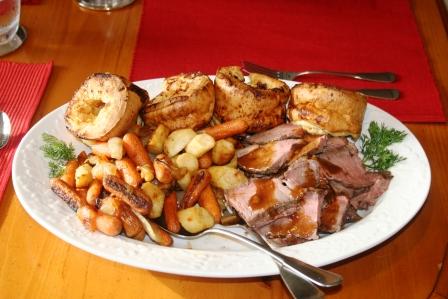
Lunch is a classic.

From lunch

I am literally posting this from the phone as we eat, since there is wifi here.  With the great wordpress ap I have it is a snap. 

Does this remind you of another meal?

From lunch

Posted in SESSIUNCULA |
11 Comments

QUAERITUR: bells at the consecration

I receive this question by e-mail:

During the Consecration of the Mass if the church bells are rung how should it be done?  We had a TLM at our Cathedral the other day; very nice.  THe bells were rung, the church bells, continuously throughout the Consecration.  I had some inquiries as to why so long?  We have another Mass in Nov. and we want to get it right.  I am speaking of the large church bells here not the small bells at the altar.


At my home parish it was the custom to toll the large bell in the tower during the consecration at the Sunday Masses.  It initially struck me that this might be a German or Austrian custom, but I have experienced this in other places as well.   Perhaps some of you will have your experiences to share.  However, back at that parish, since the church was so large and the tower so high, the tolling of the bell… the bell being struck, rather than swinging… was not intrusive.  The tolling was also fairly slow, much like the tolling of a bell for a funeral.   It worked well and it was not intrusive.  I think that could be a factor: don’t make the bell intrude on the consecration.  Be subtle.  If you want to have the bell ring at the consecrations, and it is pulled by a rope to ring, perhaps a short ring at each consecration could be best.  

Very often, less is more.
 
That is a good adage for liturgy at times.  It allows for contrast in more solemn occasions.

As far as the smaller hand bells are concerned, customs vary.  Frankly I prefer shorter rings to signal the elevation, rather than sustained ringing.  Again, less is more.  Others may have a different preference.

There was no official rule about this, as far as I am aware.

Bells are wonderful.  They should be used.

Bells are "baptized", or that is what their consecration is called.  They were simply "blessed".  The new rite for bells is rather stripped of its meaning, but the old ritual is amazing and rich.  Bells are almost like living things: they speak with a voice… thus they are also given names when they are "baptized".  Bells were used to "speak against" coming storms, and to alert people of moments of danger and of joy.  They accompany us in subtle ways through our lives, especially at turning points, such as weddings and funerals.  They connect a church to the wider world beyond.  The shadow of bell towers often define a neighborhood in some countries.  Indeed, many people felt they were in a strange land if they strayed out of sight of their villages bell tower.  While that can also define a measure of "narrowness" of imagination in some cases – in Italian when you say a person is inbued with "bell-tower-ism" it means he is narrow – it also signals being deeply attached to a place, which can be positive.

So… use bells!  Make sure they are in good repair.  Learn about them.

UPDATE:

La Smarrita of Santa Maria Maggiore …  from a comment below.

Play video

Posted in ASK FATHER Question Box |
43 Comments

KC – Bp. Finn’s “Red Mass” sermon

On 19 September, His Excellency Most Rev. Robert Finn, Bishop of Kansas City-St. Joseph said and preached at a "Red Mass" at Our Lady of Perpetual Help parish.

"Red Mass" describes Holy Mass celebrated at the opening of the "judicial season", for Catholics involved in the legal profession.  The name probably comes from the color magistrates traditionally wore in some places as well as the invoke the help of the Holy Spirit.

Let’s have a glance with my emphases and comments.

Dear Friends in Christ,

Thank you for gathering with me and Archbishop Naumann for this celebration of the Red Mass, a solemn Mass invoking the Holy Spirit and in which we mark the opening of the judicial year. I again want to acknowledge and welcome an expanded group this year as Kansas City hosts the annual meeting of the Missouri Bar and the Missouri Judicial Conference. Today we pray for the guidance and strength of God during the coming term of Court.

The exercise of your office is and must be an expression of your ultimate vocation to holiness in the world. We come as integral persons. We dare not try to put aside the totality of our human experience in applying the law, lest we forget the law’s purpose: [YES YES! Note the words "put aside".]  the well being of the human person and his just and right relationship with all other persons.

For us, as people of faith, the right ordering of these human relationships assumes and rests also on the primary relationship we have as children of God. ["Ordering" implies that there is a structure.  Some things are more "fundamental" than others.] Each and every one of us has this dignity and value precisely because we have been made in God’s image, we are redeemed by the Blood of Christ, and destined in accord with His plan to live for all eternity in heaven.  [So, one thing that cannot be "put aside" is GOD, in whose image we are made – with whom we have a relationship.]

Several of these fundamental principles are acknowledged in our Constitution and they provide a vital starting point for the whole construct of rights and obligations. The framers of these foundational documents were people of faith. Their reliance on faith provided a livable framework for good law, because Judeo-Christian faith and its values are not peripheral to human experience. They are in continuity with the Natural Law.  [We don’t need to argue most of our issues on the basis of religious formulations.  We can appeal to our very nature.] God’s revealed truth and an authentic human experience of truth are never contradictory.

[QUAERITUR…]

So how does the judge, lawyer, or legislator fulfill his or her sworn charge and at the same time respond to Jesus Christ as a faith-filled person? We have to find a way to live the Christian call to holiness in the course of our everyday responsibilities. It can and must be done. We must find a path to heaven in the law office, the courtroom, and the legislative hall, and we can.

The Gospel today reminds us in clear and strong terms that we cannot live divided lives. [We cannot, as Catholics, admit that our Faith should be relegated to the realm of the private.] We cannot live: part of us for God; part of us directed to some contrary ultimate gain. “What profit would there be for one to gain the whole world and forfeit his life?”

We are citizens of the world, of our country, state, and community, and we must seek to love others in the crossroads of the world. We are citizens of the Church, wherein we must love God and our neighbor for Christ’s sake. We have families and friends whom we love with a very special closeness. But the truth is this: Each of us has only one heart. With this same one heart we must love God, family, community, and each person we encounter.

With this one heart, and trying to make it each day a more pure and loving heart, our challenge is to turn all the circumstances and events of our life into occasions of loving God and serving the Church with joy and simplicity, bringing our faith and Christ’s love into every effort and challenge.

Dear friends, the world around us and the culture in which we live and act is one in need of Jesus Christ and His transforming grace. It is for this reason that He Himself came among us. He showed us the truth about God and ourselves. [Gaudium et spes 22] He carried in His very person a “New Law” of life and sealed it in His blood. After winning the victory over death, He ascended to heaven commending the continuation of this work to the apostles, to you and me. And for our help He sent the Holy Spirit. Come now, O Holy Spirit!

Whatever our abilities and circumstances we must bring them to bear – in tandem with our Christian faith – on the transformation of the world in Jesus Christ. If we are experts in the law, then we must assure that it best represents and protects the dignity of each person. The bishop must do his part. The priest or pastor must do his part; BUT so also [especially] the expert in business, science, journalism, or the law. What we do must be grounded in the larger vocation which is ours: the call to holiness – to be holy men and women working toward heaven.  [clergy form lay people – lay people form the world]

We mustn’t think for a moment that we can accomplish any of this without God, and without fortifying ourselves through prayer, constant conversion, and the help of the sacraments, particularly this Holy Sacrifice of the Mass around which we gather. We need also the counsel of the Church in her authentic Magisterium.

In 2004, (January, 2004, in Boston) Cardinal Sean O’Malley, Archbishop of Boston reflected on the debacle under which his state continues to suffer – namely the deterioration of the natural and moral state of marriage under the fraudulent legal equivalency of same sex unions. He used the image and example of Sir Thomas More, who went to his death, in 1535, for his refusal to acknowledge, by signed oath, the legitimacy of King Henry VIII’s divorce. St. Thomas More is for us, the Cardinal noted, a “martyr” for the sanctity of marriage and he epitomizes the kind of heroic sacrifice any of us may have to make – though perhaps on a smaller scale – when, as people of integrity, we determine to oppose peaceably an intrinsically unjust law. More is for Catholic lawyers, therefore, a patron, model, and intercessor.

Determining to uphold the law and the service of the King, More nonetheless could not part from his resolve to retain his conscience. His was not a frivolous conscience made up of merely subjective inclinations, feelings, or intuitions about what “seems right.” Rather, for him as a Catholic – as for us – it rested firmly on the promise of the Holy Spirit our Lord made on the night before He died. To the Church, through the Apostles, he gave his pledge of the Holy Spirit, the Counselor. “He will teach you everything and remind you of all that I told you.” (Jn 14: 25). You, too, bear the name “Counselor,” and you must take seriously your responsibility to conform your prudent direction in consonance with the One Eternal Truth and the dignity of the human person, well-defined by the Church.

We must ask ourselves whether we still believe that the Holy Spirit is entrusted to the Church, or not. When, for example, the Catechism of the Catholic Church states so clearly that human life must be respected and protected absolutely from the moment of conception, (CCC, no. 2270), and when it affirms the grave moral evil of every abortion as our teaching from the very first Christian century, (CCC, no. 2271) how is it that twice within a month, the U.S. Conference of Catholic Bishops found itself needing to correct Catholic elected officials for publicly expressing contorted interpretations of this clear teaching in justification of their support of abortion?  [Sometimes it is good to ask questions in this way.  However, if you do, you have to be willing to listen to the answer.]

Locally, we ought not to underestimate the significance of the integrity of the “Catholic position” on the life issues – whether it is in regard to human embryonic stem cell research in Missouri, or the regulation of abortion mills in Kansas.

When these issues are engaging the life and death of so many human persons, they are clearly not matters of partisan politics. They are much more. They are matters of the eternal salvation of souls. And there is absolutely no text from the Second Vatican Council which defines “right conscience” apart from the established moral teaching of the Church.  [Exactly!]

In a moving citation from his trial, Thomas More shows his clear determination to seek, not the dissolution of his enemies, but to exercise a constant prayerful diligence for their conversion and salvation. More was read the order of his execution: that he was to be dragged through the streets of London, hung up, disemboweled, and cut into pieces.

In response, Thomas makes no protest but expresses a fond hope for his accusers. He draws upon the image of the martyr St. Stephen and the converted St. Paul: “More have I not to say, my Lords, but that like us, the blessed Apostle St. Paul, as we read in the Acts of the Apostles, was present and consented to the death of St. Stephen, and kept their cloaks that stoned him to death. And yet, be they now both holy Saints in heaven, and shall continue there friends forever. So I verily trust, and shall therefore heartily pray, that though your Lordships have now on earth been judges to my condemnation, we may hereafter in heaven merrily all meet together, to our everlasting salvation, and thus I desire Almighty God to preserve and defend the King’s majesty, and to send him good counsel.” (Peter Ackroyd, The Life of Thomas More. Anchor: New York, 1998. c. 32; p. 398)

This integrity is a heroic yet worthy model for our life. Jesus Christ told us that we would be challenged by the world, as He was. In fact, He promised us the Cross, and told us many times in the Gospel that, unless we take up the Cross and follow Him we can not be His disciples. We cannot bear the Cross without the gift of fortitude that comes from being united to Him. Come Holy Spirit!

I am happy to gather with you to pray for the light and gift of the Holy Spirit. There is a great work of justice to be accomplished. The decisions are difficult and we need Wisdom. The circumstances can be discouraging and we need the Hope of the Gospel. The path is narrow that leads to life. Lord, keep us on the right path.

St. Thomas More, pray for us. Mary, seat of Wisdom and Spouse of the Holy Spirit, pray for us.
Posted in SESSIUNCULA |
8 Comments