PCED’s Card. Castrillon Hoyos: celebrate TLM in parishes even when it isn’t requested

An alert WDTPRSer, our friend Henry, caught an interesting comment in an article from CNA on the new DVD being made by the FSSP – which I haven’t seen yet and therefore reserve comment about.

Let’s take a look the comments of Card. Castrillon Hoyos.  The issue of the DVD, while interesting, is just a side item compared to the meat of the Cardinal’s comments:

PCED's Card. Castrillon Hoyos: celebrate TLM in parishes even when it isn't requestedFSSP to distribute free copies of new Latin Mass DVD

.- The Priestly Fraternity of St. Peter (FSSP), in cooperation with EWTN, will soon release an instructional video on the 1962 Latin Mass.   A free copy will be available to any priest or seminarian who reserves the video on its web site.

The video includes over three hours of footage on two DVD discs, giving a step-by-step explanation and demonstration of the Low Mass in the Extraordinary Form.  The production includes multiple appendices with instructions on the general principles of gesture and movement, as well as commonly encountered variations in the elements of the Mass.

Also featured is a real-time demonstration of the Mass, which is viewable from multiple camera angles on demand.  A spiritual commentary on the Mass, as well as an explanation from an FSSP priest on the liturgical principles of the Extraordinary Form are also included.

Dario Cardinal Castrillon Hoyos, President of the Pontifical Ecclesia Dei Commission, provides an introduction for the DVD. The Ecclesia Dei Commission is tasked with the implementation of Pope Benedict’s Motu Proprio on the 1962 Latin Mass.

In the cardinal’s introduction, he explains that Pope Benedict XVI hoped to foster a “spiritual and theological richness” by promoting wider use [NB: This says "promoting", not just permitting.] of the Mass of St. Pius V through the Motu Proprio Summorum Pontificum. 

The cardinal also emphasized that this Mass was a universal gift.

“All this liturgical richness, all this spiritual richness, and all the prayers so well-preserved during the centuries, all of this is offered by the Rome of today for all.   As a gift for all, it is not a gift merely for the so-called traditionalists.  No, it is a gift for the whole Catholic Church,” Cardinal Castrillon Hoyos said. 

The “sacred silence” and contemplation of the ancient rite, the cardinal said, “makes present the Lord Jesus in an expression of rich liturgical beauty, as the conqueror of death and sin… this rite brought unity to the faith and became the single expression through which the Church adores God.”

The cardinal said that parishes and priests should make available the Extraordinary Form so that “everyone may have access to this treasure of the ancient liturgy of the Church.” He also stressed that, “even if it is not specifically asked for, or requested” it should be provided. [!  Did you get that?  Even if it is not requested?] Interestingly, he added that the Pope wants this Mass to become normal in parishes, so that “young communities can also become familiar with this rite.”  [So… CNA says that Card. Castrillion, Pres. of the PCED says that the POPE wants the TLM as a normal part of parish life.]

The DVD has also been reviewed by Bishop Arthur J. Serratelli, Chairman of the Committee for Divine Worship of the U.S. Conference of Catholic Bishops.

So, according to Card. Castrillion Hoyos, the Holy Father desires that the TLM be a normal part of parish life.  He also says that priests should offer it in their parishes even if there is no specific request for it. 

This is really huge.

Some people have contended that priests may not celebrate a public TLM in their parish unless they have first received a petition from a "stable group" (though that not a good translation of what Summorum Pontificum has in the Latin).   Then some bishops, contra legem, have treid to limit the public celebrations of TLM’s even more by trying to impose a minimum number of people in such a "stable group".

Now we are getting the sense that priests should simply start using the 1962 Missale Romanum in their parishes so that people can get to know it and benefit from this gift.

Posted in Classic Posts, SESSIUNCULA |
29 Comments

Need to reduce blood pressure? Join a schola cantorum!

This is in from the Daily Mail:

Gregorian chanting ‘can reduce blood pressure and stress’

Last updated at 16:03pm on 2nd May 2008

Stress levels could be reduced simply by participating in some Gregorian chanting, researchers claimed today.

Dr Alan Watkins, a senior lecturer in neuroscience at Imperial College London, revealed that teaching people to control their breathing and applying the musical structure of chanting can help their emotional state.

He said: "We have recently carried out research that demonstrates that the regular breathing and musical structure of chanting can have a significant and positive physiological impact."

The research involved five monks having their heart rate and blood pressure measured throughout a 24-hour period.

Results showed their heart rate and blood pressure dipped to its lowest point in the day when they were chanting.

Dr Watkins pointed to previous studies that also demonstrated such practices have been shown to lower blood pressure, increase performance hormone levels as well as reduce anxiety and depression.

The lecturer also runs Cardiac Coherence Ltd, a company that helps executives perform under stressful conditions.

The Halo computer series has supposedly made an impact on the demand for Gregorian music after it appeared on the game’s soundtrack.  [Wanna raise your heart rate?  Play Halo on the "legendary" setting.]

He said: "The control of the breathing, the feelings of wellbeing that communal singing bring, and the simplicity of the melodies, seem to have a powerful effect on reducing blood pressure and therefore stress."

"We have found that teaching individuals to control their breathing, generate more positive emotional states and connect better with those around them – all key aspects of Gregorian chanting – can significantly improve their mental state, reduce tension, and increase their efficiency in the workplace."  [So, employers, start a schola today!]

Record company Universal recently chose the monks of Stift Heiligenkreuz, Vienna to make an album after responding to a public interest in the genre.

The company also believes the Halo computer game series, available on PCs and Xbox consoles, sparked a resurgence in the music traditionally sung in male church choirs, as Gregorian chant-like melodies form the main soundtrack of the games.

Posted in SESSIUNCULA |
22 Comments

Get in touch with your inner gladiator

This is in from the Chicago Tribune:

LETTER FROM ROME

Sword and sandal class? Only in gladiator school

Tunic fashion meets Punic action when the Tribune’s Christine Spolar visits a history buff’s dream academy. But fear not, citizen: No one gets fed to the lions.

May 4, 2008

ROME — Sometimes a guy just has to ungird his inner gladiator.

Sergio Iacomoni used to look up from his desk at Banca d’Italia and wonder about the likes of Spartacus. The father of two consumed books on ancient Rome. He tracked news of archeological digs, daily fare in Italy, for nuggets on how gladiators might have trained or lived. He socialized with buddies—accountants and bureaucrats cooped up in their own office or government jobs—who shared the same kind of Walter Mitty daydreams.

"One day, we were talking. We had played enough tennis, worked out with enough sports. So we decided: OK, now we’ll be gladiators," Iacomoni said.

The men, whose graying temples hadn’t dimmed memories of boyhood soldiering, began spending hours thinking up games and exercises that they imagined ancient warriors would use.

Iacomoni went further: He began calling himself Nerone and wondering whether this lifestyle could fit into a modern Rome budget.

The middle-age dad began pounding out metal helmets, twisting leather straps into sandals and designing the kind of garb that Charlton Heston, in his "Ben-Hur" days, might have appreciated. He then floated a petition to scout for other people who might want to join a club, a foundation of sorts, to preserve some Roman heritage.

Gruppo Storico Romano, as he called it, quickly pulled in dozens of members. More than a decade later, about a hundred Romans are loyal to the cause. Iacomoni qua Nerone said the initial response led him to explore a business opportunity.

In 2004 he opened a school for modern-day gladiators, a small, shady rural outpost off the Via Appia Antica, the ancient Roman road. It is part learning center, part tourist attraction and even provides a lovely spectator sport for those not inclined to swing a sword on a warm spring day.

Trident in hand
These days, the 56-year-old said with a laugh, are spent doing what every Roman boy dreams. He dons leather sandals and a deep-red tunic and spends hours heaving wooden swords and metal tridents up and down the dusty little arena he has created for the gladiator-wannabes. He works every day in the sunshine. His friends come by after work, all still eager to play gladiator.

"This is our passion," said 60-year-old Michele Forglione, a logistician at Italy’s Defense Ministry.

Any day of the week, Nerone has schoolchildren from around Rome learning the fine art of slaying their imaginary dragons or foes. "Head and back, neck and back," he calls out, teaching the youngsters to swing and step back, deftly challenging their opponents’ body parts and protecting their own. If it seems like shtick in the first minutes, children quickly learn that there is a purpose to the play.

Nerone keeps youngsters—and adult tourists or families who enlist in far more challenging exercises—on their toes. The 1st Century warriors were men to be remembered, he believes, and his courses take Roman history seriously. He also runs a small museum in the back of his lot. He admits that not a lot is known about the actual life of a gladiator, so Nerone spends his time—and his buddies’—contemplating how to hone Roman physical glory.

"The history of Rome is all along the ruins," he said. "But for gladiators, a lot has to be interpreted. The fact is that there is not a lot of documentation. … So we’ve tried to understand what was real and what was known. If an archeologist finds something or tells us something was not really used, we no longer do it.

"You have to build something authentic. If you build something strong from the beginning, there will always be a strong base to build on."

Net flicks (and DVDs too)
Instructors teach with fishnets at first, swinging them, side to side and overhead, to encourage coordination. Students joust with 5-pound helmets on their heads to understand the weight, emotional and otherwise, of battle. Nerone, during breaks in the three-hour classes, also taps into a computer and flips through DVDs to bring Rome’s ancient treasures into this century.

He markets his specialty well: The group has been featured on the Discovery Channel. His school, one of several in Rome, is booked with private groups and educational sessions throughout the year.

And every April his merry band of self-made historians takes over the streets of Rome—tromping from the Forum to Colosseum to the Circus Maximus—for an eye-popping celebration. They parade in costume to mark "Natale di Roma," the anniversary of Rome’s founding, according to legend. This year, Rome was teeming one Sunday with short-skirted men roaming the cobblestones with authority.

"I think lots of people come here and want to feel Roman," Nerone said as he prepared for another class. "Some people have it in their blood. Foreigners come and envy the history."

Tribune correspondent Christine Spolar is based in Rome.

cspolar@tribune.com

Posted in SESSIUNCULA |
3 Comments

WDTPRS: Sunday after Ascenion Thursday

Here is the last article I dashed off for The Wanderer about the Sunday after Ascension Thursday in the 1972 Missale Romanum:

What Does the Prayer Really Say?   Sunday after Ascension Thursday (1962 Missale Romanum)

During Pope Benedict’s apostolic visit to the USA I followed very carefully the Holy Masses he celebrated and pondered the question: What does this prayer really say?  I am not so concerned with the texts or their translations.  What most interested me was the liturgical style, the manner of celebration which the 2005 Synod of Bishops on the Eucharist and Pope Benedict in Sacramentum caritatis called ars celebrandi.  Necessarily such a consideration had to focus intensely on the choice of music, which the Second Vatican Council calls pars integrans, an “integral” or better “integrating part” in the liturgy. 

 The Mass at Nationals Stadium near Washington, D.C., betrayed the worst tendencies of liturgy and liturgical music that have devastated our Church since the liturgical reforms of Vatican II began to go off the rails.  The Mass and music, seemingly inspired by the laudable theme Benedict himself proposed repeatedly during his visit – that of a new anointing by the Holy Spirit for the renewal of the American Church and our whole nation – were blatantly so focused on how wonderful and diverse we all are that there was little room left for the true purpose of liturgical worship: an experience of mystery… awe at transcendence.  The in-your-face multiculturalism left little room for anything else.  Of course there were ways in which people who attended were moved by the moment! They were inspired by being with Peter and praying with him together with many others. But from what I can tell the wider reaction, especially in the Catholic blogosphere, was shock.  It struck me that for his first visit to the United States as Pope, perhaps someone could have read at least something of what Papa Ratzinger has written consistently about liturgy and music over the last few decades.

After that profound disappointment, I was genuinely pleased by what the Archdiocese of New York organized for the Holy Father’s Masses in St. Patrick’s Cathedral and then in the Stadium in the Bronx (I avoid naming the associated team in conjunction with the Pope).  The music chosen was elegant, the liturgical movement dignified.  The fact that a Mass was celebrated inside St. Patrick’s Cathedral underscored how cathedrals are for Mass while stadiums are for baseball.  For the Mass in the Bronx, there was none of the silly pandering to the false assumption that young people need edgy “tunes” at Mass or they won’t be engaged, or that every possible ethnic group ever to tread the Land of the Free had to receive a musical head nod. Limit youth to the ephemeral, and they will walk away thinking that anything having to do with the Faith can change with the times.  Pigeon-hole peoples by musical styles during Mass and you risk being condescending or insulting.

In the balance, after experiencing those three papal Masses, what did the prayer really say?  I was left with the impression, shared by others in the Catholic blogosphere such as WDTPRS’s friends over at The New Liturgical Movement, that perhaps the liturgical tide has begun to shift.   The sharp contrast between the first Mass at Nationals Stadium and then, well, everything after that, brought me hope. 

Since Pope Benedict ascended to the See of Peter, he has been making changes to the papal ceremonies.  Nationals Stadium reminded me of the old days of former master of ceremonies H.E. Archbishop Piero Marini, and Masses riddled with what are now seen as clichés left over from the goofy years of liturgies so oozing with stuck-in-the-moment “relevance” or apse-backward inculturation that they entirely rupture the aim of Catholic worship.  The New York Masses were fresher, informed with Benedict’s ideal of liturgical continuity with our tradition.  They revealed also his new spirit of the liturgy, which he has been gently proffering for decades, which the new master of ceremonies Msgr. Guido Marini has been patiently implementing item by item.  Benedict’s new and fresh liturgical continuity, now profoundly accelerated by the fruits of Summorum Pontificum, are springing forth in cathedrals and parishes throughout USA and in the world.  Ad orientem worship is slowly turning congregations away from themselves and toward the Lord.  Latin is no longer so stigmatized. People are exploring again the advantages of silence, of Gregorian chant, of polyphony.  Communion received on the tongue and kneeling is more and more seen as the appropriate physical response to the reality of the Most Holy Eucharist. 

Sure there is a lot yet to be done, and some traditional Catholics might have wanted even more.  But once upon a time I would have been thrilled to hear a Palestrina Sicut cervus or some Gregorian chant.  After the Holy Father left Washington, we had a steady stream from our Church’s magnificent treasury of integrating sacred music.  In the contrast, I think, is the lesson about what the Holy Father’s Masses really say for the future of Catholic worship.

This time following Easter can be confusing.  In the post-Conciliar, Novus Ordo calendar by all rights we ought to be observing the 7th Sunday of Easter.  However, some years ago the Holy See allowed that conferences of bishops could (they don’t have to… nor I believe do individual bishops) transfer the celebration of Ascension Thursday to the following Sunday.  I call this chimera “Ascension Thursday Sunday”.  I know, I know, … the bishops hope to expose more people to the mystery of the Ascension of the Lord.  Since Ascension Thursday has always been and still is (as per the 1983 Code of Canon Law c. 1246) a Holy Day of Obligation, they also may have wanted to lift the burden of going to Mass twice in a week.  This same calendrical tinkering occurs in the Novus Ordo with Epiphany which properly ought to be twelve days after Christmas (“Twelfth Night”).

WDPTRS remains suspicious that when expectations are lowered, people get the idea that Holy Days of Obligation just aren’t very important.  Maybe none of it is important.

The other problem is, frankly, the arrogant novelty of displacing so ancient a Christian feast. We read in Holy Scripture that nine days, not six, intervened between the Lord’s physical ascent to the Father’s right hand and the descent of the Holy Spirit at Pentecost.  Ascension Thursday was fixed at the 40th day after Easter from about the end of the 4th century. In the Latin West, St. Augustine of Hippo (+430) called it Quadragesima  (“fortieth”) Ascensionis. In the Greek East, St. Gregory of Nyssa spoke of it in 388.  That’s only a 16 century tradition.  Eastern Christians haven’t transferred Ascension.  What must they think of us?

But let’s be more positive.  With the third, 2002 edition of the Missale Romanum we have once again a Mass for the Vigil of Ascension.  This wasn’t in the 1970 or 1975 editions. Moreover, there are now proper Masses for days after Ascension until Pentecost, most having alternative collects depending on whether or not in that region Ascension is transferred to Sunday.  Nine days?  Six? 

Today’s prayer survived the Consilium’s scissor and gluepot ministrations to live in the 2002 Missale Romanum as the alternative Collect for Mass on the day of Ascension.  Rather, the Collect rose to new life in the 2002 edition.  It wasn’t in the 1970MR or 1975MR.  We can spin this positively: someone considered Ascension Thursday Sunday important enough to merit special attention.  In a sense it was brought into greater continuity with the pre-Conciliar Missale Romanum!

Today’s Collect is ancient, and is found in the Liber sacramentorum Gellonensis.

COLLECT
– (1962MR):
Concede, quaesumus, omnipotens Deus:
ut, qui hodierna die Unigenitum tuum Redemptorem nostrum
ad caelos ascendisse credimus;
ipsi quoque mente in caelestibus habitemus.

Our hard working Lewis & Short Dictionary can have a little rest today, I think.  There is nothing especially noteworthy in the vocabulary.  Let us therefore move on to a straight-forward…

LITERAL TRANSLATION:
Grant, we beseech You, Almighty God,
that we, who believe Your Only Begotten Son our Redeemer,
to have ascended on this day to heaven,
may ourselves also dwell in mind amongst heavenly things.

Bl. Abbot Columba Marmion, OSB (+1923), wrote in Christ in His Mysteries that “of all the feasts of Our Lord … the Ascension is the greatest, because it is the supreme glorification of Christ Jesus.” Then, speaking about the very Collect we are looking at today, Bl. Columba says, “This prayer first of all testifies to our faith in the mystery in recalling the title ‘Only-begotten Son’ and ‘Redeemer’, given to Jesus, the Church shows forth the reasons for the celestial exaltation of her Bridegroom;—she finally denotes the grace therein contained for our souls. … The mystery of Jesus Christ’s Ascension is represented to us in a manner suitable to our nature: we contemplate the Sacred Humanity rising from the earth and ascending visibly towards the heavens.”

Of course it is not only Christ’s humanity but our humanity that ascended into heaven.  Preaching on 1 June 444 St. Pope Leo I “the Great” said, “Truly it was a great and indescribable source of rejoicing when, in the sight of the heavenly multitudes, the nature of our human race ascended over the dignity of all heavenly creatures, to pass the angelic orders and to be raised beyond the heights of archangels. In its ascension it did not stop at any other height until this same nature was received at the seat of the eternal Father, to be associated on the throne of the glory of that One to whose nature it was joined in the Son.” 

Leo says in another sermon of 17 May 445, “This Faith, reinforced by the Ascension of the Lord and strengthened by the gift of the Holy Spirit, has not been terrified by chains, by prison, by exile, by hunger, by fire, by the mangling of wild beasts, nor by sharp suffering from the cruelty of persecutors.  Throughout the world, not only men but also women, not just immature boys but also tender virgins, have struggled on behalf of this Faith even to the shedding of their blood.  This Faith has cast out demons, driven away sicknesses, and raised the dead.”  The knowledge that our humanity is now enjoying heaven can work wonders for us in the hour of need. Keep this in mind in time of trial. 

We Catholics know that what was not assumed, was not redeemed (St. Gregory of Nazianzus).  Our humanity, body and soul, was taken by the Son into an unbreakable bond with His divinity. When Christ rose from the tomb, our humanity rose in Him.  When He ascended to heaven, so also did we.  In Christ our humanity now sits at the Father’s right hand.  His presence there is our great promise and hope.  It is already fulfilled, but not yet in its fullness.  That hope informs our trials in this life.

When the Lord ascended to heaven He did not lose touch with us His people in this vale of tears.  St. Augustine in s. 341 talks about Christ’s presence in every word of Scripture as Word equal to the Father; or as the mediator in the flesh dwelling in our midst; or Christ as the Head and Body together as in a spousal relationship, Christ and His Church intimately bound. 

This means that Christ is not insensible to our sufferings.  Our faith in this unbreakable bond of Head and Body calls us to be clean and worthy of this saving intimacy.


Posted in SESSIUNCULA, WDTPRS |
6 Comments

PODCAzT 55: Tertullian, again; Fr. Rutler and Fr. Z on Archbp. Marini’s book

PODCAzT 55: Tertullian, again; Fr. Rutler and Fr. Z on Archbp. Marini's bookSince today, in the post-Conciliar calendar, it is the feast of the Apostles Phillip and James, and since I did a PODCAzT on the reading for the Office of Readings last year, as an experiment I resurrect the audio files of last year’s audio project and integrate into this new version.  So, we will hear about Tertullian’s De praescriptione haereticorum.

Then we hear Fr. George Rutler’s review in First Things of the book under H.E. Archbp. Piero Marini’s name A Challenging Reform, which gives a picture of the work of the Consilium in the reform of the liturgy during and after Vatican II. 

I add lots of my own comments about this very interesting book.  Suffice to say that I don’t share the views of H.E. Piero Marini, or with the editors of this book, which tellingly exists only in English at this point.

This is a long one, but I don’t think you will be bored.

PODCAzT 55: Tertullian, again; Fr. Rutler and Fr. Z on Archbp. Marini's book
https://wdtprs.com/wp-content/legacy/audio-archive/podcazt/08_05_03.mp3


Posted in Patristiblogging, PODCAzT, SESSIUNCULA |
3 Comments

Archbp. Wuerl on Catholic pro-abortion pols and Communion

I wrote about the dustup regarding the pro-abortion Catholic politicians who received Communion during the papal Masses while Pope Benedict was in the USA.  I even made a PODCAzT.

One of the things I was wondering about is whether the Archdiocese of Washington DC would issue a statement similar to that which His Eminence Edward Card. Egan put out about former Mayor Guiliani.

The Director of Communication for the Archd. of Washington (what special school to these people have to go to?) did make a very brief and slippery statement that effectively passed the buck to every other bishops in the country while taking no responsibility for the local ordinary.

Now there is a column from His Excellency Most Rev. Donald Wuerl, Archbishop of Washington, DC in their dioceasn newspaper.  Let’s have a look with my emphases and comments:

4/30/2008 12:06:00 PM 

Reflections Again on Faith and Public Life

Archbp. Wuerl on Catholic pro-abortion pols and Communion

THE TEACHING OF CHRIST
By Archbishop Donald W. Wuerl

As you read today’s column, you may be tempted to say, have we not been down this road many, many times? The answer is yes, we have. But since the question continues to be raised of how bishops should respond to Catholics in public life who support abortion legislation, I thought it would be helpful once again to highlight a number of issues for the record. All of these points have been addressed before by me, and collectively by the bishops of the United States.

The first is the Church’s position on abortion. In my column in the Catholic Standard this past Nov. 15, 2007, I reminded all of us that, "The teaching is clear. Abortion and support for abortion are wrong. No informed Catholic can claim that either action is free of moral implications, and certainly no one should be led to believe, because of someone else’s voting record, that this teaching about abortion is uncertain.

"All of us have an obligation to be informed on how critical the life-death issue of abortion is, and how profoundly and intrinsically evil is the destruction of unborn human life. Our political actions, out of which come the laws of this country, must be based on the natural moral law and on the most basic of all human rights, the right to life."

As a priest, and as a bishop for more than 22 years, I have taught with persistence and insistence, as have priests and bishops nationwide, that abortion is an intrinsic evil. One of the more visible efforts locally is the annual Mass and Rally for Life that the Archdiocese of Washington sponsors at the Verizon Center every January. This year more than 25,000 young people from around the country, both at the Verizon Center and at events at neighboring churches, were encouraged and affirmed in their efforts to promote the dignity of all human life.

An altogether different yet related issue is how to respond to those in public office who support abortion legislation. In June 2004, the bishops of the United States issued a statement entitled "Catholics in Political Life" in which they addressed the question of whether Holy Communion should be denied to some Catholics in political life because of their support for abortion on demand. The bishops concluded that the responsibility to assess this situation within a bishop’s own diocese [I looked up the address of Nationals Stadium.  It seems to be in Washington, DC.] and the proper application of canon law clearly rests with the individual bishop. Bishops may arrive at different conclusions based on their local situations.

The bishops’ statement says, "Given the wide range of circumstances involved in arriving at a prudential judgment on a matter of this seriousness, we recognize that such decisions rest with the individual bishop in accord with the established canonical and pastoral principles. Bishops can legitimately make different judgments on the most prudent course of pastoral action. Nevertheless, we all share an unequivocal commitment to protect human life and dignity and to preach the Gospel in difficult times."

In 2004, Cardinal Joseph Ratzinger, now Pope Benedict XVI, wrote a letter affirming the conformity of the bishops’ position with that of the Congregation for the Doctrine of the Faith in which he stated that, "The statement ["Catholics in Political Life"] is very much in harmony with the general principles ‘Worthiness to Receive Holy Communion’ sent as a fraternal service to clarify the doctrine of the Church on this specific issue in order to assist the American bishops in their related discussion and determinations." (Letter dated July 9, 2004 and made public on July 12, 2004 by the United States Conference of Catholic Bishops) [What I would ask at this point is, does the statement of the USCCB reflect the actual text of the letter sent by Card. Ratzinger?  Your might remember that the text of the letter was somewhat fudged when presented to the bishops.]

A critical role of the bishops is to teach, to try to persuade and convince others of the truth of the Church’s teaching and the implications of that teaching in their lives and to encourage Catholics to live out their faith. The bishops of the United States addressed their role in the formation of conscience, the obligation of Catholics to follow the Church’s teaching and the challenge of living out our Catholic faith in the world of political choices in the November 2007 document Forming Consciences for Faithful Citizenship. This document is available online at www.usccb.org.

A decision regarding the refusal of Holy Communion to an individual is one that should be made only after clear efforts to persuade and convince the person that their actions are wrong and bear moral consequences. Presumably this is done in the home diocese where the bishops and priests, the pastors of souls, engage the members of their flock in this type of discussion. In the case of public figures who serve in Washington as representatives of other parts of the nation, this dialogue and any decisions would take place within their home diocese. [I believe canon law suggests that these people have some level of domicile in the Archdiocese of Washington, or nearby Arlington, etc.]

I have always respected the role of the local Church and the ministry of the individual bishop as shepherd of the Church entrusted to his care. For that reason, I have not accepted the suggestions that the Archdiocese of Washington or episcopal conferences have some particular role that supersedes the authority of an individual bishop in his particular Church.  [Who is suggesting that taking a stand on this issue somehow violates the authority of a bishop of another diocese?]

While this issue will continue to be raised, it is important to recognize that in this archdiocese the teaching on the evil of abortion will continue to be an important part of our ministry as will the effort to convince and persuade others to accept that teaching.

Just as Catholic voters are not asked to leave aside the most deeply held moral convictions of our faith when they enter a voting booth, so Catholic elected officials are not asked to deposit the moral and ethical convictions of the Church at the door of Congress or at the State Assembly where they serve.  [A good way to put it.  I would make it a little stronger and say "Catholic voters must not leave aside… Catholic elected officials must not  deposit the convictions of the Church…" ]

Our task as pastors of souls is to help form consciences so that out of a rightly formed conscience Catholics will carry out their responsibilities in daily life. As Pope Benedict XVI just recently encouraged us, "The one who has hope lives differently." (Spe salvi 2)

There it is.   

Posted in SESSIUNCULA |
Comments Off on Archbp. Wuerl on Catholic pro-abortion pols and Communion

Mini Movie Review: Ironman

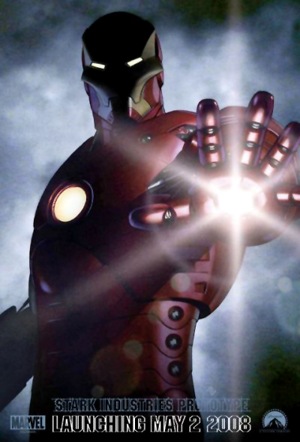
Mini Movie Review: IronmanWhile running errands yesterday I took some time and saw the new movie Ironman.

Great special effects and, remarkably, very funny at moments.  The people in the theatre were LOL at times (see how I worked that LOL in there for the younger crowd?).

There was a reference to SHIELD, suggesting a future movie as well as various embedded suggestions that there will be a sequel. Yah, I, know, "BIG surprise!  Great insight there, Father!"  Still, I rather hope this will get a sequel!

I am rather disturbed about I trend in movies these days.  Aren’t there a lot of remakes?  Has something happened to creativy? 

Special effects are simply incredible these days. 

I wonder if the effects, and the amazing graphics in video games, will start to twist people’s minds, distort their understanding of what is real?

That aside, the movie was a hoot! 

We all know that the world is divided into various camps, e.g., AL v NL people, cat v dog people, t-paper roll front-wise installers v back-wise, PC users v Mac users, WDTPRSers v everyone else, and DC v Marvel.

I wasn’t a Marvel Comic kid when growing up, but this is great comicbook fun.

Posted in SESSIUNCULA |
20 Comments

Oldie PODCAzT 29: Leo the Great’s fabulous reflection on Ascension; the angelic battle for your soul

Oldie PODCAzT 29: Leo the Great's fabulous reflection on Ascension; the angelic battle for your soulIn this PODCAzT we hear some of St. Leo the Great’s (+461) second sermon on the Ascension (s. 74) delivered in A.D. 445.  This is an amazing piece of work.  It is used on Friday after Ascension Thursday (in other words today – at least on my planet) in the older Breviarium Romanum for the 2nd Nocturne of Matins and also in the newer Liturgica Horarum in the Office of Readings. 

So, this selection of Leo the Great has been the Church’s point of reflection on this day for a long time.  I like that continuity!

Also, I talk about angels and how there is an angelic battle being waged for your soul.


https://wdtprs.com/wp-content/legacy/audio-archive/podcazt/07_05_18.mp3


 Oldie PODCAzT 29: Leo the Great's fabulous reflection on Ascension; the angelic battle for your soul

Ascension related PODCAzT’s from 2007:
030 07-05-19 Augustine on Peter & John; singing a Tridentine Requiem; St. Peter Celestine V
028 07-05-17 Augustine on the Ascension; Card. Castrillion on the Motu Proprio
027 07-05-16 Leo on the Ascension; a Collect; feedback

Feel free to use the donation button, which helps a great deal!

Posted in Patristiblogging, PODCAzT, SESSIUNCULA |
6 Comments

Irish dates and doings

I got a note from a reader with some useful information:

In the wake of the TLM celebrated in Cobh Cathedral on 25 March 2008, some had hoped that this reflected a greater openness to the Holy Father’s mind concerning greater availability of the TLM. However, that expectation – or conversion- might yet prove premature.

– A request was recently made for an occasional Mass in Midleton, Co. Cork. This was requested for the end of May to conclude the Marian month. The request has been refused outright by the PP., Dean Eamonn Goold, who is quickly emerging as the main opposition to the TLM within the Cloyne diocese.

– A previous request for the TLM in Midelton was also refused by him at the end of last year. The request, which was made by a number of people, saw themselves visited in their homes by the zealous Dean in an extraordinary outbreak of pastoral visitation. So far, no action has been taken on either of these cases, but I expect that the good Dean’s efforts will be soon be the subject of a hefty correspondence with Cardinal Dario Castrillon Hoyos.

– A further request has been made for a TLM in Fermoy, Co. Cork, at the end of June. This Mass is to be offered for the Holy Father’s intentions in the vigil of St. Peter and Paul’s. As with Cobh, the titular PP here is the Bishop of Cloyne. Word is still awaited from his Administrator in Fermoy – it is difficult to see how an excuse can be found to prohibit a Mass for the Pope’s intentions in a parish of which the PP is the Bishop of Cloyne – but we await developments.


Also, I will remind you of this conference:

St. Colman’s Society for Catholic Liturgy
Est. 2007

INTERNATIONAL LITURGICAL CONFERENCE
“Benedict XVI and The Sacred Liturgy”

at The Sheraton Fota Island Golf Resort & Spa

On Saturday 12th July 2008.

The Conference will be chaired by Professor Vincent Twomey, S.V.D.
Member of Ratzinger Schulerkreis and author of “Pope Benedict XVI. The Conscience of our
Age: A Theological Portrait” (San Francisco, 2007) (German translation: Augsburg 2006).

Speakers will include:
Professor Manfred Hauke, Lugano Switzerland
Topic: Klaus Gamber, ‘father’ of the ‘new liturgical movement’.

Fr. Uwe Michael Lang
Topic: Sacred Language
Father Lang of the London Oratory is author of "Turning Toward the Lord: Orientation in
Liturgical Prayer." The book was first published in German by Johannes Verlag and then in
English by Ignatius Press. The book has also appeared in Italian, French, Hungarian and Spanish.

Dr. Alcuin Reid
Topic: The Liturgical Reform of Benedict XVI
Dr Alcuin Reid is the author of The Organic Development of the Liturgy (Ignatius, 2005), which
carries a preface by Joseph Cardinal Ratzinger.

Fr. Neil Roy
Fr. Roy visiting Professor at Notra Dame, South Bend, Indiana, USA

Venue is situated on a beautiful island estate in Cork Harbour.
Bookings and Information: The Secretary at Colman.Liturgy@yahoo.co.uk
Sheraton Hotel web address: www.Sheraton.com/FotaIsland
East Cork Tourism address: www.EastCorkTourism.com
Cobh Tourism address: www.corktourist.com/towns/cobh/ 

Posted in SESSIUNCULA |
25 Comments

Change of Archbishop in St. Paul and Minneapolis

Il Santo Padre ha accettato la rinuncia al governo pastorale dell’arcidiocesi di St. Paul and Minneapolis (U.S.A.), presentata da S.E. Mons. Harry Flynn, in conformità al can. 401 § 1 del Codice di Diritto Canonico.
Gli succede il Coadiutore S.E. Mons. John C. Neinstedt.

So, Archbishop Flynn retired, due to turning 75, and Archbishop Nienstedt succeeded as Saint Paul and Minneapolis Archbishop.
Archbishop Nienstedt had been serving as Coadjutor Archbishop of the same archdiocese.

Posted in SESSIUNCULA |
Comments Off on Change of Archbishop in St. Paul and Minneapolis