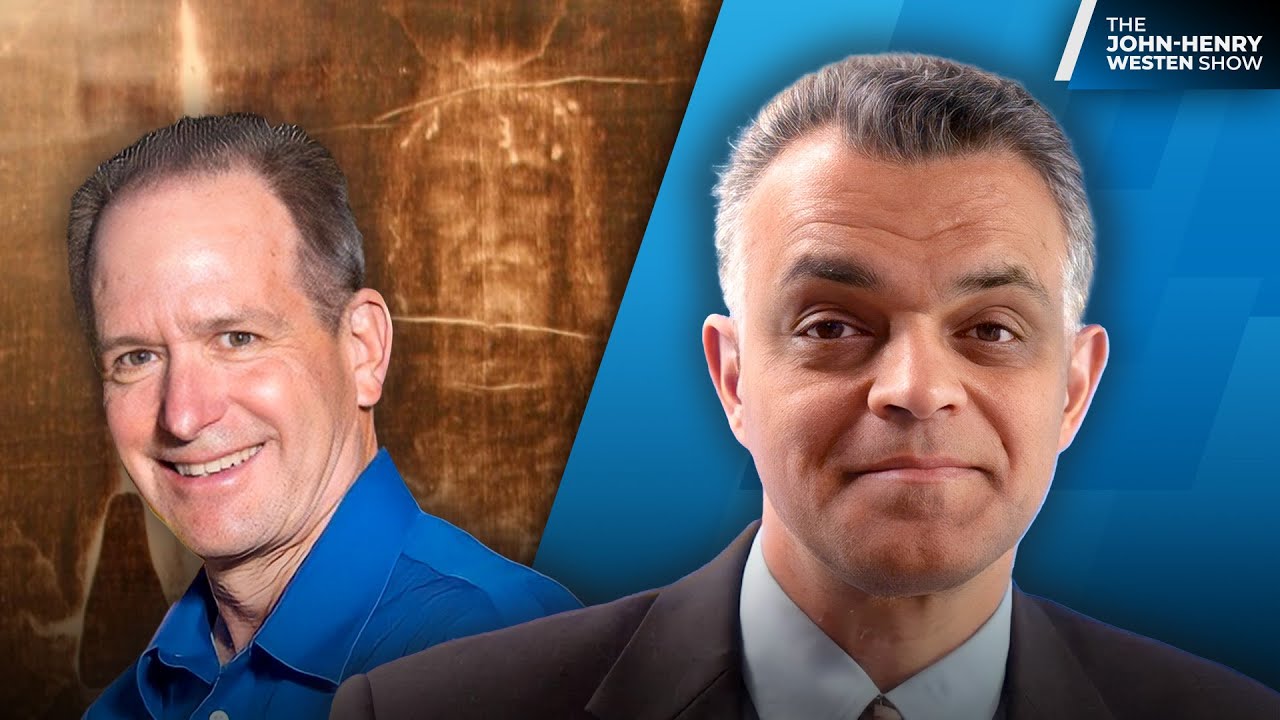
VIDEO connecting the Shroud and Eucharistic miracles examined by experts

This video is just over a half hour long.  Riveting.  A lot of us know most of these details, but this fellow swiftly makes the connections in a comprehensive way.

YouTube thumbnailYouTube icon

NB: His comments at the end about Eucharistic miracles and the upswing of suicides and the purpose of life.

“What we’ve been doing for the fifty sixty years ain’t workin’. … We need to start proclaiming the truth with love.”


Posted in Just Too Cool | Tagged
3 Comments

Daily Rome Shot 625

Use FATHERZ10 at checkout

Meanwhile,…

NB: I’ll hold comments with solutions ’till the next day so there won’t be “spoilers” for others.

Interested in learning?  Try THIS.

Traditional Catholic?  Site problems?

Posted in SESSIUNCULA |
5 Comments

ASK FATHER: When can people begin to ask for Pope Benedict’s intercession?

This question comes from a comment under another post, but it stands on its own.

From a reader…

QUAERITUR:

Father, quick question? I too believe that Benedict is a saint in heaven. Of course, when someone dies (including a pope), we pray for his soul. Thursday’s requiem will do just that. However, at what point is it permissible to pray *to* him for his intercession?

This is a good question.

In the long history of the Church venerating saints, first popularly, and then formally declaring certain saints for veneration, there have always been two crucial elements involved… at least until fairly recently, quite strong.   That is…

… fama sanctitatis… reputation for holiness, and

… cult.  (I don’t mean anything like liberal koolaid or blue oysters.

There can also be reputation for martyrdom, but let’s leave that aside.

The very first thing that spurs the beginning of a “process” which could lead to beatification is that there is a widespread, spontaneous public devotion for the person.  In our lifetimes, a good example of this is how so many people were in favor of the canonization of John Paul II.  There was obvious, widespread and spontaneous devotion to him.  That was less manifest in the case of Paul VI.  I never encountered people strongly devoted to Paul VI.  I digress.

Because of this strong devotion, someone (the “actor“) will take the initiative to begin a cause.

As the cause progresses, proofs (documents, testimonies, writings, etc.) have to be gathered and examined which can be long and rigorous.  At a certain point the “servant of God’s” cause advances to the printing of materials such as cards with prayers asking for intercession.  However, there also has to be certified that there is no untoward or heretical veneration, any improper cult, around the servant of God or the place of burial.  It is important that there be no official liturgical rites or images.  For example, were a picture of the servant of God depicted with a halo put up in church or a stained glass window before the time of beatification.  So, there has to be popular, spontaneous devotion, but it can’t be exaggerated or heretical.

As far as a figure such as Benedict XVI, I think there will be a strong popular devotion to him that could grow into a cause.  How soon can one invoke his intercession?  It seems reasonable to me to wait at least the few days allotted for mourning, an octave plus, the novemdiales.

Would it hurt to ask his intercession before that?  Privately, no. Not at all.  But there should be no organized cult of devotion in parishes, etc.  Let it evolve on its own.

I am confidant that it will.  Firstly, Benedict exuded kindness and solid faith.     His prayer life was clearly deep, individually (you don’t write as he did otherwise) and liturgically.   I do not want to see any cause rushed, and I think that some recently causes have been.  But I suspect there will be a cause in time.  While the haters are going to hate him no matter what, I believe that many hearts will begin to soften, even of those who were not enamored of him in life.

Fama sanctitatis.

Posted in "How To..." - Practical Notes, ASK FATHER Question Box, Benedict XVI, Saints: Stories & Symbols | Tagged
10 Comments

Daily Rome Shot 624… waiting to see Benedict one last time

Photo by The Great Roman™ …  in line to see Pope Benedict.

UPDATE: Inside the Basilica, they are reading quotes of Benedict about the Mass and Eucharist for the recitation of the Rosary.

Use FATHERZ10 at checkout

Meanwhile,…

White to move and improve.

NB: I’ll hold comments with solutions ’till the next day so there won’t be “spoilers” for others.

Priestly chess players, drop me a line. HERE

Posted in Benedict XVI |
4 Comments

Your Christmas Octave (Mary Mother of God) Sunday Sermon Notes – 2023

Too many people today are without good, strong preaching, to the detriment of all. Share the good stuff.

I know it has been a couple of days since Sunday.  Thus the finding here will be all more interesting.

Was there a GOOD point made in the sermon you heard at your Mass of obligation for Christmas?

Tell about attendance especially for the Traditional Latin Mass.  I hear that it is growing.  Of COURSE.

Any local changes or (hopefully good) news?

I have a few thoughts about the orations in the Vetus Ordo for the Octave: HERE

Posted in SESSIUNCULA |
3 Comments

Card. Zen on the death of Pope Benedict XVI

Card. Zen – legit hero – made a statement about the passing of Pope Benedict XVI.

I cheated and used a machine translation because I didn’t want to fight with both Chinese and Italian at 0300.

AT THIS MOMENT WHEN POPE BENEDICT LEFT US FOR HEAVEN
Pope Benedict XVI has finally finished his humble service as a “worker in the Lord’s vineyard”. It was a multifaceted service: who will underline that he was a great theologian, who will continue to call him God’s rottweiler, for me he was the great defender of the truth. It is true that his first encyclical was “Deus caritas est”, but later this was followed by “Caritas in veritate”. He defended the truth against the dictatorship of relativism. He wasn’t afraid to appear retrograde in the face of so many who exalt a pluralism to the bitter end, an indiscriminate inclusiveness. He said that love without a foundation in truth becomes a shell that can contain anything.

Someone said that Pope Benedict, after his resignation, should have kept quiet and not created confusion in the Church. It seems to me quite the opposite: precisely because there is confusion in the Church, a Pope Emeritus, like every bishop and cardinal as long as they have breath and are clear of mind, must fulfill his duty as Successor of the Apostles to defend the sound tradition of Church. Since when does the word “conservative” mean a sin? Unfortunately fidelity to Tradition can be taken as “rigidity” or “backwardness”. In crucial moments, even Pope Francis has accepted this contribution of his predecessor, as when he defended the priestly celibacy of the Roman Church in the controversy over the proposal to ordain “viri probati”.

As a member of the Chinese Church, I am immensely grateful to Pope Benedict for things he has not done for other Churches. First of all, a Letter (June 29, 2007) which was a masterpiece of balance between the lucidity of Catholic ecclesiological doctrine and humble understanding of civil authority. Catholic ecclesiology which is not personal to him, but expounded by him with unsurpassed clarity and concreteness. Unfortunately, a rather worn letter: errors (more likely also manipulations) in the Chinese translation and tendentious quotations against the obvious meaning of the Letter.

Another extraordinary thing he has done for the Church in China is the establishment of a powerful Commission to take care of the affairs of the Church in China; unfortunately under the new President of this Commission it was secretly made to disappear without even a word of respectful farewell.

Pope Benedict was often misunderstood and sometimes not followed; but it is precisely in these cases, which seem to be failures, that I was able to admire the person’s great fortitude and magnanimity in the face of setbacks (I saw Cardinal Meissner cry during those days when the German episcopate severely criticized the German Pope). In the Angelus of December 26, 2006, Pope Benedict exhorted the faithful in China to persevere in the faith, even if in the present moment everything seems to be a failure.

Despite his great effort, Pope Benedict had failed to improve the situation of the Church in China. He could not accept any compromise. I am still convinced that every effort to improve the situation of the Church in China will have to be done along the lines of the 2007 Letter. (I noted that even the great executor of the Church’s Ostpolitik, Cardinal Casaroli, did not believe he could always succeed with diplomacy).

As we remember the great Pontiff, let us remember that we now have him as a powerful intercessor in Heaven. With his intercession, let us pray that everyone, the Church in Rome, the Church in China and the Chinese authorities will be moved by God’s grace to bring about true peace for the Church and for our country.

Posted in Benedict XVI | Tagged
2 Comments

Gänswein: Traditionis custodes was a “turning point” for Pope Benedict, a “crucial moment”.

Archbp. Georg Gänswein did a video interview with Die Tagespost. He was asked about Benedict’s reaction to the Motu Proprio Traditionis custodes, that mess of cruelty.

Gänswein said that reading that Motu Proprio was a “turning point” for Benedict (Einschnitt, a “crucial event”).

He said that Benedict read it “mit Schmerz im Herzen… with pain in his heart”.  Put another way… “it broke his heart”.


Traditionis custodes was a turning point for Benedict that filled his heart with pain.

It was a turning point.

Gänswein also said that the “Old Mass” had been the “source of their spiritual life” for many people for centuries, “food for many saints”.  He could not imagine “that this is something that is no longer good”.  This applies to many young people “who no longer really understand the whole fuss (Theater) about the Council”.  Gänswein said he was “not comfortable” (nicht ganz wohl) taking this treasure away.


As we enter a new year of grace make a committment to be a true Custos Traditionis.

I propose…

… an informal association of prayer and penance dedicated to two petitions offered to the Blessed Virgin Mary, which are

  • the softening of hearts of those interpreting Traditionis custodes (bishops, Roman Congregation/Dicastery officials);
  • the overturning of, or reversal of, Traditionis custodes.

I ask you to join with others, making an informal but serious pledge to do two things for the two intentions, above.

YOUR COMMITTMENT…

  • recite the beautiful and powerful Memorare prayer DAILY;
  • make an act of physical or material penance for the two intentions ONCE A WEEK.

ACTION ITEM! Be a “Custos Traditionis”! Join an association of prayer for the reversal of “Traditionis custodes”.

Posted in Benedict XVI, Pò sì jiù | Tagged ,
7 Comments

Ever the optimist. Fr. Z’s first rants of the year.

This year 1 January, the Octave of Christmas or the Solemnity of Mary the Mother of God fell on a Sunday.  All Sundays are Holy Days of Obligation.  Next year, 2024, 1 January falls on a Monday.  That means that, in these USA, Catholics will not be obliged to go to Mass.  The bishops say that if 1 January or 15 August or 1 November are on a Monday or a Saturday, people don’t have to go to Mass, as if going to Mass on days back to back is somehow too much of a burden.

In itself this isn’t necessarily a terrible blow to Catholic identity, considered either amongst ourselves for ourselves or considered by non-Catholics observing our behavior as Catholics.  However, combined with the relaxation of other practices to the point of their invisibility both to us and the wider world, it is indeed debilitating.  Our Lenten practices have virtually vanished.   A one hour Eucharistic fast is almost risible.  While chapel veils are making a come back, they are still not widely seen by ourselves or by the watchers.  Lack of reverence in our churches is rampant, and the lack of reverently built churches is telling.  Music for worship is by and large appalling.  Confession schedules are a joke.  Religious communities that aren’t tradition minded are dying out and their un-habited members are unrecognizable.

The bishops, priests, religious and complicit lay people have succeeded in telegraphing to observers within and without that being Catholic isn’t all that important, not important enough to do anything about anyway.

Some action items come to mind.  Perhaps with the change of a calendar year of salvation, salvation will be considered and actions taken to achieve salvation for as many as possible will be implemented.  Yes, one can hope.   To this end, I propose…

  • Restore obligations: Holy Days, longer Eucharistic fast, Friday penance
  • Diminish Saturday vigil Masses and emphasize the Lord’s Day, which is Sunday
  • Phase out Communion in the hand
  • Sideline Traditionis custodes, etc.
  • Return to ad orientem worship
  • Multiply devotions: novenas, processions, Forty Hours, etc.
  • Overhaul music: repertoire and get choirs out of view
  • Return to traditional confessionals and increased times
  • Foster silence before and after Mass
  • Stress the value of sacramentals

Some might believe that I am overly optimistic in even thinking these things much less posting them as real proposals.  Indeed, my optimism is tempered by experience.

I am reminded of the difference between an optimist and a pessimist.  The pessimist says, “Things can’t possibly get any worse!”  The optimist cheerfully responds, “Oh, yes they can!”

That’s where we are at, I’m afraid.  Things can get worse.  For a while they will.  It takes a long time to change the direction of a very large ship.  Not changing, however, endangers even more immortal souls.  I don’t want to be complicit with that.  What is is that Sam’s old gaffer used to say?

‘It’s the job that’s never started as takes longest to finish, as my old gaffer used to say.

The quote, from the chapter “The Mirror of Galadriel”, continues…

And I don’t reckon that these folk can do much more to help us, magic or no. It’s when we leave this land that we shall miss Gandalf Benedict worse, I’m thinking.’

We have to push our sleeves up, set our faces towards the goal, and get to work, collectively and as individuals.

Posted in ¡Hagan lío!, "How To..." - Practical Notes, ACTION ITEM!, Hard-Identity Catholicism, Our Catholic Identity, Pò sì jiù, The Coming Storm, The future and our choices, Wherein Fr. Z Rants |
21 Comments

Daily Rome Shot 623

From the new presepio at Ss. Trinità dei Pelegrini.

Meanwhile…

White to move.

Use FATHERZ10 at checkout

NB: I’ll hold comments with solutions ’till the next day so there won’t be “spoilers” for others.

Please remember me when shopping online. Thanks in advance. US HERE – UK HERE  These links take you to a generic “catholic” search in Amazon, but, once in and browsing or searching, Amazon remembers that you used my link and I get the credit.

Posted in SESSIUNCULA |
2 Comments

ASK FATHER: Friends returning to the Church say they can receive Communion without going to confession first

From a reader…

QUAERITUR:

After a number of years away from the faith of my childhood, I made the decision to return to the Catholic church.  After attending a few masses, my heart longed to receive the Eucharist, so I made the necessary appointment to go to confession at the parish.  In my youth, we were instructed to go to confession every 2 to 3 months or as the need arose after an examination of conscience.  And I have done this.  Each time I received absolution and prayed my penance and reread Psalm 51.  During mass, I would repeat my prayers and my Act of Contrition before receiving Jesus again.
Recently people I know who have also been away from the church for years asked me to take them to mass.  I did so.  But when it came time for communion, they arose and went to receive it, even though they hadn’t made a confession for their lapses from the commandments over the years.  After mass, I reminded them of the need for the sacrament of confession and that our priest was very easy to speak with.  He makes special appointments as well.  I tried to explain that reconciliation is necessary, and they both said it wasn’t.  They said since they prayed every day that’s all they had to do and that I shouldn’t judge them.  Father, I wasn’t and am not judging anyone.  Only God can judge them.  But I was trying to share what I was taught before Confirmation, thinking that maybe they had forgotten.  It has troubled me deeply.  I know the Church requires all of us to go to confession at least once a year and to go to mass every Sunday and Holy Day, whether we receive communion or not.  I know that we are called to avoid the 7 deadly sins and to follow the ten commandments, and “to avoid the near occasion of sin.”  What should I do?  I was taught that what they are doing is sacrilege but I don’t want to lose their friendship.  What should I do?  Was I wrong to say anything?  I am confused by all of this.  I hope you have time to answer me.  I know that I will get a very straight-forward answer from you.  Please help me know what to do, Father.

I commend you for your return to your Faith, and making sure that you were confessed and ready to receive Communion again.  You did it the right way.

I also commend you for being available to take others to Mass with you.

Your concern for them doing this the right way is also commendable, as was your gentle approach.

Fr. Z kudos.

Yes, it is highly probable that your friends are not properly disposed to receive the Eucharist.

What should you do?

Firstly, don’t come down hard on them.  However, it is a spiritual work of mercy to instruct the ignorant.

We have to be properly disposed to receive Communion.  Because we are both body and soul, we have to be disposed in both body and soul.  We dispose ourselves in body by fasting.  We dispose our souls by making sure we are in the state of grace.  While there are extraordinary means to return to the state of grace, the ordinary means is the very means that Christ established in His Church: the Sacrament of Penance.  Going to confession and being absolved is how Christ wants us to be reconciled with Him, the Church and ourselves.  If it was sufficient to do something else, he would not have given His own power to the Church in the Apostles, bishops and priests, to forgive sins in His person: “I absolve…”.

It could be a good gesture on your part to invite them out after Mass for coffee or a bite and give then them as “Epiphany presents” copies of the Catechism of the Catholic Church [US HERE – UK HERE] bookmarked at the page describing disposition for reception of Communion.

For example, CCC 1415 says:

“Anyone who desires to receive Christ in Eucharistic communion must be in the state of grace. Anyone aware of having sinned mortally must not receive communion without having received absolution in the sacrament of penance.”

It could be that your people will not want to admit having committed a moral sin.  Happily there is also a section in the CCC on mortal sin.  Your breakfasts or lunches after Mass could wind up being an impromptu study sessions.

In my experience, sitting down with someone at a copy of any catechism, be it the CCC, or the Roman Catechism or the Baltimore Catechism winds up in a “one thing after another” chase, one paragraph and topic leading to looking up something connected.  The content of our Faith is interwoven such that by looking at one thing, we then also turn to another in a fascinating treasure hunt.

Or the late, great Fr. John Hardon’s Catechism.  Wonderful!

Hold the line on reception of Communion in the state of grace, but don’t be harsh or frowny.  Firm and cordial and ready to “give answers”.

“Always be prepared to make a defense to any one who calls you to account for the hope that is in you, yet do it with gentleness and reverence.” 1 Peter 3:15

Posted in "How To..." - Practical Notes, ASK FATHER Question Box, Fr. Z KUDOS, GO TO CONFESSION, Our Catholic Identity | Tagged , ,
8 Comments