Your Sunday Sermon Notes: 20th Sunday after Pentecost (30th Ordinary – N.O.)

Too many people today are without good, strong preaching, to the detriment of all. Share the good stuff.

Was there a GOOD point made in the sermon you heard at your Mass of obligation for the 19h Sunday after Pentecost (29th Ordinary in the Novus)?

Tell about attendance especially for the Traditional Latin Mass.  I hear that it is growing.  Of COURSE.

Any local changes or (hopefully good) news?


Posted in SESSIUNCULA | Tagged
9 Comments

WDTPRS – 20th Sunday after Pentecost: Silence is a hallmark of the holy

This 20th Sunday after Pentecost’s ancient Collect is found without variation in the Liber Sacramentorum Gellonensis, written perhaps in Meaux, near Paris, between 790-800. The Gellone Sacramentary, which has Frankish influences, is a strand in the complicated web of manuscripts descending from what we called the Gelasian Sacramentary, the source of so many of our ancient prayers found in the Roman Missal.  The Gellone seems to have been an attempt at a complete book for liturgical services.

COLLECT (1962MR):

Largire, quaesumus, Domine, fidelibus tuis indulgentiam placatus et pacem: ut pariter ab omnibus mundentur offensis, et secura tibi mente deserviant.

The pattern indulgentiam [X] et pacem reminds me of the post-Conciliar formula for absolution of sins spoken by the priest in regular auricular confession: Deus, Pater misericoridiarum… indulgentiam tribuat et pacem.   I found the same pattern in ancient prayers with various verbs inserted in the X spot, such as tribuas and also consequatur as well as largiatur or largiaris.

Our prayers very often include requests for pardon, that God forgive our sins.   We ask for absolutio, remissio, indulgentia (technical terms for different ways of being unbound and reconciled) and in liturgical language we use verbs like largiri, tribuere, conferre, and as the priest speaks to God, he describes Him in terms of propitius, propitiatus, and placatus.

Largire looks like an infinitive but is really an imperative form of the deponent largior, “to give bountifully, to lavish, bestow, dispense, distribute, impart… to confer, bestow, grant, yield”.

The adjective securus, –a, –um, which the mighty Lewis & Short Dictionary says means first and foremost “free from care, careless, unconcerned, untroubled, fearless, quiet, easy, composed” is understandably found in conjunction with the Last Judgment.  We wish to be “free from anxiety” when see the Just Judge coming.  Think of the line in the great sequence Dies irae used during Requiem Masses… coming up in a couple weeks:

Quid sum miser tunc dicturus?  Quem patronum rogaturus? Cum vix iustus sit securus.  … What am I, a wretch, to say then? what patron am I to beseech? When the just man is scarcely free from care [about his salvation – ]”.

Remember also from the Ordinary of the Mass after the Lord’s Prayer (my emphases):

Libera nos, quaesumus, Domine, ab omnibus malis, da propitius pacem in diebus nostris, ut, ope misericordiae tuae adiuti, et a peccato simus semper liberi et ab omni perturbatione securi: exspectantes beatam spem et adventum Salvatoris nostri Jesu Christi

Deliver us, Lord, we pray, from every evil, graciously grant peace in our days, that, by the help of your mercy, we may be always free from sin and safe from all distress, as we await the blessed hope and the coming of our Savior, Jesus Christ.

Placo is “to appease, render favorable”, and is also connected with gifts (munera, dona) or sacrifice (immolatio).  Deservio is not simply “to serve”, but “to serve zealously, be devoted to, subject to”.  This takes a dative “object”.   Par, paris, n., means “a pair”, which logically gives us the adverb pariter, “equally, in an equal degree, in like manner, as well”.

In the first place, indulgentia indicates an attitude: “indulgence, gentleness, complaisance, tenderness, fondness”, and then what flows from that attitude, namely, “a remission” of something like punishment or taxation.  In the French language dictionary of liturgical Latin, we find the same idea, an attitude which brings a result: “abandon de sa sévérité”, or “a giving up of severity”.

It doesn’t take much thought to see why “security”, in the sense of being without anxiety, and “peace” are closely tied to God’s forgiveness, His indulgence.

If God were to judge us truly according to our own fruits, and not mercifully see us through the merits of Christ’s Sacrifice, life would become unbearable and each day would bring us closer to unspeakable terror as we awaited either death or Christ’s return.

LITERAL TRANSLATION:

Having been appeased, impart to Your faithful, O Lord, we beseech You, remission and peace: so that in an equal measure they may be cleansed from all sins, and may zealously serve You with a mind free from anxiety.

It is nice to look at old translations from old hand missals on occasion, just to see something smoother, language that doesn’t stick slavishly to the text.  Here is a version prepared by J. O’Connell and H.P.R. Finberg, the editors of …

The Latin Missal In Latin and English (1957):

Relent, Lord, we pray thee, and grant thy faithful pardon and peace, so that they may be cleansed from all their sins, and serve thee with a quiet mind.

I like that “with a quiet mind”.

What a grace it is to live with a mind and conscience quiet about the course of our lives and our coming judgment.

Isn’t it true that when you are aware of your unconfessed sins, or when you – through your fault – are out of step or in conflict with others that your mind is not quiet?

Quiet is a hallmark of the holy.

Even the ringing, thunderous song of HOLY  HOLY HOLY before the throne of God in heaven is quiet, because it is in perfect accord.

Hell and sin are discordant.  When Hell and sin are in us, we are out of harmony, disquieted.  God’s grace in the sacrament of penance washes out our disrupting sins and pours calming sweet balm on our minds and hearts.  We need quiet, outside as well as inside.  Put aside the noise makers, sins of course, but also clattering screens and caterwauling distractions.

Maybe you have done a wave experiment in a physics class using a table full of water, set to vibrate at different rates and from different directions.  When the waves, crossing each other, are in sync and harmony, it looks as if they are standing still in perfect patterns.  The more they get out of harmony with each other, the greater the chaos on the surface of the water.

Remember too that in the spaces between sensible signs is where God is to be found.  That is one of the reasons why the older, traditional form of the Roman Rite is so helpful.  It has elements such as silence which are now so hard for modern people.  We have to grow out of the noise and distraction and into the still and the quiet.

And speaking of “silence”…

Robert Card Sarah’s The Power of Silence: Against the Dictatorship of Noise

US HERE – UK HERE

Must have!

Posted in Liturgy Science Theatre 3000, WDTPRS |
3 Comments

ROME 22/10 – Day 23: Sups and Sips

7:29 was the moment of overcast sunrise in Rome and 18:19 is alotted for its setting.  The Ave Maria Bell should be rung at 18:30.

It is the 20th Sunday after Pentecost and the Feast of St. Severinus Boethius.  He was a pivotal figure at the cusp of late Antiquity and what are called the Middle Ages. He is buried in the same church as St. Augustine of Hippo in Pavia.  More on him in another post.

Thank you, Lord, for this day.

This might not have immediate appeal, at least for most people and at this stage.  What you see here is mashed garlic, a little salt, olive oil, white wine vinegar and anchovy filets which are about to be mashed up with the rest into a sauce.

How strange is it that the olive oil can as “Nutrition Facts” in English.  Strange.  In any event, I had posted about puntarelle, for which I am particularly eager.   I’m giving them an additional chill before draining and then drying with paper towels.

Yum.   So, I didn’t completely mash the anchovies.

And, since the colors go well together, it’s black’s move.   White is up in material including a couple of passers.  Black doesn’t seem to have any effective checks or captures.  Those passed pawns are such a threat that black needs a mating net and needs it now.  Perhaps some deflecting and discovering could be involved.

Thanksgiving could include some wine from the traditional Benedictine monks of Le Barroux. Use FATHERZ10 at check out for 10% off.

Here is something for my friend Fr. John Hunwicke, whose blog Mutual Enrichment is a treasure. We share admiration for the the great Papa Lambertini, Benedict XIV of happy memory. “The Legislator”. His touches are upon St. Mary Major, the “Liberian Basilica”.

This is immediately over the door, so there was light spillage.

I wish I had had the presence of mind to make a video of this guy whizzing by.

How to work a “nasone” for a refreshing sip.  Block the spout.

Block the spout.  A metaphor for life.  How many sins could we avoid by keeping our mouths shut?

Get the picture?

Posted in GO TO CONFESSION |
8 Comments

22 October: Sts. Nunilo and Alodia! Virgins and Martyrs – Pray for us!

A couple years at this time I was in the Vatican gardens. I saw the “Peace Tree” where an Imam recited a sutra from the Koran intended to claim the Vatican for Allah.  Nope.  I said some very harsh things to that tree, along the lines of the Lord who spoke to the fig that wasn’t bearing fruit.

That was then.  I’d do it again.  I know where that dratted tree lives.

Today, 22 October, is the great feast of the glorious martyrs Sts. Nunilo and Alodia!

Nunilo and Alodia were 9th c. virgin martyrs in Huesca, Spain. They were born to a Muslim father and Christian mother. They chose their mother’s Christianity.

As a result of their choice for Christ, the Emir Abd ar-Rahman II executed them as apostates according to Sharia law.  Ah, the Religion of Peace!  The more things change…

Oh yes.  Before I forget, it is also the memorial of St. John Paul II.  This is the anniversary of his “inaugural” Mass after his election in 1978.  How time flies.  How we long for such times.

We read about Sts. Nunilo and Alodia also in good ol’ Butler’s Lives of the Saints:

Among the numberless martyrs who in those days sealed their fidelity to the law of God with their blood, two holy virgins were most illustrious.

They were sisters, of noble extraction, and their names were Nunilo and Alodia. Their father was a Mahometan, and their mother a Christian, and after the death of her first husband, she was so unhappy as to take a second husband who was also a Mahometan. Her two daughters, who had been brought up in the Christian faith, had much to suffer in the exercise of their religion from the brutality of this step-father, who was a person of high rank in Castile. They were also solicited by many suitors to marry, but resolving to serve God in the state of holy virginity, they obtaine

d leave to go to the house of a devout Christian aunt, where, enjoying an entire liberty as to their devotions, they strove to render themselves every day more agreeable to their divine Spouse.

Their fasts were severe, and almost daily, and their devotions were only interrupted by necessary duties or other good works.

The town where they lived, named Barbite, or Vervete, (which seems to be that which is now called Castro Viejo, near Najara in Castile, upon the borders of Navarre), being subject to the Saracens, when the laws of king Abderamene were published against the Christians, they were too remarkable by their birth and the reputation of their zeal and piety not to be soon apprehended by the king’s officers.

They appeared before the judge not only undaunted, but with a holy joy painted on their countenances. He employed the most flattering caresses and promises to work them into a compliance, and at length proceeded to threats. When these artifices failed him, he put them into the hands of impious women, hoping these instruments of the devil would be able by their crafty address to insinuate themselves into the hearts of the virgins. But Christ enlightened and protected his spouses, and those wicked women after many trials were obliged to declare to the judge that nothing could conquer their resolution.

He therefore condemned them to be beheaded in their prison; which was executed on the 22d of October, 851, or, according to Morales, in 840. Their bodies were buried in the same place: the greatest part of their relics is now kept in the abbey of Saint Saviour of Leger, in Navarre. Their festival is celebrated with an extraordinary concourse of people at Huesca in Aragon, and at Bosca, where a portion of their relics is preserved.

Someone translated a bit of Memoriale Sanctorum, by St. Eulogius of Cordoba about the saints (Book Two, Chapter Seven: Nunilo and Alodia, virgins and martyrs.)

Also, for a spiffy hymn to the sisters go here.

From the Mozarabic Psalter, pp. 262-263, a hymn to these sister-saints. It seems to follow the St. Eulogius account pretty closely.

Restant nunc ad Christi fidem
virtutis insignia,
que sanctorum rite possint
adsequi preconia,
que unius festa diem
celebrantur gloria.
Now they hold out toward Christ’s faith
The banners of virtue,
Who from the saints were able solemnly
To come as heralds,
Who together on one feast day
Are celebrated in glory!
Adsunt nempe sanctitatis
nobilis prosapie,
Nunilo siquidem virgo,
sanctaque Alodia,
que clarent germanitate,
clarentque martirio.
They are, of course, of holiness.
Of noble lineage,
Nunilo, though only a maiden,
and holy Alodia
who shone in sisterhood,
and shone in martyrdom!
Que ambo inueunti
etatis infantie
martires deo qua fide
dilitescunt domui,
sed Christi accense igne
enitescunt celibes.
Who both from the beginning,
From the age of babies,
Martyrs of God whose faith
they hid in the house,
But Christ, you reckon the fire
the unmarried ones started shining.
Tunc deinde functionem
cuiusdam versipelli
inpelluntur ad conspectum
presidis viam vici
vitam normam confitentes
Christiani dogmatis.
Then from there by the doing
of a certain Deceiver*
they were impelled into the sight
of the governor, in the street by chance;
they confessing to the rule of life
of dogma Christians.
Protinus regi delate
perducuntur pariter
urbis Osce adsistentes
principis presentia;
que interrogate pari
Christum voce clamitant.
Immediately carried to the king,
they are brought together
to stand before the city of Osca (Huesca/Adahuesca)
in the presence of the prince;
How both, questioned,
cry out, “Christ!” With one voice!
Ylico traduntur alme
private custodiam,
ubi quaterdenum tempus
dierum instantie
respuunt promissiones,
respuunt supplicia.
They were handed over on the spot, fed
under private guard,
where for four-tens’ time
of days of approaches
they spit on promises,
they spit on entreaties.
Sed in tali mancipate
dierum articulo
non cessant Christum precantes
ut illis constantiam
passionis atque mortis
largiretur optio.
But enslaved in such a way
for the days I articulate,
they do not cease praying Christ
for that constancy
to suffering and death,
when the choice would be given.
Igitur conpleta dies
inluxit feliciter;
conproducte producuntur
ad form perniciter
sic se ambo exortantes
ad palmam martirii.
Therefore, the final day
lights them with happiness;
They are led forward together
to the forum quickly,
thus both exhort each other
toward the palm of martyrdom.
Percitus litor hostendens
fulgurantes gladium
ubi conprosilit, prima
Nunilo sanctissima
crine sibi inligata
percussa prosternitur.
Hastily the lictor stretching out
his flashing sword
where it springs up, first
the most holy Nunilo
with her long hair tied up,
struck, was prostrated.
Quod cernens germana virgo
protinus Alodia
excipit flexa cerbice
inminentem gladium,
sicque ambe laureate
preveuntur etheris.
Which, seeing, her virgin sister
Alodia at once
pulls out from the bent neck
the sword sticking out;
and thus by it both, laurel-crowned,
come above the upper sky.
Inde tuam omnes sancte
flagitamus gratiam,
ut earum interventu
dimittantur crimina,
vitaque feliciorum
potiamur gaudia.
From there, all your holy
grace we ask earnestly,
so by their intervention
crimes may be dismissed,
and the life of the happy blessed
we may receive in joy.
Procul sit a corde dolum
pellantur lascivia,
caritatis omnis uno
conectamur vinculo,
quo carisma, dona sancti
perfruamur spiritus.
May deceit be far from our hearts;
may wantonness be beaten;
May everyone be one, in charity’s
chain be joined,
that by the charism, the gifts of the Holy
Spirit, we may be delighted.
Gloria patri natoque
semper et paraclito
laus potestas atque virtus,
gratiarum copia,
que deum cuncta fatentur
seculorum secula. Amen.
Glory to the Father, and the Son,
and the Paraclete always.
Praise, power and virtue,
abundance of graces.
May He be acknowledged God,
for ages of ages. Amen.

* versipelli: Deceiver — “versipellis” is literally a skinturner, skinchanger, shapeshifter. It was used figuratively in classical literature as meaning a crafty, deceitful person. In this case, they’re talking about the Devil.

One of my correspondents wrote to say:

PS — Probably the most prominent Alodia namesake today is the Filipina cosplayer and (according to that one fan documentary) “Queen of the Geeks”, Alodia Gosiengfiao. The whole phenomenon of a cosplay supermodel cracks me up…. Happy nameday to her, and to all you Alodias and Nunilons!

Mass singing of a contemporary hymn, and an instrumental version, for Ss. Nunilo and Alodia, from Huescar in Spain (a sort of sister city in Granada to Adahuesca, the saints’ birthplace in Aragon, that adopted the saints as their own). These mp3s are zipped up.

More information about Ss. Nunilo and Alodia, from a local Huescar confraternity. This seems to draw from the Aragonese account.

I wonder what Nunilo and Alodia would say about Pachamama, even on a new Vatican 10 Euro coin, and Francis’ opinions on same-sex unions, the appointment of pro-abortion atheists to the Academy on the Family (founded by John Paul II), on the Church’s response to COVID, and synod (“walking together” towards Hell) in Germany, and statements that it was God’s will to permit different religions, and the suppression of the Mass of Ages.

Sts. Nunilo and Alodia, pray for us!


Posted in Saints: Stories & Symbols, The Religion of Peace | Tagged ,
1 Comment

Online video course on St. Augustine’s “City of God” to begin on 2 November ’22

My friend Robert Royal of The Catholic Thing and excellent commentator often on EWTN is going to teach another online course.

I followed his courses on Dante’s Divine Comedy and on Augustine’s Confessions, both of which were worthwhile for me, even though I know the material well.

Beginning 2 November, Dr. Royal will start a new course of St. Augustine’s City of God.   This is a massive work of massive importance for Western Civilization.  Having a crowbar like this to pry open this treasure is an advantage.

To sign up for his course: >>HERE<<

Posted in Events, Patristiblogging, The Campus Telephone Pole | Tagged , ,
1 Comment

ROME 22/10 – Day 22: A Tale of Two Pignatelli (…not a shape of pasta)

Our Roman glimpse of Helios was at 7:28 and the final glimpse should be at 18:20. The Ave Maria is slated for 18:30. In the older calendar we have today St. Mark of Jerusalem. In the newer calendar we have St. John Paul II.

O Lord, I thank you for this day.

According to the legislation Cum sanctissima it is possible to celebrate JP2 on this day with the Vetus Ordo because there is no “heavier” feast that must be used. A priest might use the Common for one or more Supreme Pontiffs. I believe his Collect is:

Deus, dives in misericordia,
qui sanctum Ioannem Paulum, papam,
universae Ecclesiae tuae praeesse voluisti,
praesta, quaesumus, ut, eius institutis edocti,
corda nostra salutiferae gratiae Christi,
unius redemptoris hominis, fidenter aperiamus.

O God, who are rich in mercy
and who willed that the Saint John Paul II
should preside as Pope over your universal Church,
grant, we pray, that instructed by his teaching,
we may open our hearts to the saving grace of Christ,
the sole Redeemer of mankind.
Who lives and reigns with you and the Holy Spirit….

Foodie stuff.  Last night, being Friday, spaghetti alle vongole … the best yet.  At the last moment I gave it some grindings of pepper and hot red pepper.

The nearby Campo de’ Fiori in the early morning.

In the afternoon I went to a couple of churches on another scavenger hunt, as I did the other day for Card. Sirleto.  I was on the hunt for Pignatelli’s tombs, one a rake of a cardinal, the other a canonized saint… even though – or perhaps because – he was a Jesuit.

The first church was Santa Maria sopra Minerva.  However, the whole nave is blocked off, so I couldn’t explore for the funerary monument of Stefano Card. Pignatelli (+1623), son of a Neapolitan pottery maker, who had a spectacularly hideous reputation while alive as a committer of sins that cry to heaven.  Although some says it was from envy that lies were told about him, it was said of Pignatelli that his vices were so numerous that not even St. Peter’s dome could cover them.  He was a “friend” of the nephew of Paul V, Scipio Card. Borghese who was of the same sort.  Scipio somehow got Paul to make Stefano a cardinal.  Talk about reactions or a consistory list!

At the time, the “talking statue” Pasquino (there are a few statues around Rome that talk to each other and to the people through the papers people stick on them… they were “frank”), said of the elevation of Stefano to the sacred purple, that “No one should be surprised.  Spain campaigns for her candidates, France for hers.  Everyone wants his own man to be made a cardinal.  Why shouldn’t Scipio’s (member) get what it wants too, it’s own man in the College of Cardinals.”

Some things don’t change.  Think about what German and Flemish cardinals and bishops are pushing today.  Think about what certain Jesuits are after.   No one should be surprised at this.  The Enemy is very good at being an enemy.  The Enemy is going to attack high so as to confuse and corrupt many more.   Bring down some one in a very high place in the Church and massive damage is done.

[UPDATE: Doing a little more grave digging, I discovered HERE that Stefano Pignatelli was buried in S. M. sopra Minerva “senzo alcune monumento funerario… without any funerary monument” in the Caffarelli chapel.]

On the other hand, St. Joseph Pignatelli (+1811) is considered the second founder of the Jesuits after their suppression.  There had been for sometime in the 18th c. an effort on the part of some monarchs, etc., to suppress the Jesuits and expel them from their territories. For example, the Marquis de Pombal put all the Jesuits, with only the clothes on their backs, into 13 ships and sent them to Civitavecchia the port in the Papal States, as a “gift” to Pope Clement XIII, who refused to admit them.   They and Jesuits from Aragon fled to Corsica.  Pignatelli somehow got the 600 or more provisions and work until France took over Corsica and they were driven out again.  Clement XIV, of happy memory, suppressed the Society in 1773.  Pignatelli and his brother made their way to Bologna and lived in retirement, not functioning publicly as priests.  Eventually, Pius VI would permit the Jesuits left, including those who had not been suppressed by Catherine the Great in Russia, to regroup and function.  Pius VII appointed Pignatelli as the superior in Italy.  They remained untouched even when Pius was exiled and France took over.  The Society would eventually be restored fully in 1814, three years after Pignatelli’s death.  The Jesuits themselves consider him to be the second founder of the Society.  More on him HERE.

The Gesù, principle church of the Jesuits.  Magnificent Counter-Reformation statement which the modern day Jesuits are eroding with stupidate.

In the chapel where you find also the grave of Arupe, is the altar with the urn of the remains of San Giuseppe Pingatelli.

As I contemplated his tomb and thought about the immense suffering of those Jesuits, their rank and file, in the 18th c., driven here and there with nothing and under much hostility, I thought of canceled priests.  There are so many today.  Most are quietly trying to scratch out a living, somehow.  A few are visible or even noisy.  Most are hidden and nearly forgotten.  I prayed to St. Joseph Pingatelli for them, to ask Christ the High Priest to heal the injustices against them and to bring them consolations.

I thought of the plight of the Society of St. Pius X, with a saintly founder, which has in some ways been suppressed by Rome but which nevertheless is growing and thriving in a kind of exile in our midst.  I asked St. Joseph to intercede with God and raise up in the Church a figure who could navigate the present day Roman waters with their Scylla and Charybdis of moral and theological corruptions, to help bring that Society into undisputed harmony.  May Our Lady soften the hearts of their critics and be part of the solution rather than perpetuators of the problems.

I asked St. Joseph Pignatelli to intercede, along with St. Ignatius, St. Peter Favre, St. Francis Borgia, St. Robert Bellarmine, St. Aloysius Gonzaga, St. John Berchmans, St. Francis Xavier, St. John de Brebouf, St. Nicholas Owen, St. Robert Southwell (who lived across the street from where I write at the English College), and all the Jesuits saints and blesseds, with St. Joseph the Church’s Protector, and Mary Queen of the Clergy, to obtain special graces for the members of the Society, especially those who have strayed into destructive paths, who will reform the present day Jesuits. I pray for their reform.   If we say corruptio optimi pessima can we not turn the sock inside out and say conversio pessimi optima?

See what time in Rome is doing to my blog posts, which are sometimes a lot of work.   I was thinking of this the other day. I’ve spent enough time here that I don’t need to rush to see the famous things that you don’t want to miss. I’ve been there and done that.  Now I can drill (figuratively) into the engrossing details.  What treasures and lessons there are.  It’s nice to have my brain awake again.

Speaking of that… I saw this fun meme.

Meanwhile, Clement XIV (Ganganelli) swag that available.  >>HERE<<

Clement_XVI_Mug_01 Clement_XVI_Mug_02

Finally, it’s black to move in this tense situation.  The solution is not obvious.  Look at what is hanging.  See if you can force something and get a favorable exchange and position.

I’m really happy to see that some of you are talking about the puzzles in the combox comments!   That’s terrific!

NOTA BENE about the affiliate program I have with Remote Chess Academy.  A friend used one of my links hoping both to get a course and also to give me a commission (I get an amazing 50%). However, he may have moved away from my linkage having gotten into that site with my link, and got something else.  Hence, I may not have gotten that commission.  I’ve written to the person who manages the affiliate program about it and look forward to a response.   The bottom line: if you to that site, and you see something you want, be patient, write to me and I will create a custom link for you.   For example, say you spot All In One Opening Bundle and decide on that, I can create a link for that specific course, as I did HERE.  See something you want?  Drop a line HERE.

Amazon works differently.  Use my link for anything and no matter where you navigate after that your entrance point is remembered during that shopping session.  US HERE – UK HERE

Priestly chess players, drop me a line. HERE

Posted in SESSIUNCULA | Tagged
10 Comments

ROME 22/10 – Day 21: Sirah, Sirloin and Sirleto

Sunrise: 7:27.  Sunset 18:22.  Ave Maria 18:30.

It is the (new calendar) Feast of St. Gaspar del Bufalo, a great saint who fostered devotion to the Most Precious Blood of Jesus.  An exorcist friend of mine describes how imploring a spiritual covering of the Precious Blood is effective against the Enemy.  Try to get your mind around the fact that the least drop of Christ’s Most Precious Blood is of greater value than all of material creation.   Now try to get your mind around how the Precious Blood of Our Lord is treated in some parishes.

White to move and win material.

Recently my feet hied me to San Lorenzo in Panisperna precisely to find a specific funerary monument. Arriving at said basilica, at an entirely proper hour, I found it to be dratted closed. Muttering, I continued over hill and no dale at all to find Santa Pudenziana similarly closed. The mumbling greatly increased.

I went to Santa Prassede and Santa Maria Maggiore. After which visits my feet wanted to go home and so we, together, sought out the Via Panisperna again. That a curious street has had the same name and course since the time of Augustus Caesar. Panis = bread and Perna = ham. Bread and Ham Street. And there is a connection with physics!

To my surprise, the church was open and NOT at an hour one expects churches to be open, dead in the middle of the customary siesta period that my feet longed for.

In the church there was a Mass, I assume for some specific group, with the usual hideous music, involving – I am not making this up – a red plastic ukulele, and a know-it-all modernist Scripture-deletant of a priest who wouldn’t shut up. Not to disturb too much, and to rest the barking dogs, I took a seat.

When we learned from him that Jesus never spoke about the End Times, I got up from the chair I’d occupied and went about my errand in regard to the this following funerary monument.

I introduce you to His Eminence Guglielmo Sirleto (1514-1585).  His monument has seen better times.

Here’s the inscription.  Someone could do us all a favor and transcribe it. Right click for a large version.

Who was this guy, and why did my feet take me to him?   After all, there are oodles of churches in Rome and they are all lined and floored with lots of tombs and funerary monuments.  When you walk the churches of Rome you are literally also walking on and by dead people.  Do the math, oodles x lots = zillions.  Many of them are of bishops and cardinals, so zillions  /  lots = scads.  What’s one out of scads of prelatial monuments, anyway?  What’s so special about this one?

As a young Calabrian Sirleto came to Rome, exquisitely prepared in classical languages (he talked in his sleep in Greek and Latin), philosophy and theology.  St. Philip Neri sold his books and gave the money to Sirleto for his upkeep.  Think about that.  That in itself makes you wonder what Pippo Bbono saw in him.

Sirleto got to know Card. Cervini, the future Pope Marcellus II (of Palestrina’s Missa Papae Marcelli fame) and was a kind of peritus to him during the Council of Trent, as he was later also to Card. Seripando, second legate of the Pope at Trent and later first president of the same.  Marcellus made him the head of the Apostolic Vatican Library where, among other things, he made an index of all the materials that would be used for a new edition of the Vulgate Bible.  After the pontificate of Paul IV, he was teaching Greek and Hebrew and would up with a student named Carlo Borromeo.  He remained a councilor to participants at the Council of Trent.   Borromeo eventually suggested to Pius IV that Sirleto be made cardinal, and so he became the Cardinal Deacon of S. Lorenzo in Panisperna, and the builder of the present church.

Being a peritus at a Council is an important position.   Think of the influence at Vatican II of Ratzinger, Congar, etc.  Sirleto was peritus to the guys who ran Trent.

Want more influence?

He was the head of the commissions to “reform” the following:

  • Missale Romanum
  • Breviarium Romanum 
  • Catechismus Romanus
  • Martyrologium Romanum
  • Vulgata
  • Corpus Iuris Canonici.

Imagine the impact.

When he died, St. Philip Neri was at his bedside and Pope Sixtus V buried him.

A fascinating guy.

What’s also fascinating is that when I start to drill into these tombs and monuments – figuratively, that is – I find that the bones have flesh – figuratively, that is.


Meanwhile, check this out.  Hilarious and sad at the same time.  HERE


To satisfy the food pic seekers, last night I made a wine reduction… to put on…

Sirloin (Italian: contrafiletto) rubbed with salt, pepper and thyme, done in a pan with clarified butter.   In what was left I fried a couple slices of tomato that needed eating.  I like my fries done.   Steak: rare (except for the outside which was duly Maillard-ed).

The wine was a lovely Syrah from the region.

This morning, however, I was after some clams and found this wonderful chorus.  I can hear them singing Palestrina’s Missa Papae Marcelli.

The Missa Papae Marcelli has a fascinating history.  It was used for the coronation Mass of Popes until Paul VI.  Palestrina composed it for Marcellus I who reigned for three weeks.  This was a time when at the end of the Council of Trent there was discussion of sacred music, especially music that was too secular sounding.  There was even talk of suppressing polyphony, which – as parody Masses – often borrowed melodies from secular, sometimes even rather lascivious songs. However, many of the Roman participants in the Council – including St Charles Borromeo – had heard the Missa Papae Marcelli and they resisted the impulse to ban polyphony.

And at my usual stand where I’ve bought veg for 30 years, today puntarelle!   I’ll feast on these with a sauce made of anchovy, garlic, oil and white wine vinegar.  Puntarelle are chicory leaves that have been stripped and then put into ice cold water so that they get all curly and crunchy.  The L.O.L at the stand was making them, with expert but truly red, rough raw and hard as nails hands, bless her.  She’s very sweet.  She isn’t there every day anymore, but I always stop and greet the family.

And to put an exclamation point on this post, here’s Palestrina’s Papae Marcelli. Try not to choke up.

YouTube thumbnailYouTube icon


GULIELMO SIRLETO CARDINALI STILIIN. CALABRIA NATO
HUIUS ECCLESIAE PRESB. S. SEDIS APOST. BIBLIOTHECARIO
HEBRAICAE GRAECAE LATINAEQ. LINGUAE PERITISSIMO
HUMANARUM DIVINARUMQ. DISCIPLINARUM SCIENTIA CLARO
FRUDITORUM ET PAUPERUM PATRONO AC PARENTI BENEFICIENTISS.
OB PROBITATEM EIUS PIETATEMQ. SINGULAREM A PIO III PONT. MAX.
SACRO INSTANT COLLEGIO CARDINALI CREATO
VIXIT ANN. LXXI OBIIT ANN. CIƆ. IƆ. LXXXV

Posted in Fr. Z's Kitchen, Latin, SESSIUNCULA |
17 Comments

ROME 22/10 – Day 20: Pizzas, Postcards and Pipsqueaks

Sunrise in Rome was scheduled for 07:26, and it happened. Sunset has been arranged by our Creator for 18:23. Today the Ave Maria bells moves up to 18:30 from 18:45. Time marches on. It is the Feast of St. John Cantius in the traditional calendar.    He was famous in life for his great generosity to the poor.  In the intellectual sphere his scientific work anticipated Galileo and Newton on the theory of impetus.

Anecdote: The other day I was at the Piazza der Fico when some real characters from central casting play chess, or was passes for it.  They engaged me a bit, as Romans will, dressed as I was as a priest.   One of the younger of the gang, sprawl carelessly in a plastic chair magisterially announced that the Catholic Church is against science.  I asked for an example and he came up with the Church saying the world was created in six days and the Big Bang.  In that context let’s just say that he “hanged mate”.   Side-stepping the issue of creation and days, I asked him what his opinion was of the work of Fr. Georges Lemaître.  “Who the (uncouth word) is he?”  He’s the guy who came up with the theory that phenomenon of galaxies receding from each other is explainable by an expanding universe.”  Blank stare.  He’s the guy who came up with the Big Bang theory.

Anyway, St. John Cantius, who died in 1473, worked on Burdian’s theory of impetus, trying to describe motion against gravity.

Some of you might remember this.  It seems a lifetime ago.

Meanwhile, to satisfy those who like the food pics.   There is a piazza by the slice place in the Jewish “ghetto” quarter where the kosher pizza is spectacular.  The pizza scene has over the last years been revolutionized.   The game was kicked up about a hundred notches by Gabriele Bonci.

In the little S.M. di Loreto, next to Trajan’s Column, there is an altar dedicated to St. Charles Borromeo, an amazing saint whose impact on the Church endures today.  Above the altar is this image of the great Bishop of Milan.  I believe it shows San Carlo giving Holy Communion to a victim of the Black Plague: the setting is outside and not in a church, there is a languish figure in the background.  Note the figure carrying the tricerium, the three-fold candle.

In the same church we find a statue of St. Expeditus, about whom I wrote recently.

In Santa Prassede this guy saw the consistory list.

GO TO CONFESSION.

Here I am, mailing post cards to a few particularly helper donors for this Roman sojourn.  This is to prove that I mailed them for, it being Italian post, I have no idea in which year they might reach there destination.  You might have two questions.  First, yes, those are scars.  Second, I didn’t use Vatican Post because I avoid going there as much as possible: I find it very creepy over there, as if the very air is greasy with something wrong.

Your use of my Amazon affiliate link is a major part of my income. It helps to pay for insurance, groceries, everything. Please remember me when shopping online. Thanks in advance.   US HERE – UK HERE

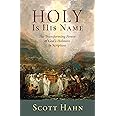
Right now I am reading Scott Hahn’s newest

Holy Is His Name: The Transforming Power of God’s Holiness in Scripture

It has a forward by Peter Kreeft.  That’s a really good sign in itself.     The book explores what “holiness” is.  We often talk about holiness.  But what is it?

The holy Benedictines of Le Barroux are making very good wine with an interesting story.  How about some for Thanksgiving?

Priestly chess players, drop me a line. HERE

Click

I have an affiliate program with a Chess GM with the terrific name of Igor Smirnov, which summons images. In any event, and I’ve related this before, I had a terrible OTB and online slump. One of his online courses pulled me out of that slump and I won a bunch of games in a row against some strong opponents. He is a good teacher. Not all online chess instructors are good teachers. Here’s a new course he has on the middle game.

And your puzzle.  White to move for great material and positional advantage.

Some updates.   I was asked by email what flowers I now have in the apartment. I still that that alstroemeria! It is getting to the end, but it is still lovely. All the blooms are well opened.

In other news, I retrieved a cassock that needed some work. My tailor is a wizard. Also, I spoke with the goldsmith about my chalice which, after over 30 years of use, needed refurbishing. I’ll go have a look at the progress early next week. However, he told me he was able to reset the gems on the node so that the now receive light! They no longer look like black solids, but sparkle (I hope) as the green garnets that they are. I look forward to seeing how he solved the problem.

Posted in SESSIUNCULA |
9 Comments

DIEBUS SALTEM DOMINICIS – 20th Sunday after Pentecost: Tempus fugit.

“Brethren:  Look carefully then how you walk, not as unwise men but as wise, making the most of the time, because the days are evil.  Therefore do not be foolish, but understand what the will of the Lord is.” (Eph 5:15-16 RSV)

True in St. Paul’s day.  More so in our day.   If the Apostle to the Gentiles was so urgent for his contemporaries to “make the most of time”, how much more urgent is it for us today?

A lot of sand has slipped through the hourglass since Paul wrote that, and yet for a great deal of that time, life was somewhat stable and comprehensible. From century to century there were, for example, important technical advances, but they developed at a pace which was rather more human than the way new things pop up now.

Consider that

The years of our life are threescore and ten,
or even by reason of strength fourscore;
yet their span is but toil and trouble;
they are soon gone, and we fly away. (Ps 90:10)

Time flies, as Virgil wrote: “fugit inreparabile tempus … time flies, irretrievable”.  Hourglasses are sometimes depicted with wings.

Speaking of flying away, in the Biblical span of a man’s life, we went from the first manned, powered flight at Kitty Hawk to a man walking on the Moon, which we could watch in real time in our living rooms.

Before the invention of telegraphy, news travelled on the average at about 5 miles per hour.  It could happen that a Pope would die and his successor be named and people would have no idea of it until perhaps even the new one had gone to God and yet another had been chosen.  They got along just fine not knowing.  Now we have the internet, bringing news in 5 seconds.  Now we know with inhumane speed far too much about everything Popes do, so much so that we can’t shut it out if we try.

Are we happier for that?

In a couple of centuries, we have gone from the rare treatments to create immunity of variolation (putting someone’s infection under the skin of another) for disease prevention, and insufflation (blowing the same up someone’s nose) to worldwide maniacal virtue signal charged pressure for global “vaccination”.

Today, TV screens, movies, hand-held devices are the ubiquitous vehicle for promotion of behaviors that, not long ago, weren’t topics for decent conversation much less universal, ideological, tyrannical advancement.

The Church herself, though clearly retaining her attributes of infallibility in matters of faith and morals and indefectibility, seems to be teetering on the edge of a demographic sink-hole and her highly visible leaders, high by position or by self-promotion, send messages to the world that are somewhat less than clearly Catholic.

Could anyone have imagined in, say, the Jubilee Year of 2000, that a papal document would insinuate that couples in the objective state of adultery could receive Holy Communion or that a Jesuit relentlessly promoting a homosexualist agenda would be celebrated and supported by Catholic bishops at every level?

Who would have believed in the 1950’s that what our forebears built, our schools, parishes, hospitals, seminaries etc., would in a few decades be empty, shut down, sold off.

Who would have conjectured that in a few fleeting years after the death of Pope St. John Paul II, there would be a wholesale attempt to cancel his Magisterium, especially major contributions such as Fides et ratio, his 1998 encyclical on the relationship of faith and reason?  Remember how that one begins?

Faith and reason are like two wings on which the human spirit rises to the contemplation of truth; and God has placed in the human heart a desire to know the truth—in a word, to know himself—so that, by knowing and loving God, men and women may also come to the fullness of truth about themselves.

The problem is that, back then, someone could and did imagine those things, in the general outline if not in the specifics.  As true believers, they worked diligently, patiently, cleverly and they made it happen.  And they still are.

There is a Latin phrase: Motus in fine velocior… As you approach the end, things go faster.”   That’s certainly apparent to those with graying hair.  You would have to be fairly numbed to idiocy by the incessant distractions of our surrounding, accelerating world not to have a sense that something big is coming because, well, things can’t go on like this much longer.

“Look carefully then how you walk, not as unwise men but as wise, making the most of the time, because the days are evil.  Therefore do not be foolish, but understand what the will of the Lord is.”

Christians have always had a sense that time was short.   From the beginning they thought that the Lord was going to return very swiftly.  Wise Christians live in a sense of urgency, a constant state of readiness, like the servants in the parables of the Lord, who await the return of their master at a time they do not know.  The wise keep enough oil on hand and the wicks of their lamps trimmed.  The foolish do not.

I have always thought that the parable of the wise and foolish virgins had one of most harrowing lines in all of Scripture.  The foolish virgins arrive too late to enter into the wedding banquet – in Christ’s parables always a symbol of the bliss of Heaven.  The door is closed.  They pound and cry out to be let in only to hear a voice from the other side say, “I do not know you.”

Our Savior concludes, “Watch therefore, for you know neither the day nor the hour” (Matthew 25:13).

Heaven is not automatic.  We must prepare and strive for it with the grace of God to guide us.

For those who are somewhat awake, not woke but awake, this evil time into which God has called us according to His unfathomable plan should spur our desire for Heaven rather than depress, demoralize, or distract us from it.

The trials of the times can be stimuli for our constant conversion and attention to our vocations.  Stimulus is from the Latin for “cattle prod”.  God has His own saving jabs, his vaxes against the world, the flesh and the Devil.

St. Bernard of Clairvaux (+1153) remarks that God draws us to Heaven, as if against our will, by means of trials (Sermones de diversis 99).  He describes four different sorts of people who get into Heaven: “alii violenter rapiunt, alii mercantur, alii furuntur, alii ad illud compelluntur…  some seize it by violence, some buy it, some steal it, and others are forced to it.”

What does the Doctor Mellifluus mean by these negative analogies?  Some, Bernard says, are like volent soldiers who sacrifice everything, live austerely with many mortifications to lay siege to Heaven and thereby win entrance. Others buy Heaven through giving alms and gaining intercessors for themselves who ask God to bestow graces on them to live well and piously.  Others steal Heaven, like thieves in the night, whom no one notices, humble and invisible concealing their good works from notice by others.  On the other hand, Bernard says that the most numerous are those who must be “forced”.  Think of the parable of the Lord we heard last week.  The king compelled people to come into the wedding feast.  Heaven, however, wasn’t automatic even for those whom the king dragged in. They, too, had to be clothed in the proper garment (charity, habitual grace) for the nuptial banquet.

Bernard’s thought is that when people experience calamities, being so compelled they come to God.  Evil times ought to make the Christian more inclined towards the life God wants us to live, not less.

Paul teaches about evil days.  Days mark the passage of time.  Days are pretty short. The older you get, the shorter they seem.

The shortest unit of time ever measured, by the way, is the zeptosecond, which is the length of time it takes for a light particle to cross a hydrogen molecule, a trillionth of a billionth of a second, or a decimal point followed by 20 zeroes and a 1.

Our time in Heaven will be unbounded and unfettered by any sorrow.   Time, eons or zeptoseconds, will stretch to eternity and will be filled with the greatest riches of meaning and joy in the presence of our infinite God, the Holy Trinity. On the other hand, time will have none of that meaning in Hell. If, in Heaven, the blessed make use of time in abundant happiness, a zeptosecond or an eon is pointless for the damned.  Were they even to have a useful zeptosecond, they would use it for repentance… if they were able.  Remember Dives and Lazarus in Luke 16: the rich man, suffering in the flames of Hell, begs Abraham to send from Heaven the poor man whom in life he spurned to obtain for him a single drop of water for his burning tongue.  He didn’t get it.

I mentioned Kitty Hawk, above, where the first powered airplane flight famously took place.   The precise place was south of the town at Kill Devil Hills.

Tempus fugit. Time is flying.

Knowing full well that sin makes us stupid, severing the connection between faith and reason, claim for your souls the wings God offers, especially if you have lost them.

If your soul is dead in mortal sin, take flight in the fight against the Enemy and “kill the Devil” in the confessional.

Afterward you will feel lighter than air and the ever-accelerating passage of time will have a whole new meaning.
 

Posted in Sermons | Tagged
1 Comment

ROME 22/10 – Day 19: Slices

The Roman sun rose at 07:25 and it will set at 18:25, lest God determines otherwise. The forlorn Ave Maria bell should sound at 18:45. It is the Feast of St. Peter de Alcantara (+1562), a mighty Franciscan who was a friend of St. John of Avila and was admired by St. Francis Borgia. What an age of saints. Will we see such a time again? Let us ask God to raise up saints rather than what we have lately. I am reminded of a phrase from my old pastor, that at times God raised up liturgists so that people who had not yet had the opportunity to suffer for their faith could do so. We need saints.

Last night I met with friends for some chow at a nearby eatery.  Some nibbles with bubbles by Tarlant started us out.  That house has only been around since 1687, the year, as you know, of the publication of Isaac Newton’s Philosophiæ Naturalis Principia Mathematica.

A bit of steak with lardo.  It needed more lardo.  And salt.

Here’s a fast spuntino – midmorning snack – before hitting the street.  I have a list of agenda et videnda.

This seems a good place for the daily puzzle.   Black to move and win material.   This shouldn’t take you very long.

Priestly chess players, drop me a line. HERE

Thanksgiving isn’t all that far off.  You might consider ordering some beer from the traditional Benedictine monks of Norcia, Italy.  These guys are fantastic.  So is their beer.  They have a dark and a blond and they are both great with savory flavors.  It would match splendidly with turkey and all the things usually made for these meals.   As a matter of fact, it would have been perfect with the slices at the top of this post.

In the early afternoon…

He – unmistakable Benedict XIII – saw the consistory list.

Posted in SESSIUNCULA |
6 Comments