Your Sunday Sermon Notes – 19th Sunday after Pentecost (N.O. 29th Sunday)

Too many people today are without good, strong preaching, to the detriment of all. Share the good stuff.

Was there a GOOD point made in the sermon you heard at your Mass of obligation for the 19h Sunday after Pentecost (29th Ordinary in the Novus)?

Tell about attendance especially for the Traditional Latin Mass.  I hear that it is growing.  Of COURSE.

Any local changes or (hopefully good) news?

Posted in SESSIUNCULA | Tagged
3 Comments

ROME 22/10 – Day 16: Fountain famous and fountain found

The sun rose at and will set at and the Ave Maria should call at 18:45. It is the 19th Sunday after Pentecost.

And there’s this…

Sites and sounds.

An homage to friends in Chicago.

The other day I wrote about the change of from the Julian Calendar to the Gregorian on the night that St. Teresa of Avila died.   I mentioned a pair of fountains (one by San Salvatore in Lauro) that were made in the time of Gregory and a Latin inscription that can still be see in the entrance to a palazzo at the intersection of the Via dei Prefetti and the Via della Lupa (no. 17).  One of the participants here posted a Gold Star comment about the Latin text.  HERE

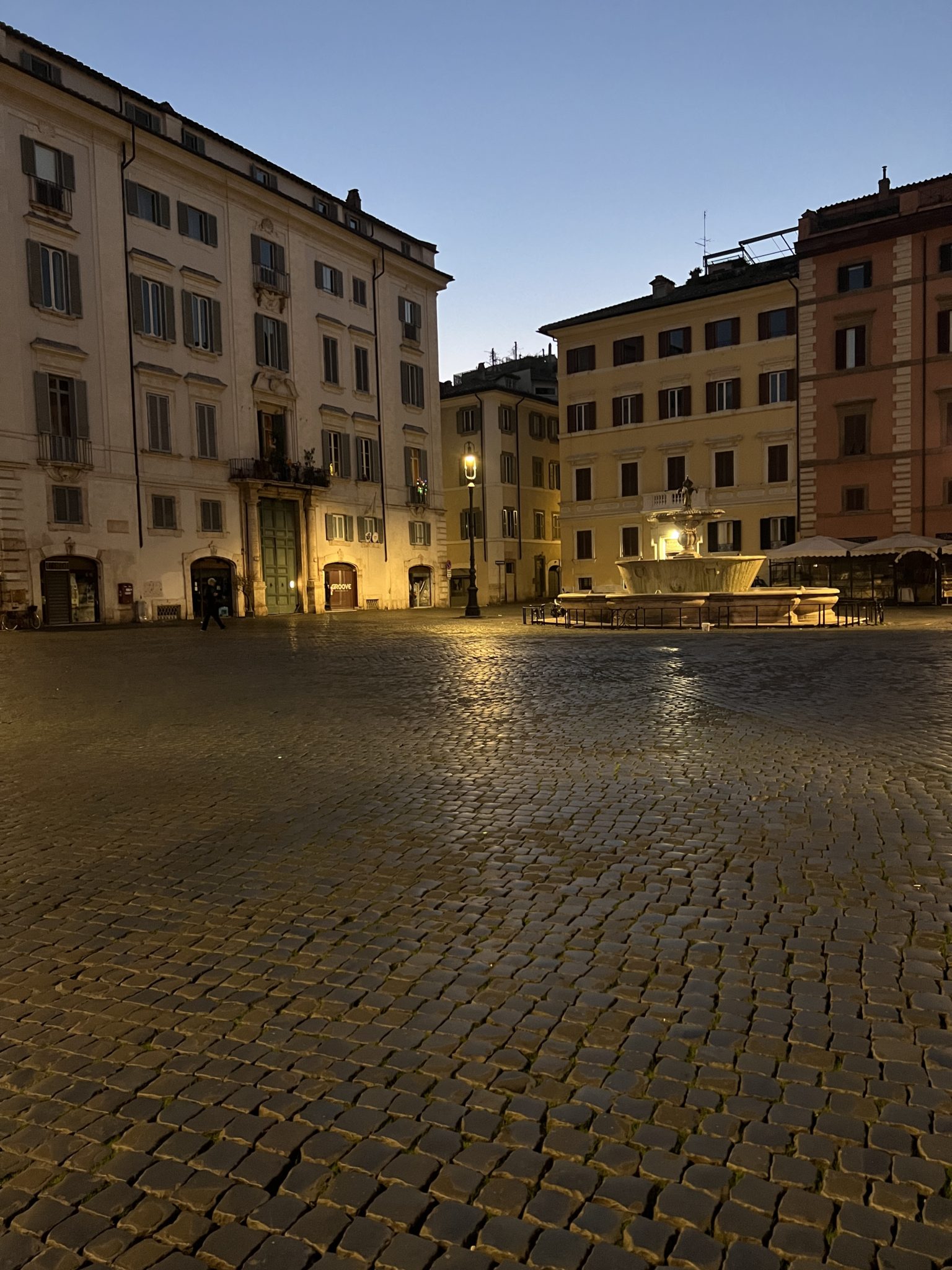
I went to find that inscription, and the old fountain, which I had not seen for many years.

At the Piazza del Popolo I spotted this, which says just about everything about Rome.

A lime green Lamborghini in front of a Vespa in front of a garbage truck in front of a church.

And at the Piazza…

Posted in SESSIUNCULA |
Comments Off on ROME 22/10 – Day 16: Fountain famous and fountain found

ROME 22/10 – Day 15: Flowers and glasses and clams

In Rome today the sun rose at 7:20 and it will sink beyond the western horizon at 18:31. The Ave Maria is scheduled for 18:45. It is the Feast of St. Teresa of Avila, Doctor of the Church and Patron of Chess Players. I wrote about her use of an image from chess in her spiritual writing HERE.

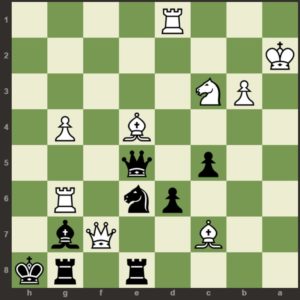
In her honor let’s have the puzzle first.   Black to move.

Interested in learning?  Try THIS.  This fellow has helped my game.

There is an interesting story about St. Teresa and our present, modern Julio-Gregorian calendar.

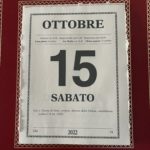
In 1582, the ancient Julian calendar (organized by, yes, Julius Caesar and still observed by many Orthodox Christians) officially was terminated on Thursday 4 October by the command of Gregory XIII (1572–1585, Ugo Boncompagni) via the papal bull Inter gravissimas.

At midnight of 3-4 October the calendar skipped automatically to a day named Friday 15 October.

The famed Jesuit mathematician Christopher Clavius (+1612) worked out the calculations for this change.  He chose October for the moment of the jump because it had the fewest feast days.

He also did his calculations without the use of the decimal point!

St. Teresa of Avila died on the very night on which His Holiness had commanded that the calendar shift from 4 October to 15 October, which is why her feast is celebrated on the 15th rather than the 3rd or 4th.

If you are in Rome, stop at San Salvatore in Lauro and look at the chewed up little fountain to the left of the main doors of the church. It will probably be obscured by parked cars.  On this little fountain is what’s left of a lion.  Over the fountain there is an inscription which inter alia speaks of a draco or “dragon” who, dutiful (pius), masters the whole world (draco qui toti pius imperat orbi). This is a reference to Pope Gregory XIII whose coat of arms bore a dragon with wings outstretched.  This is the Pope who ordered the change in the calendar and after whom we call our modern calendar Julio-Gregorian.

Here is the inscription on the fountain, for those of you who want to take a crack at it.  You will need to know that virginea here refers to a famous Roman water source, called Acqua Vergine (which also flows over the coins in the Fontana Trevi). That lupus (“wolf”) and that angus (“lamb”) refer to other fountains, which – though now lost – were part of a set, this fountain being the “lion”.  These are called “Elegiac couplets”:

VT LVPVS IN MARTIS CAMPO MANSVETIOR AGNO
VIRGINEAS POPVLO FAVCE MINISTRAT AQVAS
SIC QVOQVE PERSPICVAM CVI VIRGO PRAESIDET VNDAM
MITIOR HIC HOEDO FVNDIT AB ORE LEO
NEC MIRVM DRACO QVI TOTI PIVS IMPERAT ORBI
EXEMPLO PLACIDOS REDDIT VTROQVE SVO
MDLXXVIIII

In the cortile of Via dei Prefetti 17 is the inscription that was on the fountain of the “wolf”, where the Via della Lupa joins.  There was a family near there called the Capilupi (or some such).  The fountain is gone but the inscription survived.  I saw it once, many moons ago.  And, in that same courtyard, another fountain inscription warned that hands that had done violence or tongues that had uttered blasphemy were not permitted to touch the pure water of “the Virgin”.  Also, in Elegiac couplets.

BTW… Via dei Prefetti 17 is where Samuel Morse, the inventor of Morse Code, stayed in Rome.  If memory serves there is a plaque there.

How cool is Rome?

I should hike over there today, if my knee allows some hiking.

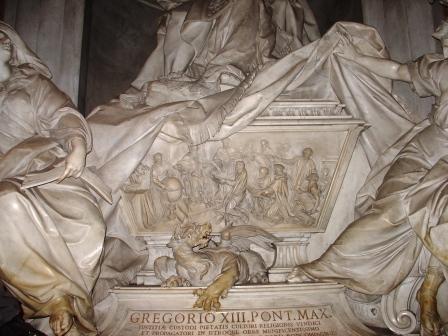
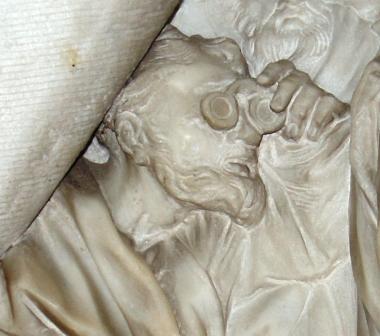
Going across the river to San Pietro in Vaticano, we search in the right side aisle for the tomb of Pope Gregory XIII and the interesting relief by Camillo Rusconi on his tomb.

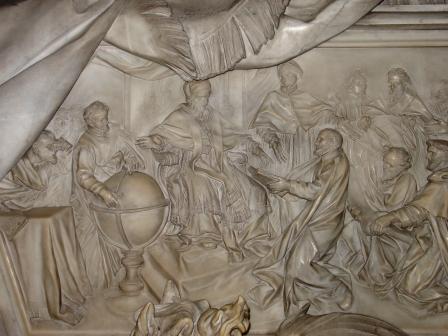
It portrays the moment he was so proud of in his pontificate: when Clavius gave him the plans for the new calendar.

One of the things you must learn to do in Rome is pay attention to details, which are funny at times.  These people had a wonderful sense of humor.

What is interesting is the style of spectacles, and that the sculptor included it.  I haven’t gotten to the bottom of who this fellow might have been.  The sculptor himself?  The biographer of Gregory?  Who knows?

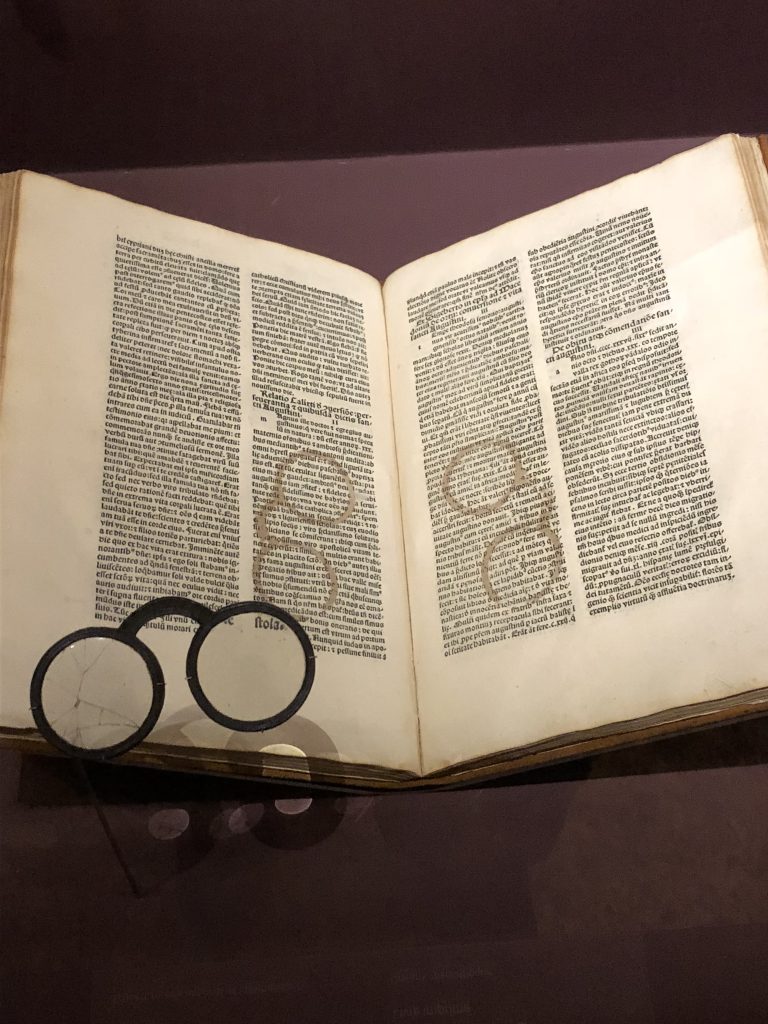
As for the spectacles, I recall that in the rooms of St. Philip Neri at the Chiesa Nuova, there are preserved a pair of Pippo’s cheaters.  And, some time ago, in Paris I saw a book in the Museum of Cluny that had been stored away for centuries with some guy’s glasses in the pages, leaving a mark.

By the way, one of my favorites Popes, Sixtus V (1585-1590 Peretti) said: “Had the Jesuit order produced nothing more than this Clavius, on this account alone the order should be praised”.  Clavius was an incredible mathematician who solved some of the most difficult problems of his day and who produced the essential textbooks of the era.  Even the way we all learned Euclidian geometry when we were children is due mostly to the presentations of Clavius.  His works were translated into Chinese by Matteo Ricci and others so that missionaries could connect with scholars in that far away land and thus bring them to the Gospel of Jesus Christ.

Now for some important things.

Pre-dawn mornings are so tranquil.

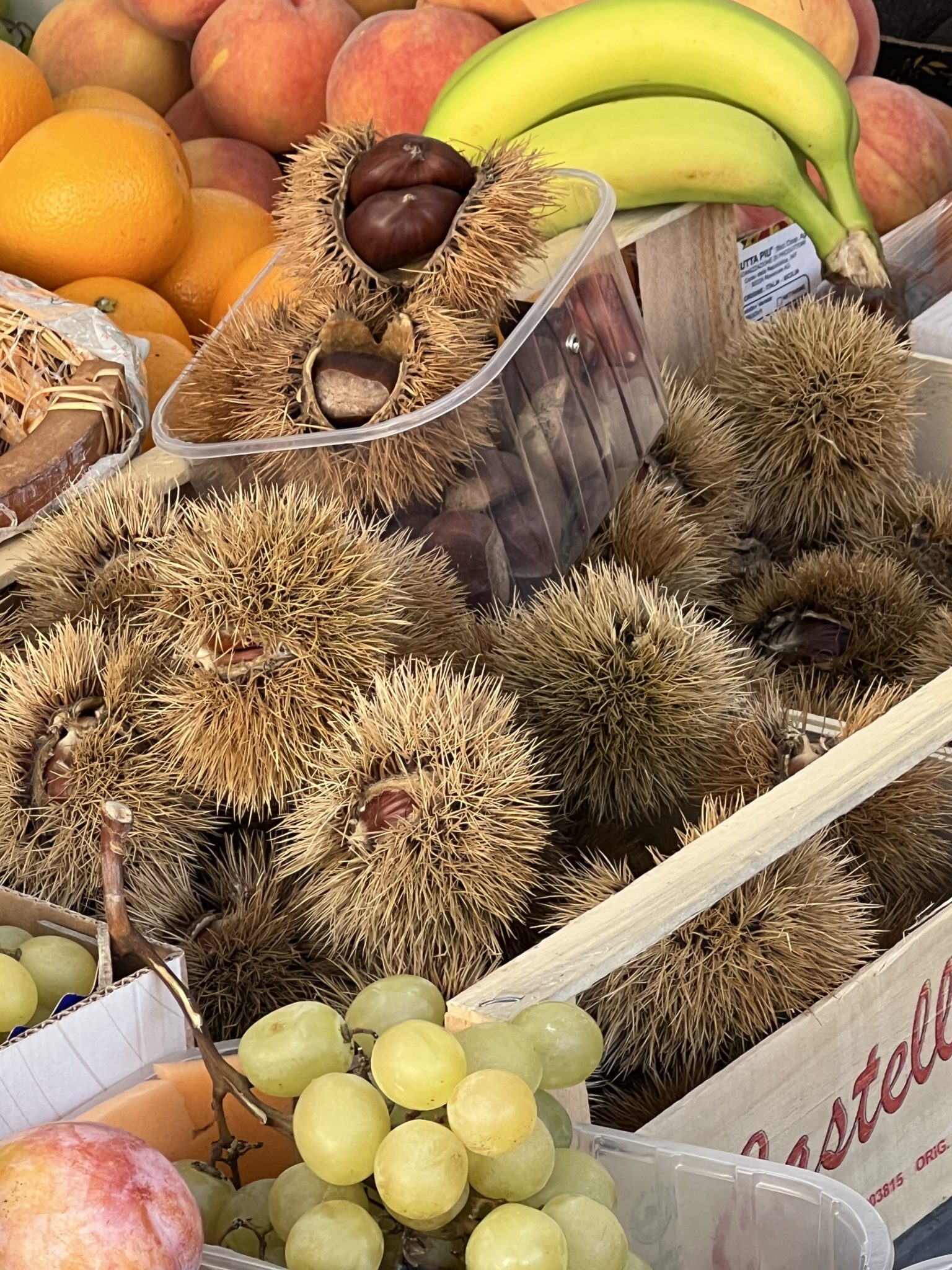
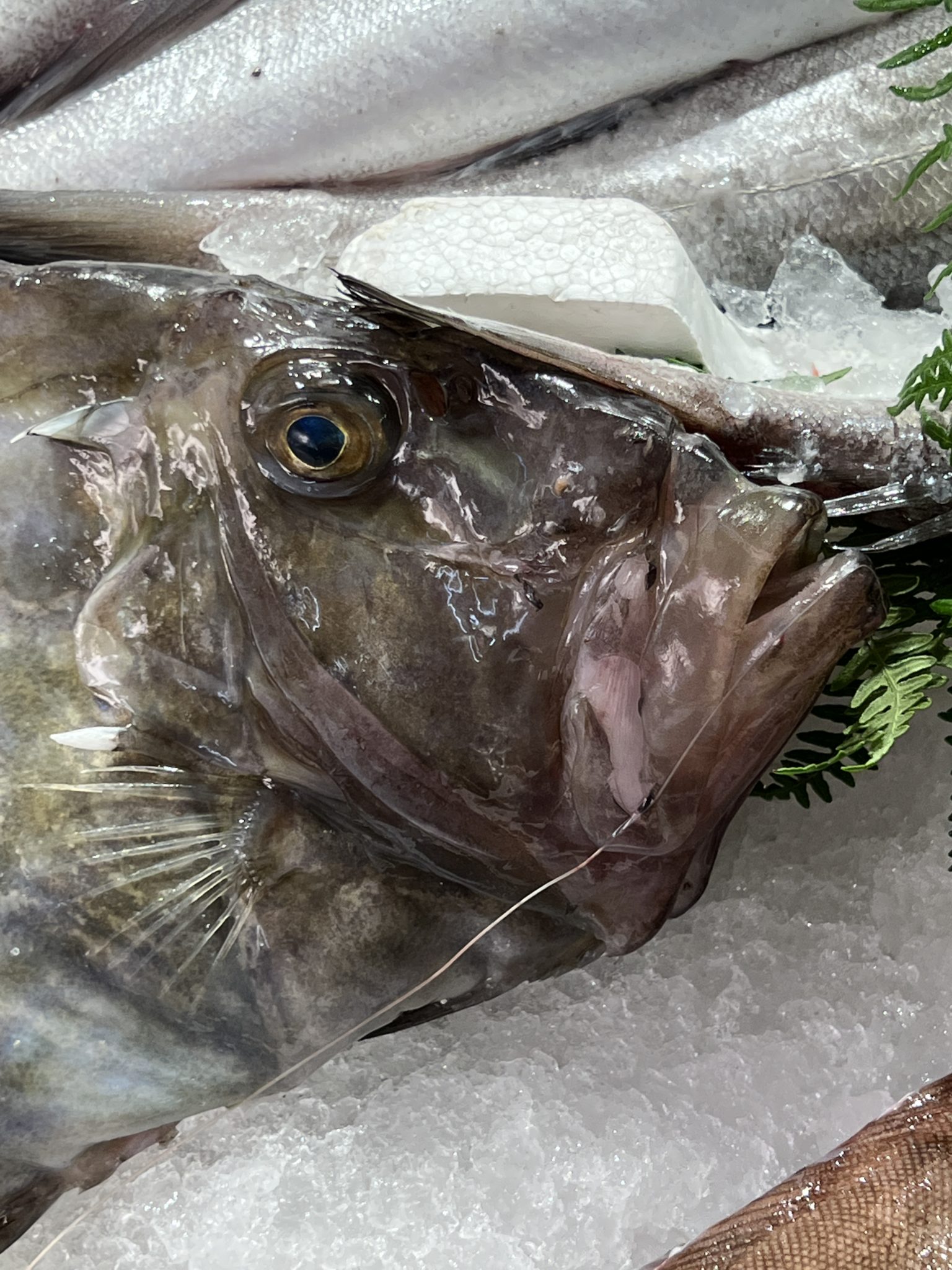
Sights from the market.

He’s still thinking about the consistory list.

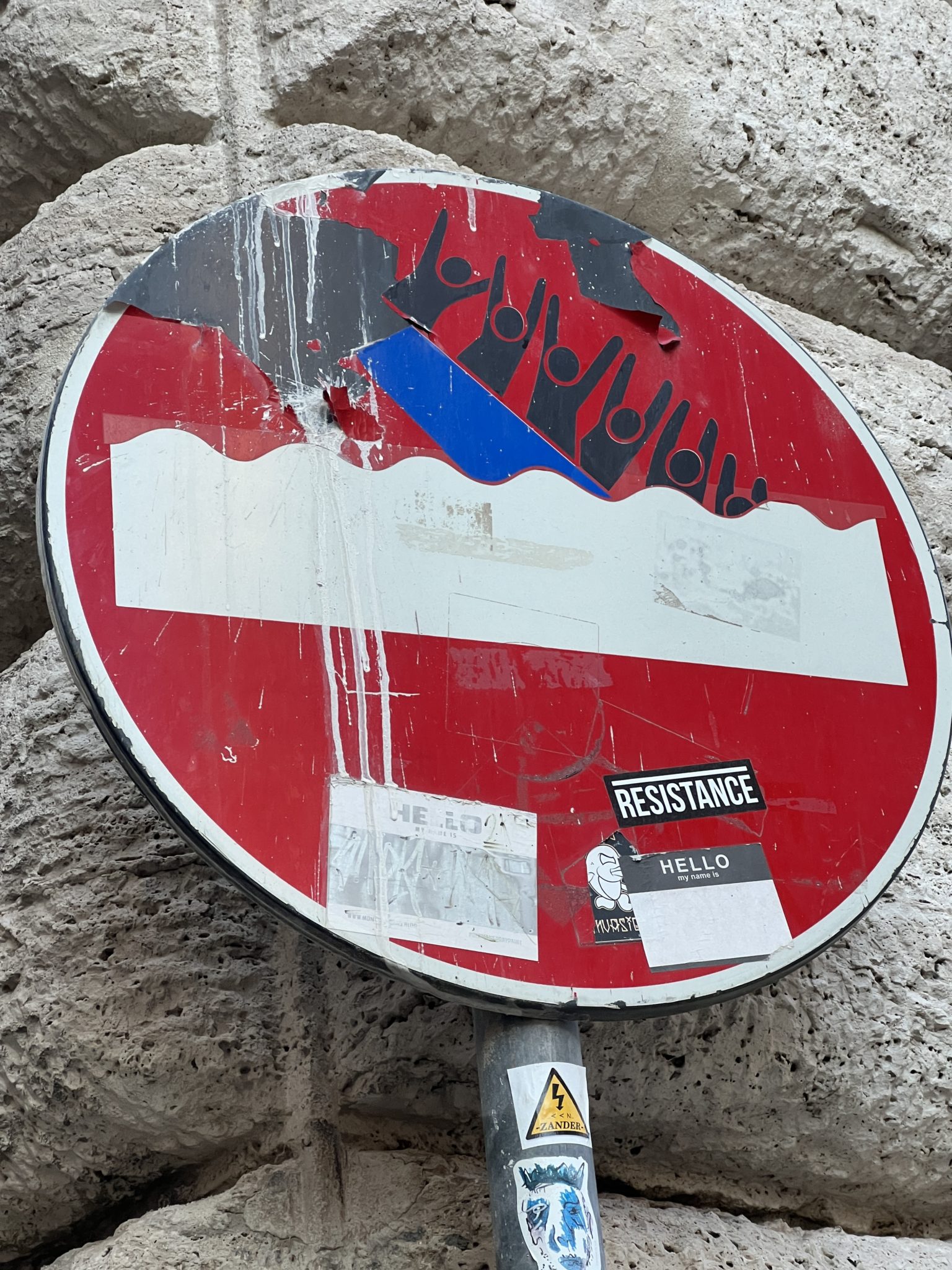
Somehow this “Do Not Enter” sign says it all.  Your metaphorical interpretations are appreciated.

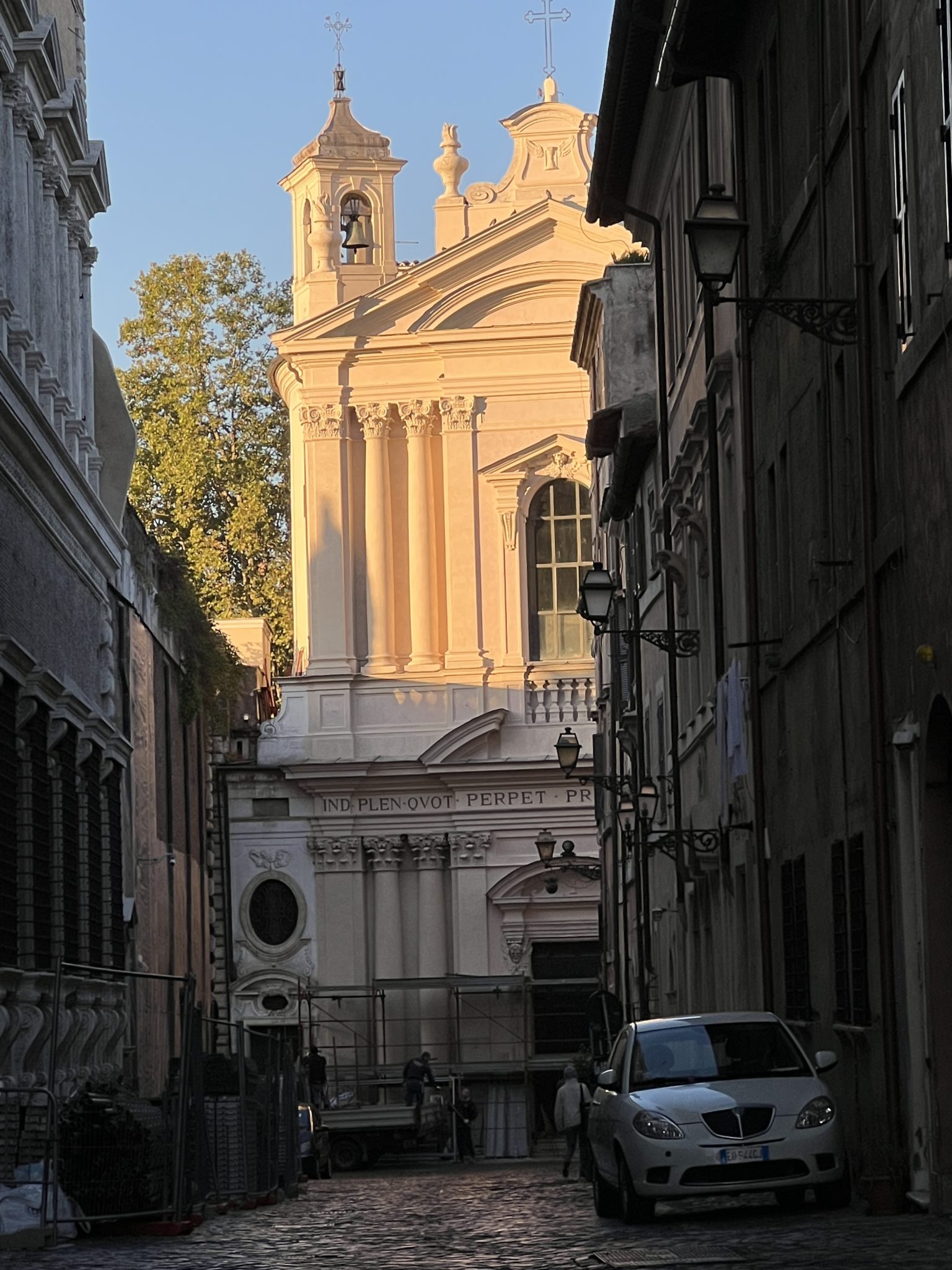
They are taking the scaffolding down from the Hungarian church! 

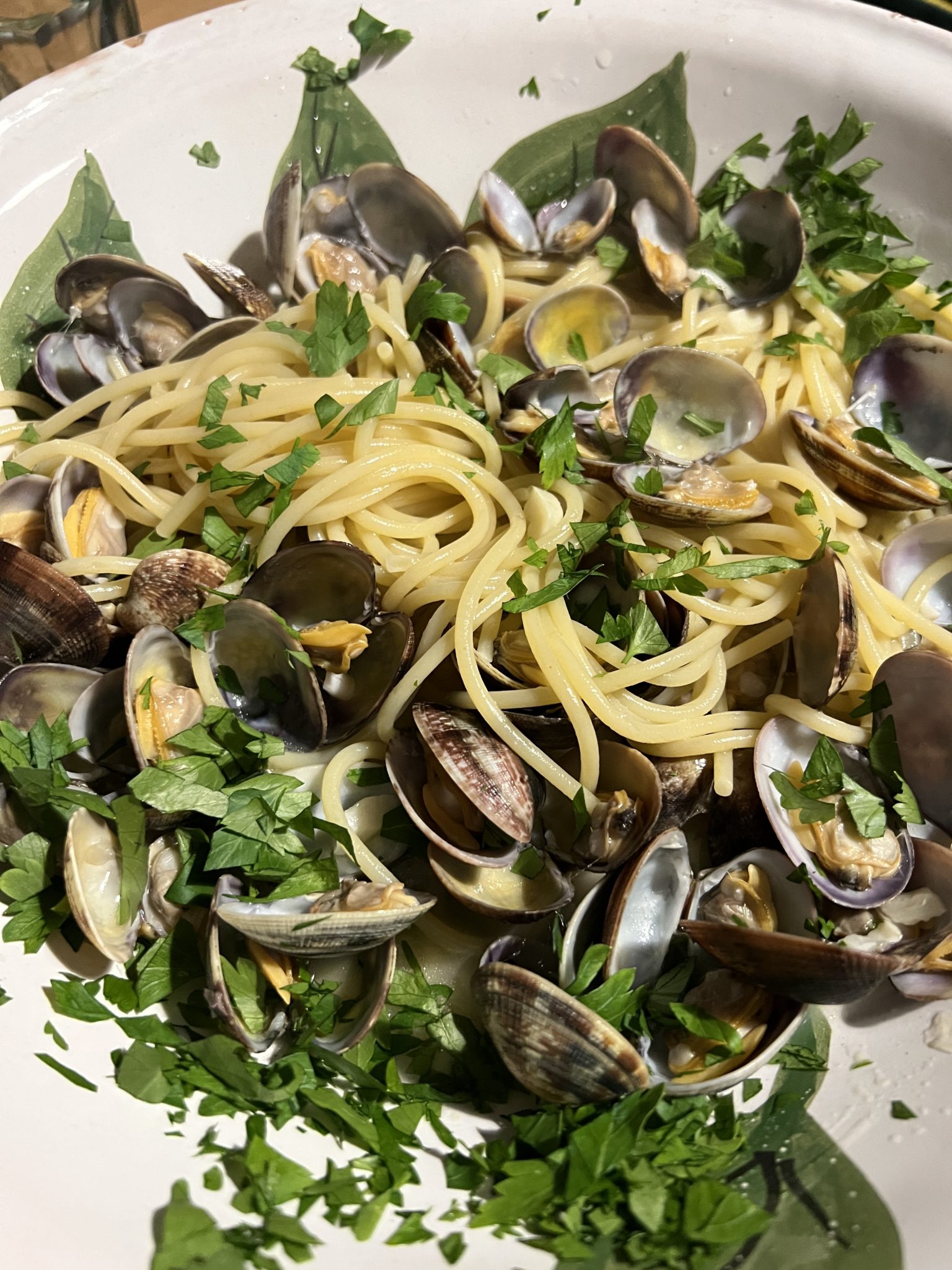
Last night spaghetti alle vongole.   The fishmonger says that the clams had already been purged.  Last time, however, … well… I should have given them another round.  Then, it was okay but there was some fine sand.   This time, a few hours in salty water did the trick.

I’m getting better and better at this one.

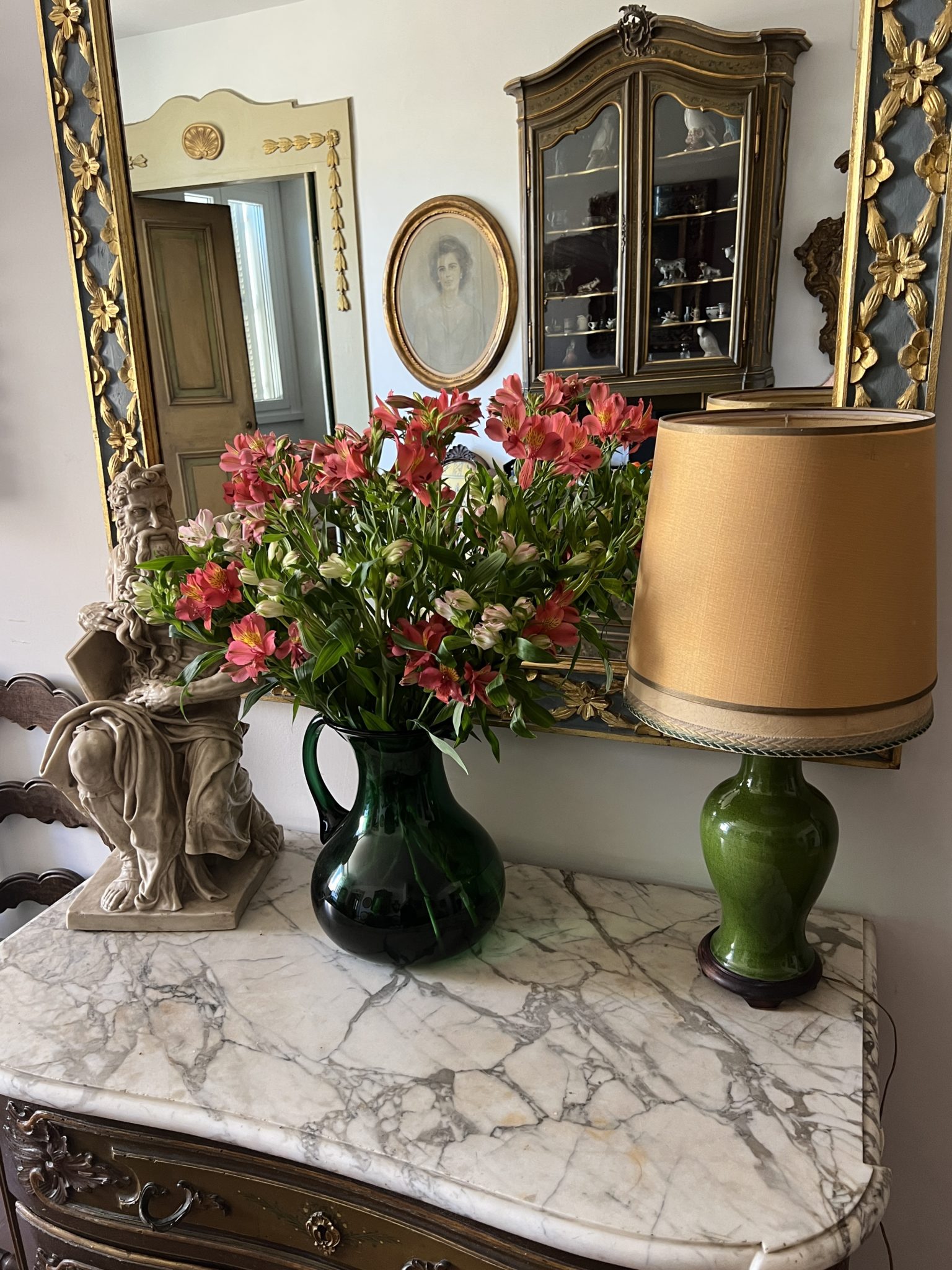
And at the request of a long time reader and very kind donor, a shot of the alstroemeria!

Posted in SESSIUNCULA |
8 Comments

DIEBUS SALTEM DOMINICIS – 19th Sunday after Pentecost: You might not have a tomorrow.

When this Sunday comes around, with its snappy Collect, I am minded of the early 4th c. martyr St. Expeditus.  Here is the Latin and my own slavishly literal version.

Omnipotens et misericors Deus, universa nobis adversantia propitiatus exclude: ut mente et corpore pariter expediti, quae tua sunt, liberis mentibus exsequamur.

Almighty and merciful God, having been appeased, keep away all things opposing us, so that, having been unencumbered in mind and body equally, we may with free minds accomplish the things which You command.

You spotted “expediti” of course, in this prayers clearly military language.   This is from expedio, “to extricate, disengage, let loose, free up from impediments, liberate any thing entangled.”  When applied to persons, it means “to be without baggage, unimpeded, free”.  Thus, the noun expeditus, i, m., is “a soldier lightly burdened, a swiftly marching soldier.”

St. Expeditus, whose feast day is 19 April, is a patron saint of procrastinators and computer programmers… for reasons which are perfectly clear. (The CSC excepted, of course.)

Expeditus is appropriately depicted as an ancient Roman soldier holding aloft a Cross upon which is written HODIE or “today” as he treads on a crow or raven croaking by means of a speech ribbon the corvine sounding Latin for “tomorrow”, CRAS.

In our prayer, expediti refers to our freedom from the chains of sin which entangle us and doom us to eternal hell.  St. Expeditus reminds us to keep moving forward swiftly in the face of the enemy and not to rely on tomorrow in dealing with immediate problems.  Like being in the state of mortal sin.

God wants your heart and service NOW.  Hodie.

Not cras. 

You might not have a tomorrow.

The Earl of Chesterfield advised his son in 1749, “Know the true value of time; snatch, seize, and enjoy every moment of it. No idleness, no laziness, no procrastination: never put off till to-morrow what you can do to-day.”

He wasn’t talking about going to confession… but I am.

GO TO CONFESSION!

Speaking of “putting off”, our Epistle reading from St. Paul to the Ephesians has admonishments which only the inveterate sinner will find off putting. The context, in chapter 4, is Paul’s plea to the Ephesians to treat each other properly, to “grow up” into the Christian life and to embrace the behavior such an identity entails. In particular, Paul tells them to put off, like dirty garments, the “old nature”, their former manner of life, and to put on, like beautiful new clothing, the “new nature, created after the likeness of God in true righteousness and holiness.” (4:24) As your trusty Douay-Reims Bible puts it, “put off the old man… and put on the new man.”  The Greek verb is endúo, “to sink into a garment, invest, array, clothe”.

For you who are close to the altar in liturgical service, or for those of you who are close through keeping the gear of the altar boys in good shape – thank you! – this image from Paul in Ephesians 4 is at the core of the prayer that boys and men, priests too, are to pray when donning the abbreviated form of the white baptismal garment, the surplice, worn over the cassock:

Indue me, Domine, novum hominem, qui secundum Deum creatus est in iustitia et sanctitate veritatis. Amen.

Invest me, O Lord, as a new man, who was created by God in justice and the holiness of truth. Amen.

Think of that, gentlemen and boys, as you carefully, reverently put on that surplice.  Think of that, ladies and girls, ,as you lovingly, generously extract wax, wash and iron.  Put on the new nature, as you are intended to have, God’s image renewed in Christ, no longer a slave burdened under the old ways of sin, but freed and “sealed unto the day of redemption”.   Expediti.

Putting off the old man and clothing with the new happens in baptism and in the confessional.  Those are but the starting points.  We have a lot of hard work and suffering afterward, a lot of falling and getting up again with the essential hand of God.

Speaking of suffering, the same image from Ephesians 4 of putting off the “old man” is to be prayed by bishops when they remove the cappa magna. Once very common.  Now, not so much.

St. Jerome (+420) commented on this very section of Ephesians with a stark image of the exchange of the old for the new.  The “old man” is aged in wickedness, gone astray and acting like a beast.  Along comes the Word of God.   “The Word of God,” says Jerome, “kills in such a way as to make the dead one come alive.  He then seeks the Lord whom he did not know before his death.  He does not corrupt but kills the old man. … As the outer man decays the inner man is renewed.”  (Commentarii in iv epistulas Paulinas, II in PL 26:540)

Note the distinction of “interior” and “exterior”.  This same theme is in the Collect of the Mass, above: “ut mente et corpore pariter expediti… unencumbered in mind and body equally”.

There should be a harmony, integration of the whole person who is renewed in Christ, who wears the “new man”.  What’s the old phrase?  “Clothes make the man”?  It isn’t by accident that the Latin word habitus means both a person’s “attire” and his “disposition, character”.   So, the Apostle to the Gentiles gets concrete.  For example, “Therefore, putting away falsehood, let every one speak the truth with his neighbor, for we are members one of another” (v. 25).   In other words, “Stop lying!”  He adds, “Stop stealing!” and “Stop being lazy!”, “Stop being greedy!” and, one of the most practical things ever penned, “Be angry but do not sin; do not let the sun go down on your anger, and give no opportunity to the devil” (vv. 26-27).

Treat each other well.  Let you all be exedititi together, unencumbered swift foot soldiers.  No baggage.

Circling back to St. Jerome on this chapter, the great Western Doctor underscores the dignity of a person who is established in Christ.

The metaphors of creating and establishing are never spoken of in Scripture except in great works.  The world is created.  A city is established. But observe that a house, however grand it may be, is more commonly said to be built than established or created.  Note then that it is a great work of God when it is said that the new person is created by God in Christ.  This creature towers over the other creatures.  This creature alone is said to have been established in the same way as the world was established, from the beginning of God’s ways (Prov 8:22), when all the elements first came into being.

What an awesome thing is it to be baptized, to receive the sacraments of the Church.

Allow me to bring this expeditiously to the Sunday Gospel and a brief comment from another of the Western Doctors, St. Gregory the Great (+604).

The Gospel is a continuation of Matthew, the parable of the Lord about the Kingdom of God – which is where we all want to wind up – being like the wedding banquet that a king held for his son.   Many were called to the banquet but didn’t come.  That’s part of the odd parable “twist”, or nimshal: people don’t turn down invitations to royal banquets.  Moreover, they kill the servants who brought invitations.  And if that isn’t extreme enough, the king them kills all of the them and burns their cities.   Eventually, the king invites every Titius, Caius and Sempronius to come in off the streets.  No pressure!  He spots a man without his wedding garment and has him tied up “hand and foot” and thrown out into the darkness, which seems a little extreme, considering that he was just invited to come in.  The garment, the wedding garment, is important, of course.  In the Old Testament garments signal various things, such as deeds of righteousness, God’s favor or, in the case of angels, he glorious light of Heaven.   St. Gregory says of this second twist:

“What then must we understand by the wedding garment but love? That person enters the marriage feast, but without wearing a wedding garment, who is present in the holy Church. He may have faith, but he does not have love. We are correct when we say that love is the wedding garment because that is what our Creator himself possessed when he came to the marriage feast to join the Church to himself.”  Forty Gospel Homilies 38:9

The Lord prepares a heavenly banquet and all are invited.  However, some, many even, prefer their worldly concerns, their farms or businesses or whatever.  The king’s reaction is a confirmation of their choice.

As the Gospel passage concludes this week: “Many are called, but few are chosen” (22:14)

The invitation is given, God prepares all that you need, the choice is made, and the separation takes place.  Those who choose well and who are worthy are within the messianic royal banquet, and those who are not are in the outer darkness, bound “hand and foot”, in their state of mortal sin and old man habits.

Impediti, not expediti.  It is up to you.

Faith alone is not enough.  Faith must be united with charity, sacrificial love of God.

Remember the words of Christ in Matthew 7:

“Not every one that saith to me, Lord, Lord, shall enter into the kingdom of heaven, but he that doth the will of my Father who is in heaven, he shall enter into the kingdom of heaven.”


Posted in GO TO CONFESSION, SESSIUNCULA, WDTPRS |
2 Comments

ROME 22/10 – Day 14: And old frenemy and a new dish

You know how this goes.

7:19

18:33

18:45

After Holy Mass and a holy hour – there is something special about the quiet of a large space – I was after something to break my fast.  Off to the famous Antico Forno at the Campo de’ Fiori.

On the way I stopped to chat with a couple of the flower vendors I’ve used for years.  Yesterday one of them made a call and got some alstromeria for me.  Knowing that, the next day another flower vendor called me over and he had it too.  He had previously said that he didn’t like it so he didn’t stock it.  I got a small bunch of a different color to incentivize and to boost my apartment’s bouquet.  I digress.    But it is the Campo de’ fiori after all.

Please remember me when shopping online via Amazon. Thanks in advance.  US HERE – UK HERE   This really helps me out.

There was a line at the bakery, as one would expect in the morning.

At the check out counter, there is a bottle of “extra virgin doggy oil”.  Just kidding.  Canino is a spectacularly beautiful place north of Rome.

Heading home with my score.

I bought a part of a loaf of casareccio and, instead of cornetti, I bought an old frenemy, a Roman rosetta.

In a couple of the clerical houses I’ve been in in Rome, breakfast always includes, invariably, a rosetta.  If fresh, they are good.  If not, they can be used for bocce or boules or, filled with explosives, combat, with lead, anchors.

They are hollow.  You approach them by pulling out the center.

I like mine with butter and jam.  It was a blast from the past.  The occasional rosetta is great!  Everyday for months on end… variety summons.

This confraternity church on the V. Giulia is getting help.   What I cherish above all is the papal coat of arms over the door.  That’s the custom in Rome: the pope’s arms and, if the church is assigned to a Cardinal, his arms.

Recognize this guy?   Superb.  I hope it is never removed except to be cleaned, preserved and put back into place.

A sad sight on the Via Giulia.  You would think that, as venerated as St. Philip Neri is in Rome – co-patron with Peter! – as omnipresent as are his images and objects in Roman churches, there would be a church dedicated to him.  Right?  There sort of is/was.

This had the misfortune of standing between a bridge over the Tiber and the straight street leading to the Corso in front of the Chiesa Nuova. It had been a plan to bash down everything and connect them.  The area between the river and V. Giula has been converted into  parking lot.

While there is some interior space, I think being used by an architect, the façade is pretty much all there is.

Lunch with a friend at one of my usual places.   This was spectacular.  A pasta much like strozzapreti (actually ferretti) in a sauce of cream, zest of citrus fruits, salmon, shaved fennel and dill.   Simple and superb.  This is definitely on my to do list.  The only problem to overcome at home will be the absence of panna da cucina, which is sort of like crème fraiche but… not.   I have a cunning plan that will involve the reduction of heavy cream, perhaps with some of the agrumi zest.  I have a couple of zesting tools that I bought in Tokyo that will do the trick.  A drop of black truffle oil will not hurt this preparation at all.  This is a great way to handle some left over salmon that isn’t – quod Deus avertat! – cooked to invincible insipid fibers.

This was a treat.

Interested in learning?  Try THIS

Black to move.

Meanwhile, the bloodbath continues, which is discouraging.

If you are looking for alternatives to PayPal, try Zelle (which most US banks offer), Continue to Give (continuetogive.com – less preferred), and Wise (wise.com – terrific for international operations, though it takes a bit to set up, very low fees).  Chase QuickPay also works. There are other options, too, including snail mail which is forwarded to me.

To receive a link to donate via Continue To Give using your smart phone, use your phone’s camera to activate the Q code (below) or text 4827563 to 715-803-4772 (US) for a link.

Posted in SESSIUNCULA |
7 Comments

13 Oct 1917 – Anniversary of the “Miracle of the Sun” at Fatima – POLL about the “3rd Secret”

Today is the anniversary of the Miracle of the Sun that occurred in 1917.   Thousands of people saw it.   It had been raining and, after, clothes and ground were dry.  Pius XII saw it in Rome in the Vatican gardens.

Such an anniversary prompts the question.  The “the Vatican” reveal everything about the so-called 3rd Secret from Our Lady to Sr. Lucia?   In the case of the first two secrets there were visions and then explanations from Our Lady.  In the case of the third, we have been given the description of the vision.  We have not been given an explanation from Our Lady.  Yet we have been told that all has been revealed.   That also seems inconsistent with evidence that there are two parts of what Sr. Lucia communicated to the Pope.

Let’s have a poll.  Anyone can vote, but you have to be registered and approved to post a comment.

Regarding the revelation of the 3rd Secret of Our Lady of Fatima...

View Results

Posted in SESSIUNCULA |
16 Comments

ROME 22/10 – Day 13: Do not despair!

It was the Feast of St. Edward the Confessor in the Vetus Ordo of the Roman Rite, that bastion against nonsense. We would have seen the sunrise at 7:18 had it not been cloudy and raining. Would we see the sunset at 18:34? Rain or not, we wouldn’t hear the Ave Maria ring except in one place that I know of, at 18:45.

It was the 60th anniversary of the 1st full day of the Second Vatican Council.  We are called to reflect on the great fruits that that Council produced and is still producing.  Enjoy the springtime.

Ss. Trinità dei Pelegrini is so tranquil in the morning before sunrise.  The magnificent Reni seems to have its own internal light source.

I had a walk yesterday.  Must keep moving.  Just a couple of views for now.

I spotted a couple of old chalices in an antique store.

I think this one is 17th c.

S. Salvatore in Lauro is jammed with so much stuff that it is among the more erratic and distracting church interiors in Rome, every side altar location being used to display something.  Annoying.  Mind you, the stuff is great.  It’s just… cluttering.  Too much of a good thing is too much, I’m afraid, and those altars are ALTARS, not shelves for display objects even if they are sacred things.   St. Pio stuff….

In a byway…

Black to move and win material.

This fellow helped my game.   Check his courses.  I am an affiliate (an amazing 50%).

Posted in SESSIUNCULA |
4 Comments

ROME 22/10 – Day 12: Mangled and hiding

Our sunrise today was at 7:17 and the sunset will be at 18:36. How time flies and shortens these lovely Roman October days. The Ave Maria, when rung, is to be rung at 18:45. It is a dies non today. But the Vetus Ordo Martyrology has:

In Africa, four thousand nine hundred and sixty-six holy confessors and martyrs, in the persecution of the Vandals under the Arian king Hunneric. Some of them were bishops, some priests and deacons, with a multitude of the faithful accompanying them, who were driven into a frightful wilderness for the defence of the Catholic truth. Many of them were cruelly annoyed by the Moorish leaders, and with sharp-pointed spears and stones forced to hasten their march, whilst others, with their feet tied, were dragged like corpses through rough places and mangled in all their limbs. They were finally tortured in different manners, and won the honors of martyrdom. The principal among them were the bishops Felix and Cyprian.

Speaking of mangled limbs, I went to the Piazza der Fico yesterday to scope out the chess situation.  A group of men have been playing there together for years.    That’s the fig.  Last June it was dropping ripe figs – splat splat splat – all among the players.

Yesterday, they were collecting money from each other for new chess sets and one of them was talking about a Mass, to be held today, for one of their deceased companions.

But the mangled part comes here… what to make of this bizzare defense by black?  In bullet matches he played it every time.  Does anyone know this?

Meanwhile here’s a lovely restoration of an ancient house.

Having a walk….

I got caught in the rain.  I don’t like that.

I do like this place, however.

I’m hiding.

I heard from a priestly chess player!  Slowly but surely.  Slowly, true: he is into correspondence chess. Priestly chess players, drop me a line. HERE

Black – it’s your move. Win material and escape the consequence.

The traditional Benedictine monks of Le Barroux are producing wine from the old papal vineyards. Thanksgiving is coming. Hint. Use my code and get 10% off.  FATHERZ10

Untangling the consequences of the vile P@yP4l scare tactic has taken a lot of time and energy. It has been really depressing.

I am grateful to those of you who are shifting to another platform.

If you are looking for alternatives to PeePee, try Zelle (frz AT wdtprs DOT com – which most US banks offer), Continue to Give (continuetogive.com – less preferred), and Wise (wise.com – terrific for international operations, though it takes a bit to set up, very low fees).  Chase QuickPay also works. There are other options, too, including snail mail which is forwarded to me.   Zelle and Chase – really fast – don’t give me emails of the donors, which is going to make it harder to write thank you notes.

To receive a link to donate via Continue To Give using your smart phone, use your phone’s camera to activate the Q code (on the right) or text 4827563 to 715-803-4772 (US) for a link.


Posted in SESSIUNCULA |
6 Comments

ASK FATHER: What is a reasonable donation to a priest for a request to say a Mass?

From a reader…

QUAERITUR:

What is a reasonable ordinary donation to a priest in connection with a request to say a mass. Or a reasonable range?

I understand that it is not strictly necessary to send a certain amount, and that way the truly poor can still get masses said for their needs / intentions. But I am not truly poor, and I am willing and able to assist with meeting priests’ needs. Presumably, other than the (sometimes very modest) living typically provided to a priest from the parish and diocese, he must pay for his needs at least in part out of what is given to him, and this includes what is given to him in thanksgiving that he is available as a priest to say masses for us and our needs. So, it seems like there would be a reasonable sort of amount or range of donations that is fitting or generally appropriate from those of us who are not poverty-stricken. Is that right?

Would we generally assume a higher amount is also fitting for those priests who have been cancelled and are receiving nothing at all from the diocese that (canonically) probably owes them to pay their living expenses?

This is a hard one to tackle for a couple of reasons.  First, it may seems a little self-serving, since I am a priest and I receive Mass stipends now and then.  Also, customs and particular laws are established in different places.  Moreover, religious priests and diocesan priests can have a different manner of receiving intentions: some go to the community, some to the parish, some even to the diocese (which I think could be a violation of canon law… certain it is of justice and charity).

Priests have the right to make their living “from the altar”.   Priests are for offering sacrifice.  They are not for being nice or chairing committees or running youth groups.  The identity of the priest and his living is “from the altar”.   Hence, it is right and just that the priest receive material means to live through his action of offering the Sacrifice at the altar for people’s intentions.   Ubi missa, ibi mensa.   Where the Mass is, there also the table/meal/living is.  This proverb explains that the priest’s income is rightfully from the celebration of Mass and, by extension, all his priestly actions.   It is right to provide stipends for priests who do things for you (baptize your babies, marry you, etc.).

In some places the amount of a stipend is fixed by the diocese.  I believe that counts mostly for public Masses celebrated on the parish schedule as well as “stole fees” (for marriages, etc).   However, priests have days off.  Retired priests have more days off. Canceled priests have all days off, as it were.  Priests can celebrate with their own intentions when they are not obliged to take the scheduled intention at the parish.  They can make their own arrangements for stipends for those Masses.

Mind you: setting a fixed amount in a diocese for Mass intentions is not a bad thing in itself.  A fixed amount removes confusion and questions.    It also helps people who are on a fixed income to plan (if they can find any parish with available slots in the calendar!).  It creates some uniformity between parishes, which can be in very different neighborhoods.

However, in some places stipends have lagged behind the times.  These days, in the USA, a $5 stipend would be absurdly low.  However, $5 stipends for a priest in Africa would be welcome.

Some priests don’t have many stipends.  For example, third world priests studying in Rome… even US priests… don’t have many stipends and that can be a problem.

Retired priests, too.  I’ve given my stipends to men who are having troubles.

And let’s not even talk about the plight of priests who have been canceled.

And some stipend is better than no stipend when you are in need.  I have had those years.  Stipends meant a meal or a book I needed for research or a phone call home (back in the day), or getting my cassock dry cleaned, a hair cut.  I still, with donations, always think in concrete terms: groceries… gas… insurance… roof replacement fund … internet bill!  Funny how early years shape your later years.

I’ve tried to be a kind of “yenta” to connect people with priests so they can work things out on their own.  I have nothing to do with the exchange of money or the conditions.  That’s between them entirely.  But I know that, from notes I’ve received, people are grateful to find a priest and the priests themselves really needed the help.  It hardly gets better than that.

The bottom line is, when you make an arrangement with a priest for Mass intentions, you can offer what you want. You can offer what that priest’s diocese or order has fixed.   You can offer a $10K for one Mass intention, or $10 for ten intentions.  The $10K is obviously a lavish gift, also.  The $10 could be the “widow’s mite” and, therefore, a precious honor for the priest to be offered.

If you and the priest agree, that’s a contract that binds the priest.  If he accepts the stipend, you can be sure he will say the Mass for that intention either within the year or on the day you two agree on (barring the unforeseen, of course).

If a priest is impeded from saying the intentions himself, he has to find another priest to take them.

Also, it is possible to give a priest Mass intentions which you keep “secret”, that is, you give them, “pro intentione dantis… for the intention of the one giving (it)”.    This sometimes works if, for example, I run into a student priest who is on the ropes and needs intentions.  I can give him a sum of money for, say, 10 stipends and say, for “intentio dantis“.  I can either give him names or purposes later or… not!  I know and God knows.

By the way, Christmas is the only day of the year on which a priest can accept three stipends for the three traditional Christmas Masses.

Consider the priests’ positions.  Are they young and without a wealthy family?   Are they retired and their pension isn’t covering life’s needs?  Are they in a parish or on their own.  Some of these cases call for generosity above and beyond what officialdom has laid down in particular law.

THIS IS IMPORTANT:

Never just send a priest money for Mass intentions without first contacting him to a) ask if he can accept them and b) not place him in a position of having to refund you or c) find another priest to take them

Finally, this morning I said Mass for my regular monthly donors, who are benefactors. I don’t get a “stipend” for that intention.  I get donations and I form the intention on my own.  It is nice to be able to organize my own intentions.  It gives me a chance to offer Masses in emergencies and for benefactors for whom I am grateful.


Posted in "How To..." - Practical Notes, ASK FATHER Question Box, Cancelled Priests, Canon Law, Priests and Priesthood | Tagged
32 Comments

ROME 22/10 – Day 11: Not snuffed out yet

The sun rose in Rome at 7:16 and will set at 18:37. The Ave Maria rings at 18:45. Today is the Feast of the Maternity of Mary and it also marks the 60th anniversary of the opening of Vatican II.

Yesterday was a really trying day for me and, as I found out, for a few other priest and lay friends.  There was something up, I think.  It was lovely outside, but it was a heavy day that weighed on me greatly.

There’s a nifty little silver smith shop near Sant’Eustachio that makes little Roman things.

Not many cats these days.  Not like the old days, for sure, with old women feeding cats left over spaghetti.

Near Ss. Trinità a very good little cheese and sausage store.  Nice guys.  They are eager to give samples and talk about each thing.


Speaking of the opening of Vatican II, the church of the confraternity of the men who carried the sedia gestatoria.  I’d like to see that come back… some day.

Chalices ready for “concelebration” Roman style.

I found this rather moving at the end of a hard day.


Sort of how I felt, feel.  Squeezed and nearly out of fuel, but not snuffed out yet!  Any number of candles can be lit from this and keep the flame burning.

Please consider joining WISE.  It is great for transfer of funds internationally and domestically with low fees and an excellent exchange rate. WISE

Yesterday and during the night has been a kind of bloodbath, I regret to report.   Very concerning.  There is also Zelle (which most US banks offer as a free service – very good! use frz AT wdtprs DOT com), Continue to Give (continuetogive.com – okay, but higher fees) and Chase Quickpay.

To receive a link to donate via Continue To Give using your smart

phone, use your phone’s camera to activate the Q code (on the right) or text 4827563 to 715-803-4772 (US) for a link.

Priestly chess players, drop me a line. HERE

White to play.

Remember to support the wonderful Summit Dominicans, the “soap sisters”.

Also, some of you have decided to send via snail mail!   How retro!  It’s slowwww… but it works!

Fr John Zuhlsdorf
733 Struck St.
PO BOX 44603
Madison, WI 53744-4603

Posted in SESSIUNCULA |
9 Comments