 Sunrise: 7:27. Sunset 18:22. Ave Maria 18:30.
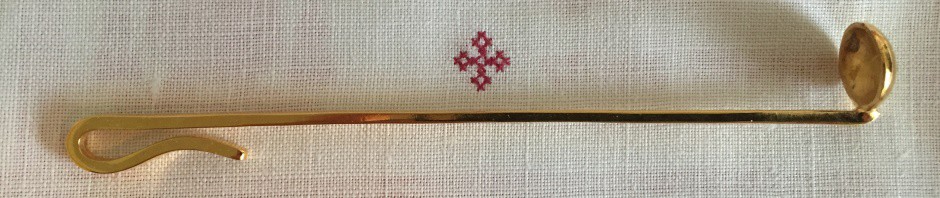
It is the (new calendar) Feast of St. Gaspar del Bufalo, a great saint who fostered devotion to the Most Precious Blood of Jesus. An exorcist friend of mine describes how imploring a spiritual covering of the Precious Blood is effective against the Enemy. Try to get your mind around the fact that the least drop of Christ’s Most Precious Blood is of greater value than all of material creation. Now try to get your mind around how the Precious Blood of Our Lord is treated in some parishes.
White to move and win material.

Recently my feet hied me to San Lorenzo in Panisperna precisely to find a specific funerary monument. Arriving at said basilica, at an entirely proper hour, I found it to be dratted closed. Muttering, I continued over hill and no dale at all to find Santa Pudenziana similarly closed. The mumbling greatly increased.
I went to Santa Prassede and Santa Maria Maggiore. After which visits my feet wanted to go home and so we, together, sought out the Via Panisperna again. That a curious street has had the same name and course since the time of Augustus Caesar. Panis = bread and Perna = ham. Bread and Ham Street. And there is a connection with physics!
To my surprise, the church was open and NOT at an hour one expects churches to be open, dead in the middle of the customary siesta period that my feet longed for.
In the church there was a Mass, I assume for some specific group, with the usual hideous music, involving – I am not making this up – a red plastic ukulele, and a know-it-all modernist Scripture-deletant of a priest who wouldn’t shut up. Not to disturb too much, and to rest the barking dogs, I took a seat.
When we learned from him that Jesus never spoke about the End Times, I got up from the chair I’d occupied and went about my errand in regard to the this following funerary monument.

I introduce you to His Eminence Guglielmo Sirleto (1514-1585). His monument has seen better times.

Here’s the inscription. Someone could do us all a favor and transcribe it. Right click for a large version.


Who was this guy, and why did my feet take me to him? After all, there are oodles of churches in Rome and they are all lined and floored with lots of tombs and funerary monuments. When you walk the churches of Rome you are literally also walking on and by dead people. Do the math, oodles x lots = zillions. Many of them are of bishops and cardinals, so zillions / lots = scads. What’s one out of scads of prelatial monuments, anyway? What’s so special about this one?
As a young Calabrian Sirleto came to Rome, exquisitely prepared in classical languages (he talked in his sleep in Greek and Latin), philosophy and theology. St. Philip Neri sold his books and gave the money to Sirleto for his upkeep. Think about that. That in itself makes you wonder what Pippo Bbono saw in him.
Sirleto got to know Card. Cervini, the future Pope Marcellus II (of Palestrina’s Missa Papae Marcelli fame) and was a kind of peritus to him during the Council of Trent, as he was later also to Card. Seripando, second legate of the Pope at Trent and later first president of the same. Marcellus made him the head of the Apostolic Vatican Library where, among other things, he made an index of all the materials that would be used for a new edition of the Vulgate Bible. After the pontificate of Paul IV, he was teaching Greek and Hebrew and would up with a student named Carlo Borromeo. He remained a councilor to participants at the Council of Trent. Borromeo eventually suggested to Pius IV that Sirleto be made cardinal, and so he became the Cardinal Deacon of S. Lorenzo in Panisperna, and the builder of the present church.
Being a peritus at a Council is an important position. Think of the influence at Vatican II of Ratzinger, Congar, etc. Sirleto was peritus to the guys who ran Trent.
Want more influence?
He was the head of the commissions to “reform” the following:
- Missale Romanum
- Breviarium Romanum
- Catechismus Romanus
- Martyrologium Romanum
- Vulgata
- Corpus Iuris Canonici.
Imagine the impact.
When he died, St. Philip Neri was at his bedside and Pope Sixtus V buried him.
A fascinating guy.
What’s also fascinating is that when I start to drill into these tombs and monuments – figuratively, that is – I find that the bones have flesh – figuratively, that is.
Meanwhile, check this out. Hilarious and sad at the same time. HERE
To satisfy the food pic seekers, last night I made a wine reduction… to put on…

Sirloin (Italian: contrafiletto) rubbed with salt, pepper and thyme, done in a pan with clarified butter. In what was left I fried a couple slices of tomato that needed eating. I like my fries done. Steak: rare (except for the outside which was duly Maillard-ed).


The wine was a lovely Syrah from the region.
This morning, however, I was after some clams and found this wonderful chorus. I can hear them singing Palestrina’s Missa Papae Marcelli.

The Missa Papae Marcelli has a fascinating history. It was used for the coronation Mass of Popes until Paul VI. Palestrina composed it for Marcellus I who reigned for three weeks. This was a time when at the end of the Council of Trent there was discussion of sacred music, especially music that was too secular sounding. There was even talk of suppressing polyphony, which – as parody Masses – often borrowed melodies from secular, sometimes even rather lascivious songs. However, many of the Roman participants in the Council – including St Charles Borromeo – had heard the Missa Papae Marcelli and they resisted the impulse to ban polyphony.
And at my usual stand where I’ve bought veg for 30 years, today puntarelle! I’ll feast on these with a sauce made of anchovy, garlic, oil and white wine vinegar. Puntarelle are chicory leaves that have been stripped and then put into ice cold water so that they get all curly and crunchy. The L.O.L at the stand was making them, with expert but truly red, rough raw and hard as nails hands, bless her. She’s very sweet. She isn’t there every day anymore, but I always stop and greet the family.

And to put an exclamation point on this post, here’s Palestrina’s Papae Marcelli. Try not to choke up.

GULIELMO SIRLETO CARDINALI STILIIN. CALABRIA NATO
HUIUS ECCLESIAE PRESB. S. SEDIS APOST. BIBLIOTHECARIO
HEBRAICAE GRAECAE LATINAEQ. LINGUAE PERITISSIMO
HUMANARUM DIVINARUMQ. DISCIPLINARUM SCIENTIA CLARO
FRUDITORUM ET PAUPERUM PATRONO AC PARENTI BENEFICIENTISS.
OB PROBITATEM EIUS PIETATEMQ. SINGULAREM A PIO III PONT. MAX.
SACRO INSTANT COLLEGIO CARDINALI CREATO
VIXIT ANN. LXXI OBIIT ANN. CIƆ. IƆ. LXXXV
 Sunrise in Rome was scheduled for 07:26, and it happened. Sunset has been arranged by our Creator for 18:23. Today the Ave Maria bells moves up to 18:30 from 18:45. Time marches on. It is the Feast of St. John Cantius in the traditional calendar. He was famous in life for his great generosity to the poor. In the intellectual sphere his scientific work anticipated Galileo and Newton on the theory of impetus.




 “Brethren: Look carefully then how you walk, not as unwise men but as wise, making the most of the time, because the days are evil. Therefore do not be foolish, but understand what the will of the Lord is.” (Eph 5:15-16 RSV)
 The Roman sun rose at 07:25 and it will set at 18:25, lest God determines otherwise. The forlorn Ave Maria bell should sound at 18:45. It is the Feast of St. Peter de Alcantara (+1562), a mighty Franciscan who was a friend of St. John of Avila and was admired by St. Francis Borgia. What an age of saints. Will we see such a time again? Let us ask God to raise up saints rather than what we have lately. I am reminded of a phrase from my old pastor, that at times God raised up liturgists so that people who had not yet had the opportunity to suffer for their faith could do so. We need saints.


 At 07:24 the sun rose and it will set soon at 18:26, not too long before the Ave Maria at 18:45. It is the Feast of St. Luke the Evangelist.


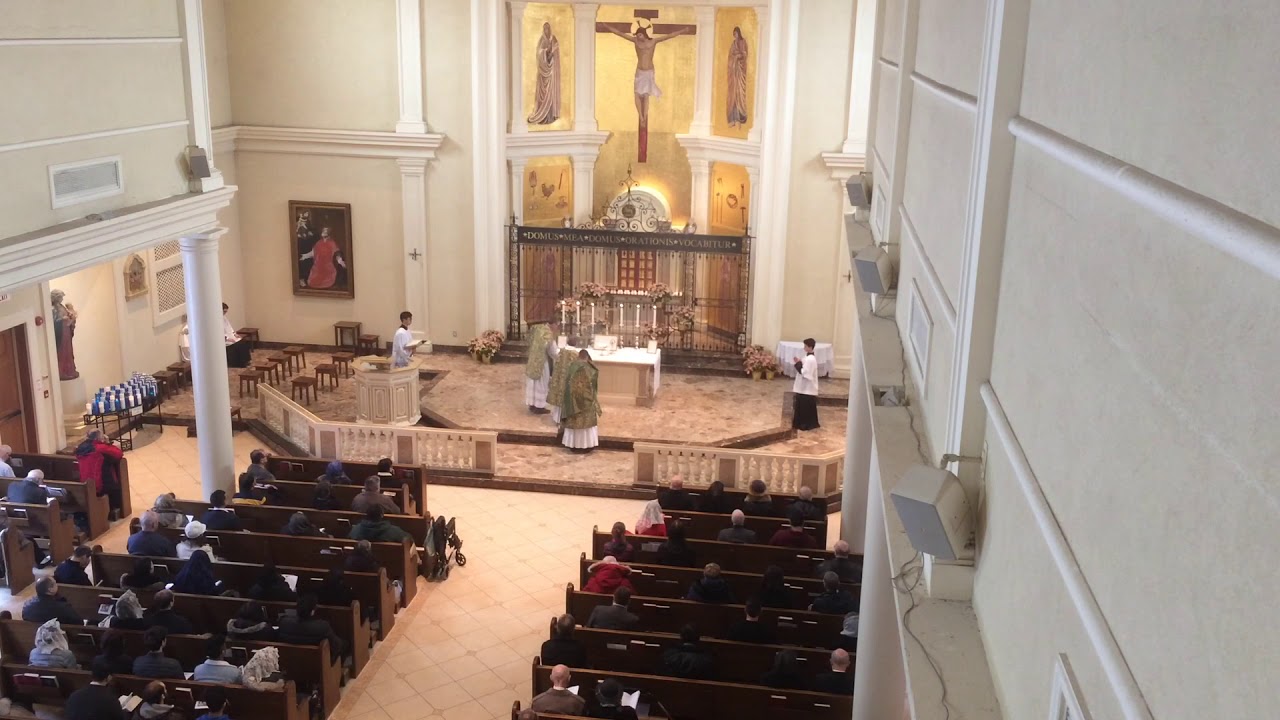
 The great liturgical scholar Klaus Gamber said that the de-orientation of the altar was the more destructive change after the Council.

 From a reader…
 The book I’ve been reading on the Council of Trent, which I have been repeatedly going back and rereading in parts (




























