Another DIY project: Kindle

Many thanks go out to kind readers who sent replacement batteries for my old Kindles.  I try to keep these going, especially because they still work, but also because they have built in text to speech ability.

This project is not so hard as the digital camera repair.

In its cover.

The problem with this gadget is not that the screen doesn’t work (I have another Kindle with that problem) but that the poor ol’ batt’ry won’t keep a charge.

The hardest part of the project was to get the back cover off the frame.  With somet jimmying and jabbing, it came away … in one piece.

Gee I wonder where the battery is.

Two little cup-like thingummies must not be lost.

The rest is pretty obvious.  Pop it in, twist in the screws, close it up.

It works well and holds a charge!


Posted in What Fr. Z is up to |
14 Comments

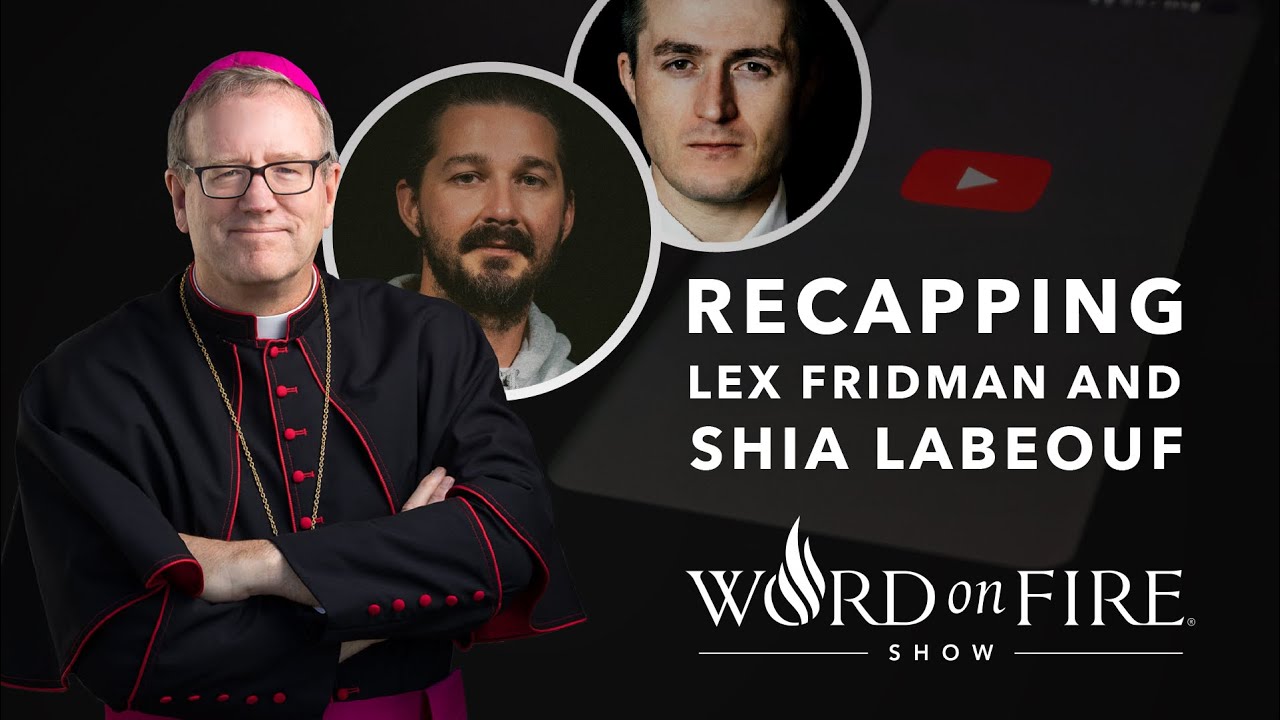
Bp. Barron did a video recap about his interview with Shia LaBeouf and ignored the huge gorilla in the room

Yesterday evening I browsed through a few videos on Youtube.  YT proposed, sua sponte of course, a video with Bp. Robert Barron, himself being interviewed, in a “recap” about his own highly viewed interviews with Lex Fridman (of which I was unaware because I don’t pay heaps of attention to Barron) and with Shia LaBeouf.

The issue of Shia caught my attention because of his conversion and his comments to Barron about the Traditional Latin Mass.  Those comments seemed to catch Barron out of prep and, as Shia came back to it several times, left him somewhat bumfuzzled.

Bp. Barron, to his credit, does a pretty good interview.  He has interesting things to say.   However, there are things that he doesn’t say and should, as when he was interviewed by Ben Shapiro.  For this, which strikes me as a tactic, Barron has for a long time stood oracularly astride what I call the Olympian Middle.

Now that he is the ordinary bishop in a diocese, I hope he will let himself off his ever so carefully braided leash, though I don’t expect that he will.  Not much at least.  He is, after all, in Winona.  Greener pastures await, but not if he leaves the leash.  Not at this time. Not with this present episcopate.

The recap video opens in medias res, no opening title, graphics, with Barron making the statement:

“Maybe we don’t have to be in a stance of kind of mutual suspicion.”

Hence, he did not bury the lead.

Leaving aside what Barron said about the interview with Lex Fridman (a science guy… some of this was very good) I was mainly interested in what he would say about the Shia interview which has garnered 1..5 million views and attention in the secular press, which he acknowledged.

Both Barron and the interviewer, his employee and water carrier, entirely ignored Shia’s comments about the Traditional Latin Mass. He chose instead to remark on the good example of “evangelization” given to Shia by the Franciscans he had met.

I will agree that that was a good topic. However, the issue of the TLM was absolutely the hulking gorilla in the recap and he chose to ignore it. I don’t say that he chose to emphasize something else: he ignored it. He could have addressed it, but he didn’t. Even though he might have wanted to keep the video short, he didn’t mention it at all. Nor did the the water carrier.  If you are going to fulfill the role of the interviewer, you ask about the hulking gorilla in the room.  They clearly agreed ahead of time to ignore it.

That gorilla is now even bigger than before by the fact that he so obviously tried to photoshop it out of the background.

It is difficult to have respect for that choice.

I firmly believe that someone of Barron’s stature could to a great deal to bring various components of the Church in these USA together.

A demographic sinkhole is opening up under the Church right now. Pretty soon, only the committed, of various flavors of Catholic identity, will be left. They will find each other out of sheer need and something interesting will result. One of the groups that will remain strong and prominent will be Catholics who have embraced traditional sacred worship. And not just the elements that most obviously characterize that liturgical tradition. They want all of it. They want the identity and life that goes with it.  This is something many bishops do not get at all.  They think it is about the externals.  Or, on the odd chance that they do get it, even if they are inclined to warm up, they dread even more the wrath of the whatever from high atop the thing.

Here’s the “recap”. The Shia part starts at about 16:45.

YouTube thumbnailYouTube icon

I don’t want this to turn into a bash Barron combox, especially from traddydom’s chattering Id crowd.  If you are going to comment, say something interesting.

Meanwhile, I invite Bp. Barron to learn the Vetus Ordo and then to celebrate a Pontifical Mass.

Posted in The Drill |
15 Comments

Name-Calling Expertise and a VIDEO

I just finished reading a good opinion piece at The Catholic Thing by Fran Maier, “The Fine Art of Name-Calling”.  His first example is, naturally, the Fishwrap (National Schismatic Reporter), truly expert name-callers in the finest Alinsky style.

Do read Fran’s piece.

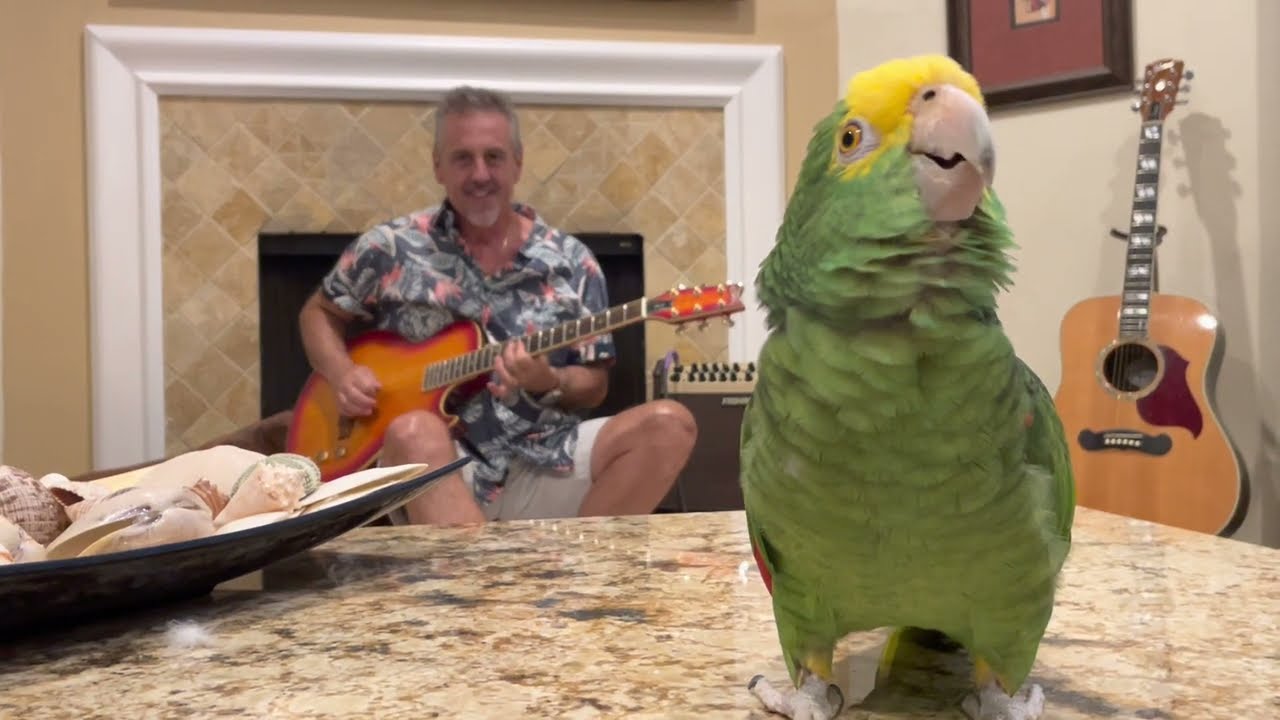
To supplement your consideration of his theme, I received today a video which made me think immediately of, yes, the Fishwrap.   There’s just something about it… some …je ne sais quoi… that made me think of the editorials there, the columns.

YouTube thumbnailYouTube icon

Fun bird.  Makes more sense than… many in the public eye.

BTW… I’m happy to report that when started a web search for “national catholic…” the first thing that came up was the REGISTER.


Posted in Lighter fare | Tagged
4 Comments

12 September 1683: The Battle of Vienna and the Feast of the Holy Name of Mary

In the Divine Praises we pray:

Blessed be the name of Mary, Virgin and Mother.

Today, 12 September, is the Feast of the Holy Name of Mary.

Devotion to the name of Mary was at first in Spain, by Carmelites.  It was associated with the Octave after the Nativity of Mary.  However, in 1683 Pope Bl. Innocent XI – his tomb was long in St. Peter’s upper Basilica but I think he has been moved – put the Feast on the Church’s universal calendar.  Pope St. Pius X established the Feast on 12 September.

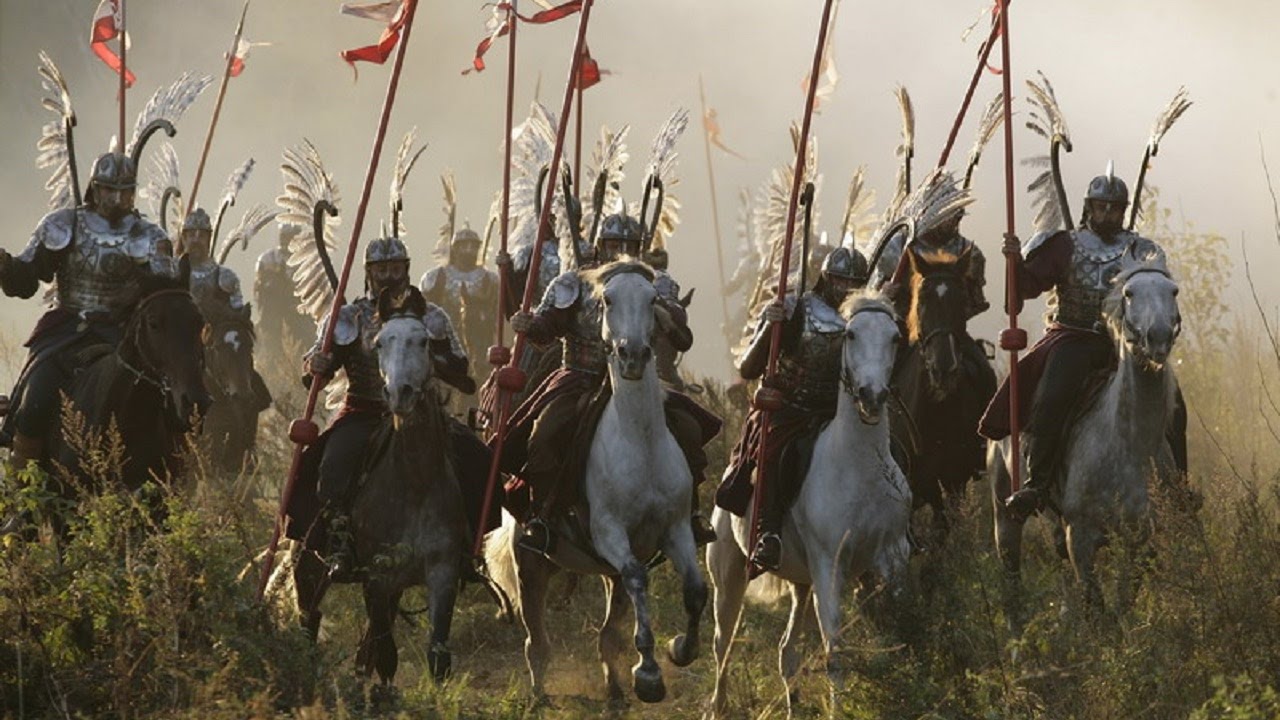
This Feast commemorates the defeat of the Islamic invaders in the Battle of Vienna in 1683.  Vienna was surrounded by the Turks when the King of Poland, John  Sobieski, arrived.  The King served Mass in the morning and lead his smaller force against the invaders, winning a great victory.  81,000 against the Turks’ 130,000.  In the afternoon there was a famous charge by Poland’s 3000 impressive “Winged Hussars”, the largest cavalry charge in history.  Game over for the invaders.

You might not be a Winged Hussar, but your baptism and earthly breath make you, right now, a mighty spiritual warrior whose prayers receive their wings from devotion and intention.  What can not be accomplished through the sincere, focused, confidently loving invocation of the Blessed Virgin by means of the Holy Rosary, repeating her name and the Most Holy Name?

Winged Hussar’s helped to save Christendom.   Christendom, our patrimony, has been squandered.  That doesn’t mean that there are not Christendom causes in our day.  One of them – with painfully blatant urgency – is the preservation of the Traditional Roman Rite.

Will you be a shirker?  Do your part, through grace and elbow grease.  We have to do our part to receive the graces we need.

The Collect of the Feast:

Concede, quaesumus, omnipotens Deus: ut fideles tui, qui sub sanctissimae Virginis Mariae Nomine et protectione laetantur; eius pia intercessione a cunctis malis liberentur in terris, et ad gaudia aeterna pervenire mereantur in coelis.


YouTube thumbnailYouTube icon

Posted in Liturgy Science Theatre 3000, Our Catholic Identity, Our Solitary Boast, Save The Liturgy - Save The World | Tagged ,
3 Comments

ASK FATHER: “Why do most clergy have almost no interest in the Liturgy of the Hours?”

From a reader…

QUAERITUR:

Why do most clergy have almost no interest in the Liturgy of the Hours?  [Maybe they are saying the Roman Breviary!]

I know many lay people who have discovered and love the divine office and expend the effort to learn how to pray and even chant it in the vernacular or Latin. But almost all clergy I know, with few exceptions, show no interest in it whatsoever. A few reasons seem to suggest themselves including the following.

1.      Poor liturgical formation which does not enable them to understand or appreciate the Liturgy of the Hours
2.      Their own personal experience of the obligation to pray the Liturgy of the Hours as an oppressive burden
3.      An already busy schedule that doesn’t have much room for yet another obligation/responsibility (I have sympathy for this one. I know how busy most priests are and how much their time is in demand)
4.      A preference to pray it as a private devotion rather than as public liturgy.

But these are just my guesses. I would like to hear a priest’s thoughts on this question.

Firstly, I think you are asking why clergy aren’t interested in public recitation of the hours.

If this is the case, I rather doubt 1) and 4) not sure about 2) (sometimes it is a real pain) and tend to 3).

You will notice that in most hand missals for the Vetus Ordo, the Traditional Latin Mass, there is a section for the prayers of Vespers for Sundays and Feasts.  It was, in fact, a custom in many places to return to church for sung Vespers.  As a matter of fact in my home parish this was and is still done and has been since … well… probably the better part of 40 years, in Latin, usually with Exposition and Benediction.   And it isn’t clergy who are hard to motivate, it’s lay people.

Vatican II strongly urged that there should be public Vespers on Sundays in major churches.  This is been honored more in the breach than the observance.  The blame for that, and there should be BLAME for that rests squarely on the backs of bishops, who have the chief major church of the diocese, the cathedral.  That ought to be the flagship for such a devotion.  I’d like to know at which cathedrals you can find Sunday Vespers, outside of WestminsterBrompton Oratory in London. St. Eugene and St Nicolas in Paris both have Vespers in the Vetus Ordo live streamed.    The SSPX seminary in these USA stream Vespers.  I am not a fan of chant with organ, btw.   On the Benedictine side, there’s the great Abbey of Le Barroux.  Some of the ICK chapels have streams of Vespers.  I would like to see a return to streaming from Gower Abbey.

Sharing the blame are the liturgical vandals who shattered the prayer life – and identity – of the Church by the abrupt imposition of an artificially cobbled up “Roman Rite”, Novus Ordo.  There were no books with musical notation for the Liturgy of the Hours, which is not the same as the Roman Breviary.  There were and are monastic diurnals, and so forth, but nothing for us seculars.  This lead to all manner of cringeworthy nonsense.  It still with pain and horror recall the truly hideous dreck foisted on us seminarians for morning and evening prayer: it had nothing to do with the true office and the music was less worthy than the theme song of Gilligan’s Island and My Little Pony.  Then again, it was the entire project of the faculty there to infantilize and break the masculinity of the men who entered as men… still.

I digress.   The lack of books was a problem.  Solesmes started to produce helpful books, such as the Liber Hymnarius but that didn’t help with the psalter.  I am talking here about Latin, of course.  The situation for the vernacular was dire in the extreme.

So, there are practical issues to consider.  Lack of materials and lack of time and energy.

If you want to have sung Vespers, do all the work to recruit and train and organize.

Posted in "How To..." - Practical Notes, ASK FATHER Question Box, Liturgy Science Theatre 3000 | Tagged ,
27 Comments

ASK FATHER: Why do we say that Christ rose “again” when He only rose one time?

From a reader…

QUAERITUR:

Why does is “ on the third day He rose AGAIN “. Why the word again?
Every Sunday I wonder…….

Okay… that’s a little scrambled, but I get the sense of the question.

I have received questions similar to this one several times, so I will drill into the matter anew… again… um…

In the Creed of the Mass we say resurrexit.  This is translated “rose again”.   So why “again” if He only rose from death once.

Remember that, although many in Rome and elsewhere seem to have no comprehension of this, LATIN is the official language of the Roman Rite.

The Latin used in the Creed is founded on Greek texts/symbols.  A “symbol” is term for a profession of Faith such as the Creeds we recite.

The “again” confusion is understandable in this age when English is devolving.  If you “rise again” you must have already previously risen.  But we know our Lord rose only once.  So is the English translation heretical?

In the Niceno-Constantinopolitan Creed which we say or sing during Mass, Latin resurrexit is a compound of re– and surgo. The prefix re– conveys the “again” part.

In English, “again” can mean more than mere repetition. Check a good dictionary of English and you will find “again” as “anew” without the concept of repetition.

In our Creed, “He rose again” means “He rose anew”.

So, resurrexit does not mean Jesus rose twice or more. He returned to life “anew”.

Picture a kid who falls while riding his bike.  He gets up again and rides off.  That “again” doesn’t mean that he repeatedly gets up before riding off.  That “again” means “anew”.

“Rose again” for resurrexit is acceptable.

However, in our Latin liturgical worship we also use simple surgo, surrexit for the Lord “rose”.  At Easter, and in the Octave, Holy Church sings “Surrexit Christus spes mea… Christ, my hope, has arisen” in the sequence Victimae paschali laudes.

I hope that helps.

Posted in "How To..." - Practical Notes, ASK FATHER Question Box, Latin, Liturgy Science Theatre 3000 | Tagged
8 Comments

Daily Rome Shot 560, etc.

Here’s a crazy situation. White to move and win.

Please remember me when shopping online. Thanks in advance.

US HERE – UK HERE

Posted in SESSIUNCULA |
2 Comments

With so much that is British in the news right now, I have in mind my dearly missed priest friends in England. VIDEO suggestion.

With so much that is British in the news right now, I have in mind my dearly missed priest friends in England. I haven’t been able to visit them for a long time.

That being the case, here is a trailer for a lovely video made with priests in England about the priesthood.

I think you will benefit from the longer video, from St. Anthony Communications.   It not free, but your buying or renting will help a good apostolate.  HERE

YouTube thumbnailYouTube icon


Posted in Mail from priests, Priests and Priesthood, The Campus Telephone Pole |
Comments Off on With so much that is British in the news right now, I have in mind my dearly missed priest friends in England. VIDEO suggestion.

“The liturgical reform was ‘sold,’ so to speak, on a mighty promise of the countless wonderful blessings it could not fail to bring to the Church.”

I read a story at CNA about a diocese in the Netherlands where the wonderous springtime of Vatican II has revolutionized all of Catholic life.

So successful has the Vatican II reform been, that the Diocese of Roermond has said that, due to a shortage of priests and to save on energy costs, they are was abandoning offering at least one Sunday Mass in every parish. They are shifting to Masses every other week. There are 3.7 million Catholics in the Netherlands, but only 4% regularly attend Mass. The Diocese of Roermond is one of two dioceses with a majority of Catholics.

Recently Peter Kwasniewski gave a talk in Charlotte, NC which was reproduced at Rorate also with the video.  The title of the talk, “The Primacy of Tradition and Obedience to the Truth”.

You can seek that out and read and/or view it via those links, above.  However, here is an excerpt for thought.  Keep in mind my catch-phrase: We Are Our Rites.

[…]

The liturgical reform was “sold,” so to speak, on a mighty promise of the countless wonderful blessings it could not fail to bring to the Church. The Second Vatican Council’s Constitution on the Sacred Liturgy, Sacrosanctum Concilium, begins with a statement of what the Council hoped to achieve, with the liturgical reform as its poster-child:

This sacred Council…desires to impart an ever increasing vigor to the Christian life of the faithful; to adapt more suitably to the needs of our own times those institutions which are subject to change; to foster whatever can promote union among all who believe in Christ; to strengthen whatever can help to call the whole of mankind into the household of the Church.

As my colleague Gregory DiPippo, esteemed editor of New Liturgical Movement, has pointed out on more than one occasion: “None of this has happened. The Christian life of the faithful has not become more vigorous; its institutions have not become more suitably adapted to the needs of our times; union has not been fostered among all who believe in Christ; the call of the whole of mankind into the household of the Church has not been strengthened.”[30]

As I have said, the traditionalists objected to a massive reform as a matter of principle, on the twin basis of reason and faith, because they could not see how it would be right to sacrifice the tradition already certainly known and loved for a future possibility uncertainly known and impossible to love because it had yet no existence. As Joseph Shaw says, in 1971, at the time of the first (so-called Agatha Christie) indult, no one had the freedom to base an argument for keeping the old liturgy on the grounds that it would be “pastoral” to do so, or because of its venerable theology, since “the whole point of the reform was the [promised] pastoral effectiveness, as yet of course untried, of the Novus Ordo Missae, and [the hoped-for assimilation of] the theological insights of Vatican II.”[31] The only defense that might work with the authorities back in 1971 was an artistic and cultural defense.

Today, we are in a vastly different position. We have not only the same principles of faith and reason as our forefathers, we also have behind us a half-century of desolation, desecration, and dramatic decline in church life as a monumental witness of unarguable fact against the prophesied success of the liturgical reform. We know now that the prophets of renewal—even if they wore the mitre of a bishop or the fisherman’s ring—were false prophets who said “peace, peace, when there was no peace” (Jer 6:14, 8:11), who promised plenty but brought down famine. To defend the superiority of Catholic tradition today, we don’t need to have even half the insightfulness of the original traditionalists, because we can see that every one of their predictions has been proved true to the last degree. They predicted that sudden and massive change would have catastrophic effects, and that the particular changes pushed through would undermine Catholic faith and practice. They predicted that where tradition was treasured, the Church would weather the storm and produce good fruits. They have been abundantly vindicated in the event, for it is the very success of the traditionalist renewal against all possible odds that has roused the dragon’s ire.

For us to be traditionalists today requires no great wisdom, for the good and bad fruits have reached full maturity. We still have the same power of reason and the same sensus fidei fidelium that tells us when something is irrational or when it refuses to harmonize with what a sound catechism teaches us. The one thing we need more of, much more of, is courage, fortitude, boldness. The traditionalist movement both benefited from and suffered from the fifteen-year “pax Benedictina,” the peaceful space of coexistence put into place by Benedict XVI. We benefited because many more priests learned the old rite and many more faithful grew to love it. So our movement has grown tremendously in numbers. But we suffered, too, because in a lot of places things became easier for us, and perhaps we grew soft, as soldiers may do in peace time; suddenly we had friendly (or at least not openly hostile) bishops, we had parishes springing up here and there; it seemed like a gently rising and irresistible tide.

And then came the unexpected Traditionis Custodes—whose title can be translated “prison-guards of treachery”—which threw us suddenly back into a state of open conflict that many of us, especially, I would say, the “baby traditionalists,” were quite unprepared for. This is where we really need to step up our game. Everyone who has drifted to the TLM because they love the Eucharistic reverence, the silence, the music, the community of young families, the orthodox preaching, whatever it might be, or even just because they hated masks and hand sanitizer and the branch covidian religion—all of them need to pick up some good books and educate themselves![32] They need to find out what happened in the 60s and why traditionalism as a movement began.[33] They need, in short, to move from being tourists of tradition to apostles of it, from nomads to homesteaders, from admirers to defenders. We were sold a kind of half-truth, that we could have the tradition if we “preferred” it; and that was a false compromise, because tradition is not something we “prefer,” it is something we know and understand, believe and live—it is a treasure without which we cannot live and without which the Church cannot thrive. It is not a preference but a vital necessity, a fundamental identity.

[…]

[30] Gregory DiPippo, “The Revolution Is Over,” New Liturgical Movement, August 1, 2022.

[31] “The 1971 Petition,” Mass of the Ages 210 (Winter 2021), 8.

[32] Start with these two: my Reclaiming Our Roman Catholic Birthright (Brooklyn: Angelico Press, 2020) and Michael Fiedrowicz’s The Traditional Mass: History, Form, and Theology of the Classical Roman Rite (Brooklyn: Angelico Press, 2020).

[33] For this, Stuart Chessman’s book Faith of Our Fathers: A Brief History of Catholic Traditionalism in the United States, from Triumph to Traditionis Custodes (Brooklyn: Angelico Press, 2022) will be indispensable.

Posted in Be The Maquis, Hard-Identity Catholicism, Liturgy Science Theatre 3000, Pò sì jiù, Save The Liturgy - Save The World, Si vis pacem para bellum!, The Coming Storm, The future and our choices, Traditionis custodes | Tagged ,
7 Comments

London’s Brompton Oratory – 1st time prayer after Mass for Charles III and God Save The King and Dies Irae in Requiem for Elizabeth

Sung for the first time at the Oratory upon the accession of King Charles III

Dies Irae at the Requiem Mass for HM Queen Elizabeth

Posted in SESSIUNCULA | Tagged
4 Comments