From a reader….
QUAERITUR:
I’m presenting an argument, I know that “St. Gertrude’s Prayer doesn’t release 1000 souls, although she was very saintly like so I don’t deny that her fervor in prayer released many souls, HOWEVER, I am uneasy with the fact that if it even belongs to this mystic, how can the laity offer the masses, when only priests can offer the mass for the dead. I never get a good feeling when I say this prayer. I avoid it. It’s been said we should reject all prayers that promises to release any amount of souls.
There’s a lot going on here.
First, St. Gertrude was a 13th c. Benedictine, saint and mystic. She received private revelations. She is often called “the Great”. She was an early promoter of veneration of Sacred Heart.
What is the St. Gertrude Prayer?
“Eternal Father, I offer You the most precious blood of thy Divine Son, Jesus, in union with the Masses said throughout the world today, for all the Holy Souls in Purgatory, for sinners everywhere, for sinners in the universal Church, for those in my own home, and in my family. Amen.”
That’s a lovely prayer.
Nowhere in the writings that have come down to us did Gertrude make the claim about 1000 souls.
For the last couple centuries, as a matter of fact, the Church has tried to weed out specious claims that have attached themselves to certain pious practices. This is precisely one of those claims. For this reason the Church abolished the “Toties Quoties” indulgences, etc. (practices by which one could gain any number of plenary indulgences in a day).
So, yes, reject the notion or claim that any prayer will release a certain number of souls from purgatory. However, that doesn’t mean that the prayer is a bad prayer. Claims about it are bad. We can say the same for perfectly acceptable prayers on old holy cards that say that a certain number of days reduced for Purgatory (or other time measures) are obtained. Number of souls or of days? No. But the prayers can still be good!
When we are dealing with indulgences, we are dealing with serious spiritual actions and implications. They should be treated with the sobriety they deserve.
You also mention offering Masses for the Dead. Yes, only priests can say those Masses. However, lay people can ask that they be said and then participate in them. By baptism, lay people share in the priesthood of Christ. They are not priests like ordained priests are. But, by baptism lay people offer spiritual sacrifices. You are enabled to offer acceptable and pleasing sacrifices and prayers to the Lord.
Even if you cannot go to Mass, you can in prayer still participate by desire. Somewhere a Mass is being said right now. There is an old prayer, in the form of a poem, much in the language of a different and more effusive period, about sending your Guardian Angel to be at Mass in your place.
Go, my Angel Guardian dear,
To church for me, the Mass to hear.
Go, kneel devoutly at my place
And treasure for me every grace.
At the Offertory time
Please offer me to God Divine.
All I have and all I am,
Present it with the Precious Lamb.
Adore for me the great Oblation.
Pray for all I hold most dear
Be they far or be they near.
Remember too, my own dear dead
For whom Christ’s Precious Blood was shed.
And at Communion bring to me
Christ’s Flesh and Blood, my food to be.
To give me strength and holy grace
A pledge to see Him face to face
And when the Holy Mass is done
Then with His blessing, come back home.
Yes, it’s a little syrupy, but there’s nothing wrong with that! It is okay to use this emotional and flowery language for prayer along with the more concise and sober prayers we use. Perhaps praying as children pray could be a good idea.
Also, it is a work of mercy to pray for the dead. As such, we are confident that prayer for the dead is good and it is effective. We believe that Christ gave His authority to the Church to bind and to loose, on the basis of, drawing from the treasury of His merits and those of the saints. We should go to this treasury often! It is superabundant. Let’s be generous and not stingy or negligent.
Finally, prayers are not offered in vain. Sometimes God says no, but that is no obstacle. Somehow, our prayers are effective, made so by God, even if we don’t see the fruits of those prayers right away. In the General Judgment, God will show us how these things all work together.

 In the last few months I have written about the return of the finest rosaries I’ve ever seen. Especially
 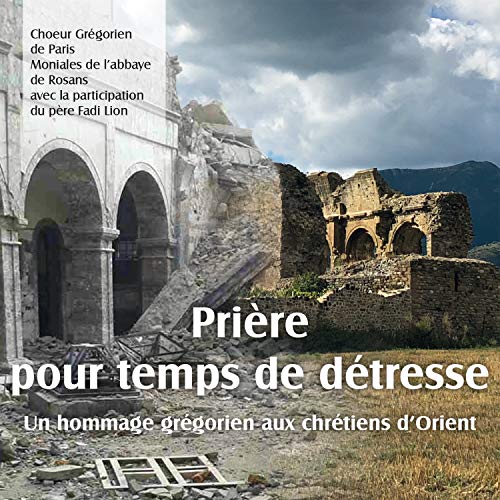 I received a note from a friend, a recommendation about a sacred music “disc”. “Great”, quoth I, “Yet another recording of the Requiem Mass,” or some such.