Dumb down liturgy. Great idea, right?

I seriously object to the dopey notion that liturgy has to made “understandable”. First, liturgical worship involves mysteries, such as that one about Christ turning the substances of bread and wine into His Body and Blood. How is that easy?  Indeed, Mass ought to be hard!

But no… let’s dumb everything down.  How insulting to congregations that attitude is.

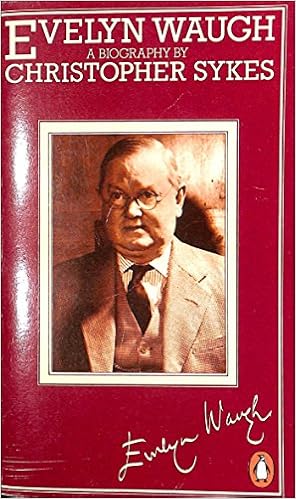
A long-time reader and benefactor of this blog (thanks!) sent me this quote about the changes (Bugnini) made to Holy Week from Evelyn Waugh: A Biography by Christopher Sykes (US HERE – UK HERE) with added emphases:

“(in the mid-1950s) ….the new service retained much of the beauty of the old, and the overwhelmingly impressive Maundy Thursday Mass, the ‘Altar of Repose’, the night offices of Tenebrae, and the liturgical masterpiece, the Good Friday ‘Mass of the Presanctified’, remained intact. Not for long. The belief grew that the celebration of Holy Week would be more valuable, would compel a greater corporate sense in the Church, if it was expressed in ceremonies which did not involve a keen appreciation of symbolism, if they were more easily understood by ordinary people and invited more ‘mass participation’ in the form of community singing; if they appealed less to the sense of awe, they avoided the accusation of meretricious aestheticism, above all of excessive indulgence of the sense of the past. Nowhere did the notion of a ‘Century of the Common Man’ exert more fascination than on Roman Catholic clergy. The entire edifice of the Holy Week Liturgy was swept away as being over-elaborate, and it was substituted by services of a more everyday kind. This was the beginning of a movement which was to reduce all Roman Catholic ceremonial to commonplace and to abolish the traditional order of the Mass in favour of a prayer-meeting in which only essential vestiges of the traditional celebration were retained.

Posted in Hard-Identity Catholicism, Liturgy Science Theatre 3000, SUMMORUM PONTIFICUM | Tagged , , , , ,
18 Comments

FSSP North America Blog

Okay… I’ll give this a boost. From my email…

I am the editor of the Missive (https://fssp.com/the-missive),
the official blog of the North American District of the FSSP. We are
trying to expand our readership, and I was wondering if I may request
a mention for the Missive on your blog. Thank you!

Posted in "How To..." - Practical Notes, Mail from priests, Si vis pacem para bellum!, SUMMORUM PONTIFICUM, The Campus Telephone Pole | Tagged
Comments Off on FSSP North America Blog

“Christ with me, Christ before me, Christ behind me,…” The Lorica of St Patrick

During these dark days, we can benefit from the use of this prayer, called the Breastplate, or Loríca of St. Patrick, “The Cry of the Deer” (Latin Lorica is pronounced lo-REE-ka).  It is said that St. Patrick (+461) sang this when an ambush was set for him so that he could not go to Tara to evangelize.  Patrick and companions were then hidden from the sight of their enemies, who thought that they were deer when they passed by.  However, some scholars date the prayer to the 8th c.  Either way, this is a mickle, puissant prayer!

The Latin word loríca means “a leather cuirass; a defense of any kind; a breastwork, parapet”.  In effect, it means “armor”.   “Loríca” is also associated with an rhythmic invocation or prayer especially for protection as when going into battle.

The Lorica of St. Patrick is rooted in an un-confused belief in the supernatural dimension of our lives, that there truly is a spiritual battle being waged for our souls.  This prayer reflects our absolute dependence on the One Three-Personed God.

One could pray this prayer each and every morning, upon arising.

On St. Patrick’s Day, instead of indulging in meat on a Friday of Lent (pace bishops, etc.) and drinking green beer, pastors of parishes should invite people to come to Church for confessions, recitation of the Rosary, Mass, Exposition, the praying of the Lorica, Benediction.  Think about it.  Suggest it to your priests.

Latin English
Sancti Patricii Hymnus ad Temoriam. The Lorica, Breastplate, of St. Patrick (The Cry of the Deer)


Ad Temoriam hodie potentiam praepollentem invoco Trinitatis,
Credo in Trinitatem sub unitate numinis elementorum.
I arise today
Through a mighty strength, the invocation of the Trinity,
Through belief in the Threeness,
Through confession of the Oneness
of the Creator of creation.
Apud Temoriam hodie virtutem nativitatis Christi cum ea ejus baptismi,
Virtutem crucifixionis cum ea ejus sepulturae,
Virtutem resurrectionis cum ea ascensionis,
Virtutem adventus ad judicium aeternum.
I arise today
Through the strength of Christ’s birth with His baptism,
Through the strength of His crucifixion with His burial,
Through the strength of His resurrection with His ascension,
Through the strength of His descent for the judgment of doom.
Apud Temoriam hodie virtutem amoris Seraphim in obsequio angelorum,
In spe resurrectionis ad adipiscendum praemium.
In orationibus nobilium Patrum,
In praedictionibus prophetarum,
In praedicationibus apostolorum,
In fide confessorum,
In castitate sanctarum virginum,
In actis justorum virorum.
I arise today
Through the strength of the love of cherubim,
In the obedience of angels,
In the service of archangels,
In the hope of resurrection to meet with reward,
In the prayers of patriarchs,
In the predictions of prophets,
In the preaching of apostles,
In the faith of confessors,
In the innocence of holy virgins,
In the deeds of righteous men.
Apud Temoriam hodie potentiam coeli,
Lucem solis,
Candorem nivis,
Vim ignis,
Rapiditatem fulguris,
Velocitatem venti,
Profunditatem maris,
Stabilitatem terrae,
Duritiam petrarum.
I arise today, through
The strength of heaven,
The light of the sun,
The radiance of the moon,
The splendor of fire,
The speed of lightning,
The swiftness of wind,
The depth of the sea,
The stability of the earth,
The firmness of rock.
Ad Temoriam hodie potentia Dei me dirigat,
Potestas Dei me conservet,
Sapientia Dei me edoceat,
Oculus Dei mihi provideat,
Auris Dei me exaudiat,
Verbum Dei me disertum faciat,
Manus Dei me protegat,
Via Dei mihi patefiat,
Scutum Dei me protegat,
Exercitus Dei me defendat,
Contra insidias daemonum,
Contra illecebras vitiorum,
Contra inclinationes animi,
Contra omnem hominem qui meditetur injuriam mihi,
Procul et prope,
Cum paucis et cum multis.
I arise today, through
God’s strength to pilot me,
God’s might to uphold me,
God’s wisdom to guide me,
God’s eye to look before me,
God’s ear to hear me,
God’s word to speak for me,
God’s hand to guard me,
God’s shield to protect me,
God’s host to save me
From snares of devils,
From temptation of vices,
From everyone who shall wish me ill,
afar and near.
Posui circa me sane omnes potentias has
Contra omnem potentiam hostilem saevam
Excogitatam meo corpori et meae animae;
Contra incantamenta pseudo-vatum,
Contra nigras leges gentilitatis,
Contra pseudo-leges haereseos,
Contra dolum idololatriae,
Contra incantamenta mulierum,
Et fabrorum ferrariorum et druidum,
Contra omnem scientiam quae occaecat animum hominis.
I summon today
All these powers between me and those evils,
Against every cruel and merciless power
that may oppose my body and soul,
Against incantations of false prophets,
Against black laws of pagandom,
Against false laws of heretics,
Against craft of idolatry,
Against spells of witches and smiths and wizards,
Against every knowledge that corrupts man’s body and soul;
Christus me protegat hodie
Contra venenum,
Contra combustionem,
Contra demersionem,
Contra vulnera,
Donec meritus essem multum praemii.
Christ to shield me today
Against poison,
against burning,
Against drowning,
against wounding,
So that there may come to me an abundance of reward.
Christus mecum,
Christus ante me,
Christus me pone,
Christus in me,
Christus infra me,
Christus supra me,
Christus ad dextram meam,
Christus ad laevam meam,
Christus hine,
Christus illine,
Christus a tergo.
Christ with me,
Christ before me,
Christ behind me,
Christ in me,
Christ beneath me,
Christ above me,
Christ on my right,
Christ on my left,
Christ when I lie down,
Christ when I sit down,
Christ when I arise,
Christus in corde omnis hominis quem alloquar,
Christus in ore cujusvis qui me alloquatur,
Christus in omni oculo qui me videat,
Christus in omni aure quae me audiat.
Christ in the heart of every man who thinks of me,
Christ in the mouth of everyone who speaks of me,
Christ in every eye that sees me,
Christ in every ear that hears me.
Ad Temoriam hodie potentiam praepollentem invoco Trinitatis. I arise today
Through a mighty strength, the invocation of the Trinity,
Credo in Trinitatem sub Unitate numinis elementorum.
Domini est salus,
Domini est salus,
Christi est salus,
Salus tua, Domine, sit semper nobiscum.
Through belief in the Threeness,
Through confession of the Oneness
of the Creator of creation.
[Salvation is from the Lord,
Salvation is from the Lord,
Salvation is from Christ,
Your Salvation, O Lord, is with us always.]
Amen. Amen.


Posted in "How To..." - Practical Notes, PRAYER REQUEST, Semper Paratus, The Coming Storm | Tagged ,
6 Comments

Fr. Stravinskas breaks it down to the essential

At Catholic World Report, we find an address Fr. Peter Stravinskas recently gave to a chapter of Legatus about liturgical issues.   He breaks down, Barney style, some super important issues which, today, are controversial. Inter alia he:

  • strongly endorses Robert Card. Sarah and his invitation to priests to celebrate Mass ad orientem
  • he explains the utility of Latin in a highly mobile age
  • examines distribution of Communion by lay people
  • looks at Communion in the hand – quite a bit of space, to this! – and advocates Communion on the tongue while kneeling

He has an amusing rejoinder to those who say that we are just trying to “turn the clock back”.

These issues are controversial today.  They shouldn’t be.  But they are.

They are controversial and they should be.   We must talk about them.  In fact, we have to have the fight about them, that’s how important they are.

Why?  Because our sacred liturgical worship is our collective ecclesial unum necessarium.

I have long advocated a widespread increase in the use of the traditional Roman Rite from the conviction that it will, as Pope Benedict intended, exert a strong “gravitational pull” (my image) on the way the Novus Ordo is celebrated.   As priests learn the older form, their ars celebrandi changes.  In turn, that will have a knock on effect on congregations and, thereafter, the whole life of the Church in every sphere.

Why?  Because WE ARE OUR RITES!

As I have been pounding away at for years, decades as a matter of fact, if by the virtue of justice we are bound to give to human persons what is owed to them, then also by the virtue of religion we are bound to give to the Divine Persons what is owed to them, chief of which is worship.   

In our relationships and in our actions there is a hierarchy.  What goes to God must be first and foremost.

If we don’t have worship of Almighty God squared away, then nothing else that devolves in our hierarchies of relations and actions will be properly ordered and effective.

This is why I am constantly harping on the fact that no initiative we undertake in the Church will be effective unless it begins in worship pleasing to God and returns to worship.

God helps us to get all of this straight by giving us a Church with His own authority to teach us and to tell us how to worship in sacred liturgy. The Church’s sacred liturgical worship is pleasing to God when we are faithful to it and we give our very best to it.

Hence, my perpetual lament – echoed just the other day – that priests and bishops (especially bishops!) get up in front of people and make speeches about this or that issue but they almost never bring liturgical worship of God into the picture.   When they occasionally do, I get pretty worked up (for example HERE).

It is as if most bishops see themselves as senators or aldermen rather than as priests.

Again, all our initiatives are doomed to failure if they are not rooted – first – in sacred liturgical worship.

Remember that whole thing about the Eucharist (Itself and Its celebration which is Mass) being the “source and summit” of our Christian lives?

Again, we are our rites.  Change them and you change our identity and, hence, our impact in the world around us (as in “Save The Liturgy, Save The World“)… not to mention our path to salvation.

Hey bishops and priests!  Wanna promote social action with real fruits?  Then revitalize worship!  Clean up the abuses!  Say the Black and do the Red (after all, each gesture and worship in our liturgical rites is Jesus Christ the High Priest gesturing and speaking)!  Get down on your knees before God!

Stravinskas hit for six on this point in the opening section of his talk, where he wrote/said:

I told an archbishop-friend of mine that I was going to address business people about liturgical concerns. He was slightly bemused [sigh] and said, “With all the problems in the Church and the world, you’re going to talk about liturgy?” He went on: “Of all the clergy I know, you and Cardinal Sarah are at the top of my list, but I don’t get the stress on liturgy.” I replied: “The principal reason for the existence of the Church is to offer fitting praise and worship to Almighty God. There is nothing more important. [Do I hear an “Amen!”?] If we can’t get that right, we can’t get anything else right, either.[My exact perennial and incessant point.] Indeed, every other good thing we may want to accomplish flows from our life of worship.” He seemed to “get it,” although I am not sure if it will stick with him long-term. I hope I can have a more lasting effect on you.

I’ve disagreed with Fr. Stravinskas on a few practical issues now and then, but there is absolutely not the hint of a question that, on the connection of liturgy and – well – EVERYTHING that we hold dear as Catholics, he truly gets it.

Would that in the future and soon more priests and bishops, especially, will get it.  Then we all have to close ranks and really get to work… together.

Enough of the fragmentation and turf-defending B as in B, S as in S!

Lay people: You have a role to play.  You have great influence.  You have a right to sound sacred liturgical worship, faithful to the Church and consistent with what our forebears understood, loved, foster and bequeathed to us as our rightful and honored patrimony.

Priests: I’m going to promote myself.  If you want a serious talk about these matters with your own parish, I’ll come and do the heavy lifting.  I always weave this stuff into what I speak about, for example during parish missions.  Just ask the great iPadre, whose parish I recently visited for a parish mission.   I’m sure that Stravinskas and other good priests who get it would also do this well and often.   We should form a team, a kind of Joint Sacred Liturgy Task Force…. Joint Catholic Identity Task Force?  Joint SURVIVAL Task Force? Same thing.

We need a revitalization of our worship here, there and everywhere.  Let’s get on it, together.

BASIC ACTION ITEMS:

  • Liturgical catechesis
  • Communion on the tongue and kneeling
  • Fewer lay ministers
  • Ad orientem worship

¡Hagan lío!


Posted in ¡Hagan lío!, "How To..." - Practical Notes, Hard-Identity Catholicism, Liturgy Science Theatre 3000, Mail from priests, Si vis pacem para bellum! | Tagged , , , ,
6 Comments

The Three Days of Darkness 2018 are underway in LA!

The Three Days of Darkness are underway in LA! (aka Religious Education Conference)

I wasn’t invited.

It might be interesting to have a photopost of your favorite moments.

Videos HERE

We can start with the front page, where there is an ad for the slithery, ambiguous book from the homosexualist Jesuit, on top of an ad for the mostly geriatric ultra-liberal Ass. of U.S. Catholic Priests.

It is instructive to go to the site of the Ass. of U.S. Catholic Priests to see what their agenda items are.

Telling.

Posted in Liberals, Lighter fare, Pò sì jiù | Tagged
21 Comments

ASK FATHER: Blessing objects through plastic wrapper, box, etc.

From a reader…

QUAERITUR:

Today I asked a priest to bless a green scapular. I had the package open for it to be taken out, but to my surprise the priest left it inside the plastic packaging, sprinkling the holy water on the outside.

Can the scapular be considered blessed even if the holy water did not touch it?

Green scapular, eh?  Did you know that a parish in the Diocese of Madison, where we have had a couple of Pontifical Masses, was slated to be the Shrine of the Green Scapular?  It was not to be.

First, let’s review. There are invocative blessings, by which we call down down God’s graces and blessings on a person. There are also constitutive blessings, by which we ask God to make a person, place or thing a blessed person, place or thing, that is, to rip it from the Prince of this world, and hand it over to the King. That’s, by the way, the distinction that the new and dreadful “Book of Blessings” sought to eliminate. But I digress.

Constitutive blessings have pretty good penetration power and great range, even in the vernacular. Yes, they can go through plastic wrappers and even boxes, as in the case of salt to be blessed or statues, etc. Holy Water is blessed inside a container, although in the older, traditional rite we open it to mix in blessed salt.

To give you an idea of penetration and range, I once blessed the entire 19th Precinct of Manhattan from an airplane flying up the East River, through the glass double window.  Wow, right?  I can assure you, it worked…. I think.  I’m working on another plan to do a better job down the line.

You might compare the penetration of constitutive blessings to those great slow mo videos of bullets going through clear ballistic gel blocks.

For visual example of what the Devil feels when he gets hit with one of these bad boy blessings, imagine that your priest just used English and gave the blessing to that green scapular still in the package. That’s like a .22LR…

Not bad, right?

But wait!  Here’s the Latin version, more like a .357 Magnum…

And there’s more.

Here’s the Latin version in cassock and stole while wearing the liturgical Beretta.

YouTube thumbnailYouTube icon

When a bishop consecrates something, for example a chalice or a bell, I suppose it would be like this a 12 gauge slug… although, come to think of it, it would unlikely for the chalice and the bell to be in boxes or wrappers… but who cares, it’s cool video!

So, what – you are by now asking – would an ordination to the priesthood do to the Devil?

YouTube thumbnailYouTube icon

Okay, maybe I’ve gotten a little off topic.

I’m ratcheted up right now because I’m visiting my mother, the retired cop, and celebrating her 83rd birthday. We went to the range this morning to try out her new 9mm Glock, as one does with one’s mom.  She hasn’t really shot much since she retired in ’87, and she hasn’t ever shot anything but a light-weight .38sp snub revolver.

Results? Mag after mag she shot groupings like this:

15′

And with the Viridian laser [HERE] engaged…

I’m pretty chuffed.  Way to go Mom!

So, with that evidence I can assure you that your green scapular is blessed, even though it was still in the wrapper.  My mother would agree.

And I’ll say to all the priests out there reading this:

Use the older, traditional Rituale Romanum and use Latin.

Make sure the Devil has a really bad day.


Posted in "How To..." - Practical Notes, ASK FATHER Question Box, Hard-Identity Catholicism, Lighter fare, Liturgy Science Theatre 3000, Semper Paratus, Si vis pacem para bellum! | Tagged ,
12 Comments

Card. Kasper: homosexual relationships are analogous to marriages

Card. Kasper, ladies and gentlemen.   The Gift that Keeps on Giving.

From LifeSite:

Cardinal Kasper: Homosexual unions are ‘analogous’ to Christian marriage  [Sure! Both of them involve carbon-based life forms!]

March 14, 2018 (LifeSiteNews.com) – Cardinal Walter Kasper, whose theology appears to be the chief inspiration for Pope Francis’ doctrine on giving Holy Communion to people living in states of adultery in second marriages, now appears to be claiming that homosexual unions contain “elements” of Christian marriage and are even “analogous” to it in a way that is similar to the relationship between the Catholic Church and non-Catholic Christian communities.  [Get it?  Those other Communities aren’t living the “ideal” but what they have is great.]

Moreover, the cardinal is attributing his claims to Pope Francis’ apostolic exhortation Amoris Laetitia, despite the fact that the document explicitly contradicts him.

“The pope does not leave room for doubt over the fact that civil marriages, de facto unions, new marriages following a divorce (Amoris Laetitia 291) and unions between homosexual persons (Amoris Laetitia 250s.) do not correspond to the Christian conception of marriage,” writes Kasper in a recently-released book on Amoris Laetitia.

“He says, however, that some of these partners can realize in a partial and analogous way some elements in Christian marriage (Amoris Laetitia 292),” continues Kasper. [?!? Such as…. fighting over balancing the check book?   Seriously.  What on earth is he thinking?  What is under consideration is either a proper sort of charity involved in proper friendship, or it is a deep twisting of friendship through other entirely uncharitable activities.]

Kasper compares such relationships with the relationship between the Catholic Church and non-Catholic Christian groups, whom Vatican II says contain “elements of sanctification and truth” of the Church.  [Sigh.  Interesting comparison. Let’s turn the sock inside out.  So, being Catholic is like being sacramentally married, and being a Lutheran is like … what?  Being a couple of homosexuals?]

“Just as outside the Catholic Church there are elements of the true Church, in the above-mentioned unions there can be elements present of Christian marriage, although they do not completely fulfill, or do not yet completely fulfill, the ideal,” adds Kasper.  [And there it is, ladies and gentlemen, “the ideal”!   No one should be held to an “ideal”.]

The statements appear in Kasper’s new booklet, “The Message of Amoris Laetitia: A Fraternal Discussion,” which was recently published simultaneously in German and Italian.

In the same work, Kasper also insinuates that Amoris Laetitia opens the way to permit the use of contraception, a practice that is universally condemned in the Scriptures, Church Fathers, and the Papal Magisterium, most recently by Popes Paul VI and John Paul II.  [The gift that keeps on giving, ladies and gents.]

Kasper notes that in Amoris Laetitia, the Pope only “encourages the use of the method of observing the cycles of natural fertility,” and “does not say anything about other methods of family planning and avoids all casuistic definitions.” In the context with the book’s passages on communion for those who commit adultery in second “marriages,” which use similar language, Kasper appears to be claiming that the pope is allowing for exceptions to the Church’s condemnation of artificial birth control.

Kasper contradicts John Paul II – and even Amoris Laetitia

Kasper’s words regarding homosexual unions appear to directly contradict not only the doctrines of John Paul II but even Amoris Laetitia, the document he purports to explain.

Under the papacy of John Paul II and the administration of Cardinal Josef Ratzinger (later Pope Benedict XVI), the Holy See’s Sacred Congregation for the Doctrine of the Faith expressly repudiated the idea that homosexual unions can be “analogous” to marriage. The document was issued in 2003 and received the approval of John Paul II.  [HUH?  2003?  That was 15 years ago!  So much has changed since then.]

“There are [NB:] absolutely no grounds for considering homosexual unions to be in any way similar or even remotely analogous to God’s plan for marriage and family,” the Congregation declared. “Marriage is holy, while homosexual acts go against the natural moral law. Homosexual acts close the sexual act to the gift of life.’ They do not proceed from a genuine affective and sexual complementarity. Under no circumstances can they be approved.”

The paragraphs in Amoris Laetitia cited by Kasper to justify treating homosexual unions as “analogous” to marriage contain no clear reference to homosexual unions but simply refer to the “constructive elements in those situations which do not yet or no longer correspond to her teaching on marriage.”  [Okay.]

However, Amoris Laetitia states in paragraph 251, “In discussing the dignity and mission of the family, the Synod Fathers observed that, ‘as for proposals to place unions between homosexual persons on the same level as marriage, there are absolutely no grounds for considering homosexual unions to be in any way similar or even remotely analogous to God’s plan for marriage and family.’” Francis and the Synod Fathers are quoting the same 2003 document of the Congregation of the Doctrine of the Faith mentioned above.

[…]

Sigh.

Posted in Liberals, Sin That Cries To Heaven, You must be joking! | Tagged , ,
14 Comments

NEEDFUL BOOKS NOTICE and a maternal CHALLENGE COIN update

As the poet said, “Ad hoc, ad loc, and quid pro quo! So little time! So much to know!”

I get lots of books from publishers. They are nearly all, I am sure, sound, since the publishers are sound.  I can’t possibly read everything I get. Still, I like to bring the titles to your attention.

For example, before I hopped the hurtling tube of flaming death to the southern climes for a visit to my mother…

BTW… I was finally able to give her the NRA – Law Enforcement challenge coin which one of you readers kindly sent me to bring to her (retired career cop that she is):

NRA!

Back to books.

I read a post at the NCReg by a priest of the Diocese of Brooklyn, Fr. John Cush.  He lists 10 books that everyone should have on their shelf.

Fr. Cush starts with an all too common and yet all too alarming anecdote about a priest who, after seminary, essentially didn’t read anything else to keep him fresh or up to date in theology.   You would think that priests would want to keep delving.  Right?  All professionals of note are required to stay up to date in their fields.   But priests are not just professionals.  They ought to love what they are and what they do, for love of God and neighbor.  When you love you want to know more about whom you love.  Right?  Not interested?  It’s not love.

Fr. Cush recalls the wise adage: “Beware the priest who has NO BOOKS in his room, because he’s probably not keeping up with his intellectual formation. Beware also the priest who has LOTS OF BOOKS in the room and the binding is not cracked on any of them, because he has allowed himself to become just a book collector.”

I am going to exempt myself from that last part, because I have literally stacks of uncracked books, because they rain down on my like something from the old testament.

Here are Father’s recommendations with links.  He comments on them, over there.

1. A good Catholic study Bible in English is a necessity. For me, the Ignatius Bible: Revised Standard Version — Second Catholic Edition (Ignatius Press, 2005) is a jewel to be treasured. [US HERE – UK HERE] This edition was revised according to norms set forth in Liturgiam Authenticam (2002). The Ignatius Catholic Study Bible: New Testament (Ignatius Press, 2010) has some excellent notes by Dr. Scott Hahn and Curtis Mitch, and they also publish a large number of study Bibles for the Old Testament with some solid, orthodox notes.  [I also like the Navarre series.]

2. Absolutely essential for a theological library is the Catechism of the Catholic Church. [US HERE – UK HERE] Be sure to get the second edition of the Catechism from 1997! The Companion to the Catechism of the Catholic Church and the Compendium to the Catechism to the Catholic Church are also very helpful to someone creating a theological library.

3. A great collection of the main texts of the Catholic Church is to be found in Enchiridion Symbolorum: A Compendium of Creeds, Definitions, and Declarations of the Catholic Church(Ignatius Press, 2012) (Latin and English Edition). [US HERE – UK HERE] This new 2012 edition takes the reader through the pontificate of Pope Benedict XVI and has many (but not all) of the Magisterial Documents. All of Pope Francis’ work is not yet collected in this English edition, but hopefully will be soon. You can find the Holy Father’s teachings online at Vatican.va. [It is really important for priests to have this book… not to mention the first two.]

4. The Documents of Vatican II, with Notes and Index: Vatican Translation (Alba House, 2009) [US HERE – UK HERE] offers the sixteen documents of the Council along with a faithful notes and a handy index. A Catholic should know what Vatican II actually states, not just what other people say Vatican II says. [NB: The translations of the Vatican II document are not without their problems.  Also, I wonder if it might not be equally if not more useful still to the documents of the Council of Trent and the Roman Catechism.  Vatican II?  I guess we all have to have that, too.]

5. Saint Thomas Aquinas’ Summa Theologica can be found in a brand-new edition, which brings this massive, but essential work into one volume (824 pages, albeit with small print) in Jake E. Steif’s Summa Theologica: The Only Complete and Unabridged Edition in One Volume (2017). [US HERE – UK HERE] There are, of course, so many different editions one could choose for the Summa, but this is a fairly new and concise one. A good introductory guide might be Peter Kreeft’s A Shorter Summa: The Essential Philosophical Passages of St. Thomas Aquinas Summa Theologica(Ignatius Press, 1993). [US HERE – UK HERE] Whether you consider yourself to be a Thomist theologically or not, Saint Thomas’ thought is the building block for all Catholic theology. [Anything by Peter Kreeft is great.  Read lots of him.]

6. Joseph Cardinal Ratzinger’s Introduction to Christianity: Revised Edition (Ignatius Press, 2004) [US HERE – UK HERE] is a classic, really setting the scene for an understanding of late 20th-century Catholic theology. The product of this young professor’s study and experience after Vatican II and written in 1968, the future Pope’s work can set the reader on a proper path for the study of theology.  [Here’s where I must make an intervention.  Like so many good priests and bishops, Father falls into the sin of omission.  He is strong on the issue of theology.  However, when it comes to Ratzinger, he ought perhaps, even more than this fine classic, have pointed the shelf-filler to Spirit of the Liturgy  US HERE – UK HERE.  Why?  Because everything we do and hope to do in the Church must flow from and return to our sacred liturgical worship of God.  Time and again we read great speeches and talks and sermons about A and B and C and almost never do they mention liturgy.  Remember… WE ARE OUR RITES.  We ignore worship at our peril.  It is the theology proposed in the other books.]

7. Aidan Nichols’ The Shape of Catholic Theology: An Introduction to Its Sources, Principles, and History [US HERE – UK HERE] (Liturgical Press, 1991) is, in my opinion, the best introduction to the study of theology for any student. It is a book that I have used since I was beginning my own theological studies and it is one that I use today as a professor. It offers a proper understanding of the fonts of Divine Revelation, namely Sacred Scripture and Sacred Tradition, as well as an understanding of the Church’s Magisterium. It is just a clear, easily readable introduction. [Nichols is, indeed, very good and I warmly endorse this book.  Get the updated edition. Nichols also wrote a book on Ratzinger’s theology.  Worthwhile, especially read in tandem with Tracey Rowland’s Ratzinger’s Faith.  US HERE – UK HERE]

8. Boniface Ramsey’s Beginning to Read the Fathers: Revised Edition (Paulist Press, 2012) [US HERE – UK HERE] gives a thematic overview to the great thinkers of the Patristic period, and, as an introduction, might inspire the reader to really study the Fathers of the Church.  [His book on Ambrose is really good.]

9. Richard A. Spinello’s The Encyclicals of John Paul II: An Introduction and Commentary(Rowman & Littlefield Publishers, 2016) [US HERE – UK HERE] is a masterful edition to the thought of this great Saint, whom I pray will one day be a Doctor of the Church. [He could be the Doctor Misericordiae.  Indeed every priest should also read Familiaris consortio.]

10. For a great introduction to some great spiritual writers and their theology, check out Jordan Aumann’s Christian Spirituality in the Catholic Tradition (Ignatius Press, 1985). [US HERE – UK HERE] From the early Church to post-Tridentine period to the Twentieth Century, the reader’s appetite will be whetted to want to know more about our great saints.

Of course the list can be increased and multiplied.  This is just one priest’s take on the basics.  Another might make other good suggestions.  It is a good list to work with.  He asks for your recommendations over at his post.  HERE

Sooooo many to recommend.

Card. Sarah’s books are good.

Perhaps your parish priest might need some or all of these books?  How’s his preaching?

It is a sad state of affairs that priests these days can’t give more time to being men of learning… which they can then pass on.  Instead they have lots of busy work, much of which has little to do with their priesthood.  Augustine suffered mightily from his sarcina that he had to carry.   He longed for otium in negotio.  As should all priests of every age, size, and background.

When you are in someone’s space, living or work, look for their books.  Of course you also, these days, need also to take into consideration their Kindle!

YES!  You need a Kindle.  US HERE – UK HERE

It would be a spiffy gift to load up a Kindle with great books and give it to a priest.
 

Posted in "How To..." - Practical Notes, Mail from priests, REVIEWS | Tagged
13 Comments

A “digital” Synod?

When I worked in the PCED, frustrated with the resistance to any new tech, I developed the phrase, “Here in the Vatican we update our equipment every 50 years, whether it needs it or not.”

I note with apprehensive amusement a piece at Crux entitled

Synod tiptoes into digital age, but are bishops thinking big enough?

After the way the last Synod (“walking together”) was rigged, who can tell what “digital” and “big enough” might entail?

I am skeptical that they will be able to organize and implement any tech more complicated than a bird cage.

In any event, as Zuhlio sang during the last goat rodeo there will still be Fifty Ways To Rig A Synod.

Posted in Lighter fare, Synod | Tagged
5 Comments

My View For Awhile: Maternal Edition

Having just returned from a fast assault on Chicago’s fare…

… and to work out details of the portable altar and sacristy for the upcoming pilgrimage, I’m off to the depths of the south.

I’ve been getting texts from Rome since I arose (at 3:15) about the splatter of front page coverage of Benedict XVI claiming that Francis thought is consistent with his own.

This is rather interesting. That’s just a few of the photos I got. Lot’s of coverage. Probably coordinated.

Remember this?

And so we board, yawning and reading tiny print in photos of newspapers sent from the other side of the pond.

And this… in case you forgot where you are…

More later.

UPDATE:

I’m in Atlanta, waiting for another flight.  Meanwhile, I’m reading the coverage of Benedict’s letter.   Liberal Leftist La Repubblica says that Benedict several things:

ROMA – Benedetto XVI esce dal silenzio, per scrollare via bruscamente le frange tradizionaliste[anyone who believes in God is “traditionalist fringe” for this paper] che tentano di trascinare il suo nome nelle beghe contrarie all’attuale pontefice. Il Papa emerito scrive una lettera alla vigilia del quinto anniversario del conclave che ha eletto Bergoglio. E contesta lo “stolto pregiudizio per cui papa Francesco sarebbe solo un uomo pratico privo di particolare formazione teologica o filosofica, mentre io – aggiunge Ratzinger – sarei stato unicamente un teorico della teologia che poco avrebbe capito della vita concreta di un cristiano di oggi”.[Strange.] Un cenno – quest’ultimo – con il quale il pontefice tedesco sembra rivendicare una considerazione diversa anche per il magistero e l’opera che lui ha portato avanti negli 8 anni trascorsi sul soglio di Pietro. E infatti nella lettera viene ribadita “una continuità interiore” tra i due pontificati “pur con tutte le differenze di stile e di temperamento”.

What I find so odd is that phrase, that it’s a, “stupid (stolto… foolish, moronic, idiotic) prejudice by which Pope Francis would be only a practical man, without specific theological or philosophical formation, whereas I would merely a theoretician of theology who would little understand the concrete life of a Christian today.”   First, the style of the language is … how to put this… looser than what one might expect from Ratzinger.  Second, it is self-referential… which anyone who has read Ratzinger over the years will recognize as something which he would vigorously avoid.  As a matter of fact, there is a full doctoral thesis available in the topic of “self-referentiality in the writings of Joseph Ratzinger”.   He abhors it.   He doesn’t abhor his own experience as a starting point.  In the past, I would have opined that he would avoid such a self-defensive reference.

In any event, they’ve changed my gate, so I have less time in the lounge than I originally thought.

Meanwhile…

Posted in On the road, What Fr. Z is up to |
22 Comments