More of Fr James Martin’s whining

CLICK

The question in this tweet from CUA’s Prof. Chad Pecknold pretty much sums it up about this Jesuit.

First, the screenshot of Martin’s loopy comment.  Then Pecknold:

No. I don’t think that Martin believes that the state of grace is important.  I am not entirely sure that he believes in grace in the same way that the Church believes.   At least I would like for him to clarify that he does with an explicit statement.

Who says that only “gay” (I hate that word now) Catholics are the only people expected to live according to a “sinless lifestyle”?  We are all called to holiness equally.  This is the flipside of the wooden nickle that some others, such as Card. Kasper and Card. Coccopalmerio, want us to accept: the Commandments are mere “ideals” which some people can’t live up to, hence, they shouldn’t be expected to.  Martin flips that around, but the result is the same: he undermines the Church’s teaching.

This Jesuit’s goal is the same as those who push a homosexualist agenda: to mainstream same-sex … everything.  That means that the Church’s teachings about sin, guilt, penance, absolution and amendment of life must be undermined and jettisoned.

The moderation queue is ON.

Posted in Liberals, Sin That Cries To Heaven, The Drill | Tagged
33 Comments

On the Pope’s clothes.

Popes_JP2_FrancisI firmly believe that occasions require decorum: the effect or result that we desire conditions the choices we make in outward expression.  We adapt and are “apt” for the situation.  Language and gestures can and should be adjusted according to the circumstances.  So should outward appearance, which generally involves clothing.  We dress for the occasion.

For example, as an invited wedding guest (the Lord has a parable about this), you dress your best… unless you want to offend.  If someone important, honored and beloved is coming to your home, you tidy up and put out the best according to your means.  If you are invited to, say, an Ascot Garden Party, you probably wouldn’t choose to wear mustard yellow corduroys.

Moreover, there is a connected between “habit” (clothing) and “habit” (interior disposition, inclination).  Clothes make the man and vice versa, but so do occasions.  Alas, decorum is a little regarded category.  There seems to be little concern today for the apt, the good, the beautiful.

Today at the dicey and slippery CRUX there is a piece about the differences of style and dress of the last few popes.  You might want to check it out.

One of the premises in this piece we cannot accept.   For example, when talking about Pope Francis’ “simpler” style, to use a word, the tailor remarks:

Mancinelli [A tailor in the Borgo Pio… I’ve never really liked his stuff] admits that having grown up in a different time, he has a preference for things that are well-fitted and precise, but he also recognizes that “if the pope decided to take this position, it means that there is a reason.

“Maybe now we can concentrate more on the will of God instead of men,” he added. [I imagine that he is not trying to be sophisticated here, because that’s simply ridiculous.  There is no reason why a person cannot dress well and appropriately, even elegantly, and not also “concentrate on the will of God”.  He admits that SAINT John Paul II had a more sophisticated style than Francis.  So, was JPII focused more on the will of men?]

The two main things to keep in mind when working for the pope, he said, are discretion and adaptability.

“The first day can be a bit shocking,” Mancinelli said, [Indeed.] since you have to get used to a different taste and aesthetic, but after a few days he says, “you learn the differences.”

Mancinelli had a good relationship with Pope Benedict XVI. He “used vestments that were a bit more beautiful, let’s say, in the sense that they were more beautiful to look at,” he said. [More beautiful to look at … well.. yes… that would be the way in which they were more beautiful, I suppose.]

Now, clergy from around the world ask Mancinelli for Pope Francis-inspired cassocks, ready for the daily wear and tear. [Silly.  There have always been cassocks ready for daily wear and tear.] But this new style has its advantages when it comes to time consumption.

“Once we only used silk, today the fabrics are simpler. [HUH? No.  Clearly not “only used silk”.] I am making clothes for some cardinals,” Mancinelli added pointing to the scarlet scraps that littered the floor. “The fabric is very simple, made of wool and light [material].”  [And that’s how it has been for decades now.]

Silk takes much more time to sow, and the simpler fabrics mean less time to make the clothes, he said.

Pope Francis “is more focused on being a good father, a good shepherd, rather than having a beautiful cassock or pants, or even shoes,” Mancinelli said. “I wish I could live many more years, so I can see what happens next!”  [Again, the suggestion that, for example, wearing a beautiful chasuble for Mass or putting on all the papal gear for a meeting with a head of state somehow is in contrast to being “a good father, a good shepherd” is absurd.  As a matter of fact, one might say that not using those things marginalizes a large portion of one’s spiritual charges.]

This same line of argument, if it can be called such, is used also be liberals and iconoclasts who are trying to break down Catholic identity.    This is notable especially in our liturgical worship.   “Noble” simplicity, is rarely so and, indeed, even when it is, it runs contrary to the occasion.  When we are in the realm of worship, less isn’t always more.  And isn’t it true that libs criticize grand liturgy along the lines of Judas criticism of the woman with the alabaster jar?  Moreover, because they think themselves morally superior, they launch their dopey barbs at beautiful vestments.  Again, because they are so superior, they demand that language of worship be dumbed down, music be reduced to the lowest common denominator… because they, in effect, think people are stupid.  I could go on.

No, don’t accept these bad premises when you encounter them.


Posted in Decorum, Turn Towards The Lord | Tagged ,
28 Comments

Sobering memory of a murdered priest and advice renewed

About three years ago, Fr. Kenneth Walker, FSSP, was murdered in Phoenix and another priest badly injured by assault.  Pray for Fr. Walker.  RIP.

At that time I posted the following, which seems no less urgent today than it did then.  Indeed, it could be more urgent still, given the trajectory of current events.

__

Reverend gentlemen, the murder of one priest and the assault on another in Phoenix compels me to remind you to…

GO TO CONFESSION.

Our schedules are busy.  Sometimes we have to drive even farther than lay people.  But go to confession.  Take the time to do this for yourself.  Much has been given to us.  Our accounting before God will be more severe than that of lay people.

Let us not forget the petition in the Litany of Saints:

“A subitanea et improvisa morte… From a sudden and unprovided death, spare us O Lord.”

Moreover, consider well your living conditions and security.

If you haven’t done so yet, begin to develop a situational awareness. Seek advice from professionals.

This is not just a matter of personal concern. It is also a concern for those who depend on you for the sacraments. A priest in the ground or in the hospital is one priest fewer to see to the spiritual needs of people in these darkening times.

You, Fathers, are a precious resource, only slowly “renewable”.

If you are not concerned for the sake of your own person, be concerned for the sake of those who need you.

___

I might now add to seek, along with advice, perhaps also training.

Posted in "How To..." - Practical Notes, GO TO CONFESSION, Linking Back, Mail from priests, Priests and Priesthood | Tagged
9 Comments

ISIS burns 19 girls to death in iron cages because they refused sex to jihadi captors

More from the Religion of Peace.

We learn this via the site of Pamela Geller.

Islamic State (ISIS) burns 19 Yazidi girls to death in iron cages after they refuse sex to jihadis

[…]

According to the local activists, the incident has taken place during the recent days in the city of Mosul in Iraq.

Abdullah Al-Malla, a local media activist, has told the Kurdish news agency ARA News, that the girls were burnt alive after they refused to have sex with the fighters of the group.

“They were punished for refusing to have sex with Isis militants,” Al-Malla said.

Another eyewitness has also said that the brutal execution of the girls was carried out in an open area and in front of the hundreds of people.

The eyewitness said the girls were locked inside the cage and were set on fire in front of the public as no one could do anything for the victims.

The terror group has been attempting to eliminate the Yazidi people as part of its ethnic cleansing efforts.

According to the reports, the terror group has taken thousands of Yazidi women and girls in their custody, mainly using them as sex slaves.

[…]

Sex slavery and rape is in accordance with Quran chapter and verse. Sex slaves are war booty. Following a victory, Muhammad would usually distribute the captives, both male and female, as slaves to his soldiers. And Muhammad is the “perfect example for Muslims.” According to Islamic law, Muslim men can take “captives of the right hand” (Qur’an 4:3, 4:24, 33:50). The Qur’an says: “O Prophet! Lo! We have made lawful unto thee thy wives unto whom thou hast paid their dowries, and those whom thy right hand possesseth of those whom Allah hath given thee as spoils of war” (33:50). 4:3 and 4:24 extend this privilege to Muslim men in general. The Qur’an says that a man may have sex with his wives and with these slave girls: “The believers must (eventually) win through, those who humble themselves in their prayers; who avoid vain talk; who are active in deeds of charity; who abstain from sex, except with those joined to them in the marriage bond, or (the captives) whom their right hands possess, for (in their case) they are free from blame.” (Qur’an 23:1-6)

Sts. Nunilo and Alodia, pray for us.
St. Lawrence of Brindisi, pray for us.
St. Pius V, pray for us.
Martyrs of Otranto, pray for us.
St. Michael the Archangel, defend us in battle.
Our Lady of Fatima, pray for us.

Posted in The Coming Storm, The future and our choices, The Religion of Peace | Tagged , , ,
17 Comments

ASK FATHER: Missa Sicca – “Dry Mass”

CarthusianFrom a reader…

QUAERITUR:

Father, what are your thoughts about Dry Masses or Missa Sicca? I found a Carthusian Breviary that there is an appendix for it, as well as Michael Lofton of Church Militant derived from it as well for the use of lay Catholics.

This is a devotion that mimics Mass but without a consecration or even elements of bread and wine.   The rest texts of the Mass are read through even with gestures – some things omitted that are proper to the priest.  The “dry Mass” seems to have developed in the Middle Ages as a devotional practice, especially among Carthusians.  The monks would say a “dry Mass” after the conventual Mass.   There would be some substitutions, such as at the Postcommunion (since there wasn’t Communion).  The references to and elements of sacrifice were omitted.

This may still be a practice among the Carthusians, but I’m not sure.

Gernetzke practice MassAlso, in seminaries sometimes the term “dry Mass” is used to describe the practice “Masses” of men in formation.  This was and is more important for men learning to say the Extraordinary Form, of course.  It takes 5-10 minutes to learn to say the Novus Ordo, especially in the vernacular, and perhaps 8-11 minutes with use of the language to learn to say it in Latin.  The older, traditional form takes more effort, coaching, practice even for those who served it for a time.  Mind you, it’s not rocket science.  Lot’s of less than genius priests said Mass well, after all.  Every priest can and should learn it, lest they remain ignorant of their Rite.

What do I think of the Missa sicca?   I strikes me as a little odd and probably not a very good thing for most lay people to attempt, lest they over time run the risk of adding elements that would simulate the celebration of Mass to the point that they committed a sin and incurred a censure.   It would also be harmful were such an activity result in lessening desire to attend true Mass.

That said, review of and meditation on the texts of Holy Mass, Ordinary and Proper, is a very good idea.  I especially like the idea of lay people reviewing the texts of Sunday Mass until midweek and then switching to the texts of the next Sunday’s Mass… adapting for greater Feasts which may intervene.

As I have often written:

We are our rites!

Hence, if we spend time in our rites we – hopefully – are more who we are.   Spending time with, resting in as it were, the texts of Mass can’t be wrong.  I can imagine people mentally going through the whole of the Mass in their heads, visualizing it, trying to hear it.   That would take some discipline.   I do this occasionally as an exercise in preparation for – quod Deus avertat – a time I can imagine in which priests would be hunted, incarcchildren playing at Masserated, impeded.  Perhaps priests would do well to memorize the Ordinary along with at least one Proper and then review from time to time.

In sum, such a devotion could be a fruitful exercise for those who are prevented from attending Holy Mass… or attending a Mass that isn’t riddled with abuses and idiocies from the pulpit.

A related activity might be that of boys “playing Mass”.  It is not a sin for children to “play Mass”.  As a matter of fact, I think it’s great… for boys.

The only problem I can think of is if, as they got older, they would be less than respectful of what they were imitating.  I have written about playing Mass before, by the way. HERE and HERE and HERE.

The moderation queue is ON.

Posted in ¡Hagan lío!, "How To..." - Practical Notes, ASK FATHER Question Box, Hard-Identity Catholicism, Liturgy Science Theatre 3000 | Tagged ,
20 Comments

Your Trinity Sunday Sermon Notes

trinityWas there a good point (at least not a heretical point) made in the (sometimes dreaded) sermon for your Trinity Sunday Mass of Obligation?

The dogma of the Most Holy Trinity is not only a mystery, it is a really difficult mystery (…is there any other kind?).

In their zeal to help people understand, some priests go to the zoo when talking about the Trinity.   You will sometimes hear priests slip into the heresy of Modalism by suggesting that the Trinity is like water, which can be found in the forms or modes of steam, ice or water.  Others blithely channel their heresy of Partialism and assert that the Trinity is like an egg, which is composed of shell, yolk and white, three distinct parts that make a whole.  Yet others lapse into Tritheism when they compare the Trinity to three wine bottles which, though separate, contain the same wine.  Then there are the creative, but certainly heretical, proponents of Arianism who proclaim that, in the Trinity, the Father is like your planet’s yellow Sun, the Son like light the Sun produces, and the Spirit like its warmth.   There are other heresies out there too, but these are common.

A solid review of the Athanasian Creed can help you sniff out heresies (and, if you are a priest, avoid preaching them).  Here is the part of the Athanasian Creed which concerns the Trinity:

The Catholic faith is this: That we worship one God in Trinity, and Trinity in Unity; Neither confounding the Persons; nor dividing the Essence.

For there is one Person of the Father; another of the Son; and another of the Holy Ghost. But the Godhead of the Father, of the Son, and of the Holy Ghost, is all one; the Glory equal, the Majesty coeternal. Such as the Father is; such is the Son; and such is the Holy Ghost.

The Father uncreated; the Son uncreated; and the Holy Ghost uncreated. The Father unlimited; the Son unlimited; and the Holy Ghost unlimited. The Father eternal; the Son eternal; and the Holy Ghost eternal. And yet they are not three eternals; but one eternal. As also there are not three uncreated; nor three infinites, but one uncreated; and one infinite.

So likewise the Father is Almighty; the Son Almighty; and the Holy Ghost Almighty. And yet they are not three Almighties; but one Almighty. So the Father is God; the Son is God; and the Holy Ghost is God. And yet they are not three Gods; but one God.

So likewise the Father is Lord; the Son Lord; and the Holy Ghost Lord. And yet not three Lords; but one Lord. For like as we are compelled by the Christian verity; to acknowledge every Person by himself to be God and Lord; So are we forbidden by the Catholic religion; to say, There are three Gods, or three Lords.

The Father is made of none; neither created, nor begotten. The Son is of the Father alone; not made, nor created; but begotten. The Holy Ghost is of the Father and of the Son; neither made, nor created, nor begotten; but proceeding.

So there is one Father, not three Fathers; one Son, not three Sons; one Holy Ghost, not three Holy Ghosts. And in this Trinity none is before, or after another; none is greater, or less than another. But the whole three Persons are coeternal, and coequal.

So that in all things, as aforesaid; the Unity in Trinity, and the Trinity in Unity, is to be worshipped. He therefore that will be saved, let him thus think of the Trinity.

There.

Posted in Hard-Identity Catholicism | Tagged , , , , , ,
33 Comments

Benedictines of Norcia: Concussi surgunt! Super nifty BEER news!

News from Norcia!

I warmly urge you to visit their site, check out their donation page, and consider joining their beer club.

Speaking of beer, be sure to look at what they have going … below.

Dear friends,

In moments of tragedy when all seems lost, God calls us to trust that somewhere, somehow, good can come from it.

Over the last 9 months, we monks of Norcia have set out to follow that path. Our home, the monastery and basilica of St. Benedict, the birthplace of our patron, was destroyed. We have lived in tents, then cabins, all the while wrestling with nature’s coldest and snowiest winter of recent memory. And we have dirtied our hands and habits in mud, working together to begin the work of constructing new buildings, and with them, a future.

17_06_10_norcia_01With that recent history in mind, we thanked God deeply and joyfully this past Sunday, the feast of Pentecost, which celebrates the Holy Spirit’s descent on the Apostles. We believe that same Spirit was there in our new wooden chapel, built to accommodate as many as 150 faithful and 24 monks. Finally, those ancient chants swelled through the new wooden rafters and once again we were able to open our doors to those eager to immerse themselves in the mysteries of God alongside the monks. While the formal inauguration of the building, which is the first phase of our future abbey, will take place September 17, we chose to celebrate Mass even with an unfinished roof. In this way, we remember: Nisi Dominus aedificaverit domum in vanum laboraverunt qui aedificant eum. Unless God builds the house in vein do the laborers build it.

17_06_10_norcia_02The entire first phase has been possible with the help of hundreds of individuals and groups from around the world. For their generosity, we are deeply grateful. But on the heels of the opening of our new chapel, one sponsor deserves special recognition: Leffe beer. Leffe took on the construction of our chapel as a special way of contributing to the efforts to rebuild Norcia and give hope to the whole earthquake-affected region.

17_06_10_norcia_04Leffe beer, one of the most highly prized beers of Belgium and brewed in the monastic tradition, launched a special limited-edition brew with Birra Nursia, our own beer, as a joint label with Leffe Blonde. While the two beers, Leffe and Birra Nursia, remain distinct, the Nursia name on the Leffe Blonde bottle signifies the shared commitment of the two breweries: to rebuild Norcia and bring hope to the tragedy-stricken region.

The beer is available in Italian markets starting this week. 100,000 bottles will be sold, and all the profits will go to sponsor the chapel, which is not just for the monks, but is open to all those thirsting after God. Read more about the Leffe project at leffepernorcia.it. Every purchase directly benefits the monastery.

17_06_10_norcia_06The announcement of the Leffe sponsorship of the chapel also provides a fitting occasion to remind our friends that we hope to break ground on our own new brewery this August. To meet that goal, we need 250,000 in funds. We hope that you might help us by making a gift to this project.   [HERE – tell them Fr. Z sent you]

As Summer heats up, the monks are hard at work building, planning, but most of all, praying that out of the darkness of this recent period in this mountainous region’s history, God might bring graces upon the people of Norcia and all those in Italy who have suffered from the earthquakes. The monks also look forward to the more formal inauguration of the new structure, which is planned for September 17. We hope to share that moment with our friends, so please consider making a visit.

May God Bless all of you as well for your prayers and your material support of the monastery.

In Christ,

Fr. Benedict Nivakoff, O.S.B.
Prior


Posted in ¡Hagan lío!, ACTION ITEM! | Tagged , ,
9 Comments

BOOKS RECEIVED: New and Repeaters

Publishers send me books. I can’t read all of them, but I can give them a good scan. Here are a few of the more recently received.

You will have already seen the book on Luther, which I wrote about HERE. I post it again because it is quite engaging and instructive. I’ve read a few of the essays now and haven’t been disappointed.

Luther and His Progeny: 500 Years of Protestantism and Its Consequences for Church, State, and Society

US HERE – UK HERE

IMG_1917

Angelico Press is doing good work.  Here is another title.  It looks good.

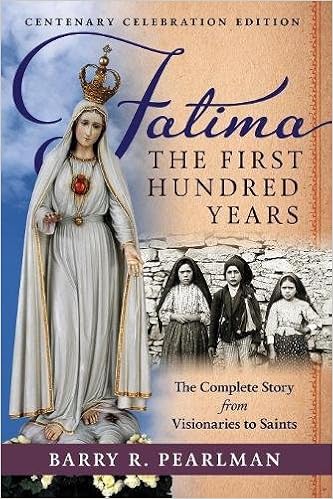
Fatima, the First Hundred Years: The Complete Story from Visionaries to Saints

US HERE – UK HERE


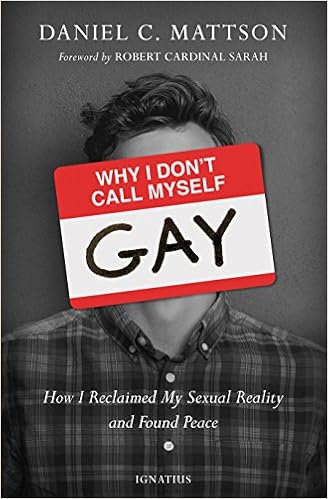
Hopefully this next title from Ignatius Press will give help to people afflicted with same-sex attraction.  I haven’t looked into this one yet, but Ignatius is reliable.  Even though they were founded by a Jesuit, they aren’t going to Martinize the issue, if you get my drift.

Why I Don’t Call Myself Gay: How I Reclaimed My Sexual Reality and Found Peace by Daniel Mattson

US HERE – UK HERE

Another from Angelico Press

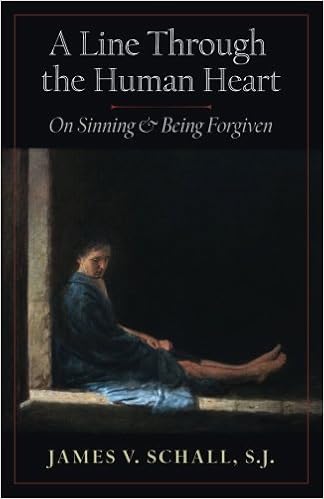
A Line Through the Human Heart: On Sinning and Being Forgiven Paperback by James V. Schall S.J.

US HERE – UK HERE

Great summer reading.


Posted in REVIEWS, Sin That Cries To Heaven, The Campus Telephone Pole | Tagged ,
1 Comment

Catholic Herald: Is there really an Old Mass revival?

17_06_09_CH_screenshotFrom the UK’s best Catholic weekly the Catholic Herald, print edition (subscribe HERE).  My emphases and comments.

Is there really an Old Mass revival?

Ten years ago Benedict XVI lifted restrictions on the Old Rite. So what had changed in Britain, asks Dan Hitchens

At any time between the 1960s and about a decade ago, it would have seemed an unlikely occasion: an English bishop conferring the sacrament of Holy Orders on two deacons, according to the Extraordinary Form. Nevertheless, on Saturday June 17, Archbishop Malcolm McMahon of Liverpool will be doing just that, at  St Mary’s Church in Warrington.

The priests-to-be, Alex Stewart and Krzysztof Sanetra, are members of the Priestly Fraternity of St Peter (FSSP), which has a special attachment to the traditional liturgy.

Archbishop McMahon has designated St Mary’s as a centre for the Extraordinary Form (EF). The parish priest, Fr Armand de Malleray, believes these are the first EF ordinations in Britain in decades.

Rather neatly, the ordinations come just a few weeks before a significant anniversary. On July 7, 2007, Benedict XVI issued Summorum Pontificum, a motu proprio (papal edict) which gave priests and communities much more latitude to celebrate Mass according to the 1962 Missal. They could do so privately without needing permission from a bishop; if the laity requested the EF, “the parish priest should willingly accede.” [Sometimes I call it the Emancipation Proclamation.]

Summorum Pontificum has had a big cultural impact as well, according to Joseph Shaw, chairman of the Latin Mass Society. The EF “has a place in the life of the Church today which would have been unthinkable before 2007”, he says. More and more priests and bishops are celebrating the older rite. Institutes such as the FSSP are growing: “Formerly, the 1962 Missal was regarded as legally and theologically dubious even by many on the ‘conservative’ side of the debate in the Church: that attitude has now simply gone.” [That’s not the case everywhere, alas.  There is still strong opposition, though they disqualify themselves by their shrillness.]

Recent developments vindicate Shaw’s point. In February, Bishop Mark O’Toole of Plymouth established a permanent base for the traditional Latin Mass at St Edward the Confessor, Peverell, which has a weekly EF Mass. Catholics in the Diocese of Leeds have the same opportunity, at St Joseph’s, Bradford.

Meanwhile, the Oratorians, a congregation known – among other things – for celebrating both the Ordinary and Extraordinary Form with reverence, are growing quickly: in the past few years four new Oratorian communities have sprung up.

On the ground, too, priests are increasingly open to the EF. The Latin Mass Society said that EF Masses at Easter rose to a “record” level last year, with 200 such celebrations across Britain.

There seems to be a particular apostolic energy emanating from some traditional communities. [Important.] Take Gosport’s Marian Franciscans, who (as Constance Watson reports on page 22) have just set up a radio station.

All that said, the traditional Mass remains a relatively small part of the Church’s life. It is perhaps disproportionately popular with certain groups, such as younger Catholics. [Also important.  Think of this in terms of long term demographics and the “Biological Solution”.] What  some find an aid to devotion and prayer – the Latin, the silence, the solemn attention to liturgical detail, the fiddleback vestments, the  Gregorian chant, etc – is to others distracting or confusing. [1 Cor 3:2]

Shaw believes that the biggest obstacles to the spread of the EF are practical ones: “Priests’ lack of time to fit in extra Masses, and, next in importance, priests’ ignorance of Latin, which is a barrier to their learning and gaining confidence in it.”  [From my experience with priests I know this to be true.]

Nevertheless, Benedict’s 2007 document has had a significant ripple effect, which goes beyond those communities where the EF is most cherished. [We can call this “mutual enrichment”.  I also call it a knock-on effect.] The writer Joanna Bogle says: “Summorum Pontificum enormously helped the now widespread ‘reform of the reform’ of the liturgy, and in the longer term I think this will be its major significance.”  [Another comparison I’ve made is that Summorum Pontificum formed part of Benedict XVI’s “Marshall Plan”.]

Increasingly, Bogle argues, the liturgy resembles what Vatican II intended. “We have the benefits of reform – a measured pace of the Mass, audibility, being able to pray with the priest ‘from the heart’ rather than just following on a printed page, and so on – but without the gruesome gimmicks that fluttered around during those first post-Council years.”

Moreover, she says, it has become clear that the two forms are not so different. “I go to the Extraordinary Form occasionally, but I have actually found that having it available has made me appreciate the Ordinary Form in new ways,” Bogle says.

The process which began in 2007, then, continues to develop in unexpected ways. Benedict?XVI merely pushed the first domino.

For years I have insisted that Benedict XVI laid out, especially in Summorum Pontificum and his own ars celebrandi, in his writings before his ascent to the See of Peter, a kind of “Marshall Plan” for the Church.

You long-time readers here will remember this, but it has been a while since I’ve presented it.

Here it is again:

After World War II many regions of Europe were devastated, especially its large cities and manufacturing.  These USA helped rebuild Europe through the Marshall Plan so as to foster good trading partners and, through prosperity, stand as a bulwark against Communism.

After Vatican II many spheres of the Church were devastated, especially its liturgical and catechetical life. We need a Plan to rebuild our Catholic identity so that we can stand, for ourselves as members of the Church and in the public square for the good of society, as a bulwark – indeed a remedy – against the dictatorship of relativism.

The use of the older form of Mass is the key to revitalizing our sacred liturgical worship.  Revitalization of our sacred liturgical worship is the absolutely essential foundation, the ultimate sine qua non for the renewed life of the Church.  Without a rightly ordered sacred liturgy, none of our initiatives will succeed.  Hence, the importance of Summorum Pontificum.

What we are doing is of supreme importance.  It is essential that we do it well, intelligently, prudently, joyfully, relentlessly, lovingly.

Posted in ¡Hagan lío!, Benedict XVI, Hard-Identity Catholicism, Liturgy Science Theatre 3000, SUMMORUM PONTIFICUM, The future and our choices | Tagged , , , , ,
14 Comments

Fr. Z’s Voice Mail

I haven’t had many voicemails recently.   Perhaps everyone is busy with summer barbecues.

Wanna leave me voice mail?  You have three options:

 WDTPRS

 020 8133 4535

 651-447-6265

Since I pay a fee for the two phone numbers, USA and UK, I am glad when they get some use.  I occasionally integrate the audio messages into posts, when there are good questions or comments.

TIPS for leaving voice mail.

  1. Don’t shout.  If you shout, your voice will be distorted and I won’t be able to understand you.
  2. Don’t whisper.  C’mon.  If you have to whisper, maybe you should be calling the police, instead.
  3. Come to your point right away.  That helps.
  4. I don’t call you back.  I do listen to every message.
  5. Say from the onset if I can use your message in a post.

Send snail mail to:
Fr. John Zuhlsdorf
733 Struck St.
PO BOX 44603
Madison, WI 53744-4603

Posted in "How To..." - Practical Notes |
Comments Off on Fr. Z’s Voice Mail