
I had a question about the Sacrament of Anointing. I looked up an old answer and figured I could simply repost. This is from a year ago, exactly!
From a priest …
QUAERITUR:
Every year at this time, my pastor has a communal anointing of the sick at mass. At the mass, everyone gets anointed, whether they need it or not. Is this correct? What should I, a lowly curate, do about this?
First, tread carefully. The care of souls is the pastor’s and you assist him. That said, it may be that the priest is not well educated about the sacrament, especially if he is of a certain age group. Depending on your relationship with him, you might open up a discussion with him about the Sacrament of Anointing, telling him about some interesting things you read recently. Hopefully the priest, once better informed, will not just cave in to the false expectations that people have by now and, thus, continue to abuse the sacrament rather than do the right thing (i.e., stop anointing everyone).
The Second Vatican Council said that “’Extreme Unction,” which may also and more properly be called ‘anointing of the sick,’ is not a sacrament for those only who are at at the point of death. Hence, as soon as anyone of the faithful begins to be in danger of death from sickness or old age, the fitting time for that person to receive this sacrament has certainly already arrived.” [SC 73]
Let us remember that Anointing was and still is called Extreme Unction… the word “Extreme” does not mean that you are giving it on a skateboard or you are using huge amounts of oil. It means that a person is “in extremis“, that is, “in danger of dying”, as in, soon, in the final moments.
Another problem is that everyone is always in danger of death. However, we make distinctions. We are always in danger of death from, say, a meteor, a drunk driver, a stray bullet from a drive by shooting, scaffolding falling from on high, earthquakes, etc. These are all external to us. There are other dangers that are internal to us, such as fourth stage pancreatic cancer, a known aneurysm, the massive gunshot wound that tore the femoral artery, being 93 years old, being 93 and getting pneumonia, etc.
So, the factors of old age and illness are internal to our persons.
That said, the law – based on the Church’s teaching – is pretty clear.
Can. 1004 §1. The anointing of the sick can be administered to a member of the faithful who, having reached the use of reason, [thus, the ability also to commit mortal sins] begins to be in danger due to sickness or old age.
This doesn’t say “everyone”.
The Catechism of the Catholic Church says:
1514 “The anointing of the sick is not a sacrament for those only who are at the point of death. Hence, as soon as anyone of the faithful begins to be in danger of death from sickness or old age, the fitting time for him to receive this sacrament has certainly already arrived.”
Common points? Danger of death… sick and old age. Not “everyone”.
Some of you might be saying,
“But Father! But Father! You really hate Vatican II! Vatican II did away with rules. This is the age of mercy! Pope Francis said so! All sacraments should be given to everyone all the time. You make me cry. That means that you must do what I want. I need to be anointed now.”
Dear Cry Baby. It is my job to keep you out of Hell. Therefore, it is my job to say “No!” more often than it is to say “Yes!”.
Let’s not abuse what God has given us, especially something as solemn as a sacrament intended to help us die well.
One of the serious ways to abuse this sacrament is to administer it higgledy-piggledy. Why?
There is an old distinction about sacraments of the dead (baptism and penance), and sacraments of the living (the other five). Sacraments of the dead bring you out of spiritual death into life. Sacrament of the living are to be received by the spiritually alive, in the state of grace. Otherwise, they don’t bring you all that you need from them, even if they are validly conferred. For example, a man and woman validly marry in the state of mortal sin, but they don’t have the actual graces of the sacrament until they are in the state of grace. A confirmand or ordinand in the state of mortal sin are ontologically changed by their sacraments, but they don’t enjoy all the benefits of being confirmed or ordained until they return to the state of grace.
Even when a person begins to be in danger of death from old age or illness, the Sacrament of Anointing should – if possible – be received in the state of grace. If a person is incapacitated, the Sacrament of Anointing also forgives sins, but if a person is capable of confessing he should confess properly and receive absolution before being anointed.
Again, the Sacrament of Anointing, or “Extreme Unction”, unless there is urgent need or incapacitation, should be preceded by sacramental confession of sins.
These “anointing” Masses could be a great moment for catechesis and spiritual renewal.
At such a Mass it would be good to explain what I explained above, adding what the effects of the sacrament are and aren’t (i.e, it is not just to make people feel good or feel like they belong – which is what Communion is turning into – it is not a moment to “get something”). They should know that they should receive it in the state of grace. Therefore, there should be confessors available to hear their sins in regular auricular confession before being anointed. It could be a two step process. Catechesis followed by confessions and then the Mass.
Anyway… good luck with the parish priest.

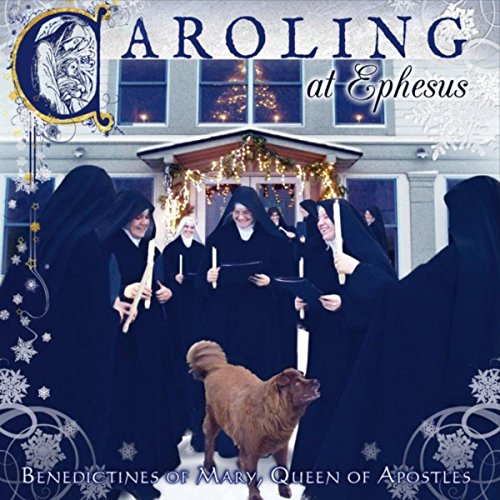 I’m doing my Christmas shopping now, so that Advent can be Advent. I will certainly get things from the Wyoming Coffee Carmelites and the Summit Soap Sisters.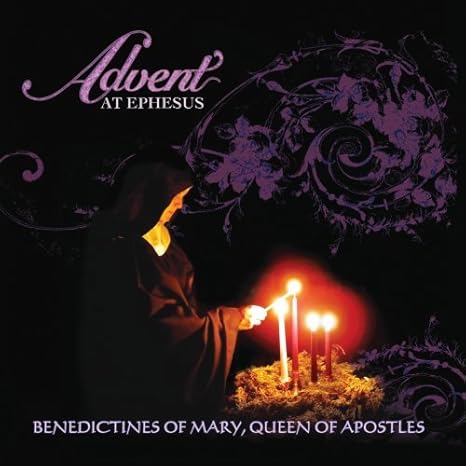
 You might trot over to


 From a reader…
 From a reader…





























