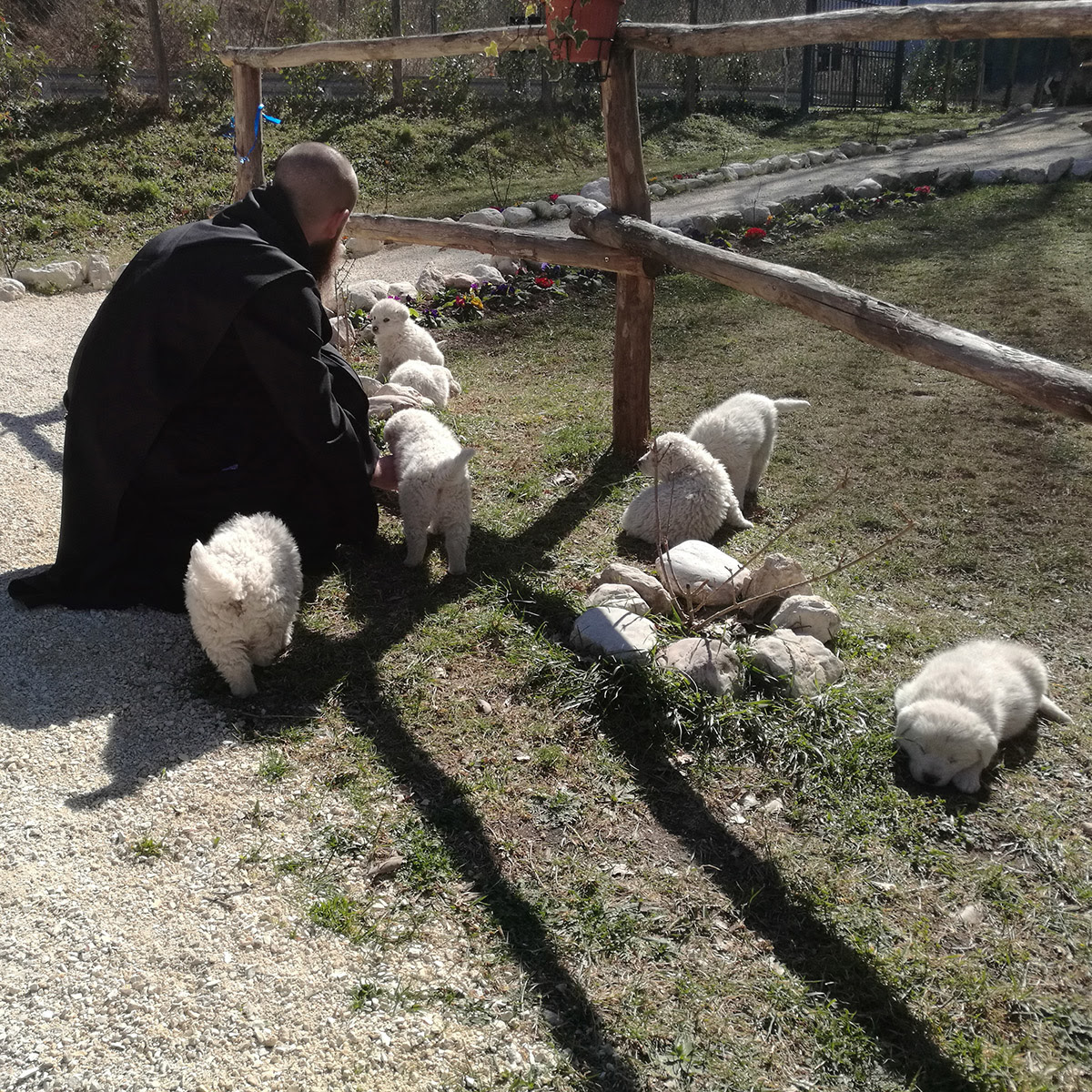
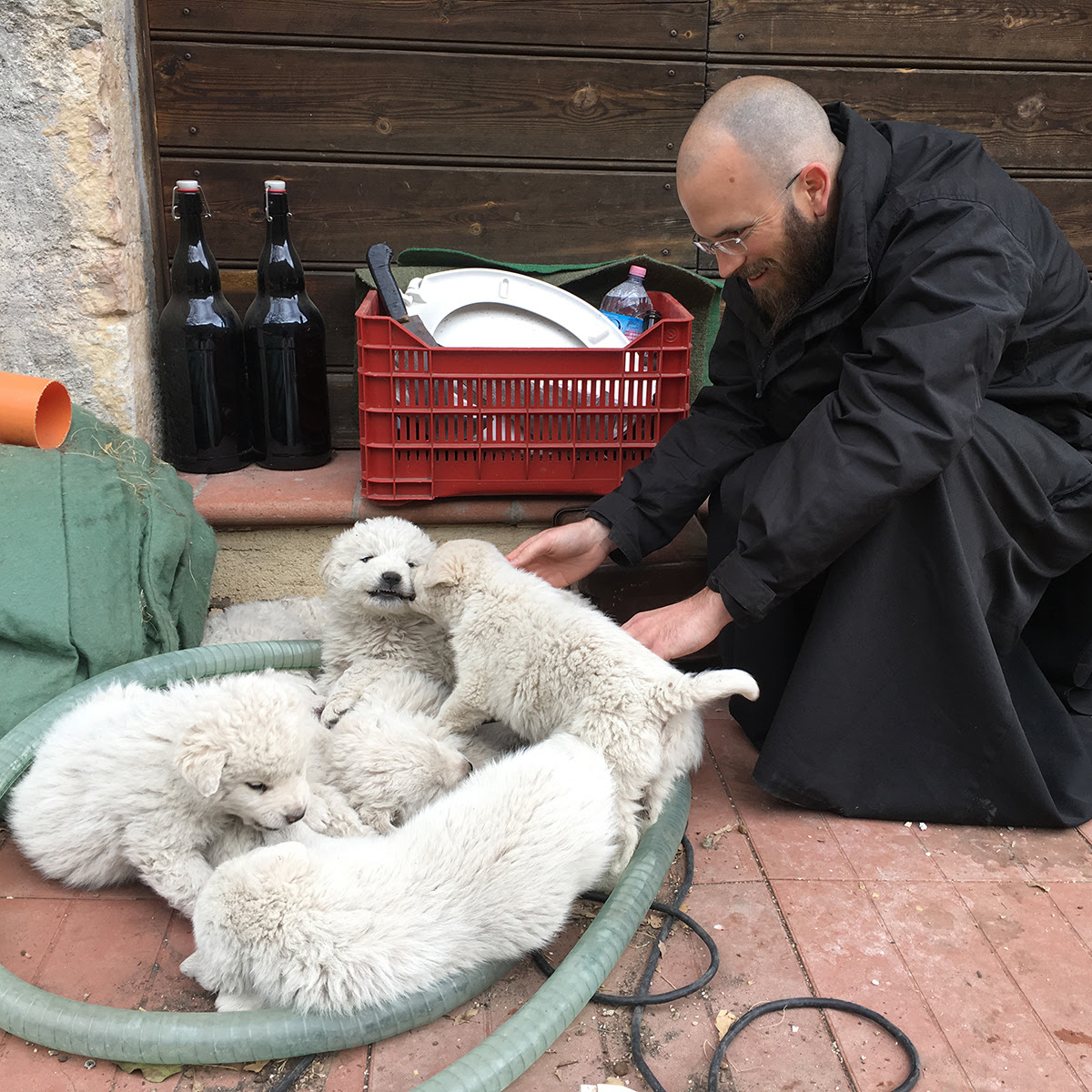
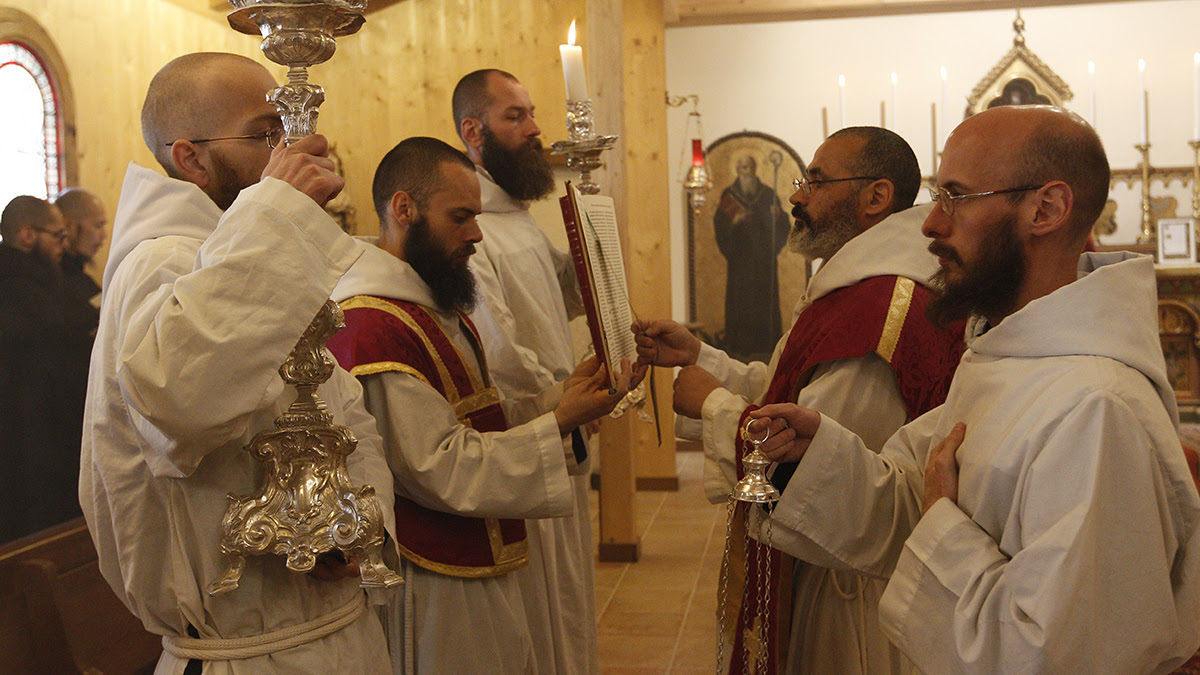
In my email I found something from the great Benedictines at Norcia.
I’ll “Rosica” it by cutting and pasting… but no, I told you where it is from. Darn. Anyway, the formatting remains messy.
Remember: BEER! Buy Beer – Boost Benedictines
|
|||||||||||||||||||||||||
|
|||||||||||||||||||||||||
|

In my email I found something from the great Benedictines at Norcia.
I’ll “Rosica” it by cutting and pasting… but no, I told you where it is from. Darn. Anyway, the formatting remains messy.
Remember: BEER! Buy Beer – Boost Benedictines
|
|||||||||||||||||||||||||
|
|||||||||||||||||||||||||
|
From a reader…
QUAERITUR:
I have a question about a marriage situation (not mine). If a marriage was valid, is it enough to resolve the state of sin of the re-“married” party(s) to simply abstain from sex without leaving the “second spouse?” Especially if each party of the original marriage is responsible for the care of an old/sick “spouse?” The proposition seems dicey to me, but the element of the care of the second “spouse “ seems to be a wrinkle perhaps.
GUEST PRIEST RESPONSE: Fr. T. Ferguson
Difficult to say – I’m not sure the question is worded accurately, so I’m going to respond to what I think the interlocutor is trying to ask.
Second point first: I think the question is about a couple in a second marriage where the first marriage of one (or both) parties is presumed to be valid. Can the couple then simply abstain from sexual relations and then re-approach the sacraments? Answer – no, at least not on their own without consulting with a priest. A priest might deem that the conditions of the second, invalid marriage are such that requiring a separation would be an injustice to someone, e.g., if the second spouse requires care, or if there are children born in the second marriage whose rights to parenting would be unduly compromised by mandating that their parents separate. The priest might then employ what’s come to be known as the “brother-sister solution,” whereby the couple agrees to retain common life, but avoid sexual intimacy, until the situation is resolved (either the former spouse dies, the children are raised, or the care the other spouse needs has been sufficiently met).
First point second: be VERY, very careful about posing questions regarding someone else’s marital situation. To a large extent, even if you’re closely related or bound by affection, it’s none of your business. Also, there is a good chance that you don’t know the entirety of the story.
If you’re aware of, or suspect some irregularity in the marital situation of your good buddy Jiff, or your dear sister Edna, the thing to do is, over tea in the latter situation or scotch in the first, say, “Have you ever sat down and had a chat with Father Entwhistle about your situation?”
If he or she answers, “No,” you respond, “You really should consider doing that someday.” Then promptly change the topic.
If he or she answers, “Not yet,” you respond, “Let me know when you want to do it, we can watch the kids (feed the dog, water the houseplants, scrub the baseboards) some evening for you so you have time.” Then promptly change the topic.
If he or she answers, “Yes,” you respond, “How lovely! I hope it went well.” Then promptly change the topic.
 I picked this up from a tweet by a classicist. It applies well to preaching. Since it’s Sunday and you all had to sit and listen … and some of you had to stand and preach…
[200] itaque intellegens dicendi existumator non adsidens et adtente audiens sed uno aspectu et praeteriens de oratore saepe iudicat. videt oscitantem iudicem, loquentem cum altero, non numquam etiam circulantem, mittentem ad horas, quaesitorem ut dimittat rogantem: intellegit oratorem in ea causa non adesse qui possit animis iudicum admovere orationem tamquam fidibus manum. idem si praeteriens aspexerit erectos intuentis iudices, ut aut doceri de re idque etiam voltu probare videantur, aut ut avem cantu aliquo sic illos viderit oratione quasi suspensos teneri aut, id quod maxume opus est, misericordia odio motu animi aliquo perturbatos esse vehementius: ea si praeteriens, ut dixi, aspexerit, si nihil audiverit, tamen oratorem versari in illo iudicio et opus oratorium fieri aut perfectum iam esse profecto intelleget.
[200] A man, therefore, who is a real connoisseur in the art, can sometimes by a single glance as he passes by, and without stopping to listen attentively to what is said, form a tolerable judgment of the ability of the speaker. When he observes any of the jurors either yawning, or speaking to the person who is next to him, or looking carelessly about him, or sending to enquire the time of day, or pressing the quaestor to dismiss the court; he concludes very naturally that the cause upon trial is not pleaded by an orator who understands how to apply the powers of language to the passions of the judges, as a skilful musician applies his fingers to the harp. On the other hand, if, as he passes by, he beholds the judges looking attentively before them, as if they were either receiving some material information, or visibly approved what they had already heard- if he sees them listening to the voice of the pleader with a kind of ecstasy like a fond bird to some melodious tune;- and, above all, if he discovers in their looks any strong indications of pity, abhorrence, or any other emotion of the mind;- though he should not be near enough to hear a single word, he immediately discovers that the cause is managed by a real orator, who is either performing, or has already played his part to good purpose.” [Translated by E.Jones (1776)]
Was there a good point made in the sermon you heard for your Mass of Sunday obligation?
Let us know!
A long and disappointing read is available at CNA about Archbishop Francis Chullikatt the Holy See’s unfortunate former permanent observer to the UN , apparently a “nasty little man”. It’s hard to imagine – or maybe it isn’t – how he has kept his head.
There is one curious thing, however, that caught my eye in the piece.
[…]
Terrence McKeegan, a former legal advisor to the Holy See’s mission to the U.N., told CNA that after he signed a one-year contract to work for the mission, Chullikatt arbitrarily cut his wages.
“On or about December 10 of 2013, I myself was informed by the nuncio that starting in 2014, he would only pay me half of the salary we had contractually agreed upon,” McKeegan told CNA.
McKeegan also noted that, beyond his contracted position, he was expected to serve, unpaid, as legal advisor to the non-profit Path to Peace Foundation, a legally distinct U.S.-based private foundation affiliated with the U.N. mission. McKeegan said he was not given access to records for the foundation, or invited to attend meetings.
The foundation, he said, helps fund mission operations and staff salaries. It also, according to its tax filings, has funded scholarships, seminars, and a U.N. internship program founded by Fr. Thomas Rosica.
[…]
Fr. Thomas “Ctrl+C” Rosica?
 During these dark days, we can benefit from the use of this prayer, called the Breastplate, or Loríca of St. Patrick, “The Cry of the Deer” (Latin Lorica is pronounced lo-REE-ka). It is said that St. Patrick (+461) sang this when an ambush was set for him so that he could not go to Tara to evangelize. Patrick and companions were then hidden from the sight of their enemies, who thought that they were deer when they passed by. However, some scholars date the prayer to the 8th c. Either way, this is a mickle, puissant prayer!
One could pray this prayer each and every morning.
Podcast: Play in new window | Download
Subscribe: RSS
Sancti Patricii Hymnus ad Temoriam.
The Latin word loríca means “a leather cuirass; a defense of any kind; a breastwork, parapet”. In effect, it means “armor”. “Loríca” is also associated with an rhythmic invocation or prayer especially for protection as when going into battle.
The Lorica of St. Patrick is rooted in an un-confused belief in the supernatural dimension of our lives, that there truly is a spiritual battle being waged for our souls. This prayer reflects our absolute dependence on the One Three-Personed God.
One could pray this prayer each and every morning, upon arising.
On St. Patrick’s Day, instead of indulging in meat even on Sunday of Lent and drinking green beer, pastors of parishes should invite people to come to Church for confessions, recitation of the Rosary, Mass, Exposition, the praying of the Lorica, Benediction.
For your convenience…
| Latin | English |
| Sancti Patricii Hymnus ad Temoriam. | The Lorica, Breastplate, of St. Patrick (The Cry of the Deer)
|
| Ad Temoriam hodie potentiam praepollentem invoco Trinitatis, Credo in Trinitatem sub unitate numinis elementorum. |
I arise today Through a mighty strength, the invocation of the Trinity, Through belief in the Threeness, Through confession of the Oneness of the Creator of creation. |
| Apud Temoriam hodie virtutem nativitatis Christi cum ea ejus baptismi, Virtutem crucifixionis cum ea ejus sepulturae, Virtutem resurrectionis cum ea ascensionis, Virtutem adventus ad judicium aeternum. |
I arise today Through the strength of Christ’s birth with His baptism, Through the strength of His crucifixion with His burial, Through the strength of His resurrection with His ascension, Through the strength of His descent for the judgment of doom. |
| Apud Temoriam hodie virtutem amoris Seraphim in obsequio angelorum, In spe resurrectionis ad adipiscendum praemium. In orationibus nobilium Patrum, In praedictionibus prophetarum, In praedicationibus apostolorum, In fide confessorum, In castitate sanctarum virginum, In actis justorum virorum. |
I arise today Through the strength of the love of cherubim, In the obedience of angels, In the service of archangels, In the hope of resurrection to meet with reward, In the prayers of patriarchs, In the predictions of prophets, In the preaching of apostles, In the faith of confessors, In the innocence of holy virgins, In the deeds of righteous men. |
| Apud Temoriam hodie potentiam coeli, Lucem solis, Candorem nivis, Vim ignis, Rapiditatem fulguris, Velocitatem venti, Profunditatem maris, Stabilitatem terrae, Duritiam petrarum. |
I arise today, through The strength of heaven, The light of the sun, The radiance of the moon, The splendor of fire, The speed of lightning, The swiftness of wind, The depth of the sea, The stability of the earth, The firmness of rock. |
| Ad Temoriam hodie potentia Dei me dirigat, Potestas Dei me conservet, Sapientia Dei me edoceat, Oculus Dei mihi provideat, Auris Dei me exaudiat, Verbum Dei me disertum faciat, Manus Dei me protegat, Via Dei mihi patefiat, Scutum Dei me protegat, Exercitus Dei me defendat, Contra insidias daemonum, Contra illecebras vitiorum, Contra inclinationes animi, Contra omnem hominem qui meditetur injuriam mihi, Procul et prope, Cum paucis et cum multis. |
I arise today, through God’s strength to pilot me, God’s might to uphold me, God’s wisdom to guide me, God’s eye to look before me, God’s ear to hear me, God’s word to speak for me, God’s hand to guard me, God’s shield to protect me, God’s host to save me From snares of devils, From temptation of vices, From everyone who shall wish me ill, afar and near. |
| Posui circa me sane omnes potentias has Contra omnem potentiam hostilem saevam Excogitatam meo corpori et meae animae; Contra incantamenta pseudo-vatum, Contra nigras leges gentilitatis, Contra pseudo-leges haereseos, Contra dolum idololatriae, Contra incantamenta mulierum, Et fabrorum ferrariorum et druidum, Contra omnem scientiam quae occaecat animum hominis. |
I summon today All these powers between me and those evils, Against every cruel and merciless power that may oppose my body and soul, Against incantations of false prophets, Against black laws of pagandom, Against false laws of heretics, Against craft of idolatry, Against spells of witches and smiths and wizards, Against every knowledge that corrupts man’s body and soul; |
| Christus me protegat hodie Contra venenum, Contra combustionem, Contra demersionem, Contra vulnera, Donec meritus essem multum praemii. |
Christ to shield me today Against poison, against burning, Against drowning, against wounding, So that there may come to me an abundance of reward. |
| Christus mecum, Christus ante me, Christus me pone, Christus in me, Christus infra me, Christus supra me, Christus ad dextram meam, Christus ad laevam meam, Christus hine, Christus illine, Christus a tergo. |
Christ with me, Christ before me, Christ behind me, Christ in me, Christ beneath me, Christ above me, Christ on my right, Christ on my left, Christ when I lie down, Christ when I sit down, Christ when I arise, |
| Christus in corde omnis hominis quem alloquar, Christus in ore cujusvis qui me alloquatur, Christus in omni oculo qui me videat, Christus in omni aure quae me audiat. |
Christ in the heart of every man who thinks of me, Christ in the mouth of everyone who speaks of me, Christ in every eye that sees me, Christ in every ear that hears me. |
| Ad Temoriam hodie potentiam praepollentem invoco Trinitatis. | I arise today Through a mighty strength, the invocation of the Trinity, |
| Credo in Trinitatem sub Unitate numinis elementorum. Domini est salus, Domini est salus, Christi est salus, Salus tua, Domine, sit semper nobiscum. |
Through belief in the Threeness, Through confession of the Oneness of the Creator of creation. [Salvation is from the Lord, Salvation is from the Lord, Salvation is from Christ, Your Salvation, O Lord, is with us always.] |
| Amen. | Amen. |
Daily recitation? Seems a good thing. Especially for you IRISH out there. Make more of you heritage.
 We have often opined that when We are elected Pope, We shall disappear into the Apostolic Palace for lengths of time so protracted that the world will suggest that We have died. Our Encyclicals will be brief and our Briefs will be terse. Our decisions will come rarely, since much of the running of all the other stuff will be handled adroitly by our Vicar For Everything. Furthermore, the newly renewed Noble Guard – with license beyond that of 007 – will ferret out the problem makers and the revised Swiss Guards – mutually enriched with retired Marines, Rangers, SEALs, SAS, etc., will maintain order on Our perimeter. But, mainly, We shall not be “out there”.
I now direct the readership to
There is an old adage that the grass is always greener on the other side of the whatever.
The ancient poet Horace – We were told as an undergrad that, as We aged We would appreciate him more and more, and We do – creatively explained this nearly ubiquitous phenomenon in his Satires, when he recounted the exchanges of the farmer and the soldier, the town-mouse and the country-mouse, the cart-horse and the race-horse. Each pines for a situation which isn’t real … for him. They learn that their lot is the lot they’ve been allotted.
Of all the possible universes God could have created, He created this one, not another. He knew each one of us before the creation of the cosmos. He called us into existence at exactly the place and time of His choosing according to His plan. This is where he wants Us to be.
These are our times. These are the problems which we, uniquely, are called to face.
Let Us, each of us, review the duties and responsibilities of our state in life as it is in the here and now, the hic et nunc, and then carry them out with true devotion. If we do that, God will give us every actually grace that we need, because we are carrying out the role He gave us in the economy of salvation.
Are you tired of torpor-inducing cliches from the pulpit? Do you grind your teeth and then yawn at the cringe-worthy pabulum dribbled by high clerics in interviews?
I guide the readership to the latest and superb podcast from Damian Thompson. He and Harry Mount, editor of The Oldie, discuss, inter alia, how boring bishops are.
Brutal. Refreshing. My only complaint is that it wasn’t long enough.
Be careful if you are drinking your mug of coffee…. tea.
They touch on the dreary state of liturgical worship and market forces… and then they end the podcast! GRRRR.
From LifeSite:
Democrats fight for kittens’ right to life after voting to kill born-alive babies
March 14, 2019 (Family Research Council) — What do cats have that newborn babies don’t? Democrats’ support. In one of the sickest ironies no one is talking about, Senate liberals picked this moment — 17 days after they voted to kill America’s perfectly healthy infants — to fight for the humane treatment of kittens. Maybe the DNC’s strategists are out to lunch, or maybe the Left really is this shameless, but I can’t wait to see some of these politicians standing on debate platforms next year telling the American people that when it comes to protecting living things: We chose cats over kids.
For sponsors like Senator Jeff Merkley (D-Ore.), the optics are nauseating. Here he is, arguing that America “must stop killing kittens,” when, three weeks ago, he stood in the U.S. Capitol and agreed with 43 Democrats that human beings should be put down. “The USDA’s decision to slaughter kittens after they are used in research is an archaic practice and horrific treatment, and we need to end it,” Merkley said with a passion that he and his colleagues couldn’t muster for a generation of perfectly healthy newborns. His Kittens in Traumatic Testing Ends Now — or KITTEN — Act wouldn’t stop the research, but it would keep the animals from being destroyed.
[…]
You can’t make this stuff up.
Democrats. The Party of Death.
The German Church continues its imitation of the Body of Christ’s theological and disciplinary Necrotizing fascitis, more commonly known as “flesh-eating disease”.
From the Catholic Herald comes news about a synod which the Germans want to hold.
What could possibly go wrong?
German bishops announce ‘synodal process’ on celibacy, sexual morality
The German bishops will discuss priestly celibacy and sexual morality, leading to an as yet undetermined ‘binding’ outcome
Cardinal Reinhard Marx of Munich and Freising has announced that the Catholic Church in Germany is embarking on a “binding synodal process” to tackle what he says are the three key issues arising from the clerical abuse crisis: priestly celibacy, the Church’s teaching on sexual morality, and a reduction of clerical power.
Speaking at the conclusion of the plenary session of the German bishops’ conference on Thursday, Marx told reporters that the bishops had unanimously decided these three topics would be subject to a process of “synodal progression” that could lead to a binding, but as yet undetermined, outcome.
“The Church needs synodal progress,” the president of the German bishops’ conference asserted. “Pope Francis encourages this.” [Right. Put it on him. Maybe he does, but these guys don’t need any encouraging. They do whatever they want anyway.]
The German bishops held their plenary session in the German town of Lingen from March 11 to 14.
[NB] Addressing journalists on the final day, Marx said the Church’s teaching on sexual morality has yet to account for significant recent discoveries from theology and the humanities. Also, he said, the significance of sexuality to personhood has not yet received sufficient attention from the Church. [Get that? They’ll drag in all sorts of B as in B S as in S from “experts” in various pseudo-sciences and obtain a pre-determined conclusion.]
Bishops “feel we often are unable to speak on questions of present-day sexual behavior,” Marx said. [That’s because you are COWARDS who don’t want to give up your Church-Tax money.]
The cardinal also said that the German bishops appreciate priestly celibacy as an “expression of the religious bond to God” and do not simply want to give up on it. [Here it comes.] But to what extent celibacy should always be an element of priestly witness is a question “we will determine” through the “synodal process,” Marx told the press. [It’s always nuance this and nuance that. They sound so smart!]
Furthermore, Marx said clerical abuse of power constitutes a betrayal of the trust of people in need of stability and religious orientation. Therefore, the “synodal process” would be charged with identifying what measures must be taken to achieve “the necessary reduction of [clerical] power.” [Anything to avoid the real problem: queer bishops and priests and seminaries dominated by their vile influence.]
The establishment of ecclesiastical administrative courts is one such step for which the bishops will in the near future draft a proposal.
As a first step on the proposed synodal path, Marx announced that the German bishops have decided to set up three preparatory working groups. The working group on “clerical power” is headed by Bishop Karl-Heinz Wiesemann of Speyer, the working group on “sexual morality” will be headed by Bishop Franz-Josef Bode of Osnabrück. [THAT guy!] The working group on “the priest’s way of life,” which will focus on celibacy, will be moderated by Bishop Felix Genn of Münster.
Interim reports are expected from all three by September 13.
Referring to the German bishops’ four year “Würzburg Synod” from 1971 to 1975, which was charged with an implementation of the decisions of the Second Vatican Council, Marx affirmed that the Church in Germany is “not starting at zero” in a synodal process, given the Würzburg experience, and various consultation processes undertaken by the German bishops in recent years.
The “synodal process” will involve consultations with the “Central Committee of German Catholics,” a lay organization that closely cooperates with the bishops’ conference, and will draw on outside experts.
As I said. What could possibly go wrong?
Pray for the poor Catholics of Germany.

Coat of Arms by D Burkart









A Daily Prayer for Priests


They find you a pro-life agent in your area who commits to giving a portion of the fee to a pro-life group!

PLEASE subscribe via PayPal if it is useful. Zelle and Wise are better, but PayPal is convenient.
A monthly subscription donation means I have steady income I can plan on. I put you my list of benefactors for whom I pray and for whom I often say Holy Mass.
In view of the rapidly changing challenges I now face, I would like to add more $10/month subscribers. Will you please help?
For a one time donation...



Help Monks in Wyoming (coffee – UPDATED LINK) and Norcia (beer) and the wonderful "Soap Sisters" of Summit, NJ!


Please follow me on Twitter!










Visits tracked by Statcounter
since Sat., 25 Nov. 2006: