Fr. Z’s Ash Wednesday Kitchen: Rose, Rice and Rapture

Today is not only Ash Wednesday, but it is also the Feast of St. Rose of Viterbo.   St. Rose died on 6 March 1251.  Today is her “dies natalis… birthday (into heaven)”.   However, there is an amazing event in Viterbo in September in her honor.  Since her relics were translated on 4 Sept 1258, down through the centuries Rose is honored with a procession the likes of which you will not see elsewhere.  A “macchina” several stories tall is carried through the streets at night, on the 3 September while huge drums are beaten.  HERE It is stunning.

Meanwhile, it is Ash Wednesday.  On my calendar and in your traditional hand missal you can see that the Roman Station church today is Santa Sabina on the Aventine Hill.  As I write, the Mass is going on.   It isn’t as impressive as it was … a few years ago.

Last night I got together with a group of priests, some of whom belong a splendid group called the Society of Jesus the Priest, which has its foundation in Spain.   They made incredible grilled steak and paella.

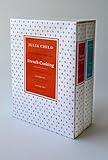
Today… I have prepared Vichyssoise from Mastering the Art of French Cooking by Julia Child. US HERE – UK HERE This will be my supper after returning from the evening Solemn Mass (TLM) for Ash Wednesday.

I asked the diocesan vocation director to be the celebrant. I’ve done it for years and he, a younger guy with fewer chances, can get some good experience. It’s a great blessing to have a diocese’s vocation director involved with our TMSM‘s mission.

Prep the veg

I used very little of the green of the leek this time… but I saved the greens.

Into broth to simmer and soften.

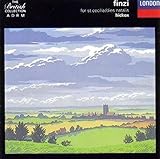
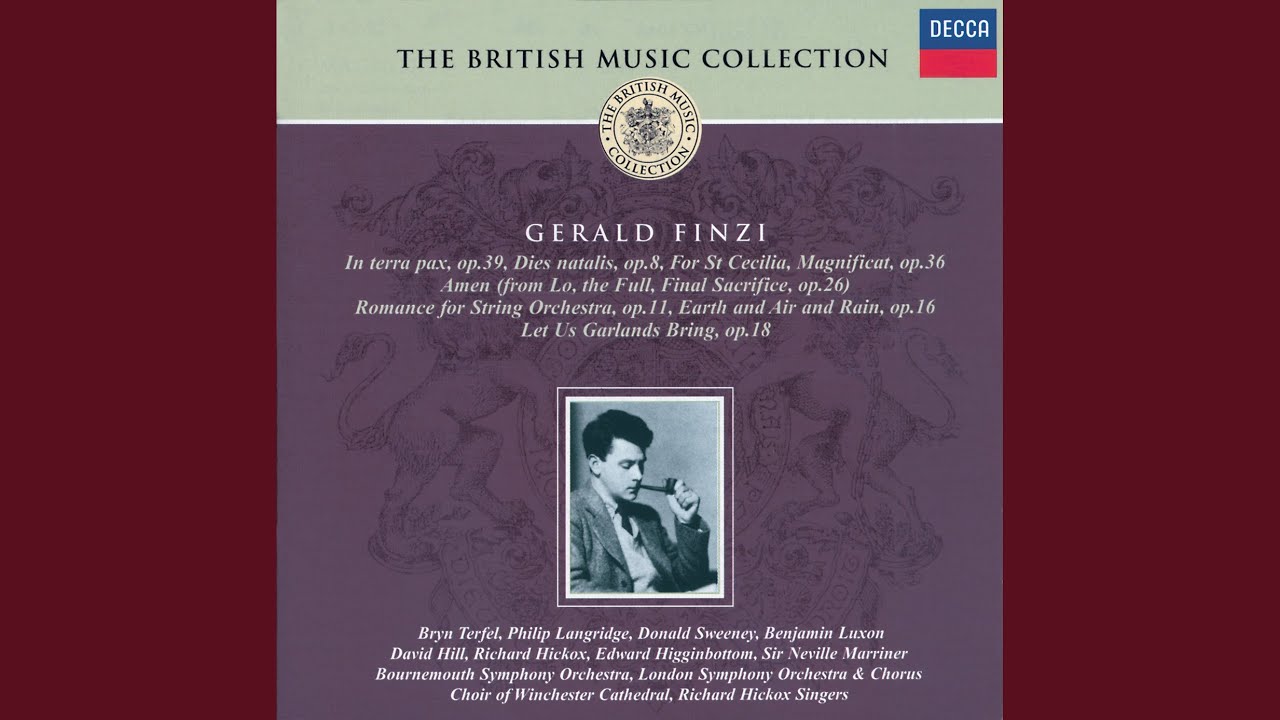
And because I mentioned “Dies Natalis”, above, here is the “Rapture” movement from Gerald Finzi’s cantata of the same name. This, the second movement, is a paen to life and to God, the joy of the new born child’s soul. And so some music while I cook.

US HERE – UK HERE  (a streaming version HERE … I think)

The texts are by Thomas Traherne (+1674), an English Metaphysical poet and priest (CofE).  The soloist is Philip Langridge, one of my favorite English tenors.  He features in my favorite recording of The Messiah.  It’s old, now, but excellent.

The Rapture

Sweet Infancy!
O heavenly fire! O sacred Light!
How fair and bright!
How great am I
Whom the whole world doth magnify!

O heavenly Joy!
O great and sacred blessedness
Which I possess!
So great a joy
Who did into my arms convey?

From God above
Being sent, the gift doth me enflame,
To praise His Name.
The stars do move,
The sun doth shine, to show His Love.

O how divine
Am I! To all this sacred wealth
This life and health,
Who rais’d? Who mine
Did make the same! What hand divine!

YouTube thumbnailYouTube icon

After that warmth and wonder, back to the prosaic potato and leek soup, which – like revenge – is traditionally served cold.

To obtain the right consistency, soften the veg by simmering it in your broth for a while.  Then, if you are old fashioned, put it through the mill, adding broth.

Whisk together with heavy cream and season.  Remember when seasoning that cold has a different effect on what you taste.    Be careful.  Check again when it is chilled.

Covered and ready for the fridge.  Tonight, Vichyssoise.  I’ll grind on fresh white pepper and add chopped chives.


Posted in Fr. Z's Kitchen | Tagged , ,
11 Comments

Church groups are losing members. Wherein Fr. Z rants.

The fundamental reason why God gave us a Church which we could recognize by its marks is that we are sinners who are going to die. Through His Church, Christ provides the ordinary means of our salvation. We have the sacraments and we have authoritative teaching about the content of the Faith and morals.

By the virtue of religion we must give God what is His due. Hence, we must conform ourselves to the teaching and participate in the sacraments and offer God pleasing worship. Pleasing worship is the primary way by which we fulfill the virtue of religion. God has told us all through salvation history how to worship Him, from His mandates in the Old Covenant through the rubrics that His Church lays down now.

All our activities as Catholic Christians must flow from and return to proper liturgical worship of God, in His Church and as His Church provides by God’s own authority. Otherwise, we drift from being a people with a mind and heart for the transcendent, a transforming encounter with God in Mystery, and we wind up mired in immanentism, without a sense of something beyond, that which is unsettling and yet alluring.

Christian life moves in a dynamic cycle of worship, loving God with “all our strength”, as well as fulfilling specific commands from God such as “love your neighbor as you love yourself”. Hence, without displacing sacred worship of God as our primary means of fulfilling the virtue of religion, we also rightly pursue corporal and spiritual works of mercy for our neighbor.

Keeping always in mind our priorities, it is the spiritual well being of our neighbor that is most important, and our help given to them on the temporal level aims finally at their spiritual good. The spiritual always has logical priority over the temporal, even it chronologically our efforts for the temporal and spiritual are simultaneous. If we reverse that logical priority and make our efforts mostly or completely focused on the temporal, our works are no longer performed mainly in charity. They are still humane and good, but they are not as “Christian” as they might be.

There are those who see the Church’s role, or want the Church’s role to be that of an NGO. St. Paul warns that we must not conform ourselves to the wisdom of this world. And yet so much of what we have done in the Church in the last 50+ years has been to turn its members into immanentists without a sense of the transcendent.

Today I saw a piece at the American and Jewish The Tablet, not to be confused with The Bitter Pill (aka The Tablet) with an interesting title:

WHY SOCIAL JUSTICE IS KILLING SYNAGOGUES AND CHURCHES
Data suggests that the more a religious movement is concerned with progressive causes, the more likely it is to rapidly lose members

Here is the concluding section. As the old phrase goes… in cauda veneno.

[…]

Catholicism, now under a reforming and politically progressive pope, faces a similar challenge. It is losing adherents, not only in North America and Europe, where his views are popular, but also his homeland of South America, where the church is steadily losing out to more conservative evangelical churches. Until the 1960s, at least 90 percent of Latin America’s population was Catholic, but that number has fallen to under 70 percent. Today, roughly 1 in 4 Nicaraguans, 1 in 5 Brazilians and 1 in 7 Venezuelans are former Catholics. The one place where the church is growing most, Africa, is dominated by conservative bishops often at odds with Francis.

Anthony Lemus, an influential lay Catholic, believes the church’s future relies on remaining true to its principles while refashioning its message to serve its adherents’ worldly, as well as spiritual, needs. An astrophysicist brought up in a deeply Catholic East Los Angeles household, Lemus is working with a prominent Catholic theologian, Rev. Robert Spitzer, on rewriting of the Catholic Catechism to make the faith more accessible to the new generation. He also supports efforts to improve services from the church—day care, athletic clubs, camps—that might attract young families back to the faith.

“Today’s generation is more in tune with value-add products and services influencing their lives immediately, and the relevance of faith competes with these promotions,” he said. “A ‘sticky’ rebranding of the importance of faith formation’s value in everyday life is key to reposition its importance for living a holistic life.”

Ultimately, as Lemus suggested, religions, including Judaism, can only hope to thrive if they serve a purpose that is not met elsewhere in society. It is all well and good to perform good deeds, but if religions do not make themselves indispensable to families, their future could be bleak. As we already see in Europe, churches and synagogues could become ever more like pagan temples, vestiges of the past and attractions for the curious, profoundly clueless about the passion and commitment that created them.

Okay, dear readers, what’s wrong with that? What’s missing?

It’s the same problem that we find with nearly everything every bishop and other Church leader proposes when looking down the road at the problems we face.  They simply don’t think to go there or they don’t dare to go there.  Either way, their proposals cannot stand because they are not grounded in the right bedrock.

Posted in Hard-Identity Catholicism, Liturgy Science Theatre 3000, Wherein Fr. Z Rants | Tagged ,
30 Comments

Ash Wednesday – Fasting, Abstainence, and You together with notes on alligator, endothermic moonfish, and muskrat

According to the 1983 Code of Canon Law for the Latin Church, Latin Church Catholics are bound to observe fasting and abstinence on Ash Wednesday.

Here are some details. I am sure you know them already, but they are good to review.

FASTING: Catholics who are 18 year old and up, until their 59th birthday (when you begin your 60th year), are bound to fast (1 full meal and perhaps some food at a couple points during the day, call it 2 “snacks”, according to local custom or law – call it, two snacks that don’t add up to a full meal) on Ash Wednesday and on Good Friday.

There is no scientific formula for this.  Figure it out.

ABSTINENCE: Catholics who are 14 years old and older are abound to abstain from meat on Ash Wednesday and on all Fridays of Lent.

In general, when you have a medical condition of some kind, or you are pregnant, etc., these requirements can be relaxed.

For Eastern Catholics there are differences concerning dates and practices. Perhaps our Eastern friends can fill us Latins in.

You should by now have a plan for your spiritual life and your physical/material mortifications and penitential practices during Lent.

You would do well to include some works of mercy, both spiritual and corporal.

I also recommend making a good confession close to the beginning of Lent.  Let me put that another way:

GO TO CONFESSION!

“But Father! But Father!”, some of you are saying anxiously, “What about my Mystic Monk Coffee?  I can drink my Mystic Monk Coffee, can’t I?  Can’t I?”

You can, of course, coffee with and as part of your full meal and two “snacks”.  No question there.

How about in between meals on Ash Wednesday?

The old axiom, for the Lenten fast, is “Liquidum non frangit ieiuniumliquid does not break the fast”, provided – NB – you are drinking for the sake of thirst, rather than for eating.

Common sense suggests that chocolate banana shakes or “smoothies”, etc., are not permissible, even though they are pretty much liquid in form.  They are not what you would drink because you are thirsty, as you might more commonly do with water, coffee, tea, wine in some cases, lemonade, even some of these sports drinks such as “Gatorade”, etc.

Again, common sense applies, so figure it out.

Drinks such as coffee and tea do not break the Lenten fast even if they have a little milk added, or a bit of sugar, or fruit juice, which in the case of tea might be lemon.

Coffee would break the Eucharistic fast (one hour before Communion), since – pace fallentes  – coffee is no longer water, but it does not break the Lenten fast on Ash Wednesday.

You will be happy to know that chewing tobacco does not break the fast (unless you eat the quid, I guess), nor does using mouthwash (gargarisatio in one manual I checked) or brushing your teeth (pulverisatio).

Concerning the consumption of alligator and crocodile – HERE  I included notes also on the eating of endothermic moonfish, peptonized beef, and muskrat… just in case.

If you want to drink your coffee and tea with true merit I suggest drinking it from one of my coffee mugs.  I’d like to offer an indulgence for doing so, but that’s above my pay grade.

I just happen to have available a “Liquidum non frangit ieiunium” mug!  HERE

Posted in "How To..." - Practical Notes | Tagged , , , , , ,
4 Comments

Stupid Idea: Sand in holy water fonts during Lent. Fr. Z opines.

You would think that this stupid idea would have been eradicated by now but, no.

I am sure that in some places you readers will see that Holy Water has been removed from the stoops – at the beginning of Lent – and replaced with sand.

No Holy Water.  Sand.  This is a REALLY BAD IDEA.

If you go into a church where you see this lunatic scheme… for the love of God, do NOT bless yourself with sand.

Stupid.

I’ve written about this quite a few times over the years, for example HERE and HERE. It’s amazing that it still crops up. Here’s the deal:

Someone put this question to the Congregation for Divine Worship and Discipline of the Sacraments.  They responded.  Enjoy.

The emphases are mine:

Prot. N. 569/00/L

March 14, 2000

Dear Father:

This Congregation for Divine Worship has received your letter sent by fax in which you ask whether it is in accord with liturgical law to remove the Holy Water from the fonts for the duration of the season of Lent.

[NB] This Dicastery is able to respond that the removing of Holy Water from the fonts during the season of Lent is not permitted, in particular, for two reasons:

1. The liturgical legislation in force does not foresee this innovation, which in addition to being praeter legem is contrary to a balanced understanding of the season of Lent, which though truly being a season of penance, is also a season rich in the symbolism of water and baptism, constantly evoked in liturgical texts.

2. The encouragement of the Church that the faithful avail themselves frequently of the [sic] of her sacraments and sacramentals is to be understood to apply also to the season of Lent. The “fast” and “abstinence” which the faithful embrace in this season does not extend to abstaining from the sacraments or sacramentals of the Church. The practice of the Church has been to empty the Holy Water fonts on the days of the Sacred Triduum in preparation of the blessing of the water at the Easter Vigil, and it corresponds to those days on which the Eucharist is not celebrated (i.e., Good Friday and Holy Saturday).

Hoping that this resolves the question and with every good wish and kind regard, I am,

Sincerely yours in Christ,
[signed]
Mons. Mario Marini [Later, the Secretary of the Pontifical Commission Ecclesia Deinow with God.]
Undersecretary

Did you get the part where the Congregation said: “is not permitted”?

Holy water is a sacramental.

We get the powerful theology of its use in the older Roman Ritual in the prayers for exorcism of the water and salt used and then the blessing itself.  The rite of blessing holy water, in the older ritual, is powerful stuff.  It sounds odd, nearly foreign to our modern ears, especially after decades of being force fed Novus Ordo pabulum.

Holy Water is a power weapon of the spiritual life against the attacks of the devil.

I would ask these priests:

  • You do believe in the existence of the Enemy, … right?
  • You know you are a soldier and pilgrim in a dangerous world, … right?
  • So why… why… why would these liturgists and priests REMOVE a tool of spiritual warfare precisely during the season of LENT when we need it the most?

Holy water is a sacramental.

It is for our benefit.

It is not a toy, or something to be abstained from, like chocolate or television.

So, don’t stand for this nonsense.  If the Holy Water has been removed… clamor for its return!

BTW… in seminary, when the out to lunch and in part degenerate faculty did this dopey stuff to us, seminarians – even the libs – retaliated.  Some of our responses, small beach chairs of tooth picks with drink umbrellas… a golf ball… cigarette buts… some quick sprouting beans and a little water.

Just ideas.   Were someone to encounter this sandy dopiness and were they to do something like this and were they to send photos… well… I don’t know what I’d do!

Posted in "How To..." - Practical Notes, ASK FATHER Question Box, Liberals, Liturgy Science Theatre 3000, You must be joking! | Tagged , ,
13 Comments

BOOK NOTES: New from Peter Kreeft and a one-day KINDLE sale on the Rumer Godden’s In This House Of Brede

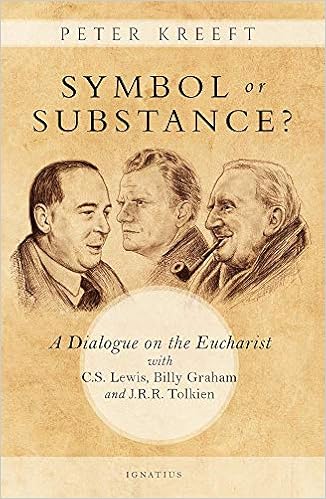
I am starting on a new book from Ignatius Press by Peter Kreeft – always good – who has written a fictional conversation about the Eucharist between three religious figures of the 20th century:

C.S. Lewis
J.R.R. Tolkien
Billy Graham

Intriguing, no?

Kreeft is really good at this genre which he calls a “supposal”.  For example, did you know that Pres. John F Kennedy, Aldous Huxley and C.S. Lewis – all three – died on the same afternoon, 22 Nov 1963.  Kreeft wrote a conversation between them, meeting at their judgment.

Kreeft is thoughtful.  He states clearly in the introduction that he does not attenuate the Catholic position of the Eucharist, even as he is fair to the positions of Lewis and Graham.

Check it out.

Symbol or Substance?: A Dialogue on the Eucharist With C. S. Lewis, Billy Graham and J. R. R. Tolkien

US HERE – UK HERE

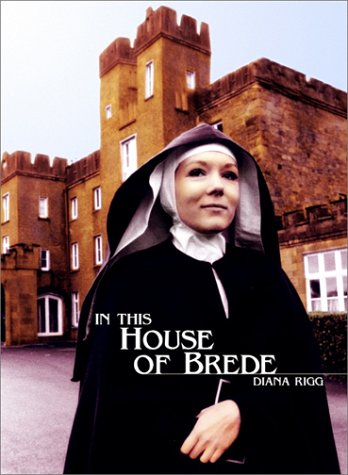
A helpful reader alerted me to a one-day sale on the Rumer Godden book, In This House Of Brede.  Kindle version, $1.99.  HERE (not sure about UK).   This was made into a movie with Diana Rigg.  HERE

Do you not have a Kindle?   Oh dear… oh dear…

US HERE – UK HERE

Kindle… reading joy.

Also, I have so many books – publishers send things – that I appreciate receiving books for Kindle.  Thanks to readers who send books from my wishlist.

Posted in The Campus Telephone Pole | Tagged ,
5 Comments

ASK FATHER: Separating priest from altar in the Novus Ordo

From a reader…

I have a question about the GIRM. If I’m reading it correctly everything except from the Offertory through Communion Rite must be done from the chair, and the missal and chalice placed elsewhere except for those times. Until recently, the parish priests said the collect, prayer after communion, etc. from the altar. Almost the whole TLM is said from the altar or the foot of the altar. From my pew, the instruction does not make sense in the context of liturgical tradition. In a larger sense, the language of the GIRM seems to make praying at the altar an act in some bigger play, which will negatively affect our understanding, especially when combined with the extra extraordinary (in number not office) ministers, and lectors walking all over the “worship space.” Am I reading the GIRM correctly? If so, what is the basis for the language of the GIRM?

You raise an important point.

Let’s consider a few initial points.

Priesthood is for sacrifice.  There is no sacrifice without priests.  The place of sacrifice is the altar.  The priest and the altar are intimately bound together, so much so that the priest kisses the altar when he arrives or when – in the traditional rite – he turns from it or when he leaves it.  He – traditionally – dresses in ritual fashion to go to it.  The altar itself – traditionally – is also to be ritually clothed in its own matching vestment, the antependium.

In 1969 – most people have never heard this and digging up information about it is hard – Paul VI issued an edition of missal for the revised “Novus Ordo” of Mass that had to be withdrawn immediately because there was heresy in the introductory comments.  The distinction of the priesthood of the laity by baptism and that of the priest by ordination was blurred.  Another missal would be released which cleaned that up.  However, you can see what was going on back in the day.

In 1968 Paul VI issued a rite of ordination to the priesthood which – while valid – left out of the interrogation of the ordinations the questions explicit language about offering the sacrifice of the Mass and about hearing confessions and absolving sins, activities which pretty much sum up the work of the priest.  In 1990 John Paul II issued a revision of Paul VI’s rite which corrected these lacunae, making these aspects of priesthood explicit.  The problem was that the rites themselves should tell us what they are conferring.  The Paul VI rite didn’t.  It was murky.  Some, therefore, argued that it wasn’t valid for holy orders.  That was wrong.  However, had that rite continued for a long time, to the point that even the bishops conferring the sacrament had murky notions about priesthood, then… well… problems.  Michael Davies dealt with all of this in a good book (US HERE – UK HERE).

And now we turn to the issue of separation the priest from the altar in the Novus Ordo for significant periods of time in the Mass and the introduction of myriad of lay people into the sanctuary.

Keep in mind that when the Word of God is proclaimed, Christ is present.  Christ is pre-eminently present in the Eucharist, but He is also present in the reading of Scripture.  The Fathers of Vatican II wanted to expand and open up a greater use of Scripture.  One way to emphasize the importance of Scripture was to give its proclamation it’s own place.  In the ancient Church there was often in a large raised ambo, with steps up both sides, from which readings were sung.   In the Solemn Mass of the Roman Rite, while the priest celebrant read the readings at the two corners of the altar, the Subdeacon and the Deacon would go to their proper places in the sanctuary and, in the case of the Gospel, facing liturgical north, for the readings.  Thus, the traditional rite also emphasized the reading of Scripture by location and by singing.  Alas, one of the things that – I think – pushed the ignorant and scholarly alike to implement radical changes to the Roman Rite is because they had gotten it into their heads that the LOW Mass was the paradigm of the Roman Rite and not the SOLEMN Mass.  At Low Mass everything is kept strictly at the altar.

We could briefly touch on the “chair” of the “presider”.  This is an echo of the “seat of Moses” whence the law was interpreted, the curule chair of Roman officials and Emperors, etc.  It is a symbol of teaching authority and governance.   The use of the chair by the priest embodies these aspects of the man’s priesthood.  However, once again, the use of the chair was present in the Solemn Mass.  At times the priest, with deacon and subdeacon, could go to sit when it was proper to wait for the choir to complete its chants.   So, the chair was ever present in the sanctuary, but there was a desire to emphasize it.  Unfortunately, this was exaggerated in many places.  I think we all have seen churches in which the tabernacle was removed from the central position and the “presider’s chair” was put there, thus giving the priest a perch grander than anything where Caesar ever parked.  We have seen altars offset from the center of the sanctuary (if it could still be called that) so that the ambo would have a place of equal dignity nearby.

That last point reminds me of something… that table of the word and table of the sacrifice.  What most people don’t get today is that the reading of Scripture at Mass is itself a priestly, sacrificial offering.  Reading Scripture at Mass is not a performance moment (ohhhh… how many dreadful readers are there?).  Reading Scripture at Mass is not primarily a didactic moment, though it is also didactic.  Readings are to be raised on high to God much like the cloud of incense that rises in an offering back to the Father.  Christ is being offered to the Father, for Christ is in every word that is proclaimed.  Hence, as we decorate the rest of the elements of Mass, it is fitting to sing the readings, as an act of sacrificial love.

It seems to me that we are slowly recovering from the enthusiastic madness of the 60’s and 70’s.  Surely the side by side use of the traditional Mass, according to the vision of Benedict XVI and Summorum Pontificum, will bring these issues to the fore.

Finally, as a convert I am highly sensitive to the differences of Protestant and Catholic world views.  I don’t recall the source off hand, but not too long ago I heard someone comment that the whole of the Protestant revolt could be summed up as an attack on the priesthood, and therefore on sacrifice.   Surely the desire to bridge the gap toward Protestants influenced those who ran beyond the mandates of the Council Fathers.  It is, in way, still functioning today, but in a subterranean way.  What do I mean?   This emphasis on “clericalism” today, as a way of dodging the real problems behind The Present Crisis, reflects a subtle attack on the Catholic understanding of priesthood, a reduction of the role of priest to “minister”, an attenuation of the vital concept of sacrifice and, therefore, the true meaning of the altar.

Perhaps some of these thoughts will help you as you gaze at the goings on the Novus Ordo sanctuary and the TLM sanctuary, how they overlap and harmonize, how they diverge and conflict.

___

Afterthought:

You might go back and listen to three podcasts I did some years back on the implementation of the Novus Ordo at Advent of 1969.

095 09-11-24 40 years ago… Paul VI on the eve of the Novus Ordo (Part III)
094 09-11-20 40 years ago… Paul VI on the eve of the Novus Ordo (Part II)
093 09-11-16 40 years ago… Paul VI on the eve of the Novus Ordo
Posted in "How To..." - Practical Notes, ASK FATHER Question Box, Liturgy Science Theatre 3000, Priests and Priesthood | Tagged , , ,
10 Comments

Fr. Z makes a suggestion. The last video of the late, great Bp. Morlino.

From what I have picked up, many people these days look at annual diocesan fundraising drives and campaigns with deep suspicion or even resentment.  I have received numerous emails asking about the morality of cutting off money to dioceses or to parishes because of, especially, The Present Crisis and feckless, untrustworthy leadership.

All of us understand our obligation to provide for the needs of the Church.  However, all of us want our contributions to mean something and not to see them go down some rat hole.  I am often asked about trustworthy causes to which you can donate.

I will repeat what I have posted in the past and suggest the TMSM, of which I am president, and also the wonderful Our Lady of Hope Clinic.

Right now, however, I’d like also to suggest a contribution to the Diocese of Madison, in remembrance of the Extraordinary Ordinary, the late, great Bishop Morlino.  He really stood up tall when The Present Crisis flamed up.

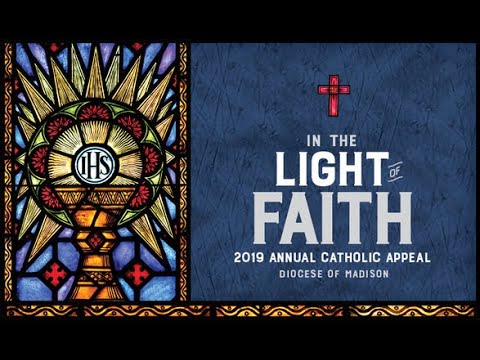
You might take a moment to watch this video.   I know… I know… I dislike these annual campaign videos too.  However, this one has the last video taken of Bp. Morlino.  It was recorded the day before he had his heart attack and subsequent death.

It is bittersweet, to be sure.

I can say this: contribution to the Madison campaign will accomplish good things.  I know what is going on around here.   For example, we have more seminarians than many dioceses that are far larger.  Yesterday, the Vocation Director and a seminarian and I had breakfast after our celebration of a Sunday TLM.   We are carrying on on the trajectory set by our late chief.  One of the things we spoke about was the upcoming 1st Mass of a man to be ordained in June: once again a TLM 1st Mass.

There is a Memorial Fund for Bp. Morlino, aimed at building a new cathedral.  The old one was the victim of arson many years ago.

HERE

There is the annual campaign.

HERE

In any event, … here is the annul appeal video.  Featured in it also are the parents of our aforementioned Vocation Director.

YouTube thumbnailYouTube icon

Posted in "How To..." - Practical Notes | Tagged , ,
12 Comments

Shrovetide: Collop Monday

We have arrived at the final days of Shrovetide.  “Shrove” is from “shrive”, “to absolve a penitent”.

On this day one customarily in earnest began to consume the leftover meat in the house, before Lent began.

Remember: once upon a time Latin Church Catholics were more serious… about everything.

Hence, today we would eat collops – slices of bacon – reserving the bacon fat for pancakes and so forth on Tuesday, when we would consume the last of the animal fats… Fat Tuesday, Mardi Gras.

In this time of “carne-vale” we would, as Catholics, say “good-bye – Latin vale!” to meat.

So, have some bacon today.  Perhaps bacon and eggs?

Posted in Liturgy Science Theatre 3000 | Tagged
11 Comments

Your Sunday Sermon Notes

Was there a good point made in the sermon you heard for your Mass of Sunday obligation? Let us know what it was.

For my part, for Quinquagesima Sunday, I connected the image in 1 Corinthians 13 of seeing “darkly” and, in the Gospel, the Apostles inability to see what the Lord was talking about in predicting his Passion, and the giving of sight to the blind man at Jericho.   At the same time, I connected the journey Paul described of moving from being a child and doing childish things to being a man and doing mature things, with the ascent Jesus and the disciples will make “up to Jerusalem”, making a connection also with John’s vision of the “new Jerusalem coming down” in Revelations, that recapitulates the ascent of Moses and the elders to the top of Mt Sinai when they have the sight of God in heaven and the shining floor like lapis lazuli.  Then I placed that in the context of the sequence of pre-Lent Sundays, which in ancient times prepared prospective catechumens to move from a less clear notion of what they were getting into to a clearer notion, through the texts of Sunday Masses, till they, on this Sunday, ascended the Vatican Hill to old St. Peter’s…. and the same readings we had today.   I reminded everyone that Fathers of the Church would refer to Lent as a “sacramentum” (Gk. mysterion).  Outward signs help us out of blindness to “see” interior realities.  This is how we prepare for Lent, which is also an ascent to Jerusalem, sacramentally made present to us and us to it in the liturgical action, in anticipation of our ascent to the new Jerusalem when all things are resolved.

Posted in SESSIUNCULA |
14 Comments

QUESTION for readers: FAST STB

Do any of you readers out there know of any – officially accredited – schools/programs of study whereby someone could complete an STB quickly?  In less than 3 years?

How about by distance learning?

The idea would be to get that basic theology degree, STB, which is a prerequiste for a, for example, JCL.

Moderation queue is ON.

Posted in "How To..." - Practical Notes |
3 Comments