Wherein Fr. Z reviews and rants on important points about VALID baptism

infant baptismBecause Easter is a special time for baptizing, I hereunder assemble some observations from past ASK FATHER Question Box responses about baptism and validity.

INITIAL RANT: 

Bishops would do well to quiz priests, and seminarians before ordination as deacons, about how to baptize.  Some might find this insulting, but given how important this is… who cares?  I have heard some pretty crazy things in my email.  Some men trained in certain place and certain years – this includes especially permanent deacons, by the way – cannot be assumed to know how to baptize properly.

I mean … how hard is it, guys, to do it right?  To do it in such a way that there can be no doubt in the minds of those watching that it was valid?  How hard is it?  For all love, if priests and deacons can’t do these basic things right, say the black and do the red, they should be sent to some… I dunno… “re-education” camp. No air-conditioning.  No screens on the windows.  Perhaps they should stay in camps on the model of Sheriff Arpaio’s in Maricopa County until they can demonstrate that they know the words and actions.

QUAERITUR: What if the water doesn’t flow on the head?

I put this to the CDF and received a response that the baptism is not valid.  Other great writers have established that if they water does not flow on the head, the validity is doubtful and it should be repeated conditionally.   Say there is an emergency, an accident, and only a leg can be reached: after the rescue, the person should be baptized conditionally.  Bottom line: water must contact the head!

QUAERITUR: What if the water flows only on the hair of the head but not the skin?

If it runs on the hair of the head, the baptism is valid.

QUAERITUR: Does the water have to be poured, only poured?

No.  Pouring, sprinkling and immersion or a combination of the three are possible for validity.  However, the water must contact – say it together – the head.

Immersion: The water has to have contact with at least the back or base of – WHAT? – the head.   Concerning babies and immersion, dipping, of just the “backside”.  FAIL.


12_11_23_sac-baptism-headQUAERITUR
: Can the priest change the words used?

Sacraments have both matter and form.  The matter of baptism is water (not something else) in contact with at least the head.   The form is the speaking of the formula: “I baptize you in the name of the Father, and of the Son, and of the Holy Spirit.”  In my opinion it is best to do this in Latin, though approved translations are allowed.  The form is absolutely essential. In no circumstance can it be altered. These words must be pronounced simultaneously with action of making the water contact the head.  Not before.  Not after.  A good practice is to pour the water thrice, with the Names of the Persons of the Trinity, or continuously as the whole form is pronounced.  That way there is no question about validity.

QUAERITUR: What about sponsors, godparents?

Having a godparent is important for baptism for liceity but not for validity.  I am writing here about validity. I’ll leave godparent stuff for another post.

BONUS RANT:

It is a constant source of amazement to me just how hard some priests find it to follow the book!  Just do the red and say the black!

Well… I guess I do understand.

Priests are generally good-hearted men, even if some are dumb or have wacky ideas.

Sometimes priests err because they want to make the rite more “meaningful”.  Sometimes they endure real pressure from poorly catechized lay people.  Yes, it is good that they come to the church for these milestone moments.  However, because their identity is tenuous at best, they want “meaningful” stuff put into the rite where it doesn’t belong.  Priests sometimes cave in.    Believe me, I understand the pressure.  A bunch of people got really mad at me once because I wouldn’t interject goofy things they made up and wanted as part of the rite of baptism.  Yes… there is pressure.

Some priests think they are doing something “more authentic” because they read somewhere that in the ancient Church baptism was by immersion.   Liberal writers and workshops have fed them the line that if it is “pristine” then it must automatically be better.  This is redolent of the false archeologizing Pius XII warned about in Mystici Corporis Christi and which the Church condemned when pushed by the infamous Synod of Pistoia.  Just because something was done in the ancient Church, that doesn’t mean that it is better than what we do now.  We’ve learned a few things along the way, after all, and therefore changed our practices.

So here is a message for priests about baptism, particularly by immersion:

If you are too dumb to do immersion properly, just don’t do it.

Otherwise, next time throw yourself into the immersion pool, preferably wearing a millstone.

Posted in "How To..." - Practical Notes, ASK FATHER Question Box, Wherein Fr. Z Rants | Tagged , ,
21 Comments

National Catholic Prayer Breakfast confirms a big guest speaker in addition to Card. Sarah!

NCPBThis year on 17 May the 12th National Catholic Prayer Breakfast will be held in Washington DC.

The keynote speaker is the great Robert Card. Sarah, Prefect of the Congregation for Divine Worship.

A special guest speaker has also been confirmed today, Speaker of the House, Paul Ryan (R-WI).

Early bird pricing for tickets expires on 31 March 2016.

Registration is open.

HERE

Posted in Events, Just Too Cool, Our Catholic Identity, The Campus Telephone Pole | Tagged , , ,
1 Comment

ASK FATHER: Priest only baptizes babies by full immersion and without clothes (… on the baby)

baptismFrom a reader…

My daughter and son-in-law (a Lutheran, and a good man finding his way home) are taking classes in preparation for the baptism our granddaughter who will be born in April. She has been told that all baptisms are done during Mass with no exceptions. Not her preference but she’s fine with that. They also have been told that all babies will be baptized by total immersion in the baptismal font (large pool) in the narthex. The babies (in the past as many as 12 or more at a time) will be completely disrobed. My daughter and her husband were taken aback by this and they do not feel at all comfortable placing their newborn in this situation. I’ve told them that while I believe it is certainly licit, I’ve never seen this done before. I believe it to be part of the Orthodox tradition but I do not understand it to be a Roman Catholic tradition, at least in this country. So for me this situation does beg the question, why? Why the pastor would think this necessary, even against the wishes of the parents? Your comments and suggestions please Father.

P.S. Went to confession today!  Thank you for your constant reminder of God’s Mercy encountered in this sacrament. Would that all priests be as vigilant in this regard.

Naked baptism, and baptism by immersion are certainly valid, but not required. I question the authority of the pastor to impose either on the faithful.  I think a discussion is in order with the pastor about possible options. If he’s unwilling to bend, a call to the diocesan chancery (after Holy Week, thank you) might produce some reasonable alternatives.

Once again, the question arises: Why are certain persons in the Church (generally of a liberal stripe) intent on making certain options mandatory (e.g., doing baptisms a certain way) while, at the same time, they seem eager to turn certain mandatory obligations into mere options (e.g., claiming that it’s still an option to stand during the Canon while it’s clearly not permitted any longer)?

Thanks for the mention of confession.  Everyone…

GO TO CONFESSION!

Posted in "How To..." - Practical Notes, ASK FATHER Question Box, Liberals, Liturgy Science Theatre 3000 | Tagged ,
41 Comments

Combox decorum: a metaphor

Friends, just because you have some anonymity in these interwebs, that doesn’t give you free reign to be all crabby, and, you know, go at each other with knives in the combox.

YouTube thumbnailYouTube icon

It’s the Star Trek fight music that does it.

Posted in Lighter fare | Tagged
4 Comments

Wednesday of Holy Week: The Whole Megillah

megillat estherDuring Holy Week, in the traditional Roman Rite we read or sing all four Gospel accounts of the Passion of the Lord.

Tomorrow, Spy Wednesday, we read or sing the whole Passion according to Luke.  Mass can get a little long, even on the weekdays of Holy Week.

This year our Wednesday of Holy Week, 23 March, coincides with the beginning of the Jewish holiday Purim, which celebrates how God, through Esther and her adoptive father Mordechai, saved the lives of the Jewish people from the hateful Hamman and the King during the Persian captivity.

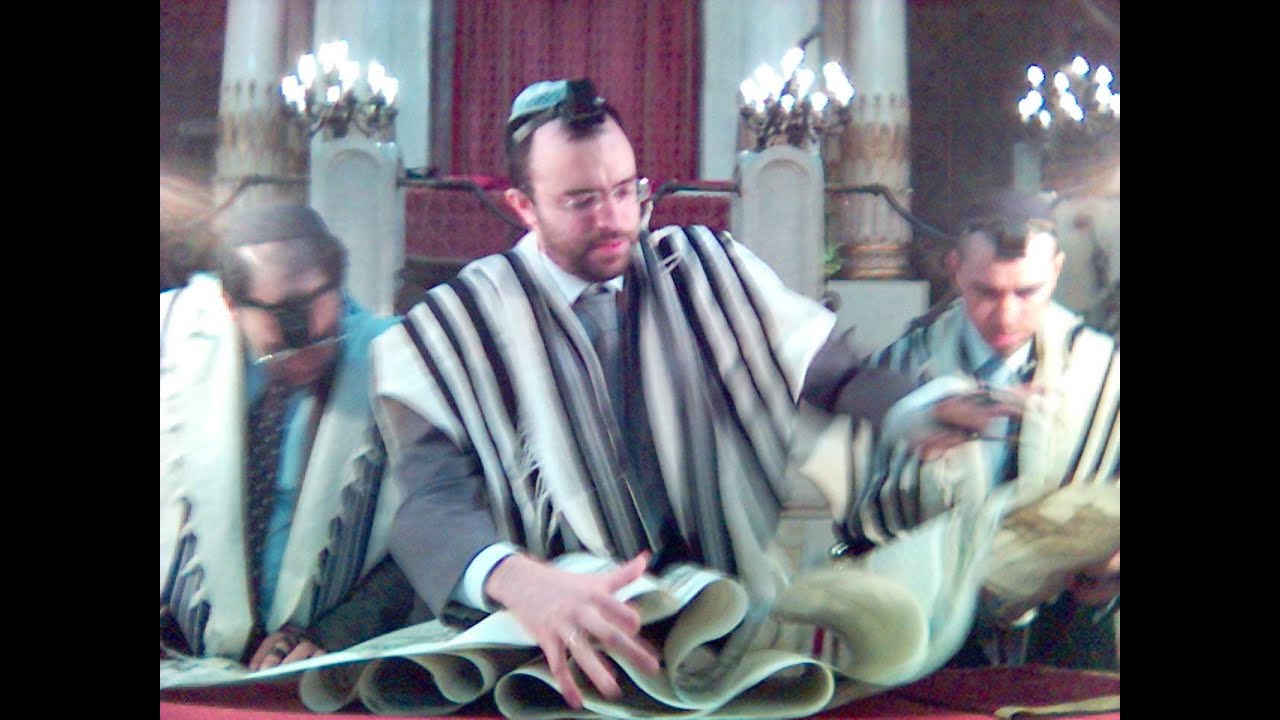
One of the customs of Purim is to read or sing the whole scroll of the Book of Esther, which is called “the whole megillah (megillat – scroll)”.  There are several “megillah books”, but Esther is probably the most associated with the word.   During the singing of the whole megillah, when the name of the evil Hamman is pronounced, the people often shout and make noise with noisemakers to blot out his name, a kind of damnatio memoriae.  There are some interesting Youtube videos of the singing of Esther that have this blotting out of “Hamman”.   For example, HERE, at synagogue in Tampa, they really get into it.  Check out about 1:30.

By the way, don’t be puzzled by the seemingly cheerful raucous music that introduce some of these Megillah Esther videos.  Purim is a time of serious partying.   There is a lot of dressing up in costumes and feasting.

Here is a singing of Esther from the Synagogue in Rome (Hebrew with an Italian accent).  Chapter 3 starts at 12:35 or so and right after is a mention of the hated Hamman.

YouTube thumbnailYouTube icon

Posted in Hard-Identity Catholicism | Tagged , , , ,
8 Comments

LONDON: “Why thanking our priests has become a Holy Week tradition”

In the online pages of the UK’s best Catholic weekly, The Catholic Herald, there is an interesting piece which you should know about.  It might inspire you.

Why thanking our priests has become a Holy Week tradition

When we saw a protest for women’s ordination outside a Chrism Mass, we knew we had to offer a response [Do I hear an “Amen!”?]

If you are a London priest – in either Westminster or Southwark – you will see us at the Chrism Mass as you walk in procession to the Cathedral. We will be there with our placard and our thank-you cards, and in recent years have come to be regarded by many of the clergy as a standard part of the proceedings.

“Thank you to our priests” says the placard, and we hand out small holy pictures with a thank-you message from Catholic women.

It began in Southwark some years ago, the independent initiative of a small group of us including Mac – a teacher – [HUZZAH!] and myself. We were distressed by seeing at St George’s Cathedral. On the one day in the year when priests gather to affirm their consecrated service to the Church, and receive the sacred oils which are central to their ministry, it seemed just so wrong that they were subjected to any form of campaigning.

But rather than set up a rival group, it was decided simply to take this opportunity to say “thank you”. The first placard was hand-made, large and enthusiastic but perhaps less than elegant: we held it aloft with enthusiasm and were touched by the response of the clergy, who accepted our small holy cards with gratitude and seemed genuinely appreciative of the gesture.

A couple of years later the Association of Catholic Women (ACW) took up the project, this time at Westminster, and on arrival in the Cathedral piazza were delighted to be joined by a young team from St Patrick’s, Soho, [HURRAY!] who had brought along their own home-made placard to show support.

We now have a splendid professionally made placard used at both Cathedrals – the gift of a young ACW member, who with a job and small children was unable to join us but wanted to help. Every year the ACW designs and prints the small thank-you cards, choosing a suitable Scriptural quotation, prayer, or religious image. In 2014 we marked the canonisation of St John Paul with extracts from his teaching on the Eucharist.

Others years have seen prayers from the Ordination ceremony, or the Chrism Mass, and designs have ranged from pictures of Our Lady to Eucharistic themes. No one ever says “No thanks” or snubs us… the only criticism has been a light-hearted “Hey, what about us?” from deacons who wondered if they might merit a placard too…  [Ehem… cough…]

Every year the Chrism Mass is always well-attended, not to say packed, and as the faithful make their way in we get a lot of support and encouragement along the lines of “Good for you!” and “Yes, I’m with you!”. When the procession ends we make our way in, glad to squeeze in at the back, and are suddenly swept up into the music and the prayers.

In fact, until this thank-you idea emerged, it had never occurred to me to attend the Chrism Mass and I found it a revelation. The prayers are beautiful, invoking Genesis and the olive branch brought back by the dove as the Flood receded… Listening to it all there is a sense of the unity of the Old and New Testaments, and the continuity of things, the very essence of Holy Week.

The only daft bit is travelling home on the bus with that placard. “How much do they pay you to carry that?” laughed a bus driver one year. All done for free, we assured him: the message is ours and we mean it.

Posted in Priests and Priesthood | Tagged ,
6 Comments

ASK FATHER: Woman “Eucharistic Minister” crosses lines to receive only from the priest

From a reader…

In our parish we have a woman who is a Eucharistic minister at some masses. Whenever she does not serve, she will get out of the pew and cross over so she can receive from the presider only. If she were a regular parishioner, I would not notice. It happens all the time. But as a recognized Eucharistic minister, do you feel she is doing a disservice by acting hypocritically by not feeling reception by a minister is “good enough”? And should I bring it to our pastor’s attention?

First, let’s say “priest” or “celebrant” and not “presider”.  Next, we say “Extraordinary (not Ordinary) Minister of Communion (not Eucharist).”  Terms have meanings.

Nowadays, many parishes have Extraordinary Ministers of Holy Communion.  Properly, these EMHCs should be male instituted acolytes.  In a pinch, any members of the lay faithful, of either sex at the discretion of the local bishop, can substitute for male instituted acolytes.

Back to the point of the question: This female Extraordinary Minister of Holy Communion receives only from the priest?

This female Extraordinary Minister of Holy Communion crosses lines in order to ensure that she is receiving Our Lord in Holy Communion from the priest who offers the Holy Sacrifice, and that, therefore, makes her (somehow) a hypocrite?

I can’t understand how that would be so.

Should you point this out to your pastor?

Were I the pastor to whom this is pointed out, my response would probably be something along the lines of,

“Perhaps, my child, if you focused more on preparing your soul to receive your Sovereign Lord and Majesty as you approach the Communion rail, you wouldn’t notice the habits of others. Could that do your soul more good than looking about to spy out what others are doing?”

Moderation queue is ON.

Posted in "How To..." - Practical Notes, ASK FATHER Question Box, Liturgy Science Theatre 3000 | Tagged ,
18 Comments

TENEBRAE – Where? When?

We must all work in a concerted effort to revive the singing of all of Tenebrae, whole and entire, from the older, traditional Office. Not some truncated version of ditties and so forth, as if it were Advent Lessons and Carols in Lent. The whole meghilla, to use a season appropriate word.

Do you know where the offices of Tenebrae are being sung?

I know that my home parish of St. Agnes in St. Paul, MN has Tenebrae on Thursday, Friday and Saturday from 9:30 and there are confessions.

I just read at Regina that Tenebrae is to be held at St Mary Moorfield’s in London at 9 pm, Wednesday to Friday in Holy week. There are also services at Birmingham Oratory. I’ll be the London Oratory will sing Tenebrae.

How about you? Do you know of other Tenebrae services? The whole thing?

Frankly, the Responses alone make you die inside.

Posted in Events, Liturgy Science Theatre 3000 | Tagged
45 Comments

PODCAzT 142: It’s Nazi Germany, it’s 1937, you are Catholic, and you are afraid. Mit brennender Sorge!

pius xiFr. John Hunwicke, at his fine blog Mutual Enrichment, reminds us all that on this liturgical day, Monday of Holy Week, in 1937

… the Gestapo raided diocesan offices and presbyteries all over Germany. The previous day, Palm Sunday, when the churches were packed, priests all over Germany had read publicly the Encyclical Mit Brennender Sorge [=With Burning Sorrow – Anxiety – Concern] of the Holy Father Pope Pius XI…. It had been smuggled into Germany in the Nuncio’s Diplomatic Bag and secretly printed …; secretly distributed by special couriers and proclaimed in every pulpit. And nobody leaked it; at least, not in time for the government to intervene. It burst upon the Fuehrer and his admirers as the most wonderful surprise. Not many people in the state apparatus will have had much sabbath rest that Sunday, as arrangements were frantically made to secure all copies for destruction.

Mit brennender Sorge is amazing.  The letter is a masterpiece of rhetoric, aimed at building the resolve and courage of the whole Church which was experiencing ever greater persecution, ever greater restriction of and violation of religious freedom in direct violation of the concordat, the treaty that the State had legally ratified with the Church. Pius describes the problems that people were enduring and seeks to harden their resolve and console them in their suffering.

His word to young people are to be prized especially in our own day.

Indeed, this letter seems as if it could be aimed at our own decade.

And since letters of this kind are lacking today, when we need them, Mit brenneder Sorge is that much more precious a gift from our forebears!

Every once in a while, I read for you old encyclicals, with the hope that they will come alive for you who have never experienced their content and, especially, their style.

They don’t write them like this anymore!

As you listen, I’ll ask you to imagine yourself in a church in Germany on Palm Sunday 1937.

The horrors of the first world war and the poverty of economic devastation are still raw. The German Riech and National Socialist party is in the ascension. People are being rounded up and disappeared. Schools are being hijacked. Young people are being indoctrinated in evil disciplines. A nationalist paganism is being blended into everything the State does as it represses any rival. Huge numbers of your neighbors are caving or are being swept up by the trends. Society is on the ede of a knife. Hitler and his thugs are driving the Catholic presence from the public square. There had been a treaty a concordat signed between the German Reich and the Church, to guarantee the Church’s freedoms, but it is being systematically and blatantly ignored.

You are afraid… for yourselves, your children, your Church, your nation.

And so, Pius XI issued his encyclical, which had material from several contributers including Eugenio Card. Pacelli, former nuncio to German and future Pope Pius XII along with German Cardinal Michael Faulhaber and von Galen.

Imaginging yourself in the church on that Sunday, listen now to Pius XI’s words, read by the priest from the pulpit of your parish church…

Finally, I share another one of Fr. Hunwicke’s observations…

At one point, I even found myself fancifully wondering if the Sovereign Pontiff had looked prophetically into the future and discerned the shadowy figures of the Obamas of our own time. You will recall that at the heart of the project of the Obamas for destroying the Catholic Church is the slick and dirty legerdemain by which Freedom of Religion is replaced by Freedom of Worship; Circeian magic or a conjurer’s substitution trick which permits to Christians whatever silly jiggery pokery we like to get up to within our church buildings just as long as we don’t try to proclaim our Holy Faith in any public forum; just as long as we don’t have the impertinence to hope that the Law of Christthe King might be expressed, or even tolerated, by the laws of men.

Evil wears a different face and speaks a different patois in every different era. The smart thing is to be able to spot it despite the disguises.

Pius XI’s Mit Brennender Sorge is a condemnation of all the Obamas of all the ages.

For more on Pius XII v. Evil – HERE

UPDATE 22 March:

Today is the feast of Bl. Clemens August Card. von Galen, the Lion of Münster!

You can read about this amazing man, who especially fought the euthanasia policies of the Nazi Reich.

Click!

CLICK!

Posted in LENTCAzT, PODCAzT, Religious Liberty | Tagged , , , , , , ,
13 Comments

Examination of Conscience resources from a rock-solid, reliable priest!

I am often asked for a good Examination of Conscience resource, or Examen.

Some time ago my good friend Fr. Tim Finigan, His Hermeneuticalness, had posted on the website of his former parish 3 good PDFS for a small trifold pamphlet, for adults, teens and children.  When Father moved to a new parish, the new pharaoh came who knew not Finigan. Those files vanished.

I wrote to Fr. Finigan.  He sent me the files and said that I could share them.

This is a bit of an experiment for me.  They are uploaded to Dropbox rather than my own server.  Also, in the UK they not only drive on the wrong side of the road, they also use the paper format A4, which is slightly different from the US standard Letter size.  I’m sure you will figure it out.

Father F said that he may be revising them and making color… sorry… colour versions.  I’m sure he will let us know on his outstanding, but lately too-rarely-updated, blog.  HERE

So….

GO TO CONFESSION!

Posted in GO TO CONFESSION, Our Catholic Identity | Tagged , , , ,
19 Comments