A Palm Sunday Image

16_03_20_PSundaySMPB_01

A few more… from the Solemn Mass I celebrated with the gracious participation of Deacon and Subdeacon…

The celebrant begins in a red cope and the other ministers are in red dalmatic and tunic.  After the procession and final prayer after the procession, we change into violet for the rest of the Mass.  For the Passion, we removed our outer vestments and used stoles.

16_03_20_PSundaySMPB_04

16_03_20_PSundaySMPB_03

16_03_20_PSundaySMPB_02

Note how the palms are fanned.

Here is shot from Ss. Trinità dei Pelegrini in Rome.

16_03_20_PSundayTrinita_01

The Deacon is wearing an odd contraption called a “Broad Stole”, seldom seen.  Also, the Subdeacon seems to be wearing a “Folded Chasuble”.  Since these pretty much went out of business around the time of John XXIII, I wonder if they didn’t use the pre-1955 rite for Palm Sunday.

Meanwhile, take a gander at those spiffy woven palms they go to carry!  Someone who loves worked hard on those.  And there’s that Folded Chasuble, which looks like it has been cut in half through the front part.

16_03_20_PSundayTrinita_02

Posted in Liturgy Science Theatre 3000 |
15 Comments

ASK FATHER: My Catholic son is marrying a Lutheran. Can a priest bless the marriage?

From reader…

QUAERITUR:

My son is Catholic and woman he will marry is Lutheran. Her father is a minister and will be doing the ceremony. May a Catholic priest be present to bless the marriage? What is the rule?

The Church requires that Catholics marry Catholics, and that they do so within a Catholic ceremony. Marriage, as a sacrament, is strengthened by the faith of the parties, and since marriage is ordered toward the good of the spouses and the procreation of children, it is only logical that the good of the spouses is strengthened by a common faith, by regular reception of the sacraments together, by common prayer, and by a common identity.

Even more, the Church knows that children’s faith is best secured when both parents share that faith.

That said, the Church recognizes that human heart and affections are difficult to regulate.

Understanding that there are circumstances where a Catholic might desire to marry someone of another faith, and respecting the autonomy of the individual, the Church can grant permission for a Catholic to marry a baptized non-Catholic, or even a dispensation for a Catholic to marry an unbaptized person. In both cases, before the permission or dispensation is granted, some assurances are required: the Catholic party needs to be advised of the seriousness of this exception, he has to state that he is intending to continue to practice his Catholic faith, and he has to state that he will do all within his power to ensure that the children born to the marriage will be brought up in the faith. In addition, the non-Catholic party must be advised that the Catholic party has made these promises. Then, if the bishop is convinced that this marriage will not be a danger to the faith of the Catholic party, then he may give his permission, or grant a dispensation.

The bishop has the further authority, should he deems it reasonable to do so, to grant a dispensation from canonical form, that is, permission for the Catholic to be married by a non-Catholic minister.

If that dispensation is given, then the wedding should follow whatever format the non-Catholic minister uses. It’s not good to “mix” rituals and have a Catholic priest do part and a (in this case) Lutheran minister do part. Particularly egregious (and actually invalid) are situations where the Lutheran minister receives the vow of the Lutheran party and the Catholic priest receives the vows of the Catholic party. There must be only one minister officiating.

Priests are not forbidden to attend such weddings, and may do so as a guest, especially if there’s a close family relationship. Priests may, with their bishop’s permission, even attend “in choir” (that is, they may wear their proper choir dress).  I suppose it would not be entirely wrong for such a priest to have some small part of the ceremony, such as proclamation of the Gospel, the offering of a prayer, if his bishop permits it. One must allow the bishop to lead his diocese in the arena of ecumenism to avoid scandal or indifferentism (cf. art. 157 of the Directory on the Principles and Norms of Ecumenism).

If the bishop does not give his permission, or if the priest or deacon prefers (I’d probably opt for this option), the priest can skip the wedding ceremony that’s taking place with a dispensation from form, and instead, come to the wedding reception and give the newlywed couple a blessing and bless the food.

Even better, Father could greet the couple after Mass on the Sunday after the wedding (just because one gets married on Saturday, doesn’t give one permission to skip Mass the next day!.  Have Gaius and Sempronia come up to the Communion rail and give them a blessing before they toddle off to their honeymoon destination and their lifelong, happy marriage together.

Posted in "How To..." - Practical Notes, ASK FATHER Question Box, One Man & One Woman, Our Catholic Identity | Tagged , ,
14 Comments

BURNING QUESTIONS ABOUT NEW FOOT-WASHING OPTIONS

Now that whole sad issue of the washing of the feet of women has been settled by the powers-that-be, I’m hearing from people all over the place that their “Mandatum” is being dropped from their Holy Thursday Masses.

In any event, I still want to provide a Public Service Announcement to help to clarify some issues surrounding the foot washing rite.  It’s what I do.

So, here are a few Questions which need to be Worked Through before Holy Thursday arrives.

  1. How will the stockings work?
  2. How many days before should the pedicure be obtained? I’ve already heard the opinion that it should be the day immediately before, but I know nothing of these things.  (Do any of us think that a woman chosen for priestly foot-handling won’t get a pedicure?  Will this new option, therefore, change our custom of calling Wednesday “Spy Wednesday”?  Does it take on a new meaning?)
  3. In the ancient church the newly baptized wore their albs for the Octave. Should women wear toe-less (open-toed?) shoes to indicate their new Status as lavatae?
  4. What about the “transgendered”?  Could a priest who doesn’t want to do this, but has the bishop and others breathing down his neck, get “women” who were (and really still are) men?

I am sure I am missing few points, but this is a start.

Best wishes for your Holy Thursday.

Oh… by the way… the foot-washing rite always was only an option, not obligatory, and it is still a legitimate option to wash the feet of males only, thus eliminating the need to form a committee to resolve the aforementioned.

Moderation queue is, yes, ON.

Posted in ¡Hagan lío!, Lighter fare, Liturgy Science Theatre 3000 | Tagged , ,
43 Comments

WDTPRS: Palm Sunday – The Transforming Example

Palm Sunday marks the beginning of Holy Week.  The Sacred Triduum (triduum from tres dies – “three day space”) were once days of obligation when people were freed from servile work so that they could attend the liturgies, once celebrated in the morning.  In the 17th century, however, the obligation was removed under the influence of changing social and religious conditions.  As a result, the faithful lost sight of these beautiful liturgies and in general only priests and religious in monasteries knew them.

In 1951 Pope Pius XII began to restore the Triduum liturgies to prominence by mandating that the Easter Vigil be celebrated in the evening.  In 1953 Mass was permitted in the evening on certain days.  A reformed Ordo for Holy Week was issued in 1955 and took effect on 25 March 1956.   That is when the Sunday of Holy Week came to be called “The Second Sunday in Passiontide, or Palm Sunday”.  Matins and Lauds (Tenebrae, “shadows”) was to be sung in the morning.  Holy Thursday Mass was not to begin before 5 p.m..  The idea was to make it easier for people to attend these all important liturgies.

The principal ceremonies of the Palm Sunday Mass include the blessing of palm branches (or olive branches in some parts of the world, such as Rome) and a procession around and into the church.  In the present Missale Romanum an interesting rubric about the procession hearkens to ancient times:

“At a suitable hour the “collect” is made (fit collecta) in a lesser church or in another appropriate place outside the church toward which the procession marches.”

Here is our word “collect” used to describe a gathering of people.

Also in the rubrics there is something helpful for our understanding of “active participation”:

“Then as is customary the priest greets the people; and then there is given a brief admonition, by which the faithful are invited to participate actively and consciously (actuose et conscie participandam) in this day’s celebration.”

Those words actuose et conscie are very important.  The Second Vatican Council, when using the term actuosa participatio or “active/actual participation”, meant mainly interior participation, the engaging of the mind, heart and will.  The Council Fathers did not mean primarily exterior participation.  Exterior participation should be the natural result of interior participation: we seek to express outwardly what we are experiencing within.  While the two influence each other, there is a logical priority to interior participation, which is by far the more important.

At the end of the procession, when everyone is gathered in the church, the priest says the…

COLLECT (2002MR):

Omnipotens sempiterne Deus,
qui humano generi, ad imitandum humilitatis exemplum,
Salvatorem nostrum carnem sumere
et crucem subire fecisti,
concede propitius,
ut et patientiae ipsius habere documenta
et resurrectionis consortia mereamur.

The vocabulary of today’s Collect is incredibly complex.  We can only scratch at a fraction of what is there.

Our prayer was in older editions of the Missale Romanum and, before them, in the Gelasian Sacramentary.  In the Gelasian there is an extra helpful et: Salvatorem nostrum et carnem sumere, et crucem subire.  Wonderfully alliterative!  The editor of the Gelasian excludes a comma, which makes sense to me: qui humano generi_ad imitandum…. There may be a touch of St. Augustine’s (+430) influence in the prayer.  In Augustine humilitatis appears with exemplum on close conjunction with documentum (ep. 194.3) and with documentum and patientiae in proximity to exemplum (en. ps. 29 en. 2.7).  In the context of the Passion Augustine says: “Therefore, the Lord Himself, judge of the living and the dead, stands before a human judge (Pilate), offering us a decisive lesson of humility and patience (humilitatis et patientiae documentum), not defeated, but giving the soldier an example of how one wages war (pugnandi exemplum): …”

There are two words for “example” here: exemplum…documenta. These words appear together in numerous classical and patristic texts. Our startlingly useful Lewis & Short Dictionary informs us that our old friend exemplum means, “a sample for imitation, instruction, proof, a pattern, model, original, example….”  Exemplum is a term in ancient rhetoric, an inseparable part of the warp and weft of the development of Christian doctrine during the first millennium.

For Fathers of the Church, all well-trained in rhetoric (how we need those skills today), exemplum identified a range of things including man as God’s image, Christ as a Teacher, and the content of prophecy.   In Greek and Roman rhetoric and philosophy, an exemplum could have auctoritas, “authority”, the persuasive force of an argument.  When we hear today’s prayer with ancient ears, exemplum is not merely an “example” to be followed: it indicates a past event with such authoritative force that it transforms him who imitates it.  Today we hear humilitatis exemplum, the authoritative model of humility who is Christ – Christ in action, or rather Christ in Passion, undergoing His sufferings for our sake.  This becomes the foundational and authoritative pattern of the Christian experience: self-emptying in the Incarnation and Passion leading to resurrection.   Exemplum is augmented later in the prayer by documentaDocumentum is also a “pattern for imitation” like exemplum but also in some contexts having the meaning of “a proof”, that is, a concrete demonstration that what is asserted is true: evidence.   In this case it is a paradigm after which we are to pattern and shape our own lives.  But this pattern or model itself actually has power to shape us.  Christ transforms us the baptized who are made in his image and likeness, after his perfect exemplum, and who imitate His exempla and documenta, His words and deeds.

Consortium (from con-sors… having the same lot/fate/destiny with something or someone) classically is a “community of goods” and “fellowship, participation, society.”

Habere has a vast entry in the L&S. The common meaning is “have”, but it also indicates concepts like “hold, account, esteem, consider, regard” as well as “have as a habit, peculiarity, or characteristic.”  Habere is doing double-duty with two objects, documenta and consortia. This is why I use both “grasp” for the first application of habere and “have” for the second.  The meanings of the two different objects draw our two different senses of habere.

Patientia is from patior, “to bear, support, undergo, suffer, endure”, and it carries all its connotations as well as the meaning “patience”.  This is where the word “Passion” comes from.  Today is Second Passion Sunday.  We could say here, “examples of His long-suffering” or “exemplary patterns of His patient forbearance.”  Finally, note that nostrum goes with Salvatorem and not with carnem: caro, carnis is feminine and the form would have to have been nostram carnem.

SLAVISHLY LITERAL RENDERING:
Almighty eternal God,
who, for the human race,
made our Savior both assume flesh and undergo the Cross
for an example of humility to be imitated,
graciously grant,
that we may be worthy both to grasp both the lessons of His forbearance
and also to have shares in the resurrection.

OBSOLETE ICEL (1973):
Almighty, ever-living God,
you have given the human race Jesus Christ our Savior,
as a model of humility.
He fulfilled your will
by becoming man and giving his life on the cross.
Help us to bear witness to you
by following his example of suffering
and make us worthy to share in his resurrection
.

CURRENT ICEL (2011):
Almighty ever-living God,
who as an example of humility for the human race to follow
caused our Savior to take flesh and submit to the Cross,
graciously grant that we may heed his lesson of patient suffering
and so merit a share in his Resurrection
.

More can be said about that phrase patientiae ipsiusIpse, a demonstrative pronoun, is emphatic and means “himself, herself, itself”.  Could we personify patientia to mean, “grasp the lessons of Patience itself” or even “of Patience Himself”?   That would be poetically sublime.

In the fullness of time the Second Person of the Trinity, God the Son, the eternal Word through whom all things visible and invisible were made, by the will of the Father emptied Himself of His glory and took our human nature up into an indestructible bond with His own divinity.  He came to us sinners to save us from our sins and teach us who we are (cf. Gaudium et spes 22).  This saving mission began with self-emptying (in Greek kenosis).

Fathom for a moment the humility of the Savior, emptying Himself of His divine splendor, submitting Himself to His humble and hidden life before His public ministry.   When the time of His years and His mission was complete He gave Himself over again, emptying Himself yet again even to giving up His very life.   Every moment of Jesus’ earthly life, every word and deed, are conditioned by humility.   This is our perfect example to follow, an example so perfect that it has the power to transform us.

As Holy Week begins and the Sacred Triduum is observed, come to the sacramental observance of the sacred and saving mysteries with humble self-emptying.  Make room for Christ.

Posted in LENT, Liturgy Science Theatre 3000, WDTPRS | Tagged , , , , , , , , ,
4 Comments

“Dear Traditionalists,…” Wherein Fr. Z repeats a rant.

Two years ago today I posted this. I haven’t changed my mind one little bit. Not an iota.

I had this from a reader. He said he was not advocating these things. However, liberals will advocate them.

I’ve got some other suggestions.  But first the wacky liberal stuff:

I have an idea for a blog topic – how about brainstorming with your readers on the top 10 changes that Pope Francis will make that will shock the Church and the world. I would orient the discussion around the Pope’s “vision” that the Church is for the poor and should itself be poor. For example, here are some ideas I had:

1) Pope Francis will live at the Lateran Basilica as an example that he will live a simple life away from the Vatican.
2) Pope Francis will allow the ordination of women deacons in service to the poor.
3) Pope Francis will sell the Vatican Museums to a private company and give the proceeds to the poor.
4) Pope Francis will get a petition from the English speaking bishops and will rescind use of the 2010 RM because the language is too complicated.
5) Pope Francis will repudiate Humanae Vitae since too many children tends to perpetuate poverty.

Yep. This is precisely what liberals will push for, hopelessly. [In fact, they are pushing for some pretty subversive thing, but I don’t think they will get their way.  That doesn’t mean that there won’t be a lot of damage.]

What do I think we should push for?

As many celebrations of the older form of the Roman Rite as possible in as many places as possible as soon as possible.

It’s ‘grind it out’ time.

I am getting some defeatist email.

Those of you who want the older form of the liturgy, and all that comes with it, should…

1) Work with sweat and money to make it happen. If you thought you worked hard before?   Been at this a long time?  HAH!  Get to work!  “Oooo! It’s tooo haaard!”  BOO HOO!

2) Get involved with all the works of charity that your parishes or groups sponsor. Make a strong showing. Make your presence known. If Pope Francis wants a Church for the poor, then we respond, “OORAH!!” The “traditionalist” will be second-to-none in getting involved.  “Dear Father… you can count on the ‘Stable Group of TLM Petitioners-For-By-Now-Several-Months” to help with the collection of clothing for the poor!  Tell us what you need!”

3) Pray and fast and give alms. Think you have been doing that? HAH!  Think again.  If you love, you can do more.

4) Form up and get organized.  You can do this.  Find like minded people and get that request for the implementation of Summorum Pontificum together, how you will raise the money to help buy the stuff the parish will need and DO IT.  Make a plan. Find people. Execute!

5) Get your ego and your own petty little personal interpretations and preferences of how Father ought to wiggle his pinky at the third word out of the way.  It is team-work time.  If we don’t sacrifice individually, we will stay divided and we won’t achieve our objectives.

At the midway point of SEAL training, BUD/S, there is a “Hell Week” to see how much you want it to keep going.

Do you want this?  Do you?  Or, when you don’t get what you want handed to you, are you going to whine about it and then blame others?

The legislation is in place.  The young priests and seminarians are dying to get into this stuff.  Give them something to do.

And to those of you will you blurt out “But Father! But Father!… I don’t like your militaristic imagery”… in order to derail the entry, here’s a new image from your own back yard.

Pope Benedict gave you, boys and girls, over the course of his 8 years, a beautiful new bicycle!  He gave you a direction, some encouragement, a snow cone, and a running push.  Now, take off the training wheels and RIDE THE DAMN BIKE!


Posted in "But Father! But Father!", "How To..." - Practical Notes, Be The Maquis, Classic Posts, Hard-Identity Catholicism, Linking Back, Si vis pacem para bellum!, SUMMORUM PONTIFICUM, The Coming Storm, The future and our choices |
18 Comments

19 March: A beautiful hymn to St. Joseph, a Roman procession, and more

It’s the Feast of the wonderful St. Joseph!  In his Litany we invoke him under beautiful titles, including Pillar of families, Solace of the wretched, Hope of the sick, Patron of the dying and, my favorite, Terror of demons.

Happy Name Day, Pope Benedict!

As I write, The Great Roman™ Fabrizio is texting me photos of the procession in the streets of Roman for St. Joseph.

A few shots in almost real time…


Thanks to the Great Roman™!

Back in 2009 I made a PODCAzT about the hymn sung in the Liturgy of Hours in honor of St. Joseph.

Check it out!

I drilled into a beautiful Gregorian chant hymn to St. Joseph in the Liturgia Horarum, the Liturgy of the Hours.

The hymn is Te, Ioseph celebrent and it is in the Liber Hymnarius for 1st and 2nd Vespers for the Feast of St. Joseph.

Also we listened to an indulgenced prayer written by Pope Leo XIII, Ad Te Ioseph.

Finally, we hear St. Bernardine of Siena (+1444) preach on our Patron of the Universal Church who is Patron of the dying.

Buy a Liber Hymnarius!  US HERE UK HERE

UPDATE on the procession!

More images are flowing in.
  

UPDATE:

At Holy Innocents in Manhattan, my friends have built a St. Joseph Table.

IMG_0465


IMG_0458

IMG_0460

An interesting thing happened while I was updating this post.  At a certain point none of the images of St. Joseph would upload.  They just froze.  I tried other images, not a problem.  So, a quick prayer or two and badda bing… up they went.   Terror daemonum… ora pro nobis.

IMG_0455

Kudos to the folks at Holy Innocents… who are also busy with Rosaries in front of the big-business abortion-for-profit Planned Parenthood.

IMG_0259 IMG_0265


MEANWHILE… back in Rome… the procession comes to a conclusion.

UPDATE:

The auxiliary bishop blesses the crowd

Back into church for Mass.

The Great Roman™ says that they were reminded to pray also for the Pope Emeritus.

This is what I wrote for The Catholic Herald about St. Joseph Tables.  It should be in the present number of the magazine:

19 March is the feast of the glorious St Joseph, earthly father of Our Savior, Spouse and chaste Guardian of the Virgin Mary. Among his titles in the Litany in his honor we sing Pillar of families, Solace of the wretched, Hope of the Sick, Patron of the Dying, Terror of Demons, Protector of the Church. Many customs adorn his feast day to which we, like “las golondrinas”, the swallows of Capistrano of song, would be happy and wise to return. St Joseph is a formidable intercessor, upon whose help I have several times relied in time of dire need.

Speaking of customs for this feast, one of the most beautiful is the building of a St Joseph Table. During the Middle Ages there occurred a terrible drought in Sicily. The people turned to Joseph for succor. They’re prayers were answered, for as I mentioned he is a powerful intercessor. In their gratitude the people distributed food to the poor. Can you get more Catholic than that? Ever since, it is the custom among Italians, especially Sicilians, to build a table in three-levels in honor of the Trinity with a statue of the Saint at it’s summit. The tables are loaded with customary Lent-appropriate foods (Joseph’s feast is always during Lent), the priest blesses them, and the less-fortunate especially are invited to partake. The Table includes breads baked in shapes like chalices and carpenter’s tools, 12 different fish for the 12 Apostles, lilies for purity and pineapples to symbolize hospitality.   I’m not clear about the pineapple thing, but they are delicious. You might also see lots of breadcrumbs scattered about, because they look like sawdust. There is a traditional pasta dish “di San Giuse” with breadcrumbs rather than grated cheese. When we Catholics were serious about our identity and the Lenten fast, we didn’t eat cheese during Lent.

Of Joseph, St Bernardine of Siena (d 1444) preached:

If the whole Church is in the debt of the Virgin Mary, since, through her, it was able to receive the Christ, surely after her, it also owes to Joseph special thanks and veneration. … Therefore be mindful of us, blessed Joseph, and intercede for us with Him Whom men thought to be your Son. Win for us the favour of the most Blessed Virgin your spouse, the mother of Him Who lives and reigns with the Holy Spirit through ages unending. Amen.

You should subscribe to the online, full edition of The Catholic Herald.  In it there are many things which are not on the website.

UPDATE:

More from Rome.  You’ll love this.

The Great Roman™ texts:

The bishop invited all – in the name of St Joseph – to receive in the mouth and NOT in the hands to avoid risks of falling particles!!

It is a wonderful feast day.

UPDATE:

CUCCANGA!


And Frittelle di San Giuseppe!


And it wouldn’t be a festa without…

UPDATE:

Meanwhile, back in NYC at Holy Innocents, Father is blessing the zeppoli!

16_03_19_HI_zeppoli

It looks he is using his phone for the text of the blessing, and I’ll wager that he is using the “Ad omnia“.  In it, you get to say “creaturas istas” without naming them.  Figuring out a Latin term for zeppoli isn’t easy.  The etymology of the word is difficult.  In late Latin there is a form zippulae which isn’t very satisfying but will do in a pinch.  It stands for a cake of dough and honey.  It might come from cippus which is like a shive or wedge. It might come from serpula which has to do with the serpentine shape some of them have when fried.  I also saw a word frictilia, which I doubt but which is fun.

UPDATE:

Meanwhile… back in Rome…

Bigné di San Giuseppe!

img_2607-1.jpg

Posted in Linking Back, PODCAzT, Saints: Stories & Symbols | Tagged , , ,
7 Comments

Card. Kasper musings on the forthcoming Apostolic Exhortation

I’ve given a couple talks here in Florida in the last couple days, both during Q&A and after, and also in my email, I’m getting questions about Card. Kasper’s claim, made in a recent speech, that the forthcoming Apostolic Exhortation (following the two Synods on the Family) is going to “turn the page” on some 1700 years of whatever.
Let’s first remember that Card. Kasper has a fluid relationship with the truth.   What do I mean by that?  For Card. Kasper the truth is a moving target when it comes to interpreting texts, even texts of Scripture.  As the scholar Robert Stark pointed out, those who talk about bending the Church’s teachings (and practices) to “reality”, would say that truth can vary from place to place and time to time. What might have once been true doesn’t necessary need to be true now. The German/Kasperite/Rahnerian approach replaces the philosophical grounding of theology with politics (majorities can determine truth, and that might diverge from what people thought in the past). Truth changes according to shifting mores, values, etc. To hell with reason (e.g., syllogisms).

Also, let’s remember that His Eminence spins.  Quite a bit.  Who can forget how he denied making those amazing comments about how African bishops shouldn’t tell the Synod what to do.  HERE  Of course the great Edward Pentin had a recording.

So, now Card. Kasper says that the new document is going to be a really big deal!

Suuuure it is!

There is a good piece in the UK’s best Catholic weekly, The Catholic Herald by Ed Condon. HERE  A couple quips…

[…]

While there is no question that there needs to be an urgent rethink about how parishes pastorally respond to, and better include, families in this situation, and while we all hope that Pope Francis will produce something profound and original to this end, the zombie-like return of Cardinal Kasper and his eponymous proposal would be an ecclesiastical nightmare, and his comments have caused more than a little concern.

The theological contradictions of such a move have already been expounded at great length, and, if they need to be again, I shall leave them to those theologically better qualified than myself to do so.

But before too much is assumed from Cardinal Kasper’s comments, we should remember that that he has already demonstrated a willingness to claim that documents say something which they clearly do not – he famously insisted that the final relatio of the family synod “opened a door” for his plan. The majority of synod fathers, however, protested that, not only was the door not open, there wasn’t even a door.

It is perfectly possible that the good cardinal is, in a rather political way, spinning a document which has not yet been released, with a view to influencing how it will be received. It should be noted that, while he was very forthcoming about what he thought the exhortation would say, he did not actually say he had read it.

[…]

And…

[…]

Pope Francis’s ecclesiology of a dynamic, diverse, personal Church, is radically at odds with Kasper’s flat, essentially German, understanding of a parish. According to the cardinal’s vision, the function of the parish is not missionary but distributive, people come to get Communion (and pay their Church tax, of course). To receive Communion is to be in the parish, and vice-versa.

In the Kasper model, the parish is reduced to a sort of sacramental McDonald’s, where everyone drives through, gets the same order, and leaves again; there is no distinction between people’s situations, no expectation of a change in their lives, no real concern for them beyond “are the getting what everyone else is getting?” rather than are they getting what they need?

This is the reason I don’t think the apostolic exhortation will incorporate the Kasper proposal. Francis wants a dynamic, messy Church of individuals helping each other on the way to faith, where our problems are the unique way God speaks to each of us and brings us to know Him better. Cardinal Kasper wants a whitewashed Church where everyone sits in neat rows.

[…]


Posted in Synod, The Drill | Tagged , ,
4 Comments

SCOTUS Nominee endorsed by Planned Parenthood

From Live Action News:

Obama nominee Garland sided against Priests for Life in contraception mandate case

As Americans attempt to discern the views of Judge Merrick Garland, President Barack Obama’s nominee to replace Justice Antonin Scalia on the Supreme Court, the Washington Post’s Julie Zauzmer has identified a past case in which he sided against Priests for Life.

In May, the DC Circuit Court of Appeals voted 6-3 to deny the group an en banc hearing by the whole court in its case against the Obama Administration’s contraception mandate, which had the result of preserving an earlier ruling in favor of the mandate.

Jay Wexler of Boston University attempted to downplay Garland’s vote with the majority as a procedural move “which doesn’t say much of anything about his views on the case,” though he did acknowledge it meant Garland “didn’t think the panel opinion denying the Priests’ religious freedom claim was clearly wrong.

In addition, Planned Parenthood President and CEO Cecile Richards was seen entering the White House West Wing minutes after Obama’s announcement of the nomination concluded, which has been interpreted as a sign that Obama wished to reassure Richards of Garland’s commitment to upholding a right to abortion.

As Live Action News covered Wednesday, Garland has not explicitly discussed or or directly ruled on abortion, but was a former clerk for Justice William Brennan, who voted in favor of Roe v. Wade, and has praised Justice Harry Blackmun, the author of Roe’s majority opinion.

In other news, big-business abortion-for-profit seems pleased with the appointment…

Planned Parenthood CEO Applauds Obama’s Supreme Court Nominee

After President Barack Obama nominated Judge Merrick Garland to the U.S. Supreme Court Wednesday, Planned Parenthood President and CEO Cecile Richards applauded the president’s choice and urged the Senate to approve him.

“Judge Garland is an intelligent, highly accomplished judge who has secured bipartisan support in his previous appointments,” Richards said in a statement. “Now that the President has upheld his constitutional duty, it is time for the Senate to uphold theirs. The American people deserve a full court and a justice appointed by the President they elected for four years — not three. It is time for the Senate to do their job and give Judge Garland a fair hearing and up or down vote.”

[…]

Leaving aside considerations of his bad ruling in DC about the 2nd Amendment, if big-business abortion-for-profit Richards wants him approved, …

Posted in Emanations from Penumbras, Liberals, Religious Liberty | Tagged , , , , ,
4 Comments

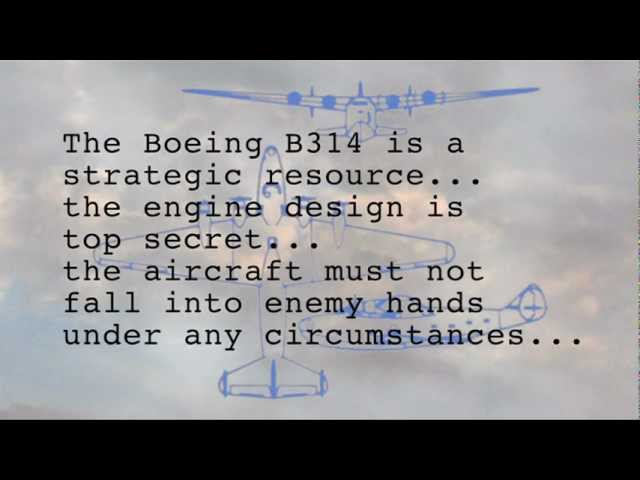
7 December 1941: The Pacific Clipper makes a dangerous escape!

Fascinating! This would make a great movie.

YouTube thumbnailYouTube icon

Posted in Just Too Cool | Tagged
20 Comments

ASK FATHER: Color of veil on Cross for Good Friday

From a reader…

What color veil is the Cross covered with on Good Friday for the Adoration of the Holy Cross? Rather, is there any place in or outside the Missale Romanum that would indicate any color other than violet?

I respect our good Pastor’s authority, naturally. I am sorry for adding to his stress level approaching Holy Week, but I opened my unfortunate mouth and asked why we don’t use violet. Being merely a lay person I defer to him, and was hoping to learn. However, my question was not received well and went unanswered. I understand this is a rather silly question about “nitty gritty details,” but I honestly was curious.

The Roman Missal – for the Ordinary Form, the Novus Ordo – has a specific indication about the color of the cloth covering the Cross on Good Friday in rubric 15:

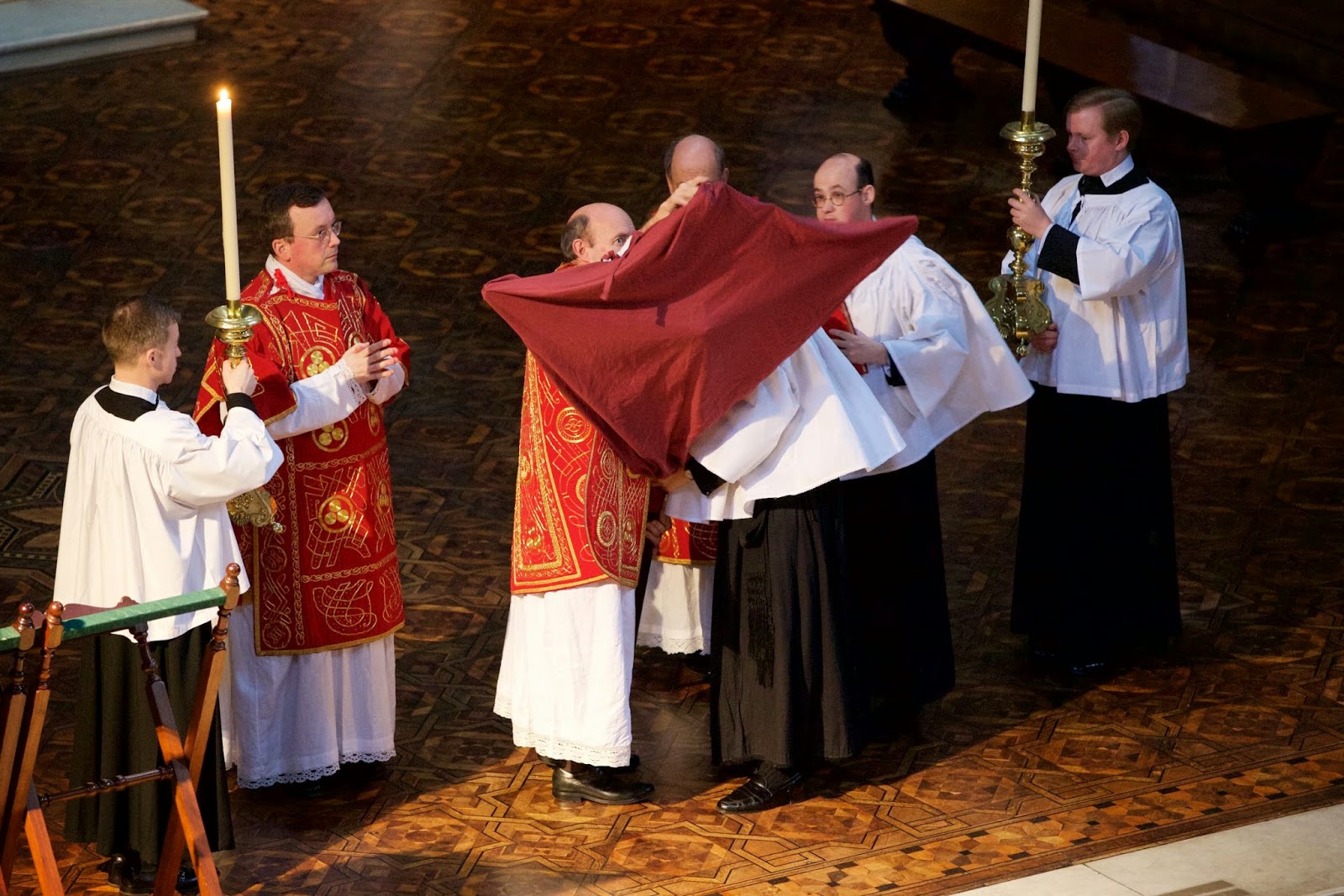
“The Deacon accompanied by ministers, or another suitable minister, goes to the sacristy, from which, in procession, accompanied by two ministers with lighted candles, he carries the Cross, covered with a violet veil [velo violaceo obtectam], through the church to the middle of the sanctuary.”

In the traditional, Extraordinary Form, violet prescribed for Good Friday.

In recent years, for Good Friday in St. Peter’s celebrated by the Pope, we have seen a red veil. It strikes me that this is a custom of papal liturgy. For example, red vestments are used for the Requiem of a Pope rather than black or violet/purple.

That said, the fact remains that the Missal says violet, not some other color.

Posted in "How To..." - Practical Notes, ASK FATHER Question Box, Liturgy Science Theatre 3000 | Tagged
3 Comments
























