ACTION ITEM! Support Our Lady of Hope Clinic!

I have an ACTION ITEM for you good readers. You have been generous to causes I have mentioned in the past.  Sometimes people have a hard time finding causes to support.  This is one of them that I admire.

RIGHT NOW… they have a “matching grant” going on.  Every donation to the clinic from now to the end of the year will be matched, so your donation does double duty.

I have written about Our Lady of Hope Clinic before.  This is one of the worthiest causes I have seen for a while and it could use your help, wherever you are.

Read more HERE and HERE

This could be a new model for health care in a rapidly changing – disintegrating – time.  The “Affordable” Care Act really… isn’t.  It is going to be harder in the future for people to get health care, not easier.  And for those without much bucks?

They have a DONATION page.

Tell them Fr. Z sent you.

Contact Julie Jensen, Director of Development, at Julie   -AT- ourladyofhopeclinic -DOT- org, or by calling (608) 957-1137.

I was recently in the clinic a couple times for … something.  It was like a meeting of the United Nations in there!  They said that whenever I mention them on the blog, they get donations from all over.

In the clinic you see a sign on the wall explaining that
20131104-083959.jpg
“Our Lady of Hope Clinic practices medicine consistent with the teachings of the Catholic Church”

Therefore, they will not refer for abortion, prescribe contraception, refer for sterilization, refer for in vitro fertilization, etc.

And…

“We will practice in complete accord with the teachings of the Roman Catholic Church.”

This is a worthy cause.

I suggest that it is a model that may be duplicated in other places, especially as the chaos really starts to begin in healthcare in these USA.

Posted in ACTION ITEM!, Our Catholic Identity, The Campus Telephone Pole | Tagged , , ,
2 Comments

VIDEO: Wherein Card Arinze explains “conscience”

The mighty Francis Card. Arinze gave a video interview to LifeSite.  He reminds everyone of what real primacy of conscience is in the Church’s teaching.  He clarifies that we have the responsibility to have a properly formed conscience.

We cannot simply claim “conscience” as justification for sin.

He speaks of the responsibility of bishops and priests to form people’s consciences properly.

He explains (perhaps to Synod members along with everyone else) what “adultery” is.

Posted in The Drill | Tagged ,
6 Comments

Card. Urosa Savino of Caracas to the Synod: Can we contradict the teachings of the Lord, St. Paul, the Church?

From CNA a little ray of sunshine:

Strengthen marriage with truth and mercy, Venezuela’s Cardinal Urosa tells synod

Vatican City, Oct 20, 2015 / 06:01 am (CNA/EWTN News).- Both truth and mercy can be found in consistent Catholic teaching on marriage, Cardinal Jorge Urosa Savino of Caracas told the Synod of Bishops on Thursday.

“United to Christ, who has overcome the world, the Church is called to maintain the splendor of truth even in difficult situations,” he said in his Oct. 15 intervention. “Mercy invites the sinner and it becomes forgiveness when one repents and changes one’s life. The prodigal son was greeted with an embrace from his father only when he returned home.”

[…]He cited St. John Paul II’s 1981 post-synodal apostolic exhortation Familiaris consortio, the 1992 Catechism of the Catholic Church, Benedict XVI’s 2007 apostolic exhortation Sacramentum Caritatis, and the 2007 ‘Aparecida document’ of the Fifth Conference of Latin American and Caribbean Bishops. These all reaffirmed pastoral care for couples in an irregular situation, while acknowledging that they may not receive Communion.

The Aparecida document was approved by then-Cardinal Jorge Bergoglio, who would be elected as Pope Francis in 2013.

“Can we contradict those teachings?” Cardinal Urosa asked.

The full text of Cardinal Urosa’s Oct. 15 intervention at the synod with my emphases and comments.

The Proposal of Admission to the Eucharist for the Divorced and Remarried

I refer to numbers 121, 122, and 123 of the Instrumentum Laboris in which is considered the proposal for the acceptance to the table of the Eucharist – counting on certain conditions been met, among them a penitential journey – or the divorced and remarried, yet maintaining the conjugal life .

We are all driven by the desire to find a better solution to this painful situation. We must do it with the spirit of the Good Shepherd and the truth that sets us free. In the evangelical spirit of mercy, I think the penitential journey should conclude in conversion and the purpose of amendment and to live in continence, as taught in other words by Saint John Paul II in Familiaris consortio 84.  [He does not think that the Magisterium of St. JP2 is outdated.]

I wonder: Can we forget the words of the Lord in the Gospel, Matthew 19, and the teaching of Saint Paul (Rom 7:2-3; 1 Cor 7:10; Eph 5:31) and of the Church over the centuries? Can we dismiss the teachings of John Paul II in his 1981 apostolic exhortation Familiaris consortio? [Which is precisely what some people want.] This document, published a year after the 1980 Synod on the Family, seriously considered and consulted by the Pope over many months of study and reflection, in communication with experts from various theological disciplines, clearly rule out this possibility (FC 84) .

We also have the teachings of the Catechism of the Catholic Church in 1992 with the traditional doctrine on the conditions for access to Communion and the Church’s teachings on sexual morality. (CCC 1650) We also have the Letter of the Congregation for the Doctrine of the Faith of September 14, 1994, written specifically on this issue. Can we forget the concluding document of the Fifth Conference of Latin American and Caribbean Bishops in Aparecida, which asks us: “Accompany with care, prudence and compassionate love, following the guidelines of the magisterium, couples who live together out of wedlock, bearing in mind that those who are divorced and remarried may not receive communion.” (n. 437)  [BTW… centenary of the Aparecida event is coming up in 2017.  It is after that, I think, that Pope Francis will resign, if he really plans to do so according to certain hints that he made in respect to his 80th year. CELAM at Aparecida was important to him.  He’ll want to be at the centenary celebrations … as Pope.]

Can we contradict those teachings? Can we forget the very recent statement by Pope Benedict XVI in his 2007 apostolic exhortation on the Eucharist, Sacramentum Caritatis, reiterating the practice of the Church, rooted in Sacred Scripture (cf. Mk 10: 2-12) of not admitting to the sacraments the divorced and remarried, since their state and their condition of life objectively contradict that union of love between Christ and the Church which is signified and made present in the Eucharist? (n. 29)

United to Christ, who has overcome the world (cf. Jn 16:33),  [and did not cave in to it] the Church is called to maintain the splendor of truth even in difficult situations. Mercy invites the sinner and it becomes forgiveness when one repents and changes one’s life. The prodigal son was greeted with an embrace from his father only when he returned home.

This Synod, without a doubt in the light of the revealed truth and with eyes of mercy, is called to reflect very clearly the teaching of the Gospel and of the Church through the centuries about the nature and dignity of Christian marriage, on the greatness of the Eucharist and on the need of having the necessary dispositions to be in union with God to be able to receive Holy Communion; on the need for penance, repentance and the firm purpose of amendment for the repentant sinner to be able to receive Divine forgiveness; and the strength and continuity of both dogmatic and moral truth of the ordinary and extraordinary Magisterium of the Church. It provides as well lights inspired by mercy to assist more effectively those in irregular situations to alleviate their moral suffering and to better live their Catholic faith.

Furthermore, the Synod must indicate lines of action that strengthen marriage, making it more attractive to young people, and keeping it alive in the hearts of the spouses over time. In this matter it will provide Pope Francis with very important elements to promote an intense evangelization of the family, and a re-appreciation of the sacrament of marriage.

Fr. Z kudos to Card. Urosa Savino.

Posted in Fr. Z KUDOS, One Man & One Woman, Synod | Tagged ,
8 Comments

Archbp. Aquila: German bishops promote “cheap grace”

His Excellency Most Reverend Samuel Aquila, Archbishop of Denver, has something to say.

From the NCRegister:

Did Thomas More and John Fisher Die For Nothing?

The idea that Catholics should be allowed to remarry and receive communion did not begin with the letter signed by Cardinal Kasper and other members of the German episcopate in 1993. Another country’s episcopate – England’s – pioneered this experiment in Christian doctrine nearly 500 years ago. At stake then was not just whether any Catholic could remarry, but whether the king could, since his wife had not borne him a son.
As with those who advocate for communion for the civilly remarried, the English bishops were uncomfortable with embracing divorce and remarriage outright. Instead, they chose to bend the law to the individual circumstances of the case with which they were confronted, and King Henry VIII was granted an “annulment” — on a fraudulent basis and without the sanction of Rome.
If “heroism is not for the average Christian,” as the German Cardinal Walter Kasper has put it, it certainly wasn’t for the King of England. Instead, issues of personal happiness and the well-being of a country made a strong utilitarian argument for Henry’s divorce. And the King could hardly be bothered to skip communion as the result of an irregular marriage.
England’s Cardinal Wolsey and all the country’s bishops, with the exception of Bishop John Fisher of Rochester, supported the king’s attempt to undo his first – and legitimate – marriage. Like Fisher, Thomas More a layman and the king’s chancellor, also withheld his support. Both were martyred – and later canonized.
In publicly advocating that the king’s marriage was indissoluble, Fisher argued that “this marriage of the king and queen can be dissolved by no power, human or Divine.” For this principle, he said, he was willing to give his life. He continued by noting that John the Baptist saw no way to “die more gloriously than in the cause of marriage,” despite the fact that marriage then “was not so holy at that time as it has now become by the shedding of Christ’s Blood.”
Like Thomas More and John the Baptist, Fisher was beheaded, and like them, he is called “saint.”
At the Synod on the Family taking place right now in Rome, some of the German bishops and their supporters are pushing for the Church to allow those who are both divorced and remarried to receive communion, while other bishops from around the world are insisting that the Church cannot change Christ’s teaching. And this begs a question: Do the German bishops believe that Sts. Thomas More and John Fischer sacrificed their lives in vain?  [Yes, I think they do.]
Jesus showed us throughout his ministry that heroic sacrifice is required to follow him. When one reads the Gospel with an open heart, a heart that does not place the world and history above the Gospel and Tradition, one sees the cost of discipleship to which every disciple is called. The German bishops would do well to read, “The Cost of Discipleship” by the Lutheran martyr, Dietrich Bonhoeffer. For what they promote is “cheap grace” rather than “costly grace,” and they even seem to ignore the words of Jesus that, “Whoever wishes to come after me must deny himself, take up his cross, and follow me,” (Mk. 8: 34, Lk. 14: 25-27, Jn. 12: 24-26).
Think, for example, of the adulterous woman whom the Pharisees presented to Jesus to trap him. The first thing he did was to protect her from her accusers, and the second thing he did was to call her to leave her sin. “Go,” he commanded her, “and sin no more.”
Following the words of Christ himself, the Catholic Church has always taught that divorce and remarriage is simply adultery by another name. And since communion is reserved to Catholics in the state of grace, those living in an irregular situation are not able participate in that aspect of the life of the Church, though they should always be welcomed within the parish and at the Mass itself.

[…]

As disciples we are always called to listen to the voice of Jesus before the voice of the world, culture or history. The voice of Jesus sheds light on the darkness of the world and cultures. Let us pray that all concerned will listen to those words of eternal life, no matter how difficult!

This column originally appeared at the Denver Catholic.

Read the whole thing there.

Fr. Z kudos to Archbp. Aquila.

Posted in Fr. Z KUDOS, One Man & One Woman, Our Catholic Identity, Synod, The Coming Storm | Tagged , ,
48 Comments

URGENT: Romanian Greek Catholic Doctor’s speech to Synod! Members (all) get a serious talking to!

I saw this at Voice of the Family.  You can find it other places too.

The entire Synod of Bishops (and the fancy people running it) received a marvelously cold slap in the face with the wet towel of real “reality” in a speech by a lay woman from Romania.  She didn’t waste time or words, but laid right into them.

My emphases and comments:

The following intervention was made by Dr. Anca-Maria Cernea,  President of the Association of Catholic Doctors of Bucharest (Romania), at the Ordinary Synod on the Family on Friday.

Your Holiness, Synod Fathers, Brothers and Sisters, I represent the Association of Catholic Doctors from Bucharest.

I am from the Romanian Greek Catholic Church.

My father was a Christian political leader, who was imprisoned by the communists for 17 years. My parents were engaged to marry, but their wedding took place 17 years later.

My mother waited all those years for my father, although she didn’t even know if he was still alive. They have been heroically faithful to God and to their engagement.

Their example shows that God’s grace can overcome terrible social circumstances and material poverty.

We, as Catholic doctors, defending life and family, [that is, actually doing something] can see this is, first of all, a spiritual battle.

Material poverty and consumerism are not the primary cause of the family crisis. [BAM!]

The primary cause of the sexual and cultural revolution is ideological.  [BIF!]

Our Lady of Fatima has said that Russia’s errors would spread all over the world. [Do I hear an “Amen!”?]

It was first done under a violent form, classical Marxism, by killing tens of millions.

Now it’s being done mostly by cultural Marxism. There is continuity from Lenin’s sex revolution, through Gramsci and the Frankfurt school, to the current-day gay-rights and gender ideology. [Naming names, too!]

Classical Marxism pretended to redesign society, through violent take-over of property.

Now the revolution goes deeper; it pretends to redefine family, sex identity and human nature.

This ideology calls itself progressive. But it is nothing else than the ancient serpent’s offer, for man to take control, to replace God, to arrange salvation here, in this world.

It’s an error of religious nature, it’s Gnosticism. [KA-POW!]

It’s the task of the shepherds to recognize it, and warn the flock against this danger. [OORAH!  Is that what the Synod Fathers are doing?  I’m just asking.]

“Seek ye therefore first the Kingdom of God, and His justice, and all these things shall be added unto you.”

The Church’s mission is to save souls. Evil, in this world, comes from sin. Not from income disparity or “climate change”. [Do I hear an “Amen!”?]

The solution is: Evangelization. Conversion.

Not an ever increasing government control. Not a world government. These are nowadays the main agents imposing cultural Marxism to our nations, under the form of population control, reproductive health, gay rights, gender education, and so on.

What the world needs nowadays is not limitation of freedom, but real freedom, liberation from sin. Salvation.

Our Church was suppressed by the soviet occupation. But none of our 12 bishops betrayed their communion with the Holy Father. Our Church survived thanks to our bishops’ determination and example in resisting prisons and terror.  [I guess they were culture warriors.]

Our bishops asked the community not to follow the world. Not to cooperate with the communists.  [Can we hand the Synod over to this gal?  Please?]

Now we need Rome to tell the world: “Repent of your sins and turn to God for the Kingdom of Heaven is near”. [Is this what you are hearing from your pastors these days?  Or are you getting a bunch of half-mumbled, mealy-mouthed temporizing?]

Not only us, the Catholic laity, but also many Christian Orthodox are anxiously praying for this Synod. Because, as they say, if the Catholic Church gives in to the spirit of this world, it is going to be very difficult for all the other Christians to resist it.  [THWACK!]

[01738-EN.01] [Original text: English]

Forward this to everyone.

God bless Dr. Cernea!

I have an imagine of some of the bishops, especially those from a certain country, blinking faster and faster as the speech goes on and, perhaps, pawing the ground with one of their feet while their hands work, aimlessly.

Posted in Be The Maquis, Both Lungs, Creation and Environment Stuff, Cri de Coeur, Francis, Hard-Identity Catholicism, New Evangelization, One Man & One Woman, Our Catholic Identity, Synod, The future and our choices | Tagged , ,
87 Comments

TO ROME for the 2015 Summorum Pontificum Pilgrimage

Just to let others who my have the same thing in mind know, I plan to be in Rome for the annual Summorum Pontificum Pilgrimage.

I must put out the begging bowl for this trip.  When you see the wavy Vatican flag on posts… heh… as often as you see the wavy Vatican flag, feel free to click and donate for this trip.

In Rome I’ll be saying the Traditional Latin Mass (of course) probably mostly at Ss. Trinità dei Pellegrini especially for benefactors for this pilgrimage.  The list is growing.  I’m keeping track.

Yes, I am going to miss the Synod!  HUZZAH!

UPDATE:

I guess I may be there for a little bit of the Synod after all.

However, I may also have a role in the Pontifical Mass with Card. Burke in St. Peter’s

UPDATE 19 Oct 0320 GMT:

I recorded some wonderful donations this evening (after a nasty long drive to my native place in horrid traffic… but I digress).   I am sure I got everyone recorded.   Please note that sometimes my “thank you” notes (I try to write a note to everyone) get kicked back to me as undeliverable.  If you didn’t get a note, sorry about that.  It may be that somehow my email didn’t make it through.

In any event, thank you.   When something comes in I calculate (okay… that’s breakfast on Thursday – or – that’s n% of an alb (a couple of my albs are falling apart and I put a finger through an amice yesterday) – or – that’s an airport ride – or – that’s lunch with Fr. D at __ – 0r – that’s the new book by Q – or – that’s x% of lodging).

BTW… during my long drive I listened to a portion of Card Sarah’s new book (see sidebar) using my older gen Kindle which has text-to-speech.  This man is the real deal.   Papabile?  Absolutely.

Posted in On the road, What Fr. Z is up to |
Comments Off on TO ROME for the 2015 Summorum Pontificum Pilgrimage

Sam Gregg: Intrinsic Evils, Final Realities, and the Synod

At CWR, Sam Gregg has a good piece of analysis.

Samples…

It was inevitable. Any discussion about marriage and the family during a synod of Catholic bishops was always going to involve questions of morality. Just as the furor around Humanae Vitae was always about much more than contraception, so too do various proposals presented to the 2015 Synod unavoidably touch on the Catholic understanding of the moral life.

One phrase that has received much attention before and around the deliberations of the Synod fathers is that of “intrinsically evil acts.” To be clear, there are no intrinsically evil persons. There are sinful acts and sinners: i.e., all of us. But no human being is by nature intrinsically evil. The Church, however, has always taught that there are certain actions which by their very nature—or, more precisely, by reason of their object—are incapable of being ordered to the good and whose illicitness admits of no exceptions. The most recent authoritative declaration of this truth may be found in Saint John Paul II’s 1993 encyclical Veritatis Splendor. This mentioned intrinsically evil acts no less than sixteen times. Nor is there any question that the truth about such acts plays directly into several important subjects being addressed by the Synod.

[…]

Then there is the matter of conscience. This has been invoked by some prelates as a basis for legitimizing access to communion for someone who is, objectively-speaking, in a state of mortal sin but who believes, in conscience, that he is not. Conscience is certainly binding. But the well-formed conscience will know that there is never a good reason for someone to engage in an intrinsically evil act. If our conscience is a practical judgment which, as Pope John Paul reiterated, “applies to a concrete situation the rational conviction that one must love and do good and avoid evil” (VS 59), then our conscience can never justify what reason itself tells us to be an intrinsically evil act such as torture or genocide. If we, however, conclude that an act of torture or genocide is acceptable, that’s a sure sign that either our conscience is in a state of invincible ignorance or severely malformed, or that we haven’t engaged in an honest discernment of the truth.

Even the notion of allowing bishops conferences to determine how to address the often-difficult pastoral situations they face in their own countries (such as polygamy in Africa) is affected by the fact of intrinsic evils. Leaving aside the question of whether bishops conferences actually possess any such authority (which no less than perhaps the greatest of twentieth century Catholic theologians, Cardinal Henri de Lubac SJ, viewed as a dubious proposition difficult to reconcile with Vatican II’s teaching on the nature of collegiality), no Catholic bishop—not even the pope—or bishops conference can authorize any pastoral measure within their diocese or country that involves acceptance or tolerance of intrinsically evil acts. An act of euthanasia is just as intrinsically evil in Belgium as it is in California. As Veritatis Splendor pointed out 22 years ago, “When it is a matter of the moral norms prohibiting intrinsic evil, there are no privileges or exceptions for anyone. It makes no difference whether one is the master of the world or the ‘poorest of the poor’ on the face of the earth” (VS 98).

[…]

Some Synod fathers have mentioned the need for the Church to look at reality and acknowledge the different state of affairs in which people find themselves. I agree. So here’s one reality that has been made manifest by contemporary discussions of intrinsically evil acts. It is this: that throughout much of the West the last fifty years havenot been marked by thorough catechesis in the truths of the Catholic Faith, or, as Vatican II stated in Lumen Gentium “the faith which is to be believed and applied to conduct” [fides credenda et moribus applicanda] (LG 25. My emphasis).

[…]

Just few snips.  Read the whole thing there.

Posted in Synod, The Drill | Tagged , , ,
24 Comments

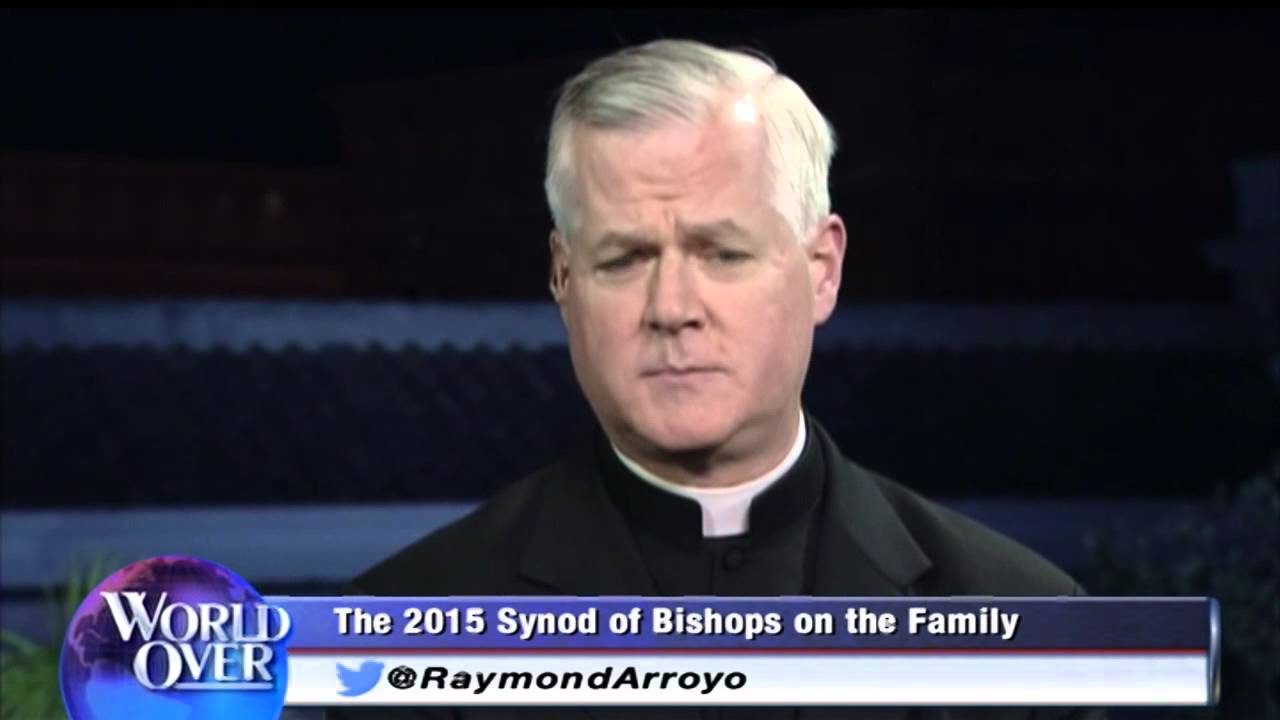
EWTN (Fr. Murray) analysis of Synod from a couple days ago.

It is interesting, today, to watch the World Over analysis of the Synod from a couple days ago.  Special attention, please, to Fr. Murray’s comments.

YouTube thumbnailYouTube icon

Posted in Synod, The Drill | Tagged ,
30 Comments

Looking for incense and hosts (altar breads)? Try Agnus Dei

Fathers (and others), if you are looking for a source for both hosts and incense, here is a good possibility .You would be doing a large family a good turn.  They have 15 children from 19 to 1.  They homeschool and have a cottage business.

Agnus Dei communion breads.

They sent me, some time ago, some small samples of various types of incense they provide and it is very good.  I’ve tried it at Sunday Masses.  And it’s cool looking, too.

Etc.


Posted in The Campus Telephone Pole | Tagged , ,
8 Comments

Pope Francis wants a transformation of the papacy and a synodal Church

Francis Synod speech 50th annivSince the beginning of the pontificate of Pope Francis – or could we coin a new phrase? The “periphery of Pope Francis”? – I have been saying that his aim is to weaken the Roman Curia. HERE and HERE and HERE are examples.

Today Francis addressed members of the Synod, et al., on the occasion of the 50th anniversary of the Synod of Bishops.

I think this speech (HERE) may be a turning point of some kind.  I don’t know what kind, yet.

Clearly, the Pope wants a more “Synodal Church”.  He says that this has been his intention from the beginning of his pontificate… periphery. He said (my translations):

Fin dall’inizio del mio ministero come Vescovo di Roma ho inteso valorizzare il Sinodo, che costituisce una delle eredità più preziose dell’ultima assise conciliare.

From the beginning of my ministry as Bishop of Rome I intended to enhance the Synod, which constitutes one of the most precious legacies of the last conciliar assembly (i.e. Vatican II).

He goes on with comments about sensus fidei that I am going to have to parse with patience.   Including:

Il sensus fidei impedisce di separare rigidamente tra Ecclesia docens ed Ecclesia discens, giacché anche il Gregge possiede un proprio “fiuto” per discernere le nuove strade che il Signore dischiude alla Chiesa.

È stata questa convinzione a guidarmi quando ho auspicato che il Popolo di Dio venisse consultato nella preparazione del duplice appuntamento sinodale sulla famiglia, come si fa e si è fatto di solito con ogni“Lineamenta”. Certamente, una consultazione del genere in nessun modo potrebbe bastare per ascoltare il sensus fidei.

The sensus fidei prevents a rigid separation between the Teaching Church and the Learning Church, since even the possesses its knack (sense of smell, sniffing out ability- fiuto) to discern the new paths that the Lord is opening up to the Church.

It was this conviction that guided me when I prayed that the People of God would be consulted in the preparation of the twin synodal meeting on the family, as is and was usually done with every “Lineamenta” (guiding document). Certainly, a consultation of this kind would in no way be enough to hear the sensus fidei.

The tricky thing about sensus fidei or more precisely sensus fidei fidelium is that you have to be faithful to have it.  Anyway, he goes on for a bit about sensus fidei.

Then he moves into his own role as successor of Peter… as “Bishop of Rome”.

He moves then into his thought about how synodality is a constitutive element of the Church.  To wit:

La sinodalità, come dimensione costitutiva della Chiesa, ci offre la cornice interpretativa più adeguata per comprendere lo stesso ministero gerarchico. Se capiamo che, come dice San Giovanni Crisostomo, «Chiesa e Sinodo sono sinonimi»….

Synodality, as a constitutive dimension of the Church, offers us the more fitting interpretive framework to understand the same hierarchical ministry. [He was speaking of it earlier on.] If we understand what St. John Chrysostom said, “Church and Synod are synonymous,”….

I might add here what another great Eastern Church Father said, St. Gregory Nazianzus in ep. 131:

“If I ought to write the truth, I am of the mind that I ought to flee all meetings of bishops, because I have never seen any happy or satisfactory outcome to any council, nor one that has deterred evils more than it has occasioned their acceptance and growth.” 

But I digress.

He goes on about levels of synodality… local, regional, etc.

The real fireworks start here:

Il secondo livello è quello delle Province e delle Regioni Ecclesiastiche, dei Concili Particolari e in modo speciale delle Conferenze Episcopali. Dobbiamo riflettere per realizzare ancor più, attraverso questi organismi, le istanze intermedie della collegialità, magari integrando e aggiornando alcuni aspetti dell’antico ordinamento ecclesiastico. L’auspicio del Concilio che tali organismi possano contribuire ad accrescere lo spirito della collegialità episcopale non si è ancora pienamente realizzato. Siamo a metà cammino, a parte del cammino. In una Chiesa sinodale, come ho già affermato, «non è opportuno che il Papa sostituisca gli Episcopati locali nel discernimento di tutte le problematiche che si prospettano nei loro territori. In questo senso, avverto la necessità di procedere in una salutare “decentralizzazione”».

The second level is that of Provinces and Ecclesiastical Regions, of Particular (local?) Councils and, in a special way, Episcopal Conferences. We must reflect in order to bring about even more, through these bodies, the intermediate applications of collegiality, even by integrating and updating some aspects of ancient ecclesiastical ordering. The wish of the Council that such organisms would help contribute to the increase of the spirit of episcopal collegiality has not yet been fully realized. As I have asserted, in a Synodal Church “it is not opportune that the Pope replace the local Episcopates in the discernment of all the problems that present themselves in their territories. In this sense, I feel the necessity to proceed in a healthy “decentralization.”

He intends to weaken, if not gut, the Roman Curia.  That means devolving to regional conferences and perhaps even individual bishops some of the briefs of the dicasteries of the Roman Curia.

He then goes on about the Petrine ministry in a Synodal Church and repeats the phrase “una conversione del papato … a conversion (in the sense of “transformation”) of the papacy”.

Finally… the peroration…

Il nostro sguardo si allarga anche all’umanità. Una Chiesa sinodale è come vessillo innalzato tra le nazioni (cfr. Is11, 12) in un mondo che -pur invocando partecipazione, solidarietà e trasparenza nell’amministrazione della cosa pubblica- consegna spesso il destino di intere popolazioni nelle mani avide di ristretti gruppi di potere. Come Chiesa che “cammina insieme” agli uomini, partecipe dei travagli della storia, coltiviamo il sogno che la riscoperta della dignità inviolabile dei popoli e della funzione di servizio dell’autorità potranno aiutare anche la società civile a edificarsi nella giustizia e nella fraternità, generando un mondo più bello e più degno dell’uomo per le generazioni che verranno dopo di noi.

Our gaze extends also to humanity. A synodal church is like a banner raised among the nations (cf Isaiah 11:12) in a world which, even though invoking participation, solidarity and transparency in the administration of the public good, often consigns the destiny of entire populations into the greedy hands of restricted groups of the powerful. As a Church that “walks together” with men, participates in the travails of history, let us cultivate the dream that the rediscovery of the inviolable dignity of peoples and the exercise of service of authority will be able to help also civil society to be built upon justice and on fraternity, generating a more beautiful world, more worthy of mankind and for the generations that will come after us.

One hardly knows what to make of all this.  One thing I do know… watch liberals start up their conga dance line again.  We have no idea what this all means yet, but they will be insufferable.

Meanwhile, let us keep on our course of building up the Church through that indispensable path of renewal of our liturgical worship of God.  A hundred grand initiatives can be launched by Popes, Synods, Conferences, Congregations, Committees, etc., but nothing lasting or important will be achieved without a deep revitalization of our sacred liturgical worship of God.

Therefore, do not relent, do not be distracted, do not veer from your course especially of building in as many places as possible the offering of the Holy Sacrifice of the Mass according to the traditional, extraordinary form of the Roman Rite as well as celebrations of Vespers and traditional devotions.

Moreover, deeply examine your conscience, discern where you have also failed to act and makes sacrifices when, where and how you should have, and

GO TO CONFESSION.

Raise your petitions to God with a clean heart and soul.

Posted in ¡Hagan lío!, Be The Maquis, GO TO CONFESSION, Hard-Identity Catholicism, Our Catholic Identity, SUMMORUM PONTIFICUM | Tagged , ,
124 Comments