Priest suspended for rapping during Mass. POLLS!

It has been said that rap does for music, what B&D does for romance.

That said, there is a story at Daily Nation that a priest was suspended for rapping the during sacred liturgical worship.

Father Paul Ogalo of St. Monica Catholic Church in Rapogi, Migori County was suspended on June 3 for alleged misconduct by the Homa Bay Diocese.

Father Charles Kochiel, judicial vicar of the inter-diocesan tribunal of Kisumu, confirmed the priest’s suspension.

The church officials took issue with Fr. Ogalo’s style of preaching and suspended him for a year to ‘reconsider his manner of preaching.’

Interesting.

Right?  Wrong?

Let’s get your opinion.  Anyone can vote.  You have to be registered to comment.

Rap music during Mass for sermon, other moments?

View Results

If we admit that rap music is wrong for Catholic worship,...

View Results


Posted in "How To..." - Practical Notes, Liturgy Science Theatre 3000, POLLS | Tagged , ,
23 Comments

D. MADISON: 30 June – A First Holy Mass “coram Episcopo”

From the site of the Tridentine Mass Society of the Diocese of Madison:

On Friday, June 29, His Excellency the Most Rev. Robert Morlino [The Extraordinary Ordinary] will be ordaining three seminarians of the diocese to the Holy Order of the priesthood. The following morning, one of those men — the Rev Peter Lee — will offer his Fist Holy Mass as a Solemn High Mass (TLM/EF) in the presence of the Bishop at St Mary’s Pine Bluff. [MAP – HERE] The Mass will be on Saturday, June 30 at 10:30 am. Please join us for this joyous occasion, and in praying for all three new priests of the Diocese of Madison.

First Masses are special occasions!

More and more young priests celebrate their 1st Masses in the traditional form… or they want to.


Posted in Just Too Cool, Mail from priests | Tagged ,
2 Comments

UPDATED: Provincial recommended Fr. Frank Phillips of @SJCantius be restored as superior general of the Canons

In the case of Fr. Frank Phillips, CR, the founder of the Canons of St. John Cantius, removed by the Archbp. of Chicago from his pastorate…

Phillips, was accused of misconduct involving adult men. He was removed as pastor of St. John Cantius in March and prohibited from public ministry in the Archdiocese of Chicago by Blase Card. Cupich, pending an investigation of the charges. The matter was left by the Archdiocese in the hands of Fr. Phillips’ superiors of the Congregation of the Resurrection, to which Phillips belongs.

An independent board determined that Fr. Phillips did not commit any criminal, civil or canonical delict.

Some time ago, I was sent documents internal to the discussion of Fr. Phillips’ fate.  I sat on them.

One of those documents was the VOTUM or the formal opinion given on 21 May by the Resurrectionist Provincial Superior in these USA.

I did not want to put it out there without good reason.  However, its content now out on the site of Catholic News AgencyHence, I can share it now.

One of the reasons why I think it is good to know about this document – which CNA published about – is because, according to a Chicago Tribune story, the Archdiocesan spokeswoman said the Archdiocese would have to be

“satisfied that Phillips is not a threat to anyone and that he could observe the archdiocese’s code of conduct code of conduct.” (Emphasis added)

Not a threat?  In 40 plus years of priesthood, including years serving at an all boys high school, nothing arose, nor has it in his time at St. John Cantius until the allegations of which he was cleared came up.  And in the present case he didn’t commit any crimes!

Is the issue really some allegations of homosexual conduct?   If so, will the treatment given to Fr. Phillips now be applied to the entire presbyterate of the Archdiocese?

In a story from the AP in the LA Times… why is the LA Times reporting on this? … we read:

Archdiocese of Chicago spokeswoman Paula Waters said although no church or secular law was violated by Phillips, there were standards of behavior Phillips did not meet. She noted the review board did not recommend Phillips’ return to St. John Cantius.

“standards of behavior Phillips did not meet”.

However, as we read in the VOTUM from the Provincial, while the Provincial thought that Phillips should not return as pastor, his faculties should be restored and he should have contact with the group he founded!

Apparently what Phillips did or didn’t do (the standards are not spelled out), wasn’t so bad that the Provincial thought he should be eliminated from the lives of the Canons.

Don’t get me wrong.  There must be standards!  However, there shouldn’t be one set of standards for some (e.g., conservatives) and another set of standards for others (e.g., liberals).

Here is the letter.  I blacked out the phone and email lest knuckleheads without filters misuse it.

The Provincial wrote:

“As Founder of the Canons Regular of St. John Cantius, the ideal would be his restoration as their superior general.  … The historical reality of his being the Founder and his ongoing provision of spiritual leadership would be salutary for all. … If the above recommendation is unfeasible, then at least he and the Canons should not be prevented from communication.”

The Archbp. of Chicago removed Phillips anyway.

Also, in the CNA report the Archdiocesan spokeswoman is quoted as saying:

“it was recommended that Fr. Phillips not return to ministry at St. John Cantius” in the Resurrectionists’ investigation report.”

Well… not quite.  The Provincial wrote that Phillips shouldn’t return to be pastor, not return to ministry.  Indeed, the Provinical wrote that the “ideal” would be for Phillips to return to be the superior general of the Canons, even if he didn’t live there.

In nearly every case that gets out into the interwebs, there are huge gaps of information.

However, in this case, it seems that some key pieces of information have indeed come out, including the VOTUM of Fr. Phillips’ superior.

The VOTUM of the provincial is important, I think, for the sake of Fr. Phillips reputation.  The Archdiocese’s spokeswoman implied that Phillips is a “threat”, even though the VOTUM of the Provincial suggests he isn’t.

With all the talk of accompaniment and mercy we hear these days, this doesn’t seem very merciful… so far.   The story isn’t yet at the last page.  There is still time for accompaniment and mercy… along with justice and truth.

Therefore, please do pray for all those who are involved in the decision making, as we as for all the anxious Canons and parishioners who have been caught in the crossfire.

UPDATE 29 June 2018:

There is an important update.

This letter was posted on the site of St. John Cantius.

This is from the same Provincial who recommended that Fr. Phillip’s be given back his faculties and that he have contact with the Canons.

What did the Review Board really say?

I am not going to hold my breath, but one of these days we may see the report of the Board.
 

Posted in The Drill | Tagged , , ,
19 Comments

ASK FATHER: Hypothetically, can a Pope dogmatically teach heresy? Wherein Fr. Z speculates.

NB: I revise a bit, below.

From a reader…

QUAERITUR:

What if the Pope were to dogmatically declare that [insert major heresy here] was true? I don’t have an answer for this, which means I am utterly dependent on faith that God won’t let such a thing happen.

Still, what if…

So, what if a putative Pope say… what’s a really trendy name… Pope Logan (the second Jesuit to be elected) … were to call everyone to St. Peter’s Square and formally announce:

“We solemnly declare by our Apostolic authority and our office to confirm the brethren and we teach ex cathedra and infallibly so that it must be firmly and immutably held by the faithful that Christ did not rise from the dead in a physical sense, but rather in a spiritual sense in the hearts of His followers at the time.”

That would be pretty bad.

I, too, believe that God would not allow that to happen.  I am with Ratzinger in holding that the role of the Holy Spirit in the election of a Pope is not to choose the Pope, but to ensure that the choice made by the Cardinals is not a total disaster.   A Pope who would attempt to promulgate something obviously contrary to the doctrine of the faith would be a disaster.  Hence, I don’t think that will happen.

As a matter of fact, I suspect that God would end the pontificate before that would occur.  Pope Logan would get to the words “…it must be firmly and immutably held by the faithful that…” and he would more than likely clutch his chest and fall over with a long, “eehhhehhehe” sound.  There is also another less obvious way God could do it, which I’ll touch hereunder.

Theologians have debated about this point.  Most notable among them is the mighty St. Robert Bellarmine.  Bellarmine thought it impossible for a Pope to be a heretic, but he speculated that by holding a heretical view even privately as a material but not a formal heretic, he would cease to be Pope because he placed himself outside the Church, and no one outside the Church can be Pope.  That, however, can’t be entirely right because we would constantly be in doubt about the status of the Pope, if all it takes is private, material heresy.

A Pope might wind up on some point or other being a material heretic, in that it could happen that he doesn’t realize that he has erred.   A whole other pot of caponata would result if the Pope turned out to be a formal heretic, openly teaching heresy, fully culpable for both the sin of heresy and the crime of heresy.

I trust that God will not permit the Pope to be a formal heretic who attempts to promulgate something contrary to the faith.

But say that he does, for the sake of the intellectual exercise.

One problem that rises in this hypothetical discussion is that the Pope cannot be judged formally, as if in a trial.  Not even an ecumenical council could do so.  Only God can do that.

However, it is possible that – while not judging the person of Pope Logan- a council or perhaps the College of Cardinals could make a declaration that a certain thing that a Pope attempted to teach was a formal heresy and, ergo, God Himself as the Pope’s judge, would have caused that Pope’s office to cease, end the pontificate such that the See of Peter was empty from the moment before the Pope taught heresy.

Think about this. A marriage tribunal cannot break a marriage.  A tribunal can only issue a declaration that there never was a marriage.  Tribunals can’t nullify, they can only identify nullity.  Councils can’t take the Pope’s office away, they can identify that God took it away.

A council could declare that Pope Logan had lost his office because of what he had intended and attempted to do.

The Church is indefectible.  The Lord prayed for Peter and his faith.  The Lord said that hell would not prevail.  The Lord said that He would be with Church for all time.  God is faithful to his promises. Because of Christ’s promises, Popes can’t teach formal heresy.

Hence, it seems to me that if God didn’t stop the Pope’s heart, God Himself would take jurisdiction away from the man the instant before he formally promulgated something contrary to the faith.

That is something that a council could deliberate about and declare.

Again, I don’t think this will happen.

It is always important to pray for our Popes.  We are all in Peter’s Barque together.

UPDATE:

I’ve been exchanging some email about this topic and I am considering revising my position.  One of the correspondents suggested that for a Pope to be removed (by God) from his office, which is a sensible, manifest reality, there has to be a sensible, manifest sign that that is what he has done.   Whereas I desired to protect the Petrine Office with my theory that the Pope would lose his office immediately before some formal heretical pronouncement, the alternative is that he would lose his office in the very moment of his pronouncing the heresy.   As my correspondent wrote: “If he acts against that faith, he is signifying his intention of renouncing the office.”  The key is that he has to do something, he has to act.

This is pretty good reasoning.

UPDATE:

LISTEN UP!

Stop submitting Francis bashing comments, or I’ll shut down your user record. They are pointless and they play into the narrative of the libs, who hardly need an excuse to harm everything we love in the Church.

UPDATE: 28 June 2018

I was sent a link to an interesting post with text from St. Francis de Sales about this question: Can a Pope teach error?

Theologians have said, in a word, that he can err in questions of fact, not in questions of right; that he can err extra cathedram, outside the chair of Peter, that is, as a private individual by writings and bad example.

But he cannot err when he is in cathedra, that is, when he intends to make an instruction and decree for the guidance of the whole Church, when he means to confirm his brethren as supreme pastor, and to conduct them into the pastures of the faith.


Posted in "How To..." - Practical Notes, ASK FATHER Question Box | Tagged , ,
18 Comments

Deaconette study commission won’t make decisions, recommendations

From Fishwrap comes news that will have their readers weeping into their chai lattes and Cosmos.

You might recall that I have said that the deaconette study commission (which Pope Francis set up to look at historical issues) would not make a determination about whether or not women could or ought to be ordained and that the would not make a recommendation.  Their job is to study the issues, not to decide anything about the ordination of women.

Now we have a statement from the chairman of that study commission, the Prefect of the CDF and soon-to-be Cardinal, Archbp. Luis Ladaria Ferrer.

Deacon commission won’t advise Francis on ordaining women, says doctrinal chief

Letter to Germans about inter-Communion a ‘call to reflection,’ he said

VATICAN CITY — The president of Pope Francis’ commission to study the history of women deacons in the Catholic Church says his group is not planning to advise the pontiff on whether to reinstitute the practice of ordaining women as deacons[That’s not its brief.]

“The Holy Father did not ask us to study if women could be deacons,” said Cardinal-designate Luis Ladaria. “The Holy Father asked us to search to say in a clear way the issues … that were present in the early church on this point of the women’s diaconate.”

Speaking to press June 26, Ladaria, the prefect of the Vatican’s Congregation for the Doctrine of the Faith, said the “primary objective” of his commission is to consider what role women who served as deacons in the first centuries of Christianity were fulfilling.

He also said that there are questions over whether women deacons had the same role as male deacons of the time and over whether their role was dependent on local needs.  []

“We know that in the early church there were these so-called deaconesses,” the cardinal-designate continued.  [aka “deaconettes”.]

“What does it mean to say this?” he asked. “Was it the same as male deacons? Or was it not the same? Was it a very diffused thing, or was it a local thing?”

Ladaria, who is one of 14 prelates Francis will make cardinals in a Vatican ceremony June 28, was speaking during a press briefing organized by the Vatican press office.

The pope first instituted the Study Commission on the Women’s Diaconate in August 2016, appointing Ladaria as its president alongside 12 other members. The prefect’s June 26 comments appear to be his first public statements on the issue since his appointment to the group.

[NB] Of what his commission will be telling Francis, the doctrinal prefect said that “it is not our job” to tell the pope whether to ordain women as deacons today. “This is not what the Holy Father asked and it is not our job,” he said.

The cardinal-designate added that the work of the commission is at “a good point.”

While the Catholic Church has claimed several times in recent decades that is has no authority to ordain women as priests, many church historians have said that there is abundant evidence that women served as deacons in the early centuries of the church. [However, this is extremely murky.]

The apostle Paul mentions such a woman, Phoebe, in his letter to the Romans. [Which doesn’t tell us much of anything about diaconate for women in the early Church.  Who knows what Paul meant when he called her “deacon”.  The word was equivocal.]

[…]

Posted in Deaconettes | Tagged , , ,
4 Comments

Former Irish President says infant baptism is a form of coersion

Ireland.  The gift that keeps on giving.

I read at the NCRegister that former Irish President Mary McAleese thinks that infant baptism is a violation of human rights.

Baptizing babies, she said, makes “infant conscripts who are held to lifelong obligations of obedience.”

She is, apparently, working on a Canon Law degree with the Jesuits in Rome.  Jesuits.  Now she thinks she has come up with something.

More of her wisdom:

“Let’s be frank about it, very little of the magisterium — there are elements of it that are obviously infallible, things like the teaching on Christ and his divinity; but there are other things that over many, many centuries were taught with great passion that quietly now have been abandoned by the very magisterium that taught them.”

McAleese, who has previously advocated publicly for ending abortion restrictions in Ireland, same-sex “marriage” and women’s ordination to the priesthood, drew headlines earlier this year when she spoke March 8 at a women’s conference in Rome held outside the Vatican.

Of course the Church has some important things to say about the importance of baptism and its connection with…well… you know… salvation.

While God cannot be limited in any way, and it is possible for God to save whom it pleaseth Him to save, with or without baptism, we don’t know exactly how it works without baptism. We read in the Catechism of the Catholic Church:

1257 The Lord himself affirms that Baptism is necessary for salvation. He also commands his disciples to proclaim the Gospel to all nations and to baptize them. Baptism is necessary for salvation for those to whom the Gospel has been proclaimed and who have had the possibility of asking for this sacrament. The Church does not know of any means other than Baptism that assures entry into eternal beatitude; this is why she takes care not to neglect the mission she has received from the Lord to see that all who can be baptized are “reborn of water and the Spirit.” God has bound salvation to the sacrament of Baptism, but he himself is not bound by his sacraments.

While there are other sorts of baptism (e.g., desire, blood) baptism with water and the Trinitarian form is normative.

Infants, being human beings, are from conception guilty of Original Sin.  Baptism forgives that Sin and sanctifies the soul.

Infants may not have the same developed intellect and use of will that adults have, but that doesn’t mean that they don’t have the effects of the sacrament of baptism.

Keeping in mind that under the old covenant infant males were circumcised, so to it seems consistent that infants be baptized.

Can. 867 §2 says: “If the infant is in danger of death, it is to be baptized without any delay.”

There is a 1980 Instruction on Infant Baptism from the Congregation for the Doctrine of the Faith.

John 3:5: “Amen, amen I say to thee, unless a man be born again of water and the Holy Ghost, he cannot enter into the kingdom of God.”


Posted in Liberals, Liturgy Science Theatre 3000, Our Catholic Identity, Puir Slow-Witted Gowk | Tagged , ,
6 Comments

What if the papal conclave took place today?

At Il Sismografo I saw some interesting stats about the College of Cardinals.

The College today, 26 June 2018
Total electors – 114
Total non electors – 98
Total College – 212

Cardinals created by John Paul II
Electors – 19
Non electors – 58
Total – 77

Created by Benedict XVI
Electors – 47
Non electors – 28
Total – 75

Francis
Electors – 48
Non electors – 12
Total – 60

What the College of Cardinals will look like after the consistory on 28 June 2018
Total electors – 125
Total non electors – 101
Total College – 226

John Paul II
Electors – 19
Non electors – 58
Total – 77

Benedict XVI
Electors – 47
Non electors – 28
Total – 75

Francis
Electors – 59
Non electors – 15
Total – 74

NB: Were Pope Francis to die or resign in the next day or two, that is before the consistory of 28 June, then the appointments would be voided and the men chosen to be new cardinals would not be cardinals and the prospective electors would not participate in the conclave.  The document that deals with law for the conclaves Universi Dominici gregis says: “A Cardinal of Holy Roman Church who has been created and published before the College of Cardinals thereby has the right to elect the Pope.”  The consistory must take place.

Also, to be an elector a cardinal must be no more than eighty years of age on the day before the death or resignation of the Pope.  That’s how Card. Kasper squeaked into the last consistory.  Benedict resigned on 28 Feb and Kasper’s 80th birthday was 5 March.  Had Benedict set his resignation for a few days later, Kasper would have been ineligible, even though the conclave itself began on 12 March.

The Dean of the College of Cardinals presides over a conclave, unless he cannot enter the conclave because he is not an elector. In that case the Vice-Dean takes his role. Dean Card. Sodano is over 80, so Vice Dean Card. Re would take the role, which would include asking the newly elected Pope if he accepts the election.  However, Re is over 80, too.  What to do?

Universi Dominici gregis says that if the Dean and the Vice-Dean are non-electors, then the senior elector in order of precedence assumes the functions of the Dean during the conclave.  The senior Cardinal elector, right now, is Béchara Boutros Raï, who is Patriarch of Antioch of the Maronites.

The guy who announces the new Pope from the balcony of St. Peter’s is the Protodeacon of the College (the College is divided into orders of deacons, priests and bishops, depending on the level of dignity of their titles). This is the senior among the Cardinal Deacons. He also puts the pallium on the new Pope. The present Protodeacon is Card. Martino, Cardinal Deacon of the Diaconal Title of San Francesco di Paoli ai Monti. He is 85. He is not an elector, so he can’t participate in the conclave. Of course, at the moment of the announcement, the conclave is over.  That said, the next in line, Card. Amato, is 80.  However, the next in line after Amato in the diaconal order in the College is Card. Sarah, who is 72. He is Cardinal Deacon of San Giovanni Bosco in via Tuscolana.

Most of the men who are given the red hat for a position in the Curia are Cardinal Deacons. Most of the men who are given the red hat who are ordinary bishops of dioceses are Cardinal Priests. It is possible after some years for a Cardinal Deacon to be promoted to Cardinal Priest even though he retains his diaconal title.  A few cardinals who have or had senior positions in the Curia are made Cardinal Bishops of the Suburbicarian Dioceses close to Rome.  Right now, none of the Cardinal Bishops can vote in a conclave and only one of the three Cardinal Bishop Patriarchs can vote, and he will, as mentioned above, run the conclave if it needs to occur right away.

However, today, 26 June, the Pope issued a Rescriptum ex audientia concerning the order of Cardinal Bishops.    Francis raised four cardinals to the dignity of Cardinal Bishops, leaving them in their titles.  They don’t get titular dioceses like the other Card. Bishops have.  The four Cardinals are Sec. of State Parolin (title Ss. Simone e Giuda Taddeo a Torre Angela), Prefect of Oriental Churches Sandri (title Ss. Biagio e Carlo ai Catinari), Prefect of Bishops Ouellet (title S. Maria in Traspontina) and Prefect of Evangelization Filoni (DIACONAL title Nostra Signora di Coromoto in S. Giovanni di Dio).  This goes into force on 28 June.

Effectively, this rearranges the order that Cardinals will go in procession and where they will sit, who concelebrates, etc.


Posted in SESSIUNCULA | Tagged
14 Comments

Pro-Life Victory at SCOTUS – NIFLA v. Becerra

Some time ago I asked you to pray during oral arguments before the SCOTUS concerning a 1st Amendment case from California, which tried to force pregnancy centers to provide abortion information.   HERE  In other words, they tried to force pro-life centers advertise for big-business abortion.

Today the SCOTUS issued their 5-4 opinion in National Institute of Family and Life Advocates (NIFLA) v. Becerra, written by Justice Thomas, in favor of the 1st Amendment rights of the pregnancy centers!

Thomas wrote the opinion, and was joined by Roberts, Kennedy, Alito and Gorsuch joined.  Kennedy filed a concurring opinion in which Roberts, Alito and Gorsuch joined.  Breyer dissented, joined by Ginsburg, Sotomayor and Kagan.

There is a good article with background HERE.

In other SCOTUS news, Pres. Trump’s travel ban was upheld.  See the opinion for Trump v. Hawaii.   The key is that the SCOTUS considered only the wording of the POTUS’ executive order and excluded consideration of anything that he said as a candidate, etc.  Hence, only the wording of the order mattered.  The majority found that the POTUS was within his constitutional powers to issue that order.

Roberts wrote the opinion and was joined by Kennedy, Thomas, Alito and Gorsuch.  Kennedy and Thomas filed concurring opinions.  Breyer dissented joined by Kagan.  Sotomayor filed a dissenting opinion joined by Ginsberg.

Posted in Emanations from Penumbras | Tagged ,
1 Comment

ASK FATHER: Weird prayer. Getting everyone to “lay on hands”

From a reader…

QUAERITUR:

This morning I was at a Catholic men’s prayer group. This is a wonderful group of men all holding each other up and pursuing their Catholic faith.  This morning however one of the men, who is in deacon formation, got up and invited all the men to join in offering a blessing on one of our members, in which several of the men familiar with this gathered in a circle around him, put their hands in the air over him and started singing “May the Lord Bless you and Keep you” This sent shivers through me, not in a good way, I just bowed my head and prayed with them.  So I guess the question is; is it right to feel like that was super weird? Or maybe that is acceptable in our Church to wave you hands in the air singing blessings over people? It felt an awful lot like a throwback to something in the 80s/90s through that I have been actively working to help purge from our church.  I believe it originated with the cursillo program.

GUEST PRIEST RESPONSE: Fr. Tim Ferguson

Ah, laying on of hands. Yes.

There is a long history in the Church of laying on hands, dating back to Apostolic times. The New Testament records several instances of the Apostles laying hands on their successors, and the faithful being exhorted to go to the elders for healing by the laying on of hands.

Outside of the apostolic and sacramental tradition of laying on of hands, in Holy Orders, Anointing of the Sick, and sometimes Penance, there’s little historical record of laying on of hands. Abbots were consecrated thusly, and in some religious orders, new members were added by this ritual.

But the general practice of members laying hands on each other as a sort of blessing? Nope, that’s not apostolic, that’s pretty much brand new. I don’t think it originated in the Cursillo movement, but I think it probably had some roots in the Protestant, Pentecostal tradition.

It is pretty weird. When we ask for a blessing, we’re asking for something from a superior – from someone in Holy Orders, from a parent, from a religious superior. Of our equals – our brothers and sisters – we don’t generally ask for blessings. Instead, we ask for prayers. Fraternal prayers. Which may be offered with a hand on a shoulder, or hand grasping hand, or even – horrors in our touchy feely era – without even touching each other!

In most places, the practice of laying hands on each other is dying out. New generations want authentic tradition, not made up rituals and weird, hippie-type emotionalism. When one encounters this sort of throwback prayer, one can either roll one’s eyes and go along with it, sit stoically back and refuse to participate, make fun (perhaps by starting to sing Kumbaya or Michael Row the Boat Ashore), or make a Catholic suggestion – “Hey guys, instead of that, why don’t we pray the litany of the Sacred Heart together for each other?” or “Joe, we did that last month, how about this month we pray a rosary?”

Posted in Our Catholic Identity | Tagged
17 Comments

BOOKS RECEIVED: good summer reading

I get a lot of books from publishers.  I read a lot of books.  I listen to audio-books and books read by my older gen Kindle (what a great machine!).

Here are a few things which I have lately gotten into.

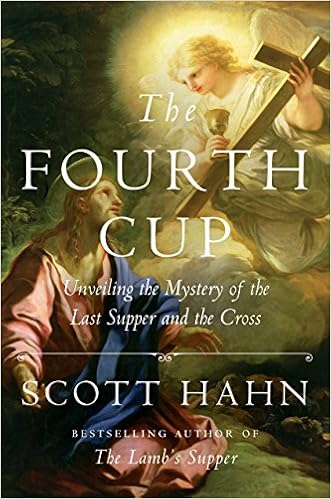
I listened to a book by Scott Hahn while I drove to Acton University in Michigan.

The Fourth Cup: Unveiling the Mystery of the Last Supper and the Cross

US HERE – UK HERE

Hahn explains “cup” imagery and connects the dots for us about how the Lord brought his Passion and therefore the Passover meal to its summit in the taking of wine upon the Cross.  Also, this is auto-biographical.  He talks about how, while researching this topic, he came into the Catholic Church.

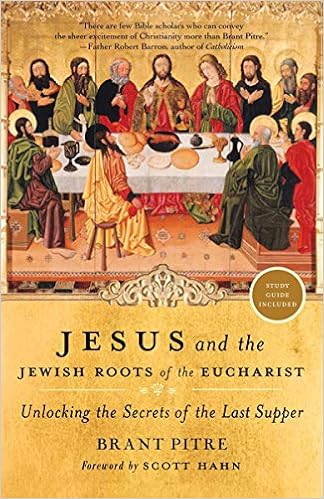
The preface is by Brant Pitre, whom I’ve also read lately.

Jesus and the Jewish Roots of the Eucharist: Unlocking the Secrets of the Last Supper

US HERE – UK HERE

Very good.  We look into various aspects of Catholic worship and its roots in ancient Jewish worship.

Back to Hahn.

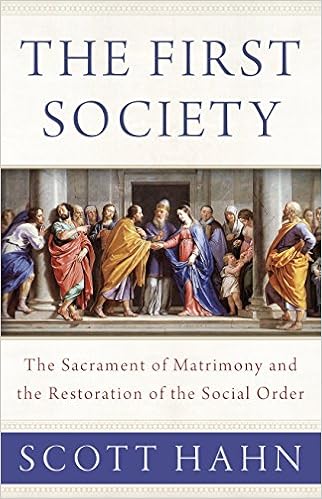
I haven’t read this, but I have received it.

The First Society: The Sacrament of Matrimony and the Restoration of the Social Order

US HERE -UK HERE

Another from Angelico Press… which is producing beautiful, trustworthy books.

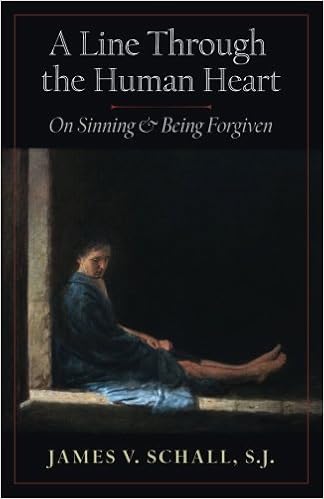
A Line Through the Human Heart: On Sinning and Being Forgiven Paperback by James V. Schall S.J.

US HERE – UK HERE

Posted in "How To..." - Practical Notes, REVIEWS | Tagged
6 Comments