ASK FATHER: I’d like to be EMHC for nursing homes but not during Mass

Dominus Est

Highly recommended! CLICK!

From a reader…

QUAERITUR:

I have a question that has been troubling me lately and I hope that you can answer my concern. There is a monthly roster that is posted at our parish to let the Extraordinary Ministers of Holy Communion what Mass they are designated to serve at. Our current pastor has, thankfully, diminished the amount of EMHC’s that serve, from four to one per Mass.

As you might have guessed, I am also an EMHC, but I have been uncomfortable in being one. Since reading Dominus Est by His Excellency Athanasius Schnieder and reading/hearing quotes from various saints on how unconsecrated hands should not touch the most Holy Eucharist, I have been considering stop being an EMHC.

Here in is where my predicament lies. I also go one Sunday a month and give Communion to the elderly at nursing homes who do not have anyone to take them to Mass. I feel torn between giving up being an EMHC and continuing the service to the elderly. There are very few persons who volunteer for Communion services to the elderly and some have quit recently.

I would really appreciate it if you can show some guidance in this situation. God Bless you and your work always, Father.

Thank you for being thoughtful about your role as an EMHC.  There is also a Vatican document which all priests and everyone involved in this ministry should read.  HERE

The employment of EMHCs is, in some places, out of hand.

That said, your desire to continue to help people at the nursing homes is commendable.

While it is without question that the ordained are the first choice for any ministry directly concerning the Eucharist. Holy Church permits this ministry and, with the shortage of priests, you could be of great service to the elderly.

Perhaps you could schedule an appointment with the parish priest.  Explain that you would like to continue with the nursing homes, but you would rather not be scheduled during Mass.  If he is reasonable, that should be enough.

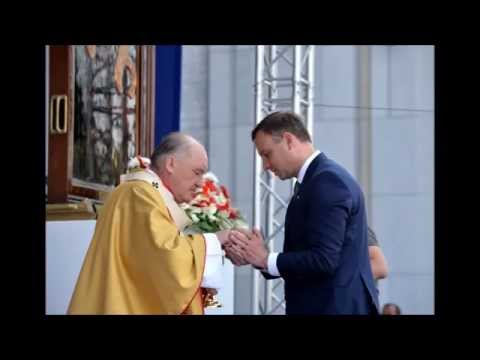
This morning I was struck by a story about how the new President of Poland, Andrej Duda,  pounced protectively on a Host that had fallen and was being blown by the wind, lest it be lost or desecrated.

Polish President Host


Marvelous.  Should he have waited for a priest to catch the Host?


YouTube thumbnailYouTube icon

We do what we need to do, when we need to do it, for love of the Lord and also for love of our neighbor.   While your service at Mass probably isn’t needed, it could be that you service to the elderly is.

Talk with your priest.

Posted in "How To..." - Practical Notes, ASK FATHER Question Box, Liturgy Science Theatre 3000, Our Catholic Identity | Tagged , ,
16 Comments

ASK FATHER: Admonishing the sinner

From a reader…

QUAERITUR:

A Catholic friend recently told me that if a person we know is doing something sinful but we believe they are truly ignorant of the fact that their action is a sin, then we should not tell them they are sinning as that will make them more culpable for their actions. For example, if a Catholic is using birth control pills but she truly seems to believe it’s not sinful, then we should not tell her it’s a mortal sin if we don’t believe she will stop using the birth control pills, because if we do, she will be more culpable for it which would effect the gravity of her sin. Is this really what we are to do as Catholics? Because at the same time, I hear priests talking about sins that send souls to hell. If a sin is going to send a person to hell, then shouldn’t we tell them and encourage them to go to confession and make amends? I just don’t see how on the one hand sexual sins lead souls to hell, but then on the other hand we can prevent those souls from going to hell by never telling them these things are sinful in the first place. Why would we ever talk about sin then? It would be better to leave people in the dark about it. But she tells me she learned this from a priest, so maybe she is right and I’m totally misunderstanding this teaching.

If your lovely friend was wearing a dress that made her look hideously ugly – I’m not talking sort of ugly, but downright vomit-inducing ugly – but she thought that it brought out the violet flecks in her eyes and it looked good on her, would you let your friend go out wearing that dress, or would you do everything you could – beg, plead, urge, cajole – to get her to change that dress and put on something that truly made her look good?

If you were doing something that harmed yourself, but you were ignorant of the harm it did, would you want your friends to remain silent, or to pull you aside and say, “Hey Betty, stop trying to stick that pencil in your eyeball. It’s got germs all over it!”?

If you were doing something that put your soul in danger of eternal hellfire, would you want a friend to wave a flag in your face and say, “Hey! Stop it, get back on the right track!”

We have an obligation, in justice, to admonish sinners. It’s a spiritual work of mercy. It must be done in a loving manner, not gloating or lording it over another.

We have to humbly acknowledge that we, too, are in need of correction at times.

The Apostle James tells us that someone who converts a sinner from his erroneous ways, not only saves his soul from death, but also obtains pardon for many sins. (James 5:20)

Ezechiel the Prophet makes it even clearer when he says that we have an obligation to warn our friends when they sin, and if we do not, we imperil our own souls

“If I [this is God speaking] say to the wicked, ‘You shall surely die,’ and you give them no warning, or speak to warn the wicked from their wicked way in order to save their life, those wicked persons shall die for their iniquity; but their blood I will require at your hand. But if you warn the wicked, and they do not turn from their wickedness, or from their wicked way, they shall die for their iniquity, but you will have saved your life.” (Ezechiel 3:20)

It’s tough to confront someone who is doing something wrong.  We must always confront sinner from a position of love, and with a recognition of our own sinfulness.

Ignorance might excuse people from the full weight of judgment falling upon them, but sinful actions are not just sinful because the Church randomly decided somethings are sinful and somethings are okay. Sinful actions (and thoughts, and inactions) are declared to be sinful because they are, at the bottom line, harmful to us and to others. They prevent us from becoming the Sons and Daughters of God that we are truly called to be.

And… before admonishing the sinner, examine your own conscience thoroughly and then

GO TO CONFESSION!

Posted in "How To..." - Practical Notes, ASK FATHER Question Box, GO TO CONFESSION, Hard-Identity Catholicism | Tagged ,
21 Comments

ASK FATHER: Getting “paid” to go to confession and “selfies” with confessor

confessionFrom a reader…

QUAERITUR:

My youth minister has been offering “S.P.Y.S Points” (basically, points that add up to a discount for events like NCYC and Steubenville Conferences) if we go to Confession and take a “selfie” with our confessor. First of all, would getting paid to go to Confession risk invalidating it? I guess she’s using it as motivation to get the teens to receive the wonderful sacrament. Would being motivated by money only risk creating insufficient contrition? Also, does taking a selfie with your confessor at least indirectly violate the Seal? The priest would be tacitly admitting that he went to Confession with you, and I know there are forbidden to even acknowledge that they heard your Confession. Apparently our pastor has approved of this. What should I do?

Odd.

Getting paid to go to confession wouldn’t invalidate the sacrament in and of itself, but it’s certainly odd and distasteful, sort of a reverse-simony.

The taking a “selfie” with one’s confessor might seem cute, but it is a serious breach of the confidentiality (let alone the sacredness) that should denote the sacrament. It would not necessarily be a violation of the Seal, but it’s close enough that a sensible priest would refuse to have any part of it.

This should be passed on a bit higher up the ecclesiastical food chain. A gently worded letter to the bishop or vicar general with a “Is this really okay?” tone to it is warranted.

Meanwhile, everyone… don’t let people doing dopey things discourage you.

GO TO CONFESSION!

And, as is often the case these days, the moderation queue is ON.

Posted in "How To..." - Practical Notes, ASK FATHER Question Box, GO TO CONFESSION, Liturgy Science Theatre 3000, Priests and Priesthood | Tagged , ,
10 Comments

ASK FATHER: Relics, consecrated altars, and liceity of Mass

From a reader…

QUAERITUR:

It recently came up in conversation that a consecrated altar should have a relic on it, or perhaps built into it. A friend insisted that the Mass would be illicit (but not invalid) without such a relic present. My question is: What are the requirements for altars in regards to relics? Are they needed for the Mass to be licit and how ought they to be incorporated into the altar?

The General Instruction of the Roman Missal in 302, that the tradition of depositing relics of the saints under a dedicated altar is to be retained. The clear preference is for the depositions of significant and decent sized relics which can be identified and certified.

It is no longer a requirement for the liceity of the Holy Mass that it be offered on a dedicated altar with a relic deposited in it. For a good reason, a priest is permitted to offer Mass elsewhere. However, it is reasonable for a church to have a dedicated (and relic-enclosing) altar, unless the church is temporary or there is some delay in the construction of the permanent, fixed altar.

And no, when the General Instruction speaks about “relics” it’s not talking about old paperback copies of Glory and Praise Volume 1, Sr. Cindi’s autoharp (or Sr. Cindi), or the polyester “chasubalb” worn by Fr. Sideburns.

Posted in "How To..." - Practical Notes, ASK FATHER Question Box, Liturgy Science Theatre 3000 | Tagged ,
3 Comments

ASK FATHER: Confession before conversion

From a reader…

I just read through your “ASK FATHER: Can non-Catholics go to confession?” post. For me, as a convert who was validly Baptized outside the Church, and because I had a horrific first Confession experience, it begs the question of when those entering the Church should receive Absolution?

I was in no grave danger when I was received into the Church in 2002 [?] but I knew that I wanted to be absolved BEFORE I received my First Communion at the Easter Vigil….and I absolutely NEEDED that.

So what’s the norm for validly Baptized, non-Catholics entering the Church about to receive their First Communion? We make our second graders go to Confession before receiving Communion, what about adults?

According to the norms of the Rite of Christian Initiation for Adults, baptized Christians who are being received into the Catholic faith should receive the Sacrament of Penance before making their profession of faith (art. 482).

As far as not being in “grave danger” is concerned, none of us know the hour or minute when we will be called before the Lord for judgment.

And to all you Catholics, I say…

GO TO CONFESSION!

Posted in "How To..." - Practical Notes, ASK FATHER Question Box, GO TO CONFESSION, Liturgy Science Theatre 3000, Our Catholic Identity | Tagged , , ,
3 Comments

ASK FATHER: How to obtain a traditional parish?

From a reader…

QUAERITUR:

What, if anything, can I do to bring about the establishment of an FSSP led parish in my community? The parishes in my county are all post-Vatican II. Can one person do anything? Thank you!

Only a bishop can establish a parish. That’s part of his job description. Only he can invite in a religious community, like the FSSP, to staff a parish.

However, there’s much that we all can do.

First, Be the Maquis!  Start participating fully in the life of your local parish. Get active in any way you can, especially with works of charity and service. Get to know the people at the parish.  Get to know like-minded Catholics in the area. Is there a Juventutem chapter in your state? Join it. Sign up to it’s websites and keep apprised of all activity. There probably are others in your immediate area who also would like easier access to the Extraordinary Form of the Mass and the Sacraments.

Next, keep at it. Don’t necessarily make it the first question you ask when you join your local parish, especially if there’s a long history of heterodoxy or bland liturgy there. Join in, worship God, find like-minded folks, and when you’ve found about forty or fifty solidly committed friends, ask the pastor if he’d be willing to offer, or at least host, an Extraordinary Form Mass.

Network with others through the internet who have gone through this process in the past.

Always be upbeat and positive, always look for ways that you can make your pastor’s life easier. He needs to learn to think of you and your like-minded friends as an asset to the parish, rather than a headache.

If twenty of the fifty people who are asking for an Extraordinary Form Mass are the backbone of the parish’s food pantry, or if the men who are involved are the ones who just volunteered to repaint the parish hall (and pay for the paint!), even a pastor disinclined to offer the EF Mass himself might be more inclined to make some allowances.

On the other hand, if the fifty people asking for the EF Mass are the fifty people who are always calling and complaining about something, or who collectively contribute $20 a week in the offertory, Father is not going to be easily persuaded or accommodating.

Posted in "How To..." - Practical Notes, ASK FATHER Question Box, Be The Maquis, Si vis pacem para bellum!, SUMMORUM PONTIFICUM, The future and our choices |
21 Comments

ASK FATHER: Validity of schismatic priests’ ordination

From a reader…

QUAERITUR:

I was wondering if the ordinations of priests and bishops in schismatic and or sedevacantist groups valid? They would be such priests like “Fr.” Anthony Cekeda and “pope” Michael and groups like the Congregation of Mary, Immaculate Queen, etc. Also, are their Masses and sacraments valid, too?

An ordination of a man capable of being ordained (e.g., a man who is free of any impediment to Holy Orders) performed by a validly ordained bishop, who intends to ordain a sacrificing priest according to the mind of the Church, and who uses the correct form for the ordination, is assumed to be valid.

We should not look upon Apostolic Succession merely as some sort of a communicable disease. At some point, the right order of the Church required that the intention of the ordaining prelate be weighed in a balance with his proximity to the Church of Jesus Christ.

Many schismatics and sedevacantists trace their ordination lineage (or pedigree, if you will) back through some pretty strange folks.

Arnold Harris Mathew, for example, who claimed to be the Earl Landaff of Thomastown and Count Povoleri was a baptized Roman Catholic man who was ordained a priest in 1877, who apostasized in 1889, then became an Anglican, married, reconciled with the Catholic Church in 1892 (but continued to officiate at Anglican weddings without a license), left the Church again to be ordained as a bishop of the Old Catholic Church (which has putatively valid orders), left the Old Catholic Church and began ordaining several men to the priesthood and episcopate under his own authority, was formally excommunicated vitandus by St. Pius X in 1911, who described him as a “pseudo-bishop” in his decree, was formally excommunicated by the Anglican Church in 1913. In August 1911, he was received into the Greek Orthodox Patriarchate of Antioch by a patriarchal legate, who did not have the authority to receive him. Towards his death in 1919, he petitioned Rome for reconciliation, but was informed that he would only be received “quasi laicus“, as a layman. He then tried to reconcile with the Anglican Church instead, but the Archbishop of Canterbury similarly refused to recognize him as a priest, let alone a bishop. He died in 1919 and was buried out of the local Anglican parish.

Specific to the ones you mention, Fr Anthony Cekeda is undeniably a validly ordained priest, though he is not in communion with the Catholic Church. He had been a member of the Society of St. Pius X, left that in 1983 to help form the Society of St. Pius V, then left that group in 1989 (but did not, as many were expecting, form the Society of St. Pius 2.5). He remains, technically, a vagus, that is, a priest without allegiance to any hierarchical superior but himself, though he is involved with Bishop Donald Sanborn, who traces his pedigree back to Archbishop Thuc, formerly of Hue, Vietnam.  Thuc ordained four men bishops during his retirement, though he did not have a papal mandate to do so.  (BTW… the Holy See often receives men ordained through bishops of the Thuc line “ut laicus
.)

Regarding David Bawden, who calls himself “Pope Michael”, there is no available information regarding his ordination. Until proof is forthcoming, he should be presumed to be a layman. He is certainly not in communion with Rome.

The “bishop” of the CMRI traces his pedigree back to Arnold Harris Mathew, whose checkered life is outlined above.

Judging the validity of some of these schismatics’ ordinations is complicated business. It should best be left to the proper authorities (that is, the Holy Father or someone he delegates). In the meantime, the faithful should steer far away from those who’ve willfully separated themselves from Our Holy Mother, the Church.

Posted in "How To..." - Practical Notes, ASK FATHER Question Box, Priests and Priesthood | Tagged ,
21 Comments

ASK FATHER: Annulment after an SSPX wedding

From a reader…

QUAERITUR:

I understand the position of the Church is the SSPX has no jurisdiction.  However, I just recently became aware of a friend from college who was “married” in front of a SSPX Priest (without permission or jurisdiction), and yet, there was an annulment that went through the full Court of Second Instance. It was granted on the basis of inability to consummate.

The funny thing is, this was treated as if it were a putative marriage, and accepted that way by the Church.  There was no sanatio associated with it at any point.

Again … we have to be careful with the language we use about declarations of nullity.

The Church does not “grant” an annulment as if it’s something positive that’s either given or withheld based on some list of circumstances. A declaration of nullity is more like a medical diagnosis: the facts are examined by experts, who, to the best of their ability, make a determination of the situation.

Like a medical diagnosis, there can be a number of possible explanations. Those examples might not be mutually exclusive.

For example, you are coughing up blood.  People who have TB cough up blood and, on that basis diagnosis could be that you have TB.  On the other hand, people who have typhus cough up blood too.  But wait!  What’s this?  You also have a sucking gunshot wound in your chest? Maybe that’s it!

However, it’s possible that all three diagnoses were correct, you have TB and typhus and a gunshot wound in the chest.

Similarly, a marriage might be null and void because one of the parties withheld an essential element of marriage at the time of consent (e.g., she simulated consent about exclusive fidelity), or because the other party was incapable of true consent (e.g., because of a seriously abusive childhood, he was simply not mature in the area of relationships to make a free choice for marriage), or because the priest who officiated at the wedding lacked the necessary faculties to marry them.

It’s quite possible that all three things, each of which would result in a declaration of nullity, are true.

Without knowing all the details of the case you provide, there may have been a number of reasons why the Tribunal proceeded the way it did. Since we are looking at this from the outside, it’s probably best not to speculate too much.

Posted in "How To..." - Practical Notes, ASK FATHER Question Box, One Man & One Woman, SSPX | Tagged , , ,
5 Comments

ASK FATHER: Can I attend an invalid SSPX wedding?

From a reader…

ok — so I get that according to cannon law, since sspx marriages are not “canonically approved’, they are not valid. My God- daughter, and my CLOSEST friend’s daughter is getting married in the fall by an sspx priest. She is the oldest of 13 children, takes her faith wildly seriously AS DO ALL OF HER SIBLINGS!! The whole family is a true inspiration to Catholic parenthood. Question: CAN WE ATTEND the wedding??? Thank you for any efforts to ease my terrified heart!!

Okay… no need to SHOUT or freak out!!?!?!

Marriage, which can only be contracted between one genetically born man and one genetically born woman, is a public covenant. It has profound significance for society. It is basically the first building block of society. It’s important, therefore, that we get it right.

For Catholics, marriage has even more importance.   Between baptized persons, marriage is a sacrament. It is a sign of Christ’s love for His Church and of His abiding presence.

Because marriage is such an important public act, the Church has an interest in protecting it.

For Catholics, marriage requires exchanging consent in the presence of an authorized, official witness (usually a bishop, priest, or a deacon with the required delegation). It is an argument for another day whether or not this requirement should be retained, but for now, it is a requirement.  Anyway, I am not making this up: to be valid, marriages have to be conducted according to the proper form.  Part of the form is to have a duly authorized official witness to the marriage.

Priests of the Priestly Fraternity of St. Pius X (SSPX) lack the required delegation to officiate at a Catholic wedding.  No bishop has given them the delegation or faculties to marry (though I wish that were the case).  No other competent authority has given them the faculties to witness marriages (though I wish that were the case).

If a Catholic (who is obliged to obey the Church’s laws concerning marriage ) is married by an SSPX priest (who lacks the faculty, delegation, to witness marriages), he is not truly married.

Now the tough part comes to the fore.

Should we attend the wedding of a Catholic which is surely going to be invalid?

There is no canonical prohibition against attending invalid weddings.

Each of us must assess, when faced with these situations,  perhaps with the advice of a wise and trusted pastor, what the best approach is.

If this family is truly a solid Catholic family, a good heart-to-heart conversation expressing your concerns about the proposed wedding might be warranted. Perhaps they can be persuaded to seek the services of a priest actually in good standing, who could obtain (or might already have) the necessary faculties to officiate at the wedding.

Express yourself calmly and kindly.  Leave out the exclamation points and CAPS when you talk to them.

Posted in "How To..." - Practical Notes, ASK FATHER Question Box, One Man & One Woman, Our Catholic Identity, SSPX | Tagged , , ,
16 Comments

WDTPRS: Corpus Christi – COLLECT (2002MR)

In 1246, Robert of Thourotte, Bishop of Liège, Belgium, had instituted in his diocese the feast now known as Corpus Christi at the request of an Augustinian nun Juliana of Cornillon, who composed an office for it.  In 1264, Pope Urban IV ordered the feast of the Body of Christ to be celebrated as a holy day of obligation for the universal Church on the Thursday after Trinity Sunday and accepted the texts by the Angelic Doctor for the Mass and office.

Today’s Collect, composed by the St. Thomas Aquinas (+1274) and used at Benediction, was assumed into the post-Tridentine 1570 Missale Romanum where it has remained unchanged in all subsequent editions.

COLLECT – (2002MR):
Deus, qui nobis sub sacramento mirabili
passionis tuae memoriam reliquisti,
tribue, quaesumus,
ita nos Corporis et Sanguinis tui sacra mysteria venerari,
ut redemptionis tuae fructum in nobis iugiter sentiamus
.

I love that snappy clausula at the end… iúgiter séntiámus!  This is a marvelous prayer to sing.  Fortunately I get to do so often since in those places where I lurk we have frequent Benediction of the Blessed Sacrament with all the prayers in Latin.

Shall we have some vocabulary?  In case you were trying to look for reliquisti in your own copy of the Lewis & Short Dictionary, that esteemed tome of Latin wisdom, it is the perfect of relinquo.  It means a range of things like, “leave, leave behind” not only in the sense of in the sense of abandoning but more importantly for us also in the sense of bequeathing.  A memoria is not just “memory, the faculty of remembering,”,  it is also, “the time of remembrance” and “an historical account, narration.”  In early Christian Latin works memoria also means “a monument” in the sense of a “memorial”.

Iugiter is a great word.  It comes ultimately from the noun iugum, “a yoke or collar for horses”, “beam, lath, or rail fastened in a horizontal direction to perpendicular poles or posts, a cross-beam”.  The yoke was a symbol for defeat and slavery.  A victorious Roman general would compel the vanquished to pass under a yoke (sub iugum whence the English word “subjugate”) made of spears as a token of defeat. Vae victis! was their wail, “Woe to the vanquished!”  The prisoners were yoked together and paraded in the returning general’s triumph procession through the Forum’s via sacra to the temple of Capitoline Jupiter.  Iugiter (an adverb from the adjective iugis “yoked together”, cf. iungo) signifies “continuously”, as if one moment in time is being yoked together with the next, and the next, and so on.

LITERAL TRANSLATION:
O God, who bequeathed to us under a wondrous sacrament
the memorial of Your Passion,
grant us,
we implore,
to venerate the sacred mysteries of Your Body and Blood
in such a way that we constantly sense within us the fruit of Your redemption
.

I have heard from many places that the customs of Corpus Christi processions, Forty Hours Devotion, and Eucharistic Adoration are returning in force.  People want and need these things.  They help us to be better Catholic Christians through contact with Christ.  The bad old days of post-Conciliar denigration of these necessary practices lingers a bit but the aging-hippie priests and liturgists are losing ground under the two-fold pincer of common sense and a genuine Catholic love of Jesus.

In the seminary I attended in the 1980’s we were informed with a superior sneer towards those quaint old processions and devotions that, “Jesus said ‘Take and eat, not sit and look!’”

Somehow, “looking” was opposed to “receiving”.

This is the same error, I think, inherent in the puzzling idea that if people aren’t constantly singing or carrying stuff during Mass they are not “actively” participating as if listening and watching must be only “passive”.

Younger people no longer have that baggage, happily.  They desire the good things of our Catholic inheritance.  They resist passé attempts to make Jesus “smaller”.  They want much more, as much as the Church can give.

Remember: this is not the fault of the Council itself.  If blame must be assigned it rests on the shoulders of those who misappropriated the Council’s authority to sustain their own ideas.

Those oh so enlightened experts of the Council’s “spirit” will benignly indulge the view that old rites and customs once served a purpose long ago, perhaps for the ignorant old-world peasant and unschooled new-world immigrant, but our shiny new up-to-date man – er um – person doesn’t need those things anymore.  In this modern age man has changed.  Eucharistic devotions would be harmful rather than helpful.  They must never be permitted!  We won’t crawl in submission before God anymore. We stand!  We do not go in archaic triumphal processions or kneel to Him as judgmental King.  We take (h)im/she/it/ourselves by the hand as helping Buddy!  We are grown up now, not child-like peasant slaves before a master who is lord and father of our household.  We have changed and so old things are no longer suitable.

Wrong.

Perhaps passing details of society have changed, its fashions and ideas shifting like sandbars, but man has not changed however well dressed or sophisticated.  Admittedly there is wider education now and greater affluence in first world countries.  Many advances have been attained.  But we, as human beings, have not changed.  We poor fallen souls, citizens of modern society and newly arrived immigrants equally, all need concrete things through which by our senses we can perceive invisible realities.  Urbane schooling and wealth might well be greater obstacles to the spiritual life than poverty and ignorance, urban or rustic.  Man remains human always, good but wounded.

In 1986 the English edition of Joseph Ratzinger’s Feast of Faith was published by Ignatius Press.  In that volume Benedict XVI reflected on the feast of Corpus Christi.  His Holiness juxtaposed the sad decline of Eucharistic devotions after the Second Vatican Council with what the Council of Trent taught.  Although the anti-triumphalism of some post-Conciliar liturgists had repressed Eucharistic exposition, adoration and processions,

the Council of Trent had been far less inhibited.  It said that the purpose of Corpus Christi was to arouse gratitude in the hearts of men and to remind them of their common Lord. (cf. Decr. desc. Euch., c. 5; DS 1644).  Here in a nutshell, we have in fact three purposes: Corpus Christi is to counter man’s forgetfulness, to elicit his thankfulness, and it has something to do with fellowship, with that unifying power which is at work where people are looking for the one Lord.  A great deal could be said about this; for with our computers, meetings and appointments we have become appallingly thoughtless and forgetful (pp. 128-9).

Let us consider Trent again for a moment.  There we find the unqualified statement that Corpus Christi celebrates Christ’s triumph, his victory over death. Just as, according to our Bavarian custom, Christ was honored in the terms of a great state visit, Trent harks back to the practice of the ancient Romans who honored their victorious generals by holding triumphal processions on their return.  The purpose of Christ’s campaign was to eliminate death, that death which devours time and makes us cultivate the lie in order to forget or “kill” time.  … Far from detracting from the primacy of reception which is expressed in the gifts of bread and wine, it actually reveals fully and for the first time what “receiving” really means, namely, giving the Lord the reception due to the Victor.  To receive him means to worship him; to receive him means precisely, Quantum potes tantum aude – dare to do as much as you can.  (p. 130).

Christ invites us to learn His ways through the image of His yoke taken upon our shoulders (Matthew 11:29-30).  In terms of the world crosses and yokes are heavy instruments of bitter humiliation.  Jesus says His yoke of subjugation is “sweet” and “light”.  True freedom lies precisely in subjugation to Him.  Yokes are sweet when they are His.

To win for us this sweet yoke, He did not defeat us, He defeated the death in us.

We need no longer fear the death we all face.

In the Blessed Sacrament we now proclaim with Christ the Triumphant Victor, “O death, where is thy victory? O death, where is thy sting?” (cf. 1 Cor 15:54b – 57).

We cannot honor enough the Body and Precious Blood of Christ by which we were redeemed.

I affirm my subjugation to Christ Victor, God and King, triumphant over death, vanquisher of hell and my sins.

Before His transforming glory in the Eucharist I am content to kneel until with His own hand He raises me.
Posted in Liturgy Science Theatre 3000, Our Catholic Identity, WDTPRS | Tagged
15 Comments