Fun with @OneMadMomBlog – BuzzFeed – Alt-Right and @SebGorka

In regard to the Hamanesque BuzzFeed hit piece, almost certainly arranged by a certain Jesuit, One Mad Mom noted that the writer attempted to link me with the Alt-Right even while saying that there is not “obvious” connection.  LOL!  She noted (my emphases and comments):

Oh ho!  “Fr. Z has no obvious connections to alt-right groups but we’re going to mention it just so you put the two in the same sentence.”  Can you say “Jumping the shark?!”

Wait for it!

But Fr. Z’s tone, politics, and tactics bring to mind the online mobs of Trump supporters who helped turn the current moment so divisive. Rhetorically, he’s a creature as much of the comment section as the canon, having honed his blogging style since the early 1990s, when he moderated CompuServe’s Catholic forum. He regularly rails against “libs,” “edgy social justice figures” and the “homosexualist agenda.” He has coined Trumpian epithets for his adversaries, referring to the progressive National Catholic Reporter as “fishwrap” and the “National Sodomitical Reporter” [I was calling it those things long before the Trump campaign.  Trump coins Zed-ian epithets.] and liberal Catholics as the “Red Guard.” [Another falsehood: I only call some liberal catholics that. And it’s the New catholic Red Guards.] He casts himself as a defender of Western civilization and culture; [Wow.  That’s pretty damning.] In a recent post, he encouraged followers to buy Defeating Jihad, by the far-right former Trump adviser Sebastian Gorka. [BuzzFeed and Haman would consider anything to the right of Elizabeth Warren “far right”.] And his blog links to a webstore where he sells mugs and T-shirts reading “Holy Mass: Turn Towards the Lord Again” in the ubiquitous #MAGA font and color scheme.

Sorry. I cannot stop snickering.  “He has no connection to the alt-right peeps but he does!”  BTW, I’m for defeating Jihad too.

Thus, One Mad Mom, ladies and gents!  Bless her.

Speaking of “Defeating Jihad” now some fun.

I just received by very own hardback copy of

Defeating Jihad: The Winnable War by Sebastian Gorka.

US HERE – UK HERE

More on this HERE.

BUT WAIT!  It’s inscribed!

#MAGA indeed.

And this book is really good. You should all, right now, go BUY A COPY and also a spare or two for distribution to liberals.

And speaking of selling gear…

Click!

Posted in ¡Hagan lío!, Biased Media Coverage, Green Inkers, Liberals, Lighter fare | Tagged , , ,
14 Comments

Singing and confession – Just Too Cool!

When I was very young, I used to curl up with the dictionary.  One word would lead to another and to another.  I wound up building my vocabulary as if by capillarity.

I sometimes do this with tweets, specially with the feeds of some of the classicists and medievalists I follow.  One thing leads to another and I often find amazing things.

Here is an amazing thing, in a tweet.  This is great for today, Shrove Tuesday, an appropriate day to be shriven.

Back in 2015 at the blog For the Wynn there was a post about “How to confess like an Anglo-Saxon.”  In that post there is an image of a manuscript, the Vespasian Psalter – 8th c. with 11th c. additions – written in Latin, with the prayer Deus inaestimabilis misericordiae (perhaps a prayer of Alcuin – PL 101, 524c).  More on that HERE.  This stuff really makes my socks roll up and down, since I had a really good paleography course back in the day and I groove on illuminated manuscripts.   The manuscript is in the British Library.

As For the Wynn writes regarding Deus inaestimabilis misericordiae:

The speaker starts by calling on God, who will forgive everyone who confesses to him. He has sinned in all sorts of ways: in the traditional categories of thought, word and deed, and in seeing, hearing, tasting, smelling and touching – in short, in every way possible. God gave the speaker a human body for appropriate purposes, but they have misused it: this body of his has sinned by failing to observe the rule of moderation in all things: he has exceeded the limits of nature in each of his members (‘In membris singulis naturae modum excessi’). The prayer goes on to list every part of the body, from the feet to the head and ending with the heart, according to the sins which have been committed with it. Some of them are quite inventive/smack of desperation: he has bent his back in order to do evil works, and lifted his neck in pride.

The idea here is that penitent should be complete in the confession of sins.

Some of you may have made a connection with the traditional Roman manner of administering the Sacrament of Anointing.  In the traditional way, the priest anoints the eyes, ears, nose, mouth, hands and feet… by which we sin by sight, hearing, smell, taste and speech, touch and walking (deeds).  The newer method doesn’t do that.

In the same manuscript, there follows a prayer and a warning.

Man mot hine gebiddan, swa swa he mæg 7 cán, mid ælcum gereorde 7 on ælcere stowe. Nu is her on englisc andetnyss 7 gebed. Ac se ðe þis singan wylle, ne secge he na mare on þære andetnysse, þonne he wyrcende wæs: for þon ðe ure Hælend nele, þæt man on hine sylfne leoge, ne eac ealle menn on áne wisan ne syngiað.

(Quoted from ‘Zur Liturgik der angelsächsischen Kirche’, Max Förster, pp. 8-10.)

One must pray as he can and knows how to, with any language in any place. Now here is a confession and prayer in English. But whoever wants to sing this, may he say no more in that confession than he had been doing, because our Lord does not want a man to lie about himself, nor do all men sin in one and the same manner.

First, this is good advice.  However, what really caught my eye is…

whoever wants to sing this

There is a phrase falsely attributed to St. Augustine: Qui cantat, bis orat… He who sings, prays twice.

Augustine didn’t write that phrase, but did he write anything similar: cantare amantis est… Singing belongs to one who loves” (s. 336, 1 – PL 38, 1472). This is the citation for qui bene cantat bis orat in the primitive edition of the Catechism of the Catholic Church (CCC) 1156.

In the edition of the CCC we are sent to footnote n. 26 (oddly, this is note 21 in the newer English edition, which adds a confer reference to Col. 3:16 – which is not in the Latin CCC). Latin CCC 1156, note 26 reads: Cf. Sanctus Augustinus, Enarratio in Psalmum 72, 1: CCL 39, 986 (PL 36, 914).

The Corpus Christianorum Latinorum (CCL – a vast series of volumes of Latin authors) vol. 39 shows us what Augustine really said:

Qui enim cantat laudem, non solum laudat, sed etiam hilariter laudat; qui cantat laudem, non solum cantat, sed et amat eum quem cantat. In laude confitentis est praedicatio, in cantico amantis affectioFor he who sings praise, does not only praise, but also praises joyously; he who sings praise, is not only singing, but also loving Him whom he is singing about/to/for. There is a praise-filled public proclamation (praedicatio) in the praise of someone who is confessing/acknowledging (God), in the song of the lover (there is) there is deep love.

Augustine is saying that when the praise is of God, then something happens to the song of the praiser/love that makes it more than just any kind of song.

The object of the song/love in a way becomes the subject.

Something happens so that the song itself becomes Love in its manifestation of love of the one who truly is Love itself.

Tracking back to singing the confession prayer in the ancient manuscript, making a confession should come from the depths of the mind and heart, the soul.  It is transformative.  If when we eat we make food into what we are, but the Eucharist makes us what He is, so too there is something of the same transformation when we are in the mysterious encounter with the High Priest and Just Judge in the Sacrament of Penance.  Our scarlet sins are washed clean in the Blood of the Lamb and, in that moment, we have a profound unity with the Savior, who suffered in His Passion and rose in His Resurrection.

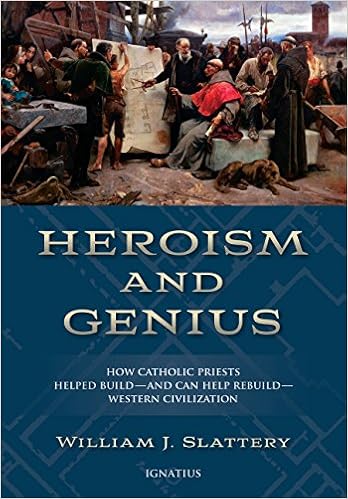
For more on Alcuin, btw, try this great book.  I wrote about it HERE.

Heroism and Genius: How Catholic Priests Helped Build—and Can Help Rebuild—Western Civilization

US HERE – UK HERE
Posted in Just Too Cool, Liturgy Science Theatre 3000 | Tagged , ,
1 Comment

Writing to Fr. Z

Some of you want to write to me.  GREAT!

Please use my contact forms on the top menu.  ALWAYS!

If you have some piece of news, observation, etc., use “Contact Fr. Z by EMAIL

If you have a question for the ASK FATHER Question Box, use “ASK FATHER Question Box

It may be that I have responded to you by email at some point in the past.  It may be that you have received a personal note of thanks from me because you sent a donation or item from my wish lists.  It may be that you will be tempted to write to me without using those forms.   Fight that temptation.

You maximize your chance that I will read and respond if you use those forms.

You greatly diminish the chance that I will read and respond if you don’t use those forms.

I get a LOT of email.  I have mail from those forms flagged to go into special folders, which I check often.  If you don’t use those forms, your notes don’t go into those folders.

I’m just sayin’.

Also, I can’t promise that I will respond to every email.  I don’t consider emails to be commands.  Also, other things may require my time.

I very much appreciate feedback.  I am especially happy to read how this blog has positively affected you.

I also have VOICEMAIL.  Check the sidebar.  Voicemails are great.

Posted in "How To..." - Practical Notes |
Comments Off on Writing to Fr. Z

Excellent Letter for Lent from Archbp. Chaput of @ArchPhilly – Fr. Z rants, gives 3 points of advice about sin.

Archbishop Charles Chaput of Philadelphia has issued a great letter on the threshold of Lent.


As I read it, the Archbishop’s reference to the history of the Church in German with the Nazi state and the 1933 , could be not only warning about our compromises with the three perennial enemies of the soul, but also on the current compromises with the the state in China.  It also could be read as a warning about compromising with the world in the matter of Communion for the divorced and remarried.  I suspect that that wasn’t the Archbishop’s intention, but the principle he underscores can be applied to many burning contemporary issues.

Here is Caput’s letter which can be found at Catholic Philly with my emphases and comments.

Toward a deeper experience of Lent

By Archbishop Charles Chaput, O.F.M. Cap. • Posted February 13, 2018

History is a great teacher, sometimes in unusual and very personal ways. Here’s an example.

Reading the Reichskonkordat (“Reich concordat” with the German state) today, 85 years after its 1933 signing, sparks some interesting thoughts. Structured as a treaty to govern the relations between the Holy See and German government, the text is remarkably positive. It’s also thorough. As deals go, this was a good one. The state got a stable legal relationship with a well-organized, potentially troublesome, and internationally connected religious minority. The Church got protection for her people.  [It was negotiated by Eugenio Card. Pacelli and it is still in force today.]

A few problematic passages in the text do exist. Article 14.2 obliges the Church to consult the German Reich on the appointment of archbishops and coadjutors. Article 16 requires new bishops to take an oath of loyalty to the state. But details like these weren’t unknown in Europe’s historical context. The concordat’s guarantees of Church freedom to profess and practice the Catholic faith, and to pursue Catholic education and social ministries without interference, are extensive, explicit, and generous.

They were also empty. The Reich began violating the deal almost as soon as the ink on the treaty was dry. State pressure on Church life was so harsh by 1937 — just four years later — that Pius XI’s encyclical, Mit brennender Sorge (“With burning concern”) had to be smuggled into the country. It was read from all of Germany’s pulpits on Palm Sunday of that year. In it, the Holy Father condemned the Reich’s (Nazi-directed) neo-paganism, race hatred, “Aryanized” Christianity, widespread attack on human rights, and contempt for the Old Testament. In response, the state simply doubled down on its pressure.

What’s the lesson here? It’s this: If you sup with the devil (so the proverb warns), you’d better bring a long spoon. It’s probably a bad idea in the first place.  [A great proverb, and one to remember throughout Lent.  It was, by the way, already in circulation when Chaucer wrote the “Squire’s Tale”.]

But there’s more. As it is in diplomacy and politics, so it is in every person’s individual life[NB] The deals we make with the world, and the flesh, and the devil, always go south. The line dividing good and evil is usually — not always, but usually — pretty bright for anyone who wants to see it. Most of us really don’t want to see it, of course, because doing so would cramp our own daily behavior. We negotiate little “concordats” with our favorite personal sins, ugly habits and dictatorial appetites all the time.

If we’re constantly angry, it’s because everybody else is so unfair. If we’re hooked on porn, surely cutting back to just an hour of it every day is “better” than three. If alcohol’s the problem, four drinks is obviously “better” than six — right? For every forbidden, hurtful, dishonest thing we like to do, we’re experts at self-deceit; at training our consciences to perform like pets … well-manicured poodles that offer us alibis on demand, like:

“I didn’t have a choice;” or
“Hey, there were extenuating circumstances;” or
“The Church is out of touch;” or
“There’s a new paradigm for thinking about this particular unpleasantness;” or [Didn’t some prelate recently make a fancy fallacy laden argument about a paradigm shift?]
“I know it’s not ideal, but this is the best I could do;” or [Haven’t some compromised prelates and theologians stated that not everyone can live up to the Church’s “ideals”?]
“There’s been a revolution in Church thinking on all sorts of complex issues — like mine;” or [cf. “paradigm shift”]
“OK this is wrong, but it’s not THAT bad.”

We all have a barrel of excellent excuses. You do. I do. And we add to them all the time.

February 14 this year is Ash Wednesday, the start of Lent. It’s the day on which a loving God invites all of us to smash our miserable little concordats with sin and its alibis to bits. The teaching of the Church – rooted in the Word of God, confirmed by experience, consistent in its expression, sometimes difficult but always liberating – is the standard of holiness and the guide to our Father’s expectations. We need to cling to it, confident in God’s mercy, in judging our own actions and redirecting our lives, no matter how radically that new path demands.

So may God grant all of us a holy and fruitful Lent, and I ask you to pray for me, as I will pray for you[That has a familiar ring!]

Good analogy.  Great letter.

A daily examination of your conscience will help you to identify where your weak spots are and what konkordats you have made with the world, the flesh and the Devil.  Know yourself!  After you have identified them, you have to do three things.

First, make a plan.  When you notice that you are in the pattern of behavior that usually leads to committing that particular sin, kick in the plan you made beforehand about what you would do instead.  You have to know what you are going to do ahead of time.  When you see that you are on the path that ends in sins, implement the plan: “Instead of doing X, I’m going to scrub some oil stains off the floor of the garage.”

Second, resolve, even perhaps by writing it down and hanging it on the wall beneath a Crucifix, that you are willing to suffer.  When you say “No!”, you will begin to suffer.  Know it ahead of time.  Be ready for it.  Look it in the face.  Be willing to suffer.  Offer the suffering in unity with the Passion of the Lord in reparation, perhaps in accord with Our Lady’s words at Fatima.

Third, GO TO CONFESSION!   Each sacrament has its effects.  One of the effects of the Sacrament of Penance is a strengthening against sin.  Graces are offered to fight off temptations and to fulfill what you declared in the confession: amendment of life.

Today, some prelates and theologians have, in effect, denied that people are capable, with the help of God, to amend their lives.  In effect, they deny grace and God’s mercy.  

Yes, our application of mercy is important in this veil of tears, but not at the expense of truth and, therefore, heaven.  We must fix our hearts and mind on the long game.  When it comes to fulfilling the commandments God has given us and the image He wrote into us, we must be confident that God will not let us down.

What God and the Church proposes is not just a “policy” that can be changed according to the changing circumstances and trends of society.

Those who deny that God offers sufficient graces to sinners or who say that sinners cannot amend their lives, are agents of Hell.

UPDATE:

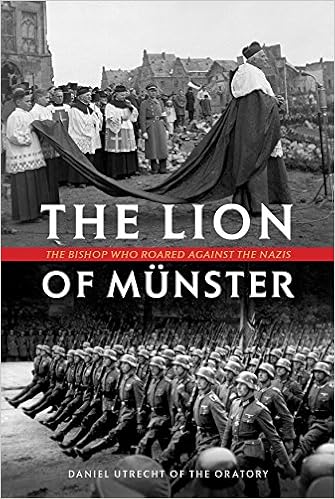
As I read I was reminded of a book about “The Lion of Munster”, Bl. Clemens August von Galen.  It also reminded one of you readers, who sent me a note.

US HERE – UK HERE
Posted in "How To..." - Practical Notes, Fr. Z KUDOS, GO TO CONFESSION, Hard-Identity Catholicism, Wherein Fr. Z Rants | Tagged , ,
4 Comments

ASK FATHER: Why can lay people read at Mass?

From a reader…

QUAERITUR:

My family goes to EF Masses on Sundays most of the time, but Novus Ordo once
a month.

My 3-year-old son asked me a question which I have no answer. He asked, “Why is the reading done by people but not the priest?” He asked this because in usus antiquior, the readings must be done by the priest, the assisting sub-deacon, or the clergy in choir. Reading done by laity is a complete novelty for my 3-year-old.

I know it is allowed in the Novus Ordo, but I really could not answer “why” it is allowed. Is there any good reason other than “The spirit of Vatican II allowed active participation”?

Fr. Z responds: Even a 3 year old can see it.

GUEST PRIEST RESPONSE: Fr. Tim Ferguson

In the early Church, there were many liturgical offices, all performed by men in the clerical state. Porters stood guard over the doors of the church, lest non-Christians sneak in. Acolytes attended the major ministers, brought the bread and wine to be consecrated to the priest, and handled the books. Lectors read the lessons and epistles. Cantors or psalmists chanted the psalms. Eventually, by the Middle Ages, a “cursus honorum” had developed with clear steps leading from one office to the next. Young men in the clerical state would be ordained as porters, then, if they showed some competence, they would be ordained as lectors, then acolytes, then exorcists, and ultimately, if they were deemed worthy, they entered into major orders as subdeacons, deacons, and then priests.

The work of one of the minor clerics could always be done by someone in a higher order, since they had been already ordained to that lesser order. Gradually, especially in parish settings, the only one actually ordained was the parish priest. Especially after the invention of seminaries in the 16th centuries, those who were progressing through the minor orders were seldom to be found outside of seminaries and religious houses. Starting by way of exception, men, and eventually boys were permitted to assist the priest after the manner of ordained acolytes, even though they weren’t clerics and, strictly speaking, should not have been allowed to enter into the sanctuary. This exception became the norms in most places. Similarly, the choir, which once would have been composed entirely of clerical chanters, became primarily and often exclusively composed of laymen and even women.

At the time of the Second Vatican Council, some of the Fathers, imbued with the romantic vision of the liturgical movement, hoped to restore the ancient situation with manifold ministers, each performing his specific ministry within the holy Mass. Yet, rather than restore the ancient clerical nature of these ministries, the Council Fathers and their successors in the Vatican, used the contemporary practice of lay people serving in those roles once reserved to ordained acolytes and cantors as a model, and instituted the notion of laymen performing the role anciently reserved to the ordained lector. By the early 1970’s, Pope Paul VI entirely eliminated the vestiges of the ancient ladder of minor orders and the subdiaconate and, in their place, established two new ministries, acolyte and lector, with these ministries being open to laymen. An exception was given by Pope Paul, that these ministries could be fulfilled even by those not formally commissioned to them, and it did not take long in most places for that exception to become the norm.

Posted in "How To..." - Practical Notes, ASK FATHER Question Box, Liturgy Science Theatre 3000 | Tagged , ,
19 Comments

ASK FATHER: When should babies be baptized?

From a reader…

QUAERITUR:

This subject comes up constantly in Catholic mom groups online. I would love your take on it.
Canon 867 §1. Parents are obliged to take care that infants are baptized in the first few weeks; as soon as possible after the birth or even before it, they are to go to the pastor to request the sacrament for their child and to be prepared properly for it. There are some who baptize their babies immediately after giving birth and some who wait 2-3 months. I’m in the second camp for several reasons….  Clearly, if there was an issue with the baby, a priest would be called in to do an immediate baptism or we would do an emergency baptism ourselves. Those in the other camp say that canon law must be followed to the T. Most parish/diocese policy also makes it difficult to do a baptism immediately after birth. My parish requires a birth certificate, which I didn’t receive until about 6 weeks after my son was born. Baptism prep classes can take up to a month to complete. Some parishes do not allow baptisms during Lent or only arrange one day for baptisms in each month. I’ve never even heard of someone baptizing their child before birth. Is this really done? So, what do you say to this? I feel that those of us on both sides of the\ issue are doing the right thing in seeking the sacrament for our children soon after birth. Is the difference between 2 and 12 weeks really a big deal? Are those of us who wait a month or two sinning?

GUEST PRIEST RESPONSE: Fr. Tim Ferguson

First, a clarification, baptism is not done before birth – the canon refers to going immediately after or even before birth to talk to the priest to arrange for the baptism.

The deeper question – how long should one wait before having one’s child baptized? In some cultures and in some places, baptism take place almost immediately after birth. Pope Benedict XVI was born early in the morning on Holy Saturday and was baptized in his parish church later that same day.

The canon speaks of “the first few weeks,” without giving further specificity. A month? Two months? Three months? Perhaps a good litmus test would be: how do you refer to the age of your newborn? “Billy’s seven weeks old.” “Amanda’s just over 10 weeks now.” “The twins are five months old.” “Ryan is 37 years old, and almost ready to stand on his own now. We’re so proud!”

If you’re still referring to your child’s age in weeks, I would argue, you’re still within the canonical range of “the first few weeks.”

Making reasonable preparations for family members to attend, and giving mother and child a chance to rest up before making the big public appearance does not seem to me to be incurring any sin, especially if the parents are knowledgeable and prepared to baptize their child in case of an emergency.

Posted in "How To..." - Practical Notes, ASK FATHER Question Box, Canon Law, Liturgy Science Theatre 3000 | Tagged ,
23 Comments

OLYMPICS 2018 12 Feb: CURLING!

I’ve been remiss in mentioning the most exciting sport of all the Winter Olympic events.

Put aside the humdrum sports of figure skating, downhill skiing, etc. No no. That’s not where the real excitement lies.

Here’s something that really deserves attention… biathlon! Ya’ gotta ski. Ya’ gotta shoot. Yep, people racing on skis with gravity mostly fighting you rather than helping you, and then, with heart pounding, hard breathing, maybe with strong wind and snow, you have to shoot with a .22 at a target the size of a DVD with a golf ball sized bulls eye 50m away!  If you miss, you have to do also a penalty loop.

Biathlon: Mercy, tempered by the Truth.

That’s cool.

Then standing.  Very cool.

There is a great video about the rifle.  HERE

Pretty soon we’ll also have Skeleton.   Memento mori!

Of course that pales in comparison with the raw excitement of…

CURLING!

We’ve all, I’m sure, been watching the weekly Curling Night in America for that weekly dose of pathos, thrills and adrenaline.  Now we are at the Olympics.

Lest you miss any of the ACTION a curling specific schedule is available HERE.

Curling isn’t all beer and skittles.   Well… it’s kinda like skittles and there’s probably a lot of beer involved outside the games, but… this Korean curler falls, reminding us all that….

Ice Is Slippery.

This Cancukette has made a boo boo.  She throw the wrong rock, one of the Korean team’s.  No big, however.  They just swapped them out.

Curling: It’s merciful, but truthful.

So, let the curling discussions begin.

Posted in Just Too Cool | Tagged , ,
8 Comments

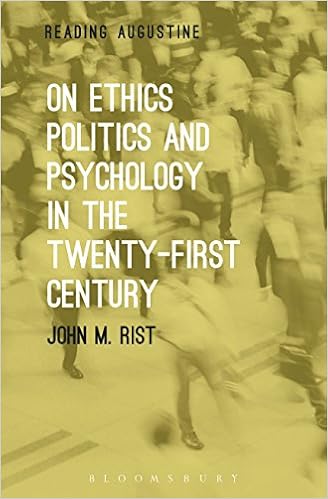
BOOKS RECEIVED: @DouthatNYT on state the Church under Francis (terrific) – John Rist in Reading Augustine series (a scream)

John Rist is one of the best working scholars on Augustine and writers on ethics in the world.   His books are fantastic, but they are hard.

Who is this guy?  HERE  He was also one of my profs in Rome.

Rist sets out to clarify who Augustine was and wasn’t, who he is and isn’t.  Then he critiques contemporary theology, etc., a kind of status quaestionis through Augustine’s own eyes.  I’ve been interested in what Augustine would think of contemporary issues ever since my first thesis, which was on Augustine and the figure of the “theologian” (suggested to me by Joseph Card. Ratzinger, btw).  If anyone can tackle this issue in a big way, definitive way?, it’s John Rist.

US HERE – UK HERE

[…]

In the first seven chapters of this book Augustine will say little about contemporary ‘theology’ and theologians, though he will show as he proceeds that he understands the need to tell a more substantial, less impressionistic theological story than most theologians now think necessary or even possible, for their judgements have been formed by a systemically developed ignorance of the history of theology. [Might I also add ignorance of history?  Recently a highly placed prelate gave a lecture in England and uttered all manner of absurdities based on premises that any 1st year student of the ancient world would have found laughable.  But I digress.] In these chapters he will indicate that his philosophical arguments, contextualized in much older and half-forgotten ‘philosophical’ and ‘theological’ beliefs, can call to account many of our own culture’s sacred cows. Then in Chapter 8 he will turn directly to contemporary theological trends and practices, to point to the minimum specifically intellectual work required if the discipline of ‘theology’ (as distinct from ‘philosophy’) is to be saved from the contempt in which (except in head-in-sand quarters) it is now almost universally held. His aim will be to replace secular idols (whether or not worshipped by quisling theologians) by something surprisingly like the thoughtful ‘theological’ Christianity he preached even to the uneducated in the early fifth-century North African city of Hippo.

[…]

In his own day Augustine argued with dissident Christians and with pagans. Nowadays few would call themselves ‘pagans’, though many would be happy to be called ‘secularists’. Our Augustine might see scant conceptual difference between the content of the two terms, for the secularists have their ‘gods’ (their idols) too, albeit they do not so designate them: their rights, their ‘charismatic’ politicians, their celebs and their ‘autonomy’. [NB] Throughout the following narrative Augustine will make little distinction between pagans and secularists when treating of recent centuries; indeed, he will view our age as in many respects a reversion to some of the least attractive and least defensible aspects of ancient paganism.

Things really pop in Chapter 8 – The Inevitable Irrelevance of Most Contemporary Theology.  One of my theologian friends told me that it’s “a scream”.  And that’s the right word.  I literally laughed aloud a couple of times.  A taste…

[T]he Catholic Church has thus gradually tended to evolve – other churches have already completed the mutation – into yet another NGO, albeit tarted up with a hypocritical or even nominal adherence to belief in a transcendent God….

And…

[A] prominent Roman Catholic Cardinal bases his account of truth not on the ancient notion that it is higher than the human mind but rather that it ‘arises’ from a ‘dialogue’ between the pantheistic Spirit of the Whole and man’s increasingly secular awareness.

Rist includes, pace Newman’s Apologia, “Austin’s Brag”.  He also has a “Transcript of a Radio Interview with Bishop Austin Redivivus: 1 April 2016.”

And his “Further Reading” list is a treasure.

The Kindle edition has a clickable index!  Verrrrry helpful.

Speaking of the 21st century, this next title should be interesting reading in juxtaposition to Rist’s book.

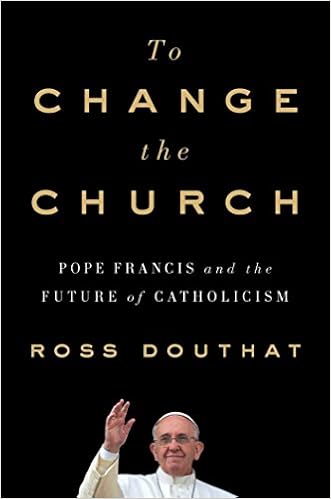
Ross Douthat’s newest… I just received an advance uncorrected review copy.

To Change the Church: Pope Francis and the Future of Catholicism

In his opening remarks at Jesuit-run F.U in NYC, Douthat recently made three points which might be used to evaluate the papacy of Pope Francis, five years on: 1) his impact on the public’s perception of the Church; 2) his attempts at reforming the Vatican bureaucracy; 3) his position on “moral-theological controversies,” specifically, communion for the divorced and remarried.  These are spun out in the course of the book’s conclusion.  But how he get’s there is riveting.  This is a status quaesitionis book which resolves in a provocative: “Quo?” 

PRE-ORDER now at a discount for its March release.

His preface is deeply personal. He lays out his background and positions and clearly states that he doesn’t intend to be neutral.  The first sentence:

This is a book about the most important religious story of our time: the fate of the world’s largest religious institution under a pope who believes that Roman Catholicism can change in ways that his predecessors rejected, and who faces resistance from Catholics who believe the changes he seeks risk breaking faith with Jesus Christ.

US HERE – UK HERE

His chapter on Benedict’s resignation (as I write, it is the 5th anniversary of his announcement), is a pretty good summary of the issues of his papacy.  His chapter on the election of Francis starts out with the Sankt Gallen project.  His final chapter, pre-maturely perhaps entitled “The Francis Legacy” has this sobering paragraph.  He talks about sweeping aside cardinals and others who stand in his way and goes on:

This is, sometimes, what Francis himself has seemed to be aiming at with his footnotes and fraught silences-off legacy of theological liberalism in effective power, but with enough room left for theological conservatives parenthesis including all those “rigid” priests he dislikes but whom the church obviously needs) to feel like their understanding of Roman Catholicism still has life. But as we have seen just in the two years since Amoris was published, this kind of truce is difficult to sustain. The old truce worked, sort of, because both sides thought of themselves as playing a long game: Conservatives had a (complacent) confidence that papal authority would gradually overcome dissent, and liberals accepted that they would not enjoy power for the foreseeable future, which meant that it almost didn’t matter what happened in Rome day-to-day, because when the necessary changes came, all of the mistakes of the John Paul era would be swept away together.

Under the new truce, though, the day to day stakes for conservatives are much higher-with more popes like Francis, Catholic truth will stand on a knife’s edge, and the promise for liberals much more immediate and tempting and hard to resist pursuing further.

[…]

There are so many bits I would like to quote from his concluding chapter, as he describes the present state of things in this papacy.

I think that he has nailed it.

Back to Rist for a moment.

To anyone who studies Augustine, Rist’s book is necessary.  Just buy it.

US HERE – UK  HERE


And this is a hard book, but rewarding.

US HERE  – UK – HERE


Posted in Francis, REVIEWS, The Campus Telephone Pole, The Coming Storm, The future and our choices | Tagged , , , ,
4 Comments

Benedict XVI’s resignation 5 years on. Your thoughts.

Five years ago today, Pope Benedict XVI announced that he would abdicate, effective 28 February.  My posts on that day.   HERE

Lightening struck the dome of St. Peter’s Basilica.

The Feast then, as today, of Our Lady of Lourdes.

I remember where I was when I heard the news.  I’ll be you do too.

Five years down the road, what are your thoughts about this monumental event?

Please.  Switch on a filter or two and think before posting.  The moderation queue is ON for this and for all posts.

The Holy Father: ipsissimis verbis

YouTube thumbnailYouTube icon

Click HERE.

Posted in Pope of Christian Unity | Tagged
60 Comments

Carmelite Nuns seeking Priest Chaplain

The last time I played yenta for a group of sisters looking for a chaplain, the results were pretty good!  HERE

Today I received a note from Mother Mary Bethany OCD, of the Discalced Carmelite Nuns in Georgetown, California (D. Sacramento).

They need a new chaplain by MARCH.

I asked for some details and Mother wrote back:

We are requesting a (reverent) Novus Ordo Mass, which most of our Sisters are used to.  Our Divine Office is in English also.

Our chaplain would have the use of a furnished house on our property, a car, a stipend commensurate with his needs and/or our abilities.  We would hope for Confessions every two weeks, and a Benediction /Adoration service on Sunday afternoons.

We are located in the Sierra Nevada foothills in a quiet rural place, so our chaplain should be able to endure silence & solitude, with some limited apostolate to the little town of Georgetown if he is able.  Not necessary.

There are 14 of us, 2 novices in formation and 12 black veils, ranging in age from 20 – 85.

We’re dedicated to St Therese , we love the Holy Face devotions, we love St Teresa of Avila!

Our bishop is Jaime Soto (Sacramento) and he is aware of our search.

Our phone is 530-333-1617.

Fr. Yenta now steps aside.

I won’t do this very often.  However, when I saw their page about the restoration of a statue of Our Lady of the Clergy, I admit that my cold, black heart warmed slightly for maybe.. two beats.  I’ve been looking for a statue of her for a while.

Posted in The Campus Telephone Pole, Women Religious | Tagged
Comments Off on Carmelite Nuns seeking Priest Chaplain