JUST TOO COOL! Wherein Fr. Z is AMAZED at … coincidences? I think not.

Okay… someone tell me what’s going on here!  (Trick question.  I think I know.)

As you recall, I have a great portable altar from St. Joseph’s Apprentice, and Pelican case to ship it in.  HERE

I also now have great reversible travel vestments for that altar, including little frontals.

I’m am also getting ready for an interesting pilgrimage to S. Italy and Sicily in April and May.

So… I’m thinking about this situation, of the portable altar, the case, the shipping.  What to do?

US HERE – UK HERE

Meanwhile, I get out a DVD of… “Hey, I haven’t seen this for a while!”… For Greater Glory.  It’s about the Cristeros.

After weighing my options, I call St. Joseph’s Apprentice, and told him to start making a “Wilderness Altar” for me.  After all, I won’t need the internal storage space inside my other beautiful altar, because I have the case with the formable foam.  That’ll lighten the load and I’ll have more storage space.

I had seen photos of the Wilderness Altar on his site.  HERE

During our phone conversation, St. Joseph’s Apprentice told me how meaningful it had been to make that altar (above), which contains a relic of the Mexican boy martyr… Saint José Luis Sánchez del Río.

For Greater Glory… portable altar… St. José Luis Sánchez del Río ….

Then – out of the blue? – I get an email from a priest entitled “Viva Cristo Rey!”   With an attached photo of… St. José Luis Sánchez del Río!

Father says that TODAY is the Feast of St. José, who was murdered exactly 90 years ago today: 10 February 1928.

I called up St. Joseph’s Apprentice to tell him that, and he tells me that the first altar he ever made had a link to the… Cristeros.

He explained that he had built a shrine for his brother in law and the local priest came to bless it.  Afterward, the priest said he wanted an altar built for an altar stone he had been given by another priest.  It was from the Cristeros.  That was Altar #1!

So, folks, you tell me what’s going on with this.

I suspect that this project and the upcoming pilgrimage may have the smile of “Joselito”, which is a diminutive of “José… Joseph”, which might be used to describe a certain builder of beautiful portable altars, who was Cristeros inspired.

YouTube thumbnailYouTube icon

Posted in ¡Hagan lío!, Just Too Cool, Saints: Stories & Symbols | Tagged , , ,
5 Comments

Concerning lying by omission, the perils of words, and the advantages of silence

At First Things there is a piece by Ramona V. Tausz, who rightly admires the discretion of Queen Elizabeth II regarding the media and too much public exposure.  She writes:

[T]here is something refreshing about Elizabeth herself. Nowadays, we expect our politicians, presidents, and even popes to be stars—celebrities who express their individuality in tweet-storms and air their every whim on Facebook. Elizabeth’s remarkable discretion (The Coronation marks the first time she has agreed to an on-camera interview) may strike us as both odd and downright boring. Yet her infamously “stringent control” over media access to the monarchy is integral to her success. For sixty-six years she has faced the challenge of balancing her individuality as Elizabeth Windsor with her public persona as Elizabeth Regina, and in all her time on the throne she has rarely permitted her personality to overshadow her office. It is this regal emphasis on office—on “the monarchy, not the monarch,” as Claire Foy’s Elizabeth puts it in The Crown—that Americans could stand to learn from.

Not only Americans.

I would also hazard to say, many churchmen around the world of every possible level.

Two principles.

1- Less is more.  Keep in mind that familiarity breeds contempt.
2 – By and large the media is not to be trusted.

The latter was evident to me and my recent unfortunate experience with a BuzzFeed reporter.  He was going to write an article about me anyway – I am convinced at the behest of people who pretty much hate my guts and want me silenced – and it probably would have been worse had I not consented to a meeting and interview before the final product was excreted for public view.

That experience was a good lesson, because it was an example of how reporters lie by understatement.  I wrote about understatement – HERE – also in regard to the Jesuit homosexualist activist James Martin, who deceives – like Geryon with the face of an honest man – by leaving out something really important that ought not to be left out.  Leaving out something of critical importance is a form of lying.   In the case of the BuzzFeed piece, the reporter began his deception from the top, by quoting something controversial that I wrote, but – with ellipsis … left something critical out.  He deceived.

There is a great moment in the Old Testament that shows how deceptive “understatement” can be.   Take the machinations in the Book of Esther about Haman – loathed by Jews, and rightly so.

Haman was the adviser of the Persian King Ahasuerus.  This is the time of the Babylonian Captivity for the Jews.   Haman plots to have all the Jews killed.  He needs Ahasuerus to sign on.  How to convince him?  Haman lies to him by telling him the truth… partly.   First, Haman tells the king that that Jews are spread through his whole kingdom, which was true.  That makes the Jews seem to be a factor for the whole kingdom, were they to become a problem.  Next, Haman tells the king that the Jews obey different laws than the rest of the people, which was true but only partially true.  They obeyed the Jewish dietary laws, etc., but Haman left out that they also obeyed the king’s laws.  The omission of that last bit, the Jews’ obedience to the king’s laws, made the Jews seem a) widespread and b) disobedient, therefore dangerous.  Finally, Haman concludes with an plain lie: Jews must not be tolerated.  Ahasuerus issues the edict to kill all the Jews.  He deceives by the juxtaposition of truth, half truth and outright falsehood.

What Haman did was so appalling that, on the feast of Purim (celebrating the deliverance of the Jews) and their reading of the Book of Esther, when Haman’s name comes up in the text they substitute a noisemaker called a “grogger”, much like the twirly gizmos we use during the Triduum instead of bells.

That’s how most of the media, especially secular media, works.  Alas, that’s how some churchmen these days work as well.  I recently read something spectacularly wrong about the primacy of conscience that was perfectly deceptive, though it was couched in otherwise true terms.  Important – really important stuff was left out.

Haman – Patron of BuzzFeed, etc.

The Book of Esther is a terrific story, btw, and part of our family history.  I digress.

When we choose to speak, we should weigh words carefully and think.  The Italian proverb I learned in my first week or so of Italian seminary is: Prima pensa, poi parla, perché parole poco pensate portano pena … First, think, then speak, because words which have been weighed little bring penalties.  If we speak on something important, we must be careful to include all the bits that really matter to the topic.  The “whole” truth, as it were.

The flip side of speaking with precision, is not to speak at all. Not rarely in both the pulpit and the confessional I comment that we could avoid a lot of sins (trouble) if we were just to keep our mouths shut.   The more we talk, in general, the greater the chance is that we can get ourselves into trouble.  Unintentional trouble is still trouble.

But, “who am I to judge”?

So, churchmen out there… be careful.  Learn from the discretion of Queen Elizabeth when it comes to the press.  Less can be more.

And when WE are elected to the See of Peter, We shall – firstly, suppress the Jesuits, and then we will disappear into the Apostolic Palace for stretches of time so long that some will wonder if we have died.

At this point I will shut up and direct you all to Card. Sarah’s wonderful book.

Benedict XVI wrote a brief essay as an afterword for a future re-printing of Robert Card. Sarah’s great book The Power of Silence: Against the Dictatorship of Noise.

US HERE – UK HERE

Posted in Biased Media Coverage | Tagged , , , , , , , ,
4 Comments

Wherein Fr. Hunwicke explained and explains today’s “Festum Ovorum”

A few years back the inimitable Fr Hunwicke offered us a brilliant post which about the Saturday before Ash Wednesday, nicknamed the “Festa ovorum”. THERE He is back for an updated crack it this year.  HERE

Here’s his offering from 2015.

FESTUM OVORUM

Well, that’s how they describe the Saturday before Quinquagesima year by year in the very inferior-quality modern Oxford University Diary with its cheapo imitation-leather cover which – since the University Diary starts with the penultimate week of August – is already looking rather tatty by now.

The origin and purpose of Festum Ovorum is pretty certainly exactly what each one of you will have guessed from first principles: as on Shrove Tuesday, to have a binge before Lent. It has stayed on the University Calendar since the Middle Ages … just as, in this University, All Soul’s Day and Corpus Christi and the Assumption survived the ‘Reformation’. We know that this was not just a custom in alma academia, but flourished throughout the neighbouring country areas, where, in their illiterate vernacular way, the worthy yokels just called it Egge Satterday. However, purely by coincidence, it became, in this University, linked with an academic deadline: the last day on which bachelors were allowed to ‘determine’; that is, to complete the exercises for the degree of MA. And academics had a ‘Determination Feast’ to celebrate this, which goes back at least to the time of Lord Richard Holland (nephew of Richard II) who had his Determination Feast on the 21st and 22nd of February, 1395 (yes, I have checked that in Cheney). As late as 1603, “all the bachelors that were presented to determine did after their presentation go to every college where they were determining and there make a feast for the senior bachelors, videlicet, of muscadine and eggs; figs; raisons; almonds; sack;Grützner_Falstaff_mit_Kanne [It’s difficult to get true sack these days and my inner Falstaff mourns.] and such like”.

I suppose all this was quite a luxury spread in those days. Now we could buy most of it in Sainsbury’s [grocery store chain] and carry it home in those little orange bags. Except for the muscadines, which (look it up in the OED if you don’t believe me) are sweetmeats (North Americans might say ‘candies’) made from a pod near the fundament (check that as well, if you like, in the OED) of an asiatic deer (its secretion may have been a sexual attractant) and regarded as an aphrodisiac since the days when the trade routes brought both it, and its Sanskrit name, from India to Byzantiuum. It is now vastly expensive since the poor things have been hunted nearly to extinction – ah, the compulsions of homo sapiens, the so-called animal rationale. But I gather that chemists produce a synthetic version, probably every bit as authentic as the ‘leather’ covers of the University Diary. [ROFL!] The English sweetmeats made from musk were called ‘kissing cakes’ or … um …. er … ‘rising cakes’ … I bet the synthetic musk has less potent Rising Qualities than the Real Thing.

And, this year, [2015] by a neat coincidence, Festum Ovorum coincides with the Solemnity of S Valentinus! Dies bis potens!

Fr. Z kudos.

Let’s hear the Sack Speech:

YouTube thumbnailYouTube icon

Posted in Just Too Cool, Linking Back, Liturgy Science Theatre 3000 | Tagged , , , , ,
2 Comments

ASK FATHER: Could a diocesan priest choose to say only the TLM?

From a reader…

QUAERITUR:

Could a diocesan priest decide that he will only celebrate the TLM? Is he allowed to do so? What could a bishop do if he disagrees with the priest?

First, a diocesan priest could decide to say only the TLM.  He would then have to live with the consequences.  His bishop and/or the pastor to whom he is assigned as an assistant may not like that decision.  The consequences would be nearly immediate.

So, Father says “YES!”, and the Bishop says, “NO!”

They go back and forth like this for a while.

In the end, Father has no real power to defend his decision.  He might be right or he may be wrong, but he has no effective power.

If the Bishop were unhappy enough, he would probably suspend Father, take away his faculties to celebrate Mass publicly, preach, hear confessions, etc.  He could move to remove him from his parish, if he is pastor.  The Bishop could reassign him, if he is an assistant, to just about anything… or nothing.   He could make Father’s life so awful that the he might want to leave the diocese or the priesthood.

The suspended or unassigned priest could appeal to Rome, but I’m 99.9% sure that he’d lose.  Rome would back the Bishop.

On the other hand, a Bishop capable of thinking outside the box might say, “Okay, Father. We were thinking about closing old St. Eulampius over in Pie Town, but why don’t you have a go with your Latin and so forth.”

It all depends on the bishop.  Some are open-minded.  Some are not. Some are creative thinkers.  Some are not.  Some are good-natured.  Some are not.  Some are really concerned for the good of the priests.  Some are not.   All of them are at times and in different circumstances a combination of all these.  They’re human, after all.

Most priests know where they would stand with their bishops on matters like these.

Posted in "How To..." - Practical Notes, ASK FATHER Question Box, SUMMORUM PONTIFICUM | Tagged
14 Comments

Your parish priest and YOU.

I just received an email from a priest who informed me that today is the 200th anniversary of the day that St. John Vianney, arrived at his parish in Ars and began his work as a pastor with the care of souls.

The care of souls.

Cura animarum.

You don’t hear much about that concept today. The parish priest has a mission to fulfill that derives ultimately from the mission given by Christ to the Apostles. They exercise this mission through Holy Orders and due appointment. Aligned with the Church’s apostolic mission and faithful to it, they have a special bond with the people under their care, to care for their souls, to help them to heaven through teaching, governing and sanctifying, through adherence to and proper use of Creed, Code and Cult, each of which is ordered precisely for the end of the cura animarum: salvation of souls.

St. John Vianney, who would become the great Patron of parish priests – got lost on his way to Ars and had to ask the right direction from a couple of – ironically – shepherds.

It may be that your pastor has gotten lost. He may need encouragement and correction from lay people to guide him into his proper place and role.

You may need to care for the soul of the priest who has the care of your soul.

Lent is coming.

Perhaps you might consider undertaking a special daily prayer for your parish priests – especially if he is somewhat off the rails – and performing some daily act of reparation on his behalf.  Offer some mortification for his or their sake.  It could be that your parish priests are pretty squared away, but you know of a priest who is … lost.   Choose a priest who isn’t good to you or others, who is perhaps faithless or a heretic or scandalous in some way.   Those guys really need prayers, especially if they have by their appointments been given the care of souls and they are neglecting their charge.   They are at great risk of eternal damnation.

If you need a project for Lent, that could be a good one.


Posted in "How To..." - Practical Notes, Mail from priests, Our Catholic Identity, Priests and Priesthood, Saints: Stories & Symbols |
5 Comments

Sam Gregg takes off the gloves: Bp. Sanchez Sorondo on China

Sam Gregg, director of research at Acton Institute, has a strongly worded piece at Liberty and Law about the seriously bizarre remarks from Argentinian Bp. Marcelo Sanchez Sorondo, presently the head of both the Pontifical Academy of Sciences and the Pontifical Academy of Social Sciences. Sorodono Sanchez recently visited China and, subsequently gushed about how wonderful the communist state is and how Catholic social teaching has been implemented there.

Gregg has taken off the gloves.

The whole thing hits hard. Here’s a taste:

[…]

Bishop Sanchez’s peculiar ruminations about world affairs are, however, emblematic of how concern for precision and facts seems to have disappeared throughout much of the Vatican over the past five years. One need only recall the notorious 2017 Civiltà Cattolica article penned by Father Antonio Spadaro, S.J. and Rev. Marcelo Figueroa: a piece which even some of its defenders conceded contained substantive errors about the history of religion in the United States and the role played by Evangelicals and conservative Catholics in American politics.

It doesn’t help the Holy See’s reputation to have some Vatican officials parading their fact-free, strikingly incoherent views of the world on the public stage. Bishop Sanchez’s claim that China is somehow one of the world’s leading exponents of Catholic social doctrine is frankly outrageous. It is also insulting to those Catholics and other Christians who have suffered so much for their faith under what is, after all, a regime that remains ideologically committed to atheistic materialism. In any organization that took reality and its own credibility seriously, such remarks would likely result in such a person being formally, if not publicly rebuked by more senior officials and perhaps even removed from office.

[…]

Posted in Liberals, The Drill, You must be joking! | Tagged
18 Comments

URGENT PRAYER REQUEST – Fr. D

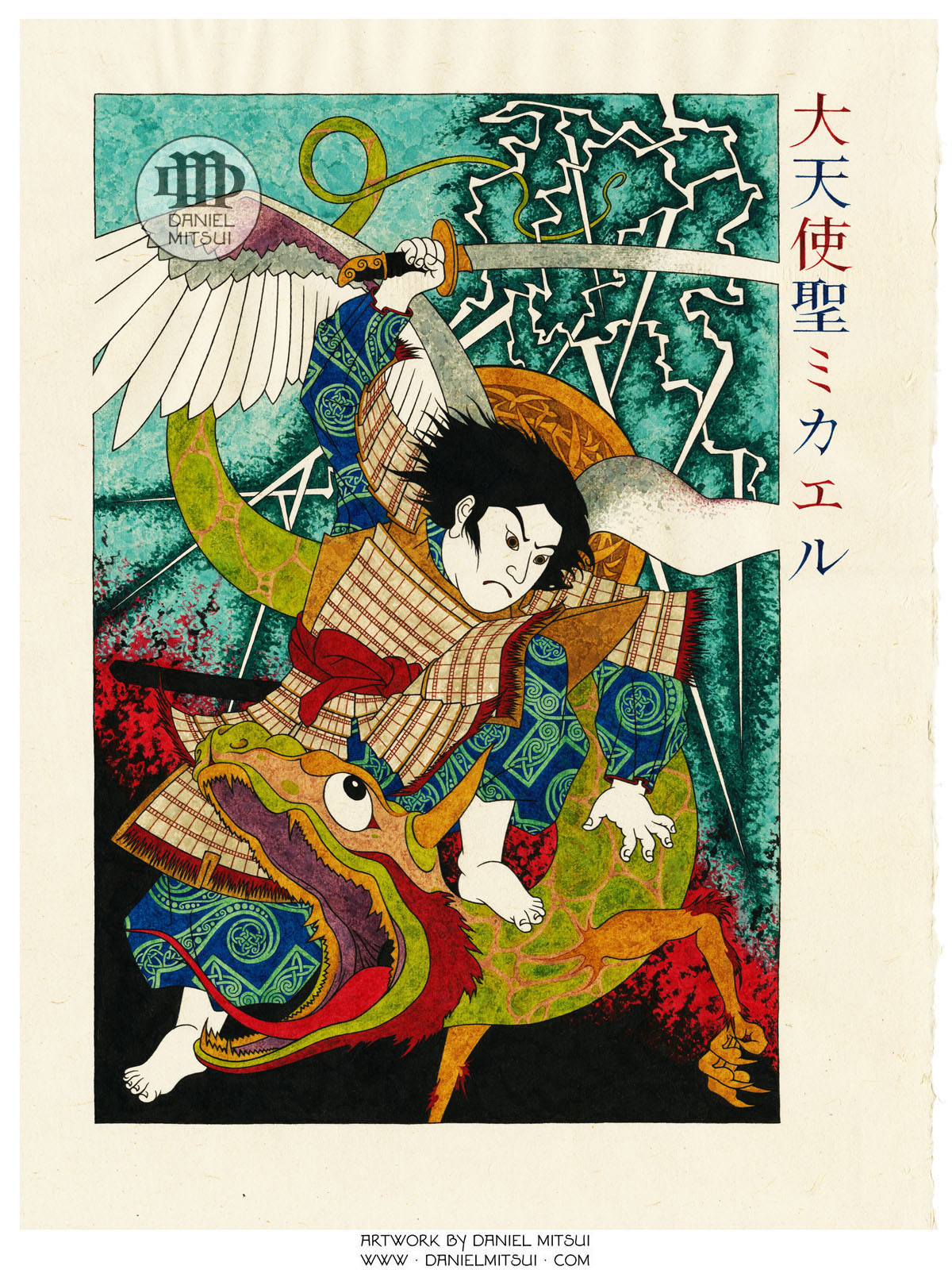
Please, in your charity, offer up a prayer to St. Michael the Archangel for Fr. D, who is in the midst of monumental changes.

Please, please… do this for this good priest.

Saint Michael Archangel,
defend us in battle,
be our protection against the wickedness and snares of the devil;
may God rebuke him, we humbly pray;
and do thou, O Prince of the heavenly host,
by the power of God, cast into hell
Satan and all the evil spirits
who prowl through the world seeking the ruin of souls.
Amen.

Sancte Michael Archangele,
defende nos in proelio;
contra nequitiam et insidias diaboli esto praesidium.
Imperet illi Deus, supplices deprecamur:
tuque, Princeps militiae Caelestis,
satanam aliosque spiritus malignos,
qui ad perditionem animarum pervagantur in mundo,
divina virtute in infernum detrude.
Amen.

St. Michael by Daniel Mitsui. Click for more.

Posted in Urgent Prayer Requests |
7 Comments

Great column on German confusion by Archbp. Chaput of @ArchPhilly … auf Deutsch! “Liebe, Klarheit, und ihr Gegenteil”

The other day I posted about a terrific column by Archbp. Chaput of Philadelphia in their diocesan newspaper.

Wherein Archbp. Chaput wins the pastoral Super Bowl in @ArchPhilly

The Archbishop wrote about, among other things, the confusion being caused right now by certain German bishops who are giving support to blessings for same-sex unions.

When I wrote about his column, I thought that a German translation might be handy for German speaking Catholics.

Perhaps this will make it easier for German blogs and outlets to share this good column.

One of you readers has supplied it!

NB: It is NOT an official translation supplied by the Archdiocese of Philadelphia.  Also, I have posted this entirely by my own initiative.

Here it is:

CatholicPhilly.com

Liebe, Klarheit, und ihr Gegenteil

Erzbischof Charles J. Chaput, O. F. M. Cap.

06. Februar 2018

An die Gläubigen der Kirche in Philadelphia:

Fast jeder, der versucht, das momentane Chaos um die Regierung in Washington zu verstehen, ist entweder (a) voreingenommen durch die Sichtweise einer der beiden politischen Parteien; oder (b) sehr verwirrt. Die meisten von uns werden wahrscheinlich in die zweite Kategorie fallen. Und das bedeutet, dass viele Bürger sich machtlos fühlen, dann angewidert, dann wütend. Wenn, wie die Heilige Schrift sagt, uns die Wahrheit frei macht, dann macht uns ihre Abwesenheit frustriert und schließt uns ein in einen Zustand der Ungewissheit. Oder, um es mit anderen Worten zu sagen: Verwirrung ist schlecht. Sie ist schlecht für die einzelne Seele, sie ist aber auch schlecht für die Wohlfahrt einer Gesellschaft, denn unvermeidlich folgen Spaltung und Streit.

Verwirrung kann verschiedene Ursachen haben. Einige davon sind ganz harmlos.
Jemand hört eine Nachricht falsch oder interpretiert sie falsch. Oder jemand drückt sich missverständlich aus. Oder Faktoren jenseits der eigenen Kontrolle – beispielsweise die Voreingenommenheit oder Nachlässigkeit einer Nachrichtenagentur – können die Weise der Kommunikation und Rezeption dramatisch beeinflussen und einfärben. Diese Dinge geschehen als natürlicher Teil des Lebens. Darum haben Anführer die besondere Aufgabe, klar, eindeutig, ehrlich und besonnen zu sein in dem, was sie tun und sagen. Sie müssen, “von der Liebe geleitet, die Wahrheit bezeugen” [Eph 4,15 EU], wie der heilige Apostel Paulus sagt. Leichtsinnig oder sogar absichtlich Verwirrung über eine wichtige Sache zu stiften, ist ein grober Fehler für eine jedwede Person, die Autorität hält. So ist es im öffentlichen Leben, und so ist es auch im Leben der Kirche.

Es gibt keine Liebe, keine Nächstenliebe, ohne Wahrheit. Genauso gibt es keine wahre Barmherzigkeit ohne Gerechtigkeit, die beseelt und geführt wird von der Wahrheit. Andererseits ist Wahrheit, die missbraucht wird, um andere zu demütigen; Wahrheit, die keine Geduld und Liebe aufweist, eine besonders hässliche Form von Gewalt.

Was also ist der Sinn dieser Ausführungen?

Im Lauf der letzten Wochen haben einige gewichtige Stimmen der Hierarchie der Kirche in Deutschland vorgeschlagen (oder es zumindest angedeutet), einen katholischen Ritus für die Segnung von gleichgeschlechtlichen Paaren, die zivil verheiratet oder eine solche zivile Ehe anstreben, zu unterstützen. Oberflächlich mag diese Idee großzügig und vernünftig klingen.
Allerdings ist – und so sollte es sein! – die Unbesonnenheit solcher öffentlicher Kommentare Grund für ernste Besorgnis. Es bedarf einer Antwort, denn was die Realität in einer Ortskirche betrifft, wirkt sich unvermeidlich auch auf andere Teile der universellen Kirche aus – gegebenenfalls sogar auf unsere Diözese.

Im vorliegenden Fall würde ein “Segnungsritus” einen moralisch verbotenen Akt unterstützen, egal wie aufrichtig die Intentionen der Person sein mögen, welche einen solchen Segen erbittet. Ein solcher Ritus würde das katholische Zeugnis bezüglich der Natur von Ehe und Familie völlig aushöhlen. Er würde die Gläubigen verwirren und zu falschen Annahmen führen. Und es würde die Einheit unserer Kirche verletzen, denn so ein Vorgehen kann man nicht ignorieren oder beschweigen.

Warum aber würde ein scheinbar so barmherziger Akt ein so großes Problem hervorrufen? Personen in bestimmten Lebenssituationen zu segnen, ist praktisch eine Ermutigung zu und Bestärkung in dieser Situation – in diesem Fall gleichgeschlechtliche Beziehungen. Die gesamte christliche Geschichte hindurch war und ist ein einfacher wie weiser Fakt immer maßgeblich: lex orandi lex credendi – unsere Art zu beten formt unsere Art zu glauben. Ein neu geschaffener Ritus verkündet und avanciert eine neue Lehre allein durch den Effekt der Praxis.

Generell gibt es zwei grundlegende Prinzipien, an die wir uns erinnern
müssen: Erstens, wir müssen alle Menschen mit Respekt begegnen und ihnen unsere pastorale Sorge zuteilwerden lassen, was sie als Kinder Gottes mit einer angeborenen Würde auch verdienen. Es soll betont werden, dass dazu auch jene Menschen gehören, die sich zum selben Geschlecht hingezogen fühlen. Zweitens, es gibt keine Wahrheit, keine wahre Barmherzigkeit und kein aufrichtiges Mitgefühl darin, eine Situation zu segnen, welche Menschen von Gott entfernt. Dies darf in keiner Weise verstanden werden als Zurückweisung von Personen, die eine solche Segnung wünschen. Allerdings weigern wir uns, die erkannte Wahrheit über die Natur von Ehe, Familie und die Würde der menschlichen Sexualität einfach zu ignorieren.

Wiederum: Wir alle sind menschliche Wesen, egal welche Stärken und Schwächen wir auch haben mögen, die ein Recht darauf haben, mit Respekt behandelt zu werden, wie es unserer gottgegebenen Würde entspricht. Wir haben auch ein Recht darauf, die Wahrheit zu hören, egal ob sie uns angenehm ist oder nicht – sogar dann, wenn es leider so scheint, dass dies die Einheit der Kirche selbst verkompliziert. Um die Gedanken Thomas von Aquins zu benutzen:
Das Gut der kirchlichen Einheit, von welcher Schisma das Gegenteil ist, ist weniger wert als das Gut der göttlichen Wahrheit, von welcher Unglaube das Gegenteil ist (vgl. S. Th. IIª-IIae q. 39 a. 2 co.).

Jesus sagt uns, dass die Wahrheit uns befreien wird. Niemals aber sagte er, dass sie uns angenehm sein wird. Immer noch sollen wir die Wahrheit in aller Klarheit hören – und sie teilen, in aller Klarheit, aber immer mit Liebe.
Verwirrung zu stiften in Anliegen, die zentrale Inhalte unseres Glaubens betreffen, egal wie gut die Absichten auch sind, wird nur dazu führen, eine sowieso schon schwierige Aufgabe noch schwieriger zu gestalten.

Euer Bruder in Jesus Christus,

+ Charles J. Chaput, O. F. M. Cap.
Erzbischof von Philadelphia

Posted in Just Too Cool, Linking Back, Our Catholic Identity, Sin That Cries To Heaven, The Coming Storm, The future and our choices | Tagged , ,
2 Comments

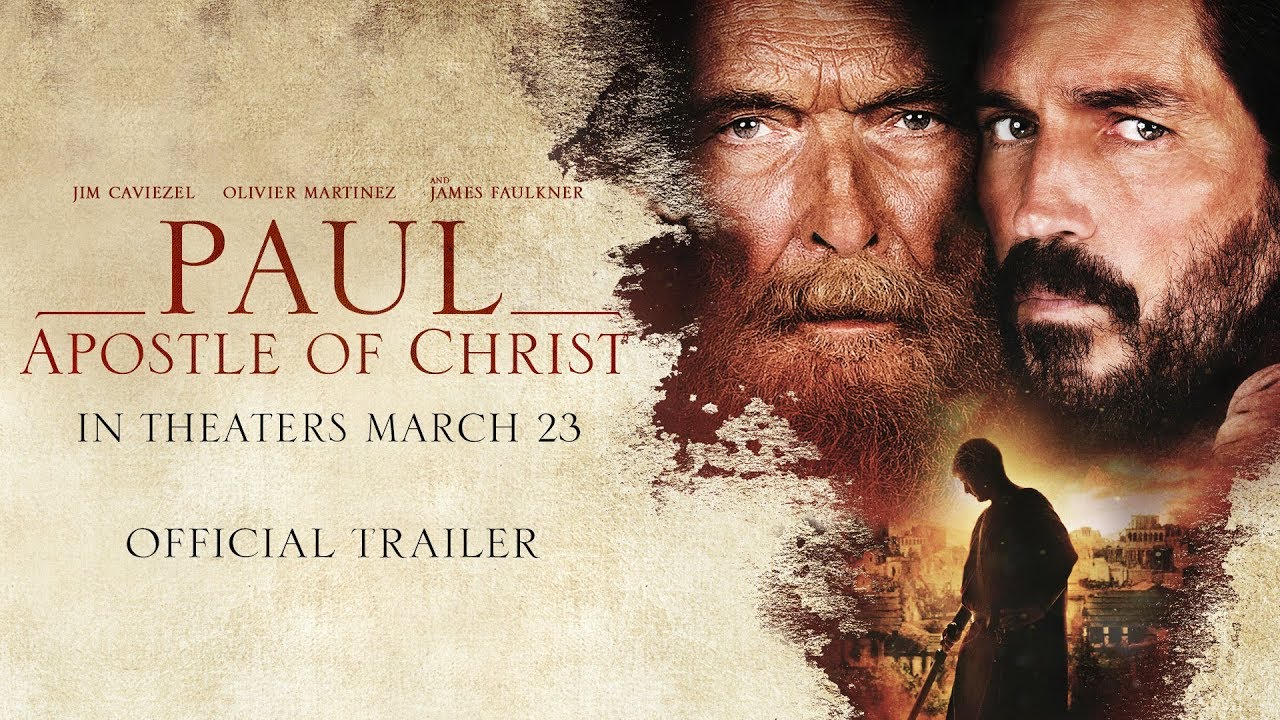
New film about Sts Paul and Luke – 28 March @PaulMovie

I am looking forward to this:

YouTube thumbnailYouTube icon

Posted in The Campus Telephone Pole | Tagged ,
7 Comments

ASK FATHER: Must images be veiled from Passion Sunday or is it only an option?

From a reader…

QUAERITUR:

Is there any authoritative rubric for the Extraordinary Form that requires statues and crosses be veiled in Church, or is it simply customary?

Our Extraordinary Form community is domiciled in a location that does not currently veil, and doesn’t seem inclined to do so.

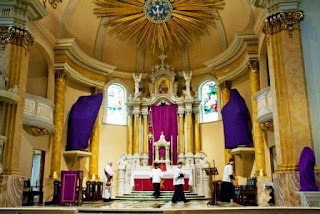
In the traditional form of the Roman Rite there is a custom of covering statues, images, etc. of the Lord and saints (except for Stations of the Cross) from after Nones (of after Mass but before 1st Vespers) of 1st Passion Sunday onward. This custom continues in the Novus Ordo as well from the 5th Sunday of Lent:

In 1988 the Congregation for Divine Worship in Paschale Solemnitatis 57 said: “It is fitting that any crosses in the church be covered with a red or purple veil, unless they have already been veiled on the Saturday before the fifth Sunday of Lent.”

On traditional 1st Passion Sunday the Gospel is from John 8, when the Lord disputes with the Jews and they try to stone him. The Gospel says: “They therefore took up stones to cast at Him; but Jesus hid Himself, and went out from the temple.”

The custom continues in the Novus Ordo.   But it is more than a custom in the Usus Antiquior.  It is necessary.

The 1962 Missale Romanum has a rubric which prescribes the veiling of images.  If memory serves, the instruction is also in the rubrics for the Breviarium Romanum and the Caerimoniale Episcoporum.

Here’s a shot of the page in the 1962 Missale Romanum (with my circling):

“Once Mass [of Saturday after the 4th Sunday of Lent] is finished, Crosses and images throughout the church are covered; which remain covered, Crosses indeed up to the adoration of the Cross on Good Friday, but images until the Gloria is intoned at the Easter Vigil.”

This isn’t “may” be covered.  It is “are” covered.

Posted in "How To..." - Practical Notes, ASK FATHER Question Box, Liturgy Science Theatre 3000 | Tagged ,
2 Comments