Let’s make this clear from the start.
People are going to sin. Nevertheless, we must uphold doctrine.
This is what is going to happen with the divorce/remarriage Commmunion thing.
The Holy Father, Pope Francis, will eventually uphold the Church’s teaching and discipline that those who “marry” again after a divorce, that is, those who live in an adulterous relationship, cannot receive Holy Communion.
I don’t see any way around that. Furthermore, one of the main duties of every Pope is to say “No!”. It shouldn’t surprise us when they do.
In the meantime, bishops and theologians and parish priests and armchair theologians and journalists will write and talk and write and talk and worry and spout and write and talk some more about “compassion” and “solutions” and so forth. There will be a tsunami of options and articles crashing around by the time the Holy Father affirms that people who are divorced and “remarried” cannot receive Communion. As a matter of fact, it may come to pass that there will be so much confusion, so much damage done in the lead up to the Pope’s affirmation of traditional teaching, that his affirmation may not make a lot of difference to people.
So, I repeat:
People are going to sin. Nevertheless, we must uphold doctrine.
That’s the way we have always done this. That’s the way Jesus did it.
Many of his disciples, when they heard it, said, “This is a hard saying; who can listen to it?” But Jesus, knowing in himself that his disciples murmured at it, said to them, “Do you take offense at this? Then what if you were to see the Son of man ascending where he was before? It is the spirit that gives life, the flesh is of no avail; the words that I have spoken to you are spirit and life. But there are some of you that do not believe.” For Jesus knew from the first who those were that did not believe, and who it was that would betray him. And he said, “This is why I told you that no one can come to me unless it is granted him by the Father.” After this many of his disciples drew back and no longer went about with him. Jesus said to the twelve, “Do you also wish to go away?” Simon Peter answered him, “Lord, to whom shall we go? You have the words of eternal life; and we have believed, and have come to know, that you are the Holy One of God.” Jesus answered them, “Did I not choose you, the twelve, and one of you is a devil?” He spoke of Judas the son of Simon Iscariot, for he, one of the twelve, was to betray him. [Read John 6]
So, the Church will teach the truth – something that makes liberals and writers and readers of the National Schismatic Reporter have night sweats because they think anyone should have sex with anything – and people will, in their weakness and under the pressure of today’s confused culture, sin a lot – something that makes conservatives have night sweats because they fear for the eternal souls of so many who are falling away from the Faith.
It has ever been so.
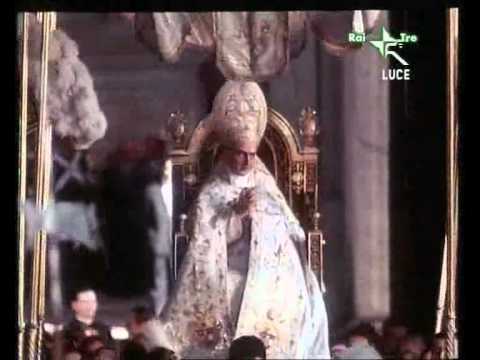
This is what happened in the lead up to and in the wake of Humanae vitae. Everyone under the sun was telling Pope Paul VI that the Church had to change its teaching about contraception. Debate raged, committees committed, newsies spun. By the time Paul VI eventually issued the definitive Humanae vitae, confusion reigned. Bishops and priests far and wide defied the Pope and Humanae vitae‘s clear teaching. They stopped teaching what the Church teaches and, instead, from behind their hand or in the confessional whispered to people “just go ahead and use it”. So they did. Priests told people to sin or at least so soft-peddled the Church’s teaching that it seemed to make no difference. And in so doing, they undermined the Church’s Christ-given authority and put the souls of millions in danger as well as, perhaps, damning themselves.
That was fused together with social upheavals outside the Church, which were welcomed by the guardians of the sheepfold, into the Church, as well as titanic changes to our sacred worship, which left people with the sense that, “If Mass can change, then everything is up for grabs.”
It looks like history is repeating itself. By the time Pope Francis affirms what we all know to be true, many will then just say … as they are saying now… “Just go ahead and receive Communion.”
But in those circumstances receiving may actually endanger their salvation.
Worth it?
In effect, there may result what Card. Kasper infamously suggested to the bishops in the extraordinary synod during his looooong and rather flimsy ramble about Communion for the “remarried”. Effectively, he said that there could/should be a “tolerated, but not accepted” solution. That is: “The Church won’t accept your new status, because you are obviously committing adultery and Christ made it clear that you couldn’t ‘marry’ again with your spouse still on this side of the grass, but – hey! – we will hold our noses and watch you go to Communion anyway. You can be a kind of pity case or second class Catholic. We will tolerate you, but not accept you.”
I wonder how that is going to go over when people figure out how condescending that uncompassionate compassionate “solution” is.
Remember: Marriage is a public act with all sorts of consequences, including juridical effects. This is why people, when they marry, must do so precisely by the book, using exact language for vows, before witnesses. This is why what happened is written down in official registers. We don’t just hold hands and jump over broomsticks. Until the Church’s proper authority determines that there was never a sacramental marriage in the first place, the marriage is presumed to be valid. It must be demonstrated, to a point of moral certainty, that there isn’t a sacramental bond. That is, a couple can’t just say, “We were never married”, and then do whatever they please. Priests can’t just say, but they do, “Wellllll…. whatever. Let’s just pretend.”
As for the so-called “internal forum” solution… let us underscore that it is internal forum, usually something explored – very rarely – in confession, with great discretion and secrecy. Moreover, just like Christ told the adulterous woman – people are expected to amend their lives. If they live together, for the sake of raising child for example, they do so as brother and sister. If they receive Communion somewhere, they do so where they are not known to others in the congregation, so as to avoid scandal. Will it happen that they might occasionally have sex during this arrangement? Sure! It could happen. Hey, we are human and we fall. We sin. Let’s call it what it is. That’s why we have a Church. Thereafter, they take up their resolve again and try to live holy lives, with the suffering that will entail.
Come to think of it, a similar thing might apply to homosexuals. If we can wrap our heads around the fact that the very concept of true “friendship” is being distorted these days (as “marriage” is), two people of the same sex who in some way are committed to each other, and who have certain inclinations, may wind up sinning together. It happens. Life is messy and people are weak. But let’s not deny the truth. We uphold and defend and teach clear Catholic doctrine. We clearly point to the natural law. But we recognize that people are sinners in need of the Church’s help and, in compassion, we help them to live better lives after they get up off the ground.
You might object that they shouldn’t be living together, because the temptation is greater. Yes, that is so. They are playing with fire. It is better to avoid occasions of sin. But, again, there is nothing in the teaching of the Church that says that friends of the same sex can’t live together and even give each other power of attorney or whatever. And if they can manage to do it, live together without committing sins that cry to heaven, well… I am sooooo tempted to say
“Who I am to judge?”
People make mistakes. We are not angels. People sin. People suffer. That doesn’t mean we lie to them about what sin is and what their state is. No. We tell them the truth and then, with great concern and compassion, help them with clear teaching, a strong and certain Catholic identity, the sacraments Christ gave us as the ordinary means of our salvation, and encouragement.
We sinners move forward, up the hard, rocky, thorny, path and we refuse the smooth, broad and seemingly easier path down to Hell.
And another thing!
All the talk about stream-lining the process for examining marriages and “annulment” must be looked on with great skepticism. Putting the marriage in the first place took a process, with obligatory steps. Showing that the marriage was defective in that process takes time, study, expertise. Should we, in our compassion, make the process go faster? Okay. We are going to need a lot more canon lawyers. Want mercy? Train canonists. But wait… no… if people don’t cooperate in the process then canonists have to wait for documents, interviews…. No matter what we do, this is going to be messy.
But let me make something clear to priests out there who may be thinking, “Well, the Church isn’t moving fast enough. I’ll just stop telling people to go through the “annulment” process. I’ll stop sending cases in. Instead, I’ll be compassionate! I’ll just tell the divorced and remarried that they are good to go. No worries. Have a great life and go to Communion whenever. We are, after all, medieval!”
I think such a priest, who may think he is well-motivated, is a candidate for eternal separation from God in Hell for leading people so astray.
I tremble for such men, I truly do.
By this time you are saying “But Father! But Father!”, while wringing your hands, “You must really hate compassion! You are mean. We know you are mean because you hate Vatican II and puppies and… and… kitties… and Vatican II!”
Lying to people about the state of their marriage and their disposition to receive the Eucharistic Lord in Holy Communion is not compassion.
It is not a “war on mercy” to insist that we get to the truth of marriage cases. It isn’t charitable to say to people who are objectively, openly, living in sin that they are not living in sin. It isn’t merciful to ditch the entirely reasonable process that the Church, in her wisdom, has put together through centuries of experience and, yes, true compassion.
The fact that we sin doesn’t make the Church wrong.

 Edward Pentin, of the National Catholic Register, quoted an antipasto of an article in De Standaard (and HERE) about an interview with a Belgian publication, Tertio, given by Pope Francis’ head of the Synod of Bishops, Lorenzo Card. Balidissieri.