Fetal cells integrate into a mother’s body with important positive effects.

For your Just Too Cool file.

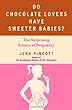
A reader sent me a link to an article about the integration of fetal cells into the mother’s body and vice versa.  The content of the article is excerpted from a book called Do Chocolate Lovers Have Sweeter Babies?: The Surprising Science of Pregnancy by Jena Pinctott, who also did the aforementioned excerpting.

Here is a portion with my emphases and comments.. I love the title of the article, which is a riff on an old scripture of the feminist movement’s canon:

Our Selves, Other Cells
By Jena Pincott at 6:00 am Tuesday, Jan 3

Living With Someone Else’s Cells

Is it any solace to sentimental mothers that their babies will always be part of them?

[…]

Of course, we nosy mothers would like to know exactly what our children’s cells are up to while they hang out in us. Are they just biding time in our bodies? Are they mother’s little helpers? Or are they baby rebels, planning an insurgency? [Is that the argument of some of the pro-abortion advocates?  That the baby is an an “invader” whom a woman has a right to fight off?]

It turns out that when fetal cells are good, they are very, very good. They may protect mothers from some forms of cancer. Fetal cells show up significantly more often in the breast tissue of women who don’t have breast cancer than in women who do (43 versus 14 percent). Why is this? Fetal cells are foreign to the mother because they contain DNA from the baby’s father. One theory is that this “otherness” stimulates the mother’s immune system just enough to help keep malignant cells in check. The more fetal cells there are in a woman’s body, the less active are autoimmune conditions such as rheumatoid arthritis and multiple sclerosis. These conditions improve during pregnancy and for some time afterward — suggesting that the mother’s immune system is more focused on attacking the “other,” not herself. There’s also tantalizing evidence that fetal cells may offer the mother increased resistance to certain diseases, thanks to the presence of the father’s immune system genes. These are new weapons in the war chest.

Some fetal cells have the potential to grow up and be anything. While many of the cells that enter the mother are immune system cells, some are stem cells. [Sounds like the only legitimate form of embryonic stem cell therapy.  I wouldn’t push that analogy, however, since therapy implies an illness.  Pregnancy is NOT an illness, which is an argument of the pro-abortion people.] Stem cells have magical properties: they can morph into other types of cells (a process called differentiation), like liver, heart, or brain cells, and become part of those organs. Fetal stem cells migrate to injury sites—for instance, they’ve been found in diseased thyroid and liver tissue and have turned themselves into thyroid and liver cells respectively. At the triage sites of wounds they accelerate healing, reducing scars after pregnancy and restoring the normal structure of the skin. It’s striking, the evidence that a fetus’s cells repair and rejuvenate moms. Of course, evolutionarily speaking, the baby has its own interests in mind. It needs a healthy mom.

Then there’s baby on the brain. This is the truly startling stuff. Researchers working with mice have found evidence that cells from the fetus can cross a mother’s brain-blood barrier and generate new neurons. If this happens in humans—and there’s reason to believe it does—then it means, in a very real sense, that our babies integrate themselves into the circuitry of our minds. Could this help explain the remarkable finding that new mothers grow new gray matter in their prefrontal cortex (goals and social control), hypothalamus (hormonal regulation), and other areas of the brain?

[…]

You can read the rest there.

Very cool stuff.

Posted in Emanations from Penumbras, Just Too Cool, Non Nobis and Te Deum, One Man & One Woman, The Drill | Tagged , , , ,
31 Comments

The Patristic angle of the new Ordinariate

Today in Houston there was a presser with Card. DiNardo of Houston-Galveston and Msgr. Steenson the Ordinary of the Personal Ordinariate of the Chair of Peter.

Both men has good Patristic credentials.

Card. DiNardo is an alumus of my school, the Patristic Institute “Augustinianum”.

Msgr. Steenson did his DPhil in Oxford in Patristics.

Posted in Brick by Brick, Just Too Cool, Patristiblogging | Tagged , , , , , ,
12 Comments

QUAERITUR: Genuflecting before a tabernacle

From a reader:

Dear Fr. Z., I am aware that the GIRM for OF Masses requires all passing in front of a tabernacle to BOW instead of genuflect, and for everyone to comport to the action of the priest during procession and recession. However, the faithful are supposed to genuflect at all other times. I notice that out of any ten able-bodied parishioners, I see maybe two or three genuflexions to 7 or 8 bows, and only two or three of those are executed in what one might construe as a reverent sense.

How long until the USCCB authorizes them to wave or flash a gang sign?

Our pastor and priests set a good example (one bows, but bows very deeply), but the implications of lex orandi lex credendi here are disturbing — what can a layman do?

Set a good example.

Continue to genuflect.

Posted in "How To..." - Practical Notes, ASK FATHER Question Box, Liturgy Science Theatre 3000, Our Catholic Identity, The Drill, The future and our choices |
39 Comments

BENEDICT XVI’S PRAYER INTENTIONS FOR JANUARY 2012

BENEDICT XVI’S PRAYER INTENTIONS FOR JANUARY 2012

VATICAN CITY, 30 DEC 2011 (VIS) – Pope Benedict’s general prayer intention for January 2012 is: “That the victims of natural disasters may receive the spiritual and material comfort they need to rebuild their lives”.

His mission intention is: “That the dedication of Christians to peace may bear witness to the name of Christ before all men and women of good will”.

Posted in Liturgy Science Theatre 3000, Our Catholic Identity, The Campus Telephone Pole |
Comments Off on BENEDICT XVI’S PRAYER INTENTIONS FOR JANUARY 2012

Alan Colmes remarks about Rick Santorum’s child; Santorum’s remarks about marriage

I watched a segment on Hannity’s show tonight (between plays) and candidate Rick Santorum was on. He explained the death of his newborn child, which became a point of – I am not making this up – mockery from liberal pundit Alan Colmes.

Karen & Rick Santorum had a baby who lived for only a couple hours. Karen, who had been a neo-natal intensive care nurse, and Rick kept the baby with them and brought their deceased child home so that their other children could know they had another sibling and so that they could all say goodbye. Then they had a proper and dignified burial. In other words, they treated their dead child with dignity as a human being and member of a family.

This is what Colmes said in a segment on Fox News in a box across from Rich Lowry.

[The embedded video was causing some problems for the page. Click HERE.]

Later, Alan Colmes called Santorum and apologized.

Apology accepted by Santorum.

Nevertheless, Colmes remarks reveal the attitude of his sort of liberal about pregnancy, birth, babies, children, (natural) sexuality, family over and opposed to the beliefs, thoughts, even feelings of those who defend the dignity of human life.

Meanwhile, I picked this up from my friend Fr. John Boyle’s blog, Caritas in Veritate. Aside from the fact that Rick Santorum is a candidate, he has great comments about marriage in this video clip. I wasn’t going to post this until after the Iowa Caucuses but, in light of the other news today about Santorum’s family, this video clip reveals something about what men ought to think about families.

It is helpful to see these videos back to back.

Have a look. You can see why a liberal such as Alan Colmes would ridicule Rick Santorum and try to label him as an extremist.

[The embedded video was causing some problems for the page. Click HERE.]

Posted in Biased Media Coverage, Emanations from Penumbras, One Man & One Woman, Our Catholic Identity, The Drill, The future and our choices, The Last Acceptable Prejudice, Throwing a Nutty | Tagged , , , , , , , ,
37 Comments

Fr. Z’s Predictions for 2012

  • Israel will attack Iran (one of these years I’ll be right about this).
  • NCR will name an old, disgruntled, liberal woman religious (or maybe a few) as person of the year.
  • H.E. Most Rev. Robert Finn will still be Bishop in Kansas-City-St. Joseph.
  • Egypt will become an Islamic Republic.
  • Benedict XVI will do something significant to support the Extraordinary Form.
  • The Pontifical Council for Migrants and Itinerant Peoples will issue a document saying that passports should no longer be required.
  • Kim Jong Un will no longer be permitted to cut his own hair.
  • Massive election fraud will confuse the vote on the pro-marriage amendment for the Constitution of Minnesota.
  • The Synod on New Evangelization will be held; then everyone will go home.
  • Women will not be ordained deacons. (Good for 2013, 2014, 2015, 2016…)
  • L’Osservatore Romano will start publishing a singles section. (They already have the funnies everyday.)
  • I will have at least one book ready for publication.
  • The Euro will tank.
  • The SSPX will not be yet reconciled.
  • Several dioceses in Ireland will be suppressed or combined.
  • Pres. Obama will not be re-elected.
  • The Cubs will not win the World Series.
  • NCR will, finally, be officially reprimanded for using the word “Catholic”.
  • Benedict will still be Pope at the end of 2012.
Posted in Lighter fare | Tagged ,
42 Comments

QUAERITUR: Priest scandalizes religious ed students by disobedience.

Another form of clerical abuse.

From a reader:

I’m a DRE with an important question. Today at Mass, a visiting priest in the diocese indicated the following during his homily:

1. He is very much opposed to the new, more accurate translation.
2. He has allowed females to preach during the liturgy (I can only
imagine he meant he’s allowed females to preach during the homily).
3. He thinks the laity are not intelligent enough to understand what
“consubstantial” & “prevenient grace” are.

That said, during the Narrative Institution & Consecration during the Liturgy of the Eucharist, the visiting priest substituted “for all” in place of “for many”. The priest was looking at the Roman Missal on the altar while he recited the words of Consecration, paused briefly before the phrase “for all” and used “for all”. It certainly seemed as if this visiting priest (who is a priest ordained in my diocese) intentionally used the phrase “for all”. I’ve understood it to be gravely illict to use any formula for Consecration other than the one printed in the translation of the Mass that has been confirmed by the Holy See and that if the degree of departure is substantial enough, the Consecration would be considered invalid. Would the intentional substitution of “for all” instead of the approved “for many” be a degree of departure substantial enough to render the Consecration invalid?

What makes this enough more offensive and scandalous is that some of my students in the religious education program were present for this Mass and were greatly confused by the priest’s homily and actions. I spent nearly all of November preparing and educating my students, who I look upon as my own children, for these new translations. Many were excited to know that we would be using a translation that was closer to the prayers our Catholic ancestors used.

Be sure to review Redemptionis Sacramentum 51 and 176 ff. RS 51 includes the line: “It is not to be tolerated that some Priests take upon themselves the right to compose their own Eucharistic Prayers”

First, the illicit substitution of the words “for all” in place of “for many” would NOT invalidate the consecration. It is, however, unquestionably a serious liturgical abuse. It is scandalous. It should be reported, first of all to the pastor of the parish, and secondly to the diocesan bishop.

If you do write to the local bishop and the pastor, do not fail to explain how disturbing this experience was for the children who had been prepared for the corrected translation.

Use the words “upset” and “children” several times in your letter.

It is unlikely that this sort of priest will be much impressed by a “stern talking-to” by the pastor, or even the bishop. However, something in writing will be added to Father’s file at the chancery where it will remain until some other day or a new bishop comes “which knows not Joseph”.

Posted in "How To..." - Practical Notes, Liturgy Science Theatre 3000 | Tagged , , ,
26 Comments

WDTPRS POLL: “Blesséd” or “Blessed”

Today is the Feast of the Holy Name.  The feast reminds me of a question I have wanted to ask in a poll.

During the Divine Praises we bless the Holy Name of Jesus.

In some context we seem to use “Blesséd” and in others “Blessed”.

Is there a grammatical difference?

Is there a difference in meaning?

If during the Divine Praises one priest says “Blest be God” and another says “Blesséd be God”, are they saying different things?  Which best translates “Benedictus Deus. Benedictum Nomen Sanctum eius. … etc.)?

What do you say or prefer?

Please choose an answer and give your reasons in the combox below.

In the Divine Praises and refering to the Eucharist I prefer/hear/say ...

View Results

Please use the “share” buttons, below.

Posted in "How To..." - Practical Notes, Liturgy Science Theatre 3000, POLLS | Tagged ,
46 Comments

QUAERITUR: Why were the candles in echelon instead of in a line?

Under another entry, a commentator asked:

Why [were] the altar candles sometimes in line (as for the Mass of 1 Jan) and sometimes in echelon (as at Christmas Midnight Mass).

I think he was asking about putting the candles at an angle.  Here is a screenshot from Midnight Mass.

I don’t know why they are that way.  Maybe a nun set them up.  It is eery how Italian nuns are incapable of putting any two or more candles in a straight line parallel to the edge of an altar.

However, there is another way in which candles can be in echelon, and this is part of the Roman style.   The candles on a Roman altar are, in at different levels.

In the front of an older Roman Missal you will see a diagram of how an altar is to be incensed.  Note that the candles are at different heights.

And here is a shot of a side altar in St. Peter’s Basilica.  You can see that the candles sticks are different heights.

In the video of the Pope’s Midnight Mass, at the very beginning there is a shot of a side altar.  You can see the candle sticks are at different levels.

In any event, I thought I would share some Roman lore for your opportune knowledge.

Posted in "How To..." - Practical Notes, ASK FATHER Question Box, Liturgy Science Theatre 3000 | Tagged ,
24 Comments

Dealing with McBrien on the new, corrected translation

From the dissident Fishwrap‘s long-time dissident columnist, Fr. Richard McBrien, comes this piece about the new, corrected translation.

Pay close attention to the contempt he shows for a vast number of people and also the attitude of disobedience he promotes.

It is not merely that he doesn’t like the new, corrected translation.  He doesn’t like the people who like the new, corrected translation.

Furthermore, note that McBrien will advocate that priests disobey lawful authority and continue to use the obsolete ICEL translation.  He advises them to impose their own will on the people in the pews.  He has advised disobedience before (click HERE).

McBrien’s suggestion is scandalous in its disrespect toward proper authority.  It also shows contempt for people in the pews, who have the right to a liturgy celebrated as the Church desires.  People have a right not to have the priest impose his pet ideas on their worship.  This is a particularly brutal form of clericalism.

The faithful are obliged to attend Mass.  McBrien would oblige people to endure the oppressive whims of a priest.

In this piece McBrien reveals his ultra-clericalist attitude.

Dealing with the new translation of the Mass
by Richard McBrien on Dec. 26, 2011

There used to be an anti-liturgical joke circulating that said that the only difference between a terrorist and a liturgist is that you can negotiate with a terrorist.  [I think there is another which involves finding yourself with two terrorists and liturgist and having only two bullets in your gun….]

By the same token, there is a seriously mistaken impression abroad that the new translation of the missal was inspired and promoted by liturgists. Nothing could be further from the truth. [I think I know what he means here, in this muddled statement.  I think he means the final product.  But is what he wrote true?  Liturgists did not “inspire and promote” the new translation?  If not, who did “inspire and promote it”?]

The great majority of liturgical scholars were opposed to the new, literal translations. [Fact check: the new translation is NOT a “literal” translation.  And note his phrasing here.  LOL!] Those who favored the changes were adherents of the so-called “reform of the reform.” [I wonder what he thinks that phrase means?]

In other words, the changes were inspired and promoted, not by liturgists, but by traditionalists in the hierarchy and a minority of ultra-conservatives within the Catholic church generally.  [Oooooo.  I guess this means that McBrien’s brand of liturgists must be incredibly feckless!  No?]

Such Catholics were never supportive of the liturgical reforms initiated by the Second Vatican Council: turning the altar around so that the priest would face the congregation during Mass, [Where is that in the documents of the Council?] receiving Holy Communion in the hand, [Where is that in the documents of the Council?]celebrating the Mass in the vernacular, [The Council said that the liturgy was to remain in Latin.]having altar girls as well as altar boys, [Where is that in the documents of the Council?]and so forth.

In the extreme, they attended Latin Masses wherever they were available. [Imagine such a thing! Members of the Latin Church going to Mass in the language the Council said Mass should be used. No. Wait. Again, McBrien is playing fast and loose with terms. I think he means the Traditional Latin Mass. “Latin Mass” can be Novus Ordo.] Their celebrants continued to wear the so-called fiddle-back chasubles and birettas. A Catholic Rip Van Winkle awakening from a long sleep beginning sometime in the 1950s would assume that nothing had changed in the meantime. [puhleez]

To be sure, the advocates of the “reform of the reform” have won only a partial victory with this new translation (for example, “I believe …” rather than the more communal “We believe …” in the Credo). [Is the writer unaware that Latin credo means “I believe”?  But, no!  Wait! “I believe” would be literal.] But the Mass is still in the vernacular; the altar is still turned around; the great majority of people receive Communion in the hand; and there are more likely to be altar girls in the sanctuary than boys. [And there won’t be any vocations from the parish.]

Such changes as these are anathema to traditionalist Catholics, who continue to receive Com-munion on the tongue (as is their right), grit their teeth when they see girls serving Mass and attend a Latin Mass from time to time. [Which is their right.]

But they are happy nonetheless to see so many of their fellow Catholics out of sorts because of the new translation of the Mass. They know that it galls Catholics for whom Pope John XXIII is a hero and Vatican II was a great event. [Is this an example of “rash judgment”? Cf. CCC 2477-78.]

I’ve heard Catholics say that their pastors, though not conservative, have praised the new translations. Either their pastors are not being honest because they don’t want to be reported to their bishop or they are deep-down right-wing in their thinking. [Again? So, McBrien, apparently a psychic who can read minds at a distance, is accusing the aforementioned pastors of being liars. Did I get that wrong?]

A retired pastor I heard prepare his congregation the week before the changes were to go into effect had the congregation practice giving the simple response, “And with your spirit.” But he said by way of introduction that the “what” of the changes he and they could handle; the “why” he would leave to the Holy Spirit. [And that is supposed to be proof of… what exactly?]

I suspect many older priests had the same reaction. Only some of the younger (or not-so-young), conservative priests, ordained during the pontificates of John Paul II and Benedict XVI, would more likely be in favor of the changes than opposed to them. [He finally got something right!]

But what good would come of outright opposition? A well-respected priest in Seattle led a movement recently to have the U.S. bishops slow down the process until all the kinks could be worked out, but that movement, though it gained thousands of supporters, fizzled and died in the end. [Again the word that pops into my mind is feckless. So many people. So little power. Maybe they were just wrong.]

The Vatican had already made up its mind, and the largely conservative U.S. hierarchy [Have you gotten his not so subtle point yet? Liberals/liturgists good… conservatives bad.] would not buck the Vatican, even if it were disposed to do so.

Some Catholics may continue to say “And also with you” rather than “And with your spirit,” or “We believe …” instead of “I believe …” in the Creed, or “one in being with the Father” instead of the highly technical and indecipherable “consubstantial,” also in the Creed. [Do you find it disconcerting that McBrien, who taught what was billed at theology at Notre Dame, finds the word “consubstantial” to be “indecipherable”? Or does he mean that it is “indecipherable” to everyone else?]

Presiders at Mass will have the most difficult time because there have been many tongue-twisting changes in the texts of the Eucharistic prayers. [Maybe they will have to slow down a little.]

Those priests who have been reciting these prayers for many years will inevitably stumble over the new wording, and those priests whose eyesight has failed them and who have memorized unchangeable parts of the Mass will continue to recite the words with which they have been long familiar. At least, that is what I would advise them if they were silly enough to ask. [Tu enim dixisti.]

This column will return to this subject a number of times in the future because it affects us all. In the meantime, I wanted to dispel a few of the most common misunderstandings about the new translations and their origin. [When will that take place?]

What happened at the beginning of Advent 2011, and the implementation of a more accurate translation, was a tiny change compared to the imposition of an artificially created, “New Order” of Mass in Advent of 1969.

Since McBrien uses his liberal psychic powers, I will use my even more powerful conservative psychic powers.

I think McBrien doesn’t like the new translation because he doesn’t like the theology of the Latin prayers, even those of the Novus Ordo, which now comes through more clearly with the new, corrected translation. Therefore he rains his atrabilious scorn down on those who respect their Catholic identity and want both what the Second Vatican Council actually asked for and also what their legitimate liturgical tradition has passed down through the centuries.

Posted in Liturgy Science Theatre 3000, Pò sì jiù, Throwing a Nutty | Tagged , , ,
89 Comments
























