Speaking of commercials, this one was GREAT. Most of them were not.
And the music is what I believe I will chose for my first entrance to my cathedral if I am ever made diocesan bishop of anywhere. Just to set the tone for the upcoming years…. ya know?
Our friends at SERVIAM have a poll going about which Super Bowl commercial lowered the standard for good, acceptable commercials, and made everyone collectively stupider and more vicious.
Sunday at Holy Innocents in Manhattan, Mass was celebrated for the Anniversary of the Dedication of the Church.
Sounds from the Mass are below.
After Mass and meeting people for coffee afterward, we dashed up to the 80’s on east side for some Hungarian food for lunch.
Sights along the way…
Ah… New York.
I had a little time so I walked over to Bryant Park, one of my favorite places in the city.
On a glorious day.
Back at church for vespers, the dedication candles were aflame.
Later, after meeting a priest friend for supper and heading back to find friends for a libation, I tuned into the game on my iPhone via Slingbox (bless its inventors).
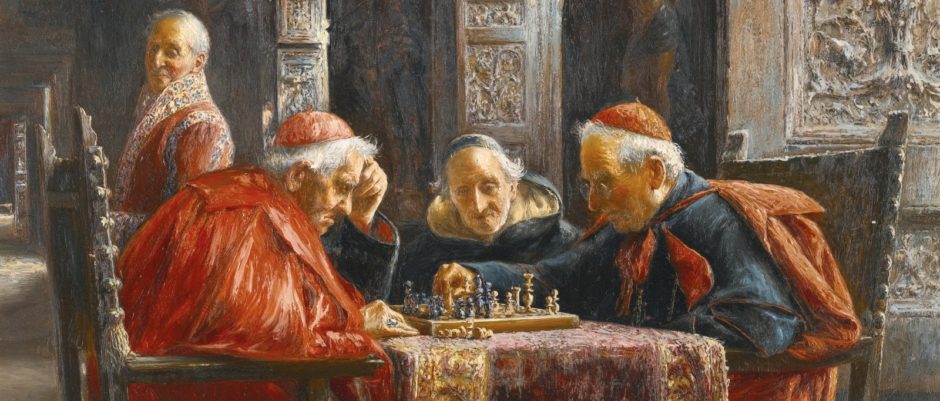
Is there any way for the celebrant of a Mass to inform other clergy that he prefer that they NOT con-celebrate with him without offending them or seeming to be ultra-conservative or rejecting the accepted practice? Con-celebration seems to be obligatory whenever clergy are invited for a celebration. Attendance in choir dress seems to be non-existent.
You have come, perhaps, to the wrong corner for advice about anything having to do with concelebration.
WDTPRS thinks that concelebration should be safe, legal and rare.
Or maybe that is why you are asking me…. hmmm…
In any event, I think it is very hard for you to say anything, especially if you …
a) are not the locum tenens,
b) have not put it about ahead of time that there will be no concelebration,
c) are in a circle where the priests rush every altar, lemming-like, in their shapeless off-white moo-moos and finger-painted stoles no matter how many Masses they have already (con)celebrated that same day, so that they can stare about in fraternity with as little attention to this Mass as any other that they have …. okay… I am ranting.
If you aren’t the pastor of the place, or the guy who calls the shots, I think you have to keep your mouth shut and permit it. Even if you are the guy in charge, you probably have to permit it. In some circumstances you have to invite it as well (funerals, for instance – it is simply expected by priests these days).
Similarly, you could, when notes are sent around about a Mass, indicate that there will be no concelebration. Instead, come in cassock and surplice with biretta (stoles to be provided for communicating priests). That ought to make some of them scratch their heads. And it won’t win friends.
I suppose you could make a little speech, if you dare, about how concelebration is not foreseen at this Mass. If any priest has not said Mass or has no other occasion, you would be happy to set up afterward and serve the Masses for the priests who otherwise would not have the opportunity. I think such a speech would be met with confused and unhappy stares.
If you are worried about keeping the rubrics tidy, without the usual interlopers milling about, you could sequester concelebrants near, but not at, the altar.
This is all quite awkward. There are good reasons to concelebrate. There are good reasons not to have it. I will not discount the reason of convenience. Plainly, if you have a whole bunch of priests in one place, it is concelebration is convenient. If you are a guest and the locum tenens isn’t inclined to help you out, well… concelebrate with a good attitude and smile.
You are going to be up against a certain mentality.
Even quite sensible priests, priests who ought to know better, have strange ideas about concelebration. They would even constrain or look down on, or even gossip about, priests who for one reason or another chose not to. I remember an occasion when I accompanied an old priest to a large Mass and he had the intention of being in choir without concelebrating. One person after another harangued him and badgered him him, trying to get him to go along with everyone else, until he finally leaned in and said into one importunate fellow’s vacant face “I’m in the state of moral sin.” That shut him up.
Anyway, this is an uphill battle
It is going to take a while to move away from the lemming-like approach to concelebration. Young priests will be taking over soon. They are more flexible and far less ideological.
To be clear, if I am with a group of priests, for example, in a fraternal setting such as an annual meeting of a priests’ group I belong to, I am okay with concelebration. Holy Thursday, most ordinations, some occasions with the local bishop or one’s own bishop, funerals of priests …
Safe, legal and rare.
Very hard to do this, friend. Very hard to say to a priest he can’t concelebrate in the Ordinary Form.
Perhaps priest readers…. priests mind you… have some suggestions. I frankly have zero interest in the opinions of lay people insofar as this question is concerned. This is priest stuff. Lay people: don’t bother commenting. Really. You can eavesdrop. That includes seminarians and deacons. Bishops and priests only. Some priests will want to defend concelebration. Okaaaaaay… if you must. Yes, we know that Eastern Catholic priests concelebrate.
I remember my father telling me when I was young that if one arrived after the Gospel at Sunday Mass, one could not receive Communion and the Sunday obligation was not fulfilled. My question has to do with daily Mass. I travel 40 miles each way to work and try to attend a 6:30 Mass before work. I am definitely not a morning person and occasionally arrive right after the priest has read the Gospel. Am I allowed to receive Communion? When that does happen I stay a few minutes after Mass and read the Gospel passage in my Magnificat publication.
Reading texts from Mass on your own is praiseworthy, but it is not the same as participating in their reading during Mass. One is a private act of devotion. The other is a liturgical action.
There were different views about limits on lateness, or presence at Mass. In one view, moral theologians thought that you had to be there at least for the reading of the Gospel onward. A good view. The Gospel is important. In another view, you had to be there from offertory onward at least under the purification of the chalice after Communion. (Let’s not focus too much on leaving Mass early and getting into a problem about fulfill one’s obligation.) This is one reason why bells were rung at the unveiling of the chalice at the offertory: that was your demarcation point between being in or out, as it were.
Others will say that you have to be there from the first words of Mass to the very end. A laudable approach, though a little inflexible. Yes, there is the Liturgy of the Word and the Liturgy of Sacrifice/Communion/etc. There is the Mass of the Catechumens and the Mass of the Faithful. But, however you divide up Mass, Mass is one. It forms a unity. So, we should be therefore the whole Mass, right? To get around the inflexibility part, some of the same people who will say you have to be therefore every breath, will tell you with the next breath that you should go to Communion anyway, even if you were late. I have me doubts about that. I’ll get to that below, after I rant for a while longer.
I am inclined to use the old chalice veil to chalice veil idea, at least insofar as “obligation” is concerned. We need to be as favorable towards people as we can when it comes to any obligations that are imposed on them. The veil to veil approach seems reasonable and clear cut.
At the same time, when it comes to our involvement in liturgical worship I am not comfortable with the minimalist approach.
In one sense, it is enough the have the priest say the minimum amount of the form of the consecration over bread and wine and then consume it. Sure, that is “valid”. It is “enough”. But enough isn’t enough. Sure, you can look at Mass from the point of view of being there for enough of it, and that is useful for being able to be clear or at ease about your obligations. The law helps us relax.
The obligation thing and the Church’s law are important. People should be able to rest easy about their obligations. Take, for example, a penitent and his penance assigned in confession. Some dreamy and pastorally sensitive priests who want to make confession spontaneous and chummy and nice will give as a penance – such a harsh word – something like “Think a nice thought someone today!” or “Do a good deed.”. Sorry, but when I get out of the confessional I wanted a penance I can perform and then know that I have done it and not have to wonder even for a spit second whether I did it or not.
The same goes for Mass attendance and obligation. Did you fulfill it? Yes or no? The demarcation lines and “minimum time there” approach have the benefit of answering that question, though they may leave some deeper questions about our role at Mass unresolved.
So, if you are late for Mass through no fault of your own, and there is no other way to fulfill your Sunday or Holy Day obligation, you have nevertheless done your best. If you late through your own fault, that is another matter.
I am going to go with an old traditional way of seeing this: chalice veil to chalice veil. Despite the indisputable importance of the Gospel and the rest of Mass, that’s where I will draw the line because when we have a restriction, we have to restrict our restrictions to the minimum.
Communion?
Reception of Communion is not the mark of having fulfilled your Mass obligation. You are still obliged to go to Sunday Mass even if you know you cannot receive Communion. Communion is not the same as getting your parking ticket validated at the restaurant. Communion is more complicated and more simple.
No one has a gun to your head saying that you must receive Communion at every Mass you go to, even when you are in the state of grace. You can go… or not go.
Here is my simple answer to whether you can go to Communion.
If you are not sure you have been there at Mass “enough”, and you will have a sense of when that is, then don’t go to Communion. Don’t make excuses for yourself and introduce doubts about whether you should have gone or not. Don’t go and you won’t wonder about whether you have to go to confession about unworthy reception. Keep it simple. The next time, get to Mass on time and go without having to weigh the odds.
I direct your attention to the Holy Father’s Letter to Catholics in Ireland. Last year Pope Benedict suggested to the Irish people that they give special attention to traditional forms of piety, prayer and penance.
Now we read that a group of Irish priests have issued a sustained whine about the new, corrected English translation of the Roman Missal.
Irish priests claim new Mass translation is ‘elitist and sexist’
By Sarah MacDonald
A group representing more than 400 of Ireland’s 4,500 priests has made an urgent plea to the country’s bishops to postpone the introduction of the new English translation of the Missal for at least another five years.
The call from the Association of Catholic Priests came as the National Centre for Liturgy in Maynooth launched a new publication aimed at explaining and preparing priests and lay people for the changes in the Missal. The new texts will be introduced on November 27, the first Sunday of Advent and the start of the liturgical year.
At a news conference in Dublin, representatives from the priests’ group said the proposed literal translations from Latin had produced texts that were “archaic, elitist and obscure and not in keeping with the natural rhythm, cadence and syntax of the English language”.
The association also criticised the new translation for “exclusivist, sexist language”. [Hmmm. I they actually used those words, then it is fairly safe to conclude that they are of a certain age and are not inclined to favor anything Pope Benedict proposes. Break out the tambourines and big-hair perms.]
Fr Dermot Lane, president of Mater Dei Institute of Education in Dublin, said the priests were making an 11th hour appeal to the Irish Catholic Bishops’ Conference and urged the bishops to begin consulting with priests, liturgical committees and lay people to develop new texts that would inspire and encourage the faithful.
“We are passionately concerned about the quality of our liturgical celebration and about the quality of the language that will be used in the way we worship Sunday after Sunday,” he said. “If this goes ahead, instead of drawing people into the liturgy, it will in fact draw people out from the liturgy.” [Rubbish. No one knows that. It will be the attitude of the priests as they implement this new translation that will make the difference. If these priests have problems with their flocks “because of the new translation”, it will because that is they they wanted it to turn out.]
The association said that it was “gravely concerned” that the “word-for-word translation from Latin into a vernacular language … demonstrates a lack of awareness of the insights gained from linguistics and anthropology during the past 100 years”. [It isn’t a “word for word” translation for one thing. I would like to quiz the priests who put their names to this thing and find out how many of them actually looked at prayers in the new translation. Any prayers. I am not even talking about comparing them side by side with the Latin. How many actually read the texts? I’ll wager very few. They are parroting the dissent of their pack-leaders.]
[…]
[Get this…] The priests’ association suggested that the Irish bishops follow the example of the German bishops and assert the right to make their own decisions regarding the celebration of the liturgy in Ireland. [There it is.]
Fr Gerard Alwill, pastor of a rural parish in the Diocese of Kilmore, said during the news conference: “We are saying very clearly that this new translation of the Missal is not acceptable… We are deeply concerned that if these new texts are imposed, they could create chaos in our church. [Sorry, but… who is creating the chaos?] Our Church doesn’t need chaos at this time. [I suggest to Fr. Alwill that his time would be better spent in reflection on the Holy Father’s Letter to Catholics in Ireland.]
“How can we, the priests, be asked to introduce this with any conviction when we ourselves haven’t had any input into it and when we have such serious doubts and reservations about it?” he added. [Interesting attitude: If I didn’t get to make it, I don’t want it. Ordained in the, say, 70’s?]
Fr Alwill called upon priests, parish pastoral councils, religious men and women and lay people to read the texts[there’s a start] and to raise any concerns they may have with their local bishop. [To what end? At this point all they are doing is fomenting discontent. Cui bono?]
This Sunday, 6 February at 10 AM, the Church of the Holy Innocents celebrates the 110th anniversary of its consecration by Archbishop Michael Corrigan in 1901.
A special Mass is celebrated for the Anniversary of the Consecration of a Church, the Mass Terribilis est, in white or gold vestments (not the green vestments that would otherwise be worn at Mass for the 5th Sunday after Epiphany).
Vespers for the Consecration of a Church will follow at 3PM. There will be Exposition and Benediction of the Blessed Sacrament.
Anyone who attends the Mass or Vespers at the Church of the Holy Innocents on the day when the anniversary of its consecration is celebrated may earn a plenary indulgence under the usual conditions.
Yesterday I followed some inclinations and did some spontaneous things. Am I glad I did. Thursday 3 February was a memorable day.
I mentioned in another post that yesterday I felt compelled by a Strong Inner Voice to visit the Met Museum of Art.
I finished my weekly article for the The Wanderer and sent it in (it was about the short doxology during the Novus Ordo which is known as the end of the Lord’s Prayer as Protestants pray it… I drilled into the history of that little prayer and commented on what I thought about it being in a Catholic Mass).
After lunch and getting my office done for the day, I went.
Rejoice with me, for I have tidings of great joy.
I now have the coveted yellow Met button.
You know these buttons. The button nazis check them before you enter museum galleries which have obligatory voluntary donations.
“But Father! But Father!”, you may be saying. “Might I just observe… ‘big deal!’?
Big for me. In my last visits I was always getting reds or greens. Yellow was the only color Met button I didn’t yet have.
It’s the little things in life sometimes.
In any event, there was A Big Thing at the Met.
The Strong Inner Voice drove me there also to see some works that have returned to the Met. The Vermeers are back, and some new/old rooms are re/opened!
Among the new/old things on display is a newly restored Madonna and Child by Filippino Lippi.
Oh my.
The startling ultramarine – a pigment made from lapis lazuli and more than gold – sucks the oxygen from your lungs as the painting comes into view.
Baby Jesus is crinkling the page of a book, much as babies will.
The pomegranate is a common symbol in Italian renaissance painting and in other art forms as well. Inspired by Greek mythology and the story of Proserpina, the pomegranate became a Christian symbol of Christ’s Passion and Resurrection.
The Virgin. What can one say about this?
Filippino Lippi was the son of Fra Filippo Lippi. You can see in Filippino’s painting some influence of Botticelli, whose student he was.
Lippi is from Latin lippus. Lippus is an adjective meaning “runny-eyed”. In ancient Rome it seems as if everyone and his brother had eye-infections and their eyes ran all the time. As a matter of fact the only place I have ever had eye infections is in Rome. In classical Latin you will find the equivalent of the English adage that something is known “to every Tom, Dick and Harry”, that is everyone. In Latin something known to everyone is know lippis et tonsoribus… runny-eyed people and barbers. If memory serves Horace quotes that.
These afternoon pleasures would have made this a wonderful day on their own.
Then I had the privilege of saying Mass and blessing throats for St. Blaise.
But wait! There’s more!
After Mass on a spur of the moment decision, I went with a friend to Trinity Church downtown at Wall and Broadway to look for treasure. It was once done in the talkies, I believe.
There was a concert to be had of music of the “Sarum Use”, that is, English composers who wrote music for use in that fascinating Latin Rite use that effectively died out.
I walked away from this concert with my head on fire and chest in pain. The music was so beautiful that at times it simply hurt.
One of my thoughts as I sat there – overwhelmed – was that this was the perfect argument anyone would need for why a musical instrument would never be needed in a church.
The video of the this concert of Sarum music, I find, is on the website of Trinity Church! Here.
Listen to one of the most beautiful pieces of music I have ever heard, a Salve Regina by Robert Wylkinson (+1515), that I had never heard before. It is from the Eton Choirbook. The beginning Salve was amazing. (Minute 19:30 in the embedded video, below.) It is about 15 minutes long. The O clemens and O Pia … if you don’t choke up, you are not human. Some extra text is added.
Salve regina, mater misericordiae,
Vita, dulcedo et spes nostra, salve.
Ad te clamamus, exules filii Evae.
Ad te suspiramus, gementes et flentes
In hac lacrimarum valle. Eia ergo,
advocata nostra, illos tuos misericordes
oculos ad nos converte; Et Jesum,
benedictum fructum ventris tui,
Nobis post hoc exsilium ostende.
Virgo mater ecclesiae,
Aeterna porta gloriae,
Esto nobis refugium
Apud Patrem et Filium.
O Clemens!
Virgo clemens, virgo pia,
Virgo dulcis o Maria,
Exaudi preces omnium
Ad te pie clamantium.
O pia!
Funde preces tuo nato,
Cruxifixo, vulnerato,
Et pro nobis flagellato,
Spinis puncto, felle potato.
O dulcis Maria, salve!
It is scored for 9 voices… for the 9 angelic choirs.
Can some readers take a shot at the Latin that was integrated into this common prayer? It isn’t hard, but it is beautiful.
And you don’t want to miss the fascinating Apostles’ Creed by Wylkinson at the beginning of the second half of the concert. (Go to minute 54:00). There is an introduction explaining the 13 part canon. (You catch a glimpse of the undersigned at about minute 56:19 and again – completely delighted – at about 58:50. The camera pans around the church because the choir is stretched up the side and center aisles around the church.)
NOTE: Some of the singers from this group should be singing at Holy Innocents on Sunday for the church’s dedication feast.
I will try to embed this:
For a special treat listen to Robert Parson’s Magnificat beginning at 68:50. The trebles are… astonishing.
What a day. I learned so much and my views shifted enormously on a whole range of issues.
Yesterday I felt compelled by a Strong Inner Voice to visit the Metropolitan Museum of Art.
Some old/news stuff is back, btw. More on that elsewhere.
In any event, I enjoyed this little moment.
Manuel Osorio Manrique de Zuñiga painted by Goya, in turn being painted by this young lady.
The painting itself.
Manuelito is splendid in his little red suit.
I thank my lucky stars everyday that I didn’t grow up in an age when kids were dressed like that.
The ominous cats are very interested in the pet magpie, which is walking about with Goya’s calling card in its beak.
There is a cage full of finches. These are the usual European finches which don their “Christological” guise in some paintings, usually of Madonna and Child. Here they are in a less than Christological setting.
Please remember me when shopping online. Your use of my Amazon affiliate link is a major part of my income. It helps to pay for insurance, groceries, everything. Thanks in advance.
“This blog is like a fusion of the Baroque ‘salon’ with its well-tuned harpsichord around which polite society gathered for entertainment and edification and, on the other hand, a Wild West “saloon” with its out-of-tune piano and swinging doors, where everyone has a gun and something to say. Nevertheless, we try to point our discussions back to what it is to be Catholic in this increasingly difficult age, to love God, and how to get to heaven.” – Fr. Z
The most evident mark of God’s anger and the most terrible castigation He can inflict upon the world are manifested when He permits His people to fall into the hands of clerics who are priests more in name than in deed, priests who practice the cruelty of ravening wolves rather than the charity and affection of devoted shepherds.
Federated Computer… your safe and private alternative to big biz corporations that hate us while taking our money and mining our data. Have an online presence large or small? Catholic DIOCESE? Cottage industry? See what Federated has to offer. Save money and gain peace of mind.
“Until the Lord be pleased to settle, through the instrumentality of the princes of the Church and the lawful ministers of His justice, the trouble aroused by the pride of a few and the ignorance of some others, let us with the help of God endeavor with calm and humble patience to render love for hatred, to avoid disputes with the silly, to keep to the truth and not fight with the weapons of falsehood, and to beg of God at all times that in all our thoughts and desires, in all our words and actions, He may hold the first place who calls Himself the origin of all things.”
Everyone, work to get this into your parish bulletins and diocesan papers.
Your support is important. Thanks in advance.
To donate monthly I prefer Zelle because it doesn't extract fees. Use
frz AT wdtprs DOT com
Donate using VENMO
GREAT BEER from Traditional Benedictine Monks in Italy
Good coffee and tea. Help monks.
CLICK and say your daily offerings!
A Daily Prayer for Priests
I use this when I travel both in these USA and abroad. Very useful. Fast enough for Zoom. I connect my DMR (ham radio) through it. If you use my link, they give me more data. A GREAT back up.
Help support Fr. Z’s Gospel of Life work at no cost to you. Do you need a Real Estate Agent? Calling these people is the FIRST thing you should do!
They find you a pro-life agent in your area who commits to giving a portion of the fee to a pro-life group!
Don’t rely on popes, bishops and priests.
“He [Satan] will set up a counter-Church which will be the ape of the Church because, he the devil, is the ape of God. It will have all the notes and characteristics of the Church, but in reverse and emptied of its divine content. It will be a mystical body of the anti-Christ that will in all externals resemble the mystical body of Christ. In desperate need for God, whom he nevertheless refuses to adore, modern man in his loneliness and frustration will hunger more and more for membership in a community that will give him enlargement of purpose, but at the cost of losing himself in some vague collectivity.”
“Who is going to save our Church? Not our bishops, not our priests and religious. It is up to you, the people. You have the minds, the eyes, and the ears to save the Church. Your mission is to see that your priests act like priests, your bishops act like bishops.”
“The modern habit of doing ceremonial things unceremoniously is no proof of humility; rather it proves the offender's inability to forget himself in the rite, and his readiness to spoil for every one else the proper pleasure of ritual.”
- C.S. Lewis
This blog has to earn its keep!
PLEASE subscribe via PayPal if it is useful. Zelle and Wise are better, but PayPal is convenient.
A monthly subscription donation means I have steady income I can plan on. I put you my list of benefactors for whom I pray and for whom I often say Holy Mass.
In view of the rapidly changing challenges I now face, I would like to add more $10/month subscribers. Will you please help?
For a one time donation...
To donate monthly I prefer Zelle because it doesn't extract fees. Use
frz AT wdtprs DOT com
As for Latin…
"But if, in any layman who is indeed imbued with literature, ignorance of the Latin language, which we can truly call the 'catholic' language, indicates a certain sluggishness in his love toward the Church, how much more fitting it is that each and every cleric should be adequately practiced and skilled in that language!" - Pius XI
"Let us realize that this remark of Cicero (Brutus 37, 140) can be in a certain way referred to [young lay people]: 'It is not so much a matter of distinction to know Latin as it is disgraceful not to know it.'" - St. John Paul II
Grant unto thy Church, we beseech Thee, O merciful God, that She, being gathered together by the Holy Ghost, may be in no wise troubled by attack from her foes. O God, who by sin art offended and by penance pacified, mercifully regard the prayers of Thy people making supplication unto Thee,and turn away the scourges of Thine anger which we deserve for our sins. Almighty and Everlasting God, in whose Hand are the power and the government of every realm: look down upon and help the Christian people that the heathen nations who trust in the fierceness of their own might may be crushed by the power of thine Arm. Through our Lord Jesus Christ, Thy Son, who liveth and reigneth with Thee in the unity of the Holy Ghost, God, world without end. R. Amen.


 From a reader:
 I suppose you could make a little speech, if you dare, about how concelebration is not foreseen at this Mass. If any priest has not said Mass or has no other occasion, you would be happy to set up afterward and serve the Masses for the priests who otherwise would not have the opportunity. I think such a speech would be met with confused and unhappy stares.
 Anyway, this is an uphill battle































