This is very cool.
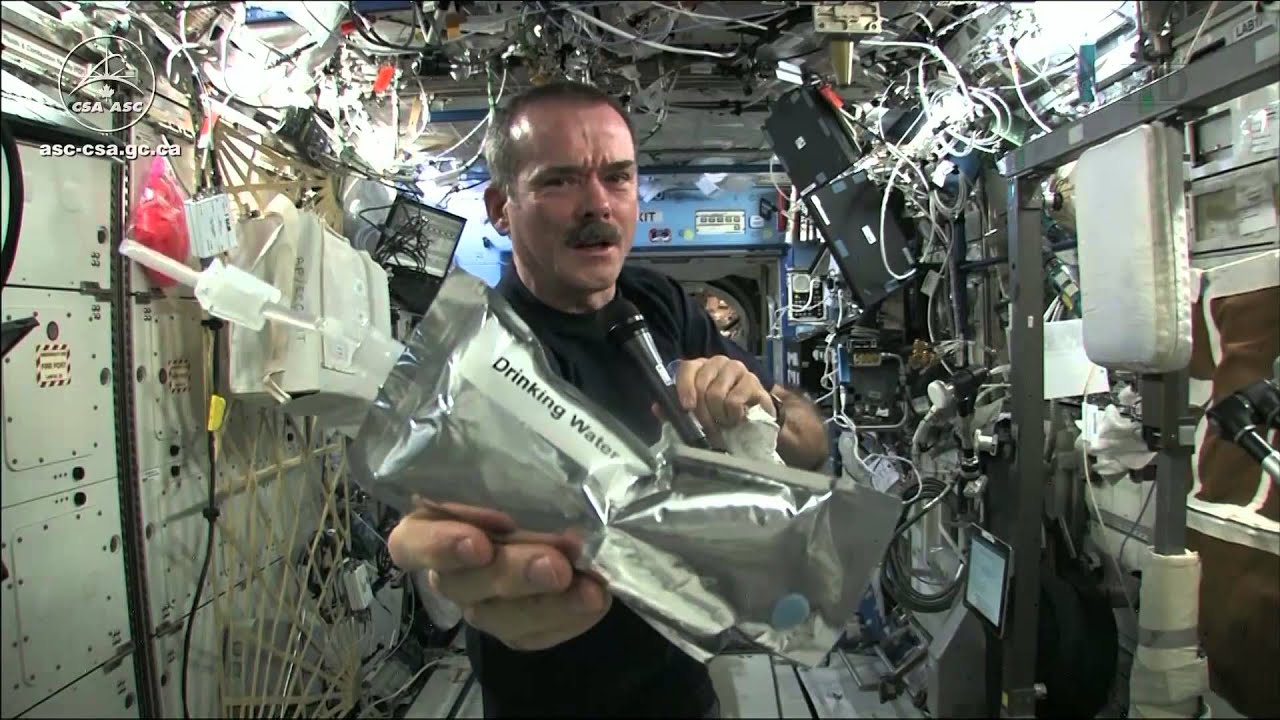

I may have to get out my Yaesu radio later on and see if I can pick up the ISS during a fly over.

This is very cool.
I may have to get out my Yaesu radio later on and see if I can pick up the ISS during a fly over.
I generally like one question at a time, but this was so… bizzare that it needs more attention.
From a reader:
This weekend, Father was having a series of talks during his Masses which spanned about fifteen minutes, and so he was late for one at another Church.
The parish sister started the Mass with the full (including greeting) introductory rites and Liturgy of the Word.
Father arrived at the offertory and then Mass continued as normal.
This is a common, though not weekly, practice. [?!?]
1) Is it still Mass?
2) Does it satisfy the obligation of the faithful (and myself) to attend Sunday Mass?
3) Is Our Lord still rendered present in the Blessed Sacrament?
4) If so, does this mean priests can just walk around saying the words of consecration with the right intention and confect the Sacrament?
Just when you think it can’t get stranger. If this happens often, I would inform the diocesan bishop and/or the Congregation for Divine Worship in Rome.
1. It does not seem to be a Mass. Mass is the entirety of the ceremony.
Could we hack away and say, “If the priest simply forgot the sign of the cross at the beginning would it still be a Mass? If he forgot the sign of the cross AND the penitential rite, would it still be a Mass?” Sure, it would be. In the case above, however, it’s clear that what happened was not a Mass.
2. It would not fulfill anyone’s obligation (including the priest’s obligation to offer Mass – if there was a stipend accepted, or if this was a pro populo Mass). The faithful who attended this inadvertently would not be culpable for not fulfilling their obligation. Objectively however, this did not fulfill their obligation.
3. Yes, Our Lord is present in the Sacrament confected.
However.. and this is a big however….
The priest, however, is guilty of a major crime, a crime so bad that canon law uses the Latin word “nefas“, rarely encountered in the law (canon 927).
It is absolutely forbidden to consecrate one matter without the other or even both outside the Eucharistic celebration.
4. Possibly, though to do so would be an abuse so great that one one could call into question either Father’s sanity (were he totally insane, the sacrament would probably not be confected) or his real intention to do what the Church intends.
Reason #675663 for Summorum Pontificum.
From a reader:
I’ve tried to get an imprimatur from my Bishop several times but I haven’t received a response. I am publishing a devotional with reflections on the Old Testament. Is it sinful for me to publish it without an imprimatur?
Canon 826, §3 says pretty clearly that books of prayer “for the public or private use of the faithful are not to be published without permission of the local ordinary.” It does not introduce the concept of sin in doing so, but the prohibition is strong.
The lack of a response from the bishop may be disappointing, but there may be good reasons for it. In a larger diocese, the bishop may have delegated the task of reviewing books and other items to a priest or a theologian. The task of granting permission may have been given to the Vicar General or an Episcopal Vicar (who are also local ordinaries).
I suggest submitting the book again, but to the Vicar General. Otherwise, call the chancery office and ask who who reviews religious books for publication.
Another approach would be to entrust the publication of the book to a Catholic publishing company. Ask them to work through their normal channels for ecclesiastical approval.
 From a reader:
Father if the Boston bomber was catholic could the church refuse to give him a funeral or burial in catholic cemetary under cannon law?
To the first question: Yes, the Church could refuse him a funeral.
We read in the Latin Code:
canon 1184: §1 “Unless they gave some signs of repentance before death, the following must be deprived of ecclesiastical funerals:
1° notorious apostates, heretics, and schismatics;
2° those who chose the cremation of their bodies for reasons contrary to Christian faith;
3° other manifest sinners who cannot be granted ecclesiastical funerals without public scandal of the faithful.
§2 If any doubt occurs, the local ordinary is to be consulted, and his judgment must be followed.
As far as denying them burial in a Catholic cemetery, there is no provision for this in universal law.
There may be particular law of a diocese that governs the discipline to be observed in cemeteries (canon 1243). The reason for this is that the Church recognizes that there may be civil laws which need to be respected (c. 22).
For example, civil laws may state that if a person (your theoretical Catholic terrorist) had purchased a cemetery plot in advance, his body may not be prevented from occupying it after his demise, regardless the circumstances.
In such a case, it should be buried without Catholic ceremony.
We should, of course, pray for God’s mercy for such people, as well as for His justice.
Some readers are sending email saying that they are having a hard time with this blog’s registration form.
I had to turn up the security option to “paranoid” mode to keep out spammers.
Also, it may be that your browser may have an ad block plugin that doesn’t like the registration form. I suggest you set your ad block plugin to accept the whole wdtprs.com domain.
Sorry about the trouble you are having. I am still getting successful registrations, so I know the form is working.
If there are problems with registration or with accessing the blog, send me your IP address so that I can “whitelist” it in my anti-spammer software.
POLL BELOW
The Holy Father is, as I type, at Santa Maria Maggiore for recitation of the Most Holy Rosary.
Do you say the Rosary?
Some shots from the live feed.


In Italy it is customary to end the Rosary with recitation of the Litany of Loreto.
Some will prefer that Francis use a stole or a cope. But in the past Popes have some times used them, sometimes not.


Now for the poll. Anyone can use the poll, but only those who have registered (and whom I have approved) can comment. I cannot tell who you are or how individuals “vote”.
The present Coffee of the Month offered by the Wyoming Carmelites is perfect for those of you who desire triumphalistic liturgy.

Isn’t it time to refresh your coffee supply?
(That’s a trick question. The answer is YES!)
And for you liberals out there… it’s organic and “fair trade” coffee!
They have TEA. They have K-Cups, delightfully called Monk Shots. You readers have given them good reviews.
You can subscribe to their coffee.
And just because this has to do with Mexico and things Catholic, have you seen…

From a reader:
I need some repairs doing on my house. We found a man who seemed competent and honest, and his price is good. Unfortunately, I noticed he was wearing a masonic ring (a pentagram I think). Should I hire somebody who is almost certainly a Freemason to do work on my house?
The fact that he takes it seriously enough to wear a ring gives me pause; but on the other hand (pun not intended), I know Masons are not all wicked individuals.
Yes, it is okay to hire a mason to work on your house. And I am not talking about your brickwork.
I can’t tell what continent you are on, but most masons in the USA are masons in the same way that some men are members of Rotary or subscribers to Sports Illustrated.
That said, when the work is done on the house, have your house blessed, room to room, thoroughly. I suggest this not because of the mason in himself but because everyone should have their houses blessed.
A while back some proponents of women’s ordination got all excited because a German archbishop said that, during a meeting of their conference, the topic of deaconesses came up.
Now a real theologian chimes in.
From CNA:
Theologian dismisses call for women ‘deacons’
By Estefania Aguirre and Carl BundersonBern, Switzerland, May 3, 2013 / 02:02 am (CNA).- Theologian Father Manfred Hauke said recent comments from a German archbishop appearing to support a particular diaconate for women are confusing to Catholics and others.
“Allowing women to be deacons would create great confusion for the faithful,” Fr. Hauke, a professor of patristics and dogmatics at the Theological Faculty of Lugano, told CNA April 30.
“You would have to explain to them the difference between male and female deacons,” he pointed out.
Female “deacons” would not be ordained to the sacrament of Holy Orders, and calling them deacons would be “ambiguous,” Fr. Hauke said. Women could “receive a benediction for services of charity” but not ordination, he clarified. [As in ancient times.]
At the conclusion of a diocesan conference on possible Church reforms last week, Archbishop Robert Zollitsch of Freiburg im Breisgau discussed the possibility of “a specific office of deacon for women.”
This “specific,” or “particular” office of deacon for women was an example of how the Church might “promote the use of new Church ministries and positions, open also to women.”
Archbishop Zollitsch went on to speak of the importance of leadership roles for women, and had earlier talked of the importance of being a more strongly charismatic-oriented Church and the strengthening of the “common priesthood of all the baptized.”
He believes the Church needs to commit to reform in order to regain credibility and strength.
Fr. Hauke said that Archbishop Zollitsch, who was ordained a priest in 1965, has made some confusing remarks on previous occasions and that he probably “got his idea” to introduce a “specific office of deacon for women” from fellow German Cardinal Walter Kasper. [The gift that keeps on giving.]
However, Cardinal Kasper, president emeritus of the Pontifical Council for Promoting Christian Unity, had clearly distinguished between a service ministry for women and the sacramental ordination of men as deacons. [Even Kasper doesn’t get this one wrong.]
Fr. Hauke said that that most people who advocate for women deacons “ultimately want women in the priesthood.”
The Code of Canon Law makes clear that ordination, including to the diaconate, is validly received only by “a baptized male,” and John Paul II’s 1994 apostolic letter “Ordinatio sacerdotalis” teaches definitevly that only men may be ordained priests.
On May 29, 2008, the Congregation for the Doctrine of the Faith decreed that whoever “shall have attempted to confer holy orders on a woman” – including necessarily the diaconate – “as well as the woman who may have attempted to receive holy orders, incurs a latae sententiae excommunication.”
Fr. Hauke noted that in 2003, the International Theological Commission “published a document with evidence that we have no historical basis for the sacramental diaconate being bestowed on women.” [Pay attention to that little word “no”, as in “NO”.]
And in September 2001, the prefects of the Congregations for the Doctrine of the Faith (Joseph Ratzinger, now Pope emeritus Benedict), of Divine Worship, and of Clerics prepared a document, which was approved by John Paul II. It affirmed that “it is not licit to put in place initiatives which in some way aim to prepare female candidates for diaconal ordination,” according to the Italian paper La Stampa.
Bishop Rudolf Voderholzer of Regensburg has said he can appreciate Archbishop Zollitsch’s call for a greater role for women in the Church, but that the sacramental diaconate cannot be received by females.
He was quick to distance himself from Archbishop Zollitsch’s remarks, and said that a non-sacramental female diaconate would not satisfy the desire for a greater leadership role by women in the Church. [That is because most of those who push for female deacons won’t be satisfied until the Pope marries her lesbian partner.]
Bishop Voderholzer pointed out that abbesses, general superiors, and school principals all generally have more influence than deacons.
“The sacramental diaconate – like the priesthood and episcopacy – is inextricably a sacrament, which according to the bible-based Tradition of the Church – even the Eastern Churches – is reserved to men,” he stated April 28.
Some have called for the ordination of women deacons by noting ancient documents referring to “deaconesses,” including a letter of Saint Paul.
Fr. Hauke [a real theologian] responded that in such instances, the “deaconesses” “cannot be identified as really deacons.”
The word ‘deacon’ comes from a Greek word which simply meant ‘servant,’ and so early references to “deaconesses” signify women in roles of service in the Church.
In the early Church, which more frequently practiced baptism by immersion, such “deaconesses” assisted in the baptism of females for the sake of modesty.
These deaconesses were servants of the Church but were not sacramental deacons, as there is no mention of a bishop laying hands on them in an act of ordination.

Click!
From a reader:
After the Gospel, one of our priests pronounces the acclamation by saying “The Gospel, the good news, of the Lord.” It has been quite distracting for me personally when he does this because it is not the norm. I have spoken to others and they have expressed the same sort of distraction. The insertion appears redundant. I am going through qualms about addressing this directly to the priest. Is it appropriate to add the insertion? Perhaps I am over reacting?
Perhaps he thinks you are not very smart? Does he think he has the authority to change the texts of Mass?
Sometimes clerics slip and do something odd. But if he is doing it week in and week out, then it is a choice.
After the Gospel the deacon or priest or bishop is to say, in English, “The Gospel of the Lord.” There is no indication in the rubrics that the cleric may say anything else.
Why is that hard?
That would, over time, be annoying.
Are you over-reacting? I have no idea.
I would like to assume that everything else that is done is according to the book, that it is this priest alone and in this moment only that the texts are fudged. If that is the case, then perhaps you can let it slide as you prepare to listen to Father’s no doubt edifying sermon.


Coat of Arms by D Burkart









A Daily Prayer for Priests


They find you a pro-life agent in your area who commits to giving a portion of the fee to a pro-life group!

PLEASE subscribe via PayPal if it is useful. Zelle and Wise are better, but PayPal is convenient.
A monthly subscription donation means I have steady income I can plan on. I put you my list of benefactors for whom I pray and for whom I often say Holy Mass.
In view of the rapidly changing challenges I now face, I would like to add more $10/month subscribers. Will you please help?
For a one time donation...



Help Monks in Wyoming (coffee – UPDATED LINK) and Norcia (beer) and the wonderful "Soap Sisters" of Summit, NJ!


Please follow me on Twitter!










Visits tracked by Statcounter
since Sat., 25 Nov. 2006:

