I am thinking about those red shoes.

I am thinking about the infamous red shoes.  I am thinking about the non-wearing of the mozzetta.  I am thinking about the growing juxtaposition in some conversations of simple liturgy versus lofty liturgy.

Some people are saying, “O how wonderful it is to get rid of all the symbols of office and power and be humble like the poor.”

When I first learned to say the older form of the Mass of the Roman Rite, that is to say, when I first learned how to say Mass, because there has never been a single of day of my priesthood when I couldn’t say it, I admit that I was deeply uncomfortable with some of the gestures prescribed by the rubrics.  I even resisted them.  For example, the kissing of the objects to be given to the priest, and the priest and the kissing of the priest’s hands… that gave me the willies.

I resisted those solita oscula because I had fallen into the trap of thinking that they made me look too important.

The fact is that none of those gestures were about me at all.  They are about the priest insofar as he is alter Christus, not insofar as he is “John”.  For “John” all of that would be ridiculous.  For Father, alter Christus, saying Mass, it is barely enough.

When you see the deacon and subdeacon in the older form of Holy Mass holding, for example, the edges of the priest’s cope when they are in procession, or when you see them kissing the priest’s hand, or bowing to him, or waiting on him or deferring to him or – what in non-Catholic eyes appears to be something like adoration or emperor worship – you are actually seeing them preparing the priest for his sacrificial slaughter on the altar of Golgotha.

It is the most natural thing in the human experience to treat with loving reverence the sacrifice to be offered to God.  The sacrificial lambs were pampered and given the very best care, right up to the moment when the knife sliced their necks.

The Catholic priest is simultaneously the victim offered on the altar.  All the older, traditional ceremonies of the Roman Rite underscore this foundational dimension of the Mass. If we don’t see that relationship of priest, altar, and victim in every Holy Mass, then the way Mass has been celebrated has failed.  If we don’t look for that relationship, then we are not really Catholic.  Mass is Calvary.

The use of beautiful marble in the church building, precious fabrics and metals for vestments and vessels, music that requires true art and skill to perform, ritual gestures which to worldly eyes seem to be the stuff of bygone eras of royals and the like, all underscore the fact that step by step during Holy Mass the priest is being readied for the sacrifice, which – mysteriously – he himself performs.

Back when I resisted the liturgical kissing of my hand when being handed a chain, spoon or chalice, I had made the mistake of imagining myself to be more humble by that resistance.  That was a mistake.  Ironically, my resistance to those gestures turned the gestures into being about me.  Submission to the gestures, on the other hand, erases the priest’s own person and helps him to be what he needs to be in that moment: priest, victim, alter Christus.   The trappings, the rubrics, the gestures erase the priest’s poor person.  Resisting these things runs the risk of making them all about the priest again.

In a sense, I had made the objection of Judas about the precious nard which the woman brought to the Lord.  Jesus responded that the precious stuff should be kept for His Body, which was to be sacrificed.  People who object that we should have only poor liturgy are falling into the argument of Judas.  We must submit to the precious and sublime in recognition of the truth of what is going on.   To pit the sublime and complex and precious and beautiful against the low, simple and humble is schizophrenic and not Catholic.

There is no real conflict of the humble and the sublime in liturgical worship.

Posted in Liturgy Science Theatre 3000, Our Catholic Identity, SESSIUNCULA, The Drill | Tagged , , , ,
218 Comments

What Did St. Francis Really Say? – 3

Now that we have a Pope named Francis, and all sorts of people are making references to St. Francis of Assisi in an attempt to pigeonhole this new Pope, we should consider who Francis of Assisi really was, what he did and said.  He wasn’t the bunny-hugging bird kisser that people think he was from their viewings of garden statues and Brother Sun, Sister Moon.  (Remember that?)

St. Francis of Assisi, some think, was a medieval peacenik.  However, Francis went to the Egypt and confronted Sultan al-Kamil, a nephew of Saladin. Here is the account of his words from “Verba fratris Illuminati socii b. Francisci ad partes Orientis et in conspectu Soldani Aegypti“, Codex Vaticanus Ott.lat.n.552:

The same sultan submitted this problem to him: “Your Lord taught in his gospels that evil must not be repaid with evil, that you should not refuse your cloak to anyone who wants to take your tunic, etc. (Mt 5,40): All the more Christians should not invade our land!”. And Blessed Francis answered: “It seems to me that you have not read the gospel of our Lord Jesus Christ in its entirety. In fact it says elsewhere: “if your eye causes you sin, tear it out and throw it away” (Mt 5 , 29). With this, Jesus wanted to teach us that if any person, even a friend or a relative of ours, and even if he is dear to us as the apple of our eye, we should be willing to repulse him, to weed him out if he sought to take us away from the faith and love of our God. This is precisely why Christians are acting according to justice when they invade the lands you inhabit and fight against you, for you blaspheme the name of Christ and strive to turn away from his worship as many people as you can. But if you were to recognize, confess, and worship the Creator and Redeemer, Christians would love you as themselves instead”.”

Think of this the next time you are called upon to sing that ditty that starts with: “Make me a channel of your peace”.  From the fine Francis of Assisi: A New Biography by Augustine Thompson.

“Peace Prayer of Saint Francis”—a popular hymn best known by its opening words “Make me a channel of your peace,” and sung to a tune written by the Anglican composer Sebastian Temple. Many are quite shocked to find that this song is not identical to Francis’s “Canticle of Brother Sun,” from which Zefferelli took the name of his movie. The “Peace Prayer” is modern and anonymous, originally written in French, and dates to about 1912, when it was published in a minor French spiritual magazine, La Clochette. Noble as its sentiments are, Francis would not have written such a piece, focused as it is on the self, with its constant repetition of the pronouns “I” and “me,” the words “God” and “Jesus” never appearing once.


Posted in Francis, The Drill | Tagged , , ,
48 Comments

Liberals will soon turn on Pope Francis

We are still a bare few days into the pontificate of Pope Francis. I have therefore declined to gush out lots of entries here, burbling my every half-formed notion about what is going to happen. I have also avoided surfing from site to site, news agency to news agency, to sift the wonky grindings of those who want to be in-the-know.

Today, however, I went to see what the National Schismatic Reporter had to say. John Allen is a well-informed, hard-working analyst, of course, and well-worth consulting, while the rest of the writers over there are good for a laugh.

With amused anticipation I clicked open the remarks on Pope Francis by Jamie Mason, the Yale-presbyterian-educated disciple of Sr. Margaret Farley and lesbian activist darling of the LCWR. Knowing that Pope Francis upholds the Church’s teaching on marriage, I expected a slightly hysterical diatribe against him as a homophobe, and how the Church – in conformity with the world – needs more queering, etc.

I got a surprise!

Jamie doesn’t like Francis, yes, for the obvious reason, but her real dislike seems to come from something else. In her expression of this dislike, she may be ahead of the pack of liberals that are – fairly soon – going to turn on Francis.  They will turn on him savagely.

In the meantime, Manson shows what direction they are going to go:

I have been touched by Francis’ clear love of the poor and the images of his bathing the feet of sick children and AIDS patients.  [Predictable.] I am troubled by his alleged failure stand up with Argentine dictators during the “Dirty War” [She needs to get up to speed on the facts.] and his harmful words about LGBT families. [The Pope is Catholic, Jamie.  Speaking clearly about the Church’s teaching, is not “harmful”, it is charitable… but let’s go on…] I am worried by reports that he was unpopular among his brother Jesuits because of his unfavorable views of base communities and liberation theology. [Because she, of course, would support base communities and liberation theology.]

But what most piqued my interest [Now we get to it…] about Pope Francis is his strong tie to a movement called Comunione e Liberazione, or Communion and Liberation (CL).

There it is.

Now, to her credit, she does a little homework about CL.  She didn’t like what she found.  To wit…

[…]

Much of what I have learned about CL, other than from the organization’s website, comes from the essay “Comunione e Liberazione: A Fundamentalist Idea of Power,” written by theologian and political scientist Dario Zadra. …

[…]

In his article on CL, Zadra explains that the movement’s worldview stems from [NB: Whether Zadra is right or not is not the point here.  Mason is taking Zadra at his word.] two main ideas: “That Christ is the saving event in human history, and that religious authority is a fundamental element of the human condition.” [Get that? “religious authority”.] He continues: “Members place religion at the center of a new worldview and in their evangelistic efforts at transforming the relationship between modern society and religion.”  [People like this are viewed as the enemy by the Fishwrap types. Religion, and religion which leans on authority, is at the center of everything?  Imagine!]

[…] Zadra explains: “In CL the authoritative character of the event of salvation is directly translated into the authority of the Church. … The central event in life is a saving encounter with the communion embodied in the Church.”  [Not just any Church, the Catholic Church.  Not the catholic Church of the National catholic Reporter, but the actually Catholic Church, which has a Mass with rubrics and a Catechism with teachings, and a Code of laws and … all that stuff that you can look up.  This isn’t the National catholic … Schismatic Reporter’s de-centralized association of self-affirming blobs of vaguely catholic identity.  Nope.  What NSR/Mason fear is a vigorous and clear reiteration of Catholic morals and doctrine to counteract all the great strides that have been made in reducing the church to an instrument of social justice without any strong voice in the public square contrary to relativistic trends in society.]

[… ] CL’s insistence on “total fidelity and communion with the Succession of Peter[sic] (a direct quote from Benedict XVI himself) has made the movement particularly popular among members of the hierarchy. [hierarchy (male) = enemy]

[Here it is…]Obedience to the authority of the church seems as crucial to Pope Francis as it did to his predecessor and as it does to CL. [Get that?] In a 2005 profile of Cardinal Bergoglio, Jose Maria Poirier, editor of the Argentinean Catholic magazine Criterio, wrote, “He exercised his authority as provincial with an iron fist, calmly demanding strict obedience and clamping down on critical voices. Many Jesuits complained that he considered himself the sole interpreter of St Ignatius of Loyola, and to this day speak of him warily.” [Papa Bergoglio isn’t into interminable text/content distorting dialogue and consensus building?]

[…] CL boldly claims that the Church embodies authoritative truth that is binding on society at large. [Not just Catholic members of society but all members of society.] By claiming the presence of Christ, the Church also claims divine authority — a kind of inerrancy, not of the biblical text (as in Protestant fundamentalism) but of the Church.

This belief in the inerrancy of the church influences CL’s understanding of human conscience. “The conscience of the individual is shaped by and beholden to the Church,” Zadra writes, “and the Church ought to be considered the living and legitimate paradigm of society.” [In other words, you can’t say “I’m Catholic, but I don’t believe the Church’s teaching on ___” (e.g., homosexual acts, abortion, contraception, to name a few items).  No, we are bound to form our consciences according to the mind of the Church.  This is enshrined in Vatican II’s Lumen gentium, of course, but those paragraphs aren’t generally read by liberals.]

Although CL members are comfortable in the modern, technological and political world, they reject the modern insistence on “a freedom of conscience that excludes the religious attitude at its very root.” […]

Zadra concludes that “the political rhetoric and vision of the movement seem to continue a long-standing political position in the Catholic world — that of returning the Roman Catholic Church to its traditional role of political power.

My [Jamie’s] purpose in exploring CL is not to demonize the movement or the new pope, but rather to piece together a fuller picture of Francis by exploring in a little more depth an organization with which he has an enduring relationship.  [“Not to demonize”, eh?]

[…]

Manson’s piece is a foretaste of what is to come.

Liberals are all gushy and gooey about Pope Francis right now.  Gosh, he’s the Pope of the poor!  That means he is going to dismantle everything that John Paul II and Benedict XVI did, those meanies.  They somehow manage to imagine that not putting on a mozzetta is the moral equivalent of donning sack cloth and a piece of twine as a belt.  Wearing black shoes is the equivalent of wearing tattered sandals.  Just like St. Francis of Assisi, right?  He’s going to ratchet down all the high liturgy.  How wonderful after these horrible years of gold and lace.  Hopefully he’ll soon just wear a little wooden cross around his neck and maybe say Mass on a card-table set up in the middle of the Via della Conciliazione. Then he’ll walk down the Tiber River to the card-board box he sleeps in under the Milvian Bridge.

Nope.  Pretty soon they are going to see that Pope Francis is hard core when it comes to Catholic teachings.  They will become more and more afraid of him as his warm style, yes simpler style, begins to win people over.

Right now Francis is the Pope of El Pueblo.  And since NSR is the Voz del Pueblo they are swooning for him… now.

But they will turn on him.

NSR‘s Jamie is out ahead of the pack.

Posted in Francis, Liberals, Our Catholic Identity, The Drill, Throwing a Nutty | Tagged , , , , , , ,
169 Comments

Asking for a few seconds of help.

May I ask for your support?

This blog was nominated for an award, the Best Catholic Blog, in the 2013 Readers’ Choice Awards.

Click HERE.

Choose “What Does The Prayer Really Say” (though we are shifting to “Fr. Z’s Blog”).

In the last couple days a few other things have been going on and perhaps some of you may have not voted daily.

It will take you a few seconds to lend a hand. You don’t have to sign up for anything, though there is a one of those type-out-the-hard-to-read things to keep spammers away.

I’d appreciate the help. Thanks!


And, please, say a prayer to keep me good and healthy during my last few days in Rome and to keep the blog up and running! The traffic has been huge.

Posted in SESSIUNCULA | Tagged
8 Comments

What Did St. Francis Really Say? 02

On matters liturgical, St. Francis of Assisi.

Epistola ad clericos

Let us all consider, O clerics, the great sin and ignorance of which some are guilty regarding the most holy Body and Blood of our Lord Jesus Christ and His most holy Name and the written words of consecration. For we know that the Body cannot exist until after these words of consecration. For we have nothing and we see nothing of the Most High Himself in this world except [His] Body and Blood, names and words by which we have been created and redeemed from death to life.

But let all those who administer such most holy mysteries, especially those who do so indifferently, consider among themselves how poor the chalices, corporals, and linens may be where the Body and Blood of our Lord Jesus Christ is sacrificed. And by many It is left in wretched places and carried by the way disrespectfully, received unworthily and administered to others indiscriminately. Again His Names and written words are sometimes trampled under foot, for the sensual man perceiveth not these things that are of God.  Shall we not by all these things be moved with a sense of duty when the good Lord Himself places Himself in our hands and we handle Him and receive Him daily? Are we unmindful that we must needs fall into His hands?

Let us then at once and resolutely correct these faults and others; and wheresoever the most holy Body of our Lord Jesus Christ may be improperly reserved and abandoned, let It be removed thence and let It be put and enclosed in a precious place. In like manner wheresoever the Names and written words of the Lord may be found in unclean places they ought to be collected and put away in a decent place. And we know that we are bound above all to observe all these things by the commandments of the Lord and the constitutions of holy Mother Church. And let him who does not act thus know that he shall have to render an account therefore before our Lord Jesus Christ on the day of judgment. And let him who may cause copies of this writing to be made, to the end that it may be the better observed, know that he is blessed by the Lord.

Attendamus, omnes clerici, magnum peccatum et ignorantiam, quam quidam habent super sanctissimum corpus et sanguinem Domini nostri Jesu Christi et sacratissima nomina et verba eius scripta, quae sanctificant corpus. Scimus, quia non potest esse corpus, nisi prius sanctificetur a verbo. Nihil enim habemus et videmus corporaliter in hoc saeculo de ipso Altissimo, nisi corpus et sanguinem, nomina et verba, per quae facti sumus et redempti de morte ad vitam (1 Joa 3,14). Omnes autem illi qui ministrant tam sanctissima ministeria, considerent intra se, maxime hi qui indiscrete ministrant, quam viles sint calices, corporalia et linteamina, ubi sacrificatur corpus et sanguis Domini nostri. Et a multis in locis vilibus relinquitur, miserabiliter portatur et indigne sumitur et indiscrete aliis ministratur. Nomina etiam et verba eius scripta aliquando pedibus conculcantur; quia animalis homo non percipit ea quae Dei sunt (1 Cor 2,14). Non movemur de his omnibus pietate, cum ipse pius Dominus in manibus nostris se praebeat et eum tractemus et sumamus quotidie per os nostrum? An ignoramus, quia debemus venire in manus eius? Igitur de his omnibus et aliis cito et firmiter emendemus; et ubicumque fuerit sanctissimum corpus Domini nostri Jesu Christi illicite collocatum et relictum, removeatur de loco illo et in loco pretioso ponatur et consignetur. Similiter nomina et verba Domini scripta, ubicumque inveniantur in locis immundis, colligantur et in loco honesto debeant collocari. Et scimus, quia haec omnia tenemur super omnia observare secundum praecepta Domimi et constitutiones sanctae matris Ecclesiae. Et qui hoc non fecerit, sciat, se coram Domino nostro Jesu Christo in die iudicii reddere rationem (cfr. Mt 12,36). Hoc scriptum, ut melius debeat observari, sciant se benedictos a Domino Deo, qui ipsum fecerint exemplari.

Posted in Francis, Liturgy Science Theatre 3000, Saints: Stories & Symbols | Tagged
65 Comments

A personal note

Dear readers,

I have had some connection problems and so forth.  I have posted less often than one might expect a prolific poster to post.

I need a little space to absorb and sort and parse and divide and contrast what I have taken in during the last few days.

I’m here. I’m tired, but I’m here.


Posted in SESSIUNCULA |
85 Comments

POLL: First impression of Pope Francis, on a scale of 1-10

While we are in his first hours and days as Pope, let’s hear about first impressions.   Anyone, even non-registered readers, can vote.  The software shouldn’t be able to track who you are.  I invite other bloggers to spread the word.

The combox is open to the registered.  Keep it concise and keep it respectful.  If you make a nasty comment about the Pope here, I’ll probably ban you as the best way to deal with the problem given me time constraints.

Let 10 be highest, something like “I thrilled and hugging everyone in sight”.   Let 1 be lowest, something like “I’m a chimp throwing feces”.

The poll will close on 18 March.   It is a POLL, not an election.   You honest first impression, please.  Balance what you have seen and heard so far and… click!

First impression of Pope Francis (10 - best, 1 - worst)

  • 10 (20%, 2,018 Votes)
  • 8 (18%, 1,748 Votes)
  • 9 (14%, 1,346 Votes)
  • 7 (11%, 1,100 Votes)
  • 1 (9%, 840 Votes)
  • 5 (8%, 803 Votes)
  • 6 (7%, 675 Votes)
  • 3 (6%, 553 Votes)
  • 4 (5%, 453 Votes)
  • 2 (3%, 314 Votes)

Total Voters: 9,850

Posted in Francis | Tagged
370 Comments

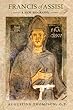
Who was St. Francis of Assisi? Check out a great new biography.

Fr. Augustine Thompson, OP, who posts here now and then, fairly recently published a new biography about St. Francis of Assisi.  This might be a good book for your parish priest or for seminarians or for yourself, as we watch the new pontificate through the lens of the “Poverello”.

I have it and it is very good.  As a matter of fact it is also on my Kindle (and you need a Kindle!).

To buy the book in the USA, click HERE.  When you use my links, I get a small percentage, which really helps.

The Kindle version USA is HERE

I have search boxes for amazon UK and Canada at the bottom of the blog. Cut and paste this into the search box: Francis of Assisi: A New Biography Augustine Thompson

Get up to speed on Francis and Francis and give Fr. Thompson’s book a boost too.

Posted in Francis, Saints: Stories & Symbols | Tagged ,
19 Comments

Pope Francis – the real deal – has Audience with Cardinals

Today I took in the Audience Pope Francis held for the College of Cardinals in the Sala Clementina.  It was entirely charming.

20130315-114600.jpgThere was a little scare, however.  After the first greeting by the Dean of the College, Card Sodano, the Pope rose to go down to him and he almost fell on the stair.  I noticed that in during the Mass yesterday he also had a little help going down the step from his chair.

He again came in only the white cassock… I hope he will bend to decorum over time… and gave a talk that was partly prepared and partly extemporaneous.  He departed frequently from his text to add observations.

20130315-114629.jpgWe need a transcript yet, but watch for his wonderful digression about how most of the men there (himself included) are now old.  Old age, he said, is the place of wisdom, it is like a good wine that has to be shared with young people.

He spoke about the need not to be pessimistic.  Give no place, he said, to pessimism, which the devil offers us every day.  Yesterday he spoke about the devil, saying that if we are not praying to the Lord, we are praying to the devil.  He clearly believes in the spiritual warfare going on around us.

20130315-114647.jpgHe smiled, he quoted from a German poet, he smiled, he extemporized, he smiled, he spoke warmly of the humble example of Benedict XVI, he smiled.  He brought forth a strong memory of John Paul I.

As we move out of the first hours of this pontificate and into days and then weeks, we will see him more clearly as he is.  He exudes warmth.

Finally, here is a view I think we will see a lot of.

20130315-114703.jpg

I suspect we will see this Pope visibly in prayer.  Perhaps it will be more of a praying pontificate than a teaching pontificate.  But Francis was able to quote a German poet when departing from his text.

Posted in Francis, SESSIUNCULA | Tagged
67 Comments

What Did St. Francis Really Say?

Now that we have a Pope named Francis, and we know that he intended to invoke St. Francis of Assisi, we might delve into Francis looking for some clues as to what (we hope) the new Pope might be up to.

First, if you have the notion that Francis was bunny-hugging, pastel-toned image on a holy card or garden statuette, with little birdies sitting on his arms.  Think again. Francis had his tender side, but he was as hard as nails.   This is, after all, the guy who went to face down a Sultan when things between Christians and Islam weren’t exactly cordial.

Over at the Catholic Online Forum, which I ran for years and of which I am still sort of the moderator – though the keys have been held for a long time by the great Roman Fabrizio – there is a a great entry about what Francis really is about.  Fabrizio pulled quotes from the texts of Francis, most not translated into English elsewhere, and presented them for our edification.  I share some things here.  He uses the exact words of St. Francis as found in the original Franciscan Sources and quoted in Latin (or Italian) original when available online.  Otherwise, he transcribed them from the print edition. Online source for St. Francis’ own writings: OPUSCULA OMNIA SANCTI FRANCISCI ASSISIENSIS

What Fabrizio does is explode myths about Francis.  Here is an example of a myth of poverty in liturgy which produced all that nonsense about clay pots and gunny sack vestments

MYTH: Francis hated the “triumphalism” of the Roman Liturgy. He wanted Mass celebrated in barns, the Sacred Species held in shoe boxes or recycled bottles. And he couldn’t stand the “ritualism” of liturgical norms and devotional practices (and shall we mention his murky understanding of the doctrine on the Eucharist?):

Epistola ad custodes

To all the custodians of the Friars Minor to whom this letter shall come, Brother Francis, your servant and little one in the Lord God, greetings with new signs of heaven and earth which are great and most excellent before God and are considered least of all by many religious and by other men.

I beg you more than if it were a question of myself that, when it is becoming and you will deem it convenient, you humbly beseech the clerics to venerate above all the most holy Body and Blood of our Lord Jesus Christ and His Holy Name and written words which sanctify the body. They ought to hold the chalices, corporals, ornaments of the altar, and all that pertain to the Sacrifice as precious. And if the most holy Body of the Lord is left very poorly in any place, let It be moved by them to a precious place, according to the command of the Church and let It be carried with great veneration and administered to others with discretion. The Names also and written words of the Lord, In whatever unclean place they may be found, let them be collected, and then they must be put in a proper place. And in every time you preach, admonish the people about penance and that no one can be saved except he that receives the most holy Body and Blood of the Lord. And whenever It is being sacrificed by the priest on the altar and It is being carried to any place, let all the people give praise, honor, and glory to the Lord God Living and True on their bended knees. And let His praise be announced and preached to all peoples so that at every hour and when the bells are rung praise and thanks shall always be given to the Almighty God by all the people through the whole earth.

And whoever of my brothers custodians shall receive this writing, let them copy it and keep it with them and cause it to be copied for the brothers who have the office of preaching and the care of brothers, and let them preach all those things that are contained in this writing to the end: let them know they have the blessing of the Lord God and mine. And let these be for them true and holy obedience.

Universis custodibus fratrum minorum, ad quos litterae istae pervenerint, frater Franciscus in Domino Deo vester servus et parvulus, salutem cum novis signis caeli et terrae, quae magna et excellentissima sunt apud Deum et a multis religiosis et aliis hominibus minima reputantur. Rogo vos plus quam de me ipso, quatenus, cum decet et videritis expedire, clericis humiliter supplicetis, quod sanctissimum corpus et sanguinem Domini nostri Jesu Christi et sancta nomina et verba eius scripta, quae sanctificant corpus, super omnia debeant venerari. Calices, corporalia, ornamenta altaris et omnia, quae pertinent ad sacrificium, pretiosa habere debeant. Et si in aliquo loco sanctissimum corpus Domini fuerit pauperrime collocatum, iuxta mandatum Ecclesiae in loco pretioso ab eis ponatur et consignetur et cum magna veneratione portetur et cum discretione aliis ministretur. Nomina etiam et verba Domini scripta, ubicumque inveniantur in locis immundis, colligantur et in loco honesto debeant collocari. Et in omni praedicatione, quam facitis, de poenitentia populum moneatis, et quod nemo potest salvari, nisi qui recipit sanctissimum corpus et sanguinem Domini (cfr. Joa 6,54). Et, quando a sacerdote sacrificatur super altare et in aliqua parte portatur, omnes gentes flexis genibus reddant laudes, gloriam et honorem Domino Deo vivo et vero. Et de laude eius ita omnibus gentibus annuntietis et praedicetis, ut omni hora et quando pulsantur campanae semper ab universo populo omnipotenti Deo laudes et gratiae referantur per totam terram. Et, ad quoscumque fratres meos custodes pervenerit hoc scriptum et exemplaverint et apud se habuerint et pro fratribus, qui habent officium praedicationis et custodiam fratrum, fecerint exemplari et omnia, quae continentur in hoc scripto, praedicaverint usque in finem, sciant se habere benedictionem Domini Dei et meam. Et ista sint eis per veram et sanctam obedientiam. Amen.


Posted in Francis | Tagged , ,
30 Comments