For your Lego by Lego file.
At the blog Shower of Roses there are fun pictures of a Lego “Habemus Papam” scene made by kids. Fun!

Go see the others there.
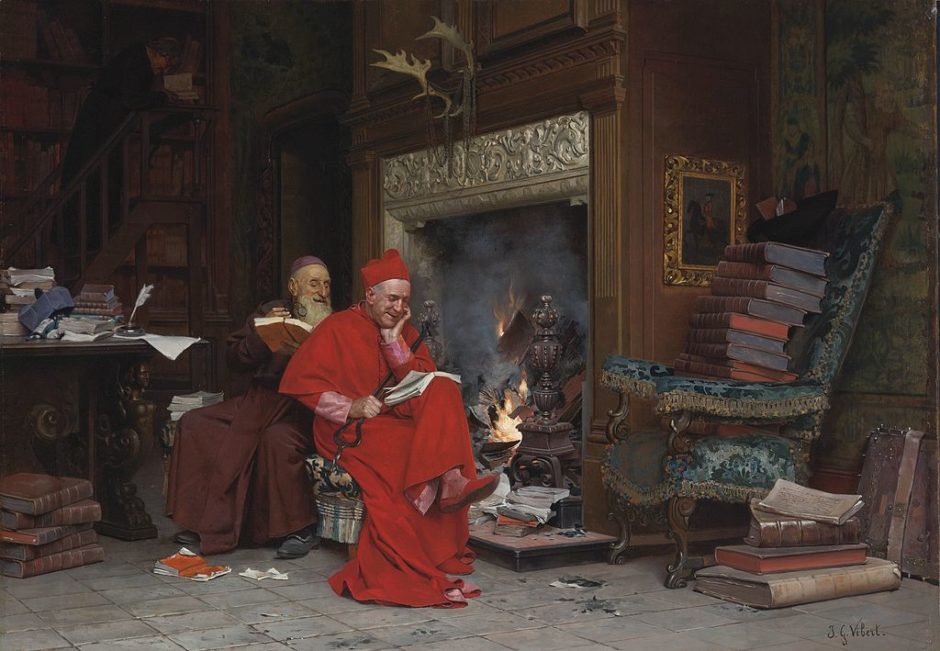
For your Lego by Lego file.
At the blog Shower of Roses there are fun pictures of a Lego “Habemus Papam” scene made by kids. Fun!
Go see the others there.
Pro-abortion catholic Democrats Rep. Nancy Pelosi and VP Joe Biden received Holy Communion at Pope Francis Mass for the beginning of his pontificate on 19 March.
Canonist Ed Peters has this at his good blog about canon law.
Nancy Pelosi will not change on her own
Communion time in St. Peter’s is, for the vast majority of lay persons (not heads of state, and not folks chosen to receive from the pope), pretty much a mob scene, so there is nothing to be gleaned from the fact that Nancy Pelosi took holy Communion at Pope Francis’ installation Mass—nothing, that is, except that either Pelosi suffers from one of the most malformed consciences in the annals of American Catholic politics or that she is simply hell bent on using her Catholic identity to attack Catholic values at pretty much every opportunity. [Or… both at the same time. Morever, it is entirely possible that she is also not very bright. There is a difference between being shrewd and being bright.] Certainly, Pelosi’s taking the Sacrament is not, in the slightest, a Roma locuta on pro-abortion Catholics and Communion.
Nancy Pelosi is America’s problem, not Rome’s, and it is obvious that, if left to her own lights, she will never mend her ways. For her sake, therefore, and for those confused by the chronic scandal she gives, Pelosi needs to be formally warned against taking holy Communion for so long as she promotes, as consistent with our Catholic faith, a variety of gravely immoral policies (per cc. 916, 1339); ministers, meanwhile, in her environs need to be directed to withhold Communion from her till advised otherwise by the competent ecclesiastical authority (per c. 915).
I’ll take a moment to remind you of my Can. 915 stuff.
From CNS (check out their spiffy feed on my side bar) comes this, which can serve as an answer to why Bp. Vasa of Santa Rosa is keeping an eye on his Catholic schools:
Majority of Congressional Members Educated at Catholic Universities are Pro-Abortion Rights
A majority of members of Congress who were educated at Catholic colleges and law schools are pro-abortion. That’s the finding of a new report from The Cardinal Newman Society.
In all, 52 of 92 (56 percent) elected officials in the last Congress and current Congress that attended Catholic colleges, according to their congressional websites, have voted for pro-abortion rights and/or related funding.
In the 112th session of the House of Representatives there were 65 congressmen and women who attended Catholic colleges or law schools. Out of those, 35 support abortion rights. Out of the 12 Catholic-educated congressmen in the incoming freshman class for the 113th session of the House, six of them are pro-abortion rights. In the Senate, 11 of the 15 Senators who earned degrees from Catholic institutions have previously voted for abortion rights or related bills.
Nearly every Congressman and Senator in the report has a zero percent rating by the National Right to Life Committee and a 100 percent rating by the National Abortion Rights Action League (NARAL).
The following is the list of elected officials who were educated at Catholic institutions and have voted in favor of abortion rights:
[…]
Read the list there.
For your Just Too Cool file from CNA:
Santa Monica, Calif., Mar 17, 2013 / 04:03 pm (CNA/EWTN News).- Three religious sisters are participating in a unique evangelization effort by competing on a Bible trivia game show in hopes of supporting their community.
“This isn’t something we would normally do, but when the opportunity arose, Mother (Assumpta Long) discerned that it would be good not only for the benefit of our community, but also for the New Evangelization,” Sr. Maria Suso of the Dominican Sisters of Mary, Mother of the Eucharist told CNA March 15.
Team Sisters of Mary will be featured on the March 21 season premiere of The American Bible Challenge, hosted by comedian Jeff Foxworthy on Game Show Network.
Facing off against Team Preachin’ Divas, a group of women dedicated to inner city outreach in Oakland, Calif., and Team Anointed Ink, a group of Texas-based tattoo artists who cover up questionable body art with religious symbols, the Sisters competed for a chance to win $100,000 for their charity of choice.
[…]
Excellent. I hope they win.
I have in the past mentioned Sr. Joan Roccasalvo, CJS, who has some intelligent things to say (about which I agree for the most part) about sacred music. She has another offering at CNA, to which I want to point you. The title of the entry is “‘Oriented toward gregorian chant’? What does this phrase mean?”
Some excerpts.
To begin with, music of the liturgy must sound different from street music, music of a rock concert, music sung in a discotheque, or music for the movies. It differs from the sounds typically associated with romantic music. It is prayer that is sung, prayer that bears the imprint of silence. Orientation toward Gregorian chant involves melody, rhythm, types of sound and harmonization.
Do I hear an “Amen!”?
There is a renewed emphasis in two main directions, both essential to the full participation of the faithful in the Mass. First, we are witnessing a renewal in singing the Mass. This means singing the Ordinary parts: Kyrie, Gloria, Sanctus, and the Agnus Dei. There are eighteen Mass settings of Gregorian chant Ordinaries in the Liber Usualis, the liturgical book containing the complete Latin settings of Gregorian chant for every Mass of the year. The easiest Mass settings are Mass XVI and Mass XVIII which can be sung during Lent and Advent.
Second, there is a renewed interest in singing the Proper (changeable) parts of the Mass in English because of the rich texts from the Old and New Testaments. Post-conciliar years saw many parishes drop the prescribed Proper parts of the Mass: the Entrance or Introit, the Gradual, the Communion.
And…
There is a growing revulsion among pastors, clergy, and laity at the use of missalettes to which most parishes subscribe. [Another “Amen!”?] More and more, they see them as a bad investment, a waste of parish funds, already stretched to the limit. These flimsy, disposable paperbacks must be changed a few times a year for the entire parish community. The cost is prohibitive.
These shabby, unattractive throw-aways with God’s word printed between the covers would make a rabbi gasp in disbelief, for the Torah is encased in precious jewels. So too is the book of the Gospels in the Christian East. In the Roman Rite, the Sacramentary and Lectionary are reasonably attractive books. What image does a missalette project? Texts are printed on cheap paper, and most music is unsuitable for worship. “We are teaching ugliness to our Catholics,” writes Alice von Hildebrand, dismayed. Why shouldn’t the faithful hold in their hands a beautifully-bound book containing the word of God from which to sing?
[…]
I will take this a another step.
Let the sacred liturgy be mainly in Latin, as the Fathers of the Second Vatican Council said, and let people have their own well-bound translation of their choice. The Council also said that pastors should make sure their flocks can both sing and speak the parts that pertain to them in Latin. True unity in true diversity, not the anti-Pentecost Tower of Babel we have going now! In some dioceses Holy Mass is celebrated in dozens of languages, little communities segregated from each other. In some parishes there are multiple languages. I applaud the choice of a parish priest about whom I recently wrote to switch the Spanish language Mass in his parish to a Traditional Latin Mass. That was a good choice not merely because we need more celebrations of the TLM, but because the Latin language can unify different communities within the community. They can pray together. Solutions can be found for the sermon. But they can all be on the same page when praying.
 I had this from a reader. He said he was not advocating these things. However, liberals will advocate them.
I’ve got some other suggestions. But first the wacky liberal stuff:
I have an idea for a blog topic – how about brainstorming with your readers on the top 10 changes that Pope Francis will make that will shock the Church and the world. I would orient the discussion around the Pope’s “vision” that the Church is for the poor and should itself be poor. For example, here are some ideas I had:
1) Pope Francis will live at the Lateran Basilica as an example that he will live a simple life away from the Vatican.
2) Pope Francis will allow the ordination of women deacons in service to the poor.
3) Pope Francis will sell the Vatican Museums to a private company and give the proceeds to the poor.
4) Pope Francis will get a petition from the English speaking bishops and will rescind use of the 2010 RM because the language is too complicated.
5) Pope Francis will repudiate Humanae Vitae since too many children tends to perpetuate poverty.
Yep. This is precisely what liberals will push for, hopelessly.
What do I think we should push for?
As many celebrations of the older form of the Roman Rite as possible in as many places as possible as soon as possible.
It’s ‘grind it out’ time.
I am getting some defeatist email.
Those of you who want the older form of the liturgy, and all that comes with it, should…
1) Work with sweat and money to make it happen. If you thought you worked hard before? Been at this a long time? HAH! Get to work! “Oooo! It’s tooo haaard!” BOO HOO!
2) Get involved with all the works of charity that your parishes or groups sponsor. Make a strong showing. Make your presence known. If Pope Francis wants a Church for the poor, then we respond, “OORAH!!” The “traditionalist” will be second-to-none in getting involved. “Dear Father… you can count on the ‘Stable Group of TLM Petitioners-For-By-Now-Several-Months” to help with the collection of clothing for the poor! Tell us what you need!”
3) Pray and fast and give alms. Think you have been doing that? HAH! Think again. If you love, you can do more.
4) Form up and get organized. You can do this. Find like minded people and get that request for the implementation of Summorum Pontificum together, how you will raise the money to help buy the stuff the parish will need and DO IT. Make a plan. Find people. Execute!
5) Get your ego and your own petty little personal interpretations and preferences of how Father ought to wiggle his pinky at the third word out of the way. It is team-work time. If we don’t sacrifice individually, we will stay divided and we won’t achieve our objectives.
At the midway point of SEAL training, BUD/S, there is a “Hell Week” to see how much you want it to keep going.
Do you want this? Do you? Or, when you don’t get what you want handed to you, are you going to whine about it and then blame others?
The legislation is in place. The young priests and seminarians are dying to get into this stuff. Give them something to do.
And to those of you will you blurt out “But Father! But Father!… I don’t like your militaristic imagery”… in order to derail the entry, here’s a new image from your own back yard.
Pope Benedict gave you, boys and girls, over the course of his 8 years, a beautiful new bicycle! He gave you a direction, some encouragement, a snow cone, and a running push. Now, take off the damn training wheels and RIDE THE BIKE!
Remember what Bp. Vasa is doing in Santa Rosa? He is requiring that teachers in Catholic schools live – gasp! – according to Catholic teachings and mores. Imagine such a thing!
The Cardinal Newman Society, which focuses on the quality of Catholic schools, has this … btw … check out their spiffy feed on the right side bar on this blog …
Parents Resist Bishop Vasa’s Efforts to Strengthen Catholic Education
March 18, 2013, at 10:32 AM | By Tim Drake |
The Press Democrat reports that a group of parents are resisting Bishop Robert Vasa’s effort to have the Diocese of Santa Rosa’s parochial school educators sign a contract addendum stating that they will uphold the Church’s teachings.
The parents of students at Cardinal Newman High School, worried that the addendum might drive away teachers, are seeking a one-year reprieve that was reportedly given to teachers at a K-8 school in Ukiah.
According to the article, parents are concerned that Bishop Vasa may be considering implementing a catechetical program similar to one adopted in the Archdiocese of Kansas City. That program requires educators to take classes through theSchool of Faith to “provide doctrinal and spiritual formation” stressing “the call to prayer, virtue, and holiness of life.”“I’m a Catholic, but to have the bishop do this is not the type of Catholicism my faith teaches me,” said Lori Edgar, the parent of a Cardinal Newman senior and freshman. [Then maybe, Lori, the problem is that what you think being Catholic is, is out of step with what the Church thinks being Catholic is. Could it be? Good sources for a reliable answer could be the local bishop and the Catechism of the Catholic Church.]
Catholic Education Daily is an online publication of The Cardinal Newman Society. Click here for email updates and free online membership with The Cardinal Newman Society.
It’s all part of the New Evangelization, folks.

Please help!
I read on an Italian blog (and so this is at the level of rumor for now) that the Roman ecclesiastical tailor shop Gammarelli sent a mozzetta over the the Apostolic Palace. A mozzetta is the elbow length red cape, often trimmed in ermine, worn by the Roman Pontiff over his white cassock.
Tuesday, today, is the Mass of the “inauguration” of Francis’ pontificate.

Tomorrow the Pope has an audience with delegations of Christian ‘churches’. Were the Pope to put on the mozzetta, that would be a good occasion. That would be the apt thing to do. It would be a sign of respect. The Pope will also soon have an audience with the diplomatic corps. The Pope, a head of state, should dress his part. The rest of the diplomats will.
This leads to “the point”, in case some of the enthusiasts run to the combox having missed it.
Remember, a mozzetta, in itself, is nothing. Popes don’t have to wear a mozzetta all the time. There are, however, occasions in which such trappings and signs of office, solemn and traditional, have their proper place. They send signals. The non-use of these symbols also sends signals.
People who say that these things are not important, or are bad, or that they should be eliminated are just plain wrong. That is a naive, shallow, approach to who we are. Catholics are not “either/or” when it comes to the dynamic interplay of the humble and the lofty. We are “both/and”, in proper measure, time and place.
 The motto of Pope, “Miserando Atque Eligendo” has aroused some people to send me questions. What’s with the Latin? What are those -nd- forms? Are they gerundives? People are getting some things wrong.
“Lowly and chosen”, some have suggested. Noooooo.….
First, as others have noted, this is from Venerable Bede’s sermon on Matthew 9. It is listed in one list as s. 22, and in others as s. 30 In nat. S. Matthaei . For the Latin go here. The lines immediately before provide some context.
Quia Christus Jesus venit in hunc mundum peccatores salvos facere, quorum primus ego sum. Sed ideo misericordiam consecutus sum, ut in me primo ostenderet Christus Jesus omnem patientiam, ad exemplum eorum qui credituri sunt illi in vitam aeternam (I Tim. I).
The Lord came to show mercy.
For the line in question.
“Vidit ergo Iesus publicanum, et quia miserando atque eligendo vidit, ait illi, ‘Sequere me’.
Jesus, therefore, saw the publican, and because he saw by having mercy and by choosing, He said to him, ‘Follow me'”.
What we have here is a fairly straight forward use of ablative gerunds. The ablative conveys the manner or even instrumental dimension of what is being done. We ask, when reading about what Christ did, “How did Jesus come to pick Matthew?” He called Matthew by a) having compassion and b) by making a decision.
So the new Bishop Bergoglio, back in the day, chose a motto to describe how he would go about being a bishop: he would be a bishop by showing compassion and by making decisions… miserando atque eligendo. He was probably thinking about how he felt himself to have been selected by God to follow Him: because God was merciful to Him and because God selected Him. Thus, as a bishop, He would do the same: show mercy and make choices.
A good motto for a reformer.
Let’s find the quote and then the context and sequela, if you will pardon the pun.
Vidit ergo Iesus publicanum, et quia miserando atque eligendo vidit, ait illi, Sequere me. Sequere autem dixit imitare. Sequere dixit non tam incessu pedum, quam executione morum. Qui enim dicit se in Christo manere, debet sicut ille ambulavit, et ipse ambulare: quod est non ambire terrena, non caduca lucra sectari, fugere honores, contemptum mundi omnen pro coelesti gloria libenter amplectio, cunctis prodesse, amare, iniurias nulli inferre, at sibi illatas patienter suffere, sed et inferentibis a Domino veniam postulare, nunnumquam suam, sed conditoris semper gloriam quaerere, quotquot valet secum ad amorem supernorum erigere. Haec est huiusmodi gerere, Christi est vestigia sequi.
Jesus, therefore, saw the publican, and because he saw by having mercy and by choosing, He said to him, ‘Follow me'”. ‘Follow’ means to imitate. ‘Follow’, He said, not so much in the pacing of feet, as in the carrying out of morals. For whoever says that he remains in Christ, ought himself to walk as He walked: which means not striving for earthly things, not eagerly pursuing fallen riches, fleeing honors, willingly embracing all the contempt of the world for the sake of heavenly glory, being advantageous to all, loving, occasioning injuries for no one but patiently suffering those caused to oneself, but seeking always the glory of the Creator, as often as one can raise himself up toward the love of those things which are above. This is what acting in that way is, This is following in the footsteps of Christ.
Stunning stuff.
Bottom line.
“By showing compassion and by choosing”.
We can dress this up a little but that’s what the motto really says.
UPDATE:
I gave my old friend and mentor Fr. Reginald Foster a call and asked him about this. He’s with me: gerunds. FWIW.
I am thinking about the infamous red shoes. I am thinking about the non-wearing of the mozzetta. I am thinking about the growing juxtaposition in some conversations of simple liturgy versus lofty liturgy.
Some people are saying, “O how wonderful it is to get rid of all the symbols of office and power and be humble like the poor.”
When I first learned to say the older form of the Mass of the Roman Rite, that is to say, when I first learned how to say Mass, because there has never been a single of day of my priesthood when I couldn’t say it, I admit that I was deeply uncomfortable with some of the gestures prescribed by the rubrics. I even resisted them. For example, the kissing of the objects to be given to the priest, and the priest and the kissing of the priest’s hands… that gave me the willies.
I resisted those solita oscula because I had fallen into the trap of thinking that they made me look too important.
The fact is that none of those gestures were about me at all. They are about the priest insofar as he is alter Christus, not insofar as he is “John”. For “John” all of that would be ridiculous. For Father, alter Christus, saying Mass, it is barely enough.
When you see the deacon and subdeacon in the older form of Holy Mass holding, for example, the edges of the priest’s cope when they are in procession, or when you see them kissing the priest’s hand, or bowing to him, or waiting on him or deferring to him or – what in non-Catholic eyes appears to be something like adoration or emperor worship – you are actually seeing them preparing the priest for his sacrificial slaughter on the altar of Golgotha.
It is the most natural thing in the human experience to treat with loving reverence the sacrifice to be offered to God. The sacrificial lambs were pampered and given the very best care, right up to the moment when the knife sliced their necks.
The Catholic priest is simultaneously the victim offered on the altar. All the older, traditional ceremonies of the Roman Rite underscore this foundational dimension of the Mass. If we don’t see that relationship of priest, altar, and victim in every Holy Mass, then the way Mass has been celebrated has failed. If we don’t look for that relationship, then we are not really Catholic. Mass is Calvary.
The use of beautiful marble in the church building, precious fabrics and metals for vestments and vessels, music that requires true art and skill to perform, ritual gestures which to worldly eyes seem to be the stuff of bygone eras of royals and the like, all underscore the fact that step by step during Holy Mass the priest is being readied for the sacrifice, which – mysteriously – he himself performs.
Back when I resisted the liturgical kissing of my hand when being handed a chain, spoon or chalice, I had made the mistake of imagining myself to be more humble by that resistance. That was a mistake. Ironically, my resistance to those gestures turned the gestures into being about me. Submission to the gestures, on the other hand, erases the priest’s own person and helps him to be what he needs to be in that moment: priest, victim, alter Christus. The trappings, the rubrics, the gestures erase the priest’s poor person. Resisting these things runs the risk of making them all about the priest again.
In a sense, I had made the objection of Judas about the precious nard which the woman brought to the Lord. Jesus responded that the precious stuff should be kept for His Body, which was to be sacrificed. People who object that we should have only poor liturgy are falling into the argument of Judas. We must submit to the precious and sublime in recognition of the truth of what is going on. To pit the sublime and complex and precious and beautiful against the low, simple and humble is schizophrenic and not Catholic.
There is no real conflict of the humble and the sublime in liturgical worship.

Coat of Arms by D Burkart









A Daily Prayer for Priests


They find you a pro-life agent in your area who commits to giving a portion of the fee to a pro-life group!

PLEASE subscribe via PayPal if it is useful. Zelle and Wise are better, but PayPal is convenient.
A monthly subscription donation means I have steady income I can plan on. I put you my list of benefactors for whom I pray and for whom I often say Holy Mass.
In view of the rapidly changing challenges I now face, I would like to add more $10/month subscribers. Will you please help?
For a one time donation...



Help Monks in Wyoming (coffee – UPDATED LINK) and Norcia (beer) and the wonderful "Soap Sisters" of Summit, NJ!


Please follow me on Twitter!










Visits tracked by Statcounter
since Sat., 25 Nov. 2006:

